Reading view

Why is Bezos trolling Musk on X with turtle pics? Because he has a new Moon plan.

The founder of Amazon, Jeff Bezos, does not often post on the social media site owned by his rival Elon Musk. But on Monday, Bezos did, sharing a black-and-white image of a turtle emerging from the shadows on X.

The photo, which included no text, may have stumped some observers. Yet for anyone familiar with Bezos' privately owned space company, Blue Origin, the message was clear. The company’s coat of arms prominently features two turtles, a reference to one of Aesop’s Fables, "The Tortoise and the Hare," in which the slow and steady tortoise wins the race over a quicker but overconfident hare.

Bezos' foray into social media turtle trolling came about 12 hours after Musk made major waves in the space community by announcing that SpaceX was pivoting toward the Moon, rather than Mars, as a near-term destination. It represented a huge shift in Musk's thinking, as the SpaceX founder has long spoken of building a multi-planetary civilization on Mars.


Read full article

Comments

© Jeff Bezos/X

  •  

China showcases new Moon ship and reusable rocket in one extraordinary test

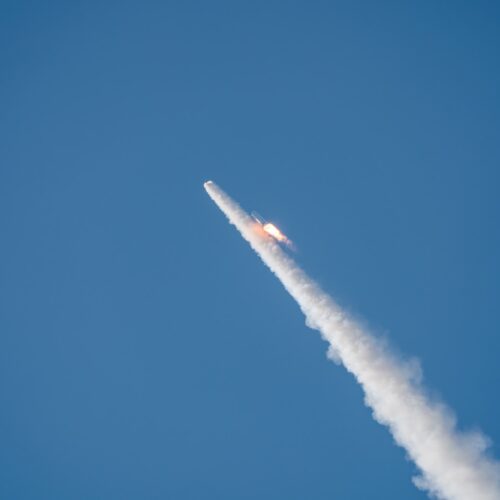
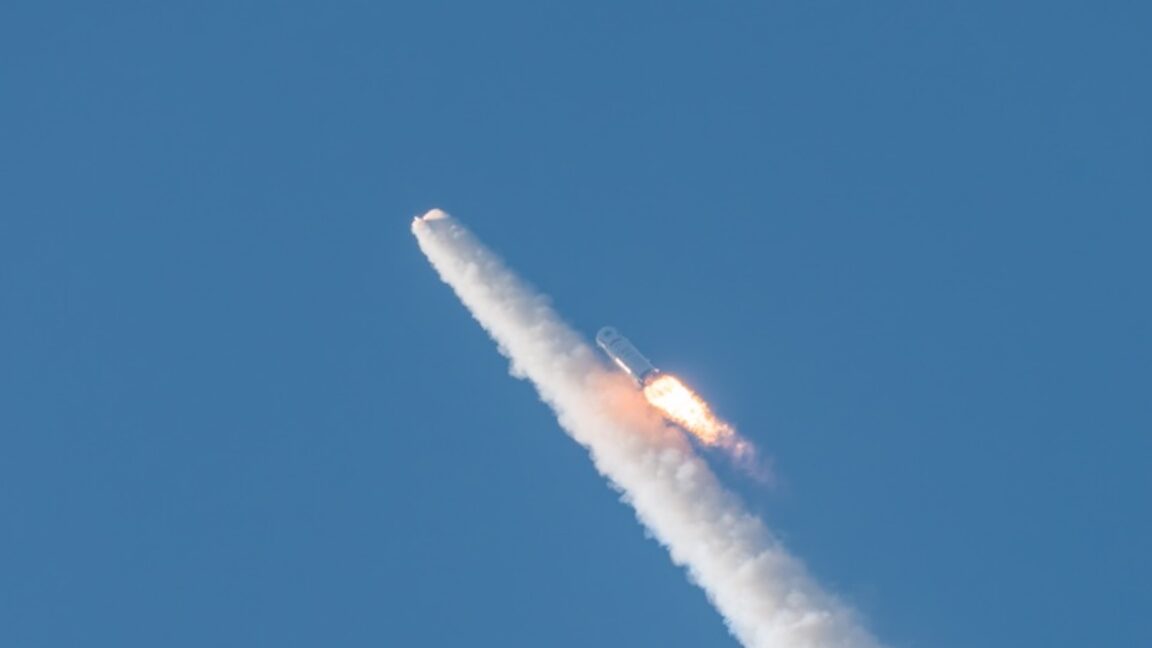
China's space program, striving to land astronauts on the Moon by 2030, carried out a test flight of a new reusable booster and crew capsule late Tuesday (US time), and the results were spectacular.

The demonstration "marks a significant breakthrough in the development of [China's] manned lunar exploration program," the China Manned Space Agency (CMSA) said in a statement. China and the United States are racing to accomplish the next human landing on the Moon in a competition for national prestige and lunar resources. The Long March 10 rocket and Mengzhou spacecraft, both tested Tuesday, are core elements of China's lunar architecture.

The launch of a subscale version of the Long March 10 rocket, still in development, provided engineers with an opportunity to verify the performance of an important part of the new Mengzhou capsule's safety system. The test began with liftoff of the Long March 10 booster from a new launch pad at Wenchang Space Launch Site on Hainan Island, China's southernmost province, at 10 pm EST Tuesday (03:00 UTC or 11 am Beijing time Wednesday).

Read full article

Comments

© VCG/VCG via Getty Images

  •  

Lost Soviet Moon Lander May Have Been Found

An anonymous reader shares a report: In 1966, a beach-ball-size robot bounced across the moon. Once it rolled to a stop, its four petal-like covers opened, exposing a camera that sent back the first picture taken on the surface of another world. This was Luna 9, the Soviet lander that was the earliest spacecraft to safely touchdown on the moon. While it paved the way toward interplanetary exploration, Luna 9's precise whereabouts have remained a mystery ever since. That may soon change. Two research teams think they might have tracked down the long-lost remains of Luna 9. But there's a catch: The teams do not agree on the location. "One of them is wrong," said Anatoly Zak, a space journalist and author who runs RussianSpaceWeb.com and reported on the story last week. The dueling finds highlight a strange fact of the early moon race: The precise resting places of a number of spacecraft that crashed or landed on the moon in the run up to NASA's Apollo missions are lost to obscurity. A newer generation of spacecraft may at last resolve these mysteries. Luna 9 launched to the moon on Jan. 31, 1966. While a number of spacecraft had crashed into the lunar surface at that stage of the moon race, it was among the earliest to try what rocket engineers call a soft landing. Its core unit, a spherical suite of scientific instruments, was about two feet across. That size makes it difficult to spot from orbit. "Luna 9 is a very, very small vehicle," said Mark Robinson, a geologist at the company Intuitive Machines, which has twice landed spacecraft on the moon.

Read more of this story at Slashdot.

  •  

Why would Elon Musk pivot from Mars to the Moon all of a sudden?

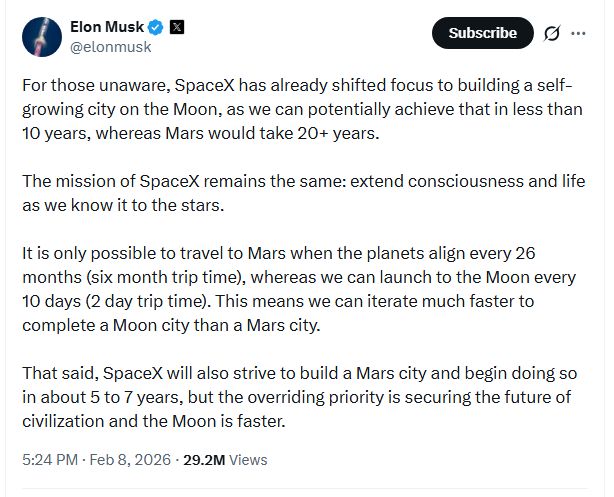
As more than 120 million people tuned in to the Super Bowl for kickoff on Sunday evening, SpaceX founder Elon Musk turned instead to his social network. There, he tapped out an extended message in which he revealed that SpaceX is pivoting from the settlement of Mars to building a "self-growing" city on the Moon.

"For those unaware, SpaceX has already shifted focus to building a self-growing city on the Moon, as we can potentially achieve that in less than 10 years, whereas Mars would take 20+ years," Musk wrote, in part.

Elon Musk tweet at 6:24 pm ET on Sunday. Credit: X/Elon Musk
This is simultaneously a jolting and practical decision coming from Musk.

Read full article

Comments

© Mark Felix/Bloomberg via Getty Images

  •  

SpaceX Prioritizes Lunar 'Self-Growing City' Over Mars Project, Musk Says

"Elon Musk said on Sunday that SpaceX has shifted its focus to building a 'self-growing city' on the moon," reports Reuters, "which could be achieved in less than 10 years." SpaceX still intends to start on Musk's long-held ambition of a city on Mars within five to seven years, he wrote on his X social media platform, "but the overriding priority is securing the future of civilization and the Moon is faster." Musk's comments echo a Wall Street Journal report on Friday, stating that SpaceX has told investors it would prioritize going to the moon and attempt a trip to Mars at a later time, targeting March 2027 for an uncrewed lunar landing. As recently as last year, Musk said that he aimed to send an uncrewed mission to Mars by the end of 2026.

Read more of this story at Slashdot.

  •  

NASA changes its mind, will allow Artemis astronauts to take iPhones to the Moon

The iPhone is going orbital, and this time it will be allowed to hang around for a while.

On Wednesday night, NASA Administrator Jared Isaacman revealed that the Crew-12 and Artemis II astronauts will be allowed to bring iPhones and other modern smartphones into orbit and beyond.

"NASA astronauts will soon fly with the latest smartphones, beginning with Crew-12 and Artemis II," Isaacman wrote on X. "We are giving our crews the tools to capture special moments for their families and share inspiring images and video with the world."

Read full article

Comments

© Apple

  •  

Unable to tame hydrogen leaks, NASA delays launch of Artemis II until March

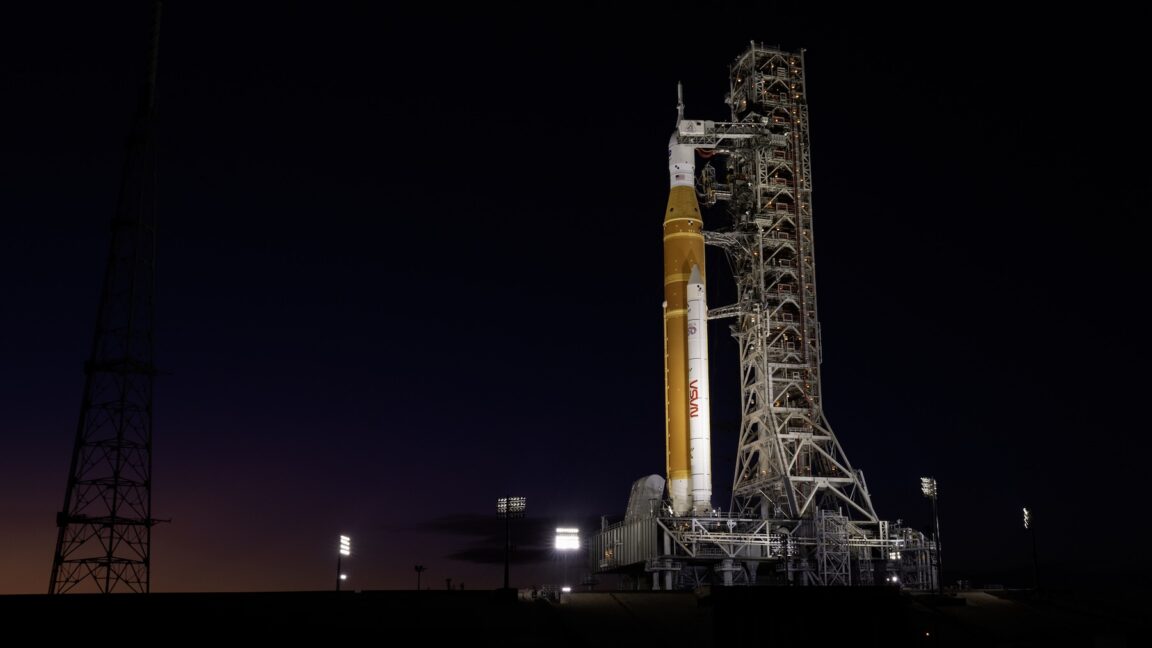
The launch of NASA's Artemis II mission, the first flight of astronauts to the Moon in more than 53 years, will have to wait another month after a fueling test Monday uncovered hydrogen leaks in the connection between the rocket and its launch platform at Kennedy Space Center in Florida.

"Engineers pushed through several challenges during the two-day test and met many of the planned objectives," NASA said in a statement following the conclusion of the mock countdown, or wet dress rehearsal (WDR), early Tuesday morning. "To allow teams to review data and conduct a second Wet Dress Rehearsal, NASA now will target March as the earliest possible launch opportunity for the flight test."

The practice countdown was designed to identify problems and provide NASA an opportunity to fix them before launch. Most importantly, the test revealed NASA still has not fully resolved recurring hydrogen leaks that delayed the launch of the unpiloted Artemis I test flight by several months in 2022. Artemis I finally launched successfully after engineers revised their hydrogen loading procedures to overcome the leak.

Read full article

Comments

© NASA/Jim Ross

  •  

NASA gears up for one more key test before launching Artemis II to the Moon

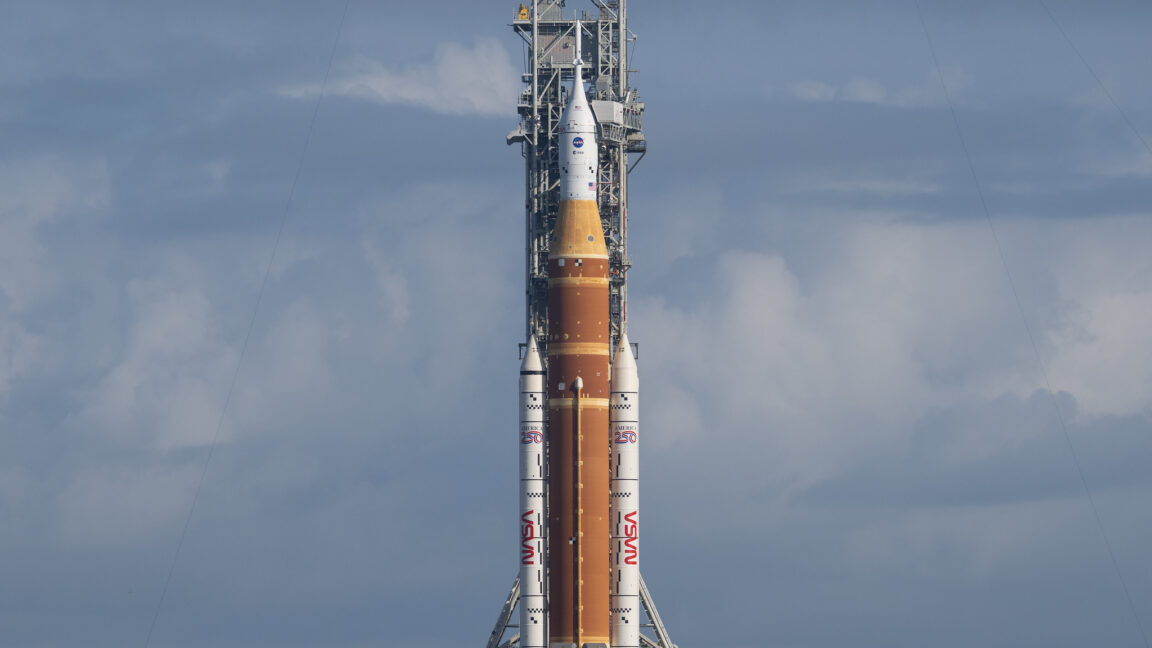
If all goes according to plan Monday, NASA's launch team at Kennedy Space Center in Florida will load more than 700,000 gallons of super-cold propellants into the rocket built to send the Artemis II mission toward the Moon.

The fuel loading is part of a simulated countdown for the Space Launch System rocket, a final opportunity for engineers to rehearse for the day NASA will send four astronauts on a nearly 10-day voyage around the far side of the Moon and back to Earth. The Artemis II mission will send humans farther from Earth than ever before. The astronauts will be the first to launch on NASA's SLS rocket and the first people to travel to the vicinity of the Moon in more than 53 years.

Charlie Blackwell-Thompson, NASA's launch director for the Artemis II mission, will supervise the practice countdown from a firing room inside the Launch Control Center a few miles away from the SLS rocket at Kennedy Space Center. In a recent briefing with reporters, she called the Wet Dress Rehearsal—"wet" refers to the loading of liquid propellants—the "best risk reduction test" for verifying all is ready to proceed into the real countdown.

Read full article

Comments

© NASA/Joel Kowsky

  •  

Blue Origin Announces Two-Year Pause in Space Tourism - to Focus on the Moon

TechCrunch reports: Jeff Bezos' space company Blue Origin is pausing its space tourism flights for "no less than two years" in order to focus all of its resources on upcoming missions to the moon, the company announced Friday. The decision puts a temporary halt on a program that Blue Origin has been using to fly humans past the Kármán line, the recognized boundary of space, for the last five years. Blue Origin made the announcement just a few weeks ahead of the expected third launch of its New Glenn mega-rocket, which is slated for late February... The company said Friday that New Shepard has flown 38 times and carried 98 humans to space, along with more than 200 scientific and research payloads. "The move is a clear sign that Blue Origin is going all in on its moon program as the company races with rival SpaceX," reports the Business Standard, "to be the first private company to land humans on the lunar surface for Nasa's Artemis program." Blue Origin holds a $3.4 billion contract with Nasa to develop its Blue Moon lander, designed to shuttle astronauts to and from the moon, with a landing originally targeted for 2029... The company is targeting the launch and landing of a cargo version of its lander as soon as this year, as a test ahead of eventually landing humans. Blue Origin has also presented an accelerated plan to Nasa for developing a lander that may be ready for carrying astronauts ahead of Starship, the large new rocket from Elon Musk's SpaceX.

Read more of this story at Slashdot.

  •  

How to View the Artemis II Moon Launch

The first crewed mission around the moon in more than 50 years is coming up. Here’s how to see it at sites in and around the Kennedy Space Center in Florida.

© Cassandra Klos for The New York Times

NASA is preparing to send four astronauts on its lunar Artemis II mission. Above, the scene on Jan. 17 during the rollout at the Kennedy Space Center in Florida.
  •  

Space Events 2026: NASA’s Artemis II Moon Mission, Summer Eclipse and More

In 2026, there will be journeys to the moon and Mars, new visions of the cosmos and a solar eclipse that might be worth traveling for.

© Joel Kowsky/NASA

The Space Launch System rocket, which will carry the Artemis II NASA mission, inside the Vehicle Assembly Building at the Kennedy Space Center in Florida on Dec. 20.
  •  

Elon Musk’s SpaceX Valued at $800 Billion, as It Prepares to Go Public

A sale of insider shares at $421 a share would make Mr. Musk’s rocket company the most valuable private company in the world, as it readies for a possible initial public offering next year.

© Meridith Kohut for The New York Times

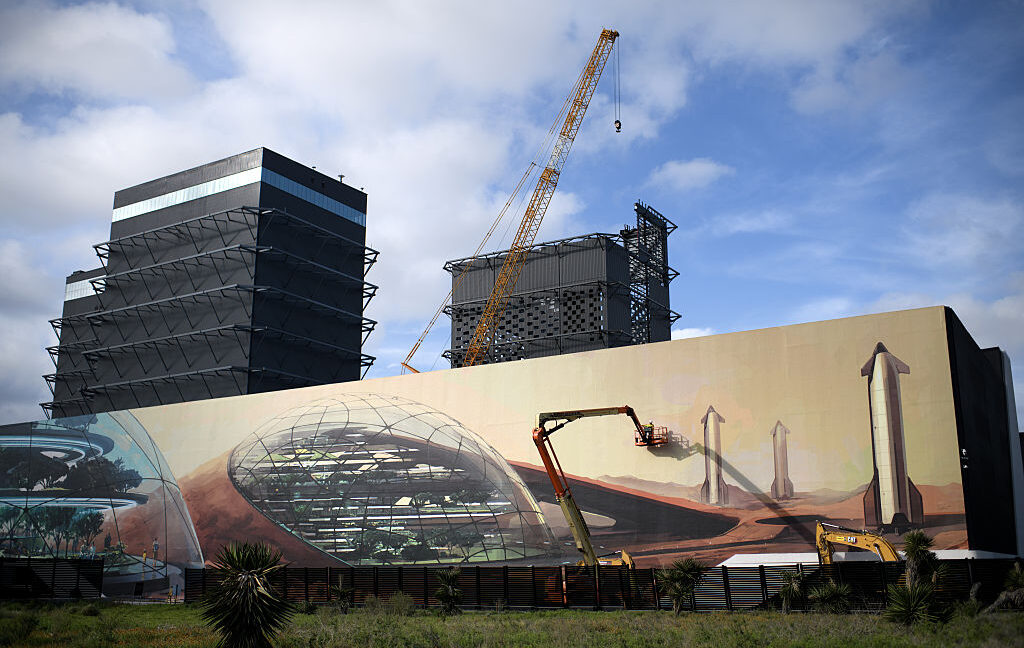
The SpaceX launchpad in South Texas in June 2024. The company said in a letter to employees on Friday that it could go public in 2026.
  •