Reading view

Canada’s curling war of words with Sweden escalates after warning over ‘F-bomb’

  • Kennedy insists he is innocent of any wrongdoing

  • World Curling says officials will clamp down on violations

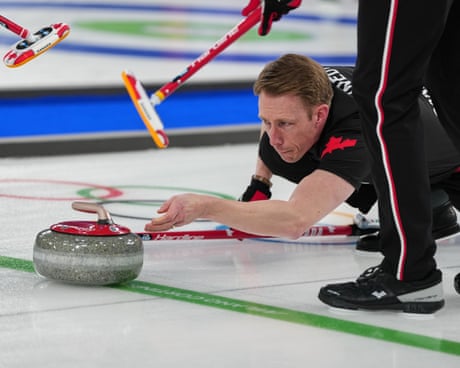
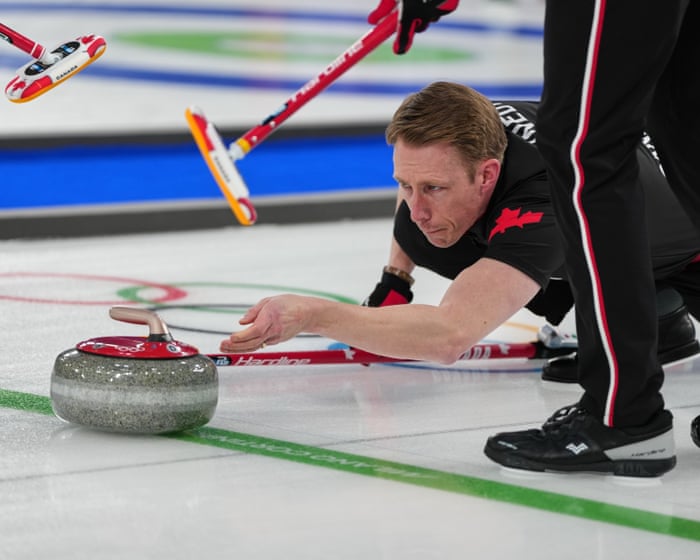
The Canadian curler at the centre of a cheating row at the Winter Olympics has denied any wrongdoing, accusing the Swedish team of deliberately trying to “catch us in the act”.

On Saturday, World Curling confirmed that Canada had escaped punishment despite being accused of breaking the rules in the 8-6 victory over Sweden on Friday night. However, the sport’s governing body did warn Canada about their abusive langugage and introduced emergency spot checks on Saturday afternoon to make sure teams were not cheating when releasing the stone.

Continue reading...

© Photograph: Misper Apawu/AP

© Photograph: Misper Apawu/AP

© Photograph: Misper Apawu/AP

  •  

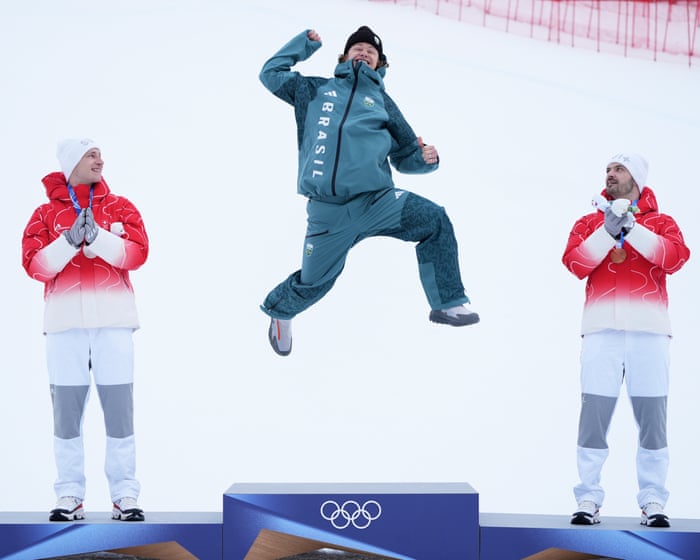
Brazil’s Pinheiro Braathen wins gold – and South America’s first Winter Olympics medal

  • Norwegian-born skier storms to historic slalom gold

  • ‘Your difference is your superpower,’ says 25-year-old

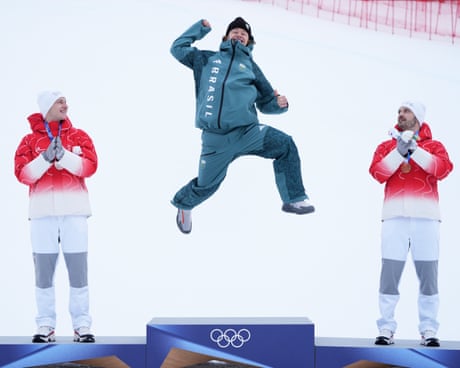
As the snow fell in Bormio, and the fog settled in, Lucas Pinheiro Braathen made history by becoming the first South American to win a Winter Olympic medal. Then, as the realisation that he had won gold for Brazil in the men’s giant slalom, he collapsed to the floor and allowed the tears to flow.

“I just hope that Brazilians look at this and truly understand that your difference is your superpower,” he said, still sobbing away. “It may show up in your skin or in the way you dress. But I hope this inspires every kid out there who feels a bit different to trust who you are.”

Continue reading...

© Photograph: Rebecca Blackwell/AP

© Photograph: Rebecca Blackwell/AP

© Photograph: Rebecca Blackwell/AP

  •  

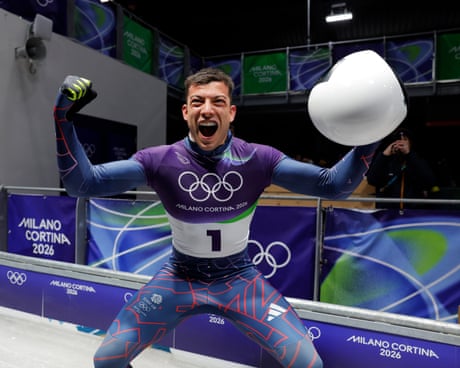
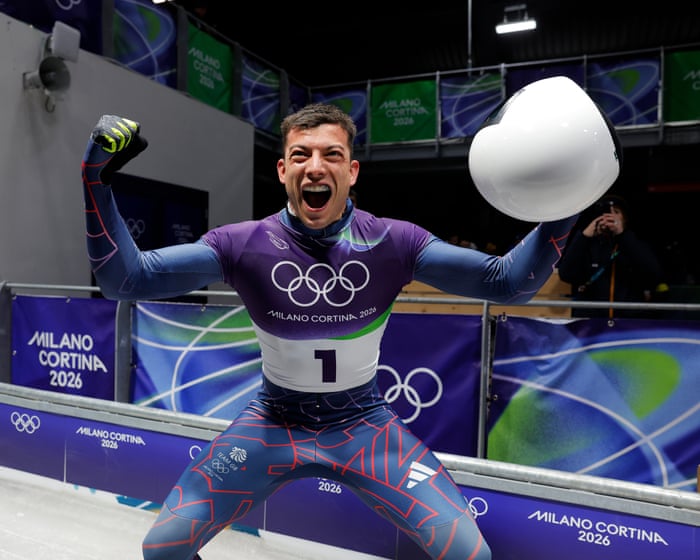
‘More bling’: Matt Weston targets second Winter Olympics gold after skeleton glory

  • British sledder has high hopes for new mixed team event

  • ‘We’re going to be one of the strongest sets of teams’

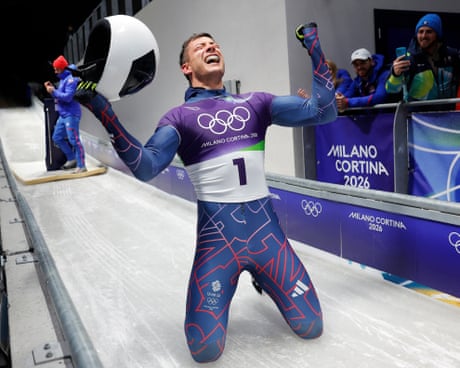
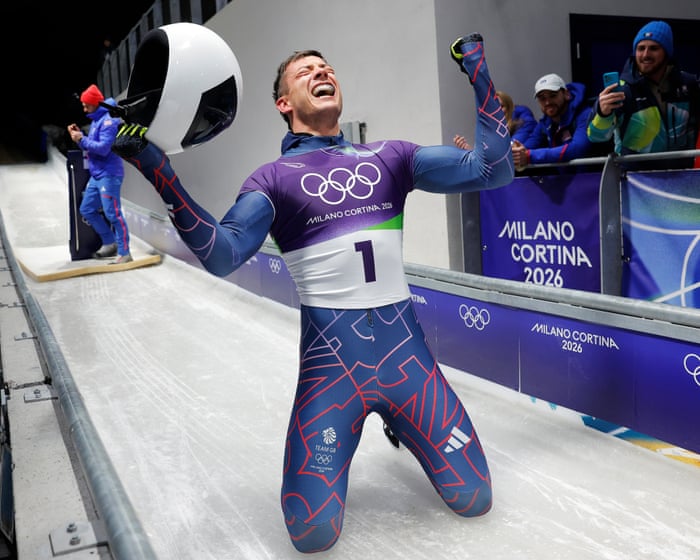
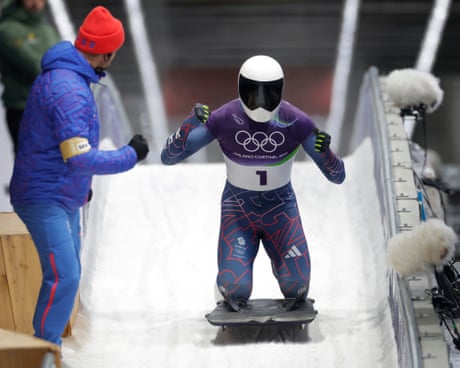
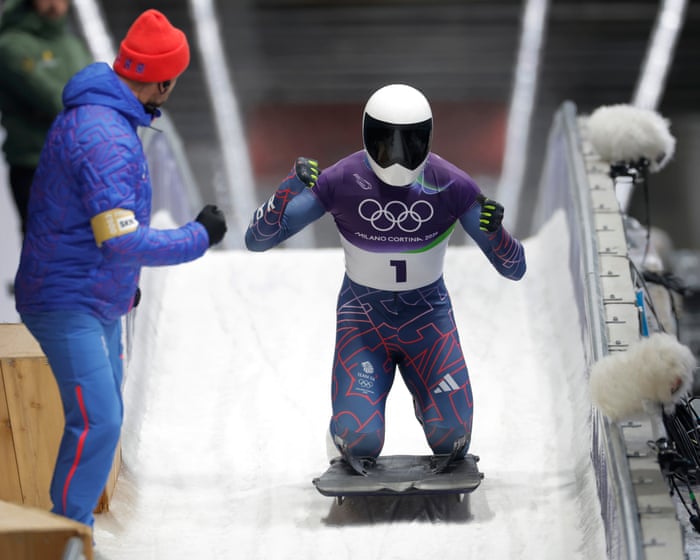
Matt Weston celebrated becoming the first British athlete to win a gold medal at these Olympics by having three slices of margherita pizza and then going straight to bed. “Some people might find it surprising,” Weston said on Saturday morning, “but I’ve got to keep my head together for the team race on Sunday.”

The mixed team skeleton is a new event at these Olympics, and it means Weston has a shot at becoming the first British athlete to win two medals at the same Winter Olympics.

Continue reading...

© Photograph: Andrew Milligan/PA

© Photograph: Andrew Milligan/PA

© Photograph: Andrew Milligan/PA

  •  

Winter Olympics 2026: ski jumping, skeleton, freestyle skiing, speed skating and more – live

Women’s dual moguls: It’s all very civilised out on the snow, the athletes have a hug when they reach the bottom. I was thinking the snow looked a bit grubby but it turns out the authorities put out pine needles – I think to help skiers find their way.

Anyway, they’ve zipped through very quickly and have already sorted the quarter finals, with four Americans in the final eight.

Continue reading...

© Photograph: Tobias Schwarz/AFP/Getty Images

© Photograph: Tobias Schwarz/AFP/Getty Images

© Photograph: Tobias Schwarz/AFP/Getty Images

  •  

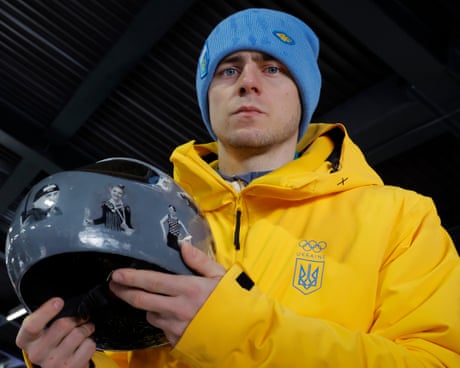
Volodymyr Zelenskyy honours disqualified skeleton racer with order of freedom

  • Vladyslav Heraskevych says ‘Cas has failed us’

  • President Zelenskyy hails skeleton racer’s courage

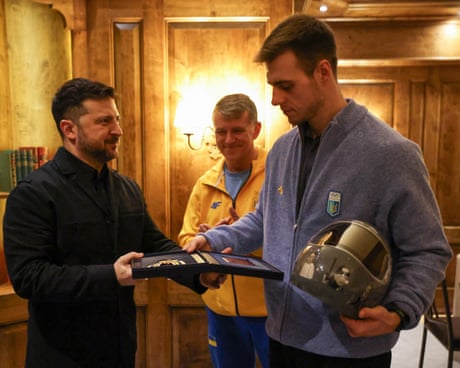
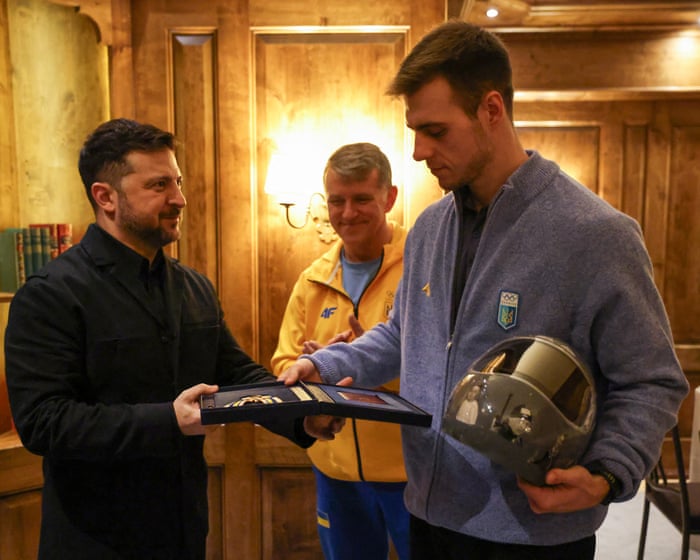
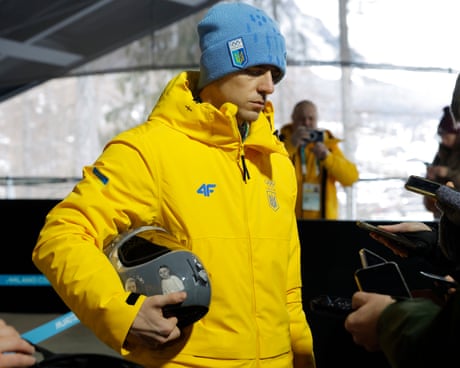
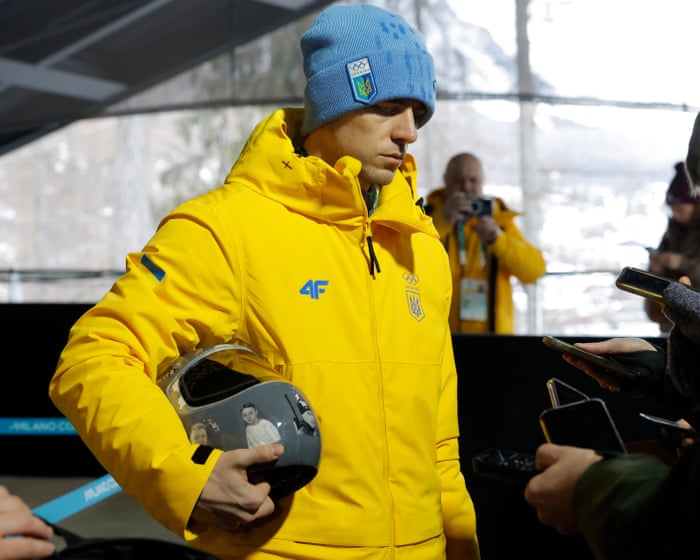
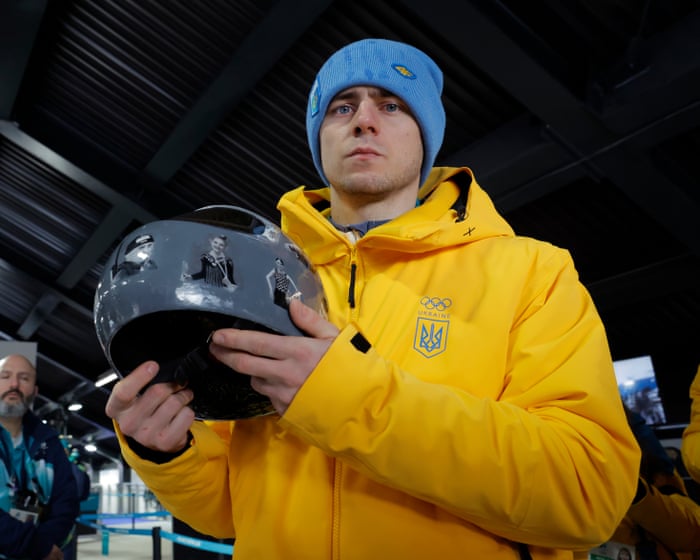
The Ukrainian skeleton racer Vladyslav Heraskevych has been awarded the order of freedom by president Volodymyr Zelenskyy following the controversial decision to bar him from the Winter Olympics.

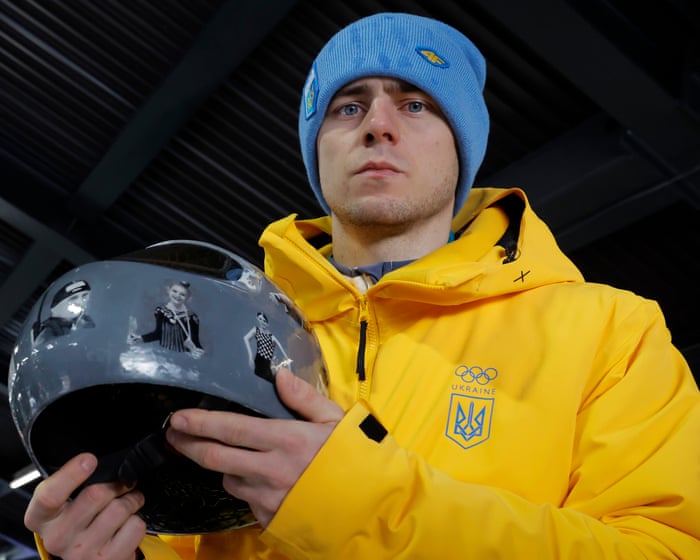
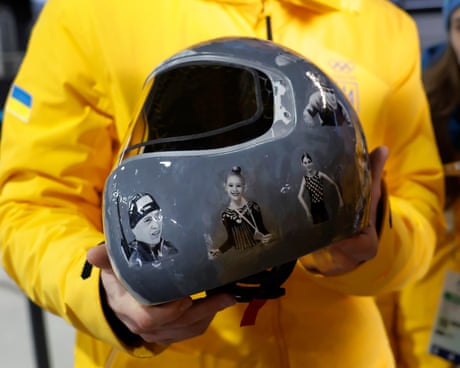
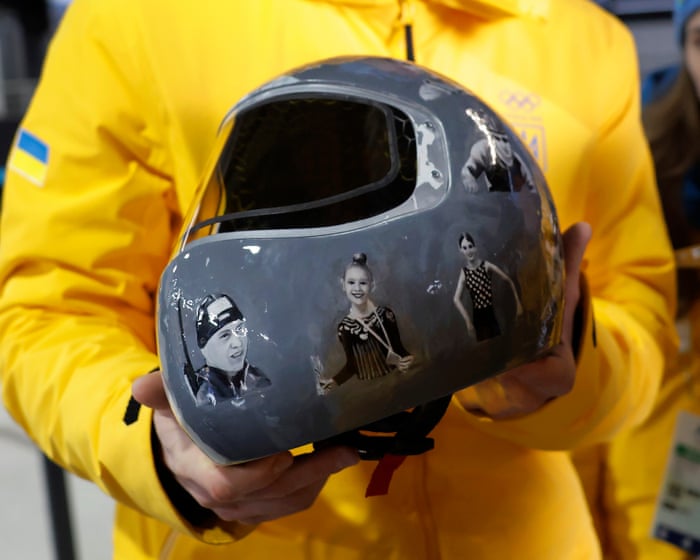
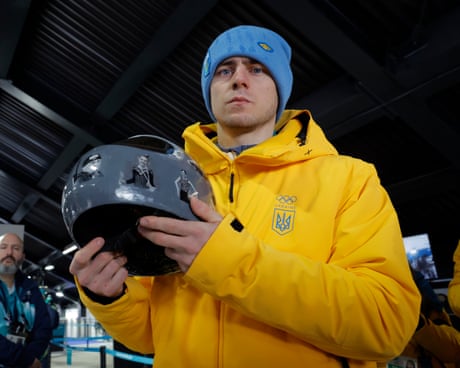
Heraskevych flew to Munich after losing his appeal against his exclusion at the Milano Cortina Games for wanting to wear a “helmet of memory’ in competition. “Remembrance is not a violation,” Zelenskyy told him. “Ukraine will always have champions and Olympians.

Continue reading...

© Photograph: Alexandra Beier/AFP/Getty Images

© Photograph: Alexandra Beier/AFP/Getty Images

© Photograph: Alexandra Beier/AFP/Getty Images

  •  

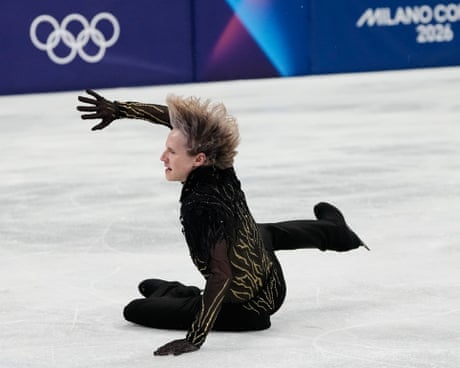
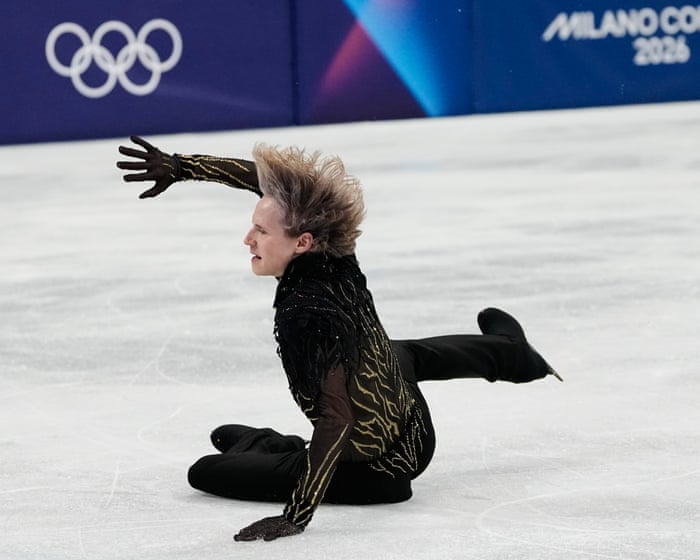
Fall of the Quad God: Ilia Malinin finds he is all too human under the Olympic spotlight

The brilliant American was expected to glide to a gold medal on Friday. It was tough to watch such a gifted athlete discover the ruthlessness of his sport

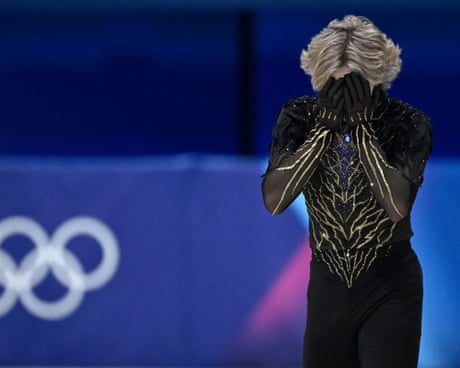
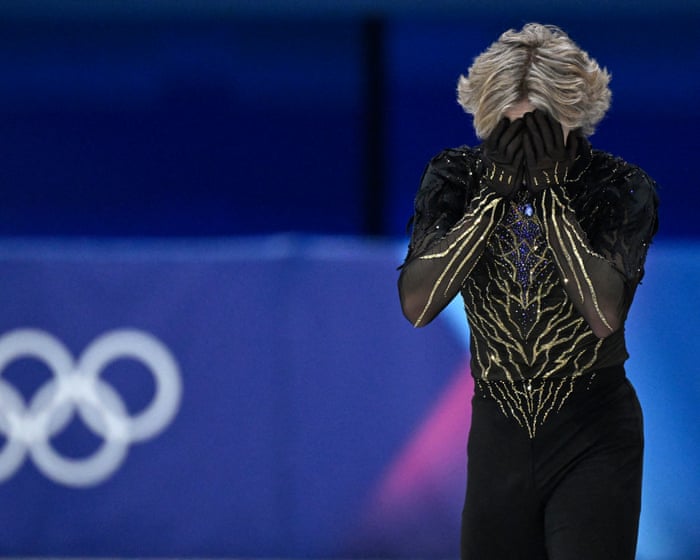
By the time Ilia Malinin reached the closing stretch of his Olympic free skate, the outcome was no longer really the story. The story was the expression on his face – not panic, not shock, but the dawning realization that a destiny he had controlled for nearly three years had slipped beyond his reach in the blinding span of four and a half catastrophic minutes.

For the rising generation of men’s skaters, the 21-year-old Malinin has existed less as a rival than as a moving technical horizon. The Quad God. The skater who built programs around jumps others still treated as theory, who pushed the sport into something closer to applied physics. Much like Simone Biles, who took in Friday’s contest from the arena’s VIP seats, his only competition was himself.

Continue reading...

© Photograph: Natacha Pisarenko/AP

© Photograph: Natacha Pisarenko/AP

© Photograph: Natacha Pisarenko/AP

  •  

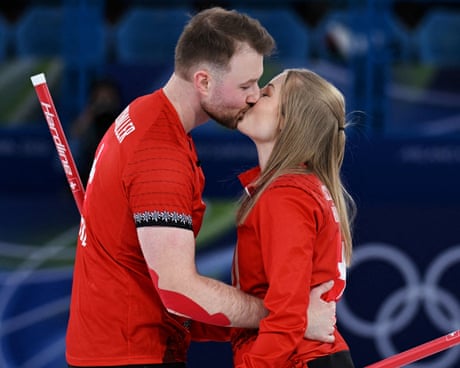
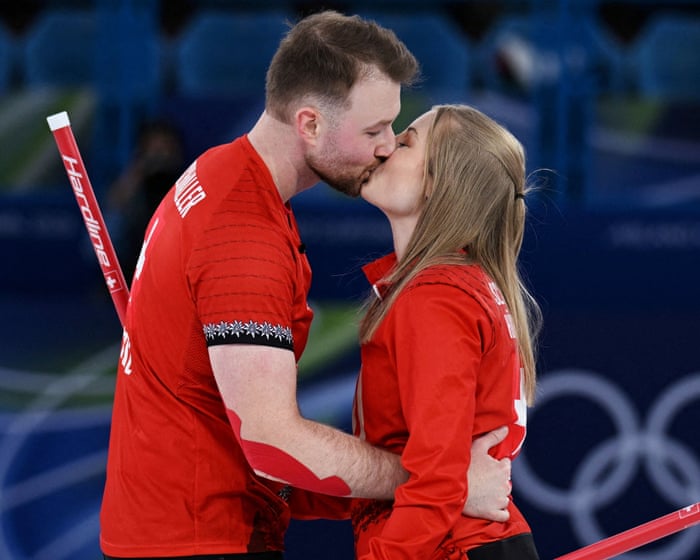
Sweeping romance: the married couples of Cortina’s Winter Olympic curling rink

Partners on and off the ice talk about the tensions and joys of competing alongside the ones they love at the Winter Olympics

Every Olympics has its love stories. Usually, they’re all about the quantities of free prophylactics being handed out in the athletes’ village (this year’s edition has an image of the Olympic mascots, the friendly stoats Milo and Tina, on the box). But you have to look a little harder to find the great romances of these Games, which have been on the ice rink in Cortina, where, for the large part of the past week, a trio of married couples were competing against each other in the mixed doubles curling. It is essentially a competitive lovers’ stress test held in front of a live audience.

It’s a peculiarity of the Winter Olympics that there are so many partners partnering with each other in different events. There were two in the ice dancing: the US pair of Madison Chock and Evan Bates won silver and the Italians Marco Fabbri and Charlène Guignard came fourth. Which is all very well. But if you want to see a relationship you can actually relate to, curling was the sport to watch. It’s as if they made an Olympic event out of sharing the front of the car with your partner on a road trip with a map and no satnav.

Continue reading...

© Photograph: Jennifer Lorenzini/Reuters

© Photograph: Jennifer Lorenzini/Reuters

© Photograph: Jennifer Lorenzini/Reuters

  •  

Ilia Malinin falls twice as Kazakhstan’s Shaidorov stuns field for Olympic gold

  • Heavy US favorite falls twice in the free skate

  • Kazakhstan’s Mikhail Shaidorov claims shock title

For nearly two years, Ilia Malinin has made men’s figure skating feel predictable in the most spectacular of ways. On Friday night on the southern outskirts of Milan, the Olympic Games reminded the sport, and perhaps Malinin himself, that predictability is never guaranteed on its biggest stage.

The overwhelming favorite entering the free skate, the 21-year-old American instead saw the Olympic title slip away to Kazakhstan’s Mikhail Shaidorov after an error-strewn performance that will go down among the biggest shocks in figure skating history.

Continue reading...

© Photograph: Wang Zhao/AFP/Getty Images

© Photograph: Wang Zhao/AFP/Getty Images

© Photograph: Wang Zhao/AFP/Getty Images

  •  

Matt Weston slides to skeleton gold as Team GB finally win medal at Winter Olympics

  • Briton triumphs by nearly a second in Milano Cortina

  • First British man to win individual winter gold since 1980

And on the seventh day, Great Britain finally won their first medal of these Olympics. At nine o’clock on Friday night Matt Weston, the man his teammates call “Captain 110%”, became the first British man ever to win the gold in the men’s skeleton, after four faultless races across the two days of competition.

The 28-year-old broke the track record at the Cortina Sliding Centre four times in succession, and won in a combined time of 3min 43.33sec, which was almost a full second ahead of the runner-up, Germany’s Axel Jungk. “I’ve been fortunate enough to win world championships, and European championships and other things, and this blows them all out the water,” Weston said. “I almost feel numb. I keep touching this medal to make sure it is real.”

Continue reading...

© Photograph: Tom Jenkins/The Guardian

© Photograph: Tom Jenkins/The Guardian

© Photograph: Tom Jenkins/The Guardian

  •  

Winter Olympics: Ilia Malinin goes for second figure-skating gold – live

Slovakia’s Adam Hagara attempts a quad toeloop, but it’s obvious as he takes off that he won’t be able to land it. He rebounds with a triple axel-double toeloop, but he falls on a triple axel.

Can he land a planned triple-double axel-double axel? Indeed he can. It doesn’t seem too fluid but gets a positive grade of execution, as does a triple flip. But he drops a triple loop to a double loop.

Continue reading...

© Photograph: Elsa/Getty Images

© Photograph: Elsa/Getty Images

© Photograph: Elsa/Getty Images

  •  

From vertigo to Van Gogh: 10 things you may have missed at the Winter Olympics

Benoît Richaud is working on the ice with 13 countries, with uniform changes to match, and Korean skiers are having nightmares on wax

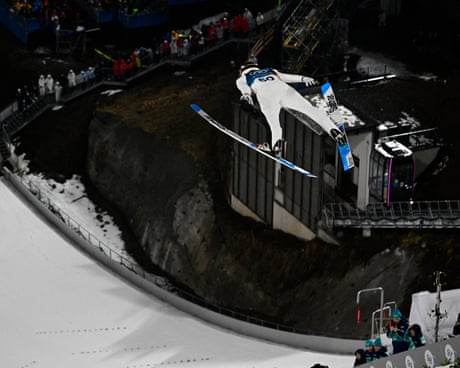
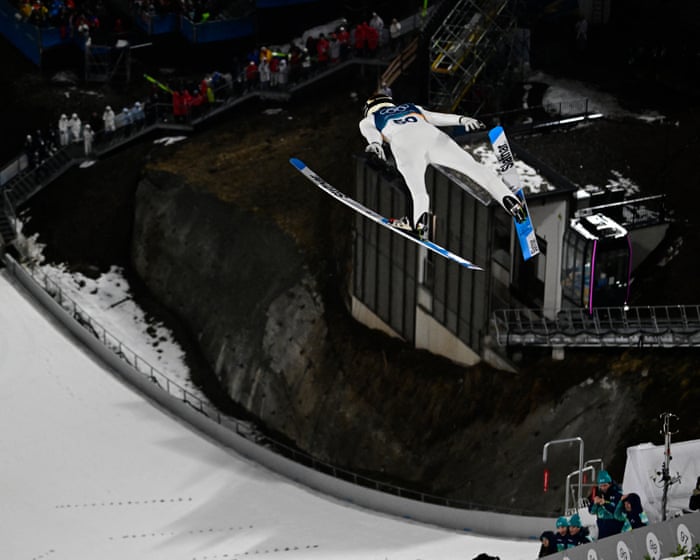
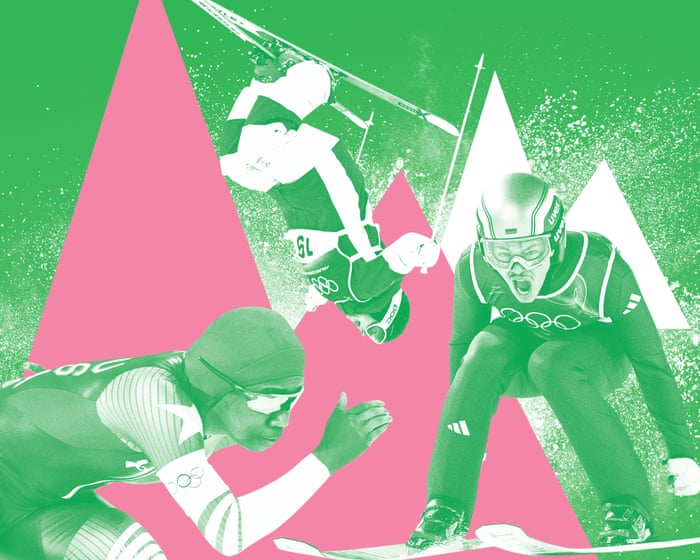
Domen Prevc set a men’s ski jump world record of 254.5m on the Planica flying hill in Slovenia last March, known for its steepness and long jumps. Germany’s Philipp Raimund sat it out – he suffers from vertigo. “From time to time, I have the issue that my body is reacting without me controlling it,” he said. “It’s like I am just observing myself while something has a tight grip on me.”

Continue reading...

© Composite: Guardian Design; EPA; AFP/Getty Images; Getty Images

© Composite: Guardian Design; EPA; AFP/Getty Images; Getty Images

© Composite: Guardian Design; EPA; AFP/Getty Images; Getty Images

  •  

Skating body defends Olympic judging after French duo’s ice dance gold

  • French judge marked French duo higher than US pair

  • Petition calling for probe approaches 15,000 signatures

  • ISU says it has ‘full confidence’ in scoring system

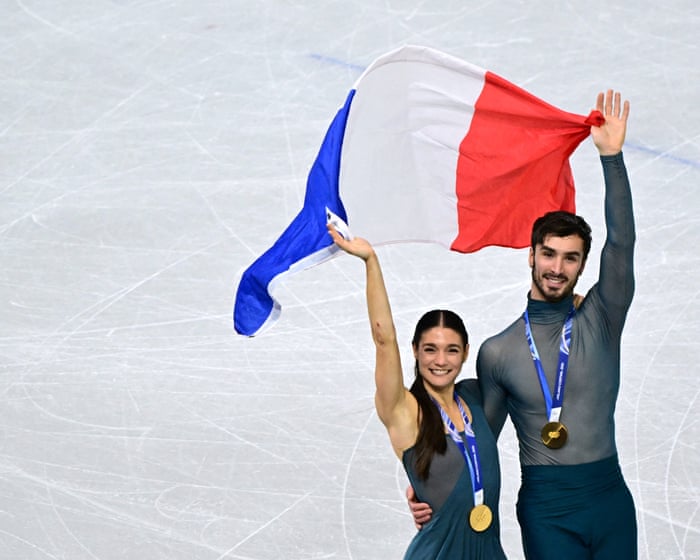
The International Skating Union (ISU) has defended the integrity of Olympic ice dance judging after a single judge’s scoring gap became central to the outcome of the gold medal contest, insisting variations across panels are expected and that safeguards exist to prevent bias from determining results.

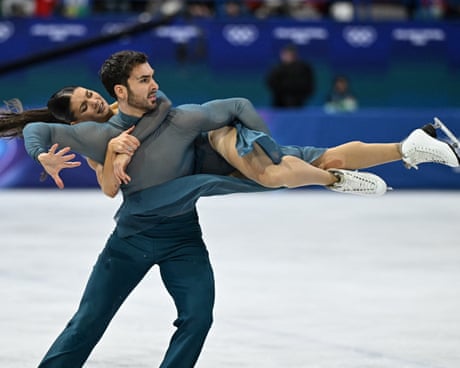
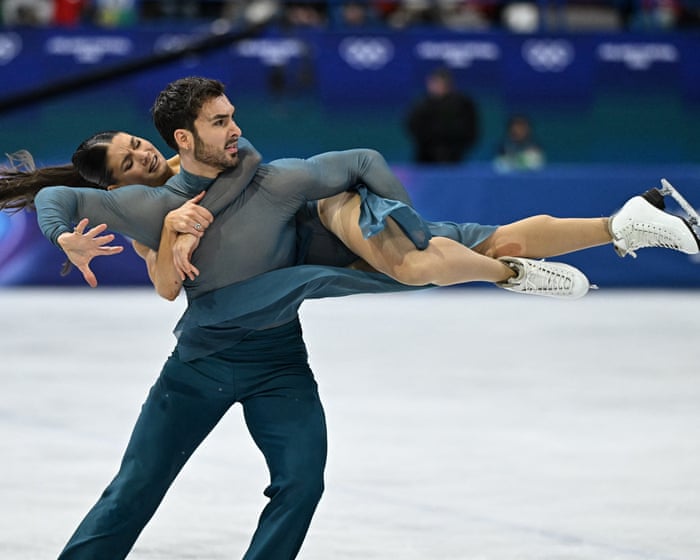
In a statement released on Friday, the governing body rejected suggestions that the judging system failed during the competition, in which France’s Laurence Fournier Beaudry and Guillaume Cizeron narrowly defeated Americans Madison Chock and Evan Bates in one of the closest and most disputed finishes of the Milano Cortina Games.

Continue reading...

© Photograph: Gabriel Bouys/AFP/Getty Images

© Photograph: Gabriel Bouys/AFP/Getty Images

© Photograph: Gabriel Bouys/AFP/Getty Images

  •  

Charlotte Bankes rues cruel nature of snowboard cross as dreams dashed again

  • Briton finishes ninth after quarter-final defeat

  • ‘Sorry, I was hoping to put on a better show’

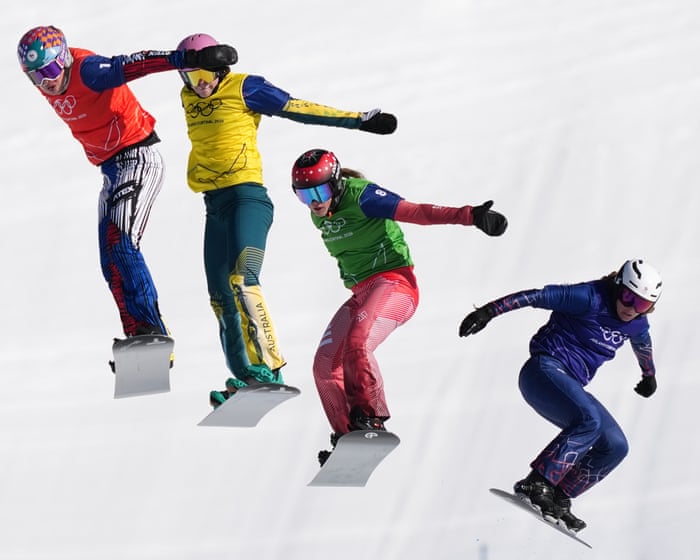
Few sports at the Winter Olympics are more thrilling or turbulent than snowboard cross. The idea is simple. Four competitors, a steep mountain, ramps, and whoever gets down quickest to the bottom wins. But jeopardy lurks on every sharp turn and steep bank. And calamities are an unfortunate fact of life.

Team GB’s Charlotte Bankes knows this better than anyone. Four years ago in Beijing she arrived as a gold medal favourite only to leave in tears after finishing ninth. On the brightest of sunny days history repeated itself. Hopes. Dreams. Expectations. Another ninth-place finish. And more tears.

Continue reading...

© Photograph: Julia Demaree Nikhinson/AP

© Photograph: Julia Demaree Nikhinson/AP

© Photograph: Julia Demaree Nikhinson/AP

  •  

Winter Olympics 2026: Weston chases skeleton gold for GB, Heraskevych’s appeal rejected by Cas – live

Medal table | Live scores and schedule | Results | Briefing
Follow us over on Bluesky | Get in touch: mail James

Italian biathlete Rebecca Passler will be able to participate in the Winter Olympics despite failing a doping test, the Italian skiing federation (Fisi) said on Friday. Italy’s anti-doping body (Nado) upheld her appeal against a provisional suspension that followed a positive test for the banned substance Letrozole on 26 January.

Nado’s Court of Appeal acknowledged the possibility of unintentional ingestion or unknowing contamination of the substance. “Passler will rejoin her teammates starting Monday, February 16, when she will be available to the coaching staff for the subsequent competitions on the Olympic programme,” Fisi said in a statement.

Continue reading...

© Photograph: Tom Jenkins/The Guardian

© Photograph: Tom Jenkins/The Guardian

© Photograph: Tom Jenkins/The Guardian

  •  

Dolomites diary: lederhosen, late buses and the anatomy of an Olympic ski jumper

Covering the first week of events at Milano Cortina 2026 has been enlightening but not straightforward

It’s a seven-hour trip from one end of the opening ceremony to the other. I leave Milan at midday and arrive in Cortina just as the athletes are making their parade around the town square. Cortina’s a one-street town, and it’s been closed down, but everyone’s hanging off the balconies. I see three men in lederhosen, five in identical Wayne Gretzky jerseys, and more people than I can count in luxurious furs. The first person I talk to is a member of the Qatari police force, who is working here as part of a security agreement between the two countries. This is the sixth Olympics I’ve worked on, but the others all took place in summer. I’m pleased to see he looks even more out of place than me.

Continue reading...

© Photograph: Tom Jenkins/The Guardian

© Photograph: Tom Jenkins/The Guardian

© Photograph: Tom Jenkins/The Guardian

  •  

Love in a cold climate: Winter Olympic village runs out of condoms after three days

  • Athletes in Italy have been ‘promised more will arrive’

  • Free condoms have been provided since 1988 Olympics

Free condoms for competitors at the Winter Olympics have run out within a record-breaking three days, according to La Stampa.

“The supplies ran out in just three days,” an anonymous athlete told the Italian newspaper. “They promised us more will arrive, but who knows when.”

Continue reading...

© Photograph: fabioberti.it/Alamy

© Photograph: fabioberti.it/Alamy

© Photograph: fabioberti.it/Alamy

  •  

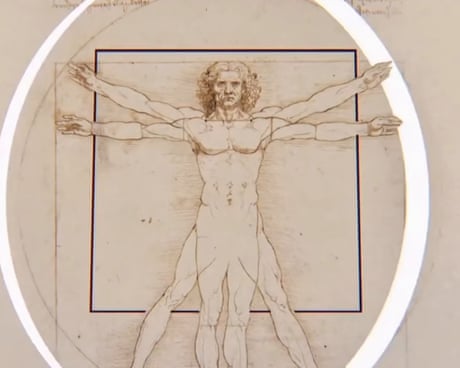
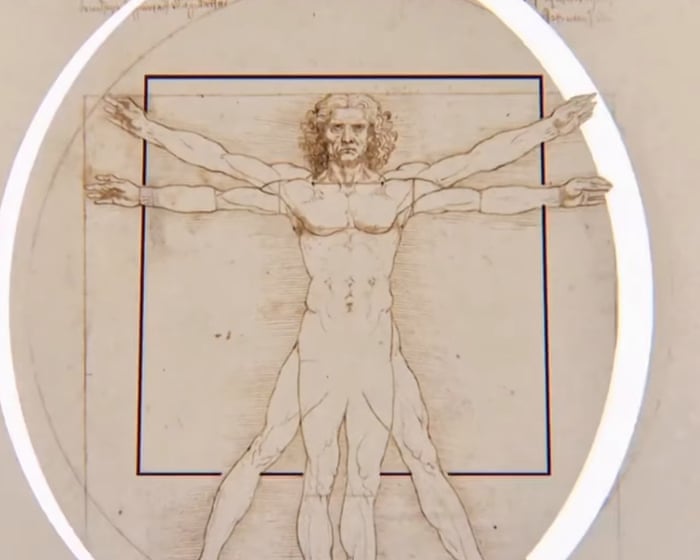
Penisgate 2: Italian Olympic coverage takes Leonardo da Vinci’s genitals away

State broadcaster accused of censorship over opening titles that use altered version of Vitruvian Man, with organs removed

Italy’s state broadcaster, Rai, has been accused of censorship after using an image of Leonardo da Vinci’s Vitruvian Man with the genitals missing in the opening credits for its Winter Olympics coverage.

The image of the 500-year-old drawing appears at the start of the clip before transforming into the bodies of ice skaters, skiers and other winter sports athletes.

Continue reading...

© Photograph: YouTube

© Photograph: YouTube

© Photograph: YouTube

  •  

Olympic chiefs have got it badly wrong over Heraskevych ban and owe him an apology | Lizzy Yarnold

As athletes we try to focus on our event and the task at hand, but our lives do not take place in a vacuum

I’m deeply saddened by the IOC banning the skeleton athlete Vladyslav Heraskevych from the Winter Olympics. His helmet depicting images of athletes and children who died in Russia’s invasion of Ukraine, some who he knew personally, was a human display of remembrance. The IOC’s response was not an appropriate one.

One only needed to look at the image of Heraskevych’s father when he was told the news of his son’s disqualification – doubled over with his head in his hands – to know the emotional toll. I cannot imagine what they are experiencing but, as both a former athlete and just a fan watching on, I also feel emotional about it and cried when Vlad and his dad messaged me on social media to say thank you for my messages of support.

Continue reading...

© Photograph: Tom Jenkins/The Guardian

© Photograph: Tom Jenkins/The Guardian

© Photograph: Tom Jenkins/The Guardian

  •  

‘A great wee place’: the small Scottish factory crafting Olympic curling stones

All stones in Cortina are made from granite found on tiny island in Firth of Clyde and crafted in East Ayrshire

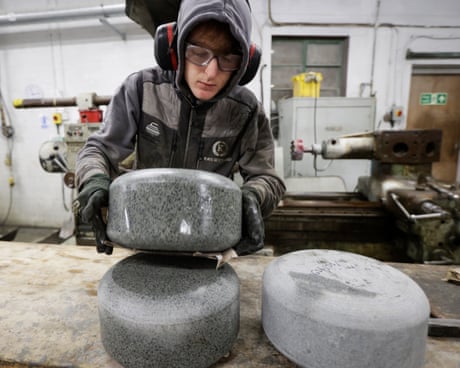
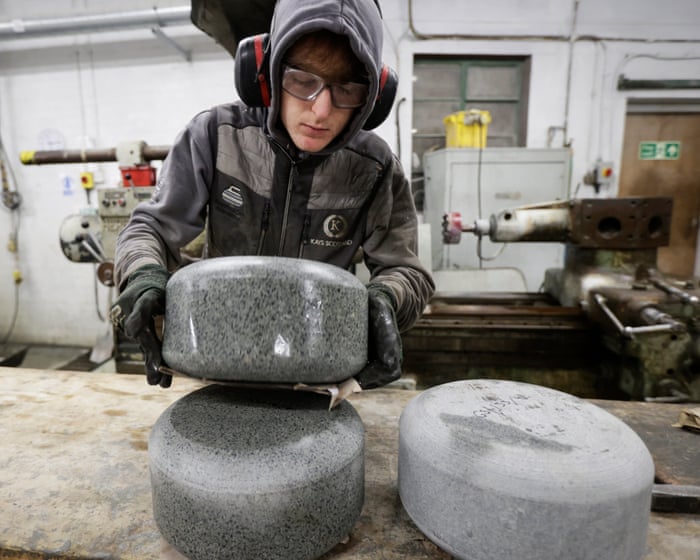
“It takes 60m years and about six hours to make a curling stone,” shouts Ricky English above the whine of the lathes. The operations manager at Kays Scotland is surrounded by wheels of ancient granite in varying states of refinement.

It is a small business with a big responsibility: the only factory in the world to supply the Winter Olympics with curling stones. Competitors don’t travel with their own stones, which weigh about 18kg each, and with 16 required for a game. Instead, this year, 132 stones were crafted in the East Ayrshire town of Mauchline and shipped to northern Italy.

Continue reading...

© Photograph: Murdo MacLeod/The Guardian

© Photograph: Murdo MacLeod/The Guardian

© Photograph: Murdo MacLeod/The Guardian

  •  

Winter Olympics briefing: Heraskevych’s helmet dispute raises tough questions

The controversy over the IOC’s decision to bar the Ukrainian from competing has cast a long shadow over the Games

The Winter Olympics have been presented as a stage for unity – a place where nations set aside conflict, athletes chase excellence, and the world gathers in a shared celebration of human potential. Yet Thursday was shadowed by controversy for the International Olympic Committee that raise difficult questions about neutrality and the limits of political expression in sport.

The Ukrainian skeleton racer Vladyslav Heraskevych was barred from competing after he insisted on wearing what he called a “helmet of memory”, created to honour Ukrainian athletes killed during Russia’s war against his country. He was informed only 21 minutes before racing by the IOC president, Kirsty Coventry, who spoke to the media in tears after she could not persuade him to change his mind.

Continue reading...

© Photograph: Tom Jenkins/The Guardian

© Photograph: Tom Jenkins/The Guardian

© Photograph: Tom Jenkins/The Guardian

  •  

The Winter Olympics is a dazzling spectacle – but on the ground in Italy the mood is darker | Jamie Mackay

The Games could have showcased Milan’s abundant culture and architecture. Instead it has filled the city with gaudy pavilions and gentrification

On a bad day, Milan can feel less like a city than an open-air shopping mall. Since winning the bid to host the Winter Olympics in 2019, the urban landscape has been flattened into construction dust and swamped in corporate messaging. What started as a logo on a tram has gradually evolved into a feverish, full-scale takeover of the public realm. From Piazza del Duomo to the Sforzesco Castle, the city’s most popular spaces have been appropriated by gaudy pavilions, turning Milan into a bizarre spectacle staffed by dancing mascots.

Last Friday, I sat down with friends to watch the opening ceremony, broadcast live from the San Siro, the much-loved brutalist football stadium that has been slated for demolition The reaction in the room was telling. On the one hand, after so much buildup, most people were excited the big moment had finally arrived. But as the proceedings went on and the parade of familiar faces gave way to the peculiar sight of bobble-headed puppets of Rossini, Puccini and Verdi dancing to Italo disco hit Vamos a la playa, the melancholy kicked in. Was this really what these years of disruption had been for? Was this strange, kitsch pop concert worth all the political repression, the public inconvenience, the relentless marketing, the unspecified millions of euros in cost?

Jamie Mackay is a writer and translator based in Florence

Continue reading...

© Photograph: Sarah Stier/Getty Images

© Photograph: Sarah Stier/Getty Images

© Photograph: Sarah Stier/Getty Images

  •  

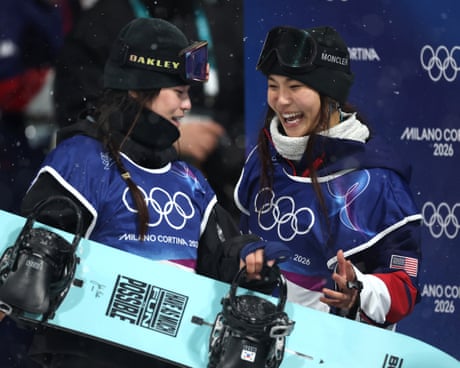
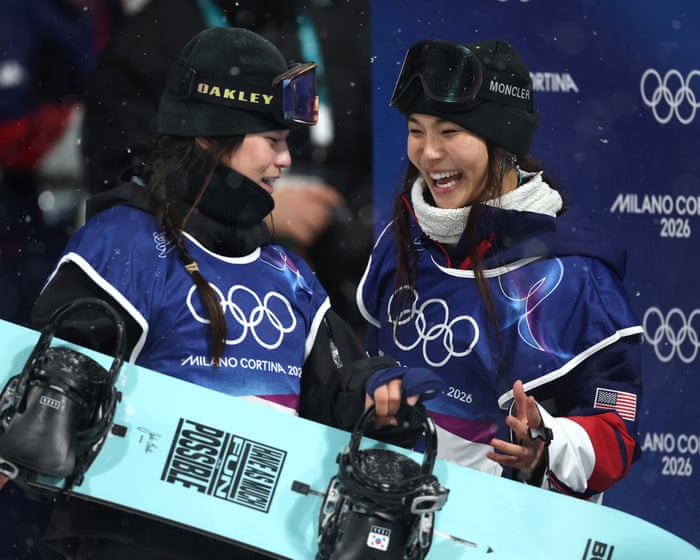
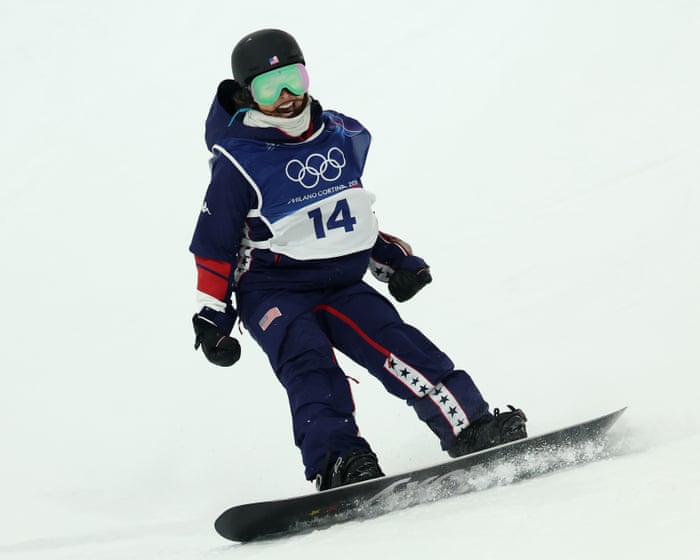
Chloe Kim thwarted in bid for Olympic halfpipe three-peat by South Korea’s Choi Gaon

  • Choi wins snowboard halfpipe title with third run

  • American star takes silver behind strong first round

The snowfall coming down on Livigno Snow Park on Thursday night helped produce one of the bigger Olympic upsets in snowboard history, as Chloe Kim’s bid to become the first rider to win three consecutive Olympic halfpipe gold medals fell just short.

Kim finished with a best score of 88.00 from her opening run, settling for silver behind surprise winner Choi Gaon of South Korea, whose heroic third run after an early fall earned 90.25 and rewrote the Olympic record books. Japan’s Mitsuki Ono took bronze with 85.00.

Continue reading...

© Photograph: Patrick Smith/Getty Images

© Photograph: Patrick Smith/Getty Images

© Photograph: Patrick Smith/Getty Images

  •  

Winter Olympics: Chloe Kim goes for gold in women’s snowboard halfpipe – live

Japan’s Sena Tomita is the defending bronze medalist. She also runs into difficulty and will not be counting this run.

23.50

Continue reading...

© Photograph: Michael Reaves/Getty Images

© Photograph: Michael Reaves/Getty Images

© Photograph: Michael Reaves/Getty Images

  •  

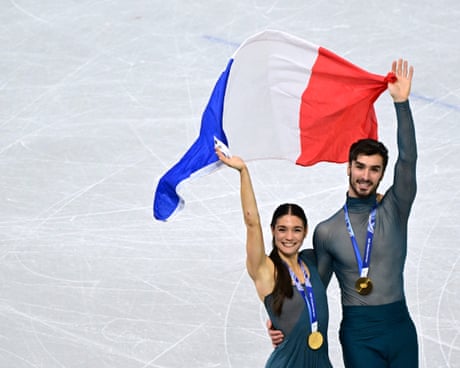
The scandals clouding ‘sinister’ French ice dancers who beat Chock and Bates for gold

Fournier Beaudry and Cizeron’s Olympic competition is set against backdrop of assault and abuse allegations involving their former partners

The American duo of Madison Chock and Evan Bates, the reigning three-time world champions contentiously missed out on Olympic ice dance gold on Wednesday despite a flawless skate. But the controversy surrounding the event is not merely a debate over artistic and technical merits.

Gold went by a narrow margin to the French duo of Laurence Fournier Beaudry and Guillaume Cizeron. It was a stunning achievement for a partnership that is less than a year old. But the union was forged after the fallout from sexual assault allegations levelled at Fournier Beaudry’s boyfriend and former ice dance partner, while Cizeron is the subject of allegations of abusive conduct from his erstwhile skating partner.

Continue reading...

© Photograph: Julien de Rosa/AFP/Getty Images

© Photograph: Julien de Rosa/AFP/Getty Images

© Photograph: Julien de Rosa/AFP/Getty Images

  •  

Heraskevych’s ‘helmet of memory’ forces IOC on to PR back foot at Winter Olympics | Sean Ingle

Skeleton racer sacrificed his dream of winning a medal and succeeded in putting the horrors of the war in Ukraine back on the agenda

To be an Olympic-class skeleton racer requires extraordinary guts and impeccable nerve, as the corners loom and then whoosh past at frightening speed. So did anybody really believe that Ukraine’s Vladyslav Heraskevych would lose his when the world’s eyes were upon him?

Not the International Olympic Committee, who flipped between threats of expulsion and sweet talk over the past fortnight, without coming close to changing his mind. And certainly not those of us who have spoken and messaged Heraskevych, and found a man utterly prepared to sacrifice his dream of winning a Winter Olympic medal for a higher purpose.

Continue reading...

© Photograph: Tom Jenkins/The Guardian

© Photograph: Tom Jenkins/The Guardian

© Photograph: Tom Jenkins/The Guardian

  •  

Olympic champion Breezy Johnson crashes out of super-G then gets engaged at end of course

  • American clips gate but given welcome surprise

  • US teammates witness event at end of course

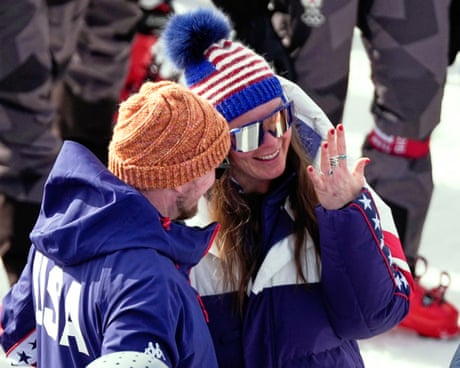
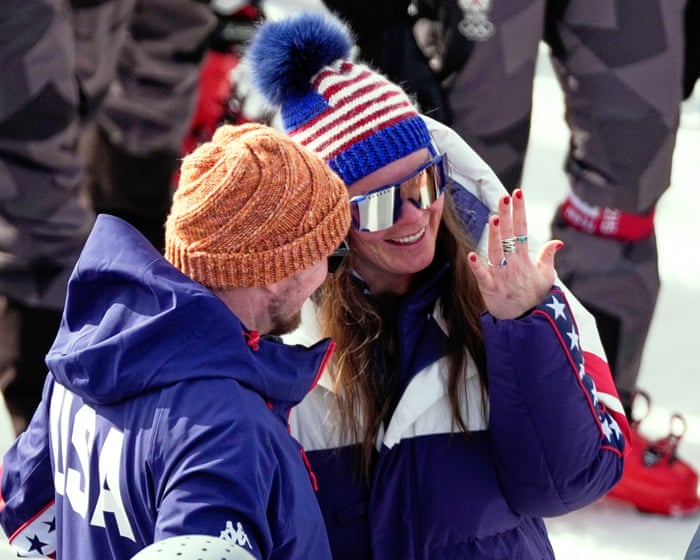
Olympic downhill champion Breezy Johnson didn’t add to her medal haul during the women’s super-G on Thursday, but she left Tofane with something precious anyway: an engagement ring.

Johnson, who won gold on Sunday in the downhill, crashed out of the super-G after she clipped a gate with one of her poles, sending her tumbling into the safety fence. However, there was some consolation: her boyfriend, Connor Watkins, proposed to her near the finish line. Surrounded by members of the US Ski Team, Johnson said “Yes!” and the two embraced.

Continue reading...

© Photograph: Andy Wong/AP

© Photograph: Andy Wong/AP

© Photograph: Andy Wong/AP

  •  

Team GB’s Matt Weston leads golden charge as skeleton rivals unite behind banned Ukrainian

  • British racer poised for podium after opening rounds

  • Sledder turned in back-to-back Cortina track records

This was the race that will always be remembered for the one man who didn’t make the start. Exactly 21 minutes before the men’s skeleton was scheduled to begin the International Olympic Committee put out its press release announcing that it had revoked the Olympic accreditation of the Ukrainian slider Vladyslav Heraskevych after he refused to compete without his helmet decorated with the images of his fellow athletes who have been killed during the Russian invasion of his country. It was so late the two British competitors, Matt Weston and Marcus Wyatt said they didn’t even find out about it until after they had finished.

By then, the news had already spread around the world, and the one Ukrainian journalist present, Stanislav Oroshkevych, from tribuna.com, found he was suddenly surrounded by colleagues from Germany, Britain, Japan, and a dozen other countries, all asking him for public comment on what was going on. Soon, the Ukrainian press attache arrived to save him and announced that Heraskevych would come to give an impromptu press conference himself. The photos of Heraskevych standing behind the barriers near the finish, his helmet tucked under his arm, addressing a crowd of 30 journalists, will be one of the iconic images of these Olympics.

Continue reading...

© Photograph: Tom Jenkins/The Guardian

© Photograph: Tom Jenkins/The Guardian

© Photograph: Tom Jenkins/The Guardian

  •  

Italian renaissance: does ‘home-ice’ give Winter Olympic hosts a competitive advantage?

With 13 medals through the first five days – surpassing their total at Turin 2006 – the Italians are the surprise stars of these Games. What’s different this time?

From Milan to Cortina and beyond, the star of the first Olympic weekend in Italy was … Italy.

The electric celebrations started Saturday in Bormio, close to the Swiss border, with a silver and bronze in the men’s downhill. They echoed a few hours later in Milan, where Francesca Lollobrigida set an Olympic record in women’s 3,000m speed skating for the host country’s first gold.

Continue reading...

© Photograph: Dean Mouhtaropoulos/Getty Images

© Photograph: Dean Mouhtaropoulos/Getty Images

© Photograph: Dean Mouhtaropoulos/Getty Images

  •  

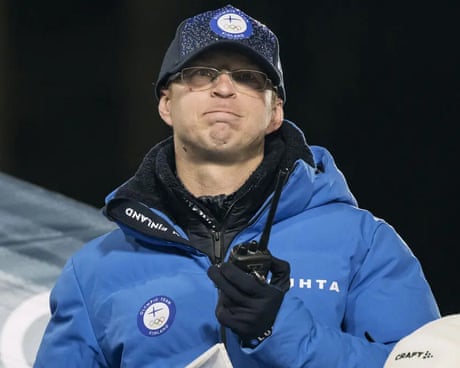
Finnish ski jump coach sent home from Winter Olympics over alcohol scandal

  • Igor Medved sent home by country’s Olympic committee

  • ‘Alcohol was consumed in violation of our team rules’

Finland’s ski jumping head coach, Igor Medved, has apologised after being sent home for violating team rules by drinking alcohol at the Winter Olympics.

The news was confirmed by the Finnish Olympic committee, who said that Medved had left Italy due to “alcohol-related issues”.

Continue reading...

© Photograph: Roni Rekomaa/Lehtikuva/TT

© Photograph: Roni Rekomaa/Lehtikuva/TT

© Photograph: Roni Rekomaa/Lehtikuva/TT

  •  

Winter Olympics 2026: Ukrainian athlete kicked out over helmet tribute, Lollobrigida claims dramatic speed skating gold – live

Women’s Super G 11.30am GMT

Men’s moguls 12.15pm GMT

Continue reading...

© Photograph: Tom Jenkins/The Guardian

© Photograph: Tom Jenkins/The Guardian

© Photograph: Tom Jenkins/The Guardian

  •  

Russian Cyberattacks Target Milan-Cortina Winter Olympics Ahead of Opening Ceremony

Russian cyberattacks

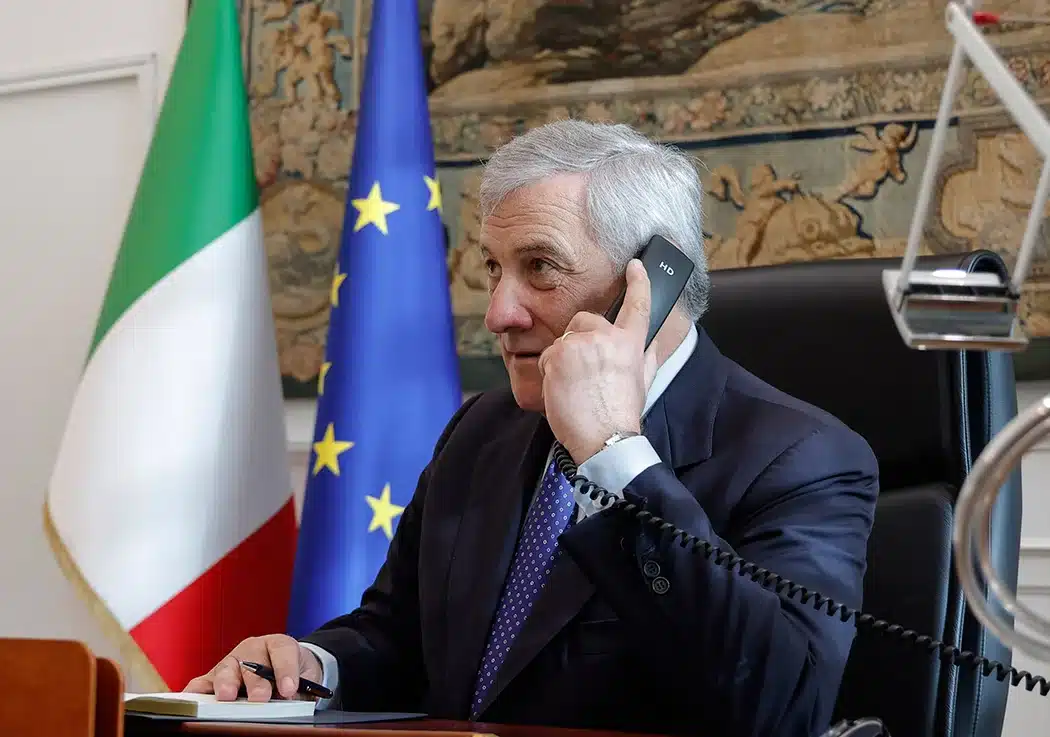
With the Milan-Cortina Winter Olympics just hours from opening, Russian cyberattacks have forced Italian authorities into a full-scale security response that blends digital defence with boots on the ground. Italy confirmed this week that it successfully thwarted a coordinated wave of cyber incidents targeting government infrastructure and Olympic-linked sites, exposing how global sporting events are now frontline targets in geopolitical conflict. Italian Foreign Minister Antonio Tajani revealed that the Russian cyberattacks hit around 120 websites, including Italy’s foreign ministry offices abroad and several Winter Olympics-related locations, such as hotels in Cortina d’Ampezzo. While officials insist the attacks were “effectively neutralised,” the timing sends a clear message: cyber operations are now as much a part of Olympic security planning as physical threats.

Russian Cyberattacks and the Olympics: A Political Signal

According to Tajani, the attacks began with foreign ministry offices, including Italy’s embassy in Washington, before spreading to Olympic-linked infrastructure. A Russian hacker group known as Noname057 claimed responsibility, framing the Russian cyberattacks as retaliation for Italy’s political support for Ukraine. In a statement shared on Telegram, the group warned that Italy’s “pro-Ukrainian course” would be met with DDoS attacks—described provocatively as “missiles”—against Italian websites. While AFP could not independently verify the group’s identity, cybersecurity analysts noted that the tactics and messaging align with previous operations attributed to the same network. DDoS attacks may seem unsophisticated compared to advanced espionage campaigns, but their impact during high-profile events like the Olympics is strategic. Disrupting hotel websites, travel systems, or government portals creates confusion, undermines confidence, and grabs headlines—all without crossing into kinetic conflict.

Digital Threats Meet Physical Security Lockdown

Italy’s response to the Russian cyberattacks has been layered and aggressive. More than 6,000 police officers and nearly 2,000 military personnel have been deployed across Olympic venues stretching from Milan to the Dolomites. Snipers, bomb disposal units, counterterrorism teams, and even skiing police are now part of the security landscape. The defence ministry has added drones, radars, aircraft, and over 170 vehicles, underlining how cyber threats are now treated as triggers for broader security escalation. Milan, hosting the opening ceremony at San Siro stadium, is under particular scrutiny, with global leaders—including US Vice President JD Vance—expected to attend. The International Olympic Committee, however, stuck to its long-standing position. “We don’t comment on security,” IOC communications director Mark Adams said, a response that feels increasingly outdated in an era where Russian cyberattacks are openly claimed and politically framed.

ICE Controversy Adds Fuel to a Tense Atmosphere

Cybersecurity is not the only issue complicating Winter Olympic 2026 preparations. The presence of US Immigration and Customs Enforcement (ICE) officials in Italy has sparked political backlash and public protests. Milan Mayor Giuseppe Sala went as far as to say ICE agents were “not welcome,” calling the agency “a militia that kills.” Italy’s interior minister Matteo Piantedosi pushed back hard, clarifying that ICE’s Homeland Security Investigations unit would operate strictly within US diplomatic missions and have no enforcement powers. Still, the optics matter—especially as Russian cyberattacks amplify fears of foreign interference and sovereignty breaches. Even symbolic gestures have changed. A US hospitality venue originally called “Ice House” was quietly renamed “Winter House,” highlighting how sensitive the political climate has become.

  •