Reading view

COVID-19 cleared the skies but also supercharged methane emissions

In the spring of 2020, as the COVID-19 pandemic brought global industry and travel nearly to a halt, satellite sensors recorded a dramatic plunge in nitrogen dioxide, a byproduct of internal combustion engines and heavy industry. For a moment, the world’s air was cleaner than it had been in decades.

But then something strange started happening: methane, the second most important anthropogenic greenhouse gas after carbon dioxide, was surging. Its growth rate hit 16.2 parts per billion that year, the highest since systematic records began in the early 1980s. A new study published in the journal Science looked at the complex chemistry of the troposphere (the lowest region of the atmosphere) and found that the two changes are likely connected.

An atmospheric cleaner

Since the late 1960s, we knew that atmospheric methane doesn’t just vanish. It is actively scrubbed from the sky by the hydroxyl radical, a highly reactive molecule that breaks down methane, turning it into water vapor and carbon dioxide. “The problem is that the lifetime of the hydroxyl radical is very short—its lifespan is less than a second" says Shushi Peng, a professor at Peking University, China, and a co-author of the study. To do its job as an atmospheric methane clearing agent, a hydroxyl radical must be constantly replenished through a series of chemical reactions triggered by sunlight. The key ingredients in these reactions are nitrogen oxides, the very pollutants that were drastically reduced when cars stayed in garages and factories went dark in 2020.


Read full article

Comments

© Education Images

  •  

Custom machine kept man alive without lungs for 48 hours

Humans can’t live without lungs. And yet for 48 hours, in a surgical suite at Northwestern University, a 33-year-old man lived with an empty cavity in his chest where his lungs used to be. He was kept alive by a custom-engineered artificial device that represented a desperate last-ditch effort by his doctors. The custom hardware solved a physiological puzzle that has made bilateral pneumonectomy, the removal of both lungs, extremely risky before now.

The artificial lung system was built by the team of Ankit Bharat, a surgeon and researcher at Northwestern. It successfully kept a critically ill patient alive long enough to enable a double lung transplant, temporarily replacing his entire pulmonary system with a synthetic surrogate. The system creates a blueprint for saving people previously considered beyond hope by transplant teams.

Melting lungs

The patient, a once-healthy 33-year-old, arrived at the hospital with Influenza B complicated by a secondary, severe infection of Pseudomonas aeruginosa, a bacterium that in this case proved resistant even to carbapenems—our antibiotics of last resort. This combination of infections triggered acute respiratory distress syndrome (ARDS), a condition where the lungs become so inflamed and fluid-filled that oxygen can no longer reach the blood.

Read full article

Comments

© Yuichiro Chino

  •  

Early Universe's supermassive black holes grew in cocoons like butterflies

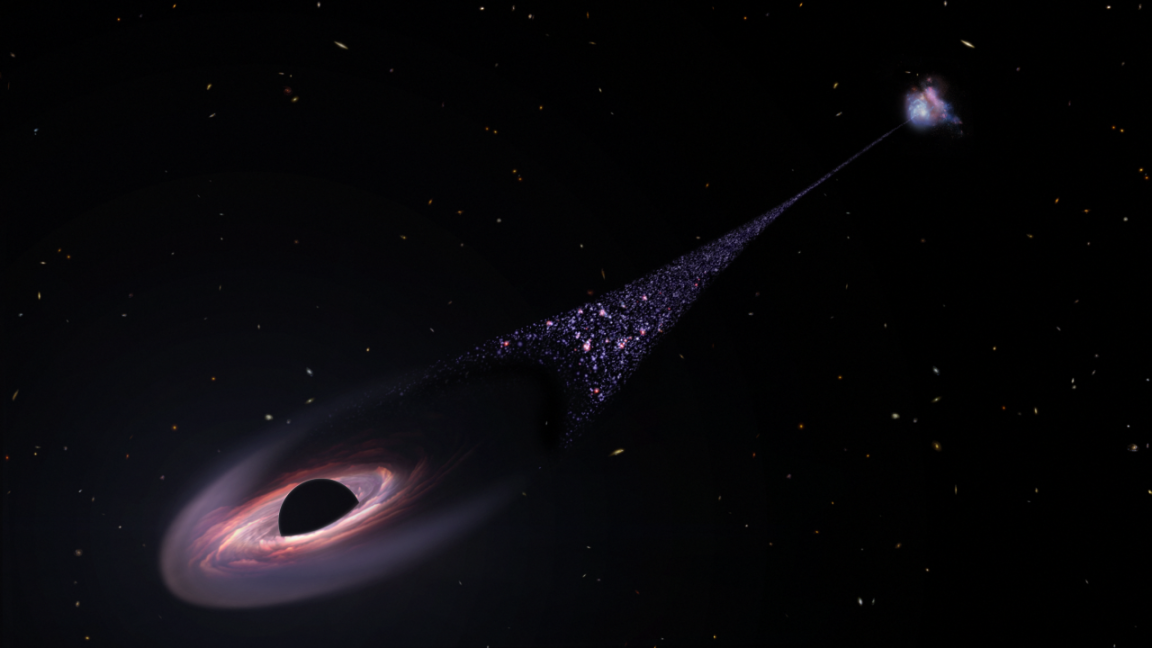
When the James Webb Space Telescope sent its first high-definition infrared images back to Earth, astronomers noticed several tiny, glowing, crimson stains. These objects, quickly named “Little Red Dots,” were too bright to be normal galaxies, and too red to be simple star clusters. They appeared to house supermassive black holes that were far more massive than they had any right to be.

But now a new study published in Nature suggests a solution to the Little Red Dots mystery. Scientists think young supermassive black holes may go through a “cocoon phase,” where they grow surrounded by high-density gas they feed on. These gaseous cocoons are likely what the JWST saw as the Little Red Dots.

The overmassive black hole problem

The first explanation scientists had for the Little Red Dots was that they were compact, distant galaxies, but something felt off about them right from the start. “They were too massive, since we saw they’d have to be completely filled with stars,” says Vadim Rusakov, an astronomer at the University of Manchester and lead author of the study. “They would need to produce stars at 100 percent efficiency, and that’s not what we’re used to seeing. Galaxies cannot produce stars at more than 20 percent efficiency, at least that’s what our current knowledge is.”

Read full article

Comments

© NASA, ESA, Leah Hustak

  •  

The origin story of syphilis goes back far longer than we thought

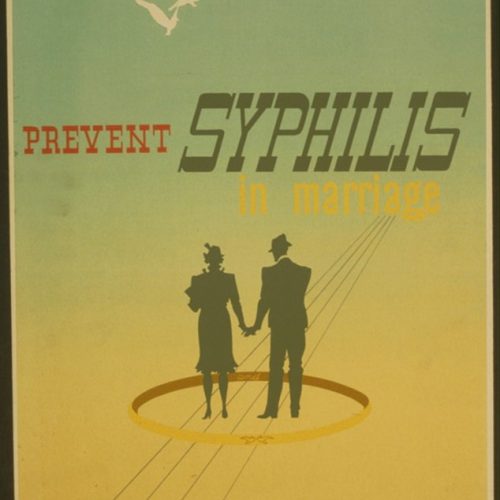
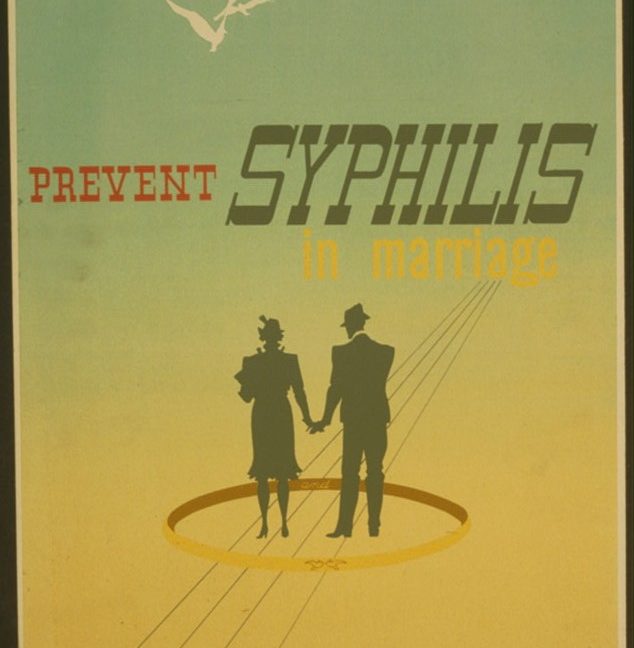
When King Charles VIII of France occupied Naples in 1495, his army of nearly 20,000 mercenaries became the ground zero of the “Great Pox,” the first massive venereal syphilis pandemic in Europe, which went on to cause up to 5 million deaths. For a long time, the siege of Naples was considered the first time syphilis entered European accounts and culture. “But the evolutionary history of Treponema pallidum, the lineage of bacteria including the one that causes syphilis, goes way deeper in time,” says Elizabeth Nelson, an anthropologist at Southern Methodist University.

Nelson and her colleagues found a 5,500-year-old Treponema pallidum genome in an individual excavated from a rock shelter in Colombia—a discovery that shows pathogens causing treponemal diseases like syphilis, bejel, or yaws are several millennia older than we thought. And this means we might have been thinking about the origins of syphilis in an entirely wrong way.

The blame game

While the French occupation of Naples did not introduce syphilis to the world, it created the perfect storm that shaped the perception of this disease and its origins for centuries to come. The first ingredient of this storm was the French army and its leader. Charles VIII invaded Naples with a vast melting pot of brigands and mercenaries from all over Europe, including the French, Swiss, Poles, and Spaniards. The king himself wasn’t exactly the epitome of morality. Chroniclers like Johannes Burckard noted his “fondness of copulation” and reported that, once he’d been with a woman, he “cared no more about her” and immediately sought another partner—a behavior eagerly mirrored by his soldiers.

Read full article

Comments

© Library of Congress/WPA

  •