Reading view

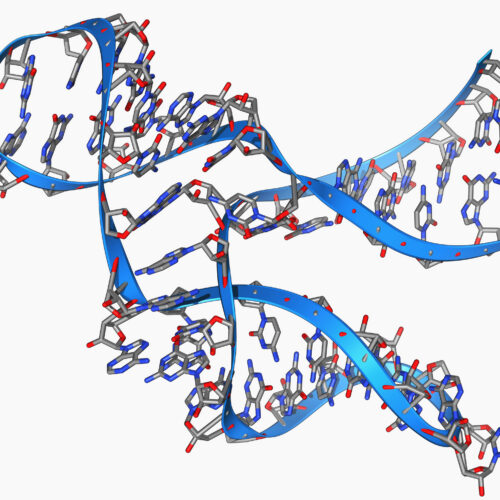
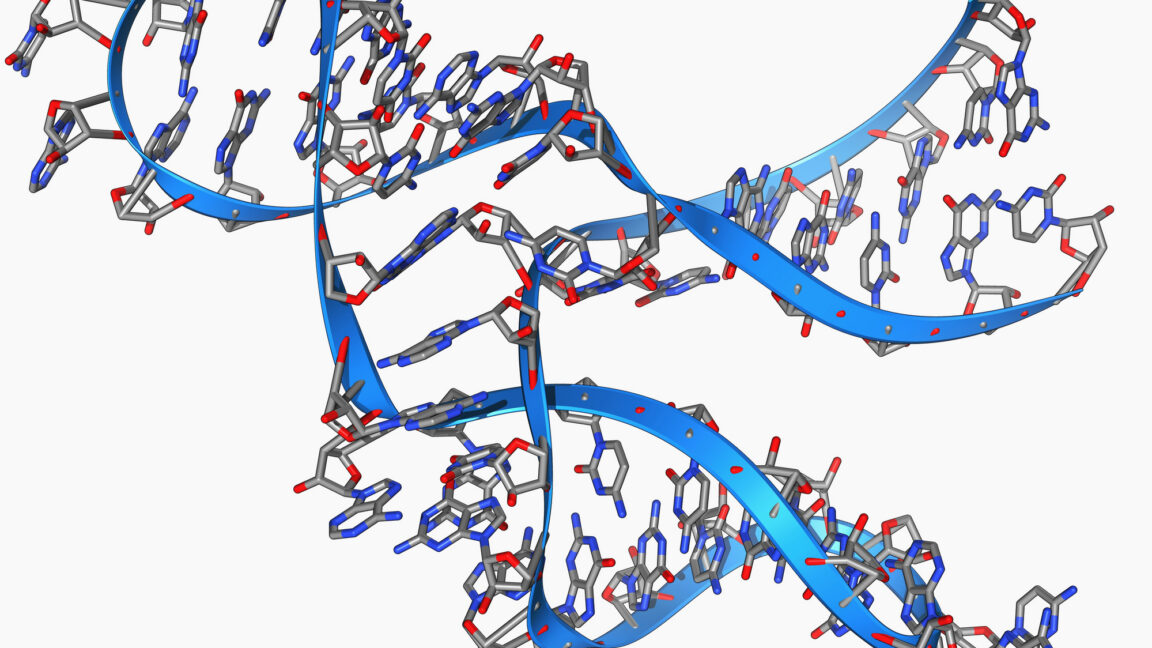
Tiny, 45 base long RNA can make copies of itself

There are plenty of unanswered questions about the origin of life on Earth. But the research community has largely reached consensus that one of the key steps was the emergence of an RNA molecule that could replicate itself. RNA, like its more famous relative DNA, can carry genetic information. But it can also fold up into three-dimensional structures that act as catalysts. These two features have led to the suggestion that early life was protein-free, with RNA handling both heredity and catalyzing a simple metabolism.

For this to work, one of the reactions that the early RNAs would need to catalyze is the copying of RNA molecules, without which any sort of heritability would be impossible. While we've found a number of catalytic RNAs that can copy other molecules, none have been able to perform a key reaction: making a copy of themselves. Now, however, a team has found an incredibly short piece of RNA—just 45 bases long—that can make a copy of itself.

Finding an RNA polymerase

We have identified a large number of catalytic RNAs (generically called ribozymes, for RNA-based enzymes), and some of them can catalyze reactions involving other RNAs. A handful of these are ligases, which link together two RNA molecules. In some cases, they need these molecules to be held together by a third RNA molecule that base pairs with both of them. We've only identified a few that can act as polymerases, which add RNA bases to a growing molecule, one at a time, with each new addition base pairing with a template molecule.
Read full article

Comments

© Laguna Design

  •  

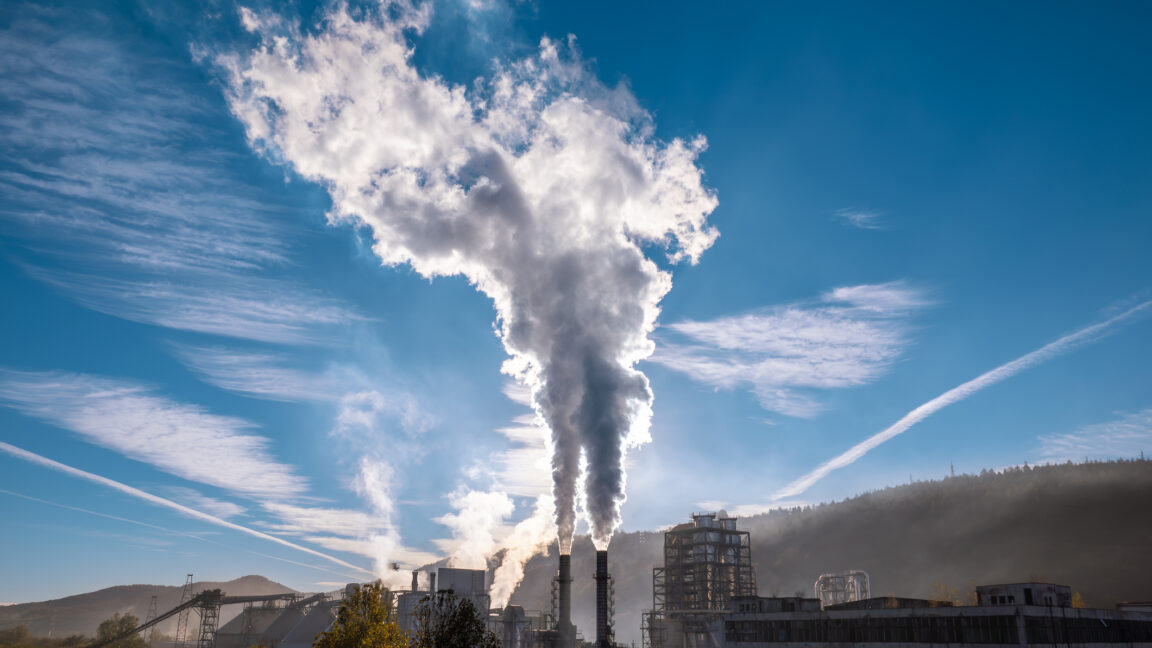
EPA kills foundation of greenhouse gas regulations

In a widely expected move, the Environmental Protection Agency has announced that it is revoking an analysis of greenhouse gases that laid the foundation for regulating their emissions by cars, power plants, and industrial sources. The analysis, called an endangerment finding, was initially ordered by the US Supreme Court in 2007 and completed during the Obama administration; it has, in theory, served as the basis of all government regulations of carbon dioxide emissions since.

In practice, lawsuits and policy changes between Democratic and Republican administrations have meant it has had little impact. In fact, the first Trump administration left the endangerment finding in place, deciding it was easier to respond to it with weak regulations than it was to challenge its scientific foundations, given the strength of the evidence for human-driven climate change.

Legal tactics

The second Trump administration, however, was prepared to tackle the science head-on, gathering a group of contrarians to write a report questioning that evidence. It did not go well, either scientifically or legally.

Read full article

Comments

© Aurich Lawson / Getty

  •  

Bringing the "functionally extinct" American chestnut back from the dead

Very few people alive today have seen the Appalachian forests as they existed a century ago. Even as state and national parks preserved ever more of the ecosystem, fungal pathogens from Asia nearly wiped out one of the dominant species of these forests, the American chestnut, killing an estimated 3 billion trees. While new saplings continue to sprout from the stumps of the former trees, the fungus persists, killing them before they can seed a new generation.

But thanks in part to trees planted in areas where the two fungi don't grow well, the American chestnut isn't extinct. And efforts to revive it in its native range have continued, despite the long generation times needed to breed resistant trees. In Thursday's issue of Science, researchers describe their efforts to apply modern genomic techniques and exhaustive testing to identify the best route to restoring chestnuts to their native range.

Multiple paths to restoration

While the American chestnut is functionally extinct—it's no longer a participant in the ecosystems it once dominated—it's most certainly not extinct. Two Asian fungi that have killed it off in its native range; one causes chestnut blight, while a less common pathogen causes a root rot disease. Both prefer warmer, humid environments and persist there because they can grow asymptomatically on distantly related trees, such as oaks. Still, chestnuts planted outside the species' original range—primarily in drier areas of western North America—have continued to thrive.

Read full article

Comments

© Teresa Lett

  •  

Trump orders the military to make agreements with coal power plants

On Wednesday, a fossil-fuel lobbying group called the Washington Coal Club awarded President Trump a trophy that named him the "Undisputed Champion of Clean, Beautiful Coal." Trump took advantage of the opportunity to take his latest shot at reviving the fortunes of the US's most polluting source of electricity: an executive order that would make the military buy it.

Coal is the second most expensive source of power for the US grid, eclipsed by gas, wind, solar, hydro—everything other than nuclear power. It also produces the most pollution, including particulates that damage human lungs, chemicals that contribute to acid rain, and coal ash that contains many toxic metals. It also emits the most carbon dioxide per unit of energy produced. Prior to Trump's return to office, the US grid had been rapidly moving away from its use, including during his first term.

Despite the long-standing Republican claims to support free markets, the second Trump administration has determined that the only way to keep coal viable is direct government intervention. Its initial attempts involved declaring an energy emergency and then using that to justify forcing coal plants slated for closure to continue operations. The emergency declaration relied on what appears to be a tenuous interpretation of the Federal Power Act, and the administration was already facing a lawsuit challenging these actions.

Read full article

Comments

© Laura Hedien

  •  

After Republican complaints, judicial body pulls climate advice

On Friday, a body that advises US judges revised the document it created to help judges grapple with scientific issues. The move came after a group of Republican state attorneys general wrote a letter to complain about the document's chapter on climate change, with one of the letter's criticisms being that it treated human influence on climate as a fact. In response to the letter, the Federal Judicial Center has now deleted the entire chapter.

The Federal Judicial Center has been established by statute as the "research and education agency of the judicial branch of the United States Government." As part of that role, it prepares documents that can serve as reference material for judges unfamiliar with topics that find their way into the courtroom. Among those projects is the "Reference Manual on Scientific Evidence," now in its fourth edition. Prepared in collaboration with the National Academies of Science, the document covers the process of science and specific topics that regularly appear before the courts, like statistical techniques, DNA-based identification, and chemical exposures.

When initially released in December, the fourth edition included material on climate change prepared by two authors at Columbia University. But a group of attorneys general from Republican-leaning states objected to this content. At the end of January, they sent a letter to the leadership of the Federal Judicial Center outlining their issues. Many of them focus on the text that accepts the reality of human-driven climate change as a fact.

Read full article

Comments

© the_burtons

  •  

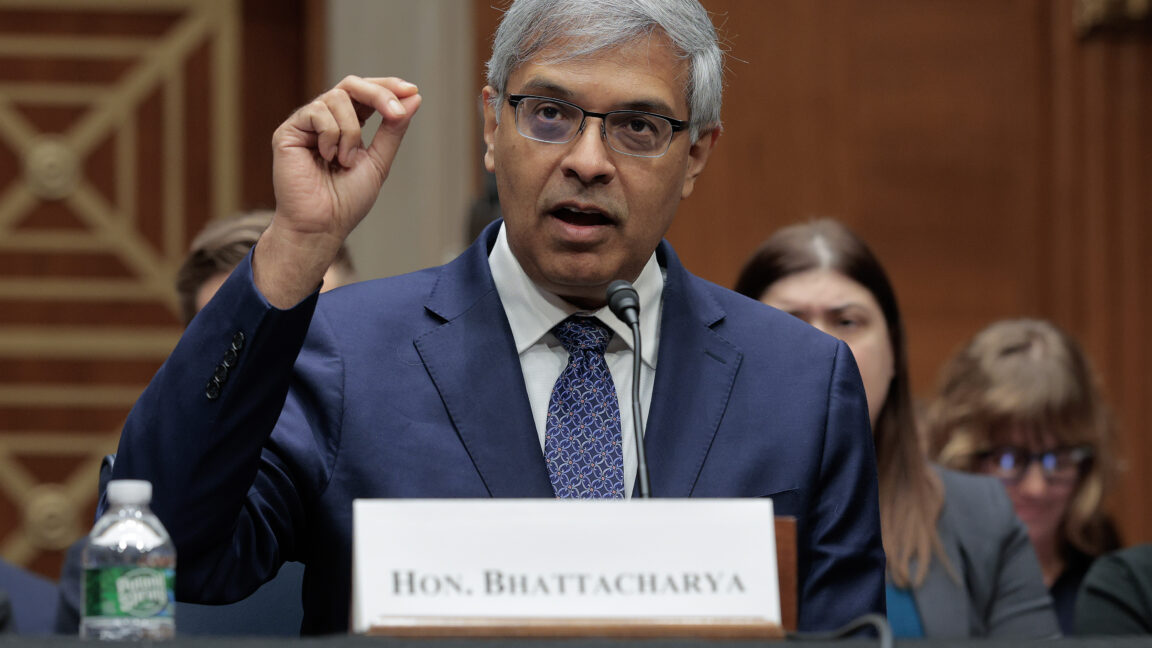
NIH head, still angry about COVID, wants a second scientific revolution

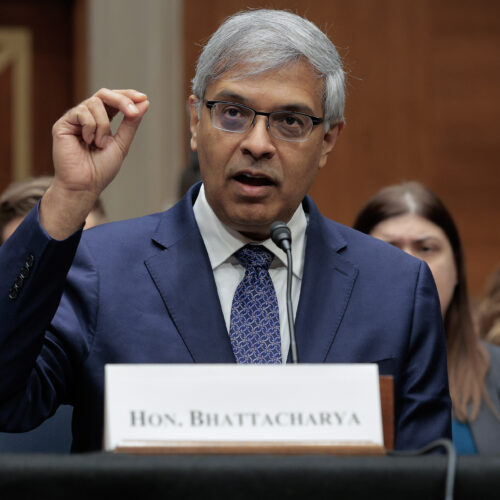
At the end of January, Washington, DC, saw an extremely unusual event. The MAHA Institute, which was set up to advocate for some of the most profoundly unscientific ideas of our time, hosted leaders of the best-funded scientific organization on the planet, the National Institutes of Health. Instead of a hostile reception, however, Jay Bhattacharya, the head of the NIH, was greeted as a hero by the audience, receiving a partial standing ovation when he rose to speak.

Over the ensuing five hours, the NIH leadership and MAHA Institute moderators found many areas of common ground: anger over pandemic-era decisions, a focus on the failures of the health care system, the idea that we might eat our way out of some health issues, the sense that science had lost people's trust, and so on. And Bhattacharya and others clearly shaped their messages to resonate with their audience.

The reason? MAHA (Make America Healthy Again) is likely to be one of the only political constituencies supporting Bhattacharya's main project, which he called a "second scientific revolution."

Read full article

Comments

© Chip Somodevilla

  •  

Upset at reports that he'd given up, Trump now wants $1B from Harvard

Amid the Trump administration's attack on universities, Harvard has emerged as a particular target. Early on, the administration put $2.2 billion in research money on hold and shortly thereafter blocked all future funding while demanding intrusive control over Harvard's hiring and admissions. Unlike many of its peer institutions, Harvard fought back, filing and ultimately winning a lawsuit that restored the cut funds.

Despite Harvard's victory, the Trump administration continued to push for some sort of formal agreement that would settle the administration's accusations that Harvard created an environment that allowed antisemitism to flourish. In fact, it had become a running joke among some journalists that The New York Times had devoted a monthly column to reporting that a settlement between the two parties was near.

Given the government's loss of leverage, it was no surprise that the latest installment of said column included the detail that the latest negotiations had dropped demands that Harvard pay any money as part of a final agreement. The Trump administration had extracted hundreds of millions of dollars from some other universities and had demanded over a billion dollars from UCLA, so this appeared to be a major concession to Harvard.

Read full article

Comments

© joe daniel price

  •  

Court orders restart of all US offshore wind construction

The Trump administration is no fan of renewable energy, but it reserves special ire for wind power. Trump himself has repeatedly made false statements about the cost of wind power, its use around the world, and its environmental impacts. That animosity was paired with an executive order that blocked all permitting for offshore wind and some land-based projects, an order that has since been thrown out by a court that ruled it arbitrary and capricious.

Not content to block all future developments, the administration has also gone after the five offshore wind projects currently under construction. After temporarily blocking two of them for reasons that were never fully elaborated, the Department of the Interior settled on a single justification for blocking turbine installation: a classified national security risk.

The response to that late-December announcement has been uniform: The companies building each of the projects sued the administration. As of Monday, every single one of them has achieved the same result: a temporary injunction that allows them to continue construction. This, despite the fact that the suits were filed in three different courts and heard by four different judges.

Read full article

Comments

© Boston Globe

  •  

Judge rules Department of Energy's climate working group was illegal

On Friday, a judge ruled that the Trump administration violated the law in forming its Climate Working Group, which released a report that was intended to undercut the rationale behind greenhouse gas regulations. The judge overseeing the case determined that the government tried to treat the Climate Working Group as a formal advisory body, while not having it obey many of the statutory requirements that govern such bodies.

While the Department of Energy (DOE) later disbanded the Climate Working Group in the hopes of avoiding legal scrutiny, documents obtained during the proceedings have now revealed the group's electronic communications. As such, the judge ruled that the trial itself had essentially overcome the government's illegal attempts to hide those communications.

Legal and scientific flaws

The whole saga derives from a Supreme Court Ruling that compelled the Environmental Protection Agency (EPA) to evaluate the risks posed to the US public by greenhouse gases. During the Obama administration, this resulted in an endangerment finding that created the foundation for the EPA to regulate carbon emissions under the Clean Air Act. The science underlying the endangerment finding was so solid that it was left unchallenged during the first Trump administration.

Read full article

Comments

© Pencho Chukov

  •