Reading view

Pedro Neto fires hat-trick as Chelsea provide Rosenior with happy return to Hull

With sleet, snow, swirling wind from the banks of the Humber and most importantly, a Hull City side pushing hard for promotion to the Premier League this season, it was hard not to believe pre-match that this had all the makings of a difficult evening’s work for Chelsea.

Liam Rosenior holds this city close to his heart, given how some of his family hail from Hull and he had an enjoyable spell in charge of the Tigers: well, until he was unceremoniously sacked nearly two years ago, that is. But his happy association with Hull continued with a magnificent display from his Chelsea side, who ultimately sauntered into the next round of the FA Cup.

Continue reading...

© Photograph: Scott Heppell/Reuters

© Photograph: Scott Heppell/Reuters

© Photograph: Scott Heppell/Reuters

  •  

Hull City v Chelsea: FA Cup fourth round – live

⚽ FA Cup fourth-round updates, 7.45pm (GMT) kick-off
Live scoreboard | Follow us on Bluesky | Email John

First thing to say is that Hadziahmetovic will be tonight’s copy and paste player.

Hull: Phillips, Coyle, Egan, McNair, McCarthy, Giles, Hadziahmetovic, Slater, Hirakawa, Koumas, Millar. Subs: Pandur, Lunstram, Jacob, Drameh, Gerhardt, Joseph, Famewo, Dowell, Tinsdale

Continue reading...

© Photograph: Mike Egerton/PA

© Photograph: Mike Egerton/PA

© Photograph: Mike Egerton/PA

  •  

‘He would fill you with confidence’: how Liam Rosenior made his mark at Hull

Chelsea manager, back at Hull in the Cup on Friday, made a strong impression on Humberside, as ex-colleagues explain

“That’s the best message I’ve received,” Liam Rosenior wrote, accompanied by laughing emojis, in response to one of the many congratulation posts sent after his surprise appointment as the Chelsea head coach. His former Hull teammate James Chester had wickedly told him: “After my time with you at Derby I never thought you’d have been Chelsea manager,” alongside a photograph of Chester in the pub with his fellow former Tigers Robbie Brady and Paul McShane, raising a glass to Rosenior.

It was a sign of the close bonds Rosenior built at Hull as a player and head coach. He returns as a Champions League head coach on Friday in the FA Cup, looking to avoid an upset against a team aiming to make it a more regular rivalry. Rosenior spent seven seasons on Humberside, five as a player and two in the dugout, which were crucial for his development.

Continue reading...

© Photograph: James Marsh/REX/Shutterstock

© Photograph: James Marsh/REX/Shutterstock

© Photograph: James Marsh/REX/Shutterstock

  •  

FA Cup fourth round: 10 things to look out for this weekend

Burnley have the chance of a Cup run, Leicester fear an unwelcome repeat and Brighton fans get a raw deal

Chelsea have kept two clean sheets in 10 games since appointing Liam Rosenior as head coach last month. Repeated doziness at the back has cost them. They have held commanding advantages against Charlton, Crystal Palace, Wolves and Leeds, only to give away silly goals. It is a bad habit and proved costly when a 2-0 lead was squandered during Tuesday’s draw with Leeds. Rosenior was livid afterwards, and is waiting for a consistent performance. Chelsea travel to Hull , Rosenior’s former club, on Friday night. They will surely advance against Championship opponents, but how they do it will matter. It is time for them to get serious. Jacob Steinberg

Hull City v Chelsea, Friday 7.45pm (all times GMT)

Burton Albion v West Ham, Saturday 12.15pm

Burnley v Mansfield, Saturday 3pm

Southampton v Leicester, Saturday 3pm

Continue reading...

© Composite: Getty Images

© Composite: Getty Images

© Composite: Getty Images

  •  

2 to 3 Cups of Coffee a Day May Reduce Dementia Risk. But Not if It’s Decaf.

One to two cups of caffeinated tea per day helps too, researchers found after following nearly 132,000 people for 40 years.

© Angela Weiss/Agence France-Presse — Getty Images

Beyond two and a half cups of coffee daily, the advantage plateaued, possibly because there’s a limit to how much caffeine our bodies can metabolize, researchers said.
  •  

Deafening, draining and potentially deadly: are we facing a snoring epidemic?

Experts say dangerous sleep apnoea affects an estimated 8 million in the UK alone, and everything from evolution to obesity or even the climate crisis could be to blame

When Matt Hillier was in his 20s, he went camping with a friend who was a nurse. In the morning she told him she had been shocked by the snoring coming from his tent. “She basically said, ‘For a 25-year-old non-smoker who’s quite skinny, you snore pretty loudly,’” says Hiller, now 32.

Perhaps because of the pervasive image of a “typical” sleep apnoea patient – older, and overweight – Hillier didn’t seek help. It wasn’t until he was 30 that he finally went to a doctor after waking up from a particularly big night of snoring with a racing heartbeat. Despite being young, active and a healthy weight, further investigation – including a night recording his snoring – revealed that he had moderate sleep apnoea. His was classed as supine, the most common form of the condition, meaning it happens when he sleeps on his back, and is likely caused by his throat muscles.

Continue reading...

© Illustration: Igor Bastidas/The Guardian

© Illustration: Igor Bastidas/The Guardian

© Illustration: Igor Bastidas/The Guardian

  •  

Bad sleep made woman's eyelids so floppy they flipped inside out, got stuck

A poor night's sleep might leave you feeling like your eyelids have filled with lead—and keeping them open is the ultimate dead lift. But for some, bad sleep brings on eyelids so droopy and floppy that they can do curl ups on their own.

That was the unfortunate case for a 39-year-old woman who sought care at an ophthalmology clinic in Brooklyn, New York. She told the doctors that for six weeks she felt like she had something in her eyes, and they were watery. By the time of her appointment, her eyelids had rolled up, flipping inside-out on their own—and were staying that way. In the latest issue of the New England Journal of Medicine, doctors report her eye-opening case—and its unexpected solution.

(You can see images of her eyelids—flipped and recovered—here. The images may seem graphic to some, but they are not much worse than that kid in elementary school who would flip their eyelids just to freak everyone out for laughs. You know the one.)

Read full article

Comments

© Getty | George Pachantouris

  •  

Do you have ideas about how to improve America's space program?

Over the first quarter of the 21st century, two major trends have transformed the global space industry.

The first is the rapid rise of China's space program, which only flew its first human to orbit in 2003 but now boasts spaceflight capabilities second only to the United States. The second trend is the rise of the commercial space sector, first in the United States and led by SpaceX, but now spreading across much of the planet.

Both of these trends have had profound impacts on both civil and military space enterprises in the United States.

Read full article

Comments

© Aurich Lawson | Getty Images

  •  

Why reviving the shuttered Anthem is turning out tougher than expected

On January 12, EA shut down the official servers for Anthem, making Bioware's multiplayer sci-fi adventure completely unplayable for the first time since its troubled 2019 launch. Last week, though, the Anthem community woke up to a new video showing the game at least partially loading on what appears to be a simulated background server.

The people behind that video—and the Anthem revival project that made it possible—told Ars they were optimistic about their efforts to coerce EA's temperamental Frostbite engine into running the game without access to EA's servers. That said, the team also wants to temper expectations that may have risen a bit too high in the wake of what is just a proof-of-concept video.

Andersson799's early proof-of-concept video showing Anthem partially loading on emulated local servers.

"People are getting excited [about the video], and naturally people are going to get their hopes up," project administrator Laurie told Ars. "I don't want to be the person that's going to have to deal with the aftermath if it turns out that we can't actually get anywhere."

Read full article

Comments

© Bioware

  •  

Kimwolf Botnet Lurking in Corporate, Govt. Networks

A new Internet-of-Things (IoT) botnet called Kimwolf has spread to more than 2 million devices, forcing infected systems to participate in massive distributed denial-of-service (DDoS) attacks and to relay other malicious and abusive Internet traffic. Kimwolf’s ability to scan the local networks of compromised systems for other IoT devices to infect makes it a sobering threat to organizations, and new research reveals Kimwolf is surprisingly prevalent in government and corporate networks.

Image: Shutterstock, @Elzicon.

Kimwolf grew rapidly in the waning months of 2025 by tricking various “residential proxy” services into relaying malicious commands to devices on the local networks of those proxy endpoints. Residential proxies are sold as a way to anonymize and localize one’s Web traffic to a specific region, and the biggest of these services allow customers to route their Internet activity through devices in virtually any country or city around the globe.

The malware that turns one’s Internet connection into a proxy node is often quietly bundled with various mobile apps and games, and it typically forces the infected device to relay malicious and abusive traffic — including ad fraud, account takeover attempts, and mass content-scraping.

Kimwolf mainly targeted proxies from IPIDEA, a Chinese service that has millions of proxy endpoints for rent on any given week. The Kimwolf operators discovered they could forward malicious commands to the internal networks of IPIDEA proxy endpoints, and then programmatically scan for and infect other vulnerable devices on each endpoint’s local network.

Most of the systems compromised through Kimwolf’s local network scanning have been unofficial Android TV streaming boxes. These are typically Android Open Source Project devices — not Android TV OS devices or Play Protect certified Android devices — and they are generally marketed as a way to watch unlimited (read:pirated) video content from popular subscription streaming services for a one-time fee.

However, a great many of these TV boxes ship to consumers with residential proxy software pre-installed. What’s more, they have no real security or authentication built-in: If you can communicate directly with the TV box, you can also easily compromise it with malware.

While IPIDEA and other affected proxy providers recently have taken steps to block threats like Kimwolf from going upstream into their endpoints (reportedly with varying degrees of success), the Kimwolf malware remains on millions of infected devices.

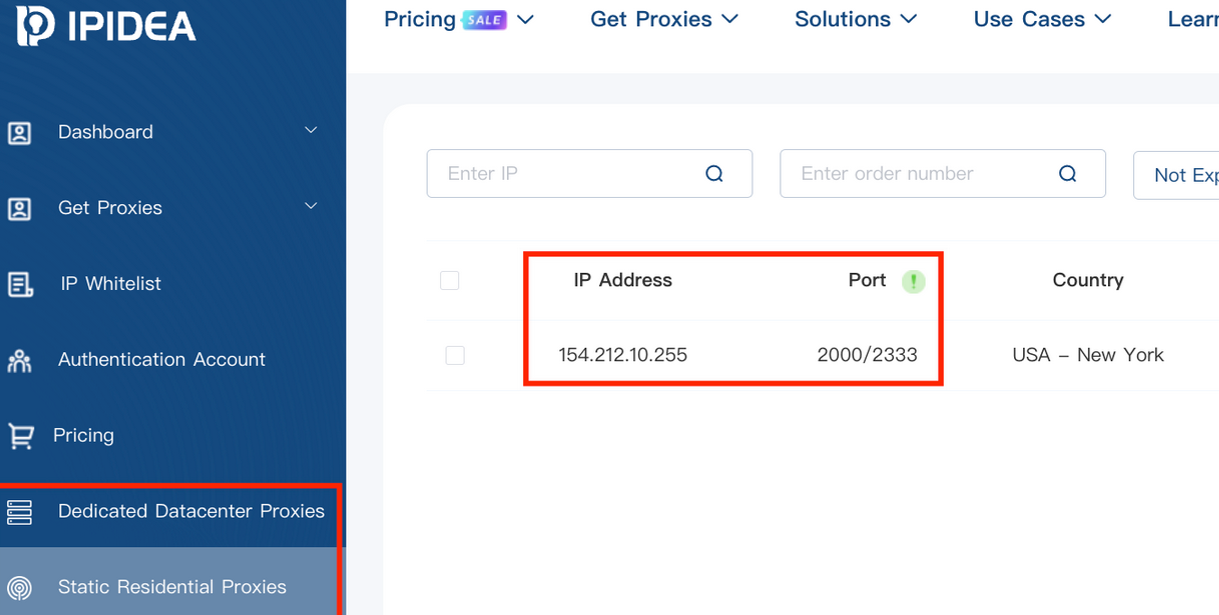
A screenshot of IPIDEA’s proxy service.

Kimwolf’s close association with residential proxy networks and compromised Android TV boxes might suggest we’d find relatively few infections on corporate networks. However, the security firm Infoblox said a recent review of its customer traffic found nearly 25 percent of them made a query to a Kimwolf-related domain name since October 1, 2025, when the botnet first showed signs of life.

Infoblox found the affected customers are based all over the world and in a wide range of industry verticals, from education and healthcare to government and finance.

“To be clear, this suggests that nearly 25% of customers had at least one device that was an endpoint in a residential proxy service targeted by Kimwolf operators,” Infoblox explained. “Such a device, maybe a phone or a laptop, was essentially co-opted by the threat actor to probe the local network for vulnerable devices. A query means a scan was made, not that new devices were compromised. Lateral movement would fail if there were no vulnerable devices to be found or if the DNS resolution was blocked.”

Synthient, a startup that tracks proxy services and was the first to disclose on January 2 the unique methods Kimwolf uses to spread, found proxy endpoints from IPIDEA were present in alarming numbers at government and academic institutions worldwide. Synthient said it spied at least 33,000 affected Internet addresses at universities and colleges, and nearly 8,000 IPIDEA proxies within various U.S. and foreign government networks.

The top 50 domain names sought out by users of IPIDEA’s residential proxy service, according to Synthient.

In a webinar on January 16, experts at the proxy tracking service Spur profiled Internet addresses associated with IPIDEA and 10 other proxy services that were thought to be vulnerable to Kimwolf’s tricks. Spur found residential proxies in nearly 300 government owned and operated networks, 318 utility companies, 166 healthcare companies or hospitals, and 141 companies in banking and finance.

“I looked at the 298 [government] owned and operated [networks], and so many of them were DoD [U.S. Department of Defense], which is kind of terrifying that DoD has IPIDEA and these other proxy services located inside of it,” Spur Co-Founder Riley Kilmer said. “I don’t know how these enterprises have these networks set up. It could be that [infected devices] are segregated on the network, that even if you had local access it doesn’t really mean much. However, it’s something to be aware of. If a device goes in, anything that device has access to the proxy would have access to.”

Kilmer said Kimwolf demonstrates how a single residential proxy infection can quickly lead to bigger problems for organizations that are harboring unsecured devices behind their firewalls, noting that proxy services present a potentially simple way for attackers to probe other devices on the local network of a targeted organization.

“If you know you have [proxy] infections that are located in a company, you can chose that [network] to come out of and then locally pivot,” Kilmer said. “If you have an idea of where to start or look, now you have a foothold in a company or an enterprise based on just that.”

This is the third story in our series on the Kimwolf botnet. Next week, we’ll shed light on the myriad China-based individuals and companies connected to the Badbox 2.0 botnet, the collective name given to a vast number of Android TV streaming box models that ship with no discernible security or authentication built-in, and with residential proxy malware pre-installed.

Further reading:

The Kimwolf Botnet is Stalking Your Local Network

Who Benefitted from the Aisuru and Kimwolf Botnets?

A Broken System Fueling Botnets (Synthient).

  •  

The Kimwolf Botnet is Stalking Your Local Network

The story you are reading is a series of scoops nestled inside a far more urgent Internet-wide security advisory. The vulnerability at issue has been exploited for months already, and it’s time for a broader awareness of the threat. The short version is that everything you thought you knew about the security of the internal network behind your Internet router probably is now dangerously out of date.
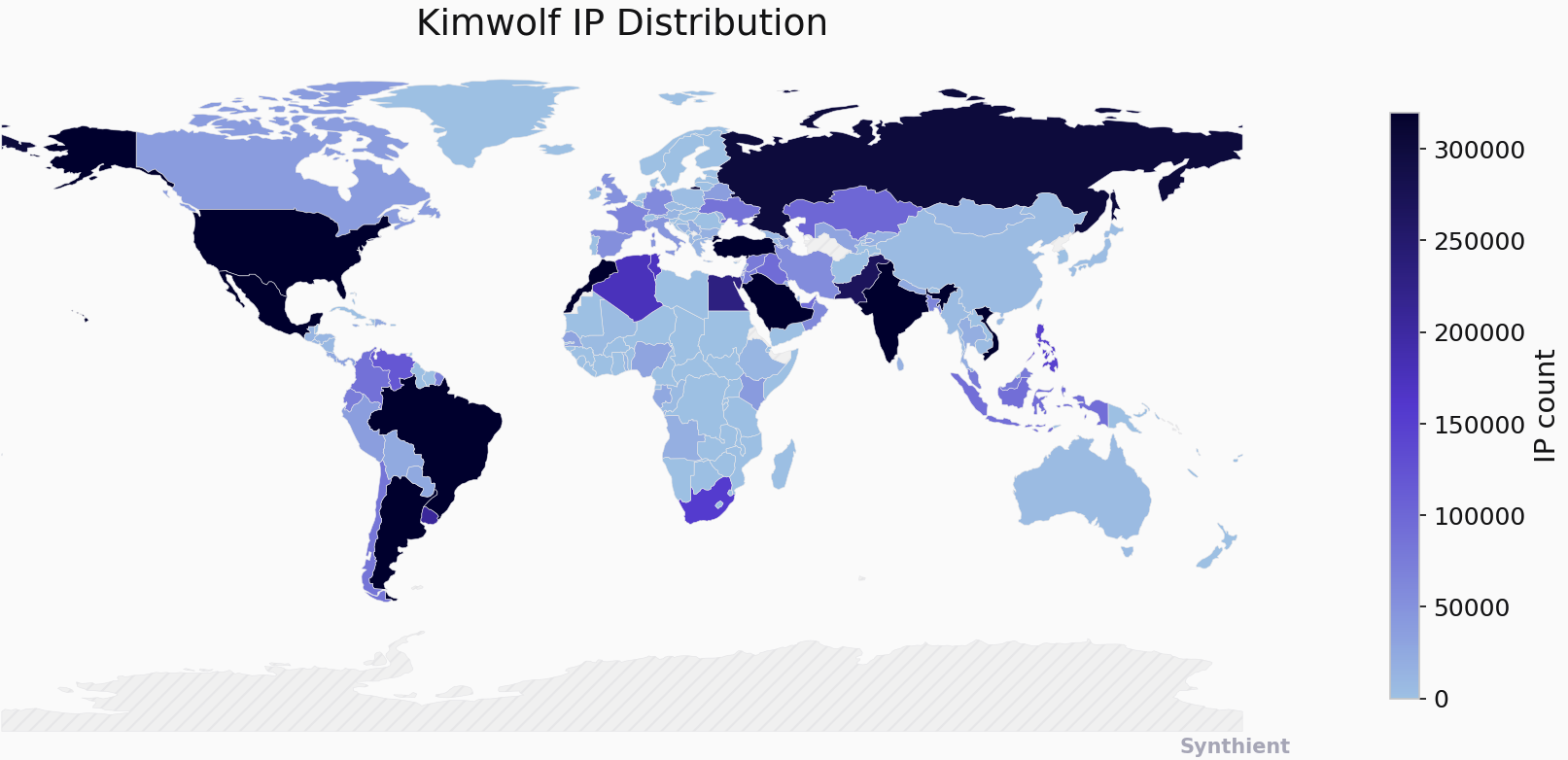
The security company Synthient currently sees more than 2 million infected Kimwolf devices distributed globally but with concentrations in Vietnam, Brazil, India, Saudi Arabia, Russia and the United States. Synthient found that two-thirds of the Kimwolf infections are Android TV boxes with no security or authentication built in.

The past few months have witnessed the explosive growth of a new botnet dubbed Kimwolf, which experts say has infected more than 2 million devices globally. The Kimwolf malware forces compromised systems to relay malicious and abusive Internet traffic — such as ad fraud, account takeover attempts and mass content scraping — and participate in crippling distributed denial-of-service (DDoS) attacks capable of knocking nearly any website offline for days at a time.

More important than Kimwolf’s staggering size, however, is the diabolical method it uses to spread so quickly: By effectively tunneling back through various “residential proxy” networks and into the local networks of the proxy endpoints, and by further infecting devices that are hidden behind the assumed protection of the user’s firewall and Internet router.

Residential proxy networks are sold as a way for customers to anonymize and localize their Web traffic to a specific region, and the biggest of these services allow customers to route their traffic through devices in virtually any country or city around the globe.

The malware that turns an end-user’s Internet connection into a proxy node is often bundled with dodgy mobile apps and games. These residential proxy programs also are commonly installed via unofficial Android TV boxes sold by third-party merchants on popular e-commerce sites like Amazon, BestBuy, Newegg, and Walmart.

These TV boxes range in price from $40 to $400, are marketed under a dizzying range of no-name brands and model numbers, and frequently are advertised as a way to stream certain types of subscription video content for free. But there’s a hidden cost to this transaction: As we’ll explore in a moment, these TV boxes make up a considerable chunk of the estimated two million systems currently infected with Kimwolf.

Some of the unsanctioned Android TV boxes that come with residential proxy malware pre-installed. Image: Synthient.

Kimwolf also is quite good at infecting a range of Internet-connected digital photo frames that likewise are abundant at major e-commerce websites. In November 2025, researchers from Quokka published a report (PDF) detailing serious security issues in Android-based digital picture frames running the Uhale app — including Amazon’s bestselling digital frame as of March 2025.

There are two major security problems with these photo frames and unofficial Android TV boxes. The first is that a considerable percentage of them come with malware pre-installed, or else require the user to download an unofficial Android App Store and malware in order to use the device for its stated purpose (video content piracy). The most typical of these uninvited guests are small programs that turn the device into a residential proxy node that is resold to others.

The second big security nightmare with these photo frames and unsanctioned Android TV boxes is that they rely on a handful of Internet-connected microcomputer boards that have no discernible security or authentication requirements built-in. In other words, if you are on the same network as one or more of these devices, you can likely compromise them simultaneously by issuing a single command across the network.

THERE’S NO PLACE LIKE 127.0.0.1

The combination of these two security realities came to the fore in October 2025, when an undergraduate computer science student at the Rochester Institute of Technology began closely tracking Kimwolf’s growth, and interacting directly with its apparent creators on a daily basis.

Benjamin Brundage is the 22-year-old founder of the security firm Synthient, a startup that helps companies detect proxy networks and learn how those networks are being abused. Conducting much of his research into Kimwolf while studying for final exams, Brundage told KrebsOnSecurity in late October 2025 he suspected Kimwolf was a new Android-based variant of Aisuru, a botnet that was incorrectly blamed for a number of record-smashing DDoS attacks last fall.

Brundage says Kimwolf grew rapidly by abusing a glaring vulnerability in many of the world’s largest residential proxy services. The crux of the weakness, he explained, was that these proxy services weren’t doing enough to prevent their customers from forwarding requests to internal servers of the individual proxy endpoints.

Most proxy services take basic steps to prevent their paying customers from “going upstream” into the local network of proxy endpoints, by explicitly denying requests for local addresses specified in RFC-1918, including the well-known Network Address Translation (NAT) ranges 10.0.0.0/8, 192.168.0.0/16, and 172.16.0.0/12. These ranges allow multiple devices in a private network to access the Internet using a single public IP address, and if you run any kind of home or office network, your internal address space operates within one or more of these NAT ranges.

However, Brundage discovered that the people operating Kimwolf had figured out how to talk directly to devices on the internal networks of millions of residential proxy endpoints, simply by changing their Domain Name System (DNS) settings to match those in the RFC-1918 address ranges.

“It is possible to circumvent existing domain restrictions by using DNS records that point to 192.168.0.1 or 0.0.0.0,” Brundage wrote in a first-of-its-kind security advisory sent to nearly a dozen residential proxy providers in mid-December 2025. “This grants an attacker the ability to send carefully crafted requests to the current device or a device on the local network. This is actively being exploited, with attackers leveraging this functionality to drop malware.”

As with the digital photo frames mentioned above, many of these residential proxy services run solely on mobile devices that are running some game, VPN or other app with a hidden component that turns the user’s mobile phone into a residential proxy — often without any meaningful consent.

In a report published today, Synthient said key actors involved in Kimwolf were observed monetizing the botnet through app installs, selling residential proxy bandwidth, and selling its DDoS functionality.

“Synthient expects to observe a growing interest among threat actors in gaining unrestricted access to proxy networks to infect devices, obtain network access, or access sensitive information,” the report observed. “Kimwolf highlights the risks posed by unsecured proxy networks and their viability as an attack vector.”

ANDROID DEBUG BRIDGE

After purchasing a number of unofficial Android TV box models that were most heavily represented in the Kimwolf botnet, Brundage further discovered the proxy service vulnerability was only part of the reason for Kimwolf’s rapid rise: He also found virtually all of the devices he tested were shipped from the factory with a powerful feature called Android Debug Bridge (ADB) mode enabled by default.

Many of the unofficial Android TV boxes infected by Kimwolf include the ominous disclaimer: “Made in China. Overseas use only.” Image: Synthient.

ADB is a diagnostic tool intended for use solely during the manufacturing and testing processes, because it allows the devices to be remotely configured and even updated with new (and potentially malicious) firmware. However, shipping these devices with ADB turned on creates a security nightmare because in this state they constantly listen for and accept unauthenticated connection requests.

For example, opening a command prompt and typing “adb connect” along with a vulnerable device’s (local) IP address followed immediately by “:5555” will very quickly offer unrestricted “super user” administrative access.

Brundage said by early December, he’d identified a one-to-one overlap between new Kimwolf infections and proxy IP addresses offered for rent by China-based IPIDEA, currently the world’s largest residential proxy network by all accounts.

“Kimwolf has almost doubled in size this past week, just by exploiting IPIDEA’s proxy pool,” Brundage told KrebsOnSecurity in early December as he was preparing to notify IPIDEA and 10 other proxy providers about his research.

Brundage said Synthient first confirmed on December 1, 2025 that the Kimwolf botnet operators were tunneling back through IPIDEA’s proxy network and into the local networks of systems running IPIDEA’s proxy software. The attackers dropped the malware payload by directing infected systems to visit a specific Internet address and to call out the pass phrase “krebsfiveheadindustries” in order to unlock the malicious download.

On December 30, Synthient said it was tracking roughly 2 million IPIDEA addresses exploited by Kimwolf in the previous week. Brundage said he has witnessed Kimwolf rebuilding itself after one recent takedown effort targeting its control servers — from almost nothing to two million infected systems just by tunneling through proxy endpoints on IPIDEA for a couple of days.

Brundage said IPIDEA has a seemingly inexhaustible supply of new proxies, advertising access to more than 100 million residential proxy endpoints around the globe in the past week alone. Analyzing the exposed devices that were part of IPIDEA’s proxy pool, Synthient said it found more than two-thirds were Android devices that could be compromised with no authentication needed.

SECURITY NOTIFICATION AND RESPONSE

After charting a tight overlap in Kimwolf-infected IP addresses and those sold by IPIDEA, Brundage was eager to make his findings public: The vulnerability had clearly been exploited for several months, although it appeared that only a handful of cybercrime actors were aware of the capability. But he also knew that going public without giving vulnerable proxy providers an opportunity to understand and patch it would only lead to more mass abuse of these services by additional cybercriminal groups.

On December 17, Brundage sent a security notification to all 11 of the apparently affected proxy providers, hoping to give each at least a few weeks to acknowledge and address the core problems identified in his report before he went public. Many proxy providers who received the notification were resellers of IPIDEA that white-labeled the company’s service.

KrebsOnSecurity first sought comment from IPIDEA in October 2025, in reporting on a story about how the proxy network appeared to have benefitted from the rise of the Aisuru botnet, whose administrators appeared to shift from using the botnet primarily for DDoS attacks to simply installing IPIDEA’s proxy program, among others.

On December 25, KrebsOnSecurity received an email from an IPIDEA employee identified only as “Oliver,” who said allegations that IPIDEA had benefitted from Aisuru’s rise were baseless.

“After comprehensively verifying IP traceability records and supplier cooperation agreements, we found no association between any of our IP resources and the Aisuru botnet, nor have we received any notifications from authoritative institutions regarding our IPs being involved in malicious activities,” Oliver wrote. “In addition, for external cooperation, we implement a three-level review mechanism for suppliers, covering qualification verification, resource legality authentication and continuous dynamic monitoring, to ensure no compliance risks throughout the entire cooperation process.”

“IPIDEA firmly opposes all forms of unfair competition and malicious smearing in the industry, always participates in market competition with compliant operation and honest cooperation, and also calls on the entire industry to jointly abandon irregular and unethical behaviors and build a clean and fair market ecosystem,” Oliver continued.

Meanwhile, the same day that Oliver’s email arrived, Brundage shared a response he’d just received from IPIDEA’s security officer, who identified himself only by the first name Byron. The security officer said IPIDEA had made a number of important security changes to its residential proxy service to address the vulnerability identified in Brundage’s report.

“By design, the proxy service does not allow access to any internal or local address space,” Byron explained. “This issue was traced to a legacy module used solely for testing and debugging purposes, which did not fully inherit the internal network access restrictions. Under specific conditions, this module could be abused to reach internal resources. The affected paths have now been fully blocked and the module has been taken offline.”

Byron told Brundage IPIDEA also instituted multiple mitigations for blocking DNS resolution to internal (NAT) IP ranges, and that it was now blocking proxy endpoints from forwarding traffic on “high-risk” ports “to prevent abuse of the service for scanning, lateral movement, or access to internal services.”
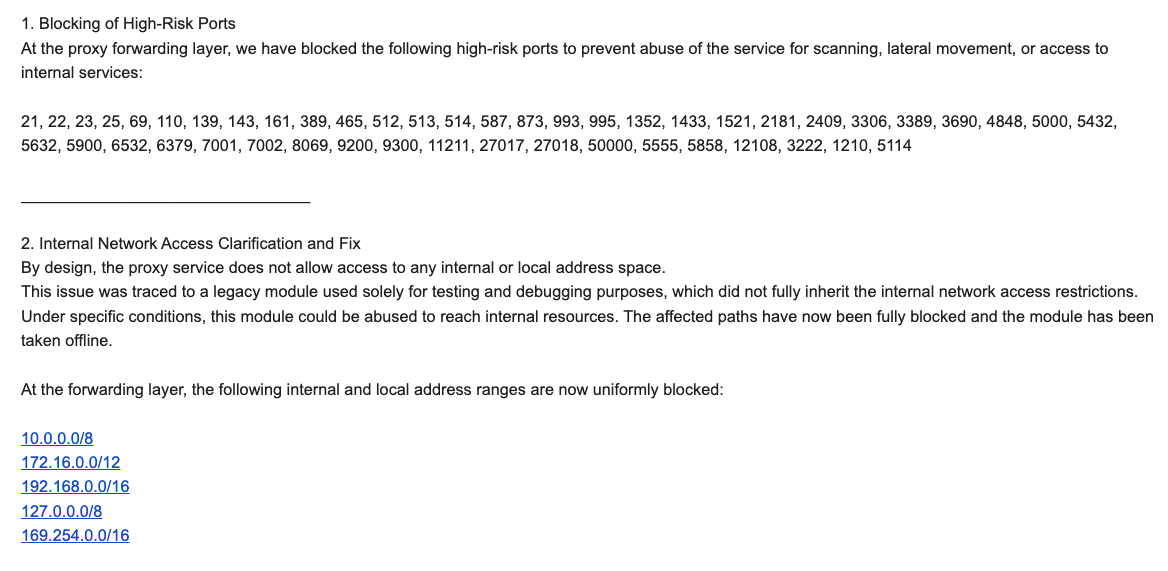
An excerpt from an email sent by IPIDEA’s security officer in response to Brundage’s vulnerability notification. Click to enlarge.

Brundage said IPIDEA appears to have successfully patched the vulnerabilities he identified. He also noted he never observed the Kimwolf actors targeting proxy services other than IPIDEA, which has not responded to requests for comment.

Riley Kilmer is founder of Spur.us, a technology firm that helps companies identify and filter out proxy traffic. Kilmer said Spur has tested Brundage’s findings and confirmed that IPIDEA and all of its affiliate resellers indeed allowed full and unfiltered access to the local LAN.

Kilmer said one model of unsanctioned Android TV boxes that is especially popular — the Superbox, which we profiled in November’s Is Your Android TV Streaming Box Part of a Botnet? — leaves Android Debug Mode running on localhost:5555.

“And since Superbox turns the IP into an IPIDEA proxy, a bad actor just has to use the proxy to localhost on that port and install whatever bad SDKs [software development kits] they want,” Kilmer told KrebsOnSecurity.
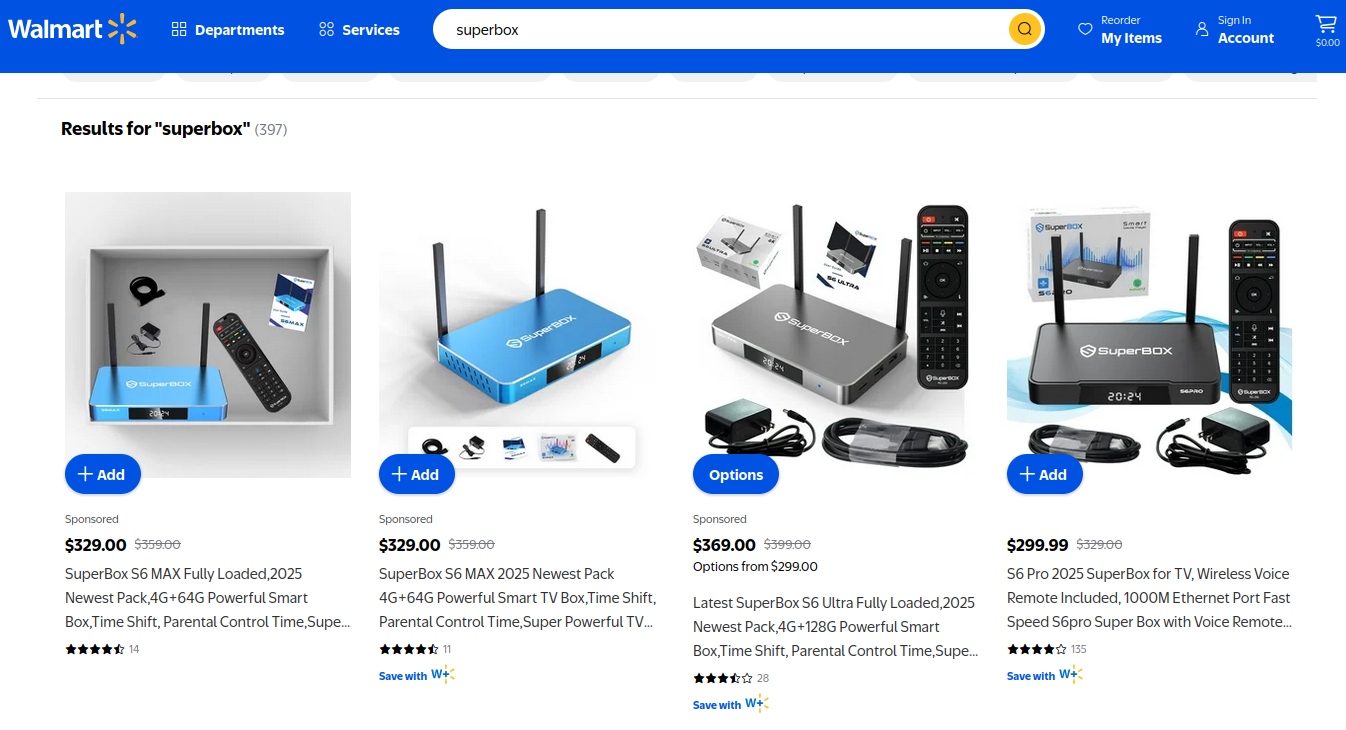
Superbox media streaming boxes for sale on Walmart.com.

ECHOES FROM THE PAST

Both Brundage and Kilmer say IPIDEA appears to be the second or third reincarnation of a residential proxy network formerly known as 911S5 Proxy, a service that operated between 2014 and 2022 and was wildly popular on cybercrime forums. 911S5 Proxy imploded a week after KrebsOnSecurity published a deep dive on the service’s sketchy origins and leadership in China.

In that 2022 profile, we cited work by researchers at the University of Sherbrooke in Canada who were studying the threat 911S5 could pose to internal corporate networks. The researchers noted that “the infection of a node enables the 911S5 user to access shared resources on the network such as local intranet portals or other services.”

“It also enables the end user to probe the LAN network of the infected node,” the researchers explained. “Using the internal router, it would be possible to poison the DNS cache of the LAN router of the infected node, enabling further attacks.”

911S5 initially responded to our reporting in 2022 by claiming it was conducting a top-down security review of the service. But the proxy service abruptly closed up shop just one week later, saying a malicious hacker had destroyed all of the company’s customer and payment records. In July 2024, The U.S. Department of the Treasury sanctioned the alleged creators of 911S5, and the U.S. Department of Justice arrested the Chinese national named in my 2022 profile of the proxy service.

Kilmer said IPIDEA also operates a sister service called 922 Proxy, which the company has pitched from Day One as a seamless alternative to 911S5 Proxy.

“You cannot tell me they don’t want the 911 customers by calling it that,” Kilmer said.

Among the recipients of Synthient’s notification was the proxy giant Oxylabs. Brundage shared an email he received from Oxylabs’ security team on December 31, which acknowledged Oxylabs had started rolling out security modifications to address the vulnerabilities described in Synthient’s report.

Reached for comment, Oxylabs confirmed they “have implemented changes that now eliminate the ability to bypass the blocklist and forward requests to private network addresses using a controlled domain.” But it said there is no evidence that Kimwolf or other other attackers exploited its network.

“In parallel, we reviewed the domains identified in the reported exploitation activity and did not observe traffic associated with them,” the Oxylabs statement continued. “Based on this review, there is no indication that our residential network was impacted by these activities.”

PRACTICAL IMPLICATIONS

Consider the following scenario, in which the mere act of allowing someone to use your Wi-Fi network could lead to a Kimwolf botnet infection. In this example, a friend or family member comes to stay with you for a few days, and you grant them access to your Wi-Fi without knowing that their mobile phone is infected with an app that turns the device into a residential proxy node. At that point, your home’s public IP address will show up for rent at the website of some residential proxy provider.

Miscreants like those behind Kimwolf then use residential proxy services online to access that proxy node on your IP, tunnel back through it and into your local area network (LAN), and automatically scan the internal network for devices with Android Debug Bridge mode turned on.

By the time your guest has packed up their things, said their goodbyes and disconnected from your Wi-Fi, you now have two devices on your local network — a digital photo frame and an unsanctioned Android TV box — that are infected with Kimwolf. You may have never intended for these devices to be exposed to the larger Internet, and yet there you are.

Here’s another possible nightmare scenario: Attackers use their access to proxy networks to modify your Internet router’s settings so that it relies on malicious DNS servers controlled by the attackers — allowing them to control where your Web browser goes when it requests a website. Think that’s far-fetched? Recall the DNSChanger malware from 2012 that infected more than a half-million routers with search-hijacking malware, and ultimately spawned an entire security industry working group focused on containing and eradicating it.

XLAB

Much of what is published so far on Kimwolf has come from the Chinese security firm XLab, which was the first to chronicle the rise of the Aisuru botnet in late 2024. In its latest blog post, XLab said it began tracking Kimwolf on October 24, when the botnet’s control servers were swamping Cloudflare’s DNS servers with lookups for the distinctive domain 14emeliaterracewestroxburyma02132[.]su.

This domain and others connected to early Kimwolf variants spent several weeks topping Cloudflare’s chart of the Internet’s most sought-after domains, edging out Google.com and Apple.com of their rightful spots in the top 5 most-requested domains. That’s because during that time Kimwolf was asking its millions of bots to check in frequently using Cloudflare’s DNS servers.

The Chinese security firm XLab found the Kimwolf botnet had enslaved between 1.8 and 2 million devices, with heavy concentrations in Brazil, India, The United States of America and Argentina. Image: blog.xLab.qianxin.com

It is clear from reading the XLab report that KrebsOnSecurity (and security experts) probably erred in misattributing some of Kimwolf’s early activities to the Aisuru botnet, which appears to be operated by a different group entirely. IPDEA may have been truthful when it said it had no affiliation with the Aisuru botnet, but Brundage’s data left no doubt that its proxy service clearly was being massively abused by Aisuru’s Android variant, Kimwolf.

XLab said Kimwolf has infected at least 1.8 million devices, and has shown it is able to rebuild itself quickly from scratch.

“Analysis indicates that Kimwolf’s primary infection targets are TV boxes deployed in residential network environments,” XLab researchers wrote. “Since residential networks usually adopt dynamic IP allocation mechanisms, the public IPs of devices change over time, so the true scale of infected devices cannot be accurately measured solely by the quantity of IPs. In other words, the cumulative observation of 2.7 million IP addresses does not equate to 2.7 million infected devices.”

XLab said measuring Kimwolf’s size also is difficult because infected devices are distributed across multiple global time zones. “Affected by time zone differences and usage habits (e.g., turning off devices at night, not using TV boxes during holidays, etc.), these devices are not online simultaneously, further increasing the difficulty of comprehensive observation through a single time window,” the blog post observed.

XLab noted that the Kimwolf author shows an almost ‘obsessive’ fixation” on Yours Truly, apparently leaving “easter eggs” related to my name in multiple places through the botnet’s code and communications:
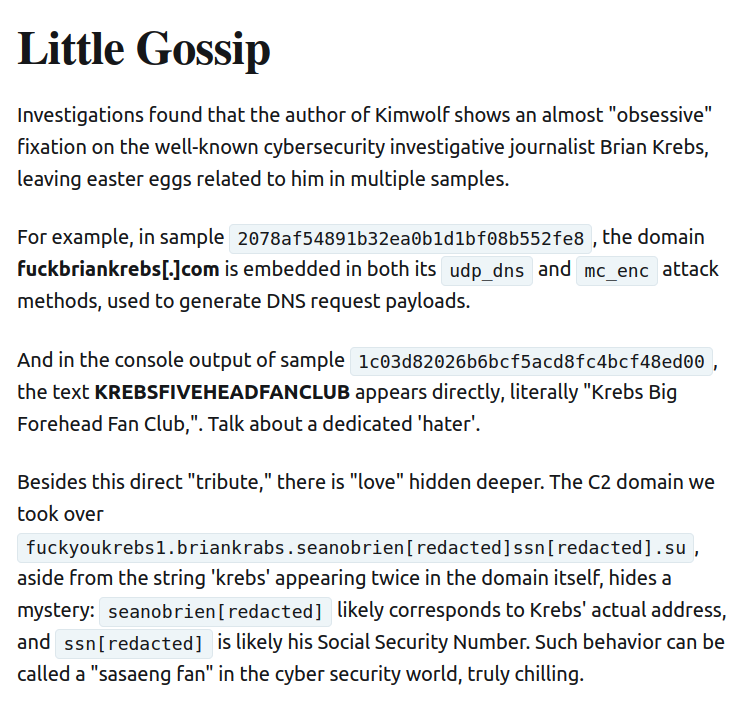
Image: XLAB.

ANALYSIS AND ADVICE

One frustrating aspect of threats like Kimwolf is that in most cases it is not easy for the average user to determine if there are any devices on their internal network which may be vulnerable to threats like Kimwolf and/or already infected with residential proxy malware.

Let’s assume that through years of security training or some dark magic you can successfully identify that residential proxy activity on your internal network was linked to a specific mobile device inside your house: From there, you’d still need to isolate and remove the app or unwanted component that is turning the device into a residential proxy.

Also, the tooling and knowledge needed to achieve this kind of visibility just isn’t there from an average consumer standpoint. The work that it takes to configure your network so you can see and interpret logs of all traffic coming in and out is largely beyond the skillset of most Internet users (and, I’d wager, many security experts). But it’s a topic worth exploring in an upcoming story.

Happily, Synthient has erected a page on its website that will state whether a visitor’s public Internet address was seen among those of Kimwolf-infected systems. Brundage also has compiled a list of the unofficial Android TV boxes that are most highly represented in the Kimwolf botnet.

If you own a TV box that matches one of these model names and/or numbers, please just rip it out of your network. If you encounter one of these devices on the network of a family member or friend, send them a link to this story and explain that it’s not worth the potential hassle and harm created by keeping them plugged in.
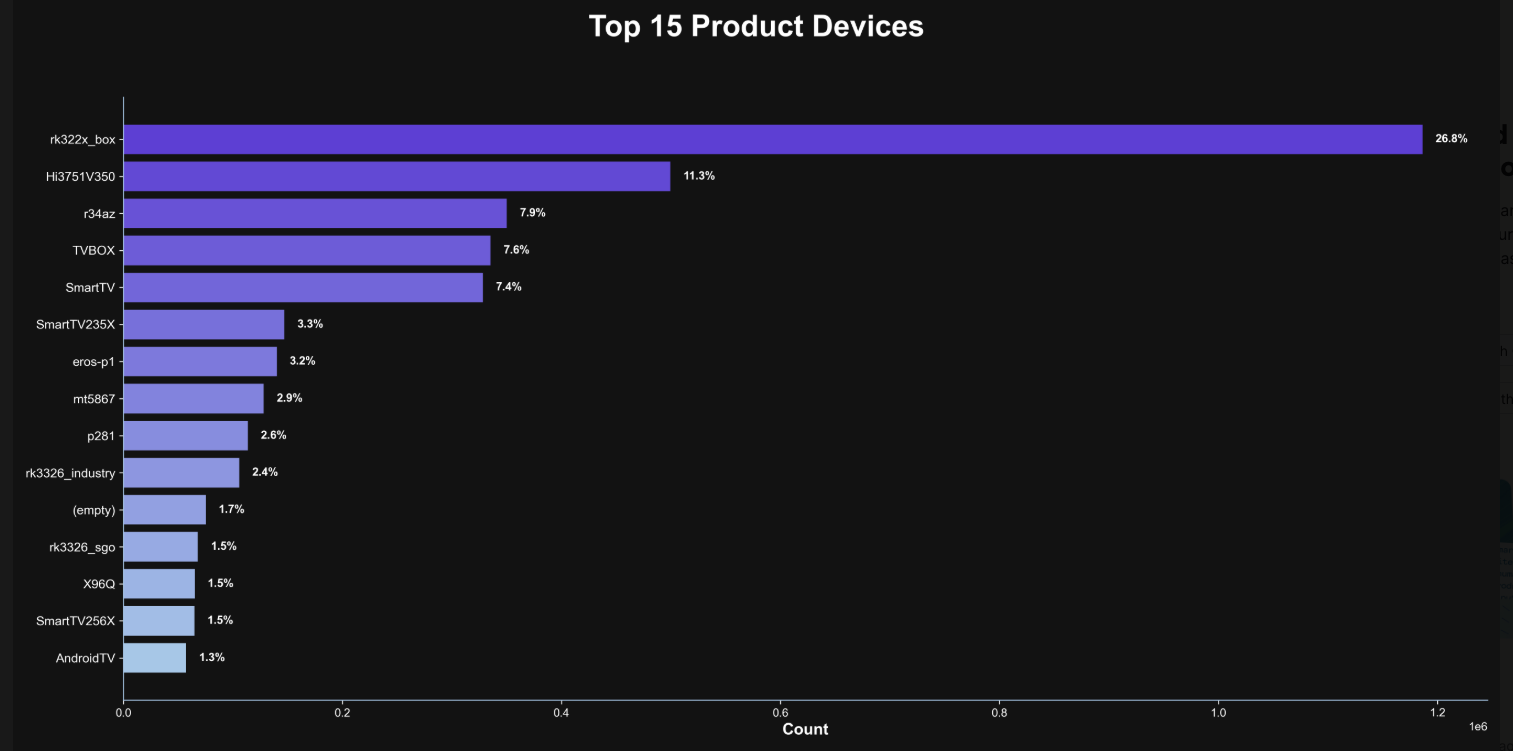
The top 15 product devices represented in the Kimwolf botnet, according to Synthient.

Chad Seaman is a principal security researcher with Akamai Technologies. Seaman said he wants more consumers to be wary of these pseudo Android TV boxes to the point where they avoid them altogether.

“I want the consumer to be paranoid of these crappy devices and of these residential proxy schemes,” he said. “We need to highlight why they’re dangerous to everyone and to the individual. The whole security model where people think their LAN (Local Internal Network) is safe, that there aren’t any bad guys on the LAN so it can’t be that dangerous is just really outdated now.”

“The idea that an app can enable this type of abuse on my network and other networks, that should really give you pause,” about which devices to allow onto your local network, Seaman said. “And it’s not just Android devices here. Some of these proxy services have SDKs for Mac and Windows, and the iPhone. It could be running something that inadvertently cracks open your network and lets countless random people inside.”

In July 2025, Google filed a “John Doe” lawsuit (PDF) against 25 unidentified defendants collectively dubbed the “BadBox 2.0 Enterprise,” which Google described as a botnet of over ten million unsanctioned Android streaming devices engaged in advertising fraud. Google said the BADBOX 2.0 botnet, in addition to compromising multiple types of devices prior to purchase, also can infect devices by requiring the download of malicious apps from unofficial marketplaces.

Google’s lawsuit came on the heels of a June 2025 advisory from the Federal Bureau of Investigation (FBI), which warned that cyber criminals were gaining unauthorized access to home networks by either configuring the products with malware prior to the user’s purchase, or infecting the device as it downloads required applications that contain backdoors — usually during the set-up process.

The FBI said BADBOX 2.0 was discovered after the original BADBOX campaign was disrupted in 2024. The original BADBOX was identified in 2023, and primarily consisted of Android operating system devices that were compromised with backdoor malware prior to purchase.

Lindsay Kaye is vice president of threat intelligence at HUMAN Security, a company that worked closely on the BADBOX investigations. Kaye said the BADBOX botnets and the residential proxy networks that rode on top of compromised devices were detected because they enabled a ridiculous amount of advertising fraud, as well as ticket scalping, retail fraud, account takeovers and content scraping.

Kaye said consumers should stick to known brands when it comes to purchasing things that require a wired or wireless connection.

“If people are asking what they can do to avoid being victimized by proxies, it’s safest to stick with name brands,” Kaye said. “Anything promising something for free or low-cost, or giving you something for nothing just isn’t worth it. And be careful about what apps you allow on your phone.”

Many wireless routers these days make it relatively easy to deploy a “Guest” wireless network on-the-fly. Doing so allows your guests to browse the Internet just fine but it blocks their device from being able to talk to other devices on the local network — such as shared folders, printers and drives. If someone — a friend, family member, or contractor — requests access to your network, give them the guest Wi-Fi network credentials if you have that option.

There is a small but vocal pro-piracy camp that is almost condescendingly dismissive of the security threats posed by these unsanctioned Android TV boxes. These tech purists positively chafe at the idea of people wholesale discarding one of these TV boxes. A common refrain from this camp is that Internet-connected devices are not inherently bad or good, and that even factory-infected boxes can be flashed with new firmware or custom ROMs that contain no known dodgy software.

However, it’s important to point out that the majority of people buying these devices are not security or hardware experts; the devices are sought out because they dangle something of value for “free.” Most buyers have no idea of the bargain they’re making when plugging one of these dodgy TV boxes into their network.

It is somewhat remarkable that we haven’t yet seen the entertainment industry applying more visible pressure on the major e-commerce vendors to stop peddling this insecure and actively malicious hardware that is largely made and marketed for video piracy. These TV boxes are a public nuisance for bundling malicious software while having no apparent security or authentication built-in, and these two qualities make them an attractive nuisance for cybercriminals.

Stay tuned for Part II in this series, which will poke through clues left behind by the people who appear to have built Kimwolf and benefited from it the most.

  •  

U.S. and Venezuela Jam Caribbean GPS Signals to Thwart Attacks, Raising Flight Hazard

Military brinkmanship between President Trump and Nicolás Maduro of Venezuela has led to an increase in electronic warfare in the region.

© Alejandro Cegarra for The New York Times

A member of Venezuela’s security forces on the tarmac at Maiquetia International Airport in Caracas this month. The F.A.A. has issued a warning to all aircraft operating there.
  •  

State-Level Cyber Espionage Suspected in KT Telecom Breach

KT Cyberattack

A recent report by British technology research firm Rethink Technology Research has raised serious concerns over a cyberattack on KT, South Korea’s leading telecom operator, suggesting the incident may involve state-level cyber espionage rather than a simple fraud case. The report, titled “KT Cyberattack: More Serious Than You Think,” was published on December 10 and analyzes the implications of the breach in detail.  According to Rethink Technology Research, the KT cyberattack appears to have targeted femtocells, small cellular base stations used in homes and offices, not for micro-payment fraud, but potentially to collect large-scale data at a national level. The report states, “The cyberattack on South Korean telecom company KT is not a simple fraud case but closer to a state-level cyber espionage activity spanning several years when examining the details.”  The report further notes that KT’s internal logs only date back to August 2024, making it difficult to confirm what occurred at vulnerable points before that period. Analysts suggest that this lack of historical data complicates the investigation and points to possible systemic failures in femtocell management, server oversight, and encryption protocols. “It seems inevitable that KT's leadership will face accountability for management negligence,” the report adds. 

Security Experts Weigh In

Security experts in South Korea have weighed in on the report’s findings. Dmitry Kurbatov, Chief Technology Officer at global communication security company SecurityGen, posted on LinkedIn that “the unauthorized micro-payment incident at KT is likely a deeper issue involving a network of thousands of femtocells.” Similarly, Kim Yong-dae, a professor in the Department of Electrical and Electronic Engineering at KAIST, described the incident as essentially a wiretapping operation rather than conventional financial fraud.  While Rethink Technology Research frames the attack as unprecedented in scope and sophistication, KT officials have pushed back against the report’s conclusions. A company spokesperson stated, “If you look at other reports by the author of this report, there is a tendency to be favorable and biased toward certain companies. It is difficult to regard this as an objective interpretation.” 

The KT Cyberattack Investigation Timeline

The cyberattack on KT was first detected in early September, when irregular micro-payments were identified across the network. A joint government-private investigation has been ongoing for over three months, with authorities yet to release the final findings. Analysts attribute the delay to stretched investigative resources due to a series of large-scale cyber incidents in South Korea, including the Coupang data leak. Some have also speculated that the prolonged timeline may indicate an intentional delay on KT’s part.  For comparison, the SK Telecom hacking case was resolved within two and a half months, followed by compensation announcements for affected users. In the case of KT, an investigation team official noted during a briefing following the presidential business report on December 12, “While investigating KT, additional issues have emerged, and server forensics are taking a considerable amount of time.”  Industry observers warn that the cyberattack on KT should serve as a cautionary tale for telecom operators not only in South Korea but globally. 
  •  

South Korea’s Coupang Hit by Massive Data Breach Affecting Nearly 34 Million Customers

Coupang data breach

South Korean e-commerce giant Coupang has confirmed a massive data breach that exposed personal information belonging to nearly 33.7 million customers, making it one of the country’s largest cybersecurity incidents in recent years. The company publicly apologised over the weekend, acknowledging that the Coupang data breach stemmed from unauthorised access that may have continued undetected for months. Park Dae-jun, CEO of Coupang, issued a statement on the company’s website saying, “We sincerely apologise once again for causing our customers inconvenience.” The firm, often referred to as the “Amazon of South Korea,” said it is cooperating with law enforcement and regulatory authorities as investigations continue.

Coupang Data Breach Went Undetected for Months

According to Coupang, the unauthorised access began on June 24 through overseas servers but was only discovered on November 18. The company initially believed only about 4,500 accounts were affected. However, further analysis revealed that 33.7 million users had some form of delivery-related personal information exposed. The leaked data includes customer names, phone numbers, email addresses, shipping addresses, and certain order histories. Coupang stressed that no payment card information, financial data, or login credentials were compromised. The company has 24.7 million active commercial users as of the third quarter, which means the Coupang data breach covers almost its entire user base.

Former Employee Identified as Main Suspect

South Korean police confirmed that they have secured the IP address used in the attack and have identified the suspect behind the breach. Investigators say the individual is a former Coupang employee, a Chinese national who has already left South Korea. “We are analysing server logs submitted by Coupang. We have secured the IP used by the suspect and are tracking them down,” an official at the Seoul Metropolitan Police said. Authorities are also verifying whether the individual is linked to an email sent to Coupang threatening to reveal the stolen information.

Government Steps In as Public Concern Rises

The Ministry of Science and ICT held an emergency meeting on Sunday to review the scale of the incident and assess whether Coupang violated any personal information protection rules. Minister Bae Kyung-hoon said regulators are closely monitoring the company’s handling of the breach. The Korea Internet & Security Agency (KISA) issued a public advisory warning users to remain alert for phishing attempts or scam messages pretending to be from Coupang. So far, police have not received reports of smishing or voice phishing linked to the breach, but authorities say preparations are in place in case the situation escalates. The Coupang data breach adds to growing frustration among South Korean consumers, who have witnessed a series of major data leaks this year. SK Telecom and other large companies have faced similar cybersecurity incidents, increasing pressure on businesses to strengthen internal security controls.

Coupang Issues Customer Guidance

The company has started notifying impacted customers through email and text messages. In an FAQ shared with users, Coupang clarified what information was exposed and what steps customers should take. The company reiterated that payment, card details, and passwords were not affected. Coupang also explained that it notified authorities immediately after confirming the issue and is committed to updating customers as the investigation progresses. For now, the company says users do not need to take additional action beyond remaining cautious of unsolicited calls, links or messages claiming to be from Coupang. Police are verifying the suspect’s identity, travel history, and potential motives. They are also examining whether the individual acted alone or was linked to a wider scheme. The case has now moved from an internal inquiry to a full-scale criminal investigation. As authorities continue to analyse server logs and cross-border activity, concerns remain that the scale or impact of the Coupang data breach could grow. For now, officials say there is no evidence of financial misuse, but investigations are still in early stages.
  •  

London Councils Hit by Cyber Incident, Services Temporarily Disrupted

London councils

Three London councils are responding to a major cybersecurity incident that has disrupted public services and triggered alerts across the capital. The Royal Borough of Kensington and Chelsea (RBKC), Westminster City Council (WCC), and Hammersmith and Fulham Council confirmed on Tuesday evening (November 25) that they were investigating a serious Account Takeover Fraud–related cyber issue affecting shared systems. The situation has raised concerns as local authorities increase monitoring and coordinate with national agencies to understand the scale of the London councils cyberattack.

London Councils Confirm Cybersecurity Incident

RBKC issued an official statement revealing that both its systems and those of Westminster City Council were impacted by what it described as a “cyber security issue.” The London councils cyberattack incident, detected early on Monday morning (November 24), prompted both councils to notify the UK Information Commissioner’s Office (ICO) and work closely with the National Cyber Security Centre (NCSC) and specialist cyber incident responders. Officials said the focus remains on securing systems, protecting data, and restoring essential services. The first public indication of disruption came when RBKC posted on X around 1pm on Monday, warning of “system issues” affecting online services. By Tuesday morning, the council described the situation as a “serious IT issue,” confirming wider service interruptions as investigations continued. [caption id="attachment_107162" align="aligncenter" width="488"]London Councils Cyberattack Source: X[/caption] WCC issued a similar update, explaining that its computer networks were temporarily shut down as a precaution. The council apologised to residents for the inconvenience but emphasised that immediate action was necessary to prevent further impact. “We are taking swift and effective action to bring all our systems back online as soon as possible,” the council stated on its website. Emergency contact numbers were provided for urgent issues.

Multiple London Authorities Heighten Threat Levels

In the wake of the London councils cyberattack, Hackney Council circulated an internal “urgent communication,” warning staff that intelligence indicated multiple London councils had been targeted by cyberattacks within the last 24 to 48 hours. As a result, the borough escalated its internal cyber threat level to Critical. Hackney officials have experience responding to major cybersecurity incidents, following a severe attack in 2020 that affected hundreds of thousands of residents and staff. Hammersmith and Fulham Council also reported that it had responded to a serious cybersecurity incident, although the local authority stated that, so far, there was no evidence that its systems had been breached. Across the affected boroughs, several IT systems, online portals, and phone lines remain disrupted. To maintain essential services, councils activated business continuity and emergency plans, prioritising support for vulnerable residents. Additional staff have been assigned to monitor phone lines and emails while restoration work continues.

Authorities Investigating Potential Data Exposure

RBKC and WCC noted that it is still too early to determine the root cause, the extent of the incident, or whether any personal data has been compromised. However, officials confirmed that investigations are underway to determine whether the attack involved techniques similar to Account Takeover Fraud or other targeted compromise attempts. “We don’t have all the answers yet,” RBKC said, “but we know people will have concerns, so we will be updating residents and partners further over the coming days.” Council IT teams worked overnight on Monday to apply several mitigation measures, and officials said they remain vigilant for any potential follow-up attempts.

National Agencies Monitoring the Situation

A spokesperson for the National Cyber Security Centre confirmed awareness of the incident and said the agency is “working to understand any potential impact.” The NCSC continues to support local authorities in managing the wider threat. The Metropolitan Police Cyber Crime Unit also confirmed it received a referral from Action Fraud on Monday following reports of a suspected cyber-attack against several London borough councils. “Enquiries remain in the early stages,” a spokesperson said, adding that no arrests have been made so far. All affected councils apologised for the disruption and urged residents to expect delays in accessing some services. They also committed to providing further updates as system recovery progresses. For concerns related to Westminster or Hammersmith and Fulham, residents were advised to contact those authorities directly.
  •  

Is Your Android TV Streaming Box Part of a Botnet?

On the surface, the Superbox media streaming devices for sale at retailers like BestBuy and Walmart may seem like a steal: They offer unlimited access to more than 2,200 pay-per-view and streaming services like Netflix, ESPN and Hulu, all for a one-time fee of around $400. But security experts warn these TV boxes require intrusive software that forces the user’s network to relay Internet traffic for others, traffic that is often tied to cybercrime activity such as advertising fraud and account takeovers.

Superbox media streaming boxes for sale on Walmart.com.

Superbox bills itself as an affordable way for households to stream all of the television and movie content they could possibly want, without the hassle of monthly subscription fees — for a one-time payment of nearly $400.

“Tired of confusing cable bills and hidden fees?,” Superbox’s website asks in a recent blog post titled, “Cheap Cable TV for Low Income: Watch TV, No Monthly Bills.”

“Real cheap cable TV for low income solutions does exist,” the blog continues. “This guide breaks down the best alternatives to stop overpaying, from free over-the-air options to one-time purchase devices that eliminate monthly bills.”

Superbox claims that watching a stream of movies, TV shows, and sporting events won’t violate U.S. copyright law.

“SuperBox is just like any other Android TV box on the market, we can not control what software customers will use,” the company’s website maintains. “And you won’t encounter a law issue unless uploading, downloading, or broadcasting content to a large group.”

A blog post from the Superbox website.

There is nothing illegal about the sale or use of the Superbox itself, which can be used strictly as a way to stream content at providers where users already have a paid subscription. But that is not why people are shelling out $400 for these machines. The only way to watch those 2,200+ channels for free with a Superbox is to install several apps made for the device that enable them to stream this content.

Superbox’s homepage includes a prominent message stating the company does “not sell access to or preinstall any apps that bypass paywalls or provide access to unauthorized content.” The company explains that they merely provide the hardware, while customers choose which apps to install.

“We only sell the hardware device,” the notice states. “Customers must use official apps and licensed services; unauthorized use may violate copyright law.”

Superbox is technically correct here, except for maybe the part about how customers must use official apps and licensed services: Before the Superbox can stream those thousands of channels, users must configure the device to update itself, and the first step involves ripping out Google’s official Play store and replacing it with something called the “App Store” or “Blue TV Store.”

Superbox does this because the device does not use the official Google-certified Android TV system, and its apps will not load otherwise. Only after the Google Play store has been supplanted by this unofficial App Store do the various movie and video streaming apps that are built specifically for the Superbox appear available for download (again, outside of Google’s app ecosystem).

Experts say while these Android streaming boxes generally do what they advertise — enabling buyers to stream video content that would normally require a paid subscription — the apps that enable the streaming also ensnare the user’s Internet connection in a distributed residential proxy network that uses the devices to relay traffic from others.

Ashley is a senior solutions engineer at Censys, a cyber intelligence company that indexes Internet-connected devices, services and hosts. Ashley requested that only her first name be used in this story.

In a recent video interview, Ashley showed off several Superbox models that Censys was studying in the malware lab — including one purchased off the shelf at BestBuy.

“I’m sure a lot of people are thinking, ‘Hey, how bad could it be if it’s for sale at the big box stores?'” she said. “But the more I looked, things got weirder and weirder.”

Ashley said she found the Superbox devices immediately contacted a server at the Chinese instant messaging service Tencent QQ, as well as a residential proxy service called Grass IO.

GET GRASSED

Also known as getgrass[.]io, Grass says it is “a decentralized network that allows users to earn rewards by sharing their unused Internet bandwidth with AI labs and other companies.”

“Buyers seek unused internet bandwidth to access a more diverse range of IP addresses, which enables them to see certain websites from a retail perspective,” the Grass website explains. “By utilizing your unused internet bandwidth, they can conduct market research, or perform tasks like web scraping to train AI.” 

Reached via Twitter/X, Grass founder Andrej Radonjic told KrebsOnSecurity he’d never heard of a Superbox, and that Grass has no affiliation with the device maker.

“It looks like these boxes are distributing an unethical proxy network which people are using to try to take advantage of Grass,” Radonjic said. “The point of grass is to be an opt-in network. You download the grass app to monetize your unused bandwidth. There are tons of sketchy SDKs out there that hijack people’s bandwidth to help webscraping companies.”

Radonjic said Grass has implemented “a robust system to identify network abusers,” and that if it discovers anyone trying to misuse or circumvent its terms of service, the company takes steps to stop it and prevent those users from earning points or rewards.

Superbox’s parent company, Super Media Technology Company Ltd., lists its street address as a UPS store in Fountain Valley, Calif. The company did not respond to multiple inquiries.

According to this teardown by behindmlm.com, a blog that covers multi-level marketing (MLM) schemes, Grass’s compensation plan is built around “grass points,” which are earned through the use of the Grass app and through app usage by recruited affiliates. Affiliates can earn 5,000 grass points for clocking 100 hours usage of Grass’s app, but they must progress through ten affiliate tiers or ranks before they can redeem their grass points (presumably for some type of cryptocurrency). The 10th or “Titan” tier requires affiliates to accumulate a whopping 50 million grass points, or recruit at least 221 more affiliates.

Radonjic said Grass’s system has changed in recent months, and confirmed the company has a referral program where users can earn Grass Uptime Points by contributing their own bandwidth and/or by inviting other users to participate.

“Users are not required to participate in the referral program to earn Grass Uptime Points or to receive Grass Tokens,” Radonjic said. “Grass is in the process of phasing out the referral program and has introduced an updated Grass Points model.”

A review of the Terms and Conditions page for getgrass[.]io at the Wayback Machine shows Grass’s parent company has changed names at least five times in the course of its two-year existence. Searching the Wayback Machine on getgrass[.]io shows that in June 2023 Grass was owned by a company called Wynd Network. By March 2024, the owner was listed as Lower Tribeca Corp. in the Bahamas. By August 2024, Grass was controlled by a Half Space Labs Limited, and in November 2024 the company was owned by Grass OpCo (BVI) Ltd. Currently, the Grass website says its parent is just Grass OpCo Ltd (no BVI in the name).

Radonjic acknowledged that Grass has undergone “a handful of corporate clean-ups over the last couple of years,” but described them as administrative changes that had no operational impact. “These reflect normal early-stage restructuring as the project moved from initial development…into the current structure under the Grass Foundation,” he said.

UNBOXING

Censys’s Ashley said the phone home to China’s Tencent QQ instant messaging service was the first red flag with the Superbox devices she examined. She also discovered the streaming boxes included powerful network analysis and remote access tools, such as Tcpdump and Netcat.

“This thing DNS hijacked my router, did ARP poisoning to the point where things fall off the network so they can assume that IP, and attempted to bypass controls,” she said. “I have root on all of them now, and they actually have a folder called ‘secondstage.’ These devices also have Netcat and Tcpdump on them, and yet they are supposed to be streaming devices.”

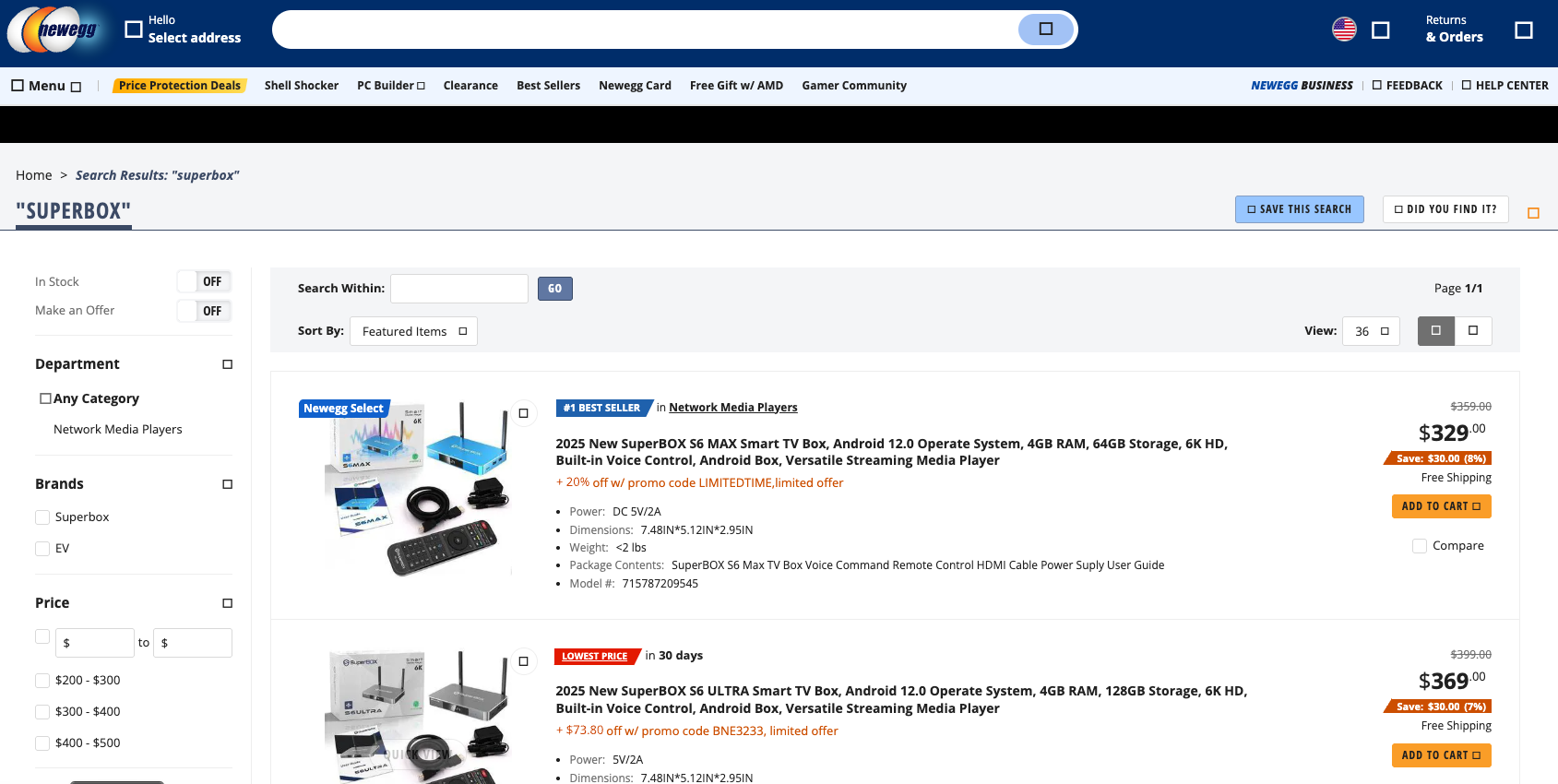
A quick online search shows various Superbox models and many similar Android streaming devices for sale at a wide range of top retail destinations, including Amazon, BestBuy, Newegg, and Walmart. Newegg.com, for example, currently lists more than three dozen Superbox models. In all cases, the products are sold by third-party merchants on these platforms, but in many instances the fulfillment comes from the e-commerce platform itself.

“Newegg is pretty bad now with these devices,” Ashley said. “Ebay is the funniest, because they have Superbox in Spanish — the SuperCaja — which is very popular.”

Superbox devices for sale via Newegg.com.

Ashley said Amazon recently cracked down on Android streaming devices branded as Superbox, but that those listings can still be found under the more generic title “modem and router combo” (which may be slightly closer to the truth about the device’s behavior).

Superbox doesn’t advertise its products in the conventional sense. Rather, it seems to rely on lesser-known influencers on places like Youtube and TikTok to promote the devices. Meanwhile, Ashley said, Superbox pays those influencers 50 percent of the value of each device they sell.

“It’s weird to me because influencer marketing usually caps compensation at 15 percent, and it means they don’t care about the money,” she said. “This is about building their network.”

A TikTok influencer casually mentions and promotes Superbox while chatting with her followers over a glass of wine.

BADBOX

As plentiful as the Superbox is on e-commerce sites, it is just one brand in an ocean of no-name Android-based TV boxes available to consumers. While these devices generally do provide buyers with “free” streaming content, they also tend to include factory-installed malware or require the installation of third-party apps that engage the user’s Internet address in advertising fraud.

In July 2025, Google filed a “John Doe” lawsuit (PDF) against 25 unidentified defendants dubbed the “BadBox 2.0 Enterprise,” which Google described as a botnet of over ten million Android streaming devices that engaged in advertising fraud. Google said the BADBOX 2.0 botnet, in addition to compromising multiple types of devices prior to purchase, can also infect devices by requiring the download of malicious apps from unofficial marketplaces.

Some of the unofficial Android devices flagged by Google as part of the Badbox 2.0 botnet are still widely for sale at major e-commerce vendors. Image: Google.

Several of the Android streaming devices flagged in Google’s lawsuit are still for sale on top U.S. retail sites. For example, searching for the “X88Pro 10” and the “T95” Android streaming boxes finds both continue to be peddled by Amazon sellers.

Google’s lawsuit came on the heels of a June 2025 advisory from the Federal Bureau of Investigation (FBI), which warned that cyber criminals were gaining unauthorized access to home networks by either configuring the products with malicious software prior to the user’s purchase, or infecting the device as it downloads required applications that contain backdoors, usually during the set-up process.

“Once these compromised IoT devices are connected to home networks, the infected devices are susceptible to becoming part of the BADBOX 2.0 botnet and residential proxy services known to be used for malicious activity,” the FBI said.

The FBI said BADBOX 2.0 was discovered after the original BADBOX campaign was disrupted in 2024. The original BADBOX was identified in 2023, and primarily consisted of Android operating system devices that were compromised with backdoor malware prior to purchase.

Riley Kilmer is founder of Spur, a company that tracks residential proxy networks. Kilmer said Badbox 2.0 was used as a distribution platform for IPidea, a China-based entity that is now the world’s largest residential proxy network.

Kilmer and others say IPidea is merely a rebrand of 911S5 Proxy, a China-based proxy provider sanctioned last year by the U.S. Department of the Treasury for operating a botnet that helped criminals steal billions of dollars from financial institutions, credit card issuers, and federal lending programs (the U.S. Department of Justice also arrested the alleged owner of 911S5).

How are most IPidea customers using the proxy service? According to the proxy detection service Synthient, six of the top ten destinations for IPidea proxies involved traffic that has been linked to either ad fraud or credential stuffing (account takeover attempts).

Kilmer said companies like Grass are probably being truthful when they say that some of their customers are companies performing web scraping to train artificial intelligence efforts, because a great deal of content scraping which ultimately benefits AI companies is now leveraging these proxy networks to further obfuscate their aggressive data-slurping activity. By routing this unwelcome traffic through residential IP addresses, Kilmer said, content scraping firms can make it far trickier to filter out.

“Web crawling and scraping has always been a thing, but AI made it like a commodity, data that had to be collected,” Kilmer told KrebsOnSecurity. “Everybody wanted to monetize their own data pots, and how they monetize that is different across the board.”

SOME FRIENDLY ADVICE

Products like Superbox are drawing increased interest from consumers as more popular network television shows and sportscasts migrate to subscription streaming services, and as people begin to realize they’re spending as much or more on streaming services than they previously paid for cable or satellite TV.

These streaming devices from no-name technology vendors are another example of the maxim, “If something is free, you are the product,” meaning the company is making money by selling access to and/or information about its users and their data.

Superbox owners might counter, “Free? I paid $400 for that device!” But remember: Just because you paid a lot for something doesn’t mean you are done paying for it, or that somehow you are the only one who might be worse off from the transaction.

It may be that many Superbox customers don’t care if someone uses their Internet connection to tunnel traffic for ad fraud and account takeovers; for them, it beats paying for multiple streaming services each month. My guess, however, is that quite a few people who buy (or are gifted) these products have little understanding of the bargain they’re making when they plug them into an Internet router.

Superbox performs some serious linguistic gymnastics to claim its products don’t violate copyright laws, and that its customers alone are responsible for understanding and observing any local laws on the matter. However, buyer beware: If you’re a resident of the United States, you should know that using these devices for unauthorized streaming violates the Digital Millennium Copyright Act (DMCA), and can incur legal action, fines, and potential warnings and/or suspension of service by your Internet service provider.

According to the FBI, there are several signs to look for that may indicate a streaming device you own is malicious, including:

-The presence of suspicious marketplaces where apps are downloaded.
-Requiring Google Play Protect settings to be disabled.
-Generic TV streaming devices advertised as unlocked or capable of accessing free content.
-IoT devices advertised from unrecognizable brands.
-Android devices that are not Play Protect certified.
-Unexplained or suspicious Internet traffic.

This explainer from the Electronic Frontier Foundation delves a bit deeper into each of the potential symptoms listed above.

  •