Members warn NFWI decision has opened up toxic culture that deters younger women from joining
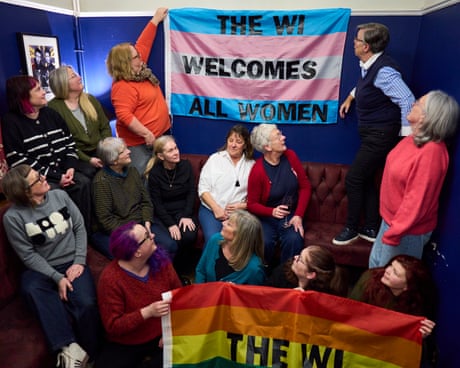
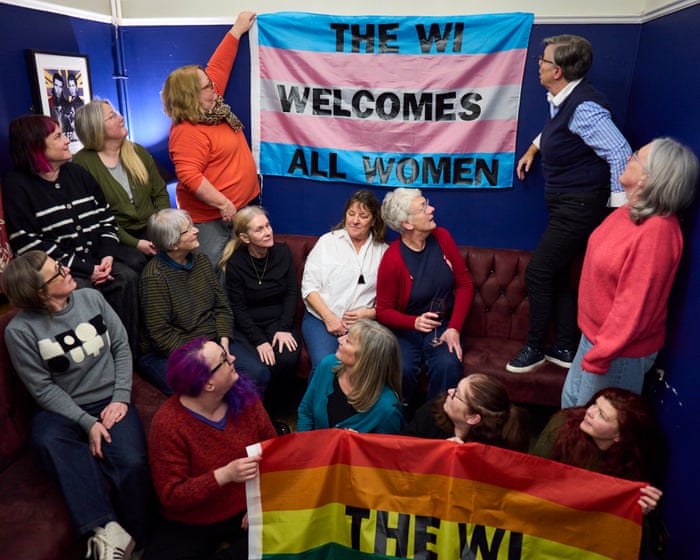
At least 12 Women’s Institute (WI) groups are closing or considering closure after the organisation barred transgender women from membership.
Members say more groups are likely to close, and that the federation’s decision has opened up a toxic, traditionalist culture that will deter younger women from joining.
PM says country’s discourse is being poisoned and polluted by rhetoric ‘pitting communities against one another’
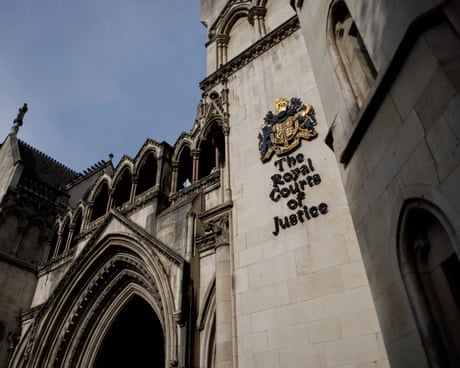
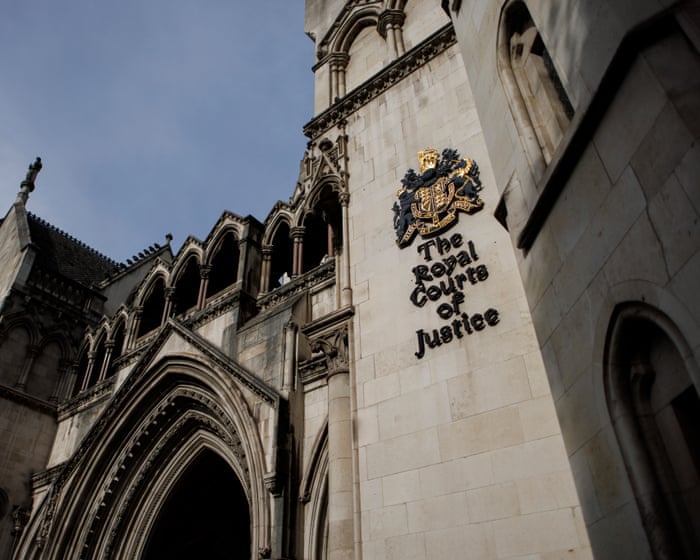
The Equality and Human Rights Commissionhas welcomed a high court ruling defending the interim guidance it issued to organisations about the implications of the supreme court judgement saying that, when the Equality Act refers to sex, it means biological sex.
The guidance – described as an “interim update” – was controversial because it was seen as over-prescriptive, and the Good Law Project launched a legal challenge.
We welcome the court’s conclusion that the interim update was lawful and the EHRC did not act in breach of its statutory duties.
We issued the interim update in response to a high level of demand immediately after the supreme court’s ruling. We were concerned that organisations and individuals could be subject to misinformation and misrepresentation of the judgment and its consequences. That might have led to them failing to comply with the law: adopting or maintaining discriminatory policies or practices, to the detriment of those the law is supposed to protect.
It is wrong because it reduces trans people to a third sex. It is wrong because it gives little or no weight to the harm done to trans people by excluding them. And it is wrong because it is not interested enough in the rights of people who are trans to keep their status private.
The tragic irony for [Morgan] McSweeney [Starmer’s chief of staff until Sunday] was that Starmer’s 18 months as prime minister have only vindicated Blair’s central analysis of their project. McSweeney and Starmer might have identified what they disliked most about the excesses of New Labour, but they never developed an alternative political economy of their own that might replace it. In place of Blairism there was no theory of political reform or coherent critique of British state failure, no analysis of Britain’s future place in the world or any kind of distinct moral mission. All there was was a promise to “clean things up” as Starmer put it to me. The mission became, in essence, conservative: to protect the settlement erected by Blair and eroded over the 20 years since his departure. Britain could thrive if it could only begin to live within its means, attract more foreign investment, reassure the bond markets and return a sense of “service” to government. After years of chaos, mere stability would be change. And this would be enough.
Where there was distinct radicalism – from McSweeney’s Blue Labour instincts – there was no mandate. McSweeney and Starmer had not fought an ideological battle to bring Blue Labour to government, as Wilson had done for socialist modernisation in the 1960s and Blair for liberal progressivism 30 years later. This was largely because Starmer never really believed in it in the first place and McSweeney, though a reflective thinker, was always more of an operator than political theorist. And so, the pair offered a programme without a programme, a government without ideas or the mandate to enact them.
Another of those who worked for [Stamer] adds: ‘He’s completely incurious. He’s not interested in policy or politics. He thinks his job is to sit in a room and be serious, be presented with something and say “Yes” or “No” – invariably “Yes” – rather than be persuader–in-chief.’ Even before he fell out with Starmer, Mandelson told friends and colleagues that the Prime Minister had never once asked him ‘What really makes Trump tick?’ or ‘How will he react to this?’.
Others dispute the claim of incuriosity. ‘There are subjects when he drills down and he’s really, really good,’ says another aide. ‘The idea he can’t think politically is also wrong. He will often think ahead.’ But even these loyalists admit Starmer lacks a ‘philosophical worldview’.
Judge rejects argument that advice is legally flawed and excludes trans people from services they have long used
The Good Law Project (GLP) has lost its legal challenge to interim advice released by the UK equalities watchdog that in effect said transgender people should be banned from using bathroom and changing facilities according to their lived gender.
The advice from the Equality and Human Rights Commission (EHRC), which has since been withdrawn from its website, was published soon after the landmark supreme court ruling on biological sex last April.
Advice on how to respond to students questioning their birth gender has been updated. Here are the key changes
Ministers have released updated guidance on how schools and colleges in England should respond to students who are questioning their birth gender. How is it different to the previous Department for Education (DfE) guidance, released under the Conservatives in 2023?
Texas A&M University is the latest school to end women’s and gender studies programs and teaching race. We know why
Last week, we learned of the decision of the Texas A&M University board of regents to end women’s and gender studies programs as well as the teaching of “divisive concepts” such as race. A&M was not the first university to do this. Florida’s New College made the move in 2023. Other red state legislatures have passed similar requirements and their public universities (in North Carolina, Ohio and Kansas) have followed suit.
The move to cancel gender studies is explicitly justified as a way to comply with Donald Trump’s executive order of last year titled Defending Women from Gender Ideology Extremism and Restoring Biological Truth to the Federal Government. That document makes “the biological reality of sex” a matter not of science but of law.
DfE guidance urges teachers to respond to social transition requests ‘with caution’ and includes Cass report findings
Primary school-age children who question their gender could be allowed to use different pronouns under long-awaited government guidance on the subject.
The guidance, billed as moving away from a culture-war approach to the subject, has some notablechanges compared with a draft produced in 2023 under the Conservatives, which said that primary-aged children “should not have different pronouns to their sex-based pronouns used about them”.
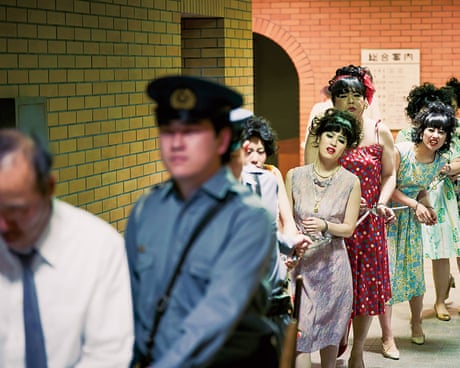
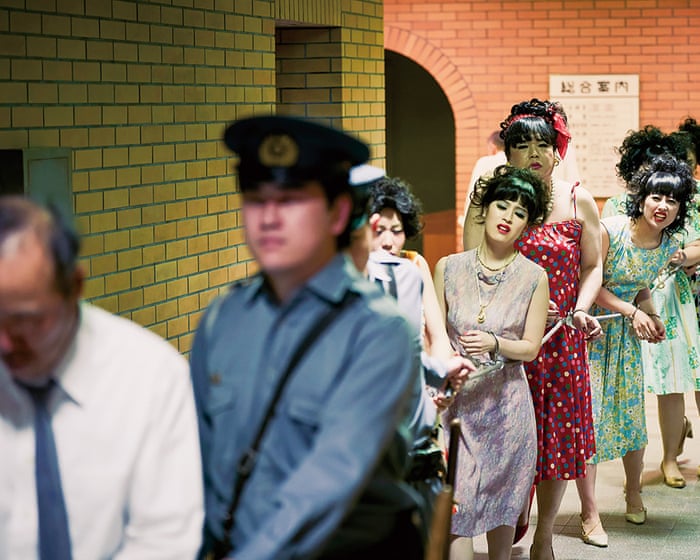
Kasho Iizuka’s feature casts trans actors to revisit a notorious 1965 trial that made gender reassignment illegal for more than 30 years. He explains why the history remains unfinished
The so-called “Blue Boy trial” in 1965 was a landmark moment for trans visibility in Japan. Now it has become a landmark film, directed by Kasho Iizuka, a transgender man and one of very few queer film-makers working in the commercial Japanese film industry.
The original legal case concerned a doctor who was prosecuted for performing gender reassignment surgery on transgender women, amid law enforcement frustrations that female-presenting transgender sex workers could not be prosecuted for their profession due to their being legally male. The doctor was found guilty of violating Japan’s eugenics laws, which prohibited surgeries resulting in sterilisation if they were deemed inessential. “Blue Boy”was a slang term for transgender individuals assigned male at birth, and the verdict effectively outlawed gender reassignment surgery in Japan until 1998. Despite this, the case raised the domestic profile of transgender people.
A report detailing how the careers of female presenters are curtailed should be a clarion call. The problem has endured for too long
As the BBC closes in on a new director general, the possibility again arises that it could be a woman. The talk is of the former BBC One controller Jay Hunt, the former Channel 4 boss Alex Mahon or the former BBC chief content officer Charlotte Moore.
At this point in the BBC’s history, almost everyone would applaud a woman at the top – but clearly the institution needs a lot more than a woman, however pioneering and accomplished, at the helm. We know from the excoriating report commissioned by the broadcaster itself that it has a grave problem with dwindling numbers of “older women” presenters. Trevor Phillips, 72, still shines at Sky, while David Aaronovitch, 71, is deservedly a fixture on Radio 4: they’re just older men, experienced journalists, doing their thing.
Her comments have been put through Britain’s culture war meat-grinder, but sexuality and gender is as fluid and interesting as we want it to be
Pity Olivia Colman. She didn’t want it to become the headline that she sometimes thinks of herself as a gay man – but clearly forgot how neurotic and demagogic much of the British press becomes if you say anything mildly provocative about sexuality and gender.
Here’s what happened. In an interview last week with the American LGBTQ+ publication Them, when asked about her penchant for taking roles in films featuring LGBTQ+ characters (say, The Favourite or Heartstopper), the actor said that she feels that she has a foot in various camps. “Throughout my whole life, I’ve had arguments with people where I’ve always felt sort of nonbinary … I’ve never felt massively feminine in my being female. I’ve always described myself to my husband as a gay man. And he goes, ‘Yeah, I get that.’”
Jason Okundaye is an assistant Opinion editor at the Guardian
Do you have an opinion on the issues raised in this article? If you would like to submit a response of up to 300 words by email to be considered for publication in our letters section, please click here.
The A.M.A.’s announcement followed a similar recommendation from the American Society of Plastic Surgeons. Other medical groups argued for a more personalized approach.
Between 2016 and 2020, about 3,700 patients 18 years old and younger have undergone gender transition surgery, mostly for breast removal, according to a JAMA study.

 Login
Login