❌

Reading view

OpenAI sidesteps Nvidia with unusually fast coding model on plate-sized chips

On Thursday, OpenAI released its first production AI model to run on non-Nvidia hardware, deploying the new GPT-5.3-Codex-Spark coding model on chips from Cerebras. The model delivers code at more than 1,000 tokens (chunks of data) per second, which is reported to be roughly 15 times faster than its predecessor. To compare, Anthropic's Claude Opus 4.6 in its new premium-priced fast mode reaches about 2.5 times its standard speed of 68.2 tokens per second, although it is a larger and more capable model than Spark.

"Cerebras has been a great engineering partner, and we're excited about adding fast inference as a new platform capability," Sachin Katti, head of compute at OpenAI, said in a statement.

Codex-Spark is a research preview available to ChatGPT Pro subscribers ($200/month) through the Codex app, command-line interface, and VS Code extension. OpenAI is rolling out API access to select design partners. The model ships with a 128,000-token context window and handles text only at launch.


Read full article

Comments

Β© Teera Konakan / Getty Images
  •  

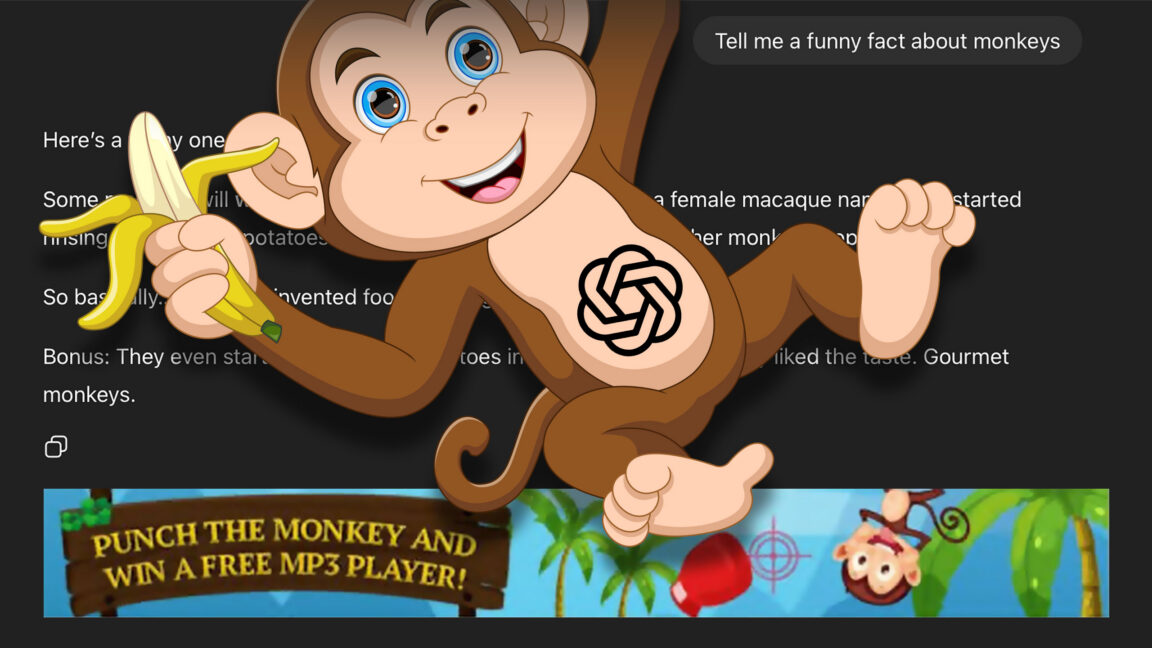
OpenAI researcher quits over ChatGPT ads, warns of "Facebook" path

On Wednesday, former OpenAI researcher ZoΓ« Hitzig published a guest essay in The New York Times announcing that she resigned from the company on Monday, the same day OpenAI began testing advertisements inside ChatGPT. Hitzig, an economist and published poet who holds a junior fellowship at the Harvard Society of Fellows, spent two years at OpenAI helping shape how its AI models were built and priced. She wrote that OpenAI's advertising strategy risks repeating the same mistakes that Facebook made a decade ago.

"I once believed I could help the people building A.I. get ahead of the problems it would create," Hitzig wrote. "This week confirmed my slow realization that OpenAI seems to have stopped asking the questions I'd joined to help answer."

Hitzig did not call advertising itself immoral. Instead, she argued that the nature of the data at stake makes ChatGPT ads especially risky. Users have shared medical fears, relationship problems, and religious beliefs with the chatbot, she wrote, often "because people believed they were talking to something that had no ulterior agenda." She called this accumulated record of personal disclosures "an archive of human candor that has no precedent."

Read full article

Comments

Β© Aurich Lawson | Getty Images

  •  

AI companies want you to stop chatting with bots and start managing them

On Thursday, Anthropic and OpenAI shipped products built around the same idea: instead of chatting with a single AI assistant, users should be managing teams of AI agents that divide up work and run in parallel. The simultaneous releases are part of a gradual shift across the industry, from AI as a conversation partner to AI as a delegated workforce, and they arrive during a week when that very concept reportedly helped wipe $285 billion off software stocks.

Whether that supervisory model works in practice remains an open question. Current AI agents still require heavy human intervention to catch errors, and no independent evaluation has confirmed that these multi-agent tools reliably outperform a single developer working alone.

Even so, the companies are going all-in on agents. Anthropic's contribution is Claude Opus 4.6, a new version of its most capable AI model, paired with a feature called "agent teams" in Claude Code. Agent teams let developers spin up multiple AI agents that split a task into independent pieces, coordinate autonomously, and run concurrently.

Read full article

Comments

Β© demaerre via Getty Images

  •  

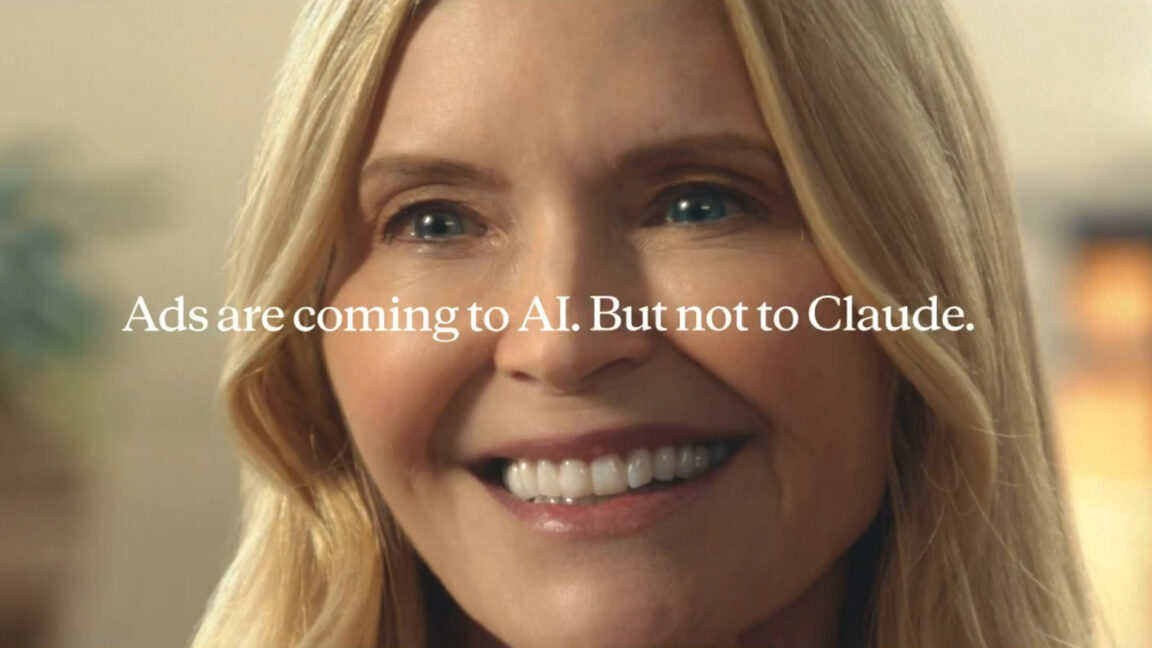
OpenAI is hoppin' mad about Anthropic's new Super Bowl TV ads

On Wednesday, OpenAI CEO Sam Altman and Chief Marketing Officer Kate Rouch complained on X after rival AI lab Anthropic released four commercials, two of which will run during the Super Bowl on Sunday, mocking the idea of including ads in AI chatbot conversations. Anthropic's campaign seemingly touched a nerve at OpenAI just weeks after the ChatGPT maker began testing ads in a lower-cost tier of its chatbot.

Altman called Anthropic's ads "clearly dishonest," accused the company of being "authoritarian," and said it "serves an expensive product to rich people," while Rouch wrote, "Real betrayal isn't ads. It's control."

Anthropic's four commercials, part of a campaign called "A Time and a Place," each open with a single word splashed across the screen: "Betrayal," "Violation," "Deception," and "Treachery." They depict scenarios where a person asks a human stand-in for an AI chatbot for personal advice, only to get blindsided by a product pitch.

Read full article

Comments

Β© Anthropic

  •  

Should AI chatbots have ads? Anthropic says no.

On Wednesday, Anthropic announced that its AI chatbot, Claude, will remain free of advertisements, drawing a sharp line between itself and rival OpenAI, which began testing ads in a low-cost tier of ChatGPT last month. The announcement comes alongside a Super Bowl ad campaign that mocks AI assistants that interrupt personal conversations with product pitches.

"There are many good places for advertising. A conversation with Claude is not one of them," Anthropic wrote in a blog post. The company argued that including ads in AI conversations would be "incompatible" with what it wants Claude to be: "a genuinely helpful assistant for work and for deep thinking."

The stance contrasts with OpenAI's January announcement that it would begin testing banner ads for free users and ChatGPT Go subscribers in the US. OpenAI said those ads would appear at the bottom of responses and would not influence the chatbot's actual answers. Paid subscribers on Plus, Pro, Business, and Enterprise tiers will not see ads on ChatGPT.

Read full article

Comments

Β© Anthropic

  •  

Nvidia's $100 billion OpenAI deal has seemingly vanished

In September 2025, Nvidia and OpenAI announced a letter of intent for Nvidia to invest up to $100 billion in OpenAI's AI infrastructure. At the time, the companies said they expected to finalize details "in the coming weeks." Five months later, no deal has closed, Nvidia's CEO now says the $100 billion figure was "never a commitment," and Reuters reports that OpenAI has been quietly seeking alternatives to Nvidia chips since last year.

Reuters also wrote that OpenAI is unsatisfied with the speed of some Nvidia chips for inference tasks, citing eight sources familiar with the matter. Inference is the process by which a trained AI model generates responses to user queries. According to the report, the issue became apparent in OpenAI's Codex, an AI code-generation tool. OpenAI staff reportedly attributed some of Codex's performance limitations to Nvidia's GPU-based hardware.

After the Reuters story published and Nvidia's stock price took a dive, Nvidia and OpenAI have tried to smooth things over publicly. OpenAI CEO Sam Altman posted on X: "We love working with NVIDIA and they make the best AI chips in the world. We hope to be a gigantic customer for a very long time. I don't get where all this insanity is coming from."

Read full article

Comments

  •  

Will ChatGPT Ads Change OpenAI? + Amanda Askell Explains Claude’s New Constitution

β€œThe question is not are these first couple of ads that we’re seeing from OpenAI going to be good or not? It’s whether two or three years from now, ChatGPT is being steered toward ad-friendly topics.”

Β© Photo Illustration by The New York Times; Image: Getty Images

  •  

The Drama at Thinking Machines, a New A.I. Start-Up, Is Riveting Silicon Valley

Defections, secret conversations, deal talks that fizzled and a battle for control: The turmoil at Thinking Machines Lab is the artificial intelligence industry’s latest drama.

Β© Jim Wilson/The New York Times

Ms. Murati with Mr. Altman and two other OpenAI colleagues in 2023. She co-founded Thinking Labs a year ago.
  •