Reading view

Deftones review – alt-metal veterans sound exceptionally fresh 38 years on

BP Pulse Live, Birmingham
The US band’s brawny, pit-inciting riffs come laced with blurry waves of distortion, making for music that is oddly reflective and melancholy

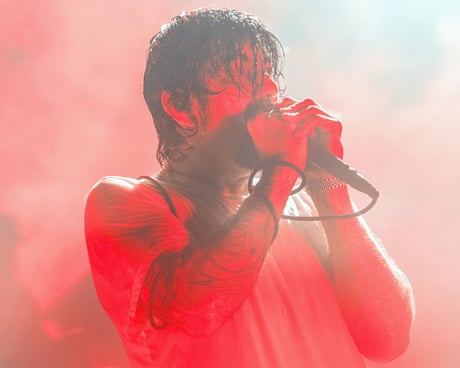
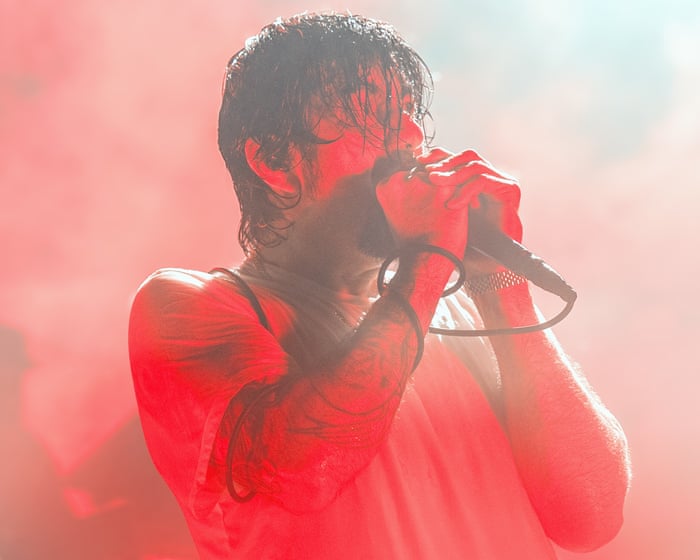
Early 00s metal is enjoying a revival, but that alone can’t account for the dramatic surge in commercial fortunes being enjoyed by Deftones. Thirty-one years on from the release of their debut album, they find themselves, as frontman Chino Moreno has put it, “literally bigger than we’ve ever been”. Between the release of 2020’s Ohms and last year’s Private Music their monthly listener figures on Spotify surged from two million to 17 million. The 15,000-capacity venue where they open their UK tour is accordingly heaving.

The reason, with a certain inevitability, is TikTok virality. Tonight, Deftones’ setlist is liberally peppered with tracks ubiquitous on the social media app, from opener Be Quiet and Drive (Far Away) to encore Cherry Waves – although why its users have alighted on them is a matter of conjecture. On fan forums, opinions range from the practical (younger listeners discovered the band after emo rappers sampled their music) to the more earthy: there is discussion of a phenomenon called – dear God - “hornycore” into which the Deftones apparently fit because Moreno has “sexual tones” and is “a fox/daddy”.

Continue reading...

© Photograph: PR
© Photograph: PR
© Photograph: PR

  •  

Charli xcx: Wuthering Heights review – atonal, amorous anthems that more than stand apart from the film

(Atlantic)
Casting off her Bratty cigarettes and sunglasses, the pop visionary channels the torments of Heathcliff and Cathy and the tumult of the Velvet Underground on her latest captivating pivot

In the catalogues of rock and pop artists, film soundtracks usually seem like interstitial releases. For every career highlight Shaft or Superfly, there’s a plethora of soundtrack albums that carry the tang of the side-hustle. It was doubtless flattering to be asked in the first place – who doesn’t want to feel like a polymath? – but the results are doomed to languish in the footnotes, alongside the compilations of B-sides and outtakes, where only diehard fans spend extended amounts of time.

But the release of House, the first single taken from Charli xcx’s soundtrack to Wuthering Heights, strongly suggested that its author saw Emerald Fennell’s take on Emily Brontë as a chance for a reset. In 2024’s Brat, she made an album you could genuinely call era-defining without fear of embarrassment: if an album makes an impact on the US presidential campaign and its title ends up refashioned as an adjective in the Collins English Dictionary, then it’s definitely era-defining.

Continue reading...

© Photograph: Paul Kooiker

© Photograph: Paul Kooiker

© Photograph: Paul Kooiker

  •  

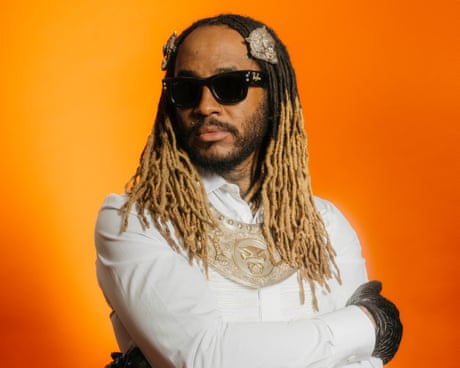
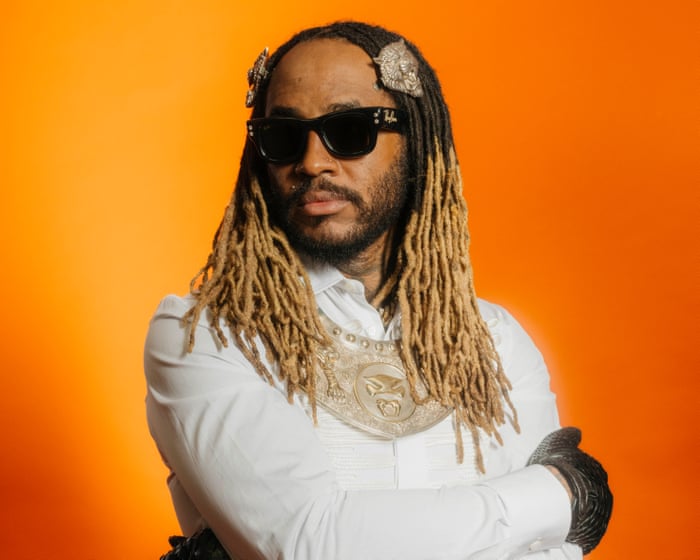
‘Choosing happy is a hell of a process’: Thundercat on funk, lost friends and being fired by Snoop Dogg (possibly)

The genre-hopping bass virtuoso has backed Ariana Grande and Herbie Hancock, appeared in Star Wars and become a dedicated boxer. Ahead of his fifth album, Stephen Bruner explains his polymath mindset

It is an overcast Thursday afternoon at the end of January, and Thundercat is telling me about the time he tried to interest Snoop Dogg in the mid-70s oeuvre of Frank Zappa. He wasn’t Thundercat then, he explains. He was still Stephen Bruner, bass player for hire, who had fetched up in what he calls a “stupid-as-hell, Rick James-level band” backing the venerable rapper, packed with Los Angeles jazz luminaries who would later contribute to Kendrick Lamar’s To Pimp a Butterfly: Kamasi Washington, Josef Leimberg, Terrace Martin. Alas, their jazz chops were sometimes deemed surplus to requirements. At one point, while Bruner was playing an expansive bass solo on stage, Snoop sidled up to him and flatly announced: “Ain’t nobody told you to play all that.”

So perhaps it was in the spirit of horizon-broadening that Bruner took it upon himself to play Snoop the song St Alfonzo’s Pancake Breakfast, a knotty, marimba-heavy slice of jazz-rock from Zappa’s 1974 album Apostrophe, which switches time signatures three times in less than two minutes, and features lyrics about a man stealing margarine and urinating on a bingo card. “Yeah, I hit him with the rollercoaster,” Bruner chuckles. “He was smoking, and he almost ate his blunt, saying: ‘What the hell is going on?’ I said: ‘My sentiments exactly.’ I think I did a cartwheel after that and left the band: I played Snoop Dogg St Alfonzo’s Breakfast, my job is done here, I have no more work to do.” He thinks for a moment. “Or maybe I got fired: ‘Get out of here dude, you’re too weird.’ I forget. It was a great moment.”

Continue reading...

© Photograph: Ollie Tikare/The Guardian

© Photograph: Ollie Tikare/The Guardian

© Photograph: Ollie Tikare/The Guardian

  •  

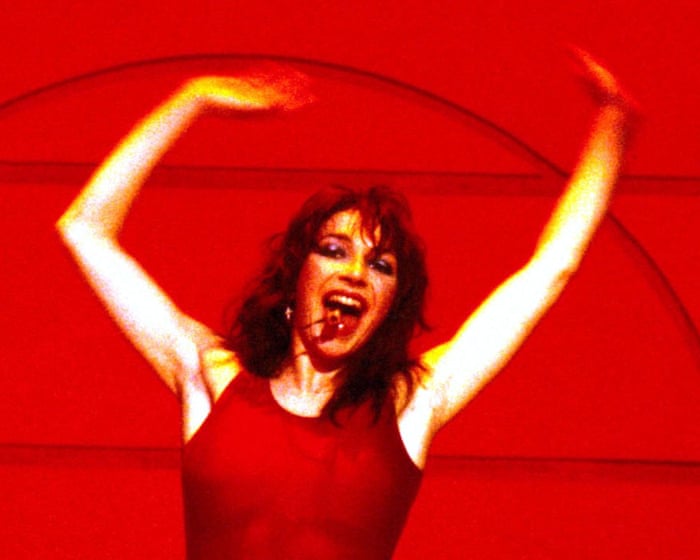
From Brontë to Ballard, Orwell to Okri: the best songs inspired by literature – ranked!

As Kate Bush’s Wuthering Heights gets a boost from a new film adaptation, we survey the surprising, seditious and sensual ways in which prose has influenced pop

The oeuvre of Katy Perry occasionally has some profoundly unexpected inspirations: California Gurls is spelt in homage to Big Star’s September Gurls, while Firework was based on, wait for it, Jack Kerouac’s On the Road, specifically the line about how his favourite people “burn like fabulous yellow roman candles”.

Continue reading...

© Photograph: Barry Schultz/ZUMA Press Wire/Shutterstock

© Photograph: Barry Schultz/ZUMA Press Wire/Shutterstock

© Photograph: Barry Schultz/ZUMA Press Wire/Shutterstock

  •  

Hemlocke Springs: The Apple Tree Under the Sea review | Alexis Petridis's album of the week

(Awal)
On her self-released debut, the singer-songwriter championed by Chappell Roan doubles down on the wonky charm that made her go viral on TikTok

We often hear about the damaging impact of social media on pop, from toxic fan culture to the way online gossip reduces lyrics to a treasure hunt for details about artists’ private lives. But it’s also worth noting its positive effects: how TikTok users can make improbable tracks from pop history go viral; how social media can transform the fortunes of an artist who probably wouldn’t have got past a record company’s reception in our current, risk-averse era.

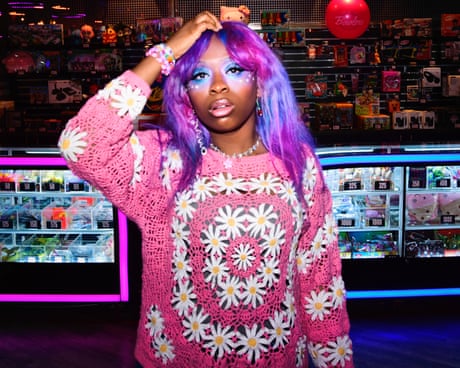
Which brings us to North Carolina’s Isimeme Udu, better known as Hemlocke Springs, who rose to fame posting homemade videos of her songs on TikTok. There’s always a chance that a label might have gone all in on a bespectacled 27-year-old former librarian fond of neon-coloured wigs, purveying “awkward Black girl anthems” via a lo-fi take on 80s-influenced synth pop, but you wouldn’t bet on it. Self-released, her tracks have racked up millions of streams and attracted the attention of Doja Cat and Chappell Roan, both of whom took her on tour: cue a video of Springs supporting Roan at New York’s Forest Hills stadium last autumn, performing Girlfriend while most of the 13,000-capacity audience sings along.

Continue reading...

© Photograph: Publicity image

© Photograph: Publicity image

© Photograph: Publicity image

  •  

The Beach Boys: We Gotta Groove review – box set of lost 70s music has all of Brian Wilson’s turmoil and talent

(Capitol)
Spanning 1974-77, this collection shows Wilson was capable of stunning pre-rock’n’roll homage – on the previously unheard Adult/Child – while also writing wayward songs about organic food

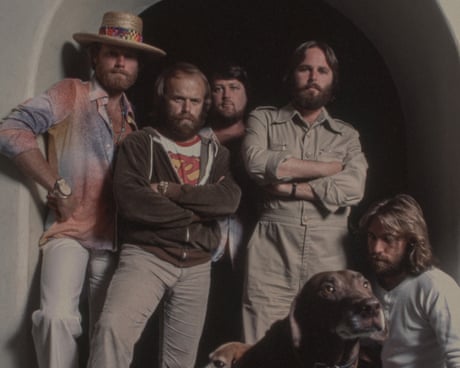
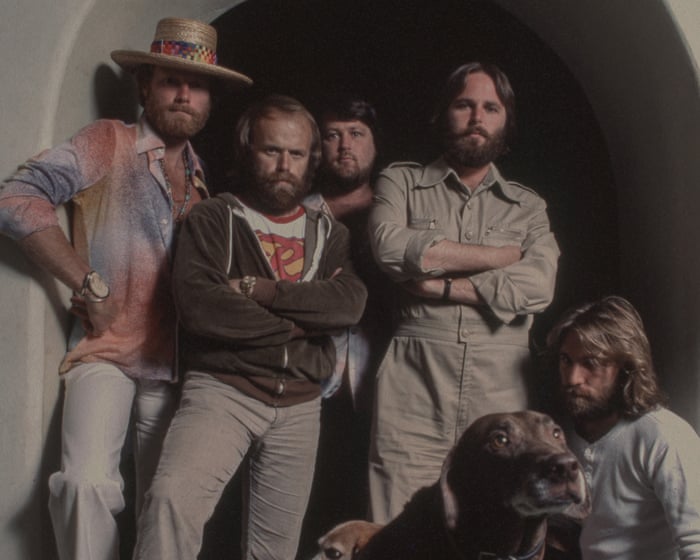
We Gotta Groove – The Brother Studios Years, a new 73-track box set, picks up the story of the Beach Boys at a deeply peculiar juncture in their career. On the face of it, they were back on top. Their commercial fortunes had been revived by the huge success of some timely compilations: in the US, 1974’s Endless Summer sold 3m copies, while 20 Golden Greats became Britain’s second-biggest-selling album of 1976. Their leader Brian Wilson was apparently, miraculously, match fit after years of addiction and mental health struggles. “BRIAN IS BACK!” ran the advertising slogan for 15 Big Ones, the first Beach Boys album to bear his name as sole producer since Pet Sounds, and the first to be made at their newly founded Brother Studios. Buoyed by a media campaign that included an hour-long TV special, it duly became their most successful album of new material in 11 years.

But, as ever with the Beach Boys, it was more complicated than it initially seemed. As a succession of features noted, Wilson didn’t seem to be terribly well at all. A Rolling Stone writer dispatched to meet him was startled when Wilson asked him for drugs midway through the interview, and expressed grave doubts about Eugene Landy, the controversial psychologist supposedly responsible for Wilson’s recuperation. A Melody Maker journalist who saw the Beach Boys live that summer declared that Wilson “shouldn’t be subjected to being propped up onstage”, noted that he looked visibly distressed and made no musical contribution. Rather than a triumphant return, 15 Big Ones was a hastily thrown-together mess of cover versions and wan new material, its sessions marked by disagreements, not least over whether Wilson was even capable of producing an album. The band’s members openly disparaged it on release: Dennis Wilson bluntly described one track as a “piece of shit”. The public who bought it seemed to lose interest quickly: the Beach Boys did not score another Top 10 album of new material for 36 years.

Continue reading...

© Photograph: Max Aguilera-Hellweg

© Photograph: Max Aguilera-Hellweg

© Photograph: Max Aguilera-Hellweg

  •