Three Democrats are seeking information from tech firms about the growing energy use of data centers and the utility bills of individuals and other businesses.
The energy needs of data centers used for artificial intelligence are forcing utility companies to spend billions of dollars to upgrade the power grid, the lawmakers said.
School districts from Utah to Ohio to Alabama are spending thousands of dollars on these tools, despite research showing the technology is far from reliable.
PayPal has applied to become a US bank by forming a Utah-chartered industrial loan company, signaling a push to deepen its financial services "as companies rush to capitalize on a friendly regulatory environment under the Trump administration," reports Reuters. From the report: If approved, the move will help PayPal to strengthen its lending offerings to small businesses in the U.S. as well as reduce its reliance on third parties. "Securing capital remains a significant hurdle for small businesses striving to grow and scale," said PayPal CEO Alex Chriss. "Establishing PayPal Bank will strengthen our business and improve our efficiency, enabling us to better support small business growth and economic opportunities across the U.S."
PayPal also plans to offer interest-bearing savings accounts to customers. The company has provided over $30 billion in loans and capital since 2013, it said. [...] PayPal has selected Mara McNeill to serve as PayPal Bank's president. She comes with over two decades of experience in banking and commercial lending, and has previously served as the CEO of Toyota Financial Savings Bank.
New Orleans is the first US city with real-time facial recognition: If you're wanted and walk past one of the system's cameras, it could flag you. The twist: it's a private system, and even though the new mayor and police chief are at odds about facial recognition, this non-profit says it's able to establish its own "guard-rails" as it feeds real-time tips to the police, side-stepping the debate about government regulation and privacy.
A new study warns that glaciers in the European Alps will hit their peak extinction rate within eight years, with global glacier loss accelerating toward thousands per year unless emissions are rapidly cut. "Glaciers in the western US and Canada are forecast to reach their peak year of loss less than a decade later, with more than 800 disappearing each year by then," adds the Guardian. From the report: About 200,000 glaciers remain worldwide, with about 750 disappearing each year. However, the research indicates this pace will accelerate rapidly as emissions from burning fossil fuels continue to be released into the atmosphere. Current climate action plans from governments are forecast to push global temperatures to about 2.7C above preindustrial levels, supercharging extreme weather. Under this scenario, glacier losses would peak at about 3,000 a year in 2040 and plateau at that rate until 2060. By the end of the century, 80% of today's glaciers will have gone. By contrast, rapid cuts to carbon emissions to keep global temperature rise to 1.5C would cap annual losses at about 2,000 a year in 2040, after which the rate would decline. [...]
The new study, published in Nature Climate Change, analyzed more than 200,000 glaciers from a database of outlines derived from satellite images. The researchers used three global glacier models to assess their fate under different heating scenarios. Regions with the smallest and fastest-melting glaciers were found to be the most vulnerable. The study estimates the 3,200 glaciers in central Europe would shrink by 87% by 2100 -- even if global temperature rise is limited to 1.5C, rising to 97% under 2.7C of heating.
In the western US and Canada, including Alaska, about 70% of today's 45,000 glaciers are projected to vanish under 1.5C of heating, and more than 90% under 2.7C. The Caucasus and southern Andes are also expected to face devastating losses. Larger glaciers take longer to melt, with those in Greenland reaching their peak extinction rate in about 2063 -- losing 40% by 2100 under 1.5C of heating and 59% under 2.7C. However, the melting is forecast to continue beyond 2100. The researchers said the peak loss dates represent more than a numerical milestone. "They mark turning points with profound implications for ecosystems, water resources and cultural heritage," they wrote. "[It is] a human story of vanishing landscapes, fading traditions and disrupted daily routines."
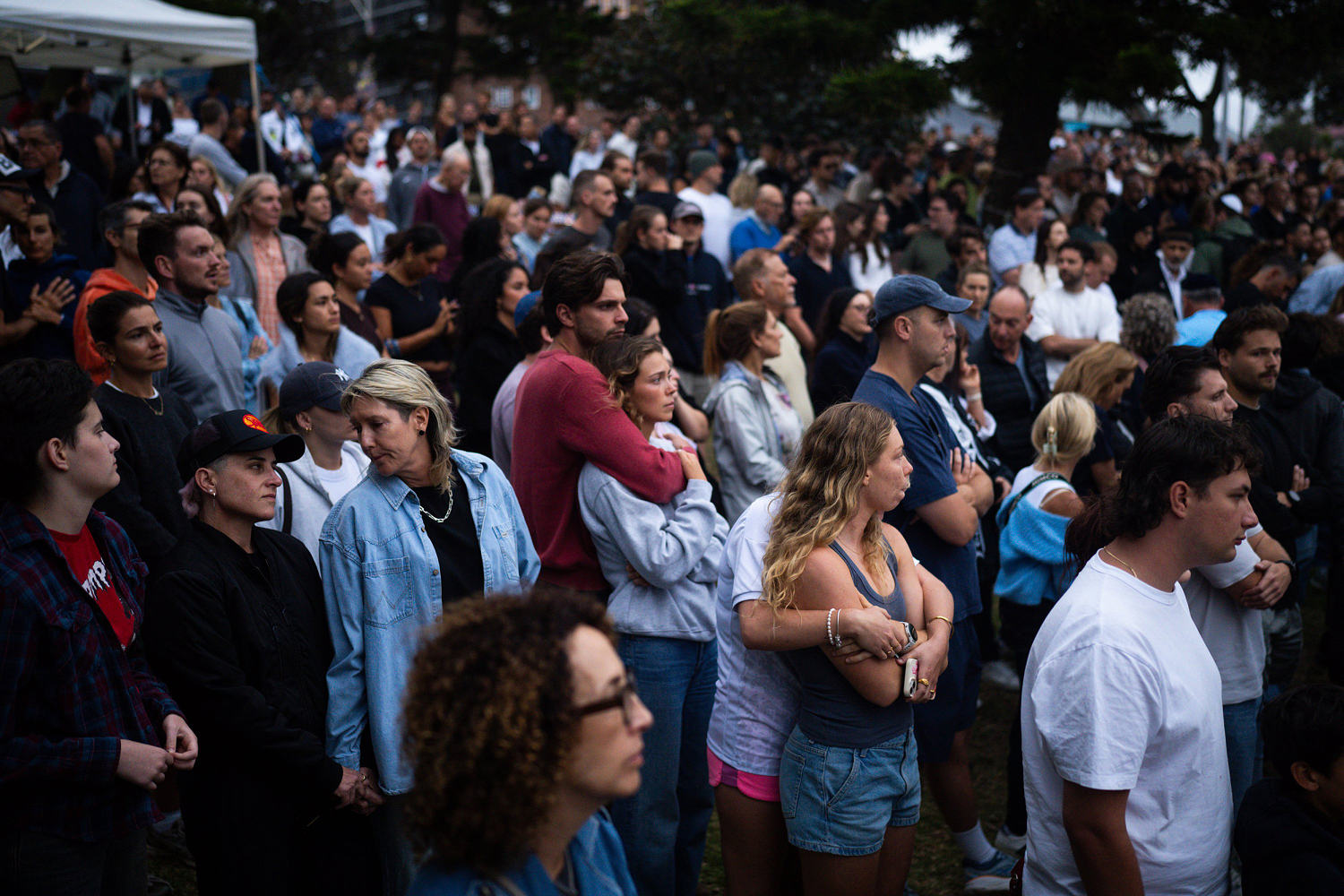
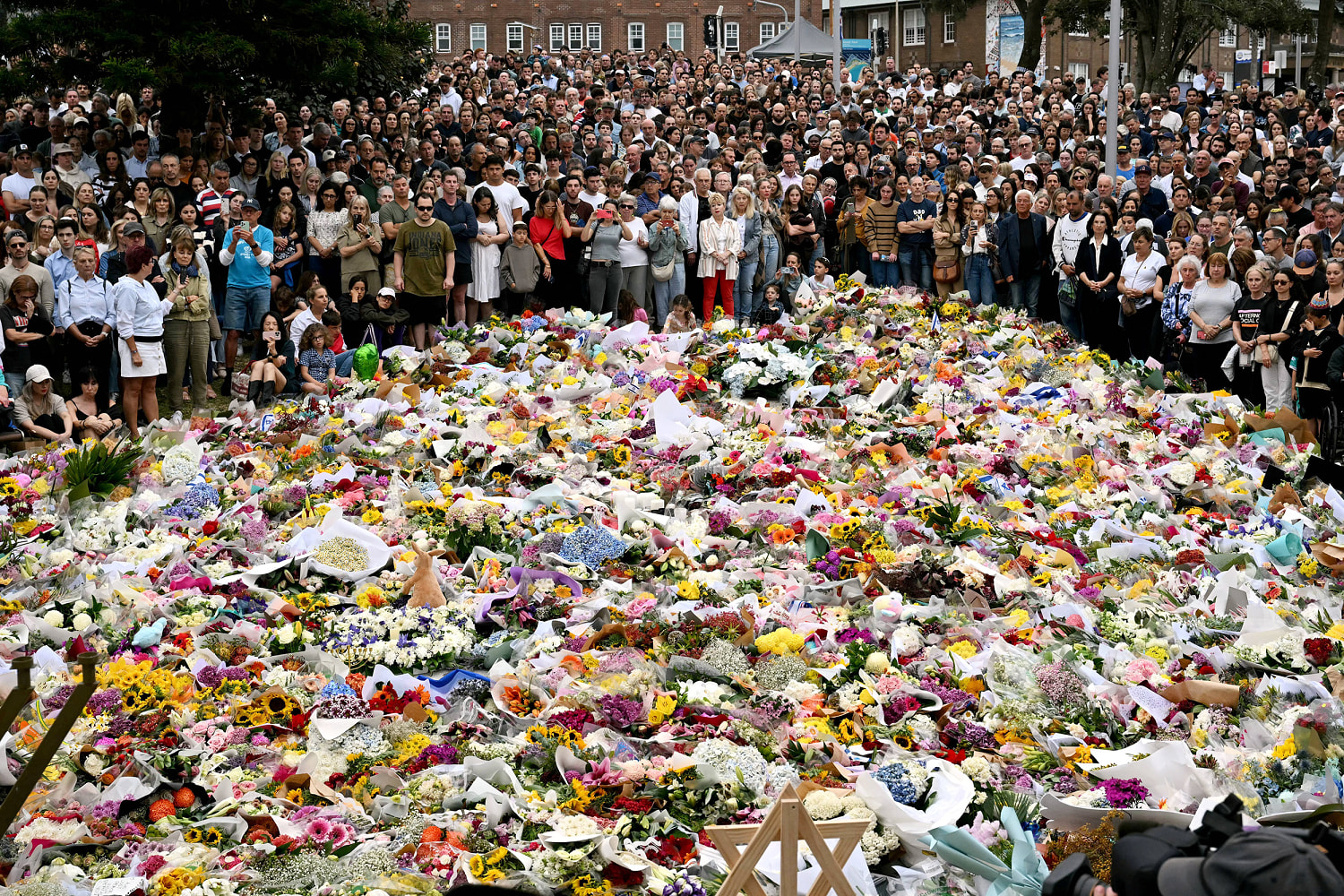
Australian Prime Minister Anthony Albanese said the suspects were “motivated by Islamic State ideology.” They had traveled to the Philippines prior to the attack, officials said.
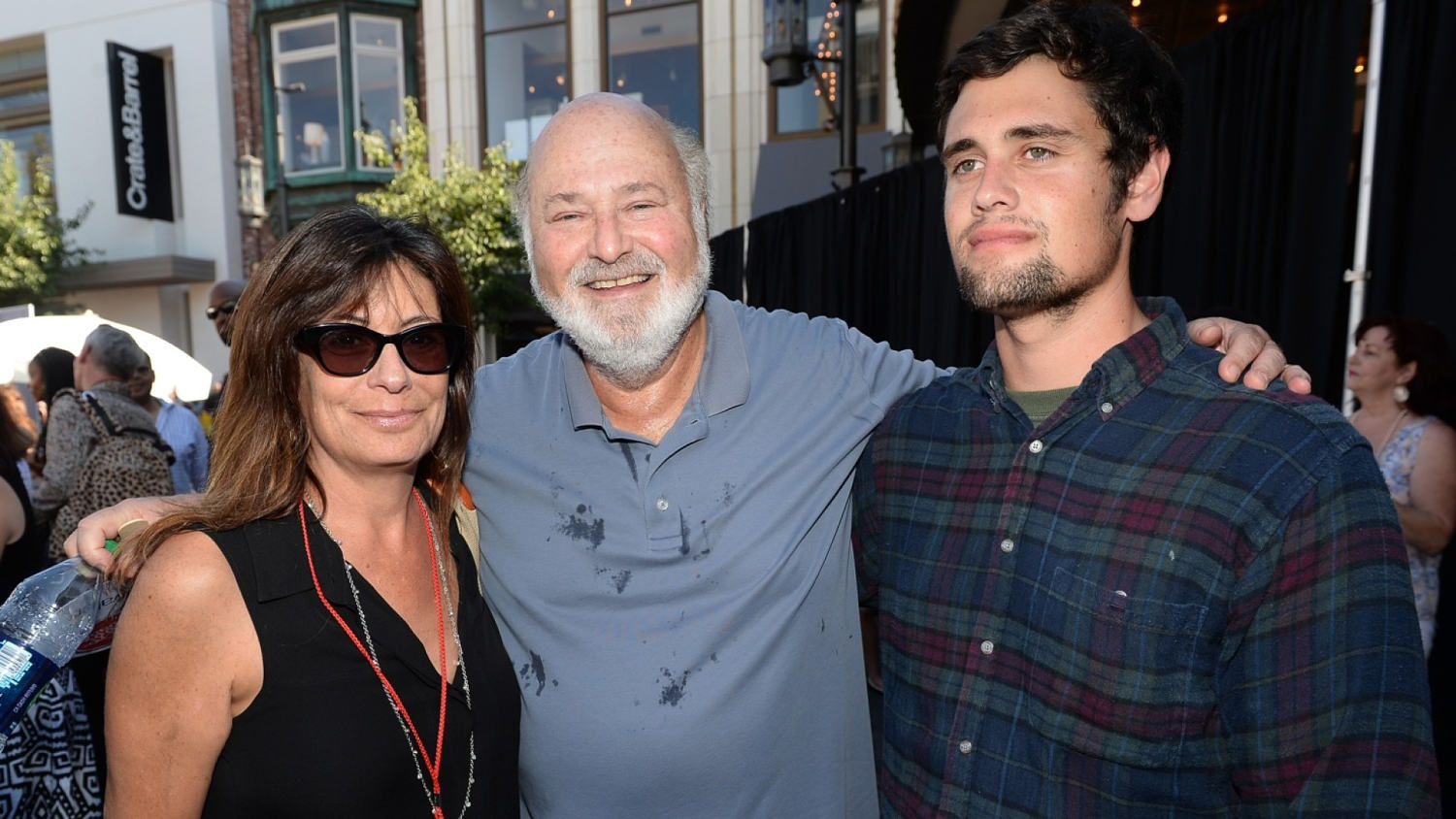
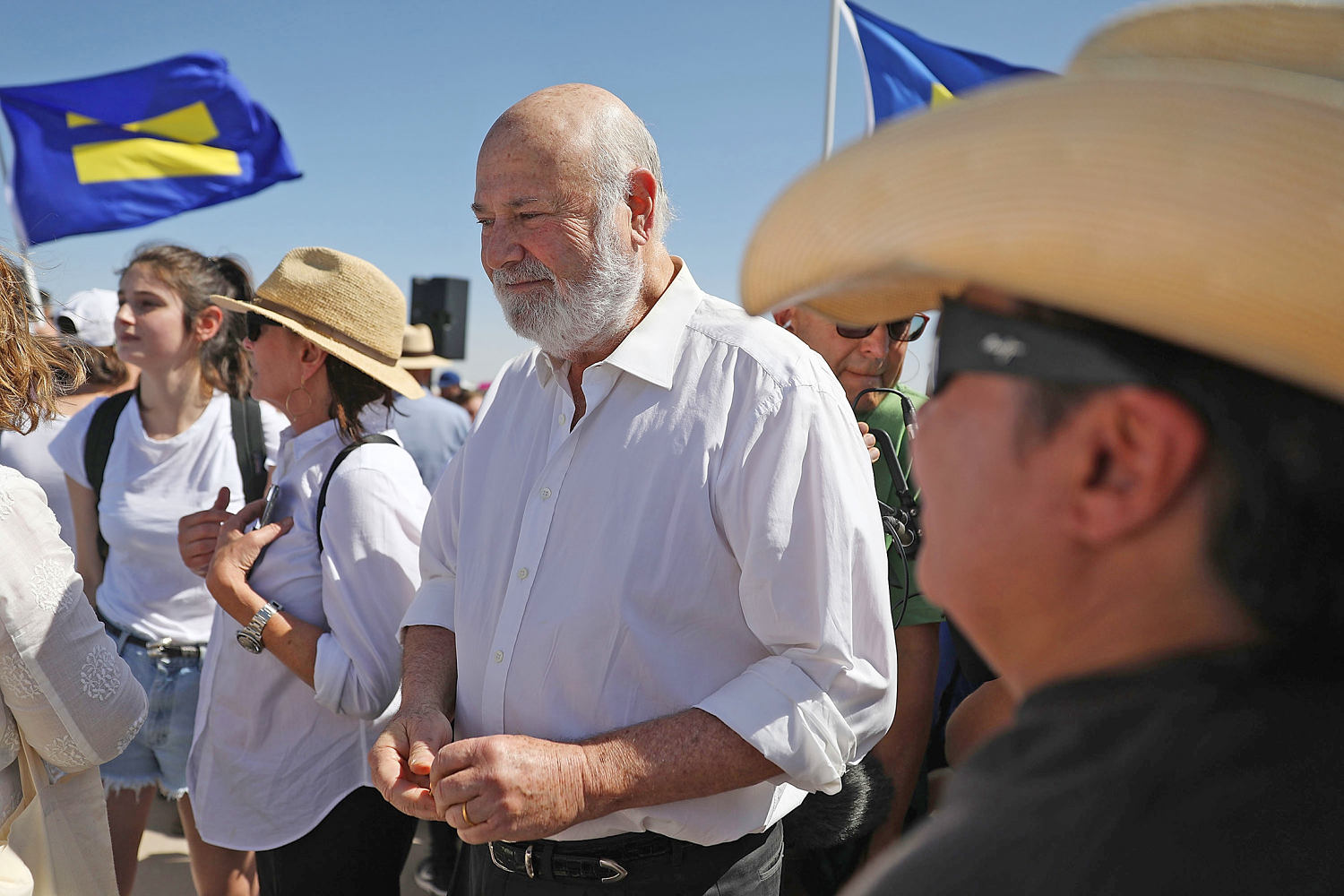
After Rob Reiner and his wife Michele were found dead inside their Los Angeles home, police arrested their son Nick on suspicion of murder. There has been a massive outpouring of support for the legendary actor and director from across Hollywood and beyond. NBC News’ Morgan Chesky reports.
After Rob Reiner and his wife Michele were found dead inside their Los Angeles home, police arrested their son Nick on suspicion of murder. There has been a massive outpouring of support for the legendary actor and director from across Hollywood and beyond. NBC News’ Morgan Chesky reports.
The FBI is offering up to $50,000 in reward money for information leading to the identity of the shooter in the Brown University attack. NBC News’ Tom Winter details what was revealed in the new video that Providence officials released.
The FBI is offering up to $50,000 in reward money for information leading to the identity of the shooter in the Brown University attack. NBC News’ Tom Winter details what was revealed in the new video that Providence officials released.
An anonymous reader quotes a report from Ars Technica: Microsoft is killing off an obsolete and vulnerable encryption cipher that Windows has supported by default for 26 years following more than a decade of devastating hacks that exploited it and recently faced blistering criticism from a prominent US senator. When the software maker rolled out Active Directory in 2000, it made RC4 a sole means of securing the Windows component, which administrators use to configure and provision fellow administrator and user accounts inside large organizations. RC4, short for Rivist Cipher 4, is a nod to mathematician and cryptographer Ron Rivest of RSA Security, who developed the stream cipher in 1987. Within days of the trade-secret-protected algorithm being leaked in 1994, a researcher demonstrated a cryptographic attack that significantly weakened the security it had been believed to provide. Despite the known susceptibility, RC4 remained a staple in encryption protocols, including SSL and its successor TLS, until about a decade ago. [...]
Last week, Microsoft said it was finally deprecating RC4 and cited its susceptibility to Kerberoasting, the form of attack, known since 2014, that was the root cause of the initial intrusion into Ascension's network. "By mid-2026, we will be updating domain controller defaults for the Kerberos Key Distribution Center (KDC) on Windows Server 2008 and later to only allow AES-SHA1 encryption," Matthew Palko, a Microsoft principal program manager, wrote. "RC4 will be disabled by default and only used if a domain administrator explicitly configures an account or the KDC to use it." [...] Following next year's change, RC4 authentication will no longer function unless administrators perform the extra work to allow it. In the meantime, Palko said, it's crucial that admins identify any systems inside their networks that rely on the cipher. Despite the known vulnerabilities, RC4 remains the sole means of some third-party legacy systems for authenticating to Windows networks. These systems can often go overlooked in networks even though they are required for crucial functions.
To streamline the identification of such systems, Microsoft is making several tools available. One is an update to KDC logs that will track both requests and responses that systems make using RC4 when performing requests through Kerberos. Kerberos is an industry-wide authentication protocol for verifying the identities of users and services over a non-secure network. It's the sole means for mutual authentication to Active Directory, which hackers attacking Windows networks widely consider a Holy Grail because of the control they gain once it has been compromised. Microsoft is also introducing new PowerShell scripts to sift through security event logs to more easily pinpoint problematic RC4 usage. Microsoft said it has steadily worked over the past decade to deprecate RC4, but that the task wasn't easy. "The problem though is that it's hard to kill off a cryptographic algorithm that is present in every OS that's shipped for the last 25 years and was the default algorithm for so long, Steve Syfuhs, who runs Microsoft's Windows Authentication team, wrote on Bluesky. "See," he continued, "the problem is not that the algorithm exists. The problem is how the algorithm is chosen, and the rules governing that spanned 20 years of code changes."
Once a star of the self-driving hype cycle, lidar maker Luminar has filed for bankruptcy amid legal turmoil, layoffs, and a cooling autonomous-vehicle market. It plans to sell off its assets before shutting down entirely. The Verge reports: As part of its bankruptcy, Luminar is seeking permission to sell both its lidar and semiconductor businesses, the latter of which it has already agreed to sell to Quantum Computing for $110 million. The company plans to continue to operate during the bankruptcy proceedings "to minimize disruptions and maintain delivery of its LiDAR hardware and software." That said, Luminar will cease to exist once the process is complete. "As we navigate this process, our top priority is to continue delivering the same quality, reliability and service our customers have come to expect from us," CEO Paul Ricci said in a statement.
After launching in 2017, Luminar muscled its way to the front of the autonomous vehicle industry as a top maker of lidar systems, a key technology that driverless cars use to sense the shapes and distances of objects around them. Luminar has sold sensors to Mercedes-Benz, Volvo, Audi, Toyota Research Institute, Caterpillar, and even Tesla, which has dismissed lidar sensors in favor of traditional cameras. The company was valued at nearly $3 billion when it went public through a reverse merger with a SPAC in 2020.
After introducing an AI Mode shortcut earlier this year, Google has now added a new "plus" menu to its Search homepage, highlighting options for image and file uploads. 9to5Google reports: On google.com, the Search bar now has a plus icon at the far left that replaces the magnifying glass. Clicking lets you "Upload image" or "Upload file." It very much matches the AI Mode experience. Those two capabilities aren't new, but this plus menu does help emphasize that you can use Google to accomplish tasks, and not just find information. Additionally, it helps indicate that they can be used with AI Mode and AI Overviews. This is just available on desktop web (not mobile) and is live on all the devices we checked today, including across signed-out Incognito sessions.
A critical React vulnerability (CVE-2025-55182) is being actively exploited at scale by Chinese, Iranian, North Korean, and criminal groups to gain remote code execution, deploy backdoors, and mine crypto. The Register reports: React maintainers disclosed the critical bug on December 3, and exploitation began almost immediately. According to Amazon's threat intel team, Chinese government crews, including Earth Lamia and Jackpot Panda, started battering the security hole within hours of its disclosure. Palo Alto Networks' Unit 42 responders have put the victim count at more than 50 organizations across multiple sectors, with attackers from North Korea also abusing the flaw.
Google, in a late Friday report, said at least five other suspected PRC spy groups also exploited React2Shell, along with criminals who deployed XMRig for illicit cryptocurrency mining, and "Iran-nexus actors," although the report doesn't provide any additional details about who the Iran-linked groups are and what they are doing after exploitation. "GTIG has also observed numerous discussions regarding CVE-2025-55182 in underground forums, including threads in which threat actors have shared links to scanning tools, proof-of-concept (PoC) code, and their experiences using these tools," the researchers wrote.
An anonymous reader quotes a report from the Wall Street Journal: JPMorgan Chase is joining the list of traditional financial firms seeking to bring blockchain technology to an investing staple: the money-market fund. The banking giant's $4 trillion asset-management arm is rolling out its first tokenized money-market fund on the Ethereum blockchain. JPMorgan will seed the fund with $100 million of its own capital, and then open it to outside investors on Tuesday. Called My OnChain Net Yield Fund, or "MONY," the private fund is supported by JPMorgan's tokenization platform, Kinexys Digital Assets, and will be open to qualified investors, or individuals with at least $5 million in investments and institutions with a minimum of $25 million. The fund has a $1 million investment minimum.
Wall Street has waded deeper into tokenization since the passage of the Genius Act earlier this year. The landmark measure, which establishes a regulatory framework for tokenized dollars known as stablecoins, has unleashed a wave of efforts to tokenize everything from stocks and bonds to funds and real assets. "There is a massive amount of interest from clients around tokenization," said John Donohue, head of global liquidity at J.P. Morgan Asset Management. "And we expect to be a leader in this space and work with clients to make sure that we have a product lineup that allows them to have the choices that we have in traditional money-market funds on blockchain."
Just three days after Apple released iOS 26.2 to iPhones everywhere, the company is back at it with a new update. iOS 26.3 is official, though only for beta testers. Those brave enough to install Apple's unfinished software on their devices won't find an update packed to the brim with new features and changes, but they will stumble upon two key new features. The thing is, we already knew both of them were on the way.
This isn't the end all be all for the update, however: Since iOS 26.3 is so new, it's possible testers will discover additional features hidden within the update. In addition, Apple may add new changes in subsequent beta versions. I'll continue to update this article to reflect any new features that reveal themselves, but, until then, here are the two new features we know about.
Notification forwarding
Back in September, we learned that Apple was quietly working on some type of notification forwarding feature, but other than that basic functionality, the details were left to speculation. At the time, the common assumption was that Apple intended the feature to be used to forward notifications to third-party devices, specifically smartwatches, in an attempt to open up the platform to wearables other than the Apple Watch. This wouldn't be Apple's choice, of course—left to its own devices, the company would keep as many features locked to Apple devices as possible. Instead, the motivation would come from the EU, which has compelled Apple to make its platforms more cooperative with third-party devices.
After three months, we are now getting our first official look at this feature. In this first iOS 26.3 beta, there is now a "Notification Forwarding" option in Notification settings. While the option isn't live at this time, Apple does have a description for how the feature works, saying that notifications can be forwarded to one device at a time. Importantly, the description says that when notifications are forwarded to another device, they will not appear on your Apple Watch. Is that limitation really necessary, Apple?
Knowledge of iOS 26.3's second feature is not quite so old. In fact, we only learned about it last week. As it happens, Apple is working directly with Google on an official way to make transferring between an iPhone and an Android device more seamless.
As of last week, Google had already rolled out its first test of the feature to Android Canary, but it was nowhere to be found in Apple's betas. Now, we know what to expect: In iOS' "Transfer or Reset iPhone" settings, there is now a new "Transfer to Android" option. Here, iOS instructs you to place your iPhone near your Android device, where you can choose to pass along data like photos, messages, notes, and apps. However, it seems not all data will transfer: Health data, devices paired with Bluetooth, and "protected items" like locked notes will not come along with this transfer feature.
This isn't the flashiest beta Apple has ever shipped, but it is possible to install right now. Both the developer and public betas are now available, which means anyone interested can enroll their device in Apple's beta program to give 26.3 a try.
However, know the risks before you do. Unfinished software could come with bugs and glitches that could impact your experience using your iPhone. If the software is particularly glitchy, you could lose data when downgrading back to iOS 26.2. If you do decide to install the beta, make a complete backup of your iPhone to a Mac or PC before you do.
We may earn a commission from links on this page. Deal pricing and availability subject to change after time of publication.
While it’s not the best choice for iPhone users or most other Android phones, for those in the Samsung ecosystem with a Galaxy device, the Samsung SmartTag2 Bluetooth tracker is an effective way to find often-misplaced items. Right now, a Samsung SmartTag2 four-pack is half off at $44.99 (originally $99.99) on Woot, making it a great gift to yourself this holiday season or a stocking stuffer for family or friends.
This tracker has UWB + AR precision finding, location history, and “Compass View” direction guidance, as well as a Bluetooth range of around 120 meters. While it’s not as universally compatible with devices as trackers like the Tile Pro, the network is more widespread because of a higher app user-base. The device has a replaceable battery and lasts up to 500 days in Normal Mode, and up to 700 days in Power-Saving Mode, according to PCMag.
An IP67 rating protects it from dust and water, making it splash- and rainproof, while a built-in loop makes it easy to attach to pet collars, bags, keys, and other items. The SmartTag2 also has a “Lost Mode” that lets people who find the device view your info via an NFC scan.
The main drawback of this tracker is its limited compatibility—it only works with Samsung Galaxy devices and requires both the SmartThings app and a Samsung account. Still, if you’re in the Samsung Galaxy ecosystem, this Samsung SmartTag2 four-pack makes an excellent, easy-to-use pick with dependable tracking, a durable build, and long battery life—especially with the current discount, which brings it down to just over $11 per tag.
I can be pretty tough on AI, especially when it's used to make misinformation slop. But as cynical as I may seem, I do acknowledge that there are plenty of useful and beneficial features that AI powers. Take live translation, for instance: Not long ago, the concept of a device that could translate someone else's words directly in your ear as they spoke would seem like some far future technology. But not only is it not a futuristic technology, both Google and Apple have their own takes on the feature that users can take advantage of.
That said, not all iPhone and Android users alike have been able to use live translate. Both companies have limited the feature to work with their respective earbuds: For Apple, that's the AirPods Pro 2 and AirPods Pro 3; for Google, that's the Pixel Buds. Without your platform's flagship earbuds, you haven't been able to use live translation, and instead need to stick with the rest of your translation app's experience, whether that be Apple Translate or Google Translate. Lucky for Android users, that's no longer the case for the latter.
On Friday, Google announced new Gemini translation capabilities for its proprietary translation app. The company says these new updates introduce "state-of-the-art text translation quality," with more nuanced, natural, and accurate translations. Importantly, however, as part of those upgrades, the company is launching a beta where all Google Translate users can access live translation through any headphones—not just Pixel Buds. This initial rollout is only available on the Android version of Google Translate in the U.S., Mexico, and India, though Google says the company will bring the feature to iOS and more regions in the next year.
This is kind of huge: Companies typically like to keep features like this locked behind their own platform as a marketing tactic. You're more likely to buy Pixel Buds over other earbuds or headphones if you really want to try live translation. However, you don't even need to buy a new pair of headphones to use this feature at all: As long as you have some type of headphones or earbuds connected to your Android device, you can translate conversations on the fly.
Trying Google's live translate with Apple headphones
I gave this a shot on my Pixel 8 Pro with my AirPods Max, by playing a video of people speaking Portuguese. Set up wasn't the simplest: First, it took forever for the Pixel to recognize my AirPods, despite the headphones being in pairing mode for some time, but that's beside the point. The key issue was getting Google Translate to present the new beta for live translation. When I first opened it, it was using the older live translate feature, which didn't work with my AirPods. I had the latest version running, so I uninstalled and reinstalled the app. When it launched, I didn't have live translate at all. Finally, after force quitting and reopening the app, I got a pop-up for the new live translation beta experience.
The next part was user error: I had my language set to the target language (Portuguese), and vice versa. As such, Google assumed I would be the one speaking Portuguese, and didn't vocalize the English translation. Once I flipped the languages, and confirmed that English would be spoken through my headphones, the feature started working—and well, for that matter. The video I choose was taken from a news broadcast, with two anchors, and various speakers during news segments. Once the video started, I could see Google Translation translating the words on my screen, and, after about four seconds, I heard the audio translated in my hear. Google Translate even tries to match the speaker's voice, and though it certainly isn't a deepfake, it does well enough to distinguish different speakers from one another. It even tried to take on more a serious tone to match the anchor's, versus the more casual tone of one of the people interviewed in a news segment.
I tried a couple of other videos in different languages, but this time, using the "Detect language" feature rather than a preset target language. The app was able to recognize this video was spoken in Thai, and this one was spoken in Urdu, and translated both accordingly. And while I can't verify the quality of the translation (I am sadly not fluent in any other language), the experience was overall easy enough to follow. The speed of speech can get a bit slow at times, perhaps because the AI has a lot to process at once, but as long as you turn up the volume on your headphones, it's easy enough to follow.
All that to say, I'm very interested to give this a try in a real world scenario. Even though my daily driver is an iPhone, I might need to start carrying around my Pixel 8 Pro just in case.
If I’ve learned anything about online fitness content in the years I've spent consuming and creating it, it’s this: Stack a bunch of numbers together, and you have a potentially viral workout, from 12-3-30 to 4-2-1.
The latest is the 2-2-2 workout, which is supposed to reveal the big secret of effectively building muscle after you hit age 40. Unfortunately, after trying it out, I’m not so sure about that.
What the Internet says about the 2-2-2 workout
I’ve been seeing the 2-2-2 workout pop up across the Internet, but all the sources point back to a video from Alain Gonzalez that claims the “2-workout-2-set” method is “getting men over 40 jacked FAST.”
That’s pretty much the whole pitch: The number 2 comes up twice (I felt like I was going mad trying to find out what the last 2 is for), and it’s aimed at middle-aged men. I’m not a man, but as a middle-aged woman with personal training and weightlifting coaching certifications, I’m in a pretty good positions to evaluate those claims. So let’s take a look at what’s actually in the workouts.
What 2-2-2 stands for
I looked at the PDF Gonzalez offers that describes the program, and in it he does actually say what the many articles about his method did not: what the third “2” stands for. So, the 2-2-2 method is:
Two full-body workouts per week
Two working sets per exercise
Two reps in reserve on each set
It’s a fine setup, I think, and probably a lot of people of any gender or age would get stronger using a workout like this. But it also relies on two often misunderstood concepts.
What are “working sets”?
A working set is a set of an exercise that you think of as your “real” work for the day. This means that it does not include warmup sets, or anything else you do to prepare for those working sets.
This means you might end up doing more than two sets, depending on the exercise. For example, I may not need any warmup sets to do my cable lateral raises (one of the exercises Gonzalez recommends), so that’s just two actual sets. But if I’m supposed to do two hard sets of leg press, I’m not going to leg press a couple hundred pounds cold. I’d start with sets of lighter weights and work my way up—so maybe that will be five sets total for the day, but only the working sets count for the 2-2-2 program.
It’s also worth noting that the PDF calls for seven exercises each day. That’s a minimum of 14 sets you’ll do per workout, with most exercises likely requiring at least one or two warmup sets, and some even more. You’ll also rest two to five minutes between sets. Emphasizing “just two sets” makes the workout sound quick and simple, but in practice, it looks like you’ll probably be in the gym a good while.
What are “reps in reserve”?
Reps in reserve, or RIR, is a great way to explain to experienced lifters how hard they’ll be working in a given set. If you’ve never used RIR before, though, there is a definite learning curve. The idea is that you stop an exercise with two reps “in reserve”—that is, reps that you could have done but didn’t. If you’ve done 10 lat pulldowns and you feel like the eleventh would be really hard and the twelfth would be the last one you could possibly do in this set, then you stop at 10. You’ve left those last two reps “in reserve.”
This is a common, useful way of talking about exercise intensity—see this explainer from the National Academy of Sports Medicine. But you have to have enough experience with that exercise, and with exercising in general, to recognize the signs your body gives you that you have exactly two reps left. Often, beginners will stop too early, and never get the benefits of going closer to failure before stopping.
If you’re used to using RIR (or RPE, which is a similar concept), this is a fine way of planning your workouts. If you tend to overestimate your abilities, you’ll probably hit RIR 0 (that is, failure) often enough to teach yourself what those last few reps feel like. But if you’re a person who tends to shy away from those harder reps, or if you’ve never really gone all the way to failure on an exercise, RIR is probably not a good tool for you.
What’s good about the 2-2-2 workout
As a lifter and a trainer, I like the idea of 2-2-2...for a specific kind of person. And yes, probably a lot of the “men over 40” in the target audience qualify as that person.
Specifically, this is a good workout for people who are already experienced in the gym, but can’t reliably make time for more than two workouts per week. You can get a lot done in two workouts, if each workout covers all your major muscle groups, which it does in this plan.
The routine does have a plan for progression, which is nice—a lot of trendy workout routines do not. You’ll be doing “double progression,” which means you increase reps of an exercise until you feel ready to increase the weight. At that point you’ll be doing fewer reps, so you start adding reps again. That’s a solid approach that doesn’t take much thinking ahead. (It’s also a missed opportunity to add another “2” to the name.)
What’s overhyped (or misunderstood) about the 2-2-2 workout
My biggest gripe about this workout is just that there’s nothing special about it. It’s basic to the point of being almost common sense: Hey you, do two full-body workouts a week! Make sure each exercise has a few hard sets! Really, no need to overthink it.
There’s actually nothing special here for “men over 40,” except perhaps that men over 40 are more likely to have kids and other responsibilities taking up their time, and thus will find a twice-a-week schedule convenient. I also find the workout selection biased toward people who stick to machines. On the bright side, you could probably do this whole thing at a Planet Fitness, and that's going to be convenient for a lot of folks. But I find machines boring. (Maybe that's a "me" problem.)
In terms of Gonzalez’s actual workout materials, there are a few things that bug me. One is that he talks about the two-workouts-per-week schedule as if it were strongly supported by science as the best option. In reality, two workouts are fine, but people tend to do better with more. No champion bodybuilder or weightlifter hits every muscle twice a week and chills on the couch the rest of the time. Even most recreational athletes with some kind of goal will do better with three or four workouts. Two is enough for most people’s goals, but it’s not necessarily better.
Promising more results for less work is a staple of the fitness industry, so I’m able to see through it—and of course everybody says their signature workout is the best option. But if you going in thinking the 2-2-2 really is the secret to getting jacked over 40, I beg you to consider that there is never one correct answer to fitness. You can pick any schedule that works each major muscle twice per week, and it will accomplish the same trick.
I am not a morning person, and I never have been—well, unless I have to make money. For years, my start time at my old job was 5 a.m. and, against all odds, I made it in every day. Now, I teach a 6 a.m. spin class twice a week after being moved off the more-tolerable late morning shift. Until a few months ago, though, I was sleeping through every alarm on all the other days, even though I knew I should be getting up and going to the gym early as a solid way to start my day. It took me a long time, but I have managed to force myself into being the kind of person who is up before the sun and done with my daily exercise routine before my friends are even out of bed. Here's exactly what I did.
I concocted financial stakes
Since starting to teach the 6 a.m. spin classes, I've noticed two undeniable things: I can drag myself out of bed for the promise of money with no problem and my day is measurably better when I start it with a workout. I am just more alert, productive, and all-around pleasant when the morning begins with exercise than I am when it begins with sleeping in. It was obvious I needed to start every day that way, whether or not I was getting paid to do it, but tricking myself into exercising "for free" was my first challenge.
The solution was one you might not like: I had to tie a financial stake to what I wanted to do. Instead of getting money, like I do when I teach, I had to pay money so I would be motivated not to let my investment go to waste. This was a problem because one of the perks of my part-time teaching gig is a free membership at a luxury gym here in New York City. Not to look a gift horse in the mouth, but having free and unlimited access to a fancy gym didn't exactly motivate me; it would be there whenever I wanted to go and if I didn't happen to want to go at all, it wasn't like I was losing money on it. So, I started signing up for introductory offers at every studio in my area. Usually, these lasted one to two weeks and cost less than a regular membership at the studio in question would if I weren't on a trial offer. I had paid, but hadn't paid a relative bunch, and that was good enough to start. Up I got each morning, slowly but surely building a habit. The intro offers expired, though, and I'd find myself scrambling to find a new place to go, which upended my routine and wasn't conducive to consistency.
Next, I downloaded ClassPass and set up an autopay for every month, but since my unused credits roll over to the next month, that wasn't as motivating. I took note of how much more consistent I am in a use-it-or-lose it scenario, kept ClassPass because it still comes in handy, but looked for more options. Ultimately, through ClassPass, I found a studio in my area that offers a Pilates-inspired strength training class. I became obsessed with it—but an unlimited monthly membership was a few hundred dollars. I put off getting that because it seemed exorbitant, but in the end, I realized that might be the only way to get myself to stick to the routine that was slowly forming. Eventually, I pulled the trigger. I traded away a small fortune for access to a studio full of something known as "megaformers." I have been in that studio every single weekday morning at 6:30 (except on teaching days, when I run over at 7:30) for a month now. Sometimes, I go at 5:30 just because I can. Who the hell is she? I am not only prepared, but excited, to buy it again going into this next month.
Do you need to spend hundreds on this? Absolutely not. But for me, tying financial stakes to my mission was crucial and, also just from my perspective, they had to be intense. A low-cost, big-box gym membership has never motivated me. What's $25 slipping out of my checking account every month along with all the other subscriptions I've forgotten about? When I've paid a little more to go to gyms that offer free classes, even signing up for morning ones didn't always do it, since there was no fee associated with skipping them. (As a teacher now, I realize exactly how nasty that mindset is, but I'm just being honest.) My subconscious is stubborn, it deeply desires staying in bed, and I had to take an extreme measure to beat it.
For you, a lower-cost gym membership might work just fine, but I'll caution that what has to go along with the financial investment is a time-based commitment. It's not that I struggle to work out in general; I do it every day, but I wanted to start doing it in the morning, not cramming it in at night or whenever I thought of it throughout the day. That's why paid classes have been so crucial: They're strictly scheduled. I can't just go whenever I want, nor can I decide I don't feel like going when the time rolls around. The combination of paying a noticeable amount and having to be there at a set time is elemental to what I'm doing.
I reconfigured my schedule
That leads me to the next big thing I did. Buying classes, packages, a gym or app membership, or whatever else, isn't enough on its own if you don't make space in your life for using them. I had to take a hard look at my schedule. I fell back on a lot of scheduling tips I've written about here, like time blocking and time boxing, plus I started using prioritization techniques to figure out what could be rearranged. The MIT—or most important thing—method was helpful because it allowed me to calculate the impact my daily to-dos have on my larger goals, leaving space for me to acknowledge the positive impact morning workouts have on other parts of my day. With other kinds of prioritization approaches, working out didn't rank as high because it is something a little more optional than the work I have to do to keep a roof over my head, you know? But my goal here was to make more space for it and create a lifestyle that specifically positioned it as a morning activity, so the MIT method helped me center it.
Like the financial investment, this meant something undesirable: I initially tried to get more serious about going to bed early. That is not aligned with who I am in the deepest parts of my soul, and it never has been. To be completely transparent, more often than not, I simply didn't do it. Asleep at 1 a.m. and awake at 5, I have just been tired a lot. I give myself grace with things like this because if I'm too hard on myself about it, I'll demoralize myself and that won't help me with my overall goal. Eventually, if being tired starts to annoy me too much, I'll course-correct and be asleep at 10 p.m. like a smarter person. As it is now, I've been making space in my schedule for some naps (which isn't something I've ever done much of before). Breaks are an important part of overall productivity, as is leaving yourself space to be who you are without trying to make too many drastic changes at once, so the temporary nap-allowance system is just fine. I'm also trying to avoid strenuous activity at night. I can't force myself to go to sleep early, but I can at least stop starting new projects at 11 p.m., which will just make me sleepier the next day than if I am relaxed pre-bedtime.
I've noticed myself making small, subconscious changes even though I haven't become an early-bedtime gal yet. I'm calling it a night a lot sooner than I normally would when I'm out with friends, even though I'm not necessarily going home to sleep so much as I'm just going home not to be out. I also was struck by the inspiration to paint a piece of furniture last night at 11 p.m.. Normally, adherent to the 10-minute and one-more rules that I am, I would have jumped up and done this the moment I thought of it. Last night, I didn't do it, knowing I shouldn't get too involved in something tricky when I needed to be winding down ahead of this morning's Pilates class. These are baby steps, yes, but they're a lot more helpful to developing long-term, sustainable habits than complete personality overhauls are. Those rarely last, but little, incremental changes add up to longer-term success.
I sought out incentives
This part is fun, so there's the reprieve. For me, any meaningful life change has to come with little rewards, and I'm not talking about the mental health benefits of exercise, looking better, or feeling more productive after a workout. I'm talking about little treats. First of all, commitment to my new schedule opened up the opportunity to crush my goals with the various apps I use to track my workouts. I am serious about using my Peloton app to track all my workouts, even the ones I don't take through the app or using my Bike, largely because I think it gives me a better data breakdown than when I use the native workout-tracking function on my Apple Watch, but also because it contributes to my daily streak (as of today: 274 days). Getting a workout inputted into the app first thing in the morning secures my streak, which is literally just a number on a screen, but it motivates me.
I have also started using something similar to a SMART goal to track and reward progress. SMART goals are ones that are specific, measurable, actionable, relevant, and time-bound. So, I tell myself things like, "If I go to class at 5:30 tomorrow morning, I will stop at Dunkin' for a donut on the way home," or, "If I work out every morning this week, I will get myself one new activewear outfit on Sunday."
Wearing silly little matchy outfits is also integral to my personal process, as it puts me in a good mood before I even leave the house and makes me feel more put-together and capable at the gym, but that might not be true for you. In fact, none of these things specifically need to be for you, but they can be a guideline. The general through line here is that I took the time to consider what I wanted (to wake up early and work out); and what I know about myself (I'm motivated by money, my schedule wasn't conducive to this activity, and I need constant mini-rewards to keep going); then combine those facts into a new, incremental strategy that worked for me. No matter what you want or what motivates you, you can do the same by relying on a few productivity tricks and your own self-awareness.
The Echo Spot is a mix between a screenless Echo smart speaker and the Echo Show; it has a screen but lacks a full smart display. According to PCMag's review, it's more of a smart speaker with a very basic screen that the time, temperature, weather, day of the week, the date, and the album art when it's playing music. It's compact but delivers impressive sound for its size, making it a great smart speaker to keep on a nightstand to use as an alarm clock.
It's not as powerful a speaker as the 5th-generation Echo Dot, but it's newer, and it has the touchscreen display, which you can use to manage basic settings like audio playback and trigger your compatible smart home devices.
It's 2025, so every piece of technology now needs to have an AI component. It doesn't matter if these AI features are useful (though some are), they just need to be there, however ham-fisted or useless they may seem—though the line between those extremes often comes down to user preference. To that end, if you've ever been reading a book on the Kindle app and wished that you could ask your device a question about the text, Amazon has an AI bot for you.
Last week, Amazon announced "Ask this Book," a new AI feature for the Kindle app. Now available on the iOS version of the app, it lets you ask Amazon's AI questions about whatever it is you're reading, whether you bought or borrowed the title. You can highlight a selection from the text to include in you're queries, and ask questions relating the story's plot, characters, relationships, and theme. According to Amazon, all answers will be contextual, presumably meaning they'll all be related to the text at hand, and importantly, all answers will be spoiler-free. That should help avoid the classic mistake of googling a question you have about a book you're reading and spoiling a coming plot twist or character death.
Amazon says Ask this Book is currently active for "thousands" of books written in English. As noted, as of this writing the feature is only live in the iOS version of the app, but Amazon is working on bringing it to the Android app, as well as Kindle devices, next year.
Ask this Book, whether you like it or not
If this sounds like the type of feature you'd be interested in, great! If you don't care for this feature, either as a reader who doesn't want AI getting in the way of their books, a publisher who doesn't want Amazon training its AI on their IP, or a teacher who might see this as a potential cheating opportunity, there's bad news: Once Amazon makes Ask this Book available for any given title, it's permanently available, and there's nothing anyone can do about it. That comes directly from an Amazon spokesperson, who told Publishers Lunch, “[t]o ensure a consistent reading experience, the feature is always on, and there is no option for authors or publishers to opt titles out.”
That response bothers me for two reasons. One, it's always frustrating when a company introduces a new feature lwithout giving users the option to turn it off. I don't use Apple Intelligence, but I appreciate that Apple lets me turn it off. Meta, on the other hand, forces me to contend with Meta AI, even though I never use it. Amazon seems to be attending the Meta school of user design.
But what's more, it seems wild to me that authors and publishers don't get a say as to whether this AI bot gets to be active on their books—especially retroactively. It'd even be one thing if authors had to opt-in in order to put their books on the Kindle platform going forward. But to enable it on "thousands" of titles made available before Ask this Book was ever a thing is, to me, disrespectful to authors and publishers, to say the least.
Interestingly, Amazon dodged questions from Publishers Lunch concerning licensing rights around Ask this Book, as well as protections for users, which is troubling given generative AI has a habit of hallucinating—or, in other words, making things up completely. Sure, when it's working as intended, the AI can help readers understand things they're confused about, but there's a real chance that the AI will misinterpret questions, misrepresent the text, or straight up lie, which could negatively impact a reader's experience of the work, with potential fallout for both the author and the publisher.
How Kindle's Ask this Book works
While you won't see this feature yet on your Kindle, you will encounter it in the Kindle app. You can either access it from the menu in any book where the feature is available, or by highlighting text in said book. Once you do, Ask this Book will present a list of questions it thinks you might be interested in asking. If none of them do it for you, you can formulate your own questions, and ask followups after the bot answers.
Like most tools, generative AI models can be misused. And when the misuse gets bad enough that a major dictionary notices, you know it’s become a cultural phenomenon.
On Sunday, Merriam-Webster announced that “slop” is its 2025 Word of the Year, reflecting how the term has become shorthand for the flood of low-quality AI-generated content that has spread across social media, search results, and the web at large. The dictionary defines slop as “digital content of low quality that is produced usually in quantity by means of artificial intelligence.”
“It’s such an illustrative word,” Merriam-Webster president Greg Barlow told the Associated Press. “It’s part of a transformative technology, AI, and it’s something that people have found fascinating, annoying, and a little bit ridiculous.”
We’re 10 days away from the next installment of the fifth and final season of Stranger Things, and Netflix has released a new trailer for what it’s calling Volume 2. This will cover episodes five through seven, with the final episode comprising Vol. 3.
(Spoilers for Season 5, Vol. 1 below.)
Season 4 ended with Vecna—the Big Bad behind it all—opening the gate that allowed the Upside Down to leak into Hawkins. We got a time jump for S5, Vol. 1, but in a way, we came full circle, since those events coincided with the third anniversary of Will’s original disappearance in S1.
Microsoft is killing off an obsolete and vulnerable encryption cipher that Windows has supported by default for 26 years following more than a decade of devastating hacks that exploited it and recently faced blistering criticism from a prominent US senator.
When the software maker rolled out Active Directory in 2000, it made RC4 a sole means of securing the Windows component, which administrators use to configure and provision fellow administrator and user accounts inside large organizations. RC4, short for Rivist Cipher 4, is a nod to mathematician and cryptographer Ron Rivest of RSA Security, who developed the stream cipher in 1987. Within days of the trade-secret-protected algorithm being leaked in 1994, a researcher demonstrated a cryptographic attack that significantly weakened the security it had been believed to provide. Despite the known susceptibility, RC4 remained a staple in encryption protocols, including SSL and its successor TLS, until about a decade ago.
Out with the old
One of the most visible holdouts in supporting RC4 has been Microsoft. Eventually, Microsoft upgraded Active Directory to support the much more secure AES encryption standard. But by default, Windows servers have continued to respond to RC4-based authentication requests and return an RC4-based response. The RC4 fallback has been a favorite weakness hackers have exploited to compromise enterprise networks. Use of RC4 played a key role in last year’s breach of health giant Ascension. The breach caused life-threatening disruptions at 140 hospitals and put the medical records of 5.6 million patients into the hands of the attackers. US Senator Ron Wyden (D-Ore.) in September called on the Federal Trade Commission to investigate Microsoft for “gross cybersecurity negligence,” citing the continued default support for RC4.
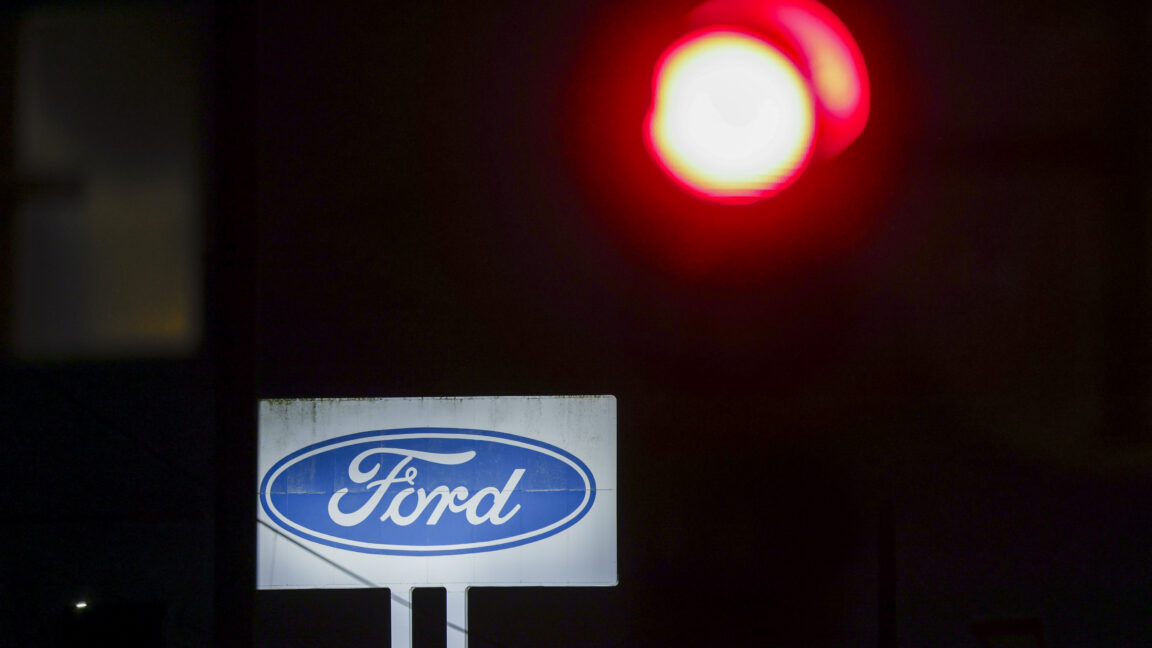
Ford’s F-150 Lightning production line has fallen silent, and its employees are now building more gas and hybrid trucks. The automaker continues to retreat from the big bet it made on Americans embracing full-size battery electric pickup trucks, and will focus instead on cheaper vehicles, hybrids, and range-extended electric vehicles—or EREVs—instead, it announced today.
One of those EREVs will be the Lighting’s replacement. With a gasoline generator that just charges the battery—series hybrid fans rejoice—the next Lightning comes with the towing ability that Ford says its customers consider “non-negotiable,” and up to 700 miles (1,126 km) of range.
“Our next-generation F-150 Lightning EREV will be every bit as revolutionary. It delivers everything Lightning customers love – near instantaneous torque and pure electric driving. But with a high-power generator enabling an estimated range of 700+ miles, it tows like a locomotive. Heavy-duty towing and cross-country travel will be as effortless as the daily commute,” said Doug Field, Ford’s chief EV, digital and design officer.
Merriam-Webster crowned "slop" its 2025 Word of the Year, reflecting growing public awareness and and fatigue around low-quality, AI-generated content flooding the internet. "It's such an illustrative word," said Greg Barlow, Merriam-Webster's president. "It's part of a transformative technology, AI, and it's something that people have found fascinating, annoying and a little bit ridiculous." The Associated Press reports: "Slop" was first used in the 1700s to mean soft mud, but it evolved more generally to mean something of little value. The definition has since expanded to mean "digital content of low quality that is produced usually in quantity by means of artificial intelligence." In other words, "you know, absurd videos, weird advertising images, cheesy propaganda, fake news that looks real, junky AI-written digital books," Barlow said. "Words like 'ubiquitous,' 'paradigm,' 'albeit,' 'irregardless,' these are always top lookups because they're words that are on the edge of our lexicon," Barlow said. "'Irregardless' is a word in the dictionary for one reason: It's used. It's been used for decades to mean 'regardless.'"
The announcement can be found here.
Ford Motor said the costs came from its decision to make fewer electric vehicles than it had planned and more hybrids that use both gasoline engines and batteries.
Ford has effectively pulled the plug on the all-electric F-150 Lightning, pivoting away from full-size BEV pickups toward hybrids, range-extended EVs (EREVs), and even data-center battery storage. Ars Technica reports: Ford's announcements today can't be said to have come out of the blue. Rumors of the F-150's demise have been circulating for more than a month, and last week SK On ended its joint venture with Ford that was building a pair of EV battery plants in Kentucky and Tennessee. We learned then that Ford would keep the Kentucky plant and SK On gets the one in Tennessee, which would focus on the energy storage business instead. Now, we know that something similar will happen at the Kentucky plant -- Ford says it's spending $2 billion to convert the factory to make prismatic lithium iron phosphate (LFP) cells.
Those aren't destined for EVs, but they are the preferred cell format for data centers, Ford says. The company says that it will bring the factory online in the next 18 months, reaching an annual output of 20 GWh. Other Ford plants are also being repurposed. With no full-size BEV pickup in the product plans, the assembly plant in Tennessee that was to produce it -- the one near the battery factory that SK On is keeping -- will instead build new gas-powered trucks, although not for another four years. Around that same time, its Ohio assembly plant will begin building new commercial vehicles.
All of this will impact Ford's bottom line, to the tune of $19.5 billion over the next few years, $5.5 billion of which will be in cash. Most of that will hit in the final quarter of 2025, but will extend until 2027, Ford said.
An anonymous reader quotes a report from Reuters: Several dozen people protested on Sunday in the Siberian city of Tomsk against Russia's ban on U.S. children's gaming platform Roblox, a rare show of public dissent as popular irritation over the ban gains some momentum. In wartime Russia, censorship is extensive: Moscow blocks or restricts social media platforms such as Snapchat, Facebook, Instagram, WhatsApp and YouTube while distributing its own narrative through a network of social media and Russian media. Russia's communications watchdog Roskomnadzor said on December 3 it had blocked Roblox because it was "rife with inappropriate content that can negatively impact the spiritual and moral development of children."
In Tomsk, 2,900 km (1,800 miles) east of Moscow, several dozen people braved the snow to hold up hand-drawn placards reading "Hands off Roblox" and "Roblox is the victim of the digital Iron Curtain" in Vladimir Vysotsky Park, according to photographs provided by an organizer of the protest. "Bans and blocks are all you are able to do," read one placard. The photographs showed about 25 people standing in a circle in the snow, holding up placards. In Russia, the ban on Roblox has triggered a debate over censorship, child safety in relation to technology and even the effectiveness of censorship in a digitalized world where children can bypass many bans in a few clicks.
A Kansas man who sued Verizon in small claims court after the carrier refused to unlock his iPhone has won his case, scoring a small but meaningful victory against a company that retroactively applied a policy change to deny his unlock request.
Patrick Roach bought a discounted iPhone 16e from Verizon's Straight Talk brand in February 2025, intending to pay for one month of service before switching the device to US Mobile. Under FCC rules dating back to a 2019 waiver, Verizon must unlock phones 60 days after activation on its network. Verizon refused to unlock the phone, citing a new policy implemented on April 1, 2025 requiring "60 days of paid active service."
Roach had purchased his device over a month before that policy took effect. Magistrate Judge Elizabeth Henry ruled in October 2025 that applying the changed terms to Roach's earlier purchase violated the Kansas Consumer Protection Act. The court ordered Verizon to refund Roach's $410.40 purchase price plus court costs. Roach had previously rejected a $600 settlement offer because it would have required him to sign a non-disclosure agreement. He estimated spending about 20 hours on the lawsuit but said "it wasn't about" the money.
One of the most water-scarce regions on Earth is now experiencing a dramatic atmospheric shift that's pushing moisture onto Oman's northern coast at rates more than 1.5 times the global average, according to a Washington Post investigation of global atmospheric data [non-paywalled source]. The change has turned extreme rainfall into a recurrent source of catastrophe across the Arabian Peninsula. In the 126 years between 1881 and 2007, just six hurricane-strength storms hit Oman or came within 60 miles of the country. At least four more have made landfall in the past 15 years alone.
Research from Sultan Qaboos University analyzing 8,000 storms across 69 rainfall stations found that half of all rain in Oman falls within the first 90 minutes of a 24-hour storm. These intense bursts quickly overwhelm the desert's ability to absorb water and send flash floods racing through wadis -- normally dry riverbeds where many communities are built. In response, Dubai is constructing an $8 billion underground stormwater network spanning more than 120 miles. Oman has agreements to build 58 new dams and is studying 14 major wadis that funnel to its al-Batinah coastline.
The U.S. Tech Force is aiming to hire about 1,000 top-level technical employees and supervisors to join federal agencies and work on projects related to artificial intelligence and modernization.
Cloudflare's sixth annual Year in Review report describes an internet increasingly shaped by two forces: automated traffic and government intervention, as global connectivity grew 19% year over year in 2025.
Google's web crawler now dominates automated traffic, dwarfing other AI and indexing bots to become the single largest source of bot activity on the web. Nearly half of all major internet disruptions globally were linked to government actions, and civil society and non-profit organizations became the most attacked sector for the first time.
Post-quantum encryption crossed a significant threshold, now protecting 52% of human internet traffic observed by Cloudflare. The company also recorded more than 25 record-breaking DDoS attacks throughout the year.
Google has decided to retire its free dark web monitoring tool, saying it wasn't as helpful as the company hoped. From a report: In a support page, Google announced the discontinuation of the "dark web report" tool, two years after offering it as a free perk to Gmail users before expanding it more broadly. The feature worked by scanning for your email addresses to determine whether they had appeared in data breaches, which often circulate on Dark Web marketplaces. The tool could then alert you about where the data was exposed, including any accompanying details such as dates of birth, addresses, and phone numbers.
President Donald Trump faced blowback from fellow Republicans Monday after he baselessly suggested that legendary director and actor Rob Reiner died because of Reiner’s anti-Trump views, injecting politics into the killing at a time when other conservatives expressed condolences.
Last month saw the release of Project Misriah, an ambitious modding project that tried to re-create the feel of Halo 3 inside Valve’s Counter-Strike 2. That project has now been taken down from the Steam Workshop, though, after drawing a Digital Millennium Copyright Act complaint from Microsoft.
Modder Froddoyo introduced Project Misriah on November 16 as “a workshop collection of Halo ported maps and assets that aims to bring a Halo 3 multiplayer-like experience to Counter-Strike 2.” Far from just being inspired by Halo 3, the mod directly copied multiple sound effects, character models, maps, and even movement mechanics from Bungie and Microsoft’s popular series.
In the weeks since, Project Misriah has drawn a lot of praise from both Halo fans and those impressed by what modders could pull off with the Source 2 engine. But last Wednesday, modder Froddoyo shared a DMCA request from Microsoft citing the “unauthorized use of Halo game content in a [Steam] workshop not associated with Halo games.”
OpenAI is facing increasing scrutiny over how it handles ChatGPT data after users die, only selectively sharing data in lawsuits over ChatGPT-linked suicides.
Last week, OpenAI was accused of hiding key ChatGPT logs from the days before a 56-year-old bodybuilder, Stein-Erik Soelberg, took his own life after “savagely” murdering his mother, 83-year-old Suzanne Adams.
According to the lawsuit—which was filed by Adams’ estate on behalf of surviving family members—Soelberg struggled with mental health problems after a divorce led him to move back into Adams’ home in 2018. But allegedly Soelberg did not turn violent until ChatGPT became his sole confidant, validating a wide range of wild conspiracies, including a dangerous delusion that his mother was part of a network of conspirators spying on him, tracking him, and making attempts on his life.
If you open a picture in the Photos app on your iPhone, and it inexplicably starts turning red, I wouldn't blame you for being a bit concerned. After all, that's not supposed to happen, and out of all the colors your photos could randomly fade into, red is among the creepiest.
While you contemplate what angry and vengeful god you might have crossed recently, understand that this isn't necessarily a problem affecting all, or even most, iPhone users and their photos. In fact, it doesn't appear to be affecting photos taken on iPhones at all. Rather, the users reporting this issue see it when zooming in on photos taken on Android devices. It seems a new hue has been added to the iPhone/Android divide: green bubbles, red pictures.
If this isn't happening on your own iPhone, you can see the issue play out in this Reddit post. User djenki0119 posted a screen recording of themself browsing photos on their iPhone that they had originally taken on a Samsung Galaxy S24. At first, the pictures appears totally normal. But once djenki0119 zooms in on each, it quickly turns a deep shade of red—almost as if you were looking at film developing in a dark room. This user has the same issue, only they took their photo on a Motorola Razr.
At this time, it's unclear what is actually causing the issue to occur. It usually doesn't matter what type of device took any particular image: Once it's in the Photos app, it should display normally. But there must be something about Android files that the iOS Photos app isn't reading correctly, at least when users zoom in on the image. As 9to5Mac highlights, it appears that something is adding a red filter to these images in the Photos app. Since this issue is only popping up recently, my guess is there's a bug within iOS 26, though there could be an issue with Android instead.
For what it's worth, I wasn't able to replicate the problem with photos I sent from my Pixel 8 Pro over to my iPhone. But perhaps there is some strange combination of hardware and software that results in this tinting: Maybe a photo taken on a certain type of Android device running a specific version of Android turns red on a certain iPhone model running a specific version of iOS.
How to undo a photo that turned red on iPhone
Luckily, you don't have to wait for Apple, Google, Samsung, or Motorola to issue a fix, depending on where the actual issue is coming from. To return your image to its proper color scheme, open it in the Photos app, tap "Edit," then choose "Revert." This restores the image to its original state, and removes the red filter that was unnecessarily overlayed on top of it.
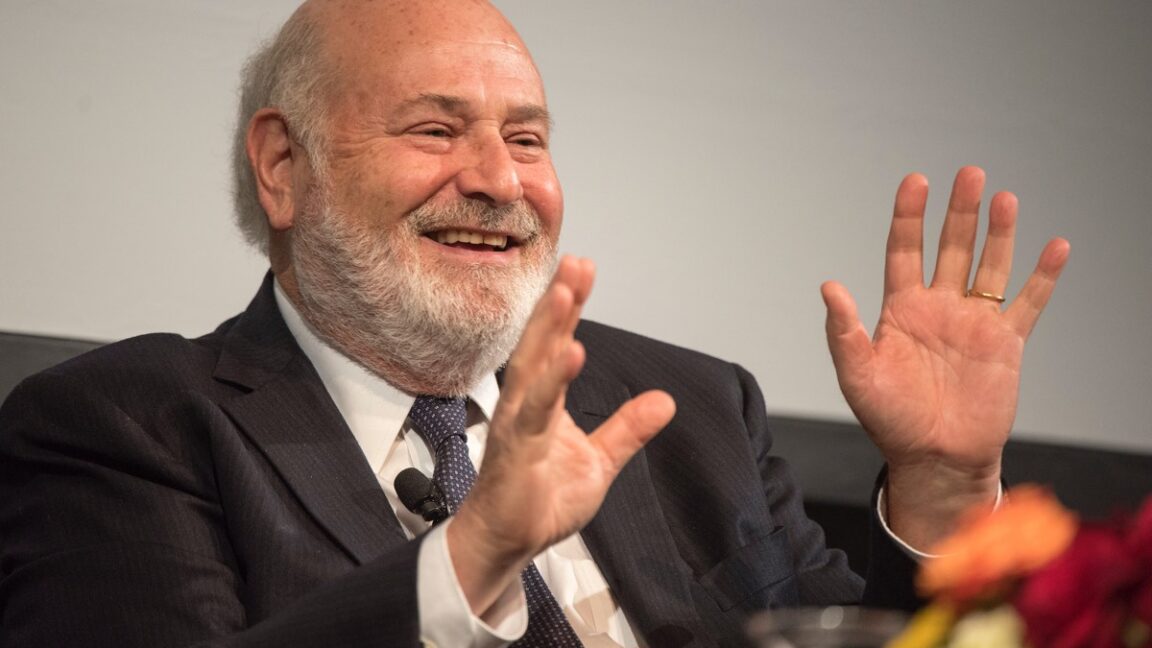
We woke up this morning to the horrifying news that beloved actor and director Rob Reiner and his wife Michele were killed in their Brentwood home in Los Angeles last night. Both had been stabbed multiple times. Details are scarce, but the couple’s 32-year-old son, Nick—who has long struggled with addiction and recently moved back in with his parents—has been arrested in connection with the killings, with bail set at $4 million. [UPDATE: Nick Reiner’s bail has been revoked and he faces possible life in prison.]
“As a result of the initial investigation, it was determined that the Reiners were the victims of homicide,” the LAPD said. “The investigation further revealed that Nick Reiner, the 32-year-old son of Robert and Michele Reiner, was responsible for their deaths. Nick Reiner was located and arrested at approximately 9:15 p.m. He was booked for murder and remains in custody with no bail. On Tuesday, December 16, 2025, the case will be presented to the Los Angeles County District Attorney’s Office for filing consideration.”
“It is with profound sorrow that we announce the tragic passing of Michele and Rob Reiner,” the family said in a statement confirming the deaths. “We are heartbroken by this sudden loss, and we ask for privacy during this unbelievably difficult time.”
The UK government reportedly will “encourage” Apple and Google to prevent phones from displaying nude images except when users verify that they are adults.
The forthcoming push for nudity-blocking systems was reported by the Financial Times today. The report said the UK won’t institute a legal requirement “for now.” But asking companies to block nude images could be the first step toward making it mandatory if the government doesn’t get what it wants.
“The UK government wants technology companies to block explicit images on phones and computers by default to protect children, with adults having to verify their age to create and access such content,” the FT report said. “Ministers want the likes of Apple and Google to incorporate nudity-detection algorithms into their device operating systems to prevent users taking photos or sharing images of genitalia unless they are verified as adults.”
Outfitting that garage with the right gear is the difference between a useful and organized space and a chaotic black hole of junk. If you want your garage to be a place where you can get work done, where you can actually find stuff, and maybe also where you can park your car, here’s what you should have, ranging from the must-have essentials to some luxuries you could stretch for.
What every garage needs
If you want to get the most of any garage, here’s the short list of essentials:
Overhead storage. An empty garage might seem like endless storage, but it fills up fast. If you don’t want to navigate a maze of junk every time you go in there, some overhead storage shelving is a must.
Wall storage. For more readily accessible storage, some bike hooks and wall hooks for yard tools (like rakes and shovels) will keep those things easy to grab but off the floor.
Absorbent mats. Your car will leak oil and other fluids, and the garage is where you do a lot of messy jobs. A large-format absorbent mat will save you a lot of cleanup.
Fire safety. Every space in your home should have a fire extinguisher within easy reach, and your garage is no exception. You might also consider keeping some fire blankets, which are often more effective for small, contained fires.
Sports caddy. If you’ve got a collection of balls for every possible sport, plus other implements, having a place to dump them all so they don’t roll around is a must.
Tool storage. Whether you go with a classic tool box or a set of magnetic strips on the walls, don’t let your expensive, delicate tools get dirty, damp, and lost.
Workbench. Even if you’re not a hobbyist or much of a DIYer, having a workbench in the garage is a good idea. If space is an issue, a wall-mounted folding one like this is an ideal solution.
Creeper seat. Similarly, you don’t have to be a total gearhead to appreciate a creeper seat. Working in the garage often means working down low to the floor, so unless you enjoy sitting on he cold, greasy floor for a few hours, a creeper seat is a necessity.
What would be nice to have if you own a garage
You can always find an upgrade for any space, and your garage is no exception. Some useful-but-not-essential upgrades include:
Rubber door bottom. Your garage door probably isn’t a very good seal. When the weather’s hot or cold, that can make the space uncomfortable. A simple adhesive rubber door bottom provides a nice seal to make the space a little nicer to be in.
Climate control. You don’t necessarily have to install central air or a mini-split in your garage. There are plenty of portable heating and cooling solutions that will keep you comfy while you work without breaking the bank.
Tire rack: If you have a growing collection of spare tires, or you’re rotating between all-weather and winter tires regularly, having a stable storage shelf for them is a lot better than stacking them up or having them rolling around.
Stopper mats: It’s a universal frustration: trying not to ram into the wall or crush a bunch of stuff every time you pull your car into the garage. If you don’t want a tennis ball hanging from a string, some simple mats like these will let you know when to hit the brakes.
Tile flooring: Even if you have a nice floor in your garage—maybe especially if you have a nice floor in there—a protective tile floor is a good idea. It’ll keep everything pristine and protected from damage (from dropped tools, for example).
Best garage upgrades
Want your garage to be even nicer? No problem—here are some very useful add-ons that fall into the “luxury” category for most garages:
Speakers. These days, you don’t need a whole entertainment system in your garage—your phone and a Bluetooth speaker will do. But the speaker needs to be waterproof and designed for work spaces if you want it to survive.
Fridge. If you’re still nipping into the kitchen for a fresh beverage while you’re working in the garage, it’s time to upgrade to a garage-specific fridge.
Retractable extension cords. Necessary? Not really, but very useful: A retractable extension cord keeps wires out of the way when you’re not using them and prevents them from knotting up in maddening ways. Extra bonus: Have an outlet installed in the ceiling of the garage and mount the extension cord up there, too, so you just pull it down when you need it.
Utility sink. Having a place to wash up and clean dirty tools in the garage is a godsend. If the garage isn’t plumbed and you don’t want to sink that kind of cash into it, an outdoor sink hooked up to a garden hose will do the trick.
Hoist. Suckers get on ladders and lift with their muscles. Smart folks install an overhead hoist that can lift cargo boxes or other heavy things out of the way with ease.
Garage door screen. It’s nice to open the garage door while you’re working in the warm weather—unless it invites every bug in the universe to assault you. A nice garage door screen lets you enjoy the breeze without the bugs.
Laser guides. If a rubber mat or a tennis ball on a string isn’t high-tech enough for your parking needs, why not install a laser-guided system? You’ll never scrape a door or crush a garbage can again.
Paper towel dispenser. Necessary? Maybe not, but being able to grab a paper towel hands-free as needed just makes garage life easier.
Wall-mounted inflator. If you’ve got cars and bikes in your garage, installing a wall-mounted inflator will make keeping tires properly inflated and maintained a breeze.
Seating area. And if you’ve got a large garage—or no car—why not create a comfortable place to sit and relax in-between projects? Some durable outdoor furniture and an outdoor rug are all you need.
We may earn a commission from links on this page. Deal pricing and availability subject to change after time of publication.
Though the Kindle Scribe has just been overhauled for 2025, last year's model remains an attractive digital notebook. Released in December of last year, the 2024 Kindle Scribe is an upgraded version of the oversized e-reader designed for note-taking, offering some nice improvements over the 2022 original. Those upgrades don't come cheap, however, with prices on the 2024 Kindle Scribe starting at $399.99 (still a lot less than the new-for-2025 version, which starts at $499.99).
Right now, the 32GB version of the 2024 Scribe is a lot cheaper: It's discounted to $279.99 (originally $419.99), the lowest price this reader has seen since its release, according to price-tracking tools, and a great opportunity to snatch one for a bargain. The 64GB version Essentials Bundle is also on sale for $341.97 (originally $449.99), adding a case and a power adapter to your purchase.
The original Kindle Scribe came out in 2022; that version is currently $369.99 for the 16GB model with the Premium Pen, which puts how good a deal this is in perspective—you can get the three-years-newer model for less.
That said, if you already have the 2022 version, there is no compelling reason to upgrade—the main difference is that the 2024 version comes with the Premium Pen instead of the Basic Pen stylus, while the tablet itself is shorter, narrower, and slimmer, but not by much (you can even still use the same case). The new screen also has texture, which will add some resistance when you're writing on it, for a more natural feel. The gap between the screen and the outer casing is also smaller. But that's where the differences end.
Otherwise, you'll get the same book format compatibility, the same 15.3 oz weight, the same glare-free 300 ppi front-lit display screen, and the same 12-week battery life. Both tablets run the same software. Still, if you don't own a Scribe at all and are considering getting one, the 2024 version is a good choice at the current price point—it's 44% cheaper than the new 2025 model.
Christmas movies have been a tradition for decades, but the days when our choices were limited to George Bailey contemplating jumping off of a bridge and Ralphie washing his mouth out with Lifebuoy soap are well past us. Holiday movies are an industry in and of themselves, with dozens of new seasonal offerings released each year, starting as soon as the leaves start to turn colors. Most of them are cozy cookie-cutter offerings—relaxing, if largely disposable.
But among the seasonal glut, new classics do occasionally emerge. Here are 30 more recent holiday classics, from silly comedies, to cozy dramas, to gruesome horrors, queer romances, and even a surprisingly literal adaptation of a Wham! song.
The Family Stone (2005)
Holiday gatherings always offer great potential for comedy and drama, with The Family Stone landing a bit of each. The setup involves Dermot Mulroney bringing home his new girlfriend, played by a fearlessly brittle Sarah Jessica Parker, for Christmas. That doesn’t go great, with the visitor constantly feeling out of place and embarrassed amid the insular, tight-knit, standoffish clan. But, in the background, strong-willed matriarch Sybil Stone (Diane Keaton) is also looking for an opportunity, amidst the holiday chaos, to reveal a terminal medical diagnosis. The subtle final shot lands like a sledgehammer every time and, of course, the recent passing of Diane Keaton adds a deeper poignance to the film this year—oh and there's maybe a sequel coming coming. Stream The Family Stone on Disney+, Prime Video, and Hulu.
Remaking a 1950 Alec Guinness movie, Last Holiday puts the ever-radiant Queen Latifah in the lead here as Georgia, a department store assistant given the news that she has a rare brain condition and, potentially, only weeks to live (insurance won't cover an operation because of course it won't). Georgia quits her job, sells her stuff, and heads off to the Czech Republic (which looks a lot more like Austria, where Last Holiday was filmed) for the glamorous European holiday spa trip of her dreams. Her workplace crush, Sean (LL Cool J) is hot on her heels. The plot here is nothing new, even leaving aside that the movie is a remake, but Queen Latifah brings her considerable charm and old-school Hollywood swagger to the film. Stream Last Holiday on Paramount+ and Hulu.
A Will Ferrell comedy about a human who identifies as a literal elf has no business being this sweet and smart. Ferrell is Buddy, a kid who was accidentally shipped off to the North Pole as a child, and now he’s off to New York during the holiday season to find his biological father (James Caan). The impressive cast here (Ed Asner, Zooey Deschanel, Peter Dinklage, Bob Newhart) doesn’t hurt one bit.Stream Elf on HBO Max.
A modest box office success, The Holdovers did even better with the critics, earning a Best Picture Oscar nod (among other nominations) and a Best Supporting Actress prize for Da'Vine Joy Randolph. She plays Mary Lamb, the cafeteria manager at a New England prep school stuck on campus during the holiday break with Paul Giamatti, playing a jerky, uptight classics teacher, as well as with a troubled student. Having recently lost her son in Vietnam, Lamb isn't inclined to spend much time with her fellow holdovers; at least until the three of them are forced to come to terms. Rent The Holdovers from Prime Video and Apple TV.
In the venerable tradition of Bob Clark, who directed Children Shouldn't Play With Dead Things and Black Christmas before making his reputation with A Christmas Story, Christopher Smith took a break from directing horror movies to helm this good-natured family comedy. Steve (Rafe Spall) is excited to reunite with his son, 9-year-old Tom (Kit Connor) after a two-year prison sentence. Of course, Christmas is always complicated, and Steve's is more complicated than most. Just as he's trying to navigate parole and visitations, he encounters a man claiming to be Santa (Jim Broadbent) in his garage. The intruder claims to have been testing a new sleigh when things went awry, leading to a crash-landing and several reindeer on the loose. Santa's attempt to reclaim his sled team leads to his incarceration, and to his son's absolute insistence that Santa gets sprung in time to save Christmas. It's silly but heartwarming, and Broadbent in particular seems to be having a blast. Stream Get Santa on Peacock and Tubi.
Roughly inspired by John Ford’s 1948 3 Godfathers, this one finds a drag queen, a teenage runaway, and a good-hearted middle-aged man struggling with alcoholism living on the streets of Tokyo when they come across a baby in a trash bin on Christmas Eve. The lovely, moving adventure that follows comes from director Satoshi Kon, who also directed classics Perfect Blue, Millennium Actress, and Paprika in his too-short life and career.Stream Tokyo Godfathers on Tubi or rent it from Apple TV.
As not every holiday is happy, not every Christmas movie should go down easy. Lucas Hedges stars here as the title's Ben, the recently clean addict son of Julia Roberts' Holly. He's released from rehab for the holiday, which comes as a surprise to his family. Holly is happy to see him, but leery of the impact he might have on her other children. She allows him to stay at the family home, as long as he is never be out of her sight. What follows is a harrowing 24 hour period during which the two face old ghosts and Ben's past associates threaten the family, even as he struggles to keep a handle on his addiction disorder. There's a bit of light and hope here, but only a bit; the emphasis here is more on realism than a message of holiday cheer. Still, the performances are stellar and the issues at hand will be relatable for a great many of us. Stream Ben is Back on Tubi or rent it from Prime Video and Apple TV.
This splashy Christmas comedy with a marquee cast (Kristen Stewart, Mackenzie Davis, Alison Brie, Aubrey Plaza, et al.) sits somewhere on the border between Lifetime/Hallmark-style Christmas movie and traditional rom-com. Abby and Harper are a couple that have been dating for nearly a year—but it turns out that Harper had lied about coming out to her parents. And, what with the stress of the holidays, she’s hoping that Abby will play along and pretend to be her roommate until after Christmas. What could go wrong? Stream Happiest Season on Hulu.
Starting a few weeks before the holiday and counting down to the big day, the modern Christmas staple movie weaves together multiple stories of love starring British familiars like Hugh Grant, Emma Thompson, Alan Rickman, Keira Knightley, and Colin Firth. If anyone’s ever professed love to you via a series of cue cards on your doorstep, you can thank (or blame) Love Actually. Stream Love Actually on Peacock and Prime Video.
2003 was a banner year for modern Christmas classics, in any flavor you’d choose. The platonic ideal of a rude Christmas movie, Terry Zwigoff’s Bad Santa stars Billy Bob Thornton as Willie Soke, a mall Santa who’s actually a con man, using his seasonal gigs to scope out stores that he can rob at night. He represents everything that you probably don’t want your kid to be around during the holidays (or anytime, really): He’s foul-mouthed, cynical, and abusive whenever he’s not putting on the merest hint of a front for the children. The film does offer a solid Christmas redemption arc in and around scenes of seasonal debauchery—but still, this probably isn’t one for the kids. Stream Bad Santa on HBO Max.
A charming Santa origin story based on nothing in particular, Klaus finds Jesper Johansen, the lazy son of a postmaster general in 19th century Norway forced to a distant island town where he’s tasked with delivering 6,000 letters within a year, otherwise he’ll be cut off from the family fortune. Arriving there, he discovers the two primary feuding families can’t be bothered to send letters for him to deliver, but that reclusive widower Klaus might be willing to help him in a scheme he’s concocted to convince the town’s children to write letters in the hopes of receiving toys in return—toys crafted by old Klaus in hope of a family that never materialized. It’s all beautifully done, and I defy you not to cry during the final act. Stream Klaus on Netflix.
It’s the holidays, and Regina Fuller (Christine Baranski!) is on her way home to evict a bunch of people so she can sell the land they live on to a mall developer. Naturally she’s got some seasonal learning to do, with help from erstwhile bestie Margeline (Jenifer Lewis!!) and Parton herself, typecast as an all-singing angel. Dolly wrote all the musical numbers, and the results are dorky fun in the best ways, with a deliberate staginess that invites you to appreciate the sentiment without taking things too seriously. The whole cast is several cuts above, as are the dance numbers, choreographed by Debbie Allen. Stream Christmas on the Square.
Maybe "classic" is going a bit far here (though time will tell), but there's something to be said for grabbing a glass of wine and having yourself a (lightly) horny holiday. In that vein, Hot Frosty casts Lacey Chabert as a widow running a cafe in the tiny made-up town of Hope Springs, New York. One day she picks up a scarf at a secondhand store and places it around the neck of a particularly chiseled snowman (because while all snowman bodies are valid, it's gonna take abs to score free winter apparel). The snowman naturally comes to life, leading to a series of wacky misunderstandings, but also a little holiday romance. If it's not cinematic genius, it's a perfectly delicious bit of holiday silliness. Stream Hot Frosty on Netflix.
A fictionalized version of a true story, this Academy Award nominee deals with an unusual moment during the first year of World War I, when, at several points along the front lines, French, German, and British soldiers called a series of informal truces, often mingling to celebrate Christmas Eve and Christmas Day. The German Crown Prince even sent the lead singer of the Berlin opera to perform along the front lines, entertaining both sides. In dramatizing the event, the filmmakers understand that the truce was both glorious and absurd. Those complicated feelings, and the knowledge that what we’re seeing represents a momentary lull in a war that would continue for years, make for powerful emotional moments. Stream Joyeux Noël on Tubi and Netflix.
Depressed Englishwoman Iris (Kate Winslet) decides to swap homes and lives, for a bit, with similarly unlucky-in-love Californian Amanda (Cameron Diaz). Iris is now living in a giant Hollywood mansion, while Amanda is exploring a quaint country village. Naturally, romance is waiting for each woman in her newfound environs. It was largely ignored on its initial release, but has grown into a charmingly dorky Christmas cult classic. Word is that Apple is working on an update. Rent The Holiday from Prime Video and Apple TV.
In the film, the research team of a greedy government drills into land best left undisturbed: an ancient burial mound that, legends suggest, is the resting place of Joulupukki, a pagan forerunner to our modern Santa Claus. BAD IDEA. Old Joulupukki is not dissimilar from Krampus, in that he’s much more interested in punishing the wicked than in rewarding the good. It’s an action-packed, darkly comic, cynical winter’s tale (rather the perfect one for our times) and builds to a wild climax. Stream Rare Exports on Tubi or rent it from Prime Video and Apple TV.
A deeply cute Christmas adventure finds a couple of kids (Judah Lewis and Darby Camp) accidentally crashing Santa’s sleigh (Santa here is played by Kurt Russell). It’s got plenty of (family-friendly) action, and Russell seems to be having a ton of fun. If you like this one, the sequel is approximately as good. Stream The Christmas Chronicles.
Aardman Animations, the Wallace and Gromit/Shaun the Sheep people, produced this joyful, quirky computer-animated family film. James McAvoy plays Arthur Claus, son of the current holder of the Santa title. Operations at the North Pole are largely automated, and Arthur has a hard time convincing management that a single undelivered toy is worth much fuss. So it’s clumsy, goofy Arthur to the rescue, with the certain knowledge that ruining even one kid’s holiday would be a failure. Stream Arthur Christmas on Prime Video and Tubi.
The long-awaited sequel to 1999's The Best Man, this one quickly updates us on the fallout from that earlier film before moving into new territory (it’s not strictly necessary to have seen the original if you’re looking to dive straight into the holiday festivities). Morris Chestnut, Taye Diggs, Regina Hall, Terrence Howard, and Sanaa Lathan lead the sequel, which offers a bold blend of off-color humor, hot shirtless guys, sincere religious themes, and shamelessly heartbreaking plot twists. Stream The Best Man Holiday on Peacock and Hulu or rent it from Prime Video.
Just your typical girlfriend/buddy/revenge comedy movie about two trans sex workers on the hunt for the man who did one of them wrong. As heartfelt as it is madcap, it all takes place on a wild Christmas Eve in Hollywood (so don’t expect snow). Shot on a couple of iPhones, director Sean Baker and company make a virtue of the intimacy and immediacy that modern technology can bring. Stream Tangerine on Peacock and Hulu or rent it from Prime Video.
Mara Rooney’s Therese and Cate Blanchett’s glamorous Carol set off sparks when they meet in a department store during the Christmas season of 1952. The women suffer for their growing attraction, and this certainly isn’t the breeziest of holiday movies, but there’s light here, and beauty, and hope for the future. Stream Carol on HBO Max or rent it from Prime Video.
The last (to date) of the Harold and Kumar movies, this one balances stoner humor with a surprising sweetness, even if it's the kind of Christmas movie in which Santa smokes a bong on his holiday rounds and replacement urine for a drug test more than qualifies as a nice Christmas present. Stream A Very Harold and Kumar Christmas on Paramount+ or rent it from Prime Video.
What else are you gonna do Christmas Eve than spend the night with your best friends (Seth Rogan, Anthony Mackie, and Joseph Gordon-Levitt) at something called the Nutcracker Ball? Yeah, sounds awful to me, too. Luckily they’ve got a ton of drugs to get them through the night. A reliably entertaining stoner Christmas story. Stream The Night Before on Peacock and Tubi or rent it from Prime Video.
Among the best of a decade’s worth of films reviving ancient, scary European traditions involving far less jolly versions of Santa, Krampus is a Gremlins-esque horror comedy with imaginative creature effects from the folks over at Weta Workshop. It might not be the darkest, nor the goriest, of holiday-themed horror sendups, but it is an awful lot of fun, with effects that evoke a twisted winter wonderland as we follow a family being hunted by the title demon. Stream Krampus on Peacock or rent it from Prime Video.
Though I might still stick with the 1966 animated version (Boris Karloff FTW), as updates go, this 2018 version is bright and colorful and energetic without getting stressful (looking at you, Jim Carrey version from 2000). Benedict Cumberbatch plays the Grinch; Pharrell narrates; and Rashida Jones, Kenan Thompson, and Angela Lansbury round out the solid voice cast. Stream The Grinch on Peacock or rent it from Prime Video.
Zombies for Christmas? OK! In this mash-up of High School Musical and Shaun of the Dead that you never knew you needed, the titular Anna just wants to get through the Christmas show at her high school in Little Haven, Scotland. She’s so preoccupied with her own problems that she fails to notice the undead infection spreading around her. It’s a weird blend of styles, no question, but one packed with gory fun, musical numbers, and some surprising, seasonally appropriate heart. Stream Anna and the Apocalypse on Prime Video and Tubi.
There are plenty of versions of A Christmas Carol to choose from, but this one examines that tale from the other side. It’s the story of Charles Dickens himself (Dan Stevens) and his journey to creating the wildly successful work. Dodging typical biopic tropes in favor of something more appropriate to the subject matter, the movie finds Dickens interacting with his fictional characters in a film that blends realism with whimsical fantasy. Stream The Man Who Invented Christmas on HBO Max or rent it from Prime Video.
Emilia Clarke and America’s sweetheart Henry Golding have tremendous chemistry as a down-on-her-luck aspiring singer and the slightly mysterious man with whom she shares a lovely and inspiring holiday season. The twist ending here, inspired by a literal reading of the title song, is bonkers—but it works better than it has a right to. Stream Last Christmas on Netflix or rent it from Prime Video.
Before Barbie, Greta Gerwig took on an American classic and, while I’m not sure there’s ever been a bad adaptation of Little Women, this one is at the top of the pile, staying faithful to the novel’s themes while rearranging the narrative just a bit, and adding elements from Alcott’s own life to hint at the ending that the author really wanted. Rent Little Women from Prime Video and Apple TV.
This one’s a straight-up fantasy that finds toymaker Jeronicus Jangle (Forest Whitaker) inventing a sentient matador figure (Ricky Martin) who fights for his right to be something other than a mass-produced toy. That sets off a series of misfortunes for Jeronicus, but his granddaughter Journey (Madalen Mills) is on hand to try to put things right. The pedigree here includes playwright David E. Talbert in the director’s chair and an almost all-Black cast that includes Whitaker, Keegan-Michael Key, and Anika Noni Rose, all having a lot of fun in a colorful (and musical!) adventure. Stream Jingle Jangle on Netflix.
Sick of questions about being single, Peter (Michael Urie) decides to invite his best friend Nick (Philemon Chambers) to pose as more than his roommate. He’s in a high-stress L.A. job, and heading home for the holidays in New Hampshire and just can’t deal with cracks about being single. His mom (Kathy Najimy), though, already had plans to fix him up with her fitness instructor (Luke Macfarlane). Now James has to navigate not only his family obligations and his new date, but also his developing feelings for the guy who was just supposed to be a pretend romance. Stream Single All the Way on Netflix.
Google began offering “dark web reports” a while back, but the company has just announced the feature will be going away very soon. In an email to users of the service, Google says it will stop telling you about dark web data leaks in February. This probably won’t negatively impact your security or privacy because, as Google points out in its latest email, there’s really nothing you can do about the dark web.
The dark web reports launched in March 2023 as a perk for Google One subscribers. The reports were expanded to general access in 2024. Now, barely a year later, Google has decided it doesn’t see the value in this type of alert for users. Dark web reports provide a list of partially redacted user data retrieved from shadowy forums and sites where such information is bought and sold. However, that’s all it is—a list.
The dark web consists of so-called hidden services hosted inside the Tor network. You need a special browser or connection tools in order to access Tor hidden services, and its largely anonymous nature has made it a favorite hangout for online criminals. If a company with your personal data has been hacked, that data probably lives somewhere on the dark web.
The iPhone's Focus modes are perhaps its most underrated feature. Once customized, they can become incredibly powerful tools that put you in control of how your iPhone can grab your attention. They can take some time to set up, but it’s worth it. Once you've got everything squared away, you'll have timed boundaries from certain apps, people, and even your work, for that mythical work-life balance. Forget having a personal phone and a work phone—a couple of well-tuned Focus modes might be enough.
Diving into Focus modes
Credit: Khamosh Pathak
What used to be Do Not Disturb on iPhone is now Focus mode, which comes with many more options. Open the Control Center and tap the Focus button to see a list of all available Focus modes. The familiar Do Not Disturb option will be up top, but you’ll also see helpful Focus modes premade by Apple, Sleep being a prominent example. If you have a device that supports Apple Intelligence, you’ll also see a mode called Reduce Interruptions, which automatically mutes all notifications except the really important ones. Other premade modes include Personal, Work, and Sleep, which you can all customize to your own liking.
How to set up your own Focus mode
To get the most out of Focus Modes, you should set some Focus modes for yourself. One for work and one for personal time would be a great place to start. Go to Settings > Focus and tap the Plus button at the top. Here, choose the Custom mode option to get the most flexibility. Give it a name, icon, and tap Next. Then, tap Customize Focus.
Credit: Khamosh Pathak
This is where you'll do most of your work. First, tap Choose People and select if you want to allow notifications from only a couple of people, or if you want to silence notifications from particular folks. If you’re setting up a Focus mode for personal time, you might want to stop notifications only from your boss and colleagues. Choose the people to allow, and tap Next. Then, choose who is allowed to call you. You can limit it to just your Favorites, or only a handful of people.
Credit: Khamosh Pathak
Then, tap Choose Apps and follow the same process for apps as well, either allowing notifications from some apps, or only silencing notifications from particular apps. For example, if you’re setting up a Focus mode for personal time, you might want to disable notifications from work apps like Slack, Teams, Gmail, and more. Tap into the Options menu, and you can also choose to show silenced notifications on the Lock Screen, or to dim the lock screen every time that Focus mode is enabled.
Next, take some time to customize what you see when a Focus mode is enabled. Apple will let you choose a distinct Lock screen, Home screen and even an Apple Watch watch face per Focus mode. For example, your work Focus can feature just your calendar and to do list. This will go a long way towards cementing the Focus state in your mind. For example, when I’m in my Writing Focus mode, my home screen is devoid of everything, including my tasks widget and communication apps.
Credit: Khamosh Pathak
Then, you’ll see a Set a Schedule section. Here, you can turn on a Smart Activation feature that will automatically enable a Focus mode depending on your location, app usage and so on. This has been hit or miss for me, so I would advise you to avoid it for the most reliable results. But you can definitely create a manual schedule using the Add Schedule button. Here, You can trigger a Focus mode to automatically start or stop at a certain time of day.
Credit: Khamosh Pathak
You can even use Focus Filters to further customize exactly what apps can show you when you’re in a Focus mode. For example, you can choose to only see your work calendar when you’re in your work Focus, but not your other calendars. These filters work for Apple’s apps and even third-party apps.
Credit: Khamosh Pathak
Lastly, you can choose to enable the Intelligent Breakthrough & Silencing feature that's found at the top of the Focus page. If you have an iPhone with Apple Intelligence enabled, you'll see this setting. It uses on-device intelligence to allow priority notifications to interrupt you even when you're in silent mode. This goes over all other customizations that you might've done. But, being an Apple Intelligence feature, its reliability can be a bit iffy. Based on personal experience, I would recommend you take the time to fully customize the Focus mode to your liking instead of handing some of that work over to Apple Intelligence, as it gets things wrong for me fairly often.
My smart home routines are ready for a refresh. As new standards have emerged for connecting gadgets in the home, and Google and Amazon have been updating their respective hardware and apps, I've been lagging in keeping things sharp and running smoothly. So, I'm doing something about it now.
If you've been feeling bored by your smart home and its current routines too, keep reading. These are ways to configure the smart devices around you to make them for more than just turning the lights on and off (although there's always plenty of that). Although my personal smart home is in the Google Home ecosystem, these features also apply to smart homes powered by Apple HomeKit and Amazon Alexa.
Turn everything off when no one is home
It sounds like a no-brainer, but in nearly ten years, I still haven't set up my smart home so the lights turn off when I leave the house. Given how my energy bill is looking lately, I'd like to get out of this practice. I want to make sure the lights and any errant appliances turn off, especially when no one is inside.
The "Away" routine in Google Home can be programmed to detect when everyone is out of the house.Credit: Florence Ion/Lifehacker
In the Google Home app, there's an "Away" routine in the Automations tab that lets me select which devices to turn off when the system detects that my phone is gone and away. But what if everyone else is home? I don't want the lights to turn off on them. Instead, I use an automation that turns the lights off when two conditions are met: I'm not at home, and none of the house's centralized gadgets, like the Chromecast-connected TVs, are on.
Even if you aren't in the Google ecosystem, you can use similar "if-this-then-that" logic. For Apple HomeKit users, the Shortcuts app is a better way to make a "Leave Home" automation and add a "Get State of Home" condition to ensure companion devices, like an Apple TV, are not in use. Amazon Alexa users have it a bit harder, as there is no native way to detect a device's on/off status. You can create a location-based routine or use the "Away Lighting" feature (in your Home/Away settings). It effectively switches on an "enforce" mode when you leave.
Apple lets you select "when the last person leaves" as a trigger for a smart home automation. Credit: Florence Ion/Lifehacker
Set the morning volume
Some people like to rock out first thing in the morning. But there's nothing worse than scaring the rest of the household into a wake-state because the volume was left on high. While you could yell over the device streaming music or run to turn down the volume, there's no need to deal with all that. Instead, set a volume-first routine so the speaker is set to the desired volume each morning before anyone activates it.
Set all your smart speakers to the same volume level at each time of day so no one gets their ears blasted off. Credit: Florence Ion/Lifehacker
In the Google Home app, under Automations, set the formula to run first thing in the morning every day, week after week. Then select the offending speaker-equipped devices. (I set up all my smart speakers at the same volume each day, upstairs and downstairs, since you never know.) Apple and Alexa have similar setups. In the Apple Home app, you'll set a scene on the corresponding HomePod to run at a Time-of-Day Automation. And through Amazon Alexa, you'll create a Routine with a "schedule" trigger, then select Echo devices to set the volume.
Deter people from your porch
If you're not interested in visitors at certain times of day or night, you can set up your porch to perform a visible action that gets whoever is outside to scram.
If you have a doorbell camera, you are likely used to getting passive notifications that someone is visible. You can turn that notice into a smart home automation. Set it up so that when motion is detected, the outdoor lights blast to full brightness and the outward-facing lights inside the house flicker on. You will need smart bulbs or smart plugs to enable this.
Nest cameras in the Google Home app let you choose a "person detected" trigger to start an action. Credit: Florence Ion/Lifehacker
In the Google Home app, the Automations tab is where this is done. I set my Nest doorbell camera to "Starter" when it detects "Person seen." Then, I choose the lights that I want blaring at 100% under Actions. Apple smart homes need HomeKit Secure Video (HSV)-enabled cameras to access something like this. In the Home app, you can create an automation that runs when the camera detects activity, then select the outdoor lights and the outward-facing lights that should turn on. Amazon users with Ring cameras can do the same in the Alexa app under Routines. You can even go a step further and enable the same "Away Lighting" feature from the last tip, which broadcasts a chime inside the house the moment motion is detected.
Focus mode for the house
Unfortunately, I can't focus. I need all external distractions disabled in some capacity. Rather than do that manually, I set up an automation to get the rest of the house whipped into shape when it's time to work. With that, I skip saying a command out loud and instead set it up on a schedule.
Beginning at 9:30 each morning, except weekends, I put the action to adjust all the lights in my office to a specific setting, enough to get me into the groove, and turn off any other lights in the house that may have been left on from the chaotic morning routine. I also turn off the TVs and any internal-facing security cameras that shouldn't be watching me while I work. It's a similar schematic for Apple HomeKit users, though it's even better because iOS lets your iPhone's state set the tone. In the Shortcuts app, you can create a personal automation. Select a Focus mode as the trigger (it might look like "Do not disturb"), then select "When Turning On." You'll then set the action to "Control Home," and that's where you'll put the status for smart lights and any other devices you want. Once you place the iPhone into silent mode, or the clock strikes 9:30 a.m.—whichever comes first—you'll see the devices linked here follow suit.
Alexa uses a similar logic to Google Home, with the schedule doing the heavy lifting. In the Alexa app, go to Routines and create one with a scheduled time as the trigger, set to run only on weekdays. Then add the smart home actions you want to adjust, turn off, and turn on. The only bummer here is that there is no way to extend the action to your smartphone, at least through Alexa.
Create a Guest Mode for smart devices
People are confused about how I control my house, and I don't blame them. So, I set up a "limited access" guest profile for friends who plan to stay only a night or two.
The Google Home app lets you add a "Member" with limited access to the smart home.Credit: Florence Ion/Lifehacker
Google Home lets you invite people with the "Member" role to access smart home controls. Provided they have a Google account, the person can access connected lights in the designated rooms as needed. Apple HomeKit is much more granular, but it works similarly. You can invite people by their Apple ID and manage access to certain accessories. You can also lock them out of security cameras and thermostats, so they have access only to the essentials, like the smart lights.
In the Amazon ecosystem, Alexa is the most limited. (It once offered a now-deprecated Guest Connect feature.) Instead, you'll rely on the Amazon Household feature, so you'll have to invite a guest with an Amazon account to control devices. However, this also gives them access to the whole kit and caboodle, like your payment methods. If you want to avoid oversharing, teach your guests the basic "on" and "off" commands for your smart devices.
Protect your thermostat
If you don't want other people adjusting your thermostat, you can lock them out with your smart home. In Google-led smart homes, you can set up a PIN in the Home app to prevent manual adjusters from accessing the thermostat and changing the temperature. However, this works only with compatible hardware, like a Nest Thermostat.
In an Amazon home, you need an Alexa-compatible thermostat. You could dig through the settings of the manufacturer's apps to set up a PIN to keep people from messing with the dial. Or you can use a Routine within Alexa to set a specific schedule so that the temperature automatically returns to your preferred setting even if someone else has touched it.
Remind everyone that the scene that's taking place is your temperature, and no one else's. Credit: Florence Ion/Lifehacker
Apple HomeKit lets you, the smart home owner, be the boss with Scenes. (Get used to making them, because they become essential later.) In the Home app, create a scene called "My temp" and then set the compatible thermostat to your preferred temperature. In the Shortcuts app, create a personal automation to run this scene at a specific time, then select how often you want it to run. This will check and adjust the temperature every few hours to ensure it's at your favorite level, not anyone else's.
Never forget another load of laundry
I have a connected washer and dryer for laundry, which I can configure to alert me when a load is done. There's the simple push notification, which might work for some, but I prefer Google Home to holler at me when the laundry's done drying. In the Home app, under Automations, I can select my LG dryer going off as the status, then ask the Home app to broadcast a message to a few specific smart speakers around the house to let me know the laundry is ready to fetch.
If you don't have internet-connected appliances, you can use a smart plug with energy- and power-monitoring capabilities from brands like Govee or TP-Link's Kasa. Provided they can handle high-voltage use (look for over 15 amps), you can plug in your unconnected washer or dryer that way and have it notify you when the appliance shuts off.
Apple HomeKit users should look into compatible Eve Energy smart plugs, then create a personal automation routine in the Shortcuts app to trigger when the smart plug's current drops below a set threshold. The action can be to "Control Home," and then choose a scene that flashes lights a certain color at high brightness, all-lights-on, as an indicator that it's time to get to the clothes. Amazon users are in the same boat. A compatible smart plug can be added to a Routine that triggers when the smart plug's energy usage is below a certain wattage. For the action, you'd set a smart bulb to red or something similar to serve as a visual cue that it's time to fold.
Don't water when it rains
My husband has set up a vast network of internet-connected sprinklers in both the front and back yards using B-Hyve. It's great for easily turning the sprinklers on and off, and for scheduling them in the summertime. But in the winter, we don't need to water the grass as much as we do in the dry summer. So we set up a weather override in the app. If you don't have a smart sprinkler setup, you can fake it. Again, all you need is a smart plug rated for outdoor use, plugged into the sprinkler system. An external temperature sensor can make this routine more accurate.
For Google Home users, you'll rely on seasonal schedules instead of live weather data. Start a new automation with a "time of day" trigger that runs only on weekdays. You will need to manually turn this routine off in winter to prevent it from overwatering the lawn. You can use a third-party service like IFTTT or Zapier to set up something that's based on the actual weather forecast. Alexa requires a similar third-party to make a Routine with a weather condition.
Apple is more accommodating. In the Apple Home app, you can create a time-of-day automation and then convert it to a Shortcut to add the weather as a condition. You can then set the action to "Get Weather Forecast" and select whether the current weather is "rainy" or whether the chance exceeds a certain percentage. If the forecast calls for rain, the Shortcut doesn't affect the system. Alternatively, if there is no rain, the Shortcut continues and sets the sprinkler's smart plug to "on."
Play music or soundscapes on command
I work best with one of those binaural tracks on loop in the background. Instead of manually starting these tracks every day, I can have Google do it by tying my soundscapes directly to a routine. You can make one, too, for any media you'd like to listen to.
In the Google Home app, under Automations, create a household routine that runs when you say "Hey Google, it's chill time!" Under Actions, select which lights should turn on and how they should be set up. Then, you can choose a smart speaker or a Chromecast device and set it up to play specific media from Spotify or YouTube.
You can select speakers to play something very particular when it's working time.Credit: Florence Ion/Lifehacker
The same goes for Apple and Amazon households. Apple Home lets you set a time-of-day automation or a voice command to run on its own. For audio, select the HomePod and set it to play "ambient sounds" or anything from Apple Music. HomePod supports a "Stop Playing After" setting, so you can set it to turn off after an hour or two.
Amazon also relies on a Routine. For the action, select the music and audio option, then specify the source of your noises. Add a second action by selecting "Timers & Alarms" and setting a "Sleep Timer." This ensures that Alexa stops the audio after a set time, like with Apple Home, so you don't have to turn it off manually.
Get an alert if someone leaves the garage door open
The best part of having a smart home is remote access to all the appliances and devices you're worried about leaving on or open when you leave the house. You can do this with your garage without dealing with one of those tricky garage door sensor installations, provided you have a compatible smart home hub.
You can buy a cheap security camera that uses an SD card to monitor the garage door and let you peek in. Or, for around $20, you can buy a small ZigBee-enabled tilt sensor and automate it to check the garage status once the system has detected that everyone is out of the house. In Google Home, you'd attach this sensor to the "Home & Away status." Like the routine we set up for the lights earlier, here you'd choose the tilt sensor to check when "Everyone is Away." If the sensor device status is set to "open," you can select an action to notify you with a custom message. Closing it is still on you, though. If you were the last to leave, you'll need to double back; if someone else was, you can quickly call or text them to turn around and close the door.
Apple and Amazon have the same location-based blueprint. On Apple, you'd set up the sensor along with the "People Leave" automation, then set the condition to "Open" after the last person leaves. Set the Action to send a notification to your device if so. And on Amazon, set a Routine to check for the garage status when you've left the premises.

 Login
Login