The AI wars continue to heat up. Just weeks after OpenAI declared a "code red" in its race against Google, the latter released its latest lightweight model: Gemini 3 Flash. This particular Flash is the latest in Google's Gemini 3 family, which started with Gemini 3 Pro, and Gemini 3 Deep Think. But while this latest model is meant to be a lighter, less expensive variant of the existing Gemini 3 models, Gemini 3 Flash is actually quite powerful in its own right. In fact, it beats out both Gemini 3 Pro and OpenAI's GPT-5.2 models in some benchmarks.
Lightweight models are typically meant for more basic queries, for lower-budget requests, or to be run on lower-powered hardware. That means they're often faster than more powerful models that take longer to process, but can do more. According to Google, Gemini 3 Flash combines the best of both those worlds, producing a model with Gemini 3's "Pro-grade reasoning," with "Flash-level latency, efficiency, and cost." While that likely matters most to developers, general users should also notice the improvements, as Gemini 3 Flash is now the default for both Gemini (the chatbot) and AI Mode, Google's AI-powered search.
Gemini 3 Flash performance
You can see these improvements in Google's reported benchmarking stats for Gemini 3 Flash. In Humanity's Last Exam, an academic reasoning benchmark that tests LLMs on 2,500 questions across over 100 subjects, Gemini 3 Flash scored 33.7% with no tools, and 43.5% with search and code execution. Compare that to Gemini 3 Pro's 37.5% and 45.8% scores, respectively, or OpenAI's GPT-5.2's scores of 34.5% and 45.5%. In MMMU-Pro, a benchmark that test a model's multimodal understanding and reasoning, Gemini 3 Flash got the top score (81.2%), compared to Gemini 3 Pro (81%) and GPT-5.2 (79.5). In fact, across the 21 benchmarking tests Google highlights in its announcement, Gemini 3 Flash has the top score in three: MMMU-Pro (tied with Gemini 3 Pro), Toolathlon, and MMMLU. Gemini 3 Pro still takes the number one spot on the most tests here (14), and GPT-5.2 topped eight tests, but Gemini 3 Flash is holding its own.
Google notes that Gemini 3 Flash also outperforms both Gemini 3 Pro and the entire 2.5 series in the SWE-bench Verified benchmark, which tests the model's coding agent capabilities. Gemini 3 Flash scored a 78%, while Gemini 3 Pro scored 76.2%, Gemini 2.5 Flash scored 60.4%, and Gemini 2.5 Pro scored 59.6%. (Note that GPT-5.2 scored the best of the models Google mentions in this announcement.) It's a close race, especially when you consider this is a lightweight model scoring alongside these company's flagship models.
Gemini 3 Flash cost
That might present an interesting dilemma for developers who pay to use AI models in their programs. Gemini 3 Flash costs $0.50 per every million input tokens (what you ask the model to do), and $3.00 per every million output tokens (the result the models returns from your prompt). Compare that to Gemini 3 Pro, which costs $2.00 per every million input tokens, and $12.00 per every million output tokens, or GPT-5.2's $3.00 and $15.00 costs, respectively. For what it's worth, it's not as cheap as Gemini 2.5 Flash ($0.30 and $2.50), or Grok 4.1 Fast for that matter ($0.20 and $0.50), but it does outperform these models in Google's reported benchmarks. Google notes that Gemini 3 Flash uses 30% fewer tokens on average than 2.5 Pro, which will save on cost, while also being three times faster.
If you're someone who needs LLMs like Gemini 3 Flash to power your products, but you don't want to pay the higher costs associated with more powerful models, I could image this latest lightweight model looking appealing from a financial perspective.
How the average user will experience Gemini 3 Flash
Most of us using AI aren't doing so as developers who need to worry about API pricing. The majority of Gemini users are likely experiencing the model through Google's consumer products, like Search, Workspace, and the Gemini app.
Starting today, Gemini 3 Flash is the default model in the Gemini app. Google says it can handle many tasks "in just a few seconds." That might include asking Gemini for tips on improving your golf swing based on a video of yourself, or uploading a speech on a given historical topic and requesting any facts you might have missed. You could also ask the bot to code you a functioning app from a series of thoughts.
You'll also experience Gemini 3 Flash in Google Search's AI Mode. Google says the new model is better at "parsing the nuances of your question," and thinks through each part of your request. AI Mode tries to return a more complete search result by scanning hundreds of sites at once, and putting together a summary with sources for your answer. We'll have to see if Gemini 3 Flash improves on previous iterations of AI Mode.
I'm someone who still doesn't find much use for generative AI products in their day-to-day lives, and I'm not entirely sure Gemini 3 Flash is going to change that for me. However, the balance of performance gains with the cost to process that power is interesting, and I'm particularly intrigued to see how OpenAI responds.
Gemini 3 Flash is available to all users starting today. In addition to general users in Gemini and AI Mode, developers will find it in the Gemini API in Google AI Studio, Gemini CLI, and Google Antigravity, the company's new agentic development platform. Enterprise users can use it in Vertex AI and Gemini Enterprise.
America is a car-centric culture—more than 90% of U.S. households have at least one vehicle. There are a lot of different kinds of cars, from old classics being maintained with love, to snazzy new electric rides, or luxury cruisers filled with cutting-edge tech. Whichever kind you drive, getting the most out of your vehicle demands regular maintenance and sensible driving practices, but you can also goose just a bit more out of any vehicle with these universal car hacks.
Throw some anti-seize lubricant in your trunk
If you’ve been driving for a while, you know that flat tires only come at the worst possible times. Sunny days when you have plenty of time? Those tires are infallible. Whiteout conditions and you’re racing to a job interview? Guaranteed flat—and you will discover that your lug nuts have fused and become absolutely impossible to shift.
One way to prevent this is the judicious use of a little anti-seize lubricant, which is designed to prevent rust and other corrosion. Mechanics argue about this, to be fair—some professionals believe that using anti-seize on lug nuts changes the required torque, which can loosen them over time. But plenty of folks have used a small amount of anti-seize lubricant to make changing or rotating tires a lot easier without any adverse effects. The key is to use a very small amount—just enough to protect the threads.
Add silicone lubricant to your door gaskets
The seals around your car’s doors help to insulate the interior. Over time, these seals can become stiff and begin to fall apart, which makes your vehicle unattractive and less comfortable to ride in. You can prevent this with a simple hack: Grab some silicon lubricant and apply thin layer onto the rubber gaskets around your doors, trunk, and windows. It’ll save you a bit of frustrating maintenance in the future—and can prevent doors from freezing closed in winter. (An oft-repeated version of this hack is to use petroleum jelly, which is OK in a pinch, but it can cause rubber to degrade over time, which silicone lubricants won't.)
Track your tire tread wear with a quarter
Tire tread is essential for the safe and efficient operation of your car. Bald tires not only make it more likely you’ll hydroplane or otherwise lose control of the vehicle, they also make your car burn more fuel to overcome their rolling resistance, lowering your vehicle’s fuel efficiency.
Tire tread is measured in 32nds of an inch—new tires typically have a tread depth of 10/32” or 11/32”, and you should replace your tires when the tread is eroded to about 4/32” or less. You can track this easily with a quarter—find the most worn-down spot on your tire, slide an upside-down quarter into the tread. If you can see the top of Washington’s head, you should replace the tire. You can also use a penny to see if you can still see the top of Lincoln’s head, but this measures 2/32” of tire tread, which means you should replace the tire immediately. The quarter test warns you to replace your tire before it’s a dangerous situation.
Prevent small window cracks from spreading with nail polish
A cracked windshield is ugly, and even a tiny crack will probably spread, slowly but inexorably, until you have no choice but to replace the glass entirely. If you have a noticeable crack in your windshield, you should replace it—but if that’s not possible right away, there’s a short-term hack you can use: Nail polish.
This isn’t a permanent repair, but it will buy you some time by slowing down the crack’s spread. Clean the damaged area thoroughly, then coat the exterior and interior of the cracked area with clear nail polish. Let it dry, and go about your business. You'll still eventually need to replace the windshield (or have a more permanent repair job done to it), but this hack will let you plan for the work instead of having to deal with it as an emergency.
Stop stuff from falling between the seats with pipe insulation
Have you ever lost your keys, phone, or anything else between the seats in your car? If so, you know it’s like Mission: Impossible to reclaim your property. Those spaces were just not designed for human beings to get into.
An easy hack to prevent the situation from happening in the first place is to close off those gaps (this also prevents crumbs and other dirt from filling those spaces). Pipe insulation is the perfect material for this: Cut a piece to length and jam it between the seats (or the seats and the console), and never lose anything ever again. In a pinch, the ever-useful pool noodle could be used as well. Alternatively, you can buy storage organizers designed to fit in those gaps, which solve the problem while giving you some extra space for stuff.
Use a plunger to fix minor dents
A dent in your car is annoying—and potentially expensive to fix. For minor cosmetic dents, you don’t need any special tools or professional help. All you need is a heat source and a common bathroom plunger.
For the heat source, you can boil some water, pour it over the dent, then use the plunger to pull the dent out. You can also use a heat gun or a hair dryer, though the water might help the plunger get a nice seal on the car body.
Put socks on your wiper blades
Nothing’s more fun than fighting your way through frigid cold to your car, only to discover that the wiper blades have frozen to your windshield. Sure, your car will eventually heat up enough to free the wipers, but if you’d prefer not to have to wait for that miracle to happen, keep an old pair of tube socks in the glove compartment. On cold nights when frozen wipers are a good probability, cover your wiper blades with the socks. This will protect them from damage as well as prevent them from freezing onto your windshield.
Try to always turn right to save money on gas
This is one of those amazing tricks that people have difficulty believing, but it actually works: To save money on gas, always make right turns unless a left turn is absolutely necessary—yes, even if that makes your trip longer.
Note, this doesn’t mean never making a left turn. It means prioritizing right turns when planning your route, even if it makes your trip longer. Whether the extra time involved is worth saving a little gas money is a whole other decision.
Use hand sanitizer on frozen locks
Another annoyance on cold winter mornings? Frozen car locks and doors. While most newer cars have keyless entry these days, you can still find yourself dealing with a frozen door, and if your battery has died due to the cold, you might need to use a physical key to gain entry to the car. When that happens, a simple hack is to whip out the hand sanitizer you probably have in your coat pocket. Squirt some into the lock (or coat your physical key before you insert it) or around the edge of the door. After a few seconds, the alcohol in the sanitizer will have melted the ice and you’ll be able to easily open everything up.
Get a glovebox organizer to maximize your storage space
No one has used a car’s glovebox to store gloves in a long time. What most of us do is jam things in there on the theory that we might need them someday, then forget what’s in there and go a decade or two without actually opening it.
Instead, hack that space with an organizer. You can find some molded plastic organizers designed to fit specific models (like this one for a Toyota Tacoma, or this one for Tesla Model 3s), or you can find wallet-style organizers that will keep your documentation and other items neatly stored, making the glove box actually useful for a change.
Physicists at the University of Amsterdam came up with a really cool bit of Christmas decor: a miniature 3D-printed Christmas tree, a mere 8 centimeters tall, made of ice, without any refrigeration equipment or other freezing technology, and at minimal cost. The secret is evaporative cooling, according to a preprint posted to the physics arXiv.
Evaporative cooling is a well-known phenomenon; mammals use it to regulate body temperature. You can see it in your morning cup of hot coffee: the hotter atoms rise to the top of the magnetic trap and “jump out” as steam. It also plays a role (along with shock wave dynamics and various other factors) in the formation of “wine tears.” It’s a key step in creating Bose-Einstein condensates.
And evaporative cooling is also the main culprit behind the infamous “stall” that so frequently plagues aspiring BBQ pit masters eager to make a successful pork butt. The meat sweats as it cooks, releasing the moisture within, and that moisture evaporates and cools the meat, effectively canceling out the heat from the BBQ. That’s why a growing number of competitive pit masters wrap their meat in tinfoil after the first few hours (usually when the internal temperature hits 170° F).
For most of photography’s roughly 200-year history, altering a photo convincingly required either a darkroom, some Photoshop expertise, or, at minimum, a steady hand with scissors and glue. On Tuesday, OpenAI released a tool that reduces the process to typing a sentence.
It’s not the first company to do so. While OpenAI had a conversational image-editing model in the works since GPT-4o in 2024, Google beat OpenAI to market in March with a public prototype, then refined it to a popular model called Nano Banana image model (and Nano Banana Pro). The enthusiastic response to Google’s image-editing model in the AI community got OpenAI’s attention.
OpenAI’s new GPT Image 1.5 is an AI image synthesis model that reportedly generates images up to four times faster than its predecessor and costs about 20 percent less through the API. The model rolled out to all ChatGPT users on Tuesday and represents another step toward making photorealistic image manipulation a casual process that requires no particular visual skills.
Larry Bushart, a man who was jailed for 37 days for reposting a Trump meme, has now sued the cops who allegedly schemed to keep him imprisoned for as long as possible simply because they disagreed with his point of view.
Bushart is a former cop who lost his post-retirement job after a seemingly vengeful sheriff jailed him for trolling a Charlie Kirk vigil post in a Facebook group. Upset that Kirk’s death commanded more attention than other victims of gun violence, Bushart posted a string of memes, among which was an image of Trump with an actual quote saying “We have to get over it” about a 2024 school shooting.
Perry County sheriff Nick Weems has since acknowledged that he “knew” that the meme referenced a prior school shooting. However, the entire time that Bushart was detained, Weems maintained that Bushart’s post incited “mass hysteria” from parents concerned that he was threatening violence at a local high school. Painting Bushart as indifferent to the supposed hysteria, Weems justified his arrest, as well as the $2 million bond ensuring Bushart couldn’t afford bail and remained behind bars.
Federal Communications Commission Chairman Brendan Carr today faced blistering criticism in a Senate hearing for his September threats to revoke ABC station licenses over comments made by Jimmy Kimmel. While Democrats provided nearly all the criticism, Sen. Ted Cruz (R-Texas) said that Congress should act to restrict the FCC’s power to intimidate news broadcasters.
As an immediate result of today’s hearing, the FCC removed a statement from its website that said it is an independent agency. Carr, who has embraced President Trump’s declaration that independent agencies may no longer operate independently from the White House, apparently didn’t realize that the website still called the FCC an independent agency.
“Yes or no, is the FCC an independent agency?” Sen. Ben Ray Luján (D-N.M.) asked. Carr answered that the FCC is not independent, prompting Luján to point to a statement on the FCC website calling the FCC “an independent US government agency overseen by Congress.”
One of the big stories of last year’s Consumer Electronics Show in Las Vegas was the debut of Donut Lab’s diminutive but powerful electric motors. When I spoke with Donut earlier this year, the company told me that it was looking at applications ranging from drones to large automotive motors, but also things like wind turbines and even washing machines. Now, almost a year later, we have our first look at an electric vehicle that uses the technology, thanks to a new collaboration between Donut Lab and WATT Electric Vehicle Company.
WATT had previously developed the Passenger and Commercial EV Skateboard (PACES), a lightweight aluminum platform for low-volume EVs. Now, it’s integrating Donut’s motors, first with one for each rear wheel, although there will eventually be an all-wheel-drive variant, too.
The small EV chassis is rather intriguing—with the motors in the rear wheel hubs, the layout is even more space-efficient than a more conventional EV, which still needs to find a few cubic feet to package its drive unit(s). The two companies see plenty of potential for the platform, which they say could give rise to “multiple vehicle configurations from beach buggies to high-performance sports cars to commercial delivery vehicles.”
The US threatened to restrict some of the largest service providers in the European Union as retaliation for EU tech regulations and investigations are increasingly drawing Donald Trump’s ire.
On Tuesday, the Office of the US Trade Representative (USTR) issued a warning on X, naming Spotify, Accenture, Amadeus, Mistral, Publicis, and DHL among nine firms suddenly yanked into the middle of the US-EU tech fight.
“The European Union and certain EU Member States have persisted in a continuing course of discriminatory and harassing lawsuits, taxes, fines, and directives against US service providers,” USTR’s post said.
Jeremy Carrasco makes videos under the handle @showtoolsai on TikTok, advocating for AI video literacy and pointing out tells you can look for to see if the videos on your feed are AI generated.
Longtime Linux developer Greg Kroah-Hartman announced that the Linux kernel has received its first CVE tied to Rust code. Phoronix reports: This first CVE (CVE-2025-68260) for Rust code in the Linux kernel pertains to the Android Binder rewrite in Rust. There is a race condition that can occur due to some noted unsafe Rust code. That code can lead to memory corruption of the previous/next pointers and in turn cause a crash. This CVE for the possible system crash is for Linux 6.18 and newer since the introduction of the Rust Binder driver. At least though it's just a possible system crash and not any more serious system compromise with remote code execution or other more severe issues.
The Department of Health and Human Services has terminated seven grants totaling millions of dollars to the American Academy of Pediatrics, escalating its confrontation with the group, which is suing Health Secretary Robert F. Kennedy Jr.
The families of two boys who died by suicide filed a lawsuit against Meta, alleging that the company ignored the rising danger of sexual blackmail on Instagram.
Billionaire entrepreneur Jared Isaacman was confirmed by the Senate on Wednesday to be the new head of NASA, marking the end of a dramatic saga that began more than a year ago
An anonymous reader quotes a report from Ars Technica: Google began its transition to Gemini 3 a few weeks ago with the launch of the Pro model, and the arrival of Gemini 3 Flash kicks it into high gear. The new, faster Gemini 3 model is coming to the Gemini app and search, and developers will be able to access it immediately via the Gemini API, Vertex AI, AI Studio, and Antigravity. Google's bigger gen AI model is also picking up steam, with both Gemini 3 Pro and its image component (Nano Banana Pro) expanding in search.
This may come as a shock, but Google says Gemini 3 Flash is faster and more capable than its previous base model. As usual, Google has a raft of benchmark numbers that show modest improvements for the new model. It bests the old 2.5 Flash in basic academic and reasoning tests like GPQA Diamond and MMMU Pro (where it even beats 3 Pro). It gets a larger boost in Humanity's Last Exam (HLE), which tests advanced domain-specific knowledge. Gemini 3 Flash has tripled the old models' score in HLE, landing at 33.7 percent without tool use. That's just a few points behind the Gemini 3 Pro model. Gemini 3 Flash has been been significantly improved in terms of factual accuracy, scoring 68.7% on Simple QA Verified, which is up from 28.1% in the previous model. It's also designed as a high-efficiency model that's suitable for real-time and high-volume workloads.
According to Google, Gemini 3 Flash is now the default model for AI Mode in Google Search.
An anonymous reader shares a report: Browser extensions with more than 8 million installs are harvesting complete and extended conversations from users' AI conversations and selling them for marketing purposes, according to data collected from the Google and Microsoft pages hosting them.
Security firm Koi discovered the eight extensions, which as of late Tuesday night remained available in both Google's and Microsoft's extension stores. Seven of them carry "Featured" badges, which are endorsements meant to signal that the companies have determined the extensions meet their quality standards. The free extensions provide functions such as VPN routing to safeguard online privacy and ad blocking for ad-free browsing. All provide assurances that user data remains anonymous and isnâ(TM)t shared for purposes other than their described use.
Sen. Richard Blumenthal and Sen. Marsha Blackburn are sending out a bipartisan letter to six different companies in an effort to know what the toymakers are doing to prevent AI-powered toys from engaging in harmful conversations with children. The letters stem from a recent NBC investigation that revealed several AI-enabled toys engaged in sexual and inappropriate conversations with users.
Sen. Richard Blumenthal and Sen. Marsha Blackburn are sending out a bipartisan letter to six different companies in an effort to know what the toymakers are doing to prevent AI-powered toys from engaging in harmful conversations with children. The letters stem from a recent NBC investigation that revealed several AI-enabled toys engaged in sexual and inappropriate conversations with users.
The conventional wisdom that English prose has gotten easier to read because sentences have gotten shorter is wrong, according to a new analysis published in Works in Progress by writer and Mercatus Center research fellow Henry Oliver. The real transformation happened centuries ago in the 1500s and 1600s when Bible translators like William Tyndale and Thomas Cranmer developed a "plain style" built on logical syntax rather than the older rhythmic, periodic structures inherited from medieval prose.
Oliver argues that much of what modern datasets measure as declining sentence length is actually just changing punctuation habits. Writers now use periods where earlier generations used colons and semicolons. One dataset shows semicolon usage dropped from one every 90 words in 1781 to one every 390 words today. The cognitive complexity of a paragraph often remains the same regardless of how it's punctuated. Even wildly popular modern books don't follow the "short sentences equal readable" formula. Oliver points to Onyx Storm, the 2025 fantasy novel that has sold tens of millions of copies, which opens with sentences of 24 and 30 words. The 30-word sentence has a subordinate clause twice as long as its main clause. The book reads easily not because sentences are short but because the language is plain and the syntax is logical.
Joe Campbell, a former Assemblies of God minister, was indicted on sex abuse charges in Oklahoma after an NBC News investigation revealed decades of missed warnings.
Kerri Jackson, pictured in her childhood bedroom, says Campbell molested her once to twice a week for three years starting when she was about 9. At right, Jackson with her brother and younger sister.
FCC Chairman Brendan Carr said in his Wednesday Senate testimony that the agency he governs "is not an independent agency, formally speaking." Axios: During his testimony, the word "independent" was removed from the FCC's mission statement on its website. The extraordinary statement speaks to a broader trend of regulatory agencies losing power to the executive branch during the Trump era. Last week, the Supreme Court appeared poised to allow President Trump to fire members of the Federal Trade Commission during oral arguments over the issue.
Sen. Ben Ray LujÃn (D-N.M.) began the line of questioning, citing the FCC's website, which said the agency was independent as of Wednesday morning. By Wednesday afternoon, the FCC's mission statement no longer said it was independent. Chairman Carr would not respond directly to questions about whether he believed the president was his boss. He would not answer whether it's appropriate if the president were to pressure him to go after media companies. He suggested the president has the power to fire him and other FCC commissioners.
A comprehensive database built by scientists in Switzerland and Norway has catalogued 16,000 chemicals linked to plastic materials, and the findings paint a troubling picture of what Americans are actually eating when they prepare food in their kitchens. Of those 16,000 chemicals, more than 5,400 are considered hazardous to human health by government and industry standards, while just 161 are classified as not hazardous. The remaining 10,700-plus chemicals simply don't have enough data to determine their safety.
The chemicals enter food through multiple pathways. Black plastic utensils and trays often contain brominated flame retardants because they're made from recycled electronic waste. Nonstick pans and compostable plates frequently contain PFAS. One California study found phthalates in three-quarters of tested foods, and a Consumer Reports analysis last year detected BPA or similar chemicals in 79% of foods tested. According to CDC data, more than 90% of Americans have measurable levels of these chemicals in their bodies. A 10-fold increase in maternal levels of brominated flame retardants is associated with a 3.7-point IQ drop in children.
AirDrop is one of Apple's best features. I use it on a daily basis to share files between my various Apple devices, but it really shines when I'm sharing stuff with other people, or vice versa. It can be tricky to find a quick solution to send larger files. Emails have too low a file size limit, chat apps can compress files, and cloud storage can fill up fast, but AirDrop is simple, built-in, and reliable. It even works with Android now, albeit just the Pixel 10.
If AirDrop has one flaw, it's that it's not particularly easy to use with strangers. Apple has changed how this side of AirDrop works over the years. For the longest time, you had two AirDrop settings: "Contacts Only," which only lets your saved contacts find your device for AirDropping files, and "Everyone," which leaves your AirDrop open to anyone with an iPhone to send you stuff. This was convenient when you needed to share files with strangers, but inconvenient if you left it on: Anyone with an iPhone could see your iPhone and send you anything—like, say, a bomb threat while on an airplane. Not good.
Then, Apple changed this latter functionality to "Everyone for 10 Minutes." Ever since, if you want to open up your AirDrop to people outside your contacts, you have to manually enable this toggle, which will only stay open for, well, 10 minutes. After that, it switches back to "Contacts Only." That's an improvement in security, but not in convenience. If you're ever in a situation where you need to AirDrop something to someone relatively frequently but you don't want to add their contact to your iPhone, you'll be switching back to "Everyone for 10 Minutes" every 10 minutes.
iOS 26.2, Apple's newest iPhone update at the time of this writing, introduces a solution—AirDrop codes. This feature forces anyone not saved in your contacts who wants to share something with you via AirDrop to ask for a one-time code first. Once you share that code, that user is temporarily saved on your iPhone for 30 days, allowing you to AirDrop repeatedly without issue. After those 30 days are up, the user leaves your iPhone, and you don't need to worry about pruning your Contacts app down the line. (This same functionality also applies to AirDrop on iPadOS 26.2 and macOS 26.2.)
How to AirDrop with strangers using AirDrop codes
Here's how this new AirDrop experience works with strangers going forward. Let's say you're at a conference and you meet someone who wants to send you some relevant materials via AirDrop. You set your AirDrop settings to "Everyone for 10 Minutes," they see your contact, and attempt to send you the file.
On your end, you see the request, with a "Continue" option: Once you tap it, you'll see the AirDrop code on your iPhone, iPad, or Mac. You can tell the code to the sender, who can enter it on their device. If successful, the file will be shared like any other AirDrop interaction.
As stated above, this allows you to AirDrop with this contact for 30 days without needing to bother with another AirDrop code. But if you're done sharing with the stranger for good, you can remove their temporary contact early. Head to the Contacts app, hit the back button in the top left if applicable to head to Lists, then choose Other Known. Here, you'll see any temporary contacts generated from previous AirDrop sessions, which you can delete ahead of that 30 day deadline. Otherwise, your device will take care of it once that timeframe has elapsed.
Another PayPal phishing scam is circulating, this time with email notifications about recurring or automatic payments. The messages originate from a legitimate PayPal address, allowing them to evade some security filters and leave recipients worried that their accounts have been compromised—perhaps just enough to ignore the obvious red flags and call or email scammers back.
I personally have been targeted by this scam with at least five separate emails, though all have gone straight to my spam folder. Here's how scammers are exploiting PayPal settings to land in your inbox.
How the PayPal scam works
If you're targeted by this campaign, you may receive an email with the subject line "Your automatic payment status has changed" or "Recurring Payment Reactivated." The layout imitates a real PayPal notification and includes a message about a high-dollar payment being "successfully processed" along with a customer service email and phone number to contact PayPal support.
The email is full of red flags: It is addressed to a random name (or, in one of the messages I received, "Hello Update Invoice"), has poor spelling and wonky formatting, and simply doesn't make sense. You can easily spot oddities like bold text and Unicode characters, which BleepingComputer notes is a trick used to bypass spam filters and keyword detection.
Credit: Emily Long
Where the trick lies is in the sender field, as the email comes from service[at]paypal[dot]com, a legitimate PayPal address, and paypal.com is in the signed-by field. As Malwarebytes Labs describes, this is likely an abuse of PayPal's subscription billing feature. If a merchant pauses a customer subscription, the user will receive an automatic email from PayPal notifying them that their payment is no longer active. Scammers are likely setting up fake subscriber accounts using Google Workspace mailing lists, so automatic emails being generated are sent to everyone on those lists. If you look at the "To:" field, you'll see that the message isn't actually addressed to your email.
Exploiting these types of loopholes to make phishing emails seem legit is a common tactic, and I've covered several similar PayPal phishingcampaigns already this year. According to a statement provided to BleepingComputer, PayPal is working on mitigating this specific flaw.
Ignore PayPal payment notifications
If one of these PayPal messages lands in your inbox, don't engage with it. Scammers frequently use emails, texts, and calls about account security and financial transactions to scare you into action, and the impersonation of trusted institutions is often pretty convincing.
If you are concerned about activity on your PayPal account, go directly to the app or website and log in to view alerts and check transactions. Do not use contact information or click any links in the original notification, as this increases the chances of compromising your information or downloading malware to your device.
There are fewer and fewer hardware differences between iPhones and Androids as the years go on, but back in the day, that was far from the case. At one point, many major Android devices came with dedicated LEDs that would shine whenever you received a notification. It was a passive way to know whether you had something on your phone to attend to, without having to actually wake up the display and risk getting unnecessarily sucked into your device.
iPhones have never had this specific feature, but Apple included a workaround for anyone interested in a similar experience. For years, you've been able to dive into Accessibility settings to turn your iPhone's LED flash into a notification light. Any time you received a text, app notification, or call, your camera flash would go off, ensuring you didn't miss an important update. This can be helpful both those who are hard of hearing, and who wouldn't be able to rely on audible alerts, or anyone who keeps their phone on silent, but would like a visual cue that they have a new notification.
For the first time in years, Apple is updating its flash alerts feature. With iOS 26.2, which the company released on Friday, you now have the option to have your iPhone's display itself flash for new alerts. You can choose to make the display the only light that flashes, or to use the feature in tandem with the LED flash, which I think makes the most sense for people who like this option. That way, it won't matter whether your iPhone is face up or face down: You'll always see a light flash for new alerts one way or another.
Display flash doesn't work like you might expect, especially if you've used LED flashes before. I thought my iPhone would flash a bright light on and off again a few times, mimicking how LED flash alerts works. Instead, when you get a new notification, the screen instantly increases the brightness for a few seconds, before lowering it again. It works—you're bound to notice your display jump in brightness if it isn't already maxed out—but it doesn't quite grab your attention as well as the LED flash.
How to set up Flash for Alerts on iPhone
To start, open the Settings app on your iPhone, then head to Accessibility. Scroll down to Hearing, then choose Audio & Visual. Scroll to the bottom of this page, then tap Flash for Alerts.
If you're running an older version of iOS, you'll only have the option to enable "LED Flash." However, those running iOS 26.2 and newer will also see an option for "Screen." Choose that option if you want the display to flash for new alerts, or "Both" to have both lights enabled.
You'll also find two choices that affect when these flash alerts go off, no matter which of the above options you pick. First, you can choose whether your iPhone will use flash alerts while locked. If you disable this option, you'll only see these light alerts when your iPhone is unlocked. Second, you can choose whether to use flash alerts in Silent Mode. I'd keep that setting enabled, since it seems most useful when your iPhone has no other way to alert you to new notifications.
It's also important to note that using an Apple Watch can complicate this feature a bit, at least in my experience. While giving this option a test, I had trouble getting alerts to come through on my locked phone without first going to my watch. If you have an Apple Watch, and its notifications mirror your iPhone's, you'll get the most out of this feature when your iPhone is unlocked.
We may earn a commission from links on this page. Deal pricing and availability subject to change after time of publication.
Sony's 1000X series have been around since 2016, improving on the previous iteration to eventually land on the Sony WH-1000XM6, the best over-ear headphones for audio quality currently on the market. But not everyone can (or needs to) drop nearly half a grand on headphones. The WH-1000XM5 are a generation older and were the best headphones for audio quality up until this year, when they were succeeded. They're currently $248 (originally $399.99), the lowest price they've ever been according to price-tracking tools, and they now come with free Sony WF-C700N earbuds. To put how good this deal is into perspective, the WH-1000XM4 are $100 more right now.
I have been a loyal customer of the 1000X line for many years; they're my go-to headphones for most activities. The WH-1000XM5 came out in May of 2022 to an "outstanding" review from PCMag for their top-notch audio quality, but also for their exceptional audio when using its best-in-class active noise-canceling (most headphones lose their audio quality when using ANC). The headphones are also well-designed to be comfortable for long sessions.
The ear controls use tapping and swiping, which aren't my favorite, but it's what all the modern headphones are moving toward. There's an app that comes with the headphones that lets you adjust your EQ settings to your liking, including what the swiping and tapping functions do on your headphones.
A great touch on these headphones that is often neglected is a Stereo 3.5mm connection, perfect for those who want to use a wired cable without worrying about battery life. Speaking of battery life, Sony says you can expect about 30 hours, but it will vary depending on your usage of ANC. They are compatible with AAC, LDAC and SBC codecs and have multipoint connection (you can pair them with more than one device at the same time).
The Sony WF-C700N earbuds are normally $119, and are "good" earbuds accorcing to PCMag's review. If you're looking for great headphones for audio quality with ANC with some free earbuds at a great price that arrives before Christmas, consider this deal.
On Tuesday, the head of the Office of Management and Budget, Russell Vought, announced that a major climate research center will be “broken up.” The National Center for Atmospheric Research, or NCAR, is a significant contributor to research on the weather, climate, and other atmospheric phenomena. The move will be a crippling blow to climate research in the US and is being widely decried by scientists.
Vought initially gave a statement regarding NCAR to USA Today and later confirmed the outlet’s reporting on social media. Calling it “one of the largest sources of climate alarmism in the country,” Vought also decried what he termed “woke” activities at NCAR. These appear to be fairly typical efforts made to attract underrepresented groups to the sciences—efforts that were uncontroversial prior to the current administration.
NCAR is primarily based in a complex on the outskirts of Boulder, Colorado, and maintains a supercomputing center in Wyoming. Much of its funding comes from the National Science Foundation, but the day-to-day management is handled by the University Corporation for Atmospheric Research (UCAR), a nonprofit that represents 130 individual educational institutions. In addition to climate science, researchers based there study Earth and space weather, atmospheric chemistry, and their impacts on the environment and humans. NCAR hosts a series of webpages that explain its research and all the ways it helps society.
Google began its transition to Gemini 3 a few weeks ago with the launch of the Pro model, and the arrival of Gemini 3 Flash kicks it into high gear. The new, faster Gemini 3 model is coming to the Gemini app and search, and developers will be able to access it immediately via the Gemini API, Vertex AI, AI Studio, and Antigravity. Google’s bigger gen AI model is also picking up steam, with both Gemini 3 Pro and its image component (Nano Banana Pro) expanding in search.
This may come as a shock, but Google says Gemini 3 Flash is faster and more capable than its previous base model. As usual, Google has a raft of benchmark numbers that show modest improvements for the new model. It bests the old 2.5 Flash in basic academic and reasoning tests like GPQA Diamond and MMMU Pro (where it even beats 3 Pro). It gets a larger boost in Humanity’s Last Exam (HLE), which tests advanced domain-specific knowledge. Gemini 3 Flash has tripled the old models’ score in HLE, landing at 33.7 percent without tool use. That’s just a few points behind the Gemini 3 Pro model.
Browser extensions with more than 8 million installs are harvesting complete and extended conversations from users’ AI conversations and selling them for marketing purposes, according to data collected from the Google and Microsoft pages hosting them.
Security firm Koi discovered the eight extensions, which as of late Tuesday night remained available in both Google’s and Microsoft’s extension stores. Seven of them carry “Featured” badges, which are endorsements meant to signal that the companies have determined the extensions meet their quality standards. The free extensions provide functions such as VPN routing to safeguard online privacy and ad blocking for ad-free browsing. All provide assurances that user data remains anonymous and isn’t shared for purposes other than their described use.
A gold mine for marketers and data brokers
An examination of the extensions’ underlying code tells a much more complicated story. Each contains eight of what Koi calls “executor” scripts, with each being unique for ChatGPT, Claude, Gemini, and five other leading AI chat platforms. The scripts are injected into webpages anytime the user visits one of these platforms. From there, the scripts override browsers’ built-in functions for making network requests and receiving responses.
After federal clean vehicle tax credits ended in September, the electric vehicle industry reached a crossroads. Well, technically, it has been there since Trump took office. This is a weird period in automotive history; A chunk of the industry is full-steam ahead with EV development, another is cutting back, and the consumer is left wondering what the electrification landscape will look like next year, let alone in three, during the next administration.
But what about the automotive aftermarket? Typically, this corner benefits from whatever progress is made on the OEM front—have Trump’s policies expanded or contracted its EV technological development? I recently spent some time chatting with personnel of the Specialty Equipment Market Association (SEMA) at its yearly tradeshow in Las Vegas to find out. I also hit the bricks (or, rather, bright carpeting) of the massive show itself, seeking out some new, unique developments in the space that behoove EV tech’s inherent benefits.
Above one of the show’s several sprawling halls, I met with Mike Spagnola, SEMA’s CEO, and Karen Bailey-Chapman, senior vice president, public and government affairs, to learn what the organization’s official stance is. First and foremost: It doesn’t want to be told what to do.
On Tuesday, X Corporation, formerly known as Twitter, sued “Operation Bluebird,” the new startup that is seeking to reclaim the allegedly abandoned Twitter trademark and relaunch a new social media network under that name.
In its 43-page lawsuit, which was filed in federal court in Delaware, X Corporation alleges trademark infringement, adding that despite Bluebird’s “purported plan, it cannot bring Twitter ‘back’—Twitter never left and continues to be exclusively owned by X Corp.”
One of Bluebird’s leaders, Michael Peroff, told Ars in an email that Operation Bluebird was “fully expecting” a lawsuit from X Corporation and that “we planned for it.”
Coursera announced on Wednesday that it will acquire rival online learning platform Udemy in an all-stock deal that values the combined company at $2.5 billion, a move that brings together two of the largest U.S.-based players in an industry that has struggled since pandemic-era enrollment highs faded. Under the terms of the agreement, Udemy shareholders will receive 0.8 shares of Coursera for each share they hold, valuing Udemy at roughly $930 million. Based on Coursera's last closing price, the offer works out to $6.35 per Udemy share, an 18.3% premium. The deal is expected to close in the second half of next year, pending regulatory and shareholder approvals.
The two companies are betting that a combined platform will be better positioned to pursue corporate customers seeking to retrain workers in artificial intelligence, data science and software development. Coursera has built its business on partnerships with universities and institutions to offer degree programs and professional certificates, while Udemy operates a marketplace where independent instructors sell courses directly to consumers and businesses. Both stocks have significantly underperformed this year. Udemy shares have fallen about 35% and Coursera is down roughly 7%, leaving both trading well below their post-IPO highs as investors remain cautious about competition and pricing pressure in the sector.
Google is suing a Chinese-speaking cybercriminal group it says is responsible for a massive wave of scam text messages sent to Americans this year, according to a legal complaint filed Tuesday. From a report: The group, known as Darcula, sells software that allows users to send phishing text messages en masse, impersonating organizations like the IRS or the U.S. Postal Service in scams. The lawsuit is designed to give Google legal standing so U.S. courts will allow it to seize websites the group uses, hampering their operations, a spokesperson said.
Darcula is possibly the most prominent name in an emerging, loosely affiliated cybercrime world that creates and sells hacking programs for aspiring scammers to use. Darcula's signature program, called Magic Cat, provides an easy-to-use, intuitive way for cybercriminals without advanced hacking skills to quickly spam millions of phone numbers with links to fake websites impersonating businesses like YouTube's premium service, then steal the credit card numbers victims put in.
The Justice Department, by law, must release the Epstein files to the public by Friday; the law's co-author warns there would be repercussions if it doesn't.
Meta is informing some users that they will soon be restricted in how many link posts they can share each month, unless they pay for its Meta Verified subscription service. As per the notification message: "Starting December 16, certain Facebook profiles without Meta Verified, including yours, will be limited to sharing links in 2 organic posts per month. Subscribe to Meta Verified to share more links on Facebook, plus get a verified badge and additional benefits to help protect your brand."
To be clear, right now this is a limited test, so relatively few Pages are impacted. But understandably, a lot of users are also seeking more information on the change, and whether it could be expanded to all Pages. So, Meta's seeking to boost take-up of Meta Verified, in order to make more money out of its subscription option, which, for business users, costs between $14.99 and $499 per month, depending on which package you choose.
Rebelling against their leaders, four House Republicans joined all Democrats on a petition to force a vote on the Obamacare subsidies that are set to expire on Dec. 31.
Warner Bros Discovery's board spurned Paramount Skydance's $108.4 billion hostile takeover bid on Wednesday, calling the offer "illusory" as it accused the studio giant of misleading shareholders about its financing. From a report: Paramount has been in a race with Netflix to win control of Warner Bros, and with it, its prized film and television studios, HBO Max streaming service and franchises like "Harry Potter." After Warner Bros accepted the streaming giant's offer, Paramount launched a hostile offer to outdo that bid.
In a letter to shareholders on Wednesday, the Warner Bros board wrote that Paramount had "consistently misled" Warner Bros shareholders that its $30-per-share cash offer was fully guaranteed, or "backstopped," by the Ellison family, led by billionaire and Oracle co-founder Larry Ellison.
OpenAI is in discussions with Amazon about a potential investment and an agreement to use its AI chips, CNBC confirmed on Tuesday. From the report: The details are fluid and still subject to change but the investment could exceed $10 billion, according to a person familiar with the matter who asked not to be named because the talks are confidential. The discussions come after OpenAI completed a restructuring in October and formally outlined the details of its partnership with Microsoft, giving it more freedom to raise capital and partner with companies across the broader AI ecosystem.
Microsoft has invested more than $13 billion in OpenAI and backed the company since 2019, but it no longer has a right of first refusal to be OpenAI's compute provider, according to an October release. OpenAI can now also develop some products with third parties. Amazon has invested at least $8 billion into OpenAI rival Anthropic, but the e-commerce giant could be looking to expand its exposure to the booming generative AI market. Microsoft has taken a similar step and announced last month that it will invest up to $5 billion into Anthropic, while Nvidia will invest up to $10 billion in the startup.
An anonymous reader quotes a report from the New York Times: Two of the largest food-delivery app companies have made a last-ditch effort to overturn tipping laws in New York City that go into effect in January just as its next mayor, who has been highly critical of the companies and the app industry, takes office. Tips to delivery workers have plummeted since some food-delivery apps switched to showing the tipping option only after a purchase had been completed; that change came after New York City established the country's first minimum pay-rate for the workers in 2023. The new laws will require the apps to suggest a minimum tip of 10 percent at checkout, though customers can contribute more or less, or nothing at all.
Two of the app companies, DoorDash and Uber, filed a joint federal lawsuit in the Southern District of New York late last week targeting the City Council legislation, arguing that the new rules violated the First Amendment by requiring them to "speak a government-mandated message" and exceeded the Council's authority. Although tipping will be optional under the law, the companies wrote in the suit that a "mandated pre-delivery 10 percent tip suggestion" would cause customers to use the app less because they were suffering from "tipping fatigue." "Lessened engagement would result in fewer orders," the suit said.
Nick Reiner has officially been charged with the murder of his parents, Hollywood legend Rob Reiner and his wife Michele. Newly obtained surveillance footage verified by NBC News shows Nick Reiner walking into a gas station before being arrested in downtown Los Angeles. NBC’s Morgan Chesky reports for TODAY.
Nick Reiner has officially been charged with the murder of his parents, Hollywood legend Rob Reiner and his wife Michele. Newly obtained surveillance footage verified by NBC News shows Nick Reiner walking into a gas station before being arrested in downtown Los Angeles. NBC’s Morgan Chesky reports for TODAY.
Omar Yaghi was a quiet child, diligent, unlikely to roughhouse with his nine siblings. So when he was old enough, his parents tasked him with one of the family’s most vital chores: fetching water. Like most homes in his Palestinian neighborhood in Amman, Jordan, the Yaghis’ had no electricity or running water. At least once every two weeks, the city switched on local taps for a few hours so residents could fill their tanks. Young Omar helped top up the family supply. Decades later, he says he can’t remember once showing up late. The fear of leaving his parents, seven brothers, and two sisters parched kept him punctual.
Yaghi proved so dependable that his father put him in charge of monitoring how much the cattle destined for the family butcher shop ate and drank. The best-quality cuts came from well-fed, hydrated animals—a challenge given that they were raised in arid desert.
Specially designed materials called metal-organic frameworks can pull water from the air like a sponge—and then give it back.
But at 10 years old, Yaghi learned of a different occupation. Hoping to avoid a rambunctious crowd at recess, he found the library doors in his school unbolted and sneaked in. Thumbing through a chemistry textbook, he saw an image he didn’t understand: little balls connected by sticks in fascinating shapes. Molecules. The building blocks of everything.
“I didn’t know what they were, but it captivated my attention,” Yaghi says. “I kept trying to figure out what they might be.”
That’s how he discovered chemistry—or maybe how chemistry discovered him. After coming to the United States and, eventually, a postdoctoral program at Harvard University, Yaghi devoted his career to finding ways to make entirely new and fascinating shapes for those little sticks and balls. In October 2025, he was one of three scientists who won a Nobel Prize in chemistry for identifying metal-organic frameworks, or MOFs—metal ions tethered to organic molecules that form repeating structural landscapes. Today that work is the basis for a new project that sounds like science fiction, or a miracle: conjuring water out of thin air.
When he first started working with MOFs, Yaghi thought they might be able to absorb climate-damaging carbon dioxide—or maybe hold hydrogen molecules, solving the thorny problem of storing that climate-friendly but hard-to-contain fuel. But then, in 2014, Yaghi’s team of researchers at UC Berkeley had an epiphany. The tiny pores in MOFs could be designed so the material would pull water molecules from the air around them, like a sponge—and then, with just a little heat, give back that water as if squeezed dry. Just one gram of a water-absorbing MOF has an internal surface area of roughly 7,000 square meters.
Yaghi wasn’t the first to try to pull potable water from the atmosphere. But his method could do it at lower levels of humidity than rivals—potentially shaking up a tiny, nascent industry that could be critical to humanity in the thirsty decades to come. Now the company he founded, called Atoco, is racing to demonstrate a pair of machines that Yaghi believes could produce clean, fresh, drinkable water virtually anywhere on Earth, without even hooking up to an energy supply.
That’s the goal Yaghi has been working toward for more than a decade now, with the rigid determination that he learned while doing chores in his father’s butcher shop.
“It was in that shop where I learned how to perfect things, how to have a work ethic,” he says. “I learned that a job is not done until it is well done. Don’t start a job unless you can finish it.”
Most of Earth is covered in water, but just 3% of it is fresh, with no salt—the kind of water all terrestrial living things need. Today, desalination plants that take the salt out of seawater provide the bulk of potable water in technologically advanced desert nations like Israel and the United Arab Emirates, but at a high cost. Desalination facilities either heat water to distill out the drinkable stuff or filter it with membranes the salt doesn’t pass through; both methods require a lot of energy and leave behind concentrated brine. Typically desal pumps send that brine back into the ocean, with devastating ecological effects.
Heiner Linke, chair of the Nobel Committee for Chemistry, uses a model to explain how metalorganic frameworks (MOFs) can trap smaller molecules inside. In October 2025, Yaghi and two other scientists won the Nobel Prize in chemistry for identifying MOFs.
JONATHAN NACKSTRAND/GETTY IMAGES
I was talking to Atoco executives about carbon dioxide capture earlier this year when they mentioned the possibility of harvesting water from the atmosphere. Of course my mind immediately jumped to Star Wars, and Luke Skywalker working on his family’s moisture farm, using “vaporators” to pull water from the atmosphere of the arid planet Tatooine. (Other sci-fi fans’ minds might go to Dune, and the water-gathering technology of the Fremen.) Could this possibly be real?
It turns out people have been doing it for millennia. Archaeological evidence of water harvesting from fog dates back as far as 5000 BCE. The ancient Greeks harvested dew, and 500 years ago so did the Inca, using mesh nets and buckets under trees.
Today, harvesting water from the air is a business already worth billions of dollars, say industry analysts—and it’s on track to be worth billions more in the next five years. In part that’s because typical sources of fresh water are in crisis. Less snowfall in mountains during hotter winters means less meltwater in the spring, which means less water downstream. Droughts regularly break records. Rising seas seep into underground aquifers, already drained by farming and sprawling cities. Aging septic tanks leach bacteria into water, and cancer-causing “forever chemicals” are creating what the US Government Accountability Office last year said “may be the biggest water problem since lead.” That doesn’t even get to the emerging catastrophe from microplastics.
So lots of places are turning to atmospheric water harvesting. Watergen, an Israel-based company working on the tech, initially planned on deploying in the arid, poorer parts of the world. Instead, buyers in Europe and the United States have approached the company as a way to ensure a clean supply of water. And one of Watergen’s biggest markets is the wealthy United Arab Emirates. “When you say ‘water crisis,’ it’s not just the lack of water—it’s access to good-quality water,” says Anna Chernyavsky, Watergen’s vice president of marketing.
In other words, the technology “has evolved from lab prototypes to robust, field-deployable systems,” says Guihua Yu, a mechanical engineer at the University of Texas at Austin. “There is still room to improve productivity and energy efficiency in the whole-system level, but so much progress has been steady and encouraging.”
MOFs are just the latest approach to the idea. The first generation of commercial tech depended on compressors and refrigerant chemicals—large-scale versions of the machine that keeps food cold and fresh in your kitchen. Both use electricity and a clot of pipes and exchangers to make cold by phase-shifting a chemical from gas to liquid and back; refrigerators try to limit condensation, and water generators basically try to enhance it.
That’s how Watergen’s tech works: using a compressor and a heat exchanger to wring water from air at humidity levels as low as 20%—Death Valley in the spring. “We’re talking about deserts,” Chernyavsky says. “Below 20%, you get nosebleeds.”
A Watergen unit provides drinking water to students and staff at St. Joseph’s, a girls’ school in Freetown, Sierra Leone. “When you say ‘water crisis,’ it’s not just the lack of water— it’s access to good-quality water,” says Anna Chernyavsky, Watergen’s vice president of marketing.
COURTESY OF WATERGEN
That still might not be good enough. “Refrigeration works pretty well when you are above a certain relative humidity,” says Sameer Rao, a mechanical engineer at the University of Utah who researches atmospheric water harvesting. “As the environment dries out, you go to lower relative humidities, and it becomes harder and harder. In some cases, it’s impossible for refrigeration-based systems to really work.”
So a second wave of technology has found a market. Companies like Source Global use desiccants—substances that absorb moisture from the air, like the silica packets found in vitamin bottles—to pull in moisture and then release it when heated. In theory, the benefit of desiccant-based tech is that it could absorb water at lower humidity levels, and it uses less energy on the front end since it isn’t running a condenser system. Source Global claims its off-grid, solar-powered system is deployed in dozens of countries.
But both technologies still require a lot of energy, either to run the heat exchangers or to generate sufficient heat to release water from the desiccants. MOFs, Yaghi hopes, do not. Now Atoco is trying to prove it. Instead of using heat exchangers to bring the air temperature to dew point or desiccants to attract water from the atmosphere, a system can rely on specially designed MOFs to attract water molecules. Atoco’s prototype version uses an MOF that looks like baby powder, stuck to a surface like glass. The pores in the MOF naturally draw in water molecules but remain open, making it theoretically easy to discharge the water with no more heat than what comes from direct sunlight. Atoco’s industrial-scale design uses electricity to speed up the process, but the company is working on a second design that can operate completely off grid, without any energy input.
Yaghi’s Atoco isn’t the only contender seeking to use MOFs for water harvesting. A competitor, AirJoule, has introduced MOF-based atmospheric water generators in Texas and the UAE and is working with researchers at Arizona State University, planning to deploy more units in the coming months. The company started out trying to build more efficient air-conditioning for electric buses operating on hot, humid city streets. But then founder Matt Jore heard about US government efforts to harvest water from air—and pivoted. The startup’s stock price has been a bit of a roller-coaster, but Jore says the sheer size of the market should keep him in business. Take Maricopa County, encompassing Phoenix and its environs—it uses 1.2 billion gallons of water from its shrinking aquifer every day, and another 874 million gallons from surface sources like rivers.
“So, a couple of billion gallons a day, right?” Jore tells me. “You know how much influx is in the atmosphere every day? Twenty-five billion gallons.”
My eyebrows go up. “Globally?”
“Just the greater Phoenix area gets influx of about 25 billion gallons of water in the air,” he says. “If you can tap into it, that’s your source. And it’s not going away. It’s all around the world. We view the atmosphere as the world’s free pipeline.”
Besides AirJoule’s head start on Atoco, the companies also differ on where they get their MOFs. AirJoule’s system relies on an off-the-shelf version the company buys from the chemical giant BASF; Atoco aims to use Yaghi’s skill with designing the novel material to create bespoke MOFs for different applications and locations.
“Given the fact that we have the inventor of the whole class of materials, and we leverage the stuff that comes out of his lab at Berkeley—everything else equal, we have a good starting point to engineer maybe the best materials in the world,” says Magnus Bach, Atoco’s VP of business development.
Yaghi envisions a two-pronged product line. Industrial-scale water generators that run on electricity would be capable of producing thousands of liters per day on one end, while units that run on passive systems could operate in remote locations without power, just harnessing energy from the sun and ambient temperatures. In theory, these units could someday replace desalination and even entire municipal water supplies. The next round of field tests is scheduled for early 2026, in the Mojave Desert—one of the hottest, driest places on Earth.
“That’s my dream,” Yaghi says. “To give people water independence, so they’re not reliant on another party for their lives.”
Both Yaghi and Watergen’s Chernyavsky say they’re looking at more decentralized versions that could operate outside municipal utility systems. Home appliances, similar to rooftop solar panels and batteries, could allow households to generate their own water off grid.
That could be tricky, though, without economies of scale to bring down prices. “You have to produce, you have to cool, you have to filter—all in one place,” Chernyavsky says. “So to make it small is very, very challenging.”
Difficult as that may be, Yaghi’s childhood gave him a particular appreciation for the freedom to go off grid, to liberate the basic necessity of water from the whims of systems that dictate when and how people can access it.
“That’s really my dream,” he says. “To give people independence, water independence, so that they’re not reliant on another party for their livelihood or lives.”
Toward the end of one of our conversations, I asked Yaghi what he would tell the younger version of himself if he could. “Jordan is one of the worst countries in terms of the impact of water stress,” he said. “I would say, ‘Continue to be diligent and observant. It doesn’t really matter what you’re pursuing, as long as you’re passionate.’”
I pressed him for something more specific: “What do you think he’d say when you described this technology to him?”
Yaghi smiled: “I think young Omar would think you’re putting him on, that this is all fictitious and you’re trying to take something from him.” This reality, in other words, would be beyond young Omar’s wildest dreams.
Alexander C. Kaufman is a reporter who has covered energy, climate change, pollution, business, and geopolitics for more than a decade.
Following the major image editing upgrades added to Google Gemini back in August—under the whimsical codename Nano Banana—it's OpenAI's turn to supercharge the tools you get for image manipulations inside ChatGPT. The new update is called GPT Image 1.5, and is rolling out now for all users.
One of the key improvements here, as was the case with Nano Banana, is the way that ChatGPT can now edit a specific part of an image while keeping everything else consistent. You can add or remove something, or change the color or style of something, without ending up with an entirely different looking picture.
Another feature ChatGPT has now borrowed from Gemini: the ability to combine multiple images together in one scene. Want you and your best friend in front of Sydney Harbour Bridge? No problem—just supply the source pictures and the AI will do the rest. You can also change visual styles while maintaining consistent details.
OpenAI says the new image editor and generator is able to follow instructions "more reliably," and render pictures up to four times faster than before. Text can be more varied in style and size, and images should be more realistic and error-free in general—though OpenAI also admits there's still room for improvement.
It's the best image generator tool we've ever seen in ChatGPT, and it all looks impressive at first glance—but how does it stack up in practice against Gemini and Nano Banana? I put the two models to the test via the $20-per-month plan on both platforms (that's ChatGPT Plus and Google AI Pro, respectively) to see how they compared.
Rendering and editing images
Open up ChatGPT on the web or on mobile and you'll see there's a new Images tab on the left-hand navigation pane. This takes you to a library of your existing pictures, together with some new prompts for creating images. You get some suggestions for prompts, plus an assortment of preset portrait image styles you can apply.
A journalist, lamp, and countryside scene courtesy of Gemini.Credit: Gemini
A journalist, lamp, and countryside scene courtesy of ChatGPT.Credit: ChatGPT
I tested out the new GPT Image 1.5 model by getting ChatGPT to generate a busy tech journalist, a lamp in the middle of an empty warehouse, and a cartoon-style rolling landscape of hills in the fog. I then got Gemini to create the same pictures with the same prompts. While the results were pretty varied, in terms of quality and realism they were pretty equal—the occasional issue with weird physics and repetition, but nothing too bad.
Both ChatGPT and Gemini are now quite competent at clean image edits, too: Both AI bots seamlessly switched the journalist's clothing to a shirt and tie without touching any other part of the picture. This would have taken a significant amount of time to do manually, even by a Photoshop expert, and shows just how transformative AI imaging is becoming.
Color changes were all handled with aplomb, but the AIs struggled a bit with perspective changes, where I asked to see the same shot from another angle. In these cases, instructions were less well-followed and the images were less consistent (as new areas needed to be rendered), though ChatGPT did a little better than Gemini at getting good results.
Clothing can now be swapped out in seconds (Gemini edition).Credit: Gemini
Clothing can now be swapped out in seconds (ChatGPT edition).Credit: ChatGPT
The classic "remove an object from this picture" challenge was handled with aplomb: Both Gemini and ChatGPT were able to remove a cottage from the countryside scene with surgical precision, leaving everything else intact. Again, these are the kind of time-intensive image edits that would previously have needed a lot of careful effort, and that can now be done in seconds.
Gemini's attempt at removing a cottage.Credit: Gemini
ChatGPT's attempt at removing a cottage.Credit: ChatGPT
Combining and remixing images
Another talent ChatGPT and Gemini now have is being able to combine images together. So you can have separate photos of you and your parents, put them together in the same shot, and then add in a background of wherever you like. You can get perfect family photos without actually gathering together your relatives together or going anywhere.
This was an area where Gemini and ChatGPT did struggle a bit more: The editing dexterity was still impressive, but the results didn't always look like a single, coherent scene. Lighting is sometimes off, or elements from different images appear at different scales, and you'll have to do a bit more tweaking and editing and reprompting to get everything right.
ChatGPT did fare slightly better at blending different images and elements together, and changing the overall look of a picture. When I tried to get the AIs to mix all my images together in a moody film noir shot, ChatGPT produced something pretty consistent—the Gemini effort looked a lot more like a cut-and-paste job.
It can be fun remixing photos again and again—adding new people, changing the weather, moving the location—and both these bots are now capable of some rather incredible results. Remixing photos of family and friends will be popular, but it's not all that easy: With people you know, any generative AI that gets added tends to look wrong, because neither ChatGPT nor Gemini knows exactly what these people look like, how they smile, how they're built, or how they tend to stand or sit.
Gemini can combine images—but they look like different images.Credit: Gemini
ChatGPT did a better job at creating a new image that looked correct.Credit: ChatGPT
In terms of ChatGPT vs. Gemini, they're both at a high level now—a level that puts advanced Photoshop-style editing capabilities at everyone's fingertips. If either AI model has the edge right now, it's ChatGPT's, but there's not much in it. It's also going to be fascinating to see where these image editing capabilities go next.
We may earn a commission from links on this page. Deal pricing and availability subject to change after time of publication.
For anyone who’s ever been tempted by Marshall’s signature guitar-amp look in headphone form but couldn’t justify the premium price, the Major V wireless on-ears just hit their lowest price ever, according to price trackers. Originally $169.99, they’re now available on Amazon for $89.99. That’s a 47% drop for a pair of headphones that stand out mostly for their sound signature, battery life, and retro design.
You don’t get active noise cancellation or high-end audio codecs like LDAC, but you do get over 100 hours of battery life (real-life usage may vary), punchy bass, and a retro-inspired design that folds up easily. The headphones run on 40mm dynamic drivers, and the tuning leans toward deep bass and crisp highs. They produce clean, rumbling sub-bass that doesn’t distort even at higher volumes, notes this PCMag review. Vocals stay clear thanks to subtle sculpting in the upper range. It’s not studio-flat audio, but it’s definitely fun. You can further tweak the sound in the Marshall app, which also lets you remap the M button for Spotify Tap or voice assistant access. The joystick on the right earcup handles volume and playback and feels intuitive, something many pricier headphones still haven’t nailed.
That said, there are trade-offs. You don’t get ANC, which means outside noise will creep in, especially with the on-ear design. There’s no Fast Pair, and no pouch to protect them when tossed into a bag. But you do get Bluetooth 5.3, support for wired playback, and surprisingly decent internal mics for calls. Battery life, again, is the standout—well over 100 hours per charge with USB-C or wireless charging via the right earcup. That alone makes the discounted price easier to swallow. If you want headphones that look good, sound bold, and don’t need to block out a plane engine, the Major V makes a strong case, especially while they're under $90.
A good productivity method can mean the difference between a disorganized, unfulfilling day and one during which you get a lot done and feel great about it. That tradeoff is why so many of these methods, techniques, and hacks exist. Some are over 100 years old, some were accidentally discovered by everyday people looking to improve their lives, and some come from self-styled gurus who publish entire books on their findings.
And some are better than others—though maybe not objectively. To find the one that works best for you, take a look through this guide to seven of my favorites. Notably, these are the ones I like, but there are plenty out there for you to consider, too. Try one that sounds like a strong match for how you think and work (or try to avoid work).
The "Power Hour" method
The idea of a "Power Hour" comes from Adrienne Herbert’s book, Power Hour: How to Focus on Your Goals and Create a Life You Love and asks you to devote an hour a day to working hard on your biggest task—or the thing you care about the most. Sometimes, this is a must-do task that will have major ramifications for your life, like filling out job applications or working on homework. In that case, what you care about most is your overall goal of improvement. Other times, it might be a personal project or passion that you want to carve out time to pursue, which will enhance your life, make you feel happier, and make you more productive that way. The trick is committing—truly committing—to taking that hour every day, upending your schedule if necessary.
Here's my fuller rundown of the approach, which I have started putting into practice in my own life with great results.
The 10-minute rule
Of all the techniques on the list, this might be the one I use (or adapt) most often. Essentially, when there's a small, mundane, or tedious task that doesn't excite you, but won't take more than 10 minutes to do, you just do it. Just do it. That's it. It sounds easy, but it's not, since these are also those tasks you're more likely to put off and ignore, like answering emails or doing the dishes. Fighting against that impulse, committing to just doing these things when you think of them, and then getting them done is hard at first, but becomes a habit over time—and it's one with a lot of benefits. I do this when I'm cleaning my apartment. Instead of laboring over some cleaning checklist or structured plan (which is helpful for a lot of people), I just take on a task when I notice it needs to be done. Then, not only does it simply get done, which is the point, but I feel a sense of motivation and contentment. Since I started doing this, my home has never been cleaner, even though I'm not following any strict guidelines besides "just do it."
I also couple this with another favorite—the "one more" trick, which involves asking yourself, "Can I do one more?" every time you finish a small task. The answer is usually yes and when it becomes no, you give yourself the grace to stop. Just knowing you don't have to, but you can do something can be motivating enough.
This method is one of my favorites for keeping on task when I’m juggling multiple projects. It calls on you to organize your tasks into three categories: Action steps, references, and back-burners. Once you’ve done that, you put it all into a spreadsheet with those three categories as the column headers. You slot tasks into each column alongside notes, supplemental material, and whatever else you need—and move them around as they change their designations, as what is a back-burner today might be an action step tomorrow. Organizing it all this way helps you keep on top of the most pressing needs.
Here’s a full explanation of how to employ the Action Method. (The “ABC” method is very similar, with “A” tasks being must-do and high-priority, “B” tasks being should-do activities, and “C” tasks being low-priority ones.)
The 3-3-3 productivity method
Using this technique, you aim to plan your day in threes: Spend your first three hours engaging in deep work on your most important project, then complete three other urgent tasks that require less time, and then do three “maintenance” tasks, like answering emails or scheduling other work. This method works because you do your deep, focused work up-front, which gets you in the zone and gives you a sense of accomplishment and makes tackling the stuff afterward easier. I like this one on days I need a touch of structure. I use a prioritization method—usually MIT, which forces me to think of my responsibilities in terms of the impact they'll have on my life, but sometimes one like the Eisenhower matrix—to figure out which category all of my to-dos belong in, then follow the guidelines to make sure they all get done. I typically pull this one out when I have a big project and am struggling to think of how I'll get it all done. Even breaking one large task down into three hours of hard work, three urgent components, and three "maintenance" tasks helps everything flow a little easier.
Similar to 3-3-3, the “Eat the Frog” method invites you to tackle work on your biggest, scariest, wartiest task first thing in the morning. Whatever time-intensive task that has kept you up at night is, that’s what you should do first. It's similar to Power Hour in that you're supposed to do it early in the day, but different in that this may not be your most important or passion-fueled project. After that, everything else should be easier. While most proponents argue you should “eat the frog” as soon as you wake up, this method can work on any schedule as long as you commit to jumping into the hard thing early, enthusiastically, and without hesitation, thus freeing up the rest of your day for other work and lowering your overall stress level. When I use this one, I specify it a little more. If cleaning my kitchen is the most demanding task of the day, that doesn't mean I should do it the second I wake up, but when I get home from work or errands. It wouldn't make sense to postpone leaving for the day to do that, but it does make sense to turn it into the "first thing" I do when I'm in the relevant space, as it makes the rest of my time in the home for the evening better.
Kanban is similar to the Action Method but requires you to label your tasks as to-do, doing, and done. It works best when managed in a spreadsheet or even on a big board with sticky notes, but you need the three columns so you can move whatever is completed into your “done” pile and anything that still needs doing into “to-do.” If you’re a visual person, this is going to be a game-changer, as it helps you easily see what needs to be done, and gives you some satisfaction when you see what you’ve already accomplished piling up under “done.”
Here’s a guide to implementing the Kanban productivity method.
The timeboxing productivity method
Another trick for the visually inclined and motivated, timeboxing requires you to schedule your entire day. Every activity, from answering emails, to working on a big project, to eating a snack, should go on your calendar. It’s much easier to use a digital calendar, like Google Calendar, for this, since so much of the average day is subject to change and it’s simpler to move things around there than in a physical planner, but try not to deviate from the schedule too much just because deviation is a drag-and-drop away. The idea behind this method is that it allows you to plan to devote exactly as much time to each task as you need to complete it while still filling your entire day with activity. There are a lot of tricks that go along with this one, and once you start, you may go down the productivity technique rabbit hole. For instance, Parkinson's Law dictates that the more time you give yourself to work on something, the longer you'll naturally take—which makes you less productive by reducing the quality of your work over timeand stopping you from working on other things. With timeboxing, you can and should practice cutting off time from all your boxes, giving yourself less time to work overall. In the gaps you ultimately create, don't forget to take a break. Those are also essential to productivity.
This is an old standby that has withstood the test of time because it works so well: Work for 25 minutes on a task, take a short break of about five minutes, and work for 25 minutes again. Every time you complete four 25-minute cycles, take a longer break. This gets you into the groove of working hard in those 25-minute bursts, since you know a little reprieve is coming. The break recharges you and you get back at it, over and over again, until your job is complete. To maximize the benefits of Pomodoro, get a specialized timer so you don't have to set alarms on your phone and can work without glancing at it and all its distracting apps. On the other hand, an app might be just what you need. I love Focus Pomo, a Pomodoro technique-specific app that blocks all your other ones during "focus sessions." If you're not finding this approach helpful after a few consistent attempts, don't be afraid to adapt it, either. The standard 25 minutes on and five off work well for a lot of people, but you might need shorter or longer work or break sessions. What matters most is that you time them out, commit to taking breaks, and then commit to getting back at it.
Here’s a guide to getting started with the Pomodoro method.
The Results Planning Method (RPM)
This technique comes from famed motivational speaker Tony Robbins, who designed it to be motivational, fast, and efficient. Not only does does the acronym stand for Rapid Planning Method, but it can also serve as a guide to what your day should look like: Results-oriented, purpose-driven, and built around a "massive action plan."
Consistently—every morning or week—ask yourself these three questions:
What do I want?
What is my purpose?
What do I need to do/What is my massive action plan?
By doing this, you connect more to your mission and get more energized about getting to work right away on the answer to the third question, rather than spending a bunch of time deliberating about what you should or shouldn't be doing with your time.

 Login
Login


















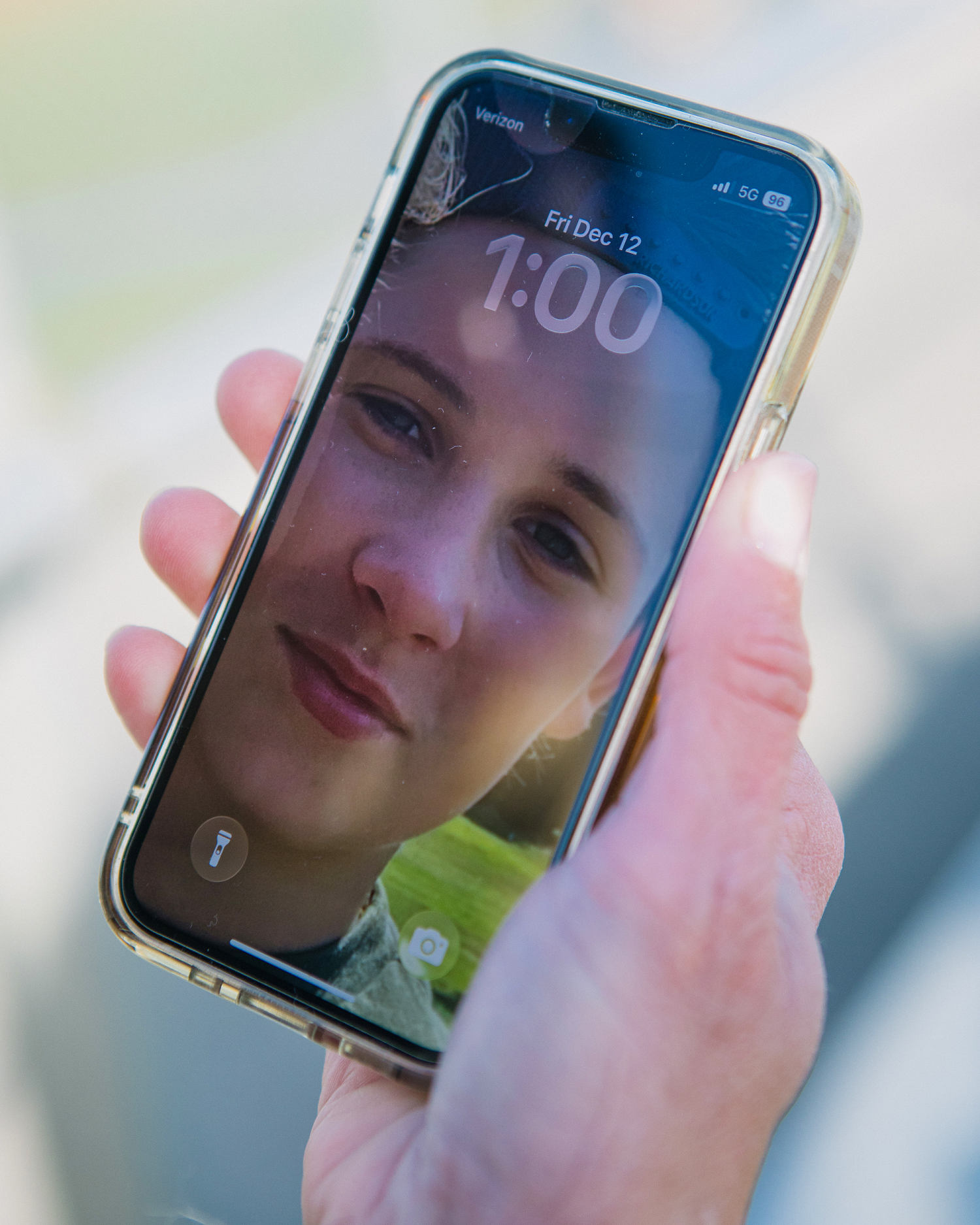




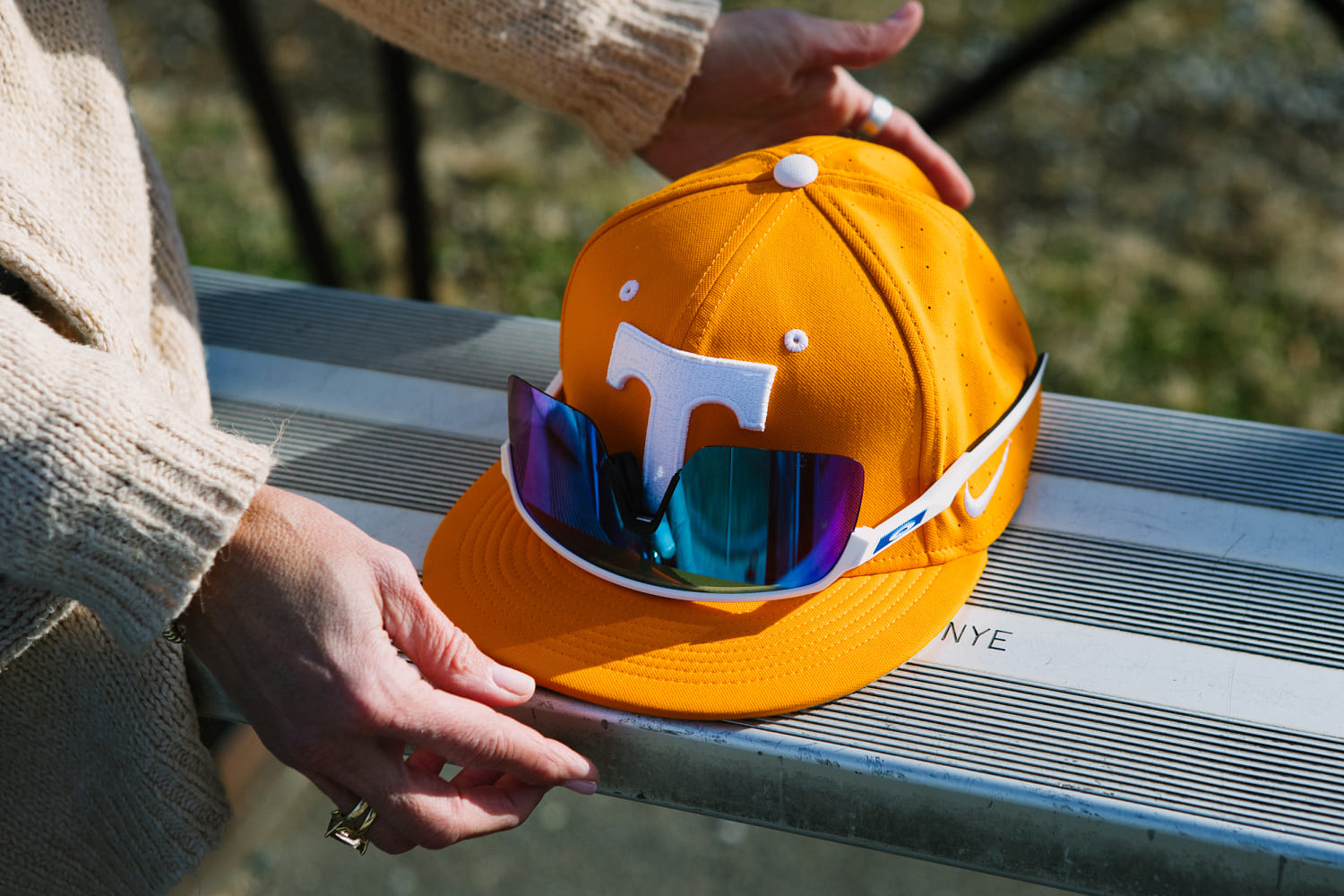




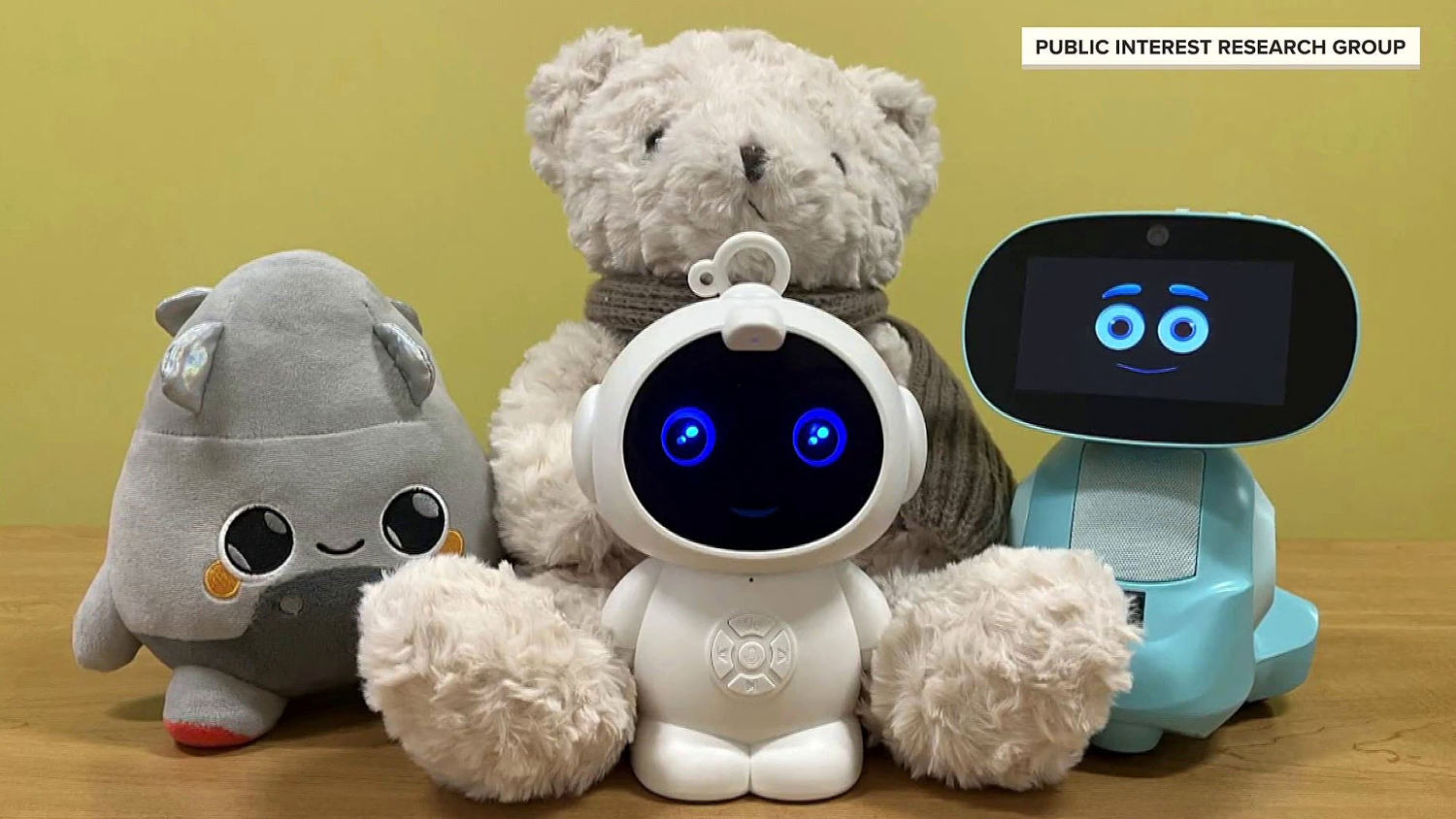











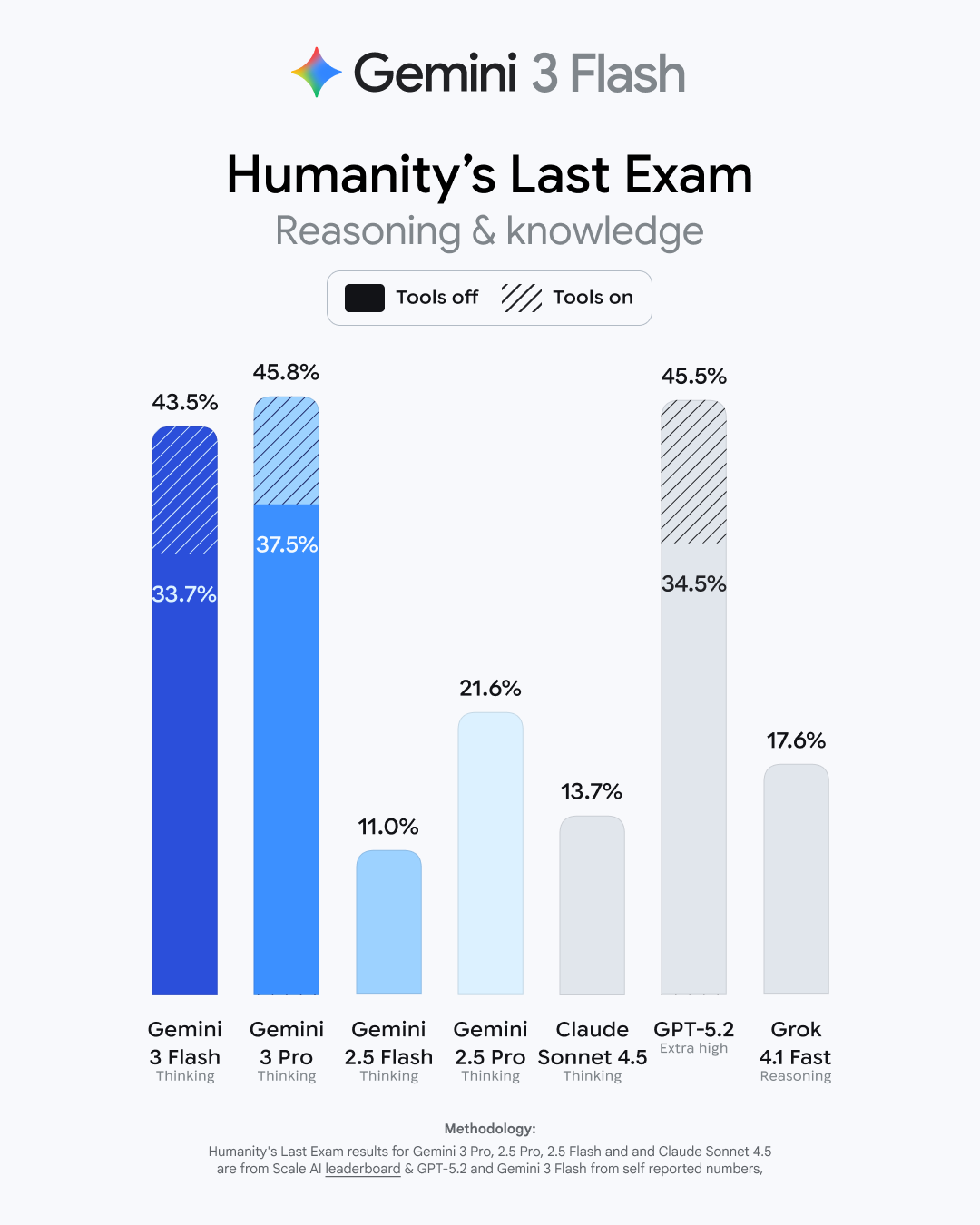 Credit:
Google
Credit:
Google