You can’t patch everything. So what do you fix first? Findings in Q2 2026 have changed traditional answers.
The latest Quarterly Threat Landscape Report from Rapid7 Labs shows vulnerability disclosures still surging while attackers use automation and AI-assisted tooling to compress the time between disclosure and exploitation. The gap that patch cycles were built to fill is closing. Speed and volume are overwhelming security teams that have relied on traditional patch cycles and reactive programs. Success going forward can’t be about patching as much as possible - it has to be about understanding what matters most and reducing the exposures attackers can actually reach.
Here are the four trends that defined Q2 2026, and what they mean for your security program as you define priorities for Q3 and beyond:
The volume of disclosures hit another milestone
There were 8,539 new high- and critical-severity CVEs (CVSS 7.0–10.0) this quarter- double the number reported in the same quarter last year (4,268). Meanwhile, the number of newly exploited vulnerabilities held roughly steady (40). The takeaway isn’t that exploitation exploded - it’s that disclosure volume is far outstripping what any team can triage.
The report breaks down which of those disclosures are actually reachable and how to triage by exploitability instead of severity score alone.
Initial access keeps getting easier
Nearly two-thirds of exploited vulnerabilities this quarter (62%) required no user interaction - no stolen credentials, no phishing victim, no click. Attackers reach and exploit them on their own, and that share is up nine points year over year (from 53% in Q2 2025). Reinforcing the trend, disclosures of missing-authentication flaws (CWE-306) surged 247% year over year - a fast-expanding pool of internet-facing systems that require no login at all.
This is the quarter’s clearest signal - and the report details exactly which exposures to close first, and how, before the exploitation curve catches up.
Nation-state activity remains persistent
Rapid7 observed continued activity from Iranian, North Korean, and Russian advanced persistent threat (APT) clusters targeting government, finance, healthcare, manufacturing, energy, and telecommunications. Russian campaigns targeted edge infrastructure; Iranian activity included sustained industrial control system (ICS) and operational technology (OT) targeting.
The report maps the specific techniques and sectors each cluster focused on this quarter.
Ransomware stays concentrated but keeps evolving
Qilin led ransomware activity in Q2 with 263 listed victims, and the United States remained the most heavily targeted country - with business services and healthcare among the hardest-hit sectors. Rapid7’s Incident Response team also saw growing use of ClickFix and fake CAPTCHA campaigns, and social engineering through trusted collaboration platforms like Microsoft Teams - techniques that accounted for 31.8% of the incidents we worked.
The report includes the full ransomware leaderboard, the sectors most at risk, and where affiliate activity is expanding next.
Exposure is the real challenge, and the biggest opportunity
The volume is daunting, but the real challenge is keeping pace with attackers. As disclosures keep growing, the organizations that stay ahead won’t be the ones patching fastest — they’ll be the ones that know what they expose, which assets matter most, where attackers can realistically get in, and how to reduce reachable exposure before it becomes an incident. That’s what preemptive security means: not a slogan, but an operating model.
The full Quarterly Threat Landscape Report shows where reachable exposure concentrates this quarter, the four actions Rapid7 Labs recommends, the sector-by-sector breakdown, and the dark-web signals shaping what’s next. Read it here before you pressure-test your Q3 prioritization.
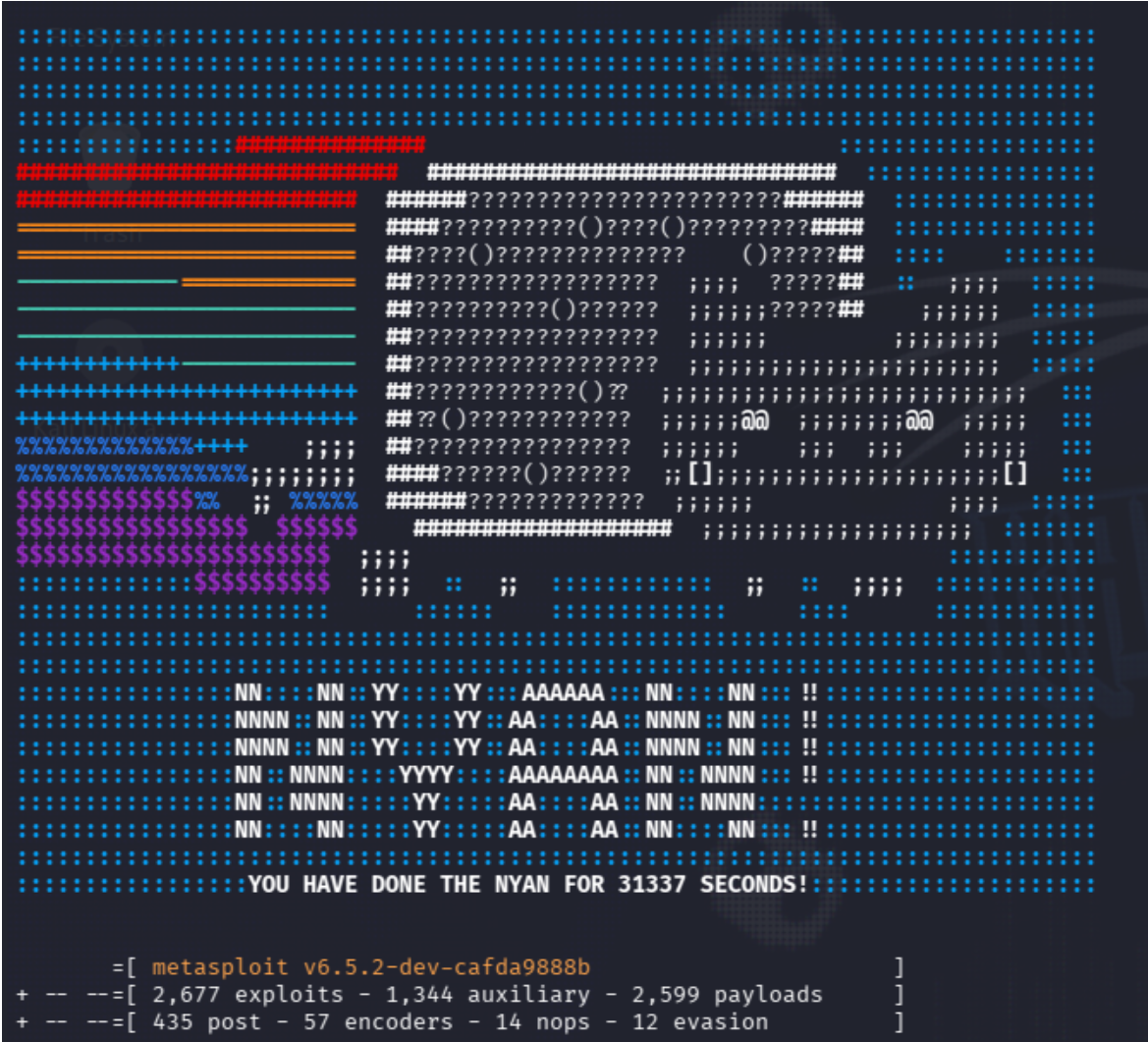
This wrap-up brings a full-on shell parade. Thirteen shiny new modules landed, starting with a buffet of RCEs. WordPress WP2Shell, Ghost CMS, Joomla JCE, Langflow, OpenCATS, Pterodactyl Panel, SonicWall SMA1000, Ray Dashboard, a Pix-for-WooCommerce, and for those who like their exploits closer to the bare-metal, the Fragnesia Linux kernel LPE (CVE-2026-46300). Metasploit also got the glow-up of the summer with the new http malleable profiles, MCP functionality and linux multi fetch payloads (more details on the [official 6.5 release blog post](https://www.rapid7.com/blog/post/pt-metasploit-framework-6-5-released/)!). Windows on ARM confirm to be the new first-class citizenship thanks to brand-new AArch64 reverse-TCP shells (both inline and staged), so your Snapdragon boxes can join the party too. Last but not least, an important message: *Nyan Nyan Nyan Nyan Nyan Nyan.*
Description: This adds an auxiliary module that leverages a path traversal vulnerability in Ray to list the contents of local directories. There is currently no CVE assigned to this vulnerability. Issuance is pending with MITRE.
Description: This adds a module which exploits a vulnerability in Pterodactyl Panel before version 1.11.11 that allows unauthenticated remote code execution through improper handling of locale file operations. The vulnerability, CVE-2025-49132, exists in the locale.json endpoint which allows path traversal and arbitrary file creation. This combination of capabilities results in remote code execution in the context of the user running the web server.
Description: This adds a new exploit module for CVE-2026-15409, a Server-Side Request Forgery (SSRF) vulnerability in the SonicWall SMA1000 WorkPlace wsproxy service.
Description: This adds a local module for the Fragnesia exploit which is a page-cache replacement vulnerability in the Linux kernel's XFRM (IPsec) subsystem, tracked as CVE-2026-46300.
Ghost CMS Remote Code Execution
Authors: Cristian-Alexandru Staicu and Maksim Rogov
Description: This adds an exploit module for Ghost CMS (CVE-2026-29053) that achieves remote code execution by uploading a malicious theme. Ghost's theme renderer evaluates untrusted JSONPath expressions through the {{#get}} helper, letting the module inject and trigger arbitrary code once a theme is uploaded and activated. You'll need valid admin or staff credentials to authenticate.
Description: This adds a new exploit module for CVE-2026-48907, an unauthenticated arbitrary profile creation vulnerability in the JCE (Joomla Content Editor) extension for Joomla!. The profiles.import task fails to enforce authentication, letting an attacker import a crafted profile that is written to disk as a PHP web shell, resulting in remote code execution when the tmp/ directory is directly accessible. All JCE versions up to and including 2.9.99.4 are affected, and no credentials are required.
Description: Adds a new multi/http/langflow_unauth_rce_cve_2026_33017 exploit module that exploits an unauth RCE vulnerability in the /api/v1/build_public_tmp/{flow_id}/flow endpoint in Langflow versions prior to 1.9.0.
Description: This adds an exploit module to target WP2Shell, an unauthenticated pre-auth remote code execution vulnerability affecting WordPress core versions 6.9.0–6.9.4 and 7.0.0–7.0.1. The module chains a REST API route confusion flaw (CVE-2026-63030) with an SQL injection (CVE-2026-60137) to elevate privileges, deploy a payload via a custom plugin, and execute a remote session.
WordPress Unauthenticated RCE via Pix for WooCommerce plugin
Type: Payload (Single) Pull request: #21728 contributed by zeroSteiner
Description: Adds support for a new MALLEABLEC2 option to Meterpreter HTTP(S) payloads. This feature enables users to load a standard profile into Meterpreter and change the shape of its HTTP(S) traffic. All Meterpreters, including Windows, Java, Python, PHP and Linux, have been updated with this functionality.
Description: Adds Windows AARCH64 staged shell payloads.
Enhancements and features (15)
#21379 from g0tmi1k - This improves the FTP login scanner by extending the reporting logic and adding extra checks
#21575 from g0tmi1k - Improves scanner/ftp/ftp_version to now report the service if host is up but we don't get an appropriate FTP banner
#21578 from arpan-pramanik - Fixes a bug where msfconsole crashes with an unhandled exception when attempting to exit if the msf database is missing
#21607 from Pushpenderrathore - This extends CertificateTrace peer cert tracing to support LDAP over TLS and RDP
#21608 from Pushpenderrathore - This adds CertificateTrace peer cert tracing to PostgreSQL over TLS, and fixes a long-standing gap where the Postgres mixin accepted an SSL datastore option but never passed it through to the underlying connection
#21622 from zeroSteiner - Adds Bearer Authentication to the MCP server plugin
#21638 from eve0805 - This reuses the existing Kerberos ticket trace formatting for offline Kerberos artifact workflows, so stored and converted tickets can be inspected with the same output style used during live Kerberos authentication
#21653 from cdelafuente-r7 - This adds job tracking via run_uuid across all module types when executed through RPC endpoints to support Model Context Protocol (MCP) tool integrations
#21654 from cdelafuente-r7 - Adds eight new MCP tools: that wrap the existing RPC endpoints for module and session control, backed by strict per-tool input validation with an opt-in flag for dangerous actions
#21667 from jburgess-r7 - This updates the gogs_rebase_rce module with the vulnerability's newly assigned CVE, CVE-2026-52806
#21691 from eve0805 - This adds KerberosTicketTrace support to the auxiliary/admin/kerberos/forge_ticket module
#21697 from bwatters-r7 - Adds explicit endianness to fetch multi payload query strings and encodes the fetch command in base64 for Python 3.8+ environments
#21728 from zeroSteiner - Adds support for a new MALLEABLEC2 option to Meterpreter HTTP(S) payloads
#21768 from adfoster-r7 - Updates the default authentication logic in the JSON RPC support to now require auth by default, either via the database with user credentials or an auth token
Bugs fixed (15)
#21552 from stzifkas - Fix LHOST validation rejecting tunnel hostnames when DNS lookup fails
#21574 from g0tmi1k - Fixes the implementation of the FTP mixin to allow for reading multiple responses on the same TCP segment
#21609 from dwelch-r7 - Fixed an issue where payload option validation was delayed until after running show options, ensuring options like LHOST and LPORT are validated immediately upon setting a payload or loading a module
#21647 from jheysel-r7 - This updates the ntlm_relay_2_self module to automatically configure Resource-Based Constrained Delegation (RBCD) on the target machine account by setting its msDS-AllowedToActOnBehalfOfOtherIdentity attribute
#21659 from dwelch-r7 - This improves port conflict handling for the MCP plugin by adding pre-flight availability checks, post-spawn verification, and proper state resets on failure
#21661 from kx7m2qd - Fixes an issue with Ctrl+C handling regarding the MCP plugin
#21663 from zeroSteiner - Updates the error handling in the auxiliary/admin/dcerpc/icpr_cert module
#21687 from zeroSteiner - This updates and centralizes the warning message that's displayed when a user sets a datastore option that is not valid in the current context
#21699 from sjanusz-r7 - Fixes a FrozenError issue when the DNS feature was enabled, which occurred when attempting to mutate frozen strings in place during DNS queries
#21701 from cdelafuente-r7 - This fixes an issue where exploit error messages were captured by the job listener during execution but hidden from the console
#21711 from cdelafuente-r7 - This fixes a Ruby 3 keyword argument parsing issue in run_simple, exploit_simple, and check_simple where passing a braceless hash literal caused an ArgumentError
#21714 from l1ve709 - Fixes typos in various module docs
#21718 from sjanusz-r7 - Fixes a crash when attempting to run VNC sessions from Metasploit
#21722 from dwelch-r7 - Fixed a regression to now again allow 0.0.0.0 as a valid listener LHOST address
#21759 from adfoster-r7 - Fixes a crash on multiple SMB modules when attempting to register an SMB service
Documentation
You can find the latest Metasploit documentation on our docsite at docs.metasploit.com .
Get it
As always, you can update to the latest Metasploit Framework with msfupdate and you can get more details on the changes since the last blog post from GitHub:
If you are a git user, you can clone the Metasploit Framework repo (master branch) for the latest. To install fresh without using git, you can use the open-source-only Nightly Installers or the commercial edition Metasploit Pro .
On July 29, 2026, the Ruby on Rails project published a security advisory for CVE-2026-66066, a critical vulnerability affecting Active Storage image processing when used in conjunction with the libvips image processing library. The vulnerability has a CVSSv4 score of 9.5 and is classified as Initialization of a Resource with an Insecure Default (CWE-1188). An unauthenticated attacker may be able to leverage CVE-2026-66066 and read files accessible to the Rails application process, potentially exposing secrets that could enable remote code execution (RCE) or access to connected systems.
An application is affected when it uses libvips for Active Storage image processing and accepts image uploads from untrusted users. Rails notes that generating image variants is not a separate requirement for exposure. Vips is the default Active Storage variant processor for applications configured with Rails 7.0 or later defaults. According to Ethiack, only the Vips processor is affected; applications using Magick are not affected through the reported vector.
As of July 30, 2026, Rapid7 is not aware of exploitation in the wild. Ethiack and GMO Flatt Security, who independently reported the vulnerability, have withheld proof-of-concept code and details of the full attack chain. Public code claiming to exploit CVE-2026-66066 exists, but it is unclear how closely it corresponds to the full attack chain reported privately to Rails. According to the Rails Security Announcement, additional details will be disclosed no later than August 28, 2026. Rapid7 recommends remediating affected applications on an urgent basis, outside of normal patch cycles.
Update #1: On July 31, 2026, Rails published technical details and forensic tools earlier than its planned August 28 disclosure date after several researchers reverse-engineered the attack and published proof-of-concept code.
Technical overview
libvips uses operations to load and save image formats, including operations backed by third-party libraries. Some are marked "unfuzzed" or "untrusted" because they are unsafe for untrusted content. According to Rails, Active Storage did not disable these operations before processing user-supplied files, which may allow a crafted upload to trigger an unsafe operation and disclose files readable by the application.
The attack details published by Rails describe a chain in which an attacker creates a blob through Active Storage's direct-upload endpoint with a false image content type and obtains a genuine signed variation_key from a page that renders an Active Storage representation. A crafted file identifies itself to libvips as a MATLAB level 5 file but to libmatio as a MAT 7.3 HDF5 container. HDF5's External File List then reads bytes from an attacker-selected path, which are rendered as image pixels and returned in the resulting variant. This known chain also requires the deployed libvips build to include the matload operation.
For this documented chain, the Active Storage direct-upload route must be reachable. When Active Storage routes are mounted, the direct-upload route is present by default even if the application's own interface does not use direct uploads. Rapid7 testing found that ordinary server-side attachment does not satisfy this chain because Rails re-identifies the crafted file as MATLAB data before variant processing.
The arbitrary file-read stage does not require knowledge of secret_key_base or a forged variation key. Rapid7 also verified an RCE escalation in which recovered Rails signing material is used to forge an ImageProcessing 1.x variation; this path does not require Marshal deserialization.
The Rails patch that remediates CVE-2026-66066, disables untrusted operations during Active Storage initialization. When ruby-vips is installed, patched versions prevent the application from starting if ruby-vips or libvips is too old to support that protection.
On August 3, 2026, Rapid7 Labs published a full root cause technical analysis of CVE-2026-66066, detailing the full RCE chain and accompanying metasploit module.
Mitigation guidance
Organizations running affected Ruby on Rails applications should upgrade to a fixed Active Storage release and ensure libvips is 8.13 or later. Updating Rails or Active Storage alone is not sufficient when an older libvips version is installed.
Rails has published forensic tools to assess whether an application was vulnerable and search Active Storage data for crafted files. Because scheduled cleanup of unattached blobs may remove evidence, Rapid7 recommends beginning forensic assessment promptly.
The Rails advisory identifies patched Active Storage releases 7.2.3.2, 8.0.5.1, and 8.1.3.1. The fixed Rails releases are:
Rails branch
Affected versions
Fixed version
Rails 7.x
7.0.0 through 7.2.3.1
7.2.3.2
Rails 8.0.x
8.0.0 through 8.0.5
8.0.5.1
Rails 8.1.x
8.1.0 through 8.1.3
8.1.3.1
The Rails advisory lists all Active Storage releases earlier than 7.2.3.2 as affected, which includes releases before Rails 7.0. Ethiack reports that Rails 6.0.0 through 6.1.7.10 may be affected when Active Storage is configured to use Vips, and Rapid7 has verified that the known attack works on the Rails 6.0 and 6.1 branches under that non-default configuration. Rails has not published fixed releases for branches earlier than 7.2, so affected applications on those branches should migrate to a supported fixed branch or apply the applicable workaround below.
When ruby-vips is installed, organizations should ensure it is 2.2.1 or later. Rails advises affected organizations to replace secret_key_base and other secrets accessible to the application process, including the Rails master key and the credentials it decrypts, storage service credentials, database credentials, and third-party service tokens or keys. Replacing secret_key_base expires active sessions and affects encrypted and signed cookies, signed global IDs, and Active Storage URLs.
As a temporary workaround on libvips 8.13 or later, organizations can set VIPS_BLOCK_UNTRUSTED or, with ruby-vips 2.2.1 or later, call Vips.block_untrusted(true) from an initializer. For libvips versions earlier than 8.13, Rails states that the only workaround is to remove the libvips dependency.
Exposure Command, InsightVM, and Nexpose customers can assess exposure to CVE-2026-66066 with vulnerability checks expected to be available in the July 31 content release.
Updates
July 30, 2026: Initial publication.
July 31, 2026: Updated with technical details and forensic resources published by Rails, and clarified the affected version range.
August 3, 2026: Added a Technical analysis section for the new Rapid7 Analysis.
On July 17, 2026, a GitHub Security Advisory was published for CVE-2026-63030, a critical unauthenticated remote code execution vulnerability affecting WordPress Core. While the official GitHub security advisory classifies the severity as Critical, the vulnerability has currently been assigned a CVSS score of 7.5. WordPress is one of the most widely deployed content management systems, making vulnerabilities in its core software potentially significant for organizations operating public-facing websites. The vulnerability reportedly allows an unauthenticated attacker to execute code via the WordPress REST API batch endpoint, potentially resulting in complete compromise of the website and its underlying data. No valid account or user interaction is required.
According to the advisory, the vulnerability affects WordPress versions 6.9.0 through 6.9.4 and versions 7.0.0 through 7.0.1. The issue is fixed in WordPress 6.9.5 and 7.0.2. A fix is also included in WordPress 7.1 Beta 2.
Cloudflare reported that the vulnerable code path can be reached when a persistent object cache is not in use. Searchlight Cyber, whose researchers identified the vulnerability, stated that it can be exploited remotely against a default WordPress installation without requiring additional plugins.
Update, July 22:Since initial publication, Searchlight Cyber has published full technical details of the exploit chain, multiple public proof-of-concept exploits have surfaced, and both CVEs were added to CISA's Known Exploited Vulnerabilities (KEV) catalog on July 21 (CVE-2026-63030, CVE-2026-60137), confirming active exploitation.
Technical overview
CVE-2026-63030 is a logic flaw in the WordPress REST API batch processor (/wp-json/batch/v1). The batch API performs validation and execution in separate loops. When wp_parse_url() fails on a sub-request path, the error is pushed to the validation array but not the matches array. This desynchronizes the arrays, causing every subsequent request to dispatch under the wrong handler.
CVE-2026-60137 is a SQL injection in the author__not_in parameter of the posts endpoint. The parameter is interpolated directly into raw SQL when provided as a scalar string. Parameter validation normally prevents this, but the batch API desynchronization allows bypass. A recursive batch call bypasses GET restrictions, yielding pre-authentication UNION-based SQL injection.
When both vulnerabilities are present, escalation to RCE chains WordPress internals to create an administrator account. The attacker logs in and uploads a malicious plugin for code execution. Neither vulnerability alone is sufficient for unauthenticated code execution. Searchlight Cyber's full technical writeup details each step of the chain.
Mitigation guidance
Organizations operating affected WordPress installations should prioritize upgrading immediately. Applying the WordPress-provided update is the most effective way to remediate CVE-2026-63030.
Affected and fixed versions include:
WordPress branch
Affected versions
Fixed version
Earlier than 6.9
Not affected by CVE-2026-63030
No action required for this CVE
6.9
6.9.0 through 6.9.4
6.9.5
7.0
7.0.0 through 7.0.1
7.0.2
7.1 beta
Affected beta versions were not fully specified
7.1 Beta 2
WordPress maintainers stated they are forcing updates for affected installations with automatic updates enabled. Administrators should nevertheless verify that each internet-facing WordPress website has successfully upgraded to WordPress 6.9.5, 7.0.2, or another fixed release appropriate for its branch.
As a temporary mitigation, organizations that cannot immediately update can block the /wp-json/batch/v1 endpoint (or ?rest_route=/batch/v1) at a web application firewall, or disable anonymous REST API access using a plugin.
Given confirmed exploitation in the wild, Rapid7 strongly recommends investigating for signs of compromise even after patching. Defenders should review HTTP access logs for anomalous batch endpoint requests and check for unfamiliar plugins or PHP files.
Rapid7 customers
Exposure Command, InsightVM, and Nexpose
Exposure Command, InsightVM, and Nexpose customers can assess exposure to CVE-2026-63030 with unauthenticated vulnerability checks available in the July 20th, 2026 content release.
Updates
July 17, 2026: Initial publication.
July 22, 2026: Updated post to reflect public reporting of exploitation in the wild; added technical overview following Searchlight Cyber's full disclosure; added temporary WAF mitigation guidance; updated Overview to note CISA KEV addition (July 21).

 Login