Reading view

Against the Federal Moratorium on State-Level Regulation of AI

Cast your mind back to May of this year: Congress was in the throes of debate over the massive budget bill. Amidst the many seismic provisions, Senator Ted Cruz dropped a ticking time bomb of tech policy: a ten-year moratorium on the ability of states to regulate artificial intelligence. To many, this was catastrophic. The few massive AI companies seem to be swallowing our economy whole: their energy demands are overriding household needs, their data demands are overriding creators’ copyright, and their products are triggering mass unemployment as well as new types of clinical ...

The post Against the Federal Moratorium on State-Level Regulation of AI appeared first on Security Boulevard.

  •  

LW ROUNDTABLE: Part 3, Cyber resilience faltered in 2025 — recalibration now under way

This is the third installment in our four-part 2025 Year-End Roundtable. In Part One, we explored how accountability got personal. In Part Two, we examined how regulatory mandates clashed with operational complexity.

Part three of a four-part series.

Now … (more…)

The post LW ROUNDTABLE: Part 3, Cyber resilience faltered in 2025 — recalibration now under way first appeared on The Last Watchdog.

The post LW ROUNDTABLE: Part 3, Cyber resilience faltered in 2025 — recalibration now under way appeared first on Security Boulevard.

  •  

Compliance-Ready Cybersecurity for Finance and Healthcare: The Seceon Advantage

Navigating the Most Complex Regulatory Landscapes in Cybersecurity Financial services and healthcare organizations operate under the most stringent regulatory frameworks in existence. From HIPAA and PCI-DSS to GLBA, SOX, and emerging regulations like DORA, these industries face a constant barrage of compliance requirements that demand not just checkboxes, but comprehensive, continuously monitored security programs. The

The post Compliance-Ready Cybersecurity for Finance and Healthcare: The Seceon Advantage appeared first on Seceon Inc.

The post Compliance-Ready Cybersecurity for Finance and Healthcare: The Seceon Advantage appeared first on Security Boulevard.

  •  

Managed Security Services 2.0: How MSPs & MSSPs Can Dominate the Cybersecurity Market in 2025

The cybersecurity battlefield has changed. Attackers are faster, more automated, and more persistent than ever. As businesses shift to cloud, remote work, SaaS, and distributed infrastructure, their security needs have outgrown traditional IT support. This is the turning point:Managed Service Providers (MSPs) are evolving into full-scale Managed Security Service Providers (MSSPs) – and the ones

The post Managed Security Services 2.0: How MSPs & MSSPs Can Dominate the Cybersecurity Market in 2025 appeared first on Seceon Inc.

The post Managed Security Services 2.0: How MSPs & MSSPs Can Dominate the Cybersecurity Market in 2025 appeared first on Security Boulevard.

  •  

Can Your AI Initiative Count on Your Data Strategy and Governance?

Launching an AI initiative without a robust data strategy and governance framework is a risk many organizations underestimate. Most AI projects often stall, deliver poor...Read More

The post Can Your AI Initiative Count on Your Data Strategy and Governance? appeared first on ISHIR | Custom AI Software Development Dallas Fort-Worth Texas.

The post Can Your AI Initiative Count on Your Data Strategy and Governance? appeared first on Security Boulevard.

  •  

Identity Risk Is Now the Front Door to Enterprise Breaches (and How Digital Risk Protection Stops It Early)

Most enterprise breaches no longer begin with a firewall failure or a missed patch. They begin with an exposed identity. Credentials harvested from infostealers. Employee logins are sold on criminal forums. Executive personas impersonated to trigger wire fraud. Customer identities stitched together from scattered exposures. The modern breach path is identity-first — and that shift …

The post Identity Risk Is Now the Front Door to Enterprise Breaches (and How Digital Risk Protection Stops It Early) appeared first on Security Boulevard.

  •  

The Hidden Threat in Your Holiday Emails: Tracking Pixels and Privacy Concerns

Join us in the midst of the holiday shopping season as we discuss a growing privacy problem: tracking pixels embedded in marketing emails. According to Proton’s latest Spam Watch 2025 report, nearly 80% of promotional emails now contain trackers that report back your email activity. We discuss how these trackers work, why they become more […]

The post The Hidden Threat in Your Holiday Emails: Tracking Pixels and Privacy Concerns appeared first on Shared Security Podcast.

The post The Hidden Threat in Your Holiday Emails: Tracking Pixels and Privacy Concerns appeared first on Security Boulevard.

💾

  •  

Bugcrowd Puts Defenders on the Offensive With AI Triage Assistant 

agentic aiDeepseek, CrowdStrike, agentic,

Bugcrowd unveils AI Triage Assistant and AI Analytics to help security teams proactively defend against AI-driven cyberattacks by accelerating vulnerability analysis, reducing MTTR, and enabling preemptive security decisions.

The post Bugcrowd Puts Defenders on the Offensive With AI Triage Assistant  appeared first on Security Boulevard.

  •  

What makes Non-Human Identities crucial for data security

Are You Overlooking the Security of Non-Human Identities in Your Cybersecurity Framework? Where bustling with technological advancements, the security focus often zooms in on human authentication and protection, leaving the non-human counterparts—Non-Human Identities (NHIs)—in the shadows. The integration of NHIs in data security strategies is not just an added layer of protection but a necessity. […]

The post What makes Non-Human Identities crucial for data security appeared first on Entro.

The post What makes Non-Human Identities crucial for data security appeared first on Security Boulevard.

  •  

How do I implement Agentic AI in financial services

Why Are Non-Human Identities Essential for Secure Cloud Environments? Organizations face a unique but critical challenge: securing non-human identities (NHIs) and their secrets within cloud environments. But why are NHIs increasingly pivotal for cloud security strategies? Understanding Non-Human Identities and Their Role in Cloud Security To comprehend the significance of NHIs, we must first explore […]

The post How do I implement Agentic AI in financial services appeared first on Entro.

The post How do I implement Agentic AI in financial services appeared first on Security Boulevard.

  •  

What are the best practices for managing NHIs

What Challenges Do Organizations Face When Managing NHIs? Organizations often face unique challenges when managing Non-Human Identities (NHIs). A critical aspect that enterprises must navigate is the delicate balance between security and innovation. NHIs, essentially machine identities, require meticulous attention when they bridge the gap between security teams and research and development (R&D) units. For […]

The post What are the best practices for managing NHIs appeared first on Entro.

The post What are the best practices for managing NHIs appeared first on Security Boulevard.

  •  

How can Agentic AI enhance our cybersecurity measures

What Role Do Non-Human Identities Play in Securing Our Digital Ecosystems? Where more organizations migrate to the cloud, the concept of securing Non-Human Identities (NHIs) is becoming increasingly crucial. NHIs, essentially machine identities, are pivotal in maintaining robust cybersecurity frameworks. They are a unique combination of encrypted passwords, tokens, or keys, which are akin to […]

The post How can Agentic AI enhance our cybersecurity measures appeared first on Entro.

The post How can Agentic AI enhance our cybersecurity measures appeared first on Security Boulevard.

  •  

NDSS 2025 – Secret Spilling Drive: Leaking User Behavior Through SSD Contention

Session 5D: Side Channels 1

Authors, Creators & Presenters: Jonas Juffinger (Graz University of Technology), Fabian Rauscher (Graz University of Technology), Giuseppe La Manna (Amazon), Daniel Gruss (Graz University of Technology)

PAPER
Secret Spilling Drive: Leaking User Behavior through SSD Contention

Covert channels and side channels bypass architectural security boundaries. Numerous works have studied covert channels and side channels in software and hardware. Thus, research on covert-channel and side-channel mitigations relies on the discovery of leaky hardware and software components. In this paper, we perform the first study of timing channels inside modern commodity off-the-shelf SSDs. We systematically analyze the behavior of NVMe PCIe SSDs with concurrent workloads. We observe that exceeding the maximum I/O operations of the SSD leads to significant latency spikes. We narrow down the number of I/O operations required to still induce latency spikes on 12 different SSDs. Our results show that a victim process needs to read at least 8 to 128 blocks to be still detectable by an attacker. Based on these experiments, we show that an attacker can build a covert channel, where the sender encodes secret bits into read accesses to unrelated blocks, inaccessible to the receiver. We demonstrate that this covert channel works across different systems and different SSDs, even from processes running inside a virtual machine. Our unprivileged SSD covert channel achieves a true capacity of up to 1503 bit/s while it works across virtual machines (cross-VM) and is agnostic to operating system versions, as well as other hardware characteristics such as CPU or DRAM. Given the coarse granularity of the SSD timing channel, we evaluate it as a side channel in an open-world website fingerprinting attack over the top 100 websites. We achieve an F1 score of up to 97.0. This shows that the leakage goes beyond covert communication and can leak highly sensitive information from victim users. Finally, we discuss the root cause of the SSD timing channel and how it can be mitigated.


ABOUT NDSS
The Network and Distributed System Security Symposium (NDSS) fosters information exchange among researchers and practitioners of network and distributed system security. The target audience includes those interested in practical aspects of network and distributed system security, with a focus on actual system design and implementation. A major goal is to encourage and enable the Internet community to apply, deploy, and advance the state of available security technologies.


Our thanks to the Network and Distributed System Security (NDSS) Symposium for publishing their Creators, Authors and Presenter’s superb NDSS Symposium 2025 Conference content on the Organizations' YouTube Channel.

Permalink

The post NDSS 2025 – Secret Spilling Drive: Leaking User Behavior Through SSD Contention appeared first on Security Boulevard.

  •  

LGPD (Brazil)

What is the LGPD (Brazil)? The Lei Geral de Proteção de Dados Pessoais (LGPD), or General Data Protection Law (Law No. 13.709/2018), is Brazil’s comprehensive data protection framework, inspired by the European Union’s GDPR. It regulates the collection, use, storage, and sharing of personal data, applying to both public and private entities, regardless of industry, […]

The post LGPD (Brazil) appeared first on Centraleyes.

The post LGPD (Brazil) appeared first on Security Boulevard.

  •  

2026 Will Be the Year of AI-based Cyberattacks – How Can Organizations Prepare?

Will the perception of security completely overturn with the exponential growth of AI in today’s technology-driven world? As we approach 2026, attackers upgrading to AI cyberattacks is no longer a possibility but a known fact. Let us examine the emerging trends in AI-driven cyberattacks and see how businesses of all sizes can strengthen their defenses […]

The post 2026 Will Be the Year of AI-based Cyberattacks – How Can Organizations Prepare? appeared first on Kratikal Blogs.

The post 2026 Will Be the Year of AI-based Cyberattacks – How Can Organizations Prepare? appeared first on Security Boulevard.

  •  

Why are companies free to choose their own AI-driven security solutions?

What Makes AI-Driven Security Solutions Crucial in Modern Cloud Environments? How can organizations navigate the complexities of cybersecurity to ensure robust protection, particularly when dealing with Non-Human Identities (NHIs) in cloud environments? The answer lies in leveraging AI-driven security solutions, offering remarkable freedom of choice and adaptability for cybersecurity professionals. Understanding Non-Human Identities: The Backbone […]

The post Why are companies free to choose their own AI-driven security solutions? appeared first on Entro.

The post Why are companies free to choose their own AI-driven security solutions? appeared first on Security Boulevard.

  •  

Can Agentic AI provide solutions that make stakeholders feel assured?

How Are Non-Human Identities Transforming Cybersecurity Practices? Are you aware of the increasing importance of Non-Human Identities (NHIs)? Where organizations transition towards more automated and cloud-based environments, managing NHIs and secrets security becomes vital. These machine identities serve as the backbone for securing sensitive operations across industries like financial services, healthcare, and DevOps environments. Understanding […]

The post Can Agentic AI provide solutions that make stakeholders feel assured? appeared first on Entro.

The post Can Agentic AI provide solutions that make stakeholders feel assured? appeared first on Security Boulevard.

  •  

How are secrets scanning technologies getting better?

How Can Organizations Enhance Their Cloud Security Through Non-Human Identities? Have you ever wondered about the unseen challenges within your cybersecurity framework? Managing Non-Human Identities (NHIs) and their associated secrets has emerged as a vital component in establishing a robust security posture. For organizations operating in the cloud, neglecting to secure machine identities can result […]

The post How are secrets scanning technologies getting better? appeared first on Entro.

The post How are secrets scanning technologies getting better? appeared first on Security Boulevard.

  •  

How does NHI support the implementation of least privilege?

What Are Non-Human Identities and Why Are They Essential for Cybersecurity? Have you ever pondered the complexity of cybersecurity beyond human interactions? Non-Human Identities (NHIs) are becoming a cornerstone in securing digital environments. With the guardians of machine identities, NHIs are pivotal in addressing the security gaps prevalent between research and development teams and security […]

The post How does NHI support the implementation of least privilege? appeared first on Entro.

The post How does NHI support the implementation of least privilege? appeared first on Security Boulevard.

  •  

What New Changes Are Coming to FedRAMP in 2026?

One thing is certain: every year, the cybersecurity threat environment will evolve. AI tools, advances in computing, the growth of high-powered data centers that can be weaponized, compromised IoT networks, and all of the traditional vectors grow and change. As such, the tools and frameworks we use to resist these attacks will also need to […]

The post What New Changes Are Coming to FedRAMP in 2026? appeared first on Security Boulevard.

  •  

NDSS 2025 – A Systematic Evaluation Of Novel And Existing Cache Side Channels

Session 5D: Side Channels 1

Authors, Creators & Presenters: Fabian Rauscher (Graz University of Technology), Carina Fiedler (Graz University of Technology), Andreas Kogler (Graz University of Technology), Daniel Gruss (Graz University of Technology)

PAPER
A Systematic Evaluation Of Novel And Existing Cache Side Channels

CPU caches are among the most widely studied side-channel targets, with Prime+Probe and Flush+Reload being the most prominent techniques. These generic cache attack techniques can leak cryptographic keys, user input, and are a building block of many microarchitectural attacks. In this paper, we present the first systematic evaluation using 9 characteristics of the 4 most relevant cache attacks, Flush+Reload, Flush+Flush, Evict+Reload, and Prime+Probe, as well as three new attacks that we introduce: Demote+Reload, Demote+Demote, and DemoteContention. We evaluate hit-miss margins, temporal precision, spatial precision, topological scope, attack time, blind spot length, channel capacity, noise resilience, and detectability on recent Intel microarchitectures. Demote+Reload and Demote+Demote perform similar to previous attacks and slightly better in some cases, e.g., Demote+Reload has a 60.7 % smaller blind spot than Flush+Reload. With 15.48 Mbit/s, Demote+Reload has a 64.3 % higher channel capacity than Flush+Reload. We also compare all attacks in an AES T-table attack and compare Demote+Reload and Flush+Reload in an inter-keystroke timing attack. Beyond the scope of the prior attack techniques, we demonstrate a KASLR break with Demote+Demote and the amplification of power side-channel leakage with Demote+Reload. Finally, Sapphire Rapids and Emerald Rapids CPUs use a non-inclusive L3 cache, effectively limiting eviction-based cross-core attacks, e.g., Prime+Probe and Evict+Reload, to rare cases where the victim's activity reaches the L3 cache. Hence, we show that in a cross-core attack, DemoteContention can be used as a reliable alternative to Prime+Probe and Evict+Reload that does not require reverse-engineering of addressing functions and cache replacement policy.


ABOUT NDSS
The Network and Distributed System Security Symposium (NDSS) fosters information exchange among researchers and practitioners of network and distributed system security. The target audience includes those interested in practical aspects of network and distributed system security, with a focus on actual system design and implementation. A major goal is to encourage and enable the Internet community to apply, deploy, and advance the state of available security technologies.


Our thanks to the Network and Distributed System Security (NDSS) Symposium for publishing their Creators, Authors and Presenter’s superb NDSS Symposium 2025 Conference content on the Organizations' YouTube Channel.

Permalink

The post NDSS 2025 – A Systematic Evaluation Of Novel And Existing Cache Side Channels appeared first on Security Boulevard.
  •  

How do secrets rotations drive innovations in security?

How Critical is Managing Non-Human Identities for Cloud Security? Are you familiar with the virtual tourists navigating your digital right now? These tourists, known as Non-Human Identities (NHIs), are machine identities pivotal in computer security, especially within cloud environments. These NHIs are akin to digital travelers carrying passports and visas—where the passport represents an encrypted […]

The post How do secrets rotations drive innovations in security? appeared first on Entro.

The post How do secrets rotations drive innovations in security? appeared first on Security Boulevard.

  •  

How can effective NHIs fit your cybersecurity budget?

Are Non-Human Identities Key to an Optimal Cybersecurity Budget? Have you ever pondered over the hidden costs of cybersecurity that might be draining your resources without your knowledge? Non-Human Identities (NHIs) and Secrets Security Management are essential components of a cost-effective cybersecurity strategy, especially when organizations increasingly operate in cloud environments. Understanding Non-Human Identities (NHIs) […]

The post How can effective NHIs fit your cybersecurity budget? appeared first on Entro.

The post How can effective NHIs fit your cybersecurity budget? appeared first on Security Boulevard.

  •  

What aspects of Agentic AI security should get you excited?

Are Non-Human Identities the Key to Strengthening Agentic AI Security? Where increasingly dominated by Agentic AI, organizations are pivoting toward more advanced security paradigms to protect their digital. Non-Human Identities (NHI) and Secrets Security Management have emerged with pivotal elements to fortify this quest for heightened cybersecurity. But why should this trend be generating excitement […]

The post What aspects of Agentic AI security should get you excited? appeared first on Entro.

The post What aspects of Agentic AI security should get you excited? appeared first on Security Boulevard.

  •  

What are the best practices for ensuring NHIs are protected?

How Can Organizations Safeguard Non-Human Identities in the Cloud? Are your organization’s machine identities as secure as they should be? With digital evolves, the protection of Non-Human Identities (NHIs) becomes crucial for maintaining robust cybersecurity postures. NHIs represent machine identities like encrypted passwords, tokens, and keys, which are pivotal in ensuring effective cloud security control. […]

The post What are the best practices for ensuring NHIs are protected? appeared first on Entro.

The post What are the best practices for ensuring NHIs are protected? appeared first on Security Boulevard.

  •  

The Autonomous MSSP: How to Turn XDR Volume into a Competitive Advantage

Turn XDR volume into revenue. Morpheus investigates 100% of alerts and triages 95% in under 2 minutes, letting MSSPs scale without adding headcount.

The post The Autonomous MSSP: How to Turn XDR Volume into a Competitive Advantage appeared first on D3 Security.

The post The Autonomous MSSP: How to Turn XDR Volume into a Competitive Advantage appeared first on Security Boulevard.

  •  

Friday Squid Blogging: Giant Squid Eating a Diamondback Squid

I have no context for this video—it’s from Reddit—but one of the commenters adds some context:

Hey everyone, squid biologist here! Wanted to add some stuff you might find interesting.

With so many people carrying around cameras, we’re getting more videos of giant squid at the surface than in previous decades. We’re also starting to notice a pattern, that around this time of year (peaking in January) we see a bunch of giant squid around Japan. We don’t know why this is happening. Maybe they gather around there to mate or something? who knows! but since so many people have cameras, those one-off monster-story encounters are now caught on video, like this one (which, btw, rips. This squid looks so healthy, it’s awesome)...

The post Friday Squid Blogging: Giant Squid Eating a Diamondback Squid appeared first on Security Boulevard.

  •  

NDSS 2025 – KernelSnitch: Side Channel-Attacks On Kernel Data Structures

Session 5D: Side Channels 1

Authors, Creators & Presenters: Lukas Maar (Graz University of Technology), Jonas Juffinger (Graz University of Technology), Thomas Steinbauer (Graz University of Technology), Daniel Gruss (Graz University of Technology), Stefan Mangard (Graz University of Technology)

PAPER
KernelSnitch: Side Channel-Attacks On Kernel Data Structures

The sharing of hardware elements, such as caches, is known to introduce microarchitectural side-channel leakage. One approach to eliminate this leakage is to not share hardware elements across security domains. However, even under the assumption of leakage-free hardware, it is unclear whether other critical system components, like the operating system, introduce software-caused side-channel leakage. In this paper, we present a novel generic software side-channel attack, KernelSnitch, targeting kernel data structures such as hash tables and trees. These structures are commonly used to store both kernel and user information, e.g., metadata for userspace locks. KernelSnitch exploits that these data structures are variable in size, ranging from an empty state to a theoretically arbitrary amount of elements. Accessing these structures requires a variable amount of time depending on the number of elements, i.e., the occupancy level. This variance constitutes a timing side channel, observable from user space by an unprivileged, isolated attacker. While the timing differences are very low compared to the syscall runtime, we demonstrate and evaluate methods to amplify these timing differences reliably. In three case studies, we show that KernelSnitch allows unprivileged and isolated attackers to leak sensitive information from the kernel and activities in other processes. First, we demonstrate covert channels with transmission rates up to 580 kbit/s. Second, we perform a kernel heap pointer leak in less than 65 s by exploiting the specific indexing that Linux is using in hash tables. Third, we demonstrate a website fingerprinting attack, achieving an F1 score of more than 89 %, showing that activity in other user programs can be observed using KernelSnitch. Finally, we discuss mitigations for our hardware-agnostic attacks.


ABOUT NDSS
The Network and Distributed System Security Symposium (NDSS) fosters information exchange among researchers and practitioners of network and distributed system security. The target audience includes those interested in practical aspects of network and distributed system security, with a focus on actual system design and implementation. A major goal is to encourage and enable the Internet community to apply, deploy, and advance the state of available security technologies.


Our thanks to the Network and Distributed System Security (NDSS) Symposium for publishing their Creators, Authors and Presenter’s superb NDSS Symposium 2025 Conference content on the Organizations' YouTube Channel.

Permalink

The post NDSS 2025 – KernelSnitch: Side Channel-Attacks On Kernel Data Structures appeared first on Security Boulevard.

  •  

LW ROUNDTABLE Part 2: Mandates surge, guardrails lag — intel from the messy middle

Regulators made their move in 2025.

Disclosure deadlines arrived. AI rules took shape. Liability rose up the chain of command. But for security teams on the ground, the distance between policy and practice only grew wider.

Part two of a (more…)

The post LW ROUNDTABLE Part 2: Mandates surge, guardrails lag — intel from the messy middle first appeared on The Last Watchdog.

The post LW ROUNDTABLE Part 2: Mandates surge, guardrails lag — intel from the messy middle appeared first on Security Boulevard.

  •  

Microsoft Expands its Bug Bounty Program to Include Third-Party Code

protecting data

In a nod to the evolving threat landscape that comes with cloud computing and AI and the growing supply chain threats, Microsoft is broadening its bug bounty program to reward researchers who uncover threats to its users that come from third-party code, like commercial and open source software,

The post Microsoft Expands its Bug Bounty Program to Include Third-Party Code appeared first on Security Boulevard.

  •  

As Capabilities Advance Quickly OpenAI Warns of High Cybersecurity Risk of Future AI Models  

agentic aiDeepseek, CrowdStrike, agentic,

OpenAI warns that frontier AI models could escalate cyber threats, including zero-day exploits. Defense-in-depth, monitoring, and AI security by design are now essential.

The post As Capabilities Advance Quickly OpenAI Warns of High Cybersecurity Risk of Future AI Models   appeared first on Security Boulevard.

  •  

React Fixes Two New RSC Flaws as Security Teams Deal with React2Shell

Google Big Sleep AI LLM security vulnerability

As they work to fend off the rapidly expanding number of attempts by threat actors to exploit the dangerous React2Shell vulnerability, security teams are learning of two new flaws in React Server Components that could lead to denial-of-service attacks or the exposure of source code.

The post React Fixes Two New RSC Flaws as Security Teams Deal with React2Shell appeared first on Security Boulevard.

  •  

Building Trustworthy AI Agents

The promise of personal AI assistants rests on a dangerous assumption: that we can trust systems we haven’t made trustworthy. We can’t. And today’s versions are failing us in predictable ways: pushing us to do things against our own best interests, gaslighting us with doubt about things we are or that we know, and being unable to distinguish between who we are and who we have been. They struggle with incomplete, inaccurate, and partial context: with no standard way to move toward accuracy, no mechanism to correct sources of error, and no accountability when wrong information leads to bad decisions...

The post Building Trustworthy AI Agents appeared first on Security Boulevard.

  •  

3 Compliance Processes to Automate in 2026

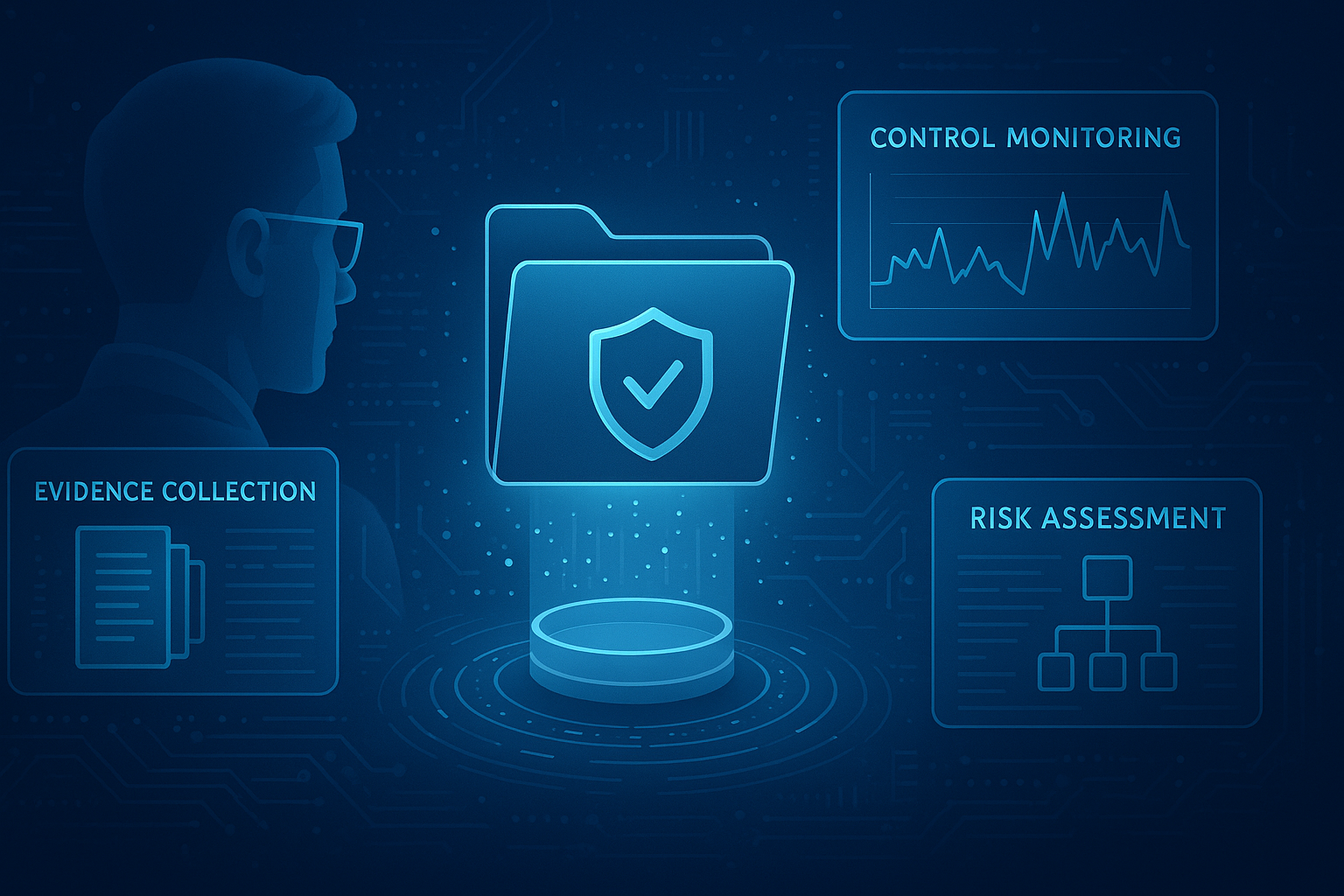
For years, compliance has been one of the most resource-intensive responsibilities for cybersecurity teams. Despite growing investments in tools, the day-to-day reality of compliance is still dominated by manual, duplicative tasks. Teams chase down screenshots, review spreadsheets, and cross-check logs, often spending weeks gathering information before an assessment or audit.

The post 3 Compliance Processes to Automate in 2026 appeared first on Security Boulevard.

  •  

How Root Cause Analysis Improves Incident Response and Reduces Downtime?

Security incidents don’t fail because of a lack of tools; they fail because of a lack of insight. In an environment where every minute of downtime equals revenue loss, customer impact, and regulatory risk, root cause analysis has become a decisive factor in how effectively organizations execute incident response and stabilize operations. The difference between […]

The post How Root Cause Analysis Improves Incident Response and Reduces Downtime? appeared first on Kratikal Blogs.

The post How Root Cause Analysis Improves Incident Response and Reduces Downtime? appeared first on Security Boulevard.

  •  

Hong Kong’s New Critical Infrastructure Ordinance will be effective by 1 January 2026 – What CIOs Need to Know

As the clock ticks down to the full enforcement of Hong Kong’s Protection of Critical Infrastructures (Computer Systems) Ordinance on January 1, 2026, designated operators of Critical Infrastructures (CI) and Critical Computer Systems (CCS) must act decisively. This landmark law mandates robust cybersecurity measures for Critical Computer Systems (CCS) to prevent disruptions, with non-compliance risking […]

The post Hong Kong’s New Critical Infrastructure Ordinance will be effective by 1 January 2026 – What CIOs Need to Know appeared first on NSFOCUS, Inc., a global network and cyber security leader, protects enterprises and carriers from advanced cyber attacks..

The post Hong Kong’s New Critical Infrastructure Ordinance will be effective by 1 January 2026 – What CIOs Need to Know appeared first on Security Boulevard.

  •  

Behavioral Analysis of AI Models Under Post-Quantum Threat Scenarios.

Explore behavioral analysis techniques for securing AI models against post-quantum threats. Learn how to identify anomalies and protect your AI infrastructure with quantum-resistant cryptography.

The post Behavioral Analysis of AI Models Under Post-Quantum Threat Scenarios. appeared first on Security Boulevard.

  •