Reading view

Physicists 3D-printed a Christmas tree of ice

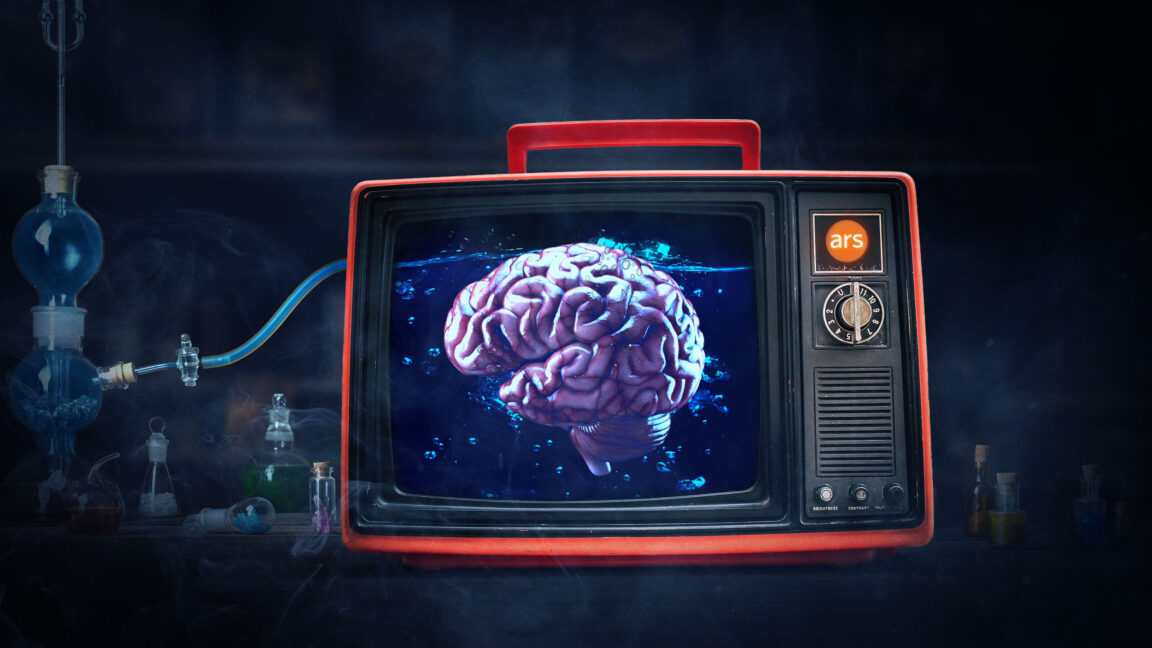
Physicists at the University of Amsterdam came up with a really cool bit of Christmas decor: a miniature 3D-printed Christmas tree, a mere 8 centimeters tall, made of ice, without any refrigeration equipment or other freezing technology, and at minimal cost. The secret is evaporative cooling, according to a preprint posted to the physics arXiv.

Evaporative cooling is a well-known phenomenon; mammals use it to regulate body temperature. You can see it in your morning cup of hot coffee: the hotter atoms rise to the top of the magnetic trap and “jump out” as steam. It also plays a role (along with shock wave dynamics and various other factors) in the formation of “wine tears.” It’s a key step in creating Bose-Einstein condensates.

And evaporative cooling is also the main culprit behind the infamous “stall” that so frequently plagues aspiring BBQ pit masters eager to make a successful pork butt. The meat sweats as it cooks, releasing the moisture within, and that moisture evaporates and cools the meat, effectively canceling out the heat from the BBQ. That’s why a growing number of competitive pit masters wrap their meat in tinfoil after the first few hours (usually when the internal temperature hits 170° F).


Read full article

Comments

© University of Amsterdam

  •  

OpenAI’s new ChatGPT image generator makes faking photos easy

For most of photography’s roughly 200-year history, altering a photo convincingly required either a darkroom, some Photoshop expertise, or, at minimum, a steady hand with scissors and glue. On Tuesday, OpenAI released a tool that reduces the process to typing a sentence.

It’s not the first company to do so. While OpenAI had a conversational image-editing model in the works since GPT-4o in 2024, Google beat OpenAI to market in March with a public prototype, then refined it to a popular model called Nano Banana image model (and Nano Banana Pro). The enthusiastic response to Google’s image-editing model in the AI community got OpenAI’s attention.

OpenAI’s new GPT Image 1.5 is an AI image synthesis model that reportedly generates images up to four times faster than its predecessor and costs about 20 percent less through the API. The model rolled out to all ChatGPT users on Tuesday and represents another step toward making photorealistic image manipulation a casual process that requires no particular visual skills.

Read full article

Comments

© OpenAI / ChatGPT

  •  

Man sues cops who jailed him for 37 days for trolling a Charlie Kirk vigil

Larry Bushart, a man who was jailed for 37 days for reposting a Trump meme, has now sued the cops who allegedly schemed to keep him imprisoned for as long as possible simply because they disagreed with his point of view.

Bushart is a former cop who lost his post-retirement job after a seemingly vengeful sheriff jailed him for trolling a Charlie Kirk vigil post in a Facebook group. Upset that Kirk’s death commanded more attention than other victims of gun violence, Bushart posted a string of memes, among which was an image of Trump with an actual quote saying “We have to get over it” about a 2024 school shooting.

Perry County sheriff Nick Weems has since acknowledged that he “knew” that the meme referenced a prior school shooting. However, the entire time that Bushart was detained, Weems maintained that Bushart’s post incited “mass hysteria” from parents concerned that he was threatening violence at a local high school. Painting Bushart as indifferent to the supposed hysteria, Weems justified his arrest, as well as the $2 million bond ensuring Bushart couldn’t afford bail and remained behind bars.

Read full article

Comments

© via FIRE

  •  

FCC chair scrubs website after learning it called FCC an “independent agency”

Federal Communications Commission Chairman Brendan Carr today faced blistering criticism in a Senate hearing for his September threats to revoke ABC station licenses over comments made by Jimmy Kimmel. While Democrats provided nearly all the criticism, Sen. Ted Cruz (R-Texas) said that Congress should act to restrict the FCC’s power to intimidate news broadcasters.

As an immediate result of today’s hearing, the FCC removed a statement from its website that said it is an independent agency. Carr, who has embraced President Trump’s declaration that independent agencies may no longer operate independently from the White House, apparently didn’t realize that the website still called the FCC an independent agency.

“Yes or no, is the FCC an independent agency?” Sen. Ben Ray Luján (D-N.M.) asked. Carr answered that the FCC is not independent, prompting Luján to point to a statement on the FCC website calling the FCC “an independent US government agency overseen by Congress.”

Read full article

Comments

© Getty Images | Heather Diehl

  •  

Donut Lab’s hub motor meets WATT’s battery to create new EV skateboard

One of the big stories of last year’s Consumer Electronics Show in Las Vegas was the debut of Donut Lab’s diminutive but powerful electric motors. When I spoke with Donut earlier this year, the company told me that it was looking at applications ranging from drones to large automotive motors, but also things like wind turbines and even washing machines. Now, almost a year later, we have our first look at an electric vehicle that uses the technology, thanks to a new collaboration between Donut Lab and WATT Electric Vehicle Company.

WATT had previously developed the Passenger and Commercial EV Skateboard (PACES), a lightweight aluminum platform for low-volume EVs. Now, it’s integrating Donut’s motors, first with one for each rear wheel, although there will eventually be an all-wheel-drive variant, too.

The small EV chassis is rather intriguing—with the motors in the rear wheel hubs, the layout is even more space-efficient than a more conventional EV, which still needs to find a few cubic feet to package its drive unit(s). The two companies see plenty of potential for the platform, which they say could give rise to “multiple vehicle configurations from beach buggies to high-performance sports cars to commercial delivery vehicles.”

Read full article

Comments

© Donut Lab

  •  

Bursting AI bubble may be EU’s “secret weapon” in clash with Trump, expert says

The US threatened to restrict some of the largest service providers in the European Union as retaliation for EU tech regulations and investigations are increasingly drawing Donald Trump’s ire.

On Tuesday, the Office of the US Trade Representative (USTR) issued a warning on X, naming Spotify, Accenture, Amadeus, Mistral, Publicis, and DHL among nine firms suddenly yanked into the middle of the US-EU tech fight.

“The European Union and certain EU Member States have persisted in a continuing course of discriminatory and harassing lawsuits, taxes, fines, and directives against US service providers,” USTR’s post said.

Read full article

Comments

© Moor Studio | DigitalVision Vectors

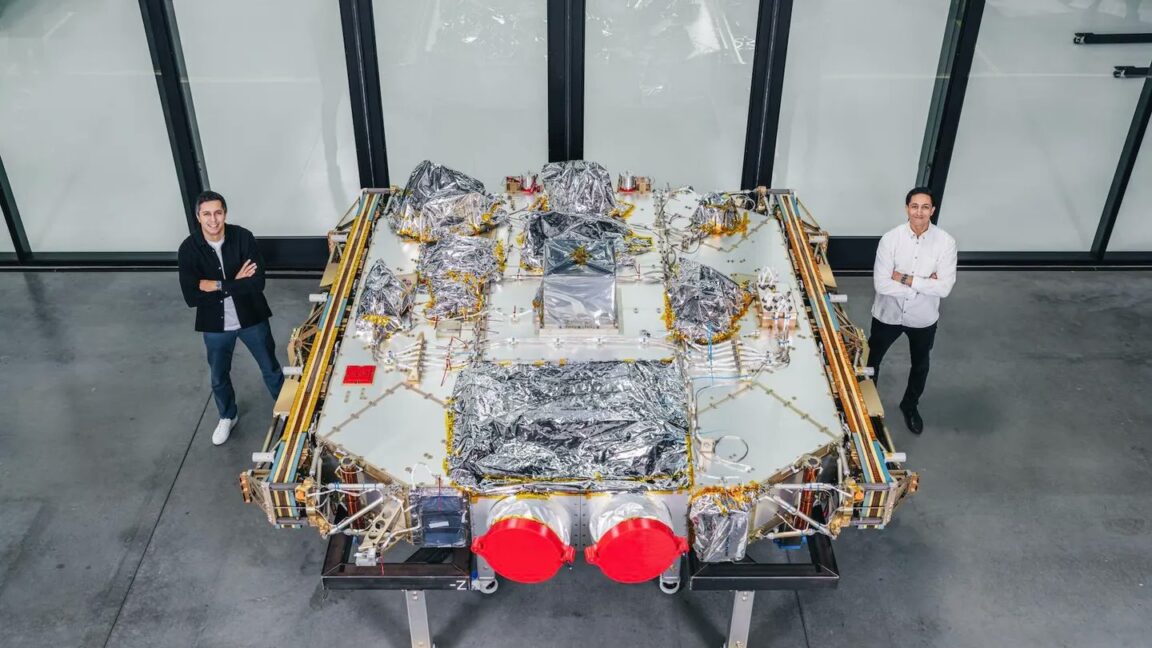
  •  

Trump admin threatens to break up major climate research center

On Tuesday, the head of the Office of Management and Budget, Russell Vought, announced that a major climate research center will be “broken up.” The National Center for Atmospheric Research, or NCAR, is a significant contributor to research on the weather, climate, and other atmospheric phenomena. The move will be a crippling blow to climate research in the US and is being widely decried by scientists.

Vought initially gave a statement regarding NCAR to USA Today and later confirmed the outlet’s reporting on social media. Calling it “one of the largest sources of climate alarmism in the country,” Vought also decried what he termed “woke” activities at NCAR. These appear to be fairly typical efforts made to attract underrepresented groups to the sciences—efforts that were uncontroversial prior to the current administration.

NCAR is primarily based in a complex on the outskirts of Boulder, Colorado, and maintains a supercomputing center in Wyoming. Much of its funding comes from the National Science Foundation, but the day-to-day management is handled by the University Corporation for Atmospheric Research (UCAR), a nonprofit that represents 130 individual educational institutions. In addition to climate science, researchers based there study Earth and space weather, atmospheric chemistry, and their impacts on the environment and humans. NCAR hosts a series of webpages that explain its research and all the ways it helps society.

Read full article

Comments

© Chris Rogers

  •  

Google releases Gemini 3 Flash, promising improved intelligence and efficiency

Google began its transition to Gemini 3 a few weeks ago with the launch of the Pro model, and the arrival of Gemini 3 Flash kicks it into high gear. The new, faster Gemini 3 model is coming to the Gemini app and search, and developers will be able to access it immediately via the Gemini API, Vertex AI, AI Studio, and Antigravity. Google’s bigger gen AI model is also picking up steam, with both Gemini 3 Pro and its image component (Nano Banana Pro) expanding in search.

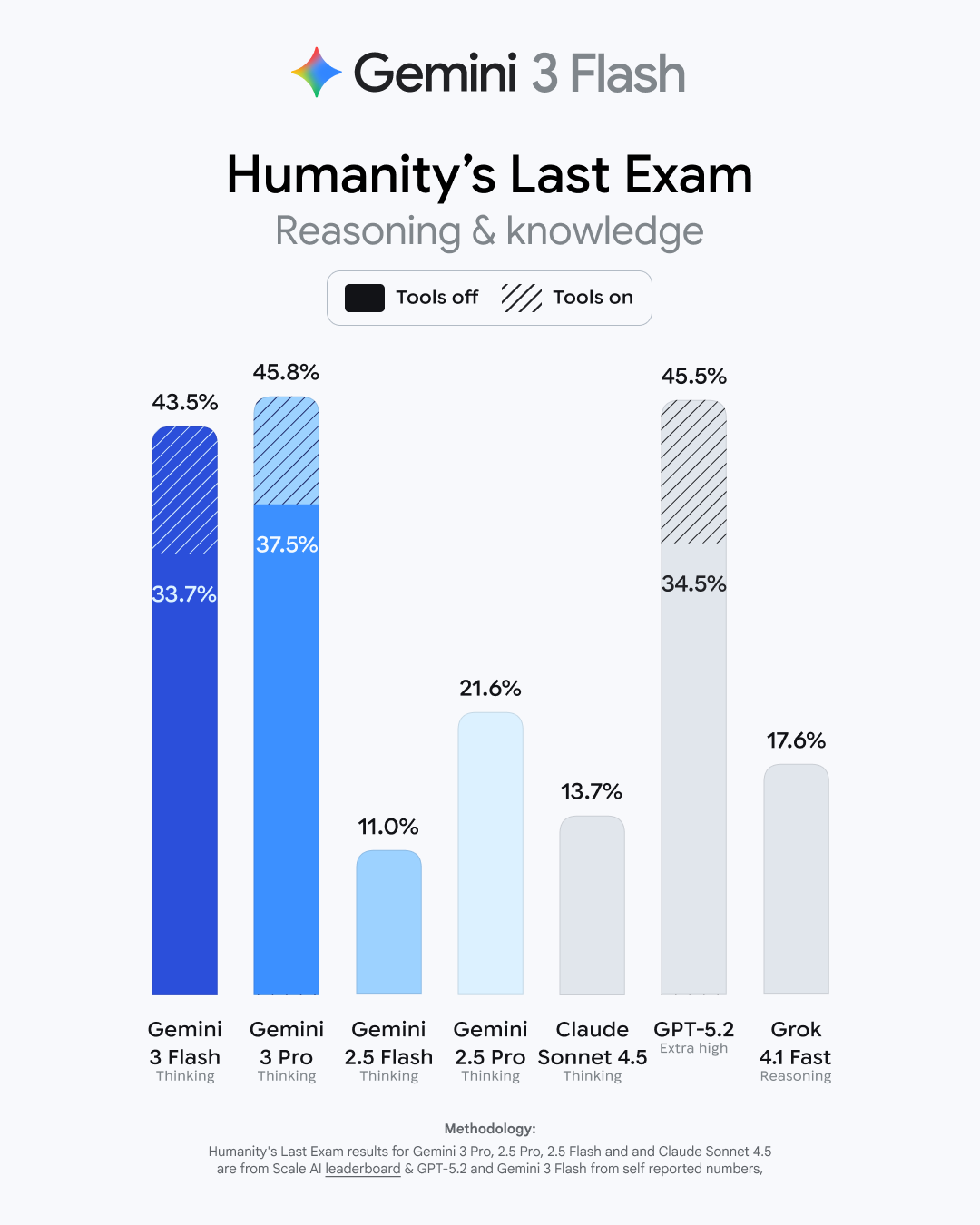
This may come as a shock, but Google says Gemini 3 Flash is faster and more capable than its previous base model. As usual, Google has a raft of benchmark numbers that show modest improvements for the new model. It bests the old 2.5 Flash in basic academic and reasoning tests like GPQA Diamond and MMMU Pro (where it even beats 3 Pro). It gets a larger boost in Humanity’s Last Exam (HLE), which tests advanced domain-specific knowledge. Gemini 3 Flash has tripled the old models’ score in HLE, landing at 33.7 percent without tool use. That’s just a few points behind the Gemini 3 Pro model.

Gemini HLE test Credit: Google

Read full article

Comments

© Google
  •  

Browser extensions with 8 million users collect extended AI conversations

Browser extensions with more than 8 million installs are harvesting complete and extended conversations from users’ AI conversations and selling them for marketing purposes, according to data collected from the Google and Microsoft pages hosting them.
Security firm Koi discovered the eight extensions, which as of late Tuesday night remained available in both Google’s and Microsoft’s extension stores. Seven of them carry “Featured” badges, which are endorsements meant to signal that the companies have determined the extensions meet their quality standards. The free extensions provide functions such as VPN routing to safeguard online privacy and ad blocking for ad-free browsing. All provide assurances that user data remains anonymous and isn’t shared for purposes other than their described use.

A gold mine for marketers and data brokers

An examination of the extensions’ underlying code tells a much more complicated story. Each contains eight of what Koi calls “executor” scripts, with each being unique for ChatGPT, Claude, Gemini, and five other leading AI chat platforms. The scripts are injected into webpages anytime the user visits one of these platforms. From there, the scripts override browsers’ built-in functions for making network requests and receiving responses.

Read full article

Comments

© Getty Images

  •  

Electric vehicles cause tension in the automotive aftermarket

After federal clean vehicle tax credits ended in September, the electric vehicle industry reached a crossroads. Well, technically, it has been there since Trump took office. This is a weird period in automotive history; A chunk of the industry is full-steam ahead with EV development, another is cutting back, and the consumer is left wondering what the electrification landscape will look like next year, let alone in three, during the next administration.

But what about the automotive aftermarket? Typically, this corner benefits from whatever progress is made on the OEM front—have Trump’s policies expanded or contracted its EV technological development? I recently spent some time chatting with personnel of the Specialty Equipment Market Association (SEMA) at its yearly tradeshow in Las Vegas to find out. I also hit the bricks (or, rather, bright carpeting) of the massive show itself, seeking out some new, unique developments in the space that behoove EV tech’s inherent benefits.

Above one of the show’s several sprawling halls, I met with Mike Spagnola, SEMA’s CEO, and Karen Bailey-Chapman, senior vice president, public and government affairs, to learn what the organization’s official stance is. First and foremost: It doesn’t want to be told what to do.

Read full article

Comments

© Peter Nelson

  •  

Twitter comeback bid draws lawsuit from Elon Musk’s X Corp

On Tuesday, X Corporation, formerly known as Twitter, sued “Operation Bluebird,” the new startup that is seeking to reclaim the allegedly abandoned Twitter trademark and relaunch a new social media network under that name.

In its 43-page lawsuit, which was filed in federal court in Delaware, X Corporation alleges trademark infringement, adding that despite Bluebird’s “purported plan, it cannot bring Twitter ‘back’—Twitter never left and continues to be exclusively owned by X Corp.”

One of Bluebird’s leaders, Michael Peroff, told Ars in an email that Operation Bluebird was “fully expecting” a lawsuit from X Corporation and that “we planned for it.”

Read full article

Comments

© Getty Images | Thomas Trutschel

  •  

US oil industry doesn’t see profit in Trump’s “pro-petroleum” moves

As the Trump administration makes announcement after announcement about its efforts to promote the US fossil fuel industry, the industry isn’t exactly jumping at new opportunities.

Some high-profile oil and gas industry leaders and organizations have objected to changes to long-standing government policy positions that give companies firm ground on which to make their plans.

And the financial picture around oil and gas drilling is moving against the Trump administration’s hopes. Though politicians may tout new opportunities to drill offshore or in Arctic Alaska, the commercial payoff is not clear and even unlikely.

Read full article

Comments

© Kayla Bartkowski / Los Angeles Times via Getty Images

  •  

“A Band-Aid on a giant gash”: Trump’s attacks on science may ruin his AI moonshot

By executive order last month, Donald Trump launched his so-called “Genesis Mission.”

Described as a “historic national effort” to “invest in AI-enabled science to accelerate scientific advancement,” Trump claimed his mission would address key challenges to American energy dominance, innovation, and national security.

This mission, Trump boasted, would be a game-changer to science akin to putting a man on the moon or firing the first nuclear weapons. By building “an integrated AI platform” trained on “the world’s largest collection” of federal scientific data sets, he promised, the government could set off cascades of scientific breakthroughs.

Read full article

Comments

© Aurich Lawson | Getty Images

  •  

Texas sues biggest TV makers, alleging smart TVs spy on users without consent

Texas Attorney General Ken Paxton sued five large TV manufacturers yesterday, alleging that their smart TVs spy on viewers without consent. Paxton sued Samsung, the longtime TV market share leader, along with LG, Sony, Hisense, and TCL.

“These companies have been unlawfully collecting personal data through Automated Content Recognition (‘ACR’) technology,” Paxton’s office alleged in a press release that contains links to all five lawsuits. “ACR in its simplest terms is an uninvited, invisible digital invader. This software can capture screenshots of a user’s television display every 500 milliseconds, monitor viewing activity in real time, and transmit that information back to the company without the user’s knowledge or consent. The companies then sell that consumer information to target ads across platforms for a profit. This technology puts users’ privacy and sensitive information, such as passwords, bank information, and other personal information at risk.”

The lawsuits allege violations of the Texas Deceptive Trade Practices Act, seeking damages of up to $10,000 for each violation and up to $250,000 for each violation affecting people 65 years or older. Texas also wants restraining orders prohibiting the collection, sharing, and selling of ACR data while the lawsuits are pending.

Read full article

Comments

© Getty Images | Maskot

  •  

The $4.3 billion space telescope Trump tried to cancel is now complete

A few weeks ago, technicians inside a cavernous clean room in Maryland made the final connection to complete assembly of NASA’s Nancy Grace Roman Space Telescope.

Parts of this new observatory, named for NASA’s first chief astronomer, recently completed a spate of tests to ensure it can survive the shaking and intense sound of a rocket launch. Engineers placed the core of the telescope inside a thermal vacuum chamber, where it withstood the airless conditions and extreme temperature swings it will see in space.

Then, on November 25, teams at NASA’s Goddard Space Flight Center in Greenbelt, Maryland, joined the inner and outer portions of the Roman Space Telescope. With this milestone, NASA declared the observatory complete and on track for launch as soon as fall 2026.

Read full article

Comments

© NASA Goddard Space Flight Center Scientific Visualization Studio

  •  

Senators count the shady ways data centers pass energy costs on to Americans

Senators launched a probe Tuesday demanding that tech companies explain exactly how they plan to prevent data center projects from increasing electricity bills in communities where prices are already skyrocketing.

In letters to seven AI firms, Senators Elizabeth Warren (D-Mass.), Chris Van Hollen (D-Md.), and Richard Blumenthal (D-Conn.) cited a study estimating that “electricity prices have increased by as much as 267 percent in the past five years” in “areas located near significant data center activity.”

Prices increase, senators noted, when utility companies build out extra infrastructure to meet data centers’ energy demands—which can amount to one customer suddenly consuming as much power as an entire city. They also increase when demand for local power outweighs supply. In some cases, residents are blindsided by higher bills, not even realizing a data center project was approved, because tech companies seem intent on dodging backlash and frequently do not allow terms of deals to be publicly disclosed.

Read full article

Comments

© Handout / Handout | Getty Images News

  •  

Software leaks point to the first Apple Silicon “iMac Pro,” among other devices

Apple doesn’t like to talk about its upcoming products before it’s ready, but sometimes the company’s software does the talking for it. So far this week we’ve had a couple of software-related leaks that have outed products Apple is currently testing—one a pre-release build of iOS 26, and the other some leaked files from a kernel debug kit (both via MacRumors).

Most of the new devices referenced in these leaks are straightforward updates to products that already exist: a new Apple TV, a HomePod mini 2, new AirTags and AirPods, an M4 iPad Air, a 12th-generation iPad to replace the current A16 version, next-generation iPhones (including the 17e, 18, and the rumored foldable model), a new Studio Display model, some new smart home products we’ve already heard about elsewhere, and M5 updates for the MacBook Air, Mac mini, Mac Studio, and the other MacBook Pros. There’s also yet another reference to the lower-cost MacBook that Apple is apparently planning to replace the M1 MacBook Air it still sells via Walmart for $599.

For power users, though, the most interesting revelation might be that Apple is working on a higher-end Apple Silicon iMac powered by an M5 Max chip. The kernel debug kit references an iMac with the internal identifier J833c, based on a platform identified as H17C—and H17C is apparently based on the M5 Max, rather than a lower-end M5 chip. (For those who don’t have Apple’s branding memorized, “Max” is associated with Apple’s second-fastest chips; the M5 Max would be faster than the M5 or M5 Pro, but slower than the rumored M5 Ultra.)

Read full article

Comments

© Samuel Axon

  •  

Reporter suggests Half-Life 3 will be a Steam Machine launch title

If you can take your mind way back to the beginning of 2025, you might remember a fresh wave of rumors suggesting that Half-Life 3 was finally reaching the final stages of production, and could be announced and/or released at any moment. Now, though, 2025 seems set to come to a close without any official news of a game fans have been waiting literal decades for.

That doesn’t necessarily mean a Half-Life 3 announcement and/or release isn’t imminent, though. On the contrary, veteran journalist Mike Straw insisted on a recent Insider Gaming podcast that “everybody I’ve talked to are still adamant [Half-Life 3] is a game that will be a launch title with the Steam Machine.”

Straw—who has a long history of reporting gaming rumors from anonymous sources—said this Half-Life 3 information is “not [from] these run-of-the-mill sources that haven’t gotten me information before. … These aren’t like random, one-off people.” And those sources are “still adamant that the game is coming in the spring,” Straw added, noting that he was “specifically told [that] spring 2026 [is the window] for the Steam Machine, for the Frame, for the Controller, [and] for Half-Life 3.”

Read full article

Comments

© knowyourmeme.com

  •  

Utah leaders hinder efforts to develop solar energy supply

Utah Gov. Spencer Cox believes his state needs more power—a lot more. By some estimates, Utah will require as much electricity in the next five years as it generated all last century to meet the demands of a growing population as well as chase data centers and AI developers to fuel its economy.

To that end, Cox announced Operation Gigawatt last year, declaring the state would double energy production in the next decade. Although the announcement was short on details, Cox, a Republican, promised his administration would take an “any of the above” approach, which aims to expand all sources of energy production.

Despite that goal, the Utah Legislature’s Republican supermajority, with Cox’s acquiescence, has taken a hard turn against solar power—which has been coming online faster than any other source in Utah and accounts for two-thirds of the new projects waiting to connect to the state’s power grid.

Read full article

Comments

© Jim West/UCG/Universal Images Group via Getty Images

  •  

2026 Mercedes CLA first drive: Entry level doesn’t mean basic

SAN FRANCISCO—Automakers are starting to follow somewhat familiar paths as they continue their journeys to electrification. Electric vehicles are, at first, strange new tech, and usually look like it. Mercedes-Benz’s EQS and EQE are good examples—with bodies that look like bars of soap worn down in the shower, they stood out. For early adopters and trailblazers that might be fine, but you need to sell cars to normal people if you want to survive, and that means making EVs more normal. Which is what Mercedes did with its newest one, the all-electric CLA.

The normal looks belie the amount of new technology that Mercedes has packed into the CLA, though. The car sticks to the four-door coupe look that the company pioneered a couple of decades ago, but there’s a thoroughly modern electric powertrain connected to the wheels, run by four powerful networked computers. And yes, there’s AI. (For the pedants, “coupe” means cut down, not two-door, so the name is accurate.)

The CLA is the first of a new series of Mercedes that will use the same modular architecture, and interestingly, it’s powertrain agnostic—a hybrid CLA is coming in time, too. But first the battery EV, which makes good use of some technology Mercedes developed for the EQXX concept car.

Read full article

Comments

© Jonathan Gitlin

  •  

Merriam-Webster’s word of the year delivers a dismissive verdict on junk AI content

Like most tools, generative AI models can be misused. And when the misuse gets bad enough that a major dictionary notices, you know it has become a cultural phenomenon.

On Sunday, Merriam-Webster announced that “slop” is its 2025 Word of the Year, reflecting how the term has become shorthand for the flood of low-quality AI-generated content that has spread across social media, search results, and the web at large. The dictionary defines slop as “digital content of low quality that is produced usually in quantity by means of artificial intelligence.”

“It’s such an illustrative word,” Merriam-Webster President Greg Barlow told The Associated Press. “It’s part of a transformative technology, AI, and it’s something that people have found fascinating, annoying, and a little bit ridiculous.”

Read full article

Comments

  •  

Stranger Things S5 trailer teases Vol. 2

We’re 10 days away from the next installment of the fifth and final season of Stranger Things, and Netflix has released a new trailer for what it’s calling Volume 2. This will cover episodes five through seven, with the final episode comprising Vol. 3.

(Spoilers for Season 5, Vol. 1 below.)

Season 4 ended with Vecna—the Big Bad behind it all—opening the gate that allowed the Upside Down to leak into Hawkins. We got a time jump for S5, Vol. 1, but in a way, we came full circle, since those events coincided with the third anniversary of Will’s original disappearance in S1.

Read full article

Comments

© Netflix

  •  

Microsoft will finally kill obsolete cipher that has wreaked decades of havoc

Microsoft is killing off an obsolete and vulnerable encryption cipher that Windows has supported by default for 26 years following more than a decade of devastating hacks that exploited it and recently faced blistering criticism from a prominent US senator.

When the software maker rolled out Active Directory in 2000, it made RC4 a sole means of securing the Windows component, which administrators use to configure and provision fellow administrator and user accounts inside large organizations. RC4, short for Rivist Cipher 4, is a nod to mathematician and cryptographer Ron Rivest of RSA Security, who developed the stream cipher in 1987. Within days of the trade-secret-protected algorithm being leaked in 1994, a researcher demonstrated a cryptographic attack that significantly weakened the security it had been believed to provide. Despite the known susceptibility, RC4 remained a staple in encryption protocols, including SSL and its successor TLS, until about a decade ago.

Out with the old

One of the most visible holdouts in supporting RC4 has been Microsoft. Eventually, Microsoft upgraded Active Directory to support the much more secure AES encryption standard. But by default, Windows servers have continued to respond to RC4-based authentication requests and return an RC4-based response. The RC4 fallback has been a favorite weakness hackers have exploited to compromise enterprise networks. Use of RC4 played a key role in last year’s breach of health giant Ascension. The breach caused life-threatening disruptions at 140 hospitals and put the medical records of 5.6 million patients into the hands of the attackers. US Senator Ron Wyden (D-Ore.) in September called on the Federal Trade Commission to investigate Microsoft for “gross cybersecurity negligence,” citing the continued default support for RC4.

Read full article

Comments

© Getty Images

  •  

Ford ends F-150 Lightning production, starts battery storage business

Ford’s F-150 Lightning production line has fallen silent, and its employees are now building more gas and hybrid trucks. The automaker continues to retreat from the big bet it made on Americans embracing full-size battery electric pickup trucks, and will focus instead on cheaper vehicles, hybrids, and range-extended electric vehicles—or EREVs—instead, it announced today.

One of those EREVs will be the Lighting’s replacement. With a gasoline generator that just charges the battery—series hybrid fans rejoice—the next Lightning comes with the towing ability that Ford says its customers consider “non-negotiable,” and up to 700 miles (1,126 km) of range.

“Our next-generation F-150 Lightning EREV will be every bit as revolutionary. It delivers everything Lightning customers love – near instantaneous torque and pure electric driving. But with a high-power generator enabling an estimated range of 700+ miles, it tows like a locomotive. Heavy-duty towing and cross-country travel will be as effortless as the daily commute,” said Doug Field, Ford’s chief EV, digital and design officer.

Read full article

Comments

© Thomas Banneyer/picture alliance via Getty Images

  •  

Microsoft takes down mod that re-created Halo 3 in Counter-Strike 2

Last month saw the release of Project Misriah, an ambitious modding project that tried to re-create the feel of Halo 3 inside Valve’s Counter-Strike 2. That project has now been taken down from the Steam Workshop, though, after drawing a Digital Millennium Copyright Act complaint from Microsoft.

Modder Froddoyo introduced Project Misriah on November 16 as “a workshop collection of Halo ported maps and assets that aims to bring a Halo 3 multiplayer-like experience to Counter-Strike 2.” Far from just being inspired by Halo 3, the mod directly copied multiple sound effects, character models, maps, and even movement mechanics from Bungie and Microsoft’s popular series.

In the weeks since, Project Misriah has drawn a lot of praise from both Halo fans and those impressed by what modders could pull off with the Source 2 engine. But last Wednesday, modder Froddoyo shared a DMCA request from Microsoft citing the “unauthorized use of Halo game content in a [Steam] workshop not associated with Halo games.”

Read full article

Comments

© https://www.youtube.com/watch?v=ki1RQF0-jyk

  •  

Murder-suicide case shows OpenAI selectively hides data after users die

OpenAI is facing increasing scrutiny over how it handles ChatGPT data after users die, only selectively sharing data in lawsuits over ChatGPT-linked suicides.

Last week, OpenAI was accused of hiding key ChatGPT logs from the days before a 56-year-old bodybuilder, Stein-Erik Soelberg, took his own life after “savagely” murdering his mother, 83-year-old Suzanne Adams.

According to the lawsuit—which was filed by Adams’ estate on behalf of surviving family members—Soelberg struggled with mental health problems after a divorce led him to move back into Adams’ home in 2018. But allegedly Soelberg did not turn violent until ChatGPT became his sole confidant, validating a wide range of wild conspiracies, including a dangerous delusion that his mother was part of a network of conspirators spying on him, tracking him, and making attempts on his life.

Read full article

Comments

© via OpenAI complaint

  •  

Filmmaker Rob Reiner, wife, killed in horrific home attack

We woke up this morning to the horrifying news that beloved actor and director Rob Reiner and his wife Michele were killed in their Brentwood home in Los Angeles last night. Both had been stabbed multiple times. Details are scarce, but the couple’s 32-year-old son, Nick—who has long struggled with addiction and recently moved back in with his parents—has been arrested in connection with the killings, with bail set at $4 million.  [UPDATE: Nick Reiner’s bail has been revoked and he faces possible life in prison.]

“As a result of the initial investigation, it was determined that the Reiners were the victims of homicide,” the LAPD said. “The investigation further revealed that Nick Reiner, the 32-year-old son of Robert and Michele Reiner, was responsible for their deaths. Nick Reiner was located and arrested at approximately 9:15 p.m. He was booked for murder and remains in custody with no bail. On Tuesday, December 16, 2025, the case will be presented to the Los Angeles County District Attorney’s Office for filing consideration.”

“It is with profound sorrow that we announce the tragic passing of Michele and Rob Reiner,” the family said in a statement confirming the deaths. “We are heartbroken by this sudden loss, and we ask for privacy during this unbelievably difficult time.”

Read full article

Comments

© Public domain

  •  

UK to “encourage” Apple and Google to put nudity-blocking systems on phones

The UK government reportedly will “encourage” Apple and Google to prevent phones from displaying nude images except when users verify that they are adults.

The forthcoming push for nudity-blocking systems was reported by the Financial Times today. The report said the UK won’t institute a legal requirement “for now.” But asking companies to block nude images could be the first step toward making it mandatory if the government doesn’t get what it wants.

“The UK government wants technology companies to block explicit images on phones and computers by default to protect children, with adults having to verify their age to create and access such content,” the FT report said. “Ministers want the likes of Apple and Google to incorporate nudity-detection algorithms into their device operating systems to prevent users taking photos or sharing images of genitalia unless they are verified as adults.”

Read full article

Comments

© Getty Images | Eshma

  •  

Google will end dark web reports that alerted users to leaked data
Google began offering “dark web reports” a while back, but the company has just announced the feature will be going away very soon. In an email to users of the service, Google says it will stop telling you about dark web data leaks in February. This probably won’t negatively impact your security or privacy because, as Google points out in its latest email, there’s really nothing you can do about the dark web.

The dark web reports launched in March 2023 as a perk for Google One subscribers. The reports were expanded to general access in 2024. Now, barely a year later, Google has decided it doesn’t see the value in this type of alert for users. Dark web reports provide a list of partially redacted user data retrieved from shadowy forums and sites where such information is bought and sold. However, that’s all it is—a list.

The dark web consists of so-called hidden services hosted inside the Tor network. You need a special browser or connection tools in order to access Tor hidden services, and its largely anonymous nature has made it a favorite hangout for online criminals. If a company with your personal data has been hacked, that data probably lives somewhere on the dark web.

Read full article

Comments

© Getty Images | 400tmax

  •  

Oh look, yet another Starship clone has popped up in China

Every other week, it seems, a new Chinese launch company pops up with a rocket design and a plan to reach orbit within a few years. For a long time, the majority of these companies revealed designs that looked a lot like SpaceX’s Falcon 9 rocket.

The first of these copy cats, the medium-lift Zhuque-3 rocket built by LandSpace, launched earlier this month. Its primary mission was nominal, but the Zhuque-3 rocket failed its landing attempt, which is understandable for a first flight. Doubtless there will be more Chinese Falcon 9-like rockets making their debut in the near future.

However, over the last year, there has been a distinct change in announcements from China when it comes to new launch technology. Just as SpaceX is seeking to transition from its workhorse Falcon 9 rocket—which has now been flying for a decade and a half—to the fully reusable Starship design, so too are Chinese companies modifying their visions.

Read full article

Comments

© Beijing Leading Rocket Technology Co.

  •  

Roomba maker iRobot swept into bankruptcy

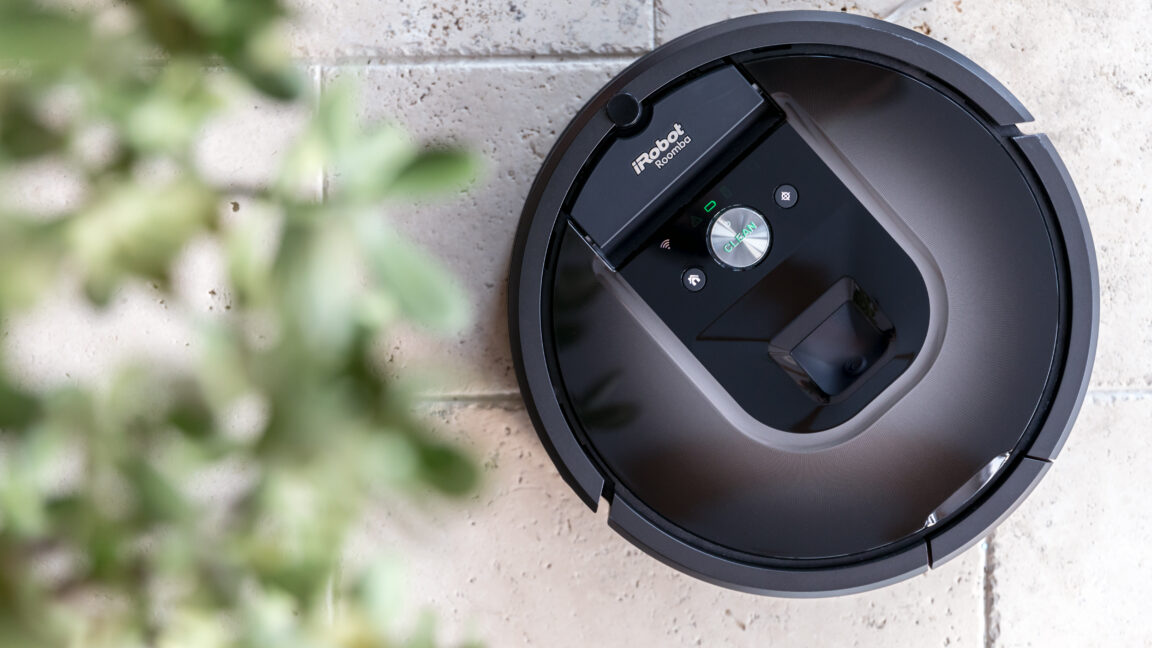
Roomba maker iRobot has filed for bankruptcy and will be taken over by its Chinese supplier after the company that popularized the robot vacuum cleaner fell under the weight of competition from cheaper rivals.

The US-listed group on Sunday said it had filed for Chapter 11 bankruptcy in Delaware as part of a restructuring agreement with Shenzhen-based Picea Robotics, its lender and primary supplier, which will acquire all of iRobot’s shares.

The deal comes nearly two years after a proposed $1.5 billion acquisition by Amazon fell through over competition concerns from EU regulators.

Read full article

Comments

© Onfokus

  •  

Verizon refused to unlock man’s iPhone, so he sued the carrier and won

When Verizon refused to unlock an iPhone purchased by Kansas resident Patrick Roach, he had no intention of giving up without a fight. Roach sued the wireless carrier in small claims court and won.

Roach bought a discounted iPhone 16e from Verizon’s Straight Talk brand on February 28, 2025, as a gift for his wife’s birthday. He intended to pay for one month of service, cancel, and then switch the phone to the US Mobile service plan that the couple uses. Under federal rules that apply to Verizon and a Verizon unlocking policy that was in place when Roach bought the phone, this strategy should have worked.

“The best deals tend to be buying it from one of these MVNOs [Mobile Virtual Network Operators] and then activating it until it unlocks and then switching it to whatever you are planning to use it with. It usually saves you about half the value of the phone,” Roach said in a phone interview.

Read full article

Comments

© Aurich Lawson | Getty Images

  •  

Sharks and rays gain landmark protections as nations move to curb international trade

For the first time, global governments have agreed to widespread international trade bans and restrictions for sharks and rays being driven to extinction.

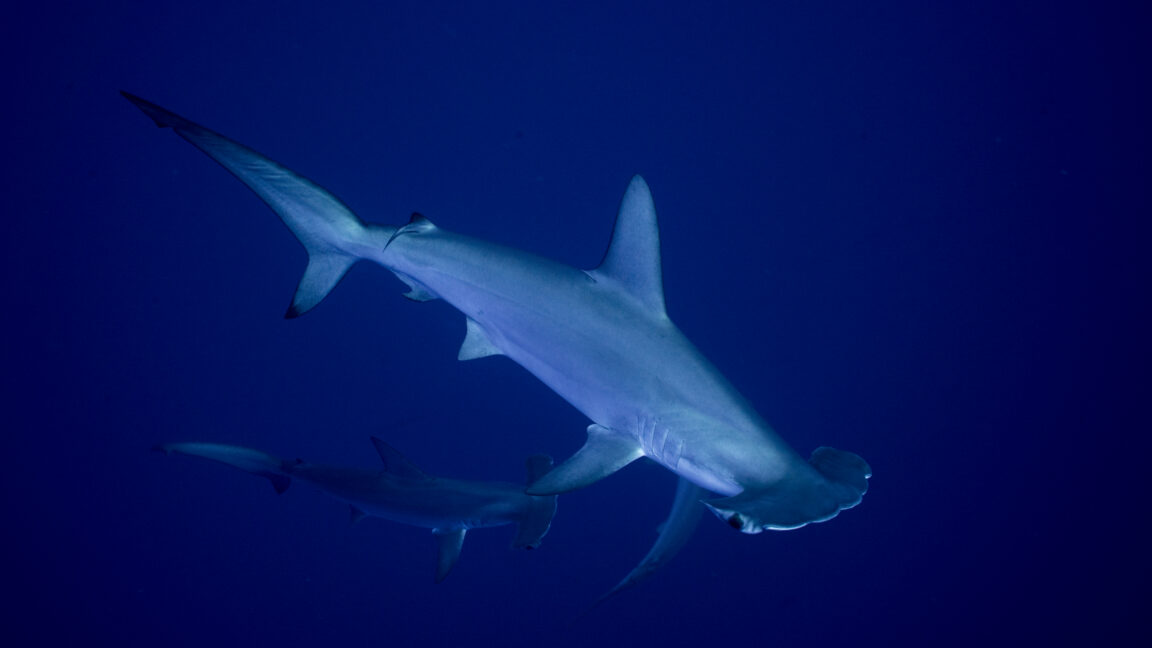
Last week, more than 70 shark and ray species, including oceanic whitetip sharks, whale sharks, and manta rays, received new safeguards under the Convention on International Trade in Endangered Species of Wild Fauna and Flora. The convention, known as CITES, is a United Nations treaty that requires countries to regulate or prohibit international trade in species whose survival is threatened.

Sharks and rays are closely related species that play similar roles as apex predators in the ocean, helping to maintain healthy marine ecosystems. They have been caught and traded for decades, contributing to a global market worth nearly $1 billion annually, according to Luke Warwick, director of shark and ray conservation at Wildlife Conservation Society (WCS), an international nonprofit dedicated to preserving animals and their habitats.

Read full article

Comments

© Anadolu / Contributor

  •  

OpenAI built an AI coding agent and uses it to improve the agent itself

With the popularity of AI coding tools rising among some software developers, their adoption has begun to touch every aspect of the process, including human developers using the tools to improve existing AI coding tools. We’re not talking about runaway self-improvement here; just people using tools to improve the tools themselves.

In interviews with Ars Technica this week, OpenAI employees revealed the extent to which the company now relies on its own AI coding agent, Codex, to build and improve the development tool. “I think the vast majority of Codex is built by Codex, so it’s almost entirely just being used to improve itself,” said Alexander Embiricos, product lead for Codex at OpenAI, in a conversation on Tuesday. Codex now generates most of the code that OpenAI developers use to improve the tool itself.

Codex, which OpenAI launched in its modern incarnation as a research preview in May 2025, operates as a cloud-based software engineering agent that can handle tasks like writing features, fixing bugs, and proposing pull requests. The tool runs in sandboxed environments linked to a user’s code repository and can execute multiple tasks in parallel. OpenAI offers Codex through ChatGPT’s web interface, a command-line interface (CLI), and IDE extensions for VS Code, Cursor, and Windsurf.

Read full article

Comments

© Mininyx Doodle via Getty Images

  •  

Reminder: Donate to win swag in our annual Charity Drive sweepstakes

If you’ve been too busy floating in your new WoW house to take part in this year’s Ars Technica Charity Drive sweepstakes, don’t worry. You still have time to donate to a good cause and get a chance to win your share of over $4,000 worth of swag (no purchase necessary to win).

In the first two days or so of the drive, over 200 readers have contributed over $11,000 to either the Electronic Frontier Foundation or Child’s Play as part of the charity drive (Child’s Play has a roughly 60/40 donation lead at the moment). That’s still a long way off from 2020’s record haul of over $58,000, but there’s still plenty of time until the Charity Drive wraps up on Friday, January 2, 2026.

That doesn’t mean you should put your donation off, though. Do yourself and the charities involved a favor and give now while you’re thinking about it.

Read full article

Comments

© Kyle Orland

  •  

Google Translate expands live translation to all earbuds on Android

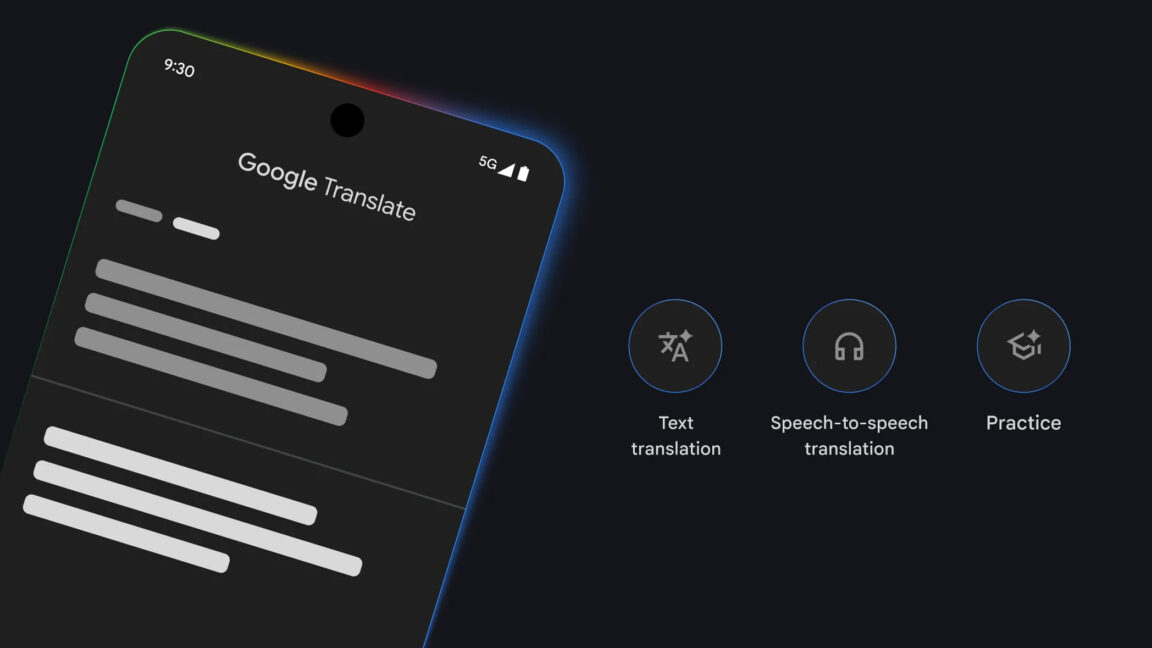
Google has increasingly moved toward keeping features locked to its hardware products, but the Translate app is bucking that trend. The live translate feature is breaking out of the Google bubble with support for any earbuds you happen to have connected to your Android phone. The app is also getting improved translation quality across dozens of languages and some Duolingo-like learning features.

The latest version of Google’s live translation is built on Gemini and initially rolled out earlier this year. It supports smooth back-and-forth translations as both on-screen text and audio. Beginning a live translate session in Google Translate used to require Pixel Buds, but that won’t be the case going forward.

Google says a beta test of expanded headphone support is launching today in the US, Mexico, and India. The audio translation attempts to preserve the tone and cadence of the original speaker, but it’s not as capable as the full AI-reproduced voice translations you can do on the latest Pixel phones. Google says this feature should work on any earbuds or headphones, but it’s only for Android right now. The feature will expand to iOS in the coming months. Apple does have a similar live translation feature on the iPhone, but it requires AirPods.

Read full article

Comments

© Google

  •  

Ukrainians sue US chip firms for powering Russian drones, missiles

Dozens of Ukrainian civilians filed a series of lawsuits in Texas this week, accusing some of the biggest US chip firms of negligently failing to track chips that evaded export curbs. Those chips were ultimately used to power Russian and Iranian weapon systems, causing wrongful deaths last year.

Their complaints alleged that for years, Texas Instruments (TI), AMD, and Intel have ignored public reporting, government warnings, and shareholder pressure to do more to track final destinations of chips and shut down shady distribution channels diverting chips to sanctioned actors in Russia and Iran.

Putting profits over human lives, tech firms continued using “high-risk” channels, Ukrainian civilians’ legal team alleged in a press statement, without ever strengthening controls.

Read full article

Comments

© NurPhoto / Contributor | NurPhoto

  •  

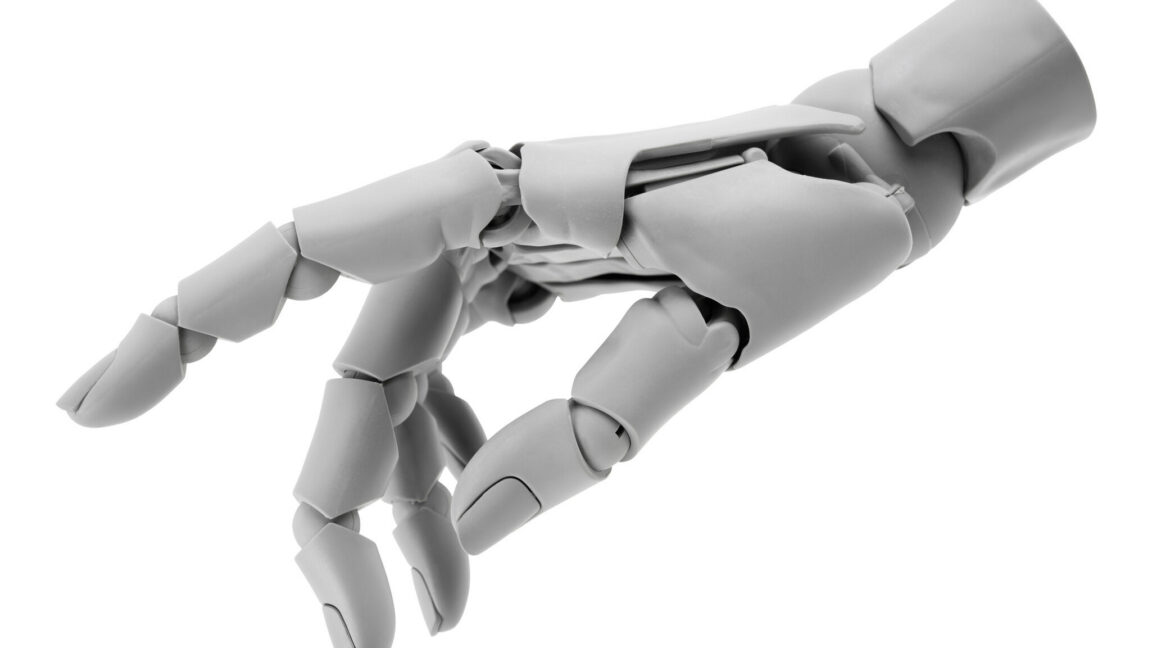
Scientists built an AI co-pilot for prosthetic bionic hands

Modern bionic hand prostheses nearly match their natural counterparts when it comes to dexterity, degrees of freedom, and capability. And many amputees who tried advanced bionic hands apparently didn’t like them. “Up to 50 percent of people with upper limb amputation abandon these prostheses, never to use them again,” says Jake George, an electrical and computer engineer at the University of Utah.

The main issue with bionic hands that drives users away from them, George explains, is that they’re difficult to control. “Our goal was making such bionic arms more intuitive, so that users could go about their tasks without having to think about it,” George says. To make this happen, his team came up with an AI bionic hand co-pilot.

Micro-management issues

Bionic hands’ control problems stem largely from their lack of autonomy. Grasping a paper cup without crushing it or catching a ball mid-flight appear so effortless because our natural movements rely on an elaborate system of reflexes and feedback loops. When an object you hold begins to slip, tiny mechanoreceptors in your fingertips send signals to the nervous system that make the hand tighten its grip. This all happens within 60 to 80 milliseconds—before you even consciously notice. This reflex is just one of many ways your brain automatically assists you in dexterity-based tasks.

Read full article

Comments

© Pakin Songmor

  •  

A study in contrasts: The cinematography of Wake Up Dead Man

Rian Johnson has another Benoit Blanc hit on his hands with Wake Up Dead Man, in which Blanc tackles the strange death of a fire-and-brimstone parish priest, Monseigneur Jefferson Wicks (Josh Brolin). It’s a classic locked-room mystery in a spookily Gothic small-town setting, and Johnson turned to cinematographer Steve Yedlin (Looper, The Last Jedi) to help realize his artistic vision.

(Minor spoilers below but no major reveals.)

Yedlin worked on the previous two Knives Out installments. He’s known Johnson since the two were in their teens, and that longstanding friendship ensures that they are on the same page, aesthetically, from the start when they work on projects.

Read full article

Comments

© Netflix

  •  

Trump tries to block state AI laws himself after Congress decided not to

President Trump issued an executive order yesterday attempting to thwart state AI laws, saying that federal agencies must fight state laws because Congress hasn’t yet implemented a national AI standard. Trump’s executive order tells the Justice Department, Commerce Department, Federal Communications Commission, Federal Trade Commission, and other federal agencies to take a variety of actions.

“My Administration must act with the Congress to ensure that there is a minimally burdensome national standard—not 50 discordant State ones. The resulting framework must forbid State laws that conflict with the policy set forth in this order… Until such a national standard exists, however, it is imperative that my Administration takes action to check the most onerous and excessive laws emerging from the States that threaten to stymie innovation,” Trump’s order said. The order claims that state laws, such as one passed in Colorado, “are increasingly responsible for requiring entities to embed ideological bias within models.”

Congressional Republicans recently decided not to include a Trump-backed plan to block state AI laws in the National Defense Authorization Act (NDAA), although it could be included in other legislation. Sen. Ted Cruz (R-Texas) has also failed to get congressional backing for legislation that would punish states with AI laws.

Read full article

Comments

© Getty Images | Chip Somodevilla

  •  

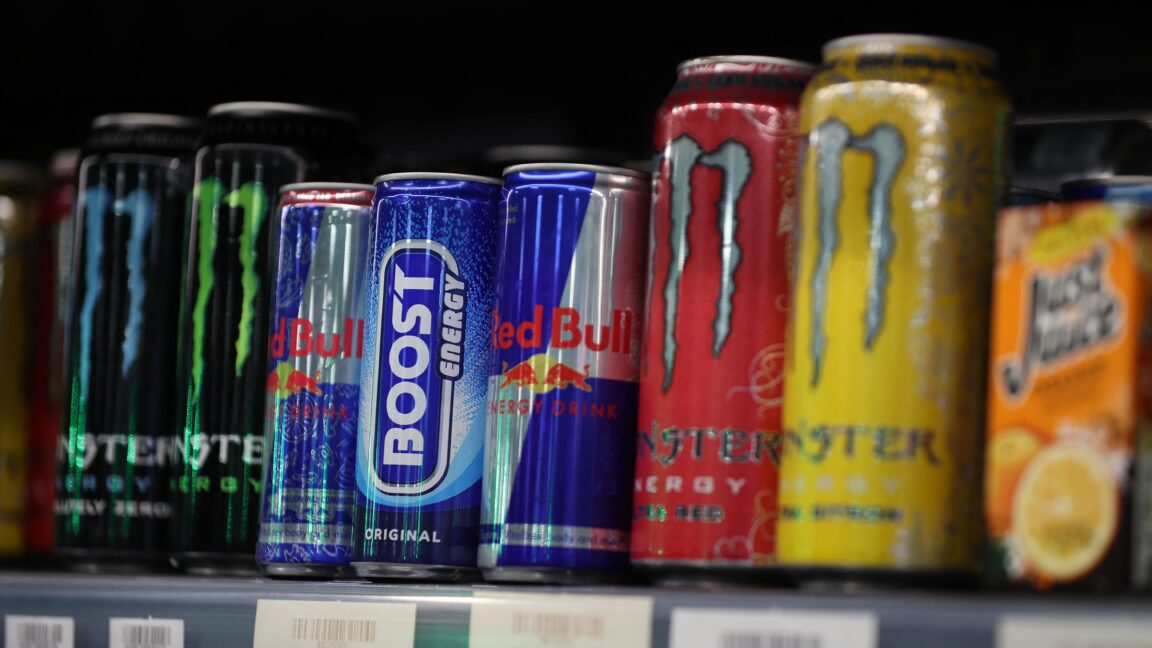
Man shocks doctors with extreme blood pressure, stroke from energy drinks

Sometimes, downing an energy drink can feel like refueling your battery. But with too much, that jolt can turn into a catastrophic surge that fries the wiring and blows a fuse. That was the unfortunate and alarming case for a man in the UK several years ago, according to a case report this week in BMJ Case Reports.

The man, who was in his 50s and otherwise healthy, showed up at a hospital after the entire left side of his body abruptly went numb and he was left with clumsy, uncoordinated muscle movements (ataxia). His blood pressure was astonishingly high, at 254/150 mm Hg. For context, a normal reading is under 120/80, while anything over 180/120 is considered a hypertensive crisis, which is a medical emergency.

The man had suffered a mild stroke, and his extremely high blood pressure was an obvious factor. But why his blood pressure had reached stratospheric heights was far less obvious to his doctors, according to the retrospective case report written by Martha Coyle and Sunil Munshi of Nottingham University Hospital.

Read full article

Comments

© Getty | DANIEL LEAL

  •  

Apple loses its appeal of a scathing contempt ruling in iOS payments case

Back in April, District Court Judge Yvonne Gonzalez Rogers delivered a scathing judgment finding that Apple was in “willful violation” of her 2021 injunction intended to open up iOS App Store payments. That contempt of court finding has now been almost entirely upheld by the Ninth Circuit Court of Appeals, a development that Epic Games’ Tim Sweeney tells Ars he hopes will “do a lot of good for developers and start to really change the App Store situation worldwide, I think.”

The ruling, signed by a panel of three appellate court judges, affirmed that Apple’s initial attempts to charge a 27 percent fee to iOS developers using outside payment options “had a prohibitive effect, in violation of the injunction.” Similarly, Apple’s restrictions on how those outside links had to be designed were overly broad; the appeals court suggests that Apple can only ensure that internal and external payment options are presented in a similar fashion.

The appeals court also agreed that Apple acted in “bad faith” by refusing to comply with the injunction, rejecting viable, compliant alternatives in internal discussions. And the appeals court was also not convinced by Apple’s process-focused arguments, saying the district court properly evaluated materials Apple argued were protected by attorney-client privilege.

Read full article

Comments

© Getty Images

  •  

Senator endorses discredited doctor’s book that claims chemical treats autism, cancer

For years, Sen. Ron Johnson has been spreading conspiracy theories and misinformation about COVID-19 and the safety of vaccines.

He’s promoted disproven treatments for COVID-19 and claimed, without evidence, that athletes are “dropping dead on the field” after getting the COVID-19 vaccination. Now the Wisconsin politician is endorsing a book by a discredited doctor promoting an unproven and dangerous treatment for autism and a host of ailments: chlorine dioxide, a chemical used for disinfecting and bleaching.

The book is “The War on Chlorine Dioxide: The Medicine that Could End Medicine by Dr. Pierre Kory, a critical care specialist who practiced in Wisconsin hospitals before losing his medical certification for statements advocating using an antiparasite medication to treat COVID-19. The action, he’s said, makes him unemployable, even though he still has a license.

Read full article

Comments

© Scott Olson

  •  

Investors commit quarter-billion dollars to startup designing “Giga” satellites

A startup established three years ago to churn out a new class of high-power satellites has raised $250 million to ramp up production at its Southern California factory.

The company, named K2, announced the cash infusion on Thursday. K2’s Series C fundraising round was led by Redpoint Ventures, with additional funding from investment firms in the United States, the United Kingdom, and Germany. K2 has now raised more than $400 million since its founding in 2022 and is on track to launch its first major demonstration mission next year, officials said.

K2 aims to take advantage of a coming abundance of heavy- and super-heavy-lift launch capacity, with SpaceX’s Starship expected to begin deploying satellites as soon as next year. Blue Origin’s New Glenn rocket launched twice this year and will fly more in 2026 while engineers develop an even larger New Glenn with additional engines and more lift capability.

Read full article

Comments

© K2

  •  

How to break free from smart TV ads and tracking

Smart TVs can feel like a dumb choice if you’re looking for privacy, reliability, and simplicity.

Today’s TVs and streaming sticks are usually loaded up with advertisements and user tracking, making offline TVs seem very attractive. But ever since smart TV operating systems began making money, “dumb” TVs have been hard to find.

In response, we created this non-smart TV guide that includes much more than dumb TVs. Since non-smart TVs are so rare, this guide also breaks down additional ways to watch TV and movies online and locally without dealing with smart TVs’ evolution toward software-centric features and snooping. We’ll discuss a range of options suitable for various budgets, different experience levels, and different rooms in your home.

Read full article

Comments

© Aurich Lawson | Getty Images

  •  

Chatbot-powered toys rebuked for discussing sexual, dangerous topics with kids

Protecting children from the dangers of the online world was always difficult, but that challenge has intensified with the advent of AI chatbots. A new report offers a glimpse into the problems associated with the new market, including the misuse of AI companies’ large language models (LLMs).

In a blog post today, the US Public Interest Group Education Fund (PIRG) reported its findings after testing AI toys (PDF). It described AI toys as online devices with integrated microphones that let users talk to the toy, which uses a chatbot to respond.

AI toys are currently a niche market, but they could be set to grow. More consumer companies have been eager to shoehorn AI technology into their products so they can do more, cost more, and potentially give companies user tracking and advertising data. A partnership between OpenAI and Mattel announced this year could also create a wave of AI-based toys from the maker of Barbie and Hot Wheels, as well as its competitors.

Read full article

Comments

© Alilo

  •  

Rocket Report: Neutron’s Hungry Hippo is deemed ready, whither Orbex?

Welcome to Edition 8.22 of the Rocket Report! The big news this week concerns the decision by SpaceX founder Elon Musk to take the company public, via IPO, sometime within the next 12 to 18 months. Musk confirmed this after Ars published a story on Wednesday evening. This understandably raises questions about whether a future SpaceX will be committed more to AI data centers in space or Mars settlement. However, one of the company’s founding employees, Tom Mueller, said this could benefit the company’s Mars plans. Clearly this is something we’ll be following closely.

As always, we welcome reader submissions, and if you don’t want to miss an issue, please subscribe using the box below (the form will not appear on AMP-enabled versions of the site). Each report will include information on small-, medium-, and heavy-lift rockets as well as a quick look ahead at the next three launches on the calendar.

Avio will build solid rocket motors in Virginia. The governor of Virginia, Glenn Youngkin, announced Wednesday that Avio USA has selected his state to produce solid rocket motors for defense and commercial space propulsion purposes. Avio USA’s investment, which will be up to $500 million, is supported by its Italian parent Avio. The company’s factory will encompass 860,000 sq. feet.

Read full article

Comments

© Rocket Lab

  •  

Star Wars: Fate of the Old Republic announced as a KOTOR spiritual successor

Over two decades after the release of Star Wars: Knights of the Old Republic II, a new project described as a “spiritual successor” to that seminal RPG series was announced at The Game Awards Thursday night. Star Wars: Fate of the Old Republic will be a collaboration between Lucasfilm Games and Arcanaut Studios, a new development house being launched by original KOTOR director Casey Hudson.

Hudson, who will serve as director on the new game, said in an interview with StarWars.com that he has remained in contact with Lucasfilm since the KOTOR days, in the hopes of being able to collaborate in the Star Wars universe again. “It took the right conditions to get everything to line up,” he told the site.

Calling KOTOR “one of the defining experiences of my career,” Hudson said he wants to “explore a contemporary vision” of the Star Wars universe and “deliver on the combination of player agency and immersion in Star Wars” that defined the original games. As director on the upcoming game, Hudson said he sees his role as “to gather and shape a cohesive vision that the entire team contributes to. Ensuring that everyone shares that vision and understands their part in creating it is critical to the success of a project.”

Read full article

Comments

  •  

Jonathan Blow has spent the past decade designing 1,400 puzzles for you

Back in 2016, after six-and-a-half years spent working on puzzle-adventure opus The Witness, Jonathan Blow says he needed a break. He tells Ars that the project he started in The Witness’ wake was meant to serve as a quick proof of concept for a new engine and programming language he was working on. “It was supposed to be a short game,” that could be finished in “like a year and a half or two years,” he said.

Now, after nine years of development—and his fair share of outspoken, controversial statements—Blow is finally approaching the finish line on that “short game.” He said Order of the Sinking Star—which was announced Thursday via a Game Awards trailer ahead of a planned 2026 release—now encompasses around 1,400 individual puzzles that could take completionists 400 to 500 hours to fully conquer.

Jonathan Blow, seen here probably thinking about puzzles. Credit: Thekla, Inc.

“I don’t know why I convinced myself it was going to be a small game,” Blow told me while demonstrating a preview build to Ars last week. “But once we start things, I just want to do the good version of the thing, right? I always make it as good as it can be.”

Read full article

Comments

© Thekla, Inc.

  •  

Runway claims its GWM-1 “world models” can stay coherent for minutes at a time

AI company Runway has announced what it calls its first world model, GWM-1. It’s a significant step in a new direction for a company that has made its name primarily on video generation, and it’s part of a wider gold rush to build new frontier of models as large language models and image and video generation move into a refinement phase, no longer an untapped frontier.

GWM-1 is a blanket term for a trio of autoregression models, each built on top of Runway’s Gen-4.5 text-to-video generation model and then post-trained with domain-specific data for different kinds of applications. Here’s what each does.

Runway’s world model announcement livestream video.

GWM Worlds

GWM Worlds offers an interface for digital environment exploration with real-time user input that affects the generation of coming frames, which Runway suggests can remain consistent and coherent “across long sequences of movement.”

Read full article

Comments

© Runway

  •