Login
Login
Ukraine war briefing: Peacekeepers could repel Russian forces under ceasefire plan, says Merz
German Chancellor says this remains a far-off prospect; Zelenskyy says negotiations on peace deal could soon be finalised. What we know on day 1,393
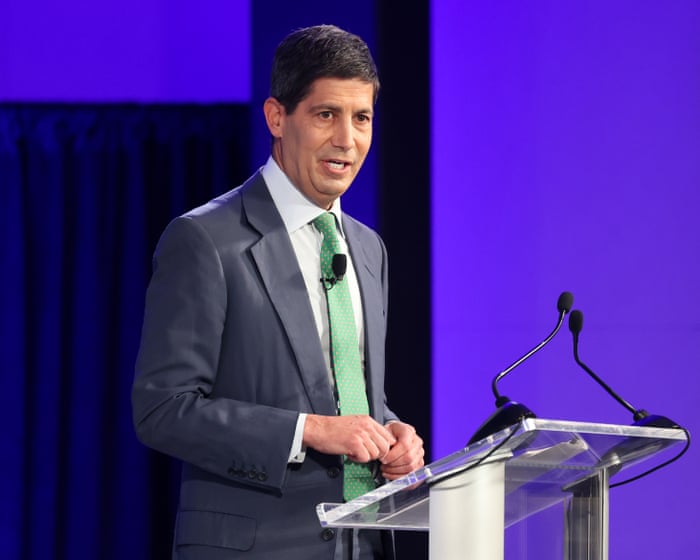
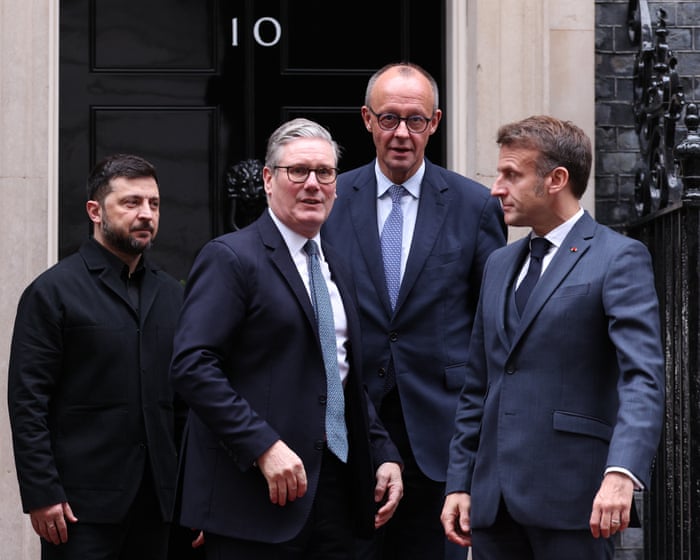
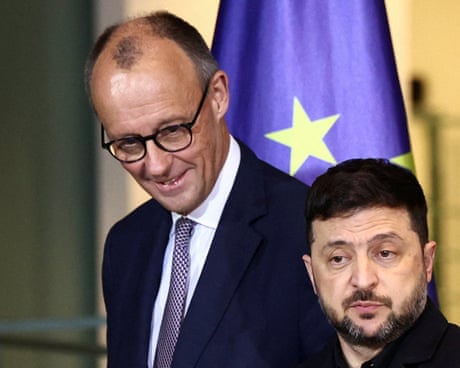
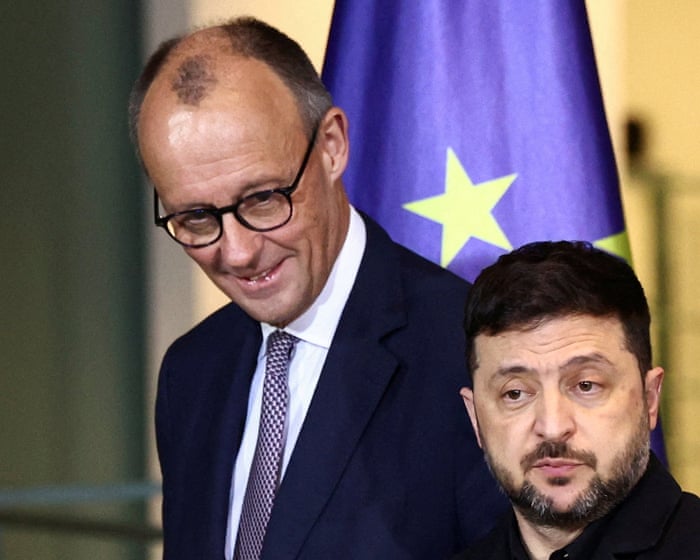
Under post-ceasefire guarantees provided by the United States and Europe to Ukraine, peacekeepers could in certain circumstances repel Russian forces, German Chancellor Friedrich Merz told ZDF public television in an interview, adding that this remained a far-off prospect. Pressed by interviewers for details on the possible security guarantees floated by the United States in Monday’s Berlin talks with Ukrainian president Volodymyr Zelenskyy, Merz said the guarantors would need to repel Russian forces should there be a violation of any ceasefire terms.
“We would secure a demilitarized zone between the warring parties and, to be very specific, we would also act against corresponding Russian incursions and attacks. We’re not there yet,” he said. “The fact that the Americans have made such a commitment – to protect Ukraine in the event of a ceasefire as if it were Nato territory – I think that’s a remarkable new position for the United States of America,” Merz said.
Zelenskyy has said proposals negotiated with US officials on a peace deal to end Russia’s war in Ukraine could be soon finalised, after which American envoys will present them to the Kremlin. After two days of talks in Berlin, US officials said on Monday they had resolved “90%” of the problematic issues between Russia and Ukraine, but despite the positive spin it is not clear that an end to the war is any closer, particularly as the Russian side is absent from the current talks.
Russian President Vladimir Putin’s spokesperson indicated that the Kremlin opposes European participation in talks on ending the conflict in Ukraine based on a US plan. “The participation of the Europeans, in terms of acceptability, does not bode well,” Kremlin spokesperson Dmitry Peskov was quoted as saying by Russian news agencies. Peskov also said that the Kremlin had not yet been informed of the results of the latest talks in Berlin on Monday between Zelenskyy and European leaders.
The UN rights chief voiced alarm Wednesday over diminishing freedoms in Russian-occupied Ukrainian territory, saying restrictions were tightening on freedom of movement, expression and religion. Volker Turk painted a grim picture of events in a presentation to the UN Human Rights Council, the United Nations’ top rights body.
Russian authorities on Tuesday named German public broadcaster Deutsche Welle as an “undesirable organization,” effectively outlawing its operation in the country. Under Russian law, involvement with an “undesirable organization,” including sharing its content, is a criminal offence. In a statement, Deutsche Welle director general Barbara Massing called the designation Russia’s latest attempt to silence independent media.
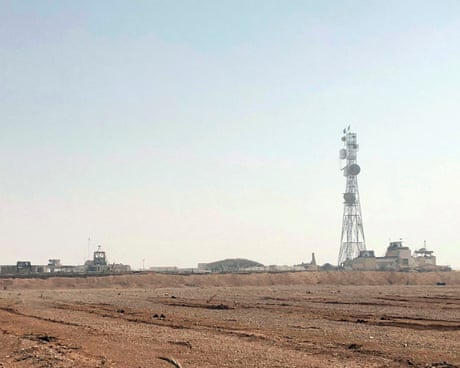
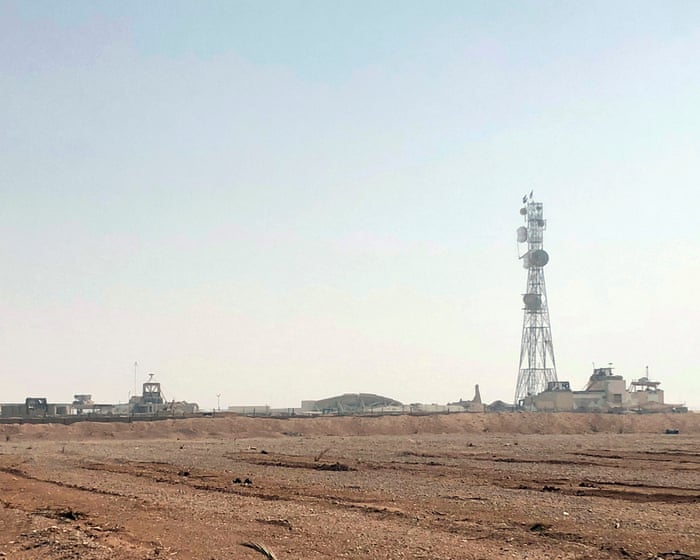
The Russian-controlled Zaporizhzhia nuclear power plant in Ukraine is now receiving electricity through only one of two external power lines, its Russian management said on Tuesday. The other line was disconnected due to military activity, the management said, adding that radiation levels remain normal. Repair work will begin as soon as possible.
South Africa’s government is in talks with Russia to bring home 17 South African men fighting for Russia in Ukraine, after the men were allegedly tricked on to the frontlines of the war.
Continue reading...
© Photograph: Liesa Johannssen/Reuters
© Photograph: Liesa Johannssen/Reuters
© Photograph: Liesa Johannssen/Reuters