Vote on Isaacman, private astronaut and Mars missions advocate, passes 67-30 for him to be agency’s 15th leader
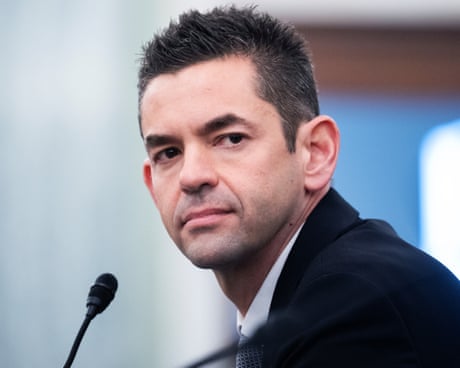
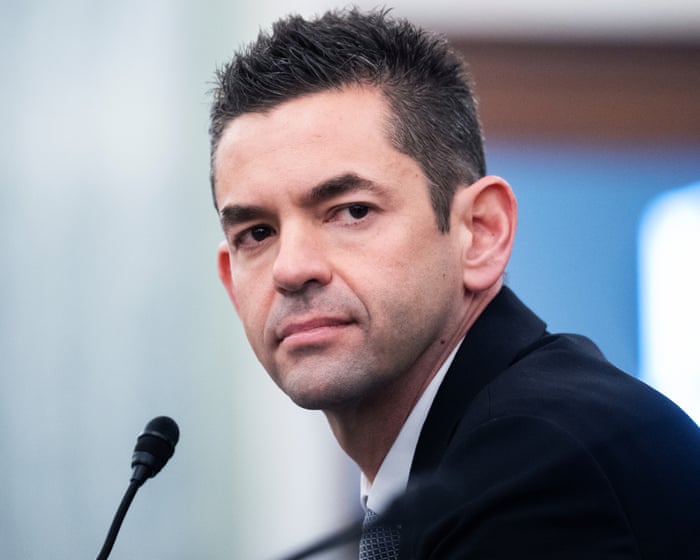
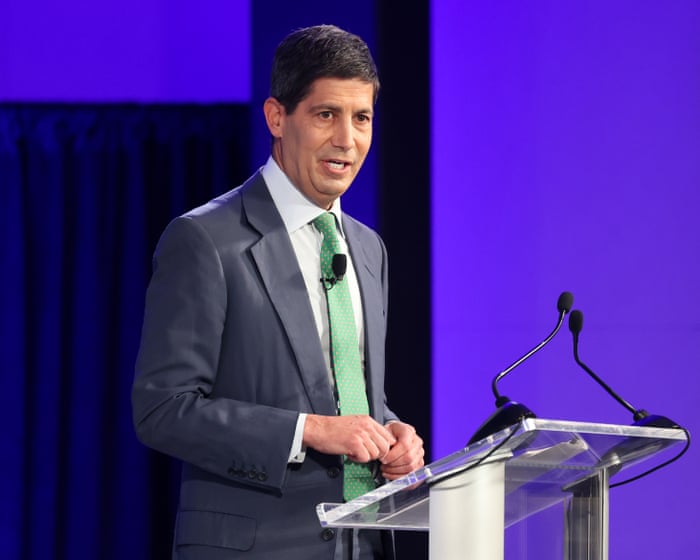
The US Senate on Wednesday confirmed billionaire private astronaut Jared Isaacman to become Donald Trump’s Nasa administrator. The confirmation makes an advocate of Mars missions and an ally of SpaceX CEO Elon Musk the space agency’s 15th leader.
The vote on Isaacman, who Trump nominated, removed and then renamed for the post of Nasa administrator this year, passed 67-30, two weeks after he told senators in his second hearing that Nasa must pick up the pace in beating China back to the moon this decade.
Karen Ford says strike action is set to continue because of political posturing, while an NHS consultant worries about the deteriorating relationship among colleagues. Plus letters from John Sowerby, Dr Mussaddaq Iqbal, Gill Kelly and a final-year medical student
“Striking resident doctors are digging in. History suggests this will go on and on” says the headline on Denis Campbell’s analysis piece (16 December). As a retired public health research and policy adviser and the parent of a doctor currently in core training, I agree that it is likely to go on and on – but not because doctors are stubborn. It will persist because the numbers do not add up and too much of the response has been political posturing rather than workforce planning.
This year, around 30,000 doctors competed for just 10,000 specialty training posts, leaving thousands unable to progress. Promised increases of around 1,000 posts from 2026 may help at the margins, but will leave large numbers with no route into registrar training.
Deploying familiar tropes and the loaded phrase “population control” (not used by the organisations or institutions working on the issue), he insinuates that anyone raising population concern is at best hypocritical, at worst racist, by blaming “poorer Black and Brown people in the global south” while ignoring excessive individual consumption in rich, developed countries like the UK. His crusade to scare off any liberal, progressive person from daring to posit that growth in population as well as consumption might be an issue sinks to new lows when he claims that only “mass murder on an unprecedented scale” could slow and stabilise population growth.
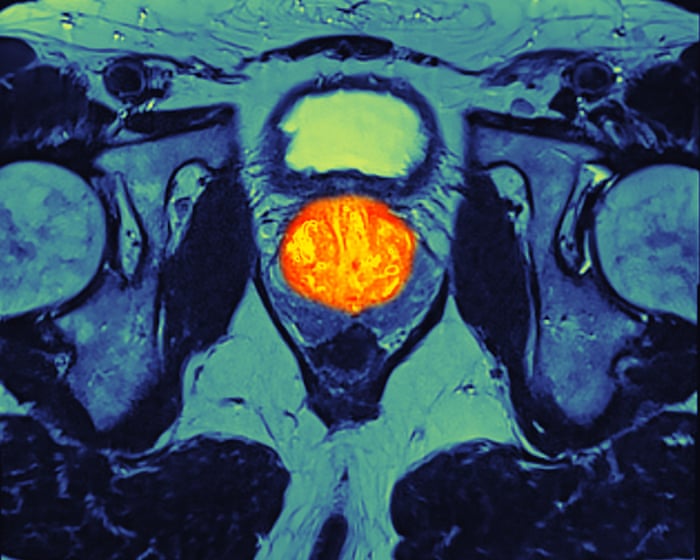
Mark Cottle, who has metastatic prostate cancer, responds to an article by Carolin Würfel
It’s not just Germans like Carolin Würfel (16 December) who face a challenge with the question “How are you?” When I was diagnosed with metastatic prostate cancer, that question went from being a routine conversation-opener to something much trickier.
The convention, in Britain at least, is to answer something like “Oh, not bad…” Frankly, things are very bad, so I’m stuck between the dishonesty of the ritual reply and the full truth, which is a lot to fling back at someone offering an innocent greeting. I’ve developed the more nuanced response “All right today”, which I use if I really am doing all right in the general context of things.
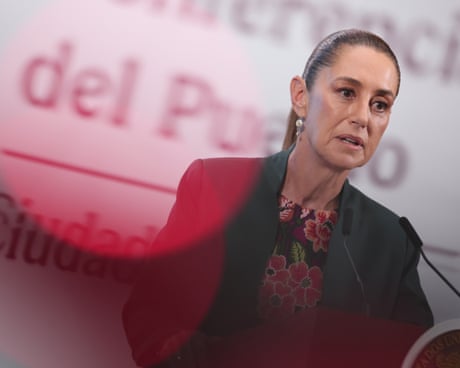
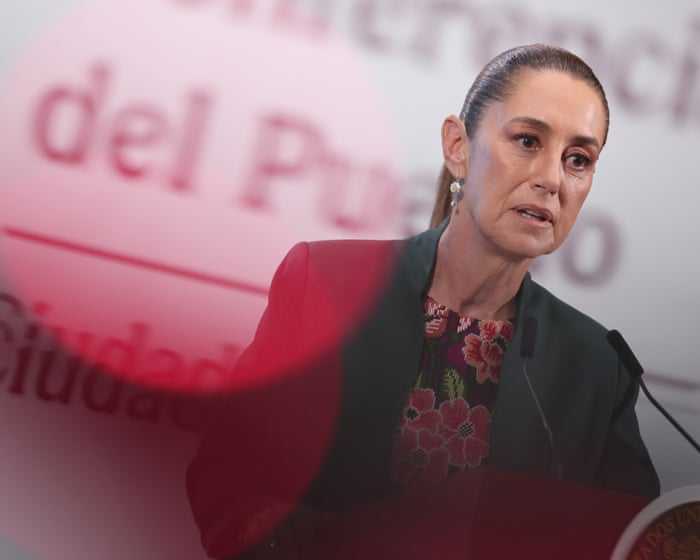
Mexico’s president, Claudia Sheinbaum, has urged the United Nations to “prevent any bloodshed” in Venezuela, as Donald Trump piled more pressure on the South American country.
“The United Nations has been conspicuously absent. It must assume its role to prevent any bloodshed and to always seek the peaceful resolution of conflicts,” the leftwing president told reporters the morning after Washington announced a blockade of “sanctioned oil tankers” entering or leaving Venezuela.
Record rains have forced hundreds of rescues, swamped communities and left rivers high, with more storms forecast
The extent of the damage in Washington state is profound but unclear after more than a week of heavy rains and record flooding, according to the state’s governor, Bob Ferguson.
A barrage of storms from weather systems stretching across the Pacific has dumped close to 2ft (0.6 metres) of rain in parts of the state, swelling rivers far beyond their banks and prompting more than 600 rescues across 10 counties.
German Chancellor says this remains a far-off prospect; Zelenskyy says negotiations on peace deal could soon be finalised. What we know on day 1,393
Under post-ceasefire guarantees provided by the United States and Europe to Ukraine, peacekeepers could in certain circumstances repel Russian forces, German Chancellor Friedrich Merz told ZDF public television in an interview, adding that this remained a far-off prospect. Pressed by interviewers for details on the possible security guarantees floated by the United States in Monday’s Berlin talks with Ukrainian president Volodymyr Zelenskyy, Merz said the guarantors would need to repel Russian forces should there be a violation of any ceasefire terms.
“We would secure a demilitarized zone between the warring parties and, to be very specific, we would also act against corresponding Russian incursions and attacks.We’re not there yet,” he said. “The fact that the Americans have made such a commitment – to protect Ukraine in the event of a ceasefire as if it were Nato territory – I think that’s a remarkable new position for the United States of America,” Merz said.
Zelenskyy has said proposals negotiated with US officials on a peace deal to end Russia’s war in Ukraine could be soon finalised, after which American envoys will present them to the Kremlin. After two days of talks in Berlin, US officials said on Monday they had resolved “90%” of the problematic issues between Russia and Ukraine, but despite the positive spin it is not clear that an end to the war is any closer, particularly as the Russian side is absent from the current talks.
Russian President Vladimir Putin’s spokesperson indicated that the Kremlin opposes European participation in talks on ending the conflict in Ukraine based on a US plan. “The participation of the Europeans, in terms of acceptability, does not bode well,” Kremlin spokesperson Dmitry Peskov was quoted as saying by Russian news agencies. Peskov also said that the Kremlin had not yet been informed of the results of the latest talks in Berlin on Monday between Zelenskyy and European leaders.
The UN rights chief voiced alarm Wednesday over diminishing freedoms in Russian-occupied Ukrainian territory, saying restrictions were tightening on freedom of movement, expression and religion. Volker Turk painted a grim picture of events in a presentation to the UN Human Rights Council, the United Nations’ top rights body.
Russian authorities on Tuesday named German public broadcaster Deutsche Welle as an “undesirable organization,” effectively outlawing its operation in the country. Under Russian law, involvement with an “undesirable organization,” including sharing its content, is a criminal offence. In a statement, Deutsche Welle director general Barbara Massing called the designation Russia’s latest attempt to silence independent media.
The Russian-controlled Zaporizhzhia nuclear power plant in Ukraine is now receiving electricity through only one of two external power lines, its Russian management said on Tuesday. The other line was disconnected due to military activity, the management said, adding that radiation levels remain normal. Repair work will begin as soon as possible.
South Africa’s government is in talks with Russia to bring home 17 South African men fighting for Russia in Ukraine, after the men were allegedly tricked on to the frontlines of the war.
The alleged gunman shot dead by police during Sunday’s attack on Australia’s Bondi beach was originally from the southern Indian city of Hyderabad and his family there seemed unaware of his alleged “radical mindset”, Indian police said on Tuesday.
Meanwhile the second alleged gunman who was hospitalised after also being shot by police has awoken from a coma and may be charged as early as today, Seven News has reported.
Readers respond to Sunday night’s terror attack targeting Jewish families celebrating the first night of Hanukah at Bondi beach in Sydney, Australia
The Bondi beach terror attack did not occur in a vacuum. It followed years in which antisemitism originating on the left has been minimised, sanitised, or treated as a conceptual misunderstanding rather than a real threat.
In Australia, language that Jews recognise immediately as dangerous has been repeatedly defended as nuance. Antisemitic imagery has been excused as metaphor. Threats have been recast as “context”. When Jews object, they are told they are conflating criticism with hatred – even when the language used would be unacceptable if directed at any other minority.
The agreement raises the baseline threshold used by the National Institute for Health and Care Excellence to assess the cost-effectiveness for newmedicines, enabling more treatments to be considered for NHS use.
Retired immigration judge Jane Coker points out that it’s the right to respect for family life that the European convention on human rights protects
Why do the media refer to “the right to family life” in the European convention on human rights (What does UK want to change about human rights law – and will it happen?, 10 December). It is the right to respect for family life. As the Bonavero report from the University of Oxford makes clear, article 8 can only prevent deportation if the impact would be “unduly harsh” on the family and the consequences of deportation outweigh the public interest.
The number of foreign national offenders who successfully invoked human rights grounds to prevent their deportation is 0.73% of the total number of foreign offenders. Having a child or partner in the UK does not mean that a foreign national offender can successfully appeal on human rights grounds. The Home Office does not keep – or at least does not appear to release – statistics on the number of foreign national offenders who are removed immediately after serving their prison sentence and those who are not, despite there being a valid deportation order (some of whom then go on to commit further serious crimes).
There’s a difference between armchair diagnosis and legitimate observation, and we must allow medical expertise to inform public discourse, writes Robert Krasner
The Goldwater rule was designed to prevent irresponsible “armchair diagnosis” based on hearsay. However, Dr Allen Dyer, a psychiatrist instrumental in developing the original rule, clarified in October 2024 that it was never intended to serve as an absolute gag order. It does not preclude responsible discussion of observable public behaviours, particularly when a public figure voluntarily displays these patterns on a national stage.
Evacuation order comes after a levee failed following a week of heavy rain as NWS issues flash flood warning
Officials in Washington state ordered immediate evacuations in three south Seattle suburbs on Monday after a levee failed following a week of heavy rains.
The evacuation order from King county covered homes and businesses east of the Green River in parts of Kent, Auburn and Tukwila.
Bryony Worthington says the media should not be pushing a western attitude to climate strategies to the detriment of African nations. Plus letters from Prof Hugh Hunt, Dr Portia Adade Williams and Angela Churie Kallhauge
Your editorial (8 December) says that it is “hard to disagree” with calls to ban research into climate interventions or geoengineering solutions, citing well-worn tropes about a “termination shock” scenario and a dislike of private-sector involvement in the field. The pretext for forming this opinion – and claiming it represents all of Africa – appears to be the brief reference in a joint statement earlier this year from the African environmental ministers.
I can’t help feeling that the Guardian is being played. Every advance in human technology elicits cries from a vocal few that a line must be drawn that cannot be crossed. Usually seeded in the corridors of western NGOs, legitimate concerns are whipped up into fearmongering and luddism, with the goal of holding back scientific inquiry.
Guardian readers respond to a report by the homelessness charity Crisis and our editorial
Your editorial (The Guardian view on England’s social housing system: failing the very people it was built for, 10 December) claims that “social homes were supposed to be for those who couldn’t afford private rents”. That’s not so. Most council estates, such as Becontree and Harold Hill, were built following the first and second world wars to house ordinary working families when decent housing was in dire straits. Privately rented properties were often of poor quality and devoid of basic amenities.
The governments then believed it imperative to house ordinary families in good-quality modern housing. Relying on private landlords and precarious tenancies was seen practically as an insult to the nation’s people, and even financially well-off council tenants could rest assured that their tenancy was not going to be terminated.
We shouldn’t be surprised that teenagers are turning to tools such as ChatGPT in this way. NHS waiting lists are rising, and one in five young people are living with a mental health condition. It is unacceptable that young people who require support for their mental health are unable to access the services they need, before they reach crisis point.
William Schabas on the conviction of two officers of a German submarine of ‘an offence against the law of nations’ during the first world war
Sidney Blumenthal referred to a 1945 war crimes judgment on the killing of seamen who had survived an attack at sea during the second world war (Does Pete Hegseth even believe that war crimes exist?, 8 December). There is an even earlier case. In a trial held by a German court pursuant to the treaty of Versailles (1919), two officers of U-86 were convicted of “an offence against the law of nations” for attacking survivors after the sinking of a Canadian hospital ship, the Llandovery Castle, off the coast of Ireland in the final months of the first world war. The judges said the rule against such attacks was “simple” and “universally known”. They rejected the defence argument that the officers were following orders of the submarine’s captain. They said such an order was manifestly unlawful. The precedent is still cited today and is codified in the Rome statute of the international criminal court. William Schabas Professor of international law, Middlesex University
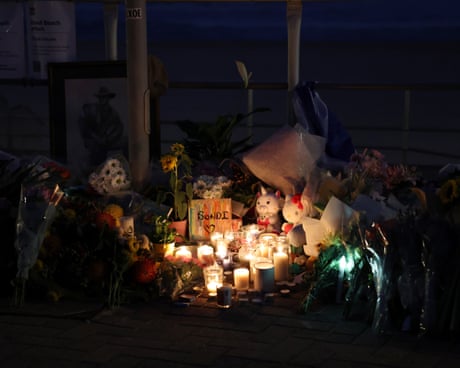
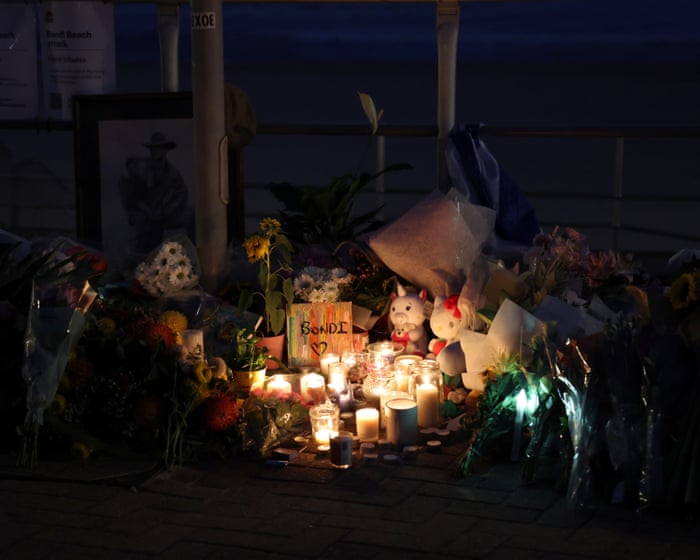
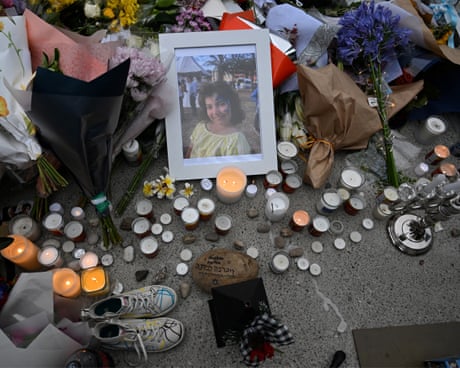
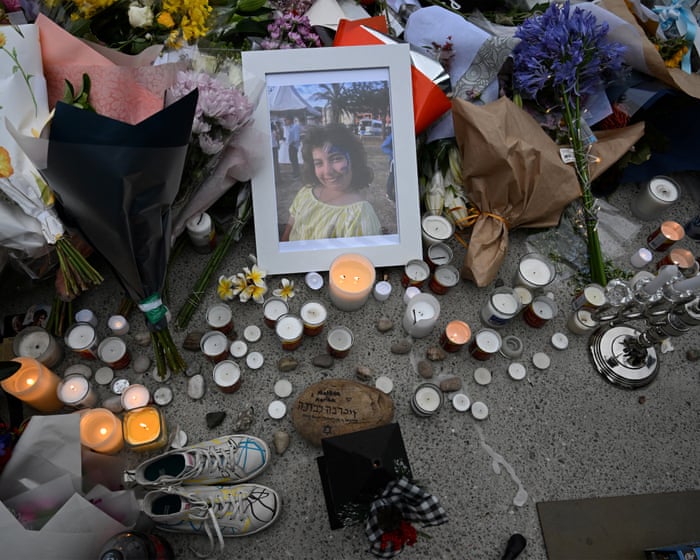
Australia is in mourning after gunmen opened fire on Bondi beach on Sunday, killing at least 15 people in an attack on the Jewish community during its Hanukah celebrations. One of the alleged gunmen was also killed during the incident
Israeli prime minister claims the Australian government ‘let the disease’ of antisemitism spread ‘and the result is the horrific attacks on Jews we saw today’
Leaders around the world expressed their horror at Sunday’s terrorist attack on Bondi beach, in which at least 16 people died, mixed in some cases with harsh words for the Australian government for alleged shortcomings in tackling antisemitism over the past two years.
The Israeli prime minister, Benjamin Netanyahu, said he had written to his Australian counterpart, Anthony Albanese, in August, warning that the government’s decision to recognise a Palestinian state “pours fuel on the antisemitic fire … emboldens those who menace Australian Jews and encourages the Jew hatred now stalking your streets”. He claimed Albanese had “replaced weakness with weakness and appeasement with more appeasement”.
Dr Richard Hassall, Allen Frances and Natasha Fairbairn respond to a column by John Harris which argued that the health secretary should not jump on a rightwing bandwagon about mental health
John Harris is misguided in his criticism of Wes Streeting’s review of UK mental health services (The right’s callous overdiagnosis bandwagon is rolling. Wes Streeting should not be on it, 7 December). While this review will inevitably examine questions of overdiagnosis, Harris is wrong to imply that Streeting’s main motivation is political. There is nothing unusual, of course, about ministers making decisions based on political considerations, but there is rather more to the review than Harris indicates.
It hardly needs restating that mental health services are grossly overstretched and underresourced, and an inquiry is necessary. This is a particular problem in child and adolescent mental health services (Camhs). When I was working as a clinical psychologist and involved in a Camhs autism diagnosis team 15 years ago, the waiting time for an autism assessment was around four to six months. Nowadays a waiting time of up to two years is common.
They are not ‘bureaucrats’ who must be culled, writes Michael Joffe
The finding that one in seven GP referrals are getting lost, with harm to most of the patients involved (Thousands of patients in England at risk as GP referrals vanish into NHS ‘black hole’, 7 December), is no surprise to me. But it is not confined to GP referrals. Hospital patients are constantly in a similar position. I have experienced this myself many times, with investigations and/or outpatient appointments promised but never happening. Sometimes this follows an appointment being cancelled, with a “we will be in contact soon” message that turns out not to be true. Sometimes one just falls off the system, presumably included on a waiting list to be dealt with, that is then not dealt with. My experience is shared by large numbers of patients.
The administrators are, in my experience, competent and dedicated people – but the system is not working. The commonly heard complaint that “there’s too much bureaucracy in the NHS” is wrong. What is needed is a well-managed administrative system, where the chief priority is that somebody is responsible for ensuring coordination, and that gaps are filled, eg when an administrator is on leave, ill, or moves to a different job. The present dire situation also means that nurses and doctors have to add administrative tasks to their already-heavy workload, adding to their stress and burnout.
Australia is showing what is possible by not succumbing to the pressures of big tech. The UK needs to follow its lead, says Daniel Kebede
Lisa Nandy’s suggestion that an Australian-style restriction on social media for under-16s would lead to prosecuting children is a distraction (Young people have faced ‘violent indifference’ for decades, Lisa Nandy says, 9 December). No one is calling for teenagers to be criminalised for using platforms designed to keep them hooked. The responsibility lies squarely with the tech companies that profit from exposing children to harm. Why does the government still allow systems that erode childhood for commercial gain?
Teachers and parents witness the fallout daily: pupils too anxious and distracted to learn, children awake into the night because notifications demand constant attention, bullying that never ends, and content that pushes young people to extremes. This is not poor parenting or teaching – it is caused by the exploitative business models at the core of these addictive platforms.
A bystander tackled and wrestled a gun from one of the two alleged gunmen during the Bondi beach mass shooting in which at least 16 people were killed, footage shows.
Seven News reported the man was a 43-year-old fruit shop owner from the Sutherland Shire named Ahmed al-Ahmed.
Cuban officials denounce the US seizure of the Skipper oil tanker off Venezuela’s coast. Key US politics stories from 13 December 2025
Cuban officials have denounced the US seizure of the Skipper oil tanker off Venezuela’s coast on Wednesday, calling it an “act of piracy and maritime terrorism”, as well as a “serious violation of international law” that hurts the Caribbean island nation and its people.
The tanker, which was reported now to be heading for Galveston, Texas, was believed to loaded with nearly 2m barrels of Venezuela’s heavy crude, according to internal data from the Venezuelan state oil company PDVSA, as reported by the New York Times.
White House official confirms Trump’s envoy Steve Witkoff will meet with Zelenskyy and European leaders this weekend. What we know on day 1,390
Donald Trump’s special envoy will meet with Volodymyr Zelenskyy and other European leaders in Berlin this weekend, the White House said, as Washington presses for a plan to end the war. Germany said earlier on Saturday that it would host US and Ukrainian delegations over the weekend for talks on a ceasefire, before a summit involving European leaders and Zelenskyy in Berlin on Monday. Zelenskyy also confirmed that he will personally meet with Donald Trump’s Steve Witkoff in the series of meetings: “Most importantly, I will be meeting with envoys of President Trump, and there will also be meetings with our European partners, with many leaders, concerning the foundation of peace – a political agreement to end the war,” Zelenskyy said in an address to the nation late on Saturday.
Kremlin foreign affairs adviser Yuri Ushakov reaffirmed Friday that Moscow will give its blessing to a ceasefire only after Ukraine’s forces have withdrawn from parts of the Donetsk region that they still control. Ushakov told the business daily Kommersant that Russian police and national guard troops would stay in parts of eastern Ukraine’s Donbas even if they become a demilitarised zone under a prospective peace plan – a demand likely to be rejected by Ukraine.
Russia attacked five Ukrainian regions overnight, targeting the country’s energy and port infrastructure, according to Zelenskyy, who said the attacks involved more than 450 drones and 30 missiles. With temperatures hovering around freezing, Ukraine’s interior minister, Ihor Klymenko, said more than a million people were without electricity.
An attack on Odesa caused grain silos to catch fire at the coastal city’s port, Ukrainian deputy prime minister and reconstruction minister Oleksiy Kuleba said. Two people were wounded in attacks on the wider region, according to regional head Oleh Kiper.
Germany has said it will send a group of soldiers to Poland to help with a project to fortify the country’s eastern border as worries mount about the threat from Russia. Poland, a strong supporter of Ukraine in its fight against Moscow, announced plans in May last year to bolster a long stretch of its border that includes Belarus and the Russian exclave of Kaliningrad. The main task of the German soldiers in Poland will be “engineering activities,” a spokesperson for the defence ministry in Berlin said late Friday.
About 480 people were evacuated Saturday from a train traveling between the Polish city of Przemysl and Kyiv after police received a call concerning a threat on the train, Karolina Kowalik, a spokesperson for the Przemysl police, said. Nobody was hurt and she didn’t elaborate on the threat. Polish authorities are on high alert since multiple attempts to disrupt trains on the line linking Warsaw to the Ukrainian border, including the use of explosives in November, with Polish authorities saying they have evidence Russia was behind it.
Ukraine’s navy accused Russia of deliberately attacking a civilian Turkish vessel carrying sunflower oil to Egypt with a drone on Saturday, a day after Moscow hit two Ukrainian ports: “Russia delivered a targeted strike using a drone against the Turkish vessel ‘VIVA’, which was en route to Egypt carrying sunflower oil,” Ukraine’s navy said on social media. None of the 11 crew were wounded and the ship was able to continue its journey, it added.
Ukraine received 114 prisoners released by Belarus on Saturday, Kyiv’s PoW coordination centre said. The centre’s statement said that the released captives would receive medical attention, and those Belarusian citizens who so wished would subsequently be transported to Poland or Lithuania.
US Central Command reports an ambush on Saturday, the first attack to inflict US casualties since fall of Bashar al-Assad
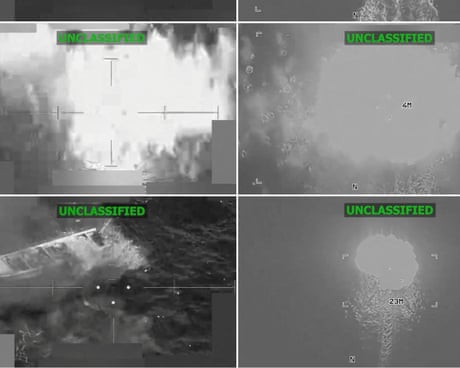
Two US army soldiers and one American civilian interpreter have been killed and several other people wounded in an ambush on Saturday by the Islamic State group in central Syria, the Pentagon said.
The attack on US troops in Palmyra is the first to inflict casualties since the fall of the former Syrian president, Bashar al-Assad, a year ago.
The most exciting places our writers came across this year, from untouched islands in Finland to an affordable ski resort in Bulgaria and the perfect Parisian bistro
On a midsummer trip to Ireland, I saw dolphins in the Irish Sea, sunset by the Liffey, and misty views of the Galtee Mountains. The half-hour train journey to Cobh (“cove”), through Cork’s island-studded harbour, was especially lovely. As the railway crossed Lough Mahon, home to thousands of seabirds, there was water on both sides of the train. I watched oystercatchers, egrets, godwits and common terns, which nest on floating pontoons. Curlews foraged in the mudflats, and an old Martello tower stood on a wooded promontory.
Scarlett Johansson’s directorial debut stars the 96-year-old June Squibb, while Netflix’s lovable tweefest sees its heroine move to Rome
Eleanor the Great Out now June Squibb stars in Scarlett Johansson’s directorial debut, which premiered at Cannes and tells the tale of the eponymous Eleanor, a senior citizen recently relocated to New York, who strikes up a friendship with a 19-year old – and then stumbles her way into pretending to be a Holocaust survivor.
Lurker Out now A hit at Sundance, this is the story of a lowly retail employee who happens to strike up a friendship with a rising pop star, becoming the Boswell to his Johnson, if Boswell was part of a pop star’s entourage. But the path of friendship with a famous person never did run smooth, and the uneven power dynamic soon prompts some desperate manoeuvring in this psychological thriller.
Ella McCay Out now Emma Mackey stars in the latest from James L Brooks (his first since 2010), a political comedy about an idealistic thirtysomething working in government and preparing to step into the shoes of her mentor, Governor Bill (Albert Brooks). Jamie Lee Curtis co-stars as Ella’s aunt.
A buzzy thriller about a Hollywood hanger-on and a moving documentary following the parents bereaved in last summer’s Southport attack. Here’s the pick of the week’s culture, taken from the Guardian’s best-rated reviews
The seizure of the Skipper on Wednesday marked the first US capture of Venezuelan oil cargo since sanctions were imposed in 2019
Venezuelan oil exports have reportedly fallen sharply since the US seized a tanker this week and imposed fresh sanctions on shipping companies and vessels doing business with Caracas, according to shipping data, documents and maritime sources.
The US seizure of the Skipper tanker off Venezuela’s coast on Wednesday was the first US capture of Venezuelan oil cargo since sanctions were imposed in 2019 and marked a sharp escalation in rising tensions between the Trump administration and the government of Nicolás Maduro.
Ex-Fed governor Kevin Warsh is at top of his list to succeed Powell as central bank’s chair, president says in interview
Donald Trump declared he “should be listened to” by the Federal Reserve, as he weighs candidates to lead the central bank amid an extraordinary campaign by the White House to exert greater control over its decisions.
The US president said on Friday that former Fed governor Kevin Warsh is currently top of his list to chair the central bank.
Nick Moss, Dr Deborah Talbot, Dimitra Blana and Mary Pimm on the prime minister’s plan to ‘protect our borders’ and Donald Trump’s accusations that Europe is ‘weak’ and ‘decaying’
It is not just that the human rights lawyer who wrote a key text on the Human Rights Act 1998 has become, as prime minister, an advocate of the act’s undoing, along with all the consequences for migrant families that will flow from that. It is that Starmer shows through this the complete dearth of ideas available to European social democracy.
Guardian readers share their views on a proposed shorter working week for educators
As a teacher who already works four days (albeit I don’t get paid for the fifth), I can wholeheartedly say it has transformed my relationship with the job (‘Bring it on!’: growing support in England for four-day week in schools, 9 December). I no longer have the dread of weekends and holidays with insurmountable mountains of work. The move to a four-day teaching week would need to be thought about carefully.
I, for one, would not want to have one full day out of school – this would mean four straight days of teaching. In most schools, a day not teaching would equate to five planning, preparation and assessment periods (PPAs).
Europe must realise its superior economic and military potential has to be mobilised, writes Bill Jones, while Robin Wilson addresses Belgium’s resistance to seizing Russian assets
I wholly support the plea to Europe by Timothy Garton Ash (Only Europe can save Ukraine from Putin and Trump – but will it?, 6 December). One aspect he did not mention was the strategic nuclear balance. Since the late 1940s, responsibility for deterrence has always lain with the Pentagon and has succeeded in keeping the peace, though at times a very fragile version of it.
The recent US statement on defence makes it clear that Europe is no longer seen as a priority by the Trump administration, the danger now being that doubt is crucially being raised as to the credibility of Nato’s deterrent. Without certainty of a reaction in kind, Russia, under its ambitious and risk-taking president, might be tempted to chance its arm in what almost looks like a ceding of Europe by the US into a Russian “sphere of influence”.
The University of Leeds complex was a prototype for the Barbican – and the work done to it over time demonstrates how brutalist buildings can be humanised, writes Alan Radford
I read with interest about the refurbishment plans for the Barbican (Barbican revamp to give ‘bewildering’ arts centre a new lease of life, 5 December). I spent more than 30 years working on the prototype – the large complex of buildings that the architects Chamberlin, Powell and Bon designed for the University of Leeds, constructed circa 1970.
All of the design features in the Barbican were there in the Leeds complex of offices, laboratories, library and so on, including all the problems. I always explained to visitors that I regarded the Chamberlin buildings primarily as a large-scale piece of brutalist sculpture rather than as a working environment.
Explore a curated selection of images by Guardian photographers from 2025. Available to buy through the Guardian Print Shop. Produced on premium heavyweight fine art paper, the prints are supplied with a Guardian Archive certificate of authenticity
Conflict monitors say the junta has increased airstrikes year-on-year since the start of Myanmar’s civil war
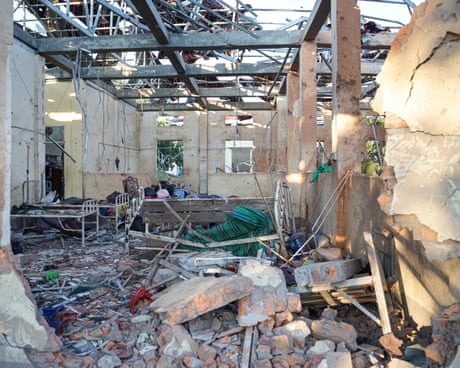
Dozens have been killed in a military strike on a hospital in Myanmar’s western Rakhine state, according to an aid worker, a rebel group, a witness and local media reports, as the junta wages a withering offensive ahead of elections beginning this month.
“The situation is very terrible,” said on-site aid worker Wai Hun Aung. “As for now, we can confirm there are 31 deaths and we think there will be more deaths. Also there are 68 wounded and will be more and more.”
Aamir Ahmed, Dr Graham Simpson, Adrian Bell and David Gollancz respond to a letter by a reader whose husband died of the disease after delaying getting a PSA test
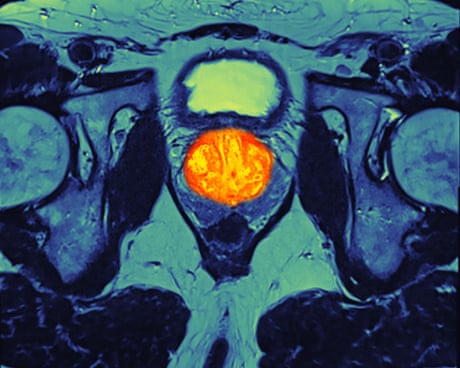
It is understandable for patients suffering from a late diagnosis of prostate cancer, or families who have lost loved ones, to demand that something should be done (Letters, 5 December). I, however, respect the UK National Screening Committee’s recommendation not to screen most men using the prostate specific antigen (PSA) test.
The job of the committee was to weigh up the benefits and harms of any available test for routine screening. PSA testing, as a first step to diagnose cancer, results in false negatives and a significant number of false positives, meaning it has both low sensitivity and low specificity, making it a poor screening marker. PSA screening has been conducted in the US; there are varying estimates that, over three decades, it has resulted in more than 1 million patients receiving treatment (eg surgery or radiotherapy) they did not need.
Defying the will of the House of Commons will increase calls for radical reform of the upper house sooner rather than later, say the MPs Nia Griffith, Justin Madders and Debbie Abrahams
When visitors come to parliament, it seems incongruous to explain that, in our mother of parliaments, we have a second chamber – the House of Lords – which is unelected. Those who support its existence in its current or similar form justify it on the grounds that it performs a useful revising function which can improve the detail of legislation, and it undoubtedly does good work.
But the fact that it is unelected can only be tolerated in a democracy provided its members accept that it is for the House of Commons to have the last word on what becomes law and what doesn’t in this country.
I can tell you that we also have beavers in Berkshire. I live by the River Kennet and I caught one on my garden trail camera in August, along with otters in the same 30-second clip. The identification of the beaver is unmistakable, and was confirmed by the Berks, Bucks and Oxon wildlife trust. Two weeks ago, my neighbour caught a beaver on her garden trail camera. Her garden is 50 yards downstream of ours.
• The latest US visa requirements would be a nightmare. Imagine trying to hold an international bridge tournament in the US. Where would you find players who haven’t bid “1 No Trump” in the last five years? Steen I Petersen Nanaimo, British Columbia, Canada
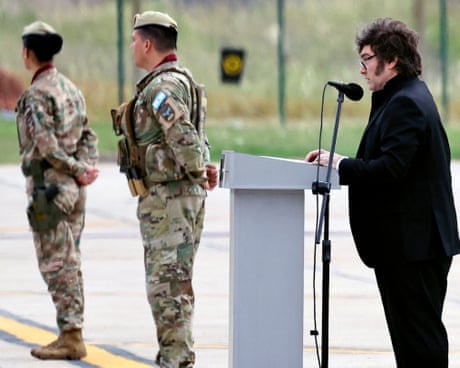
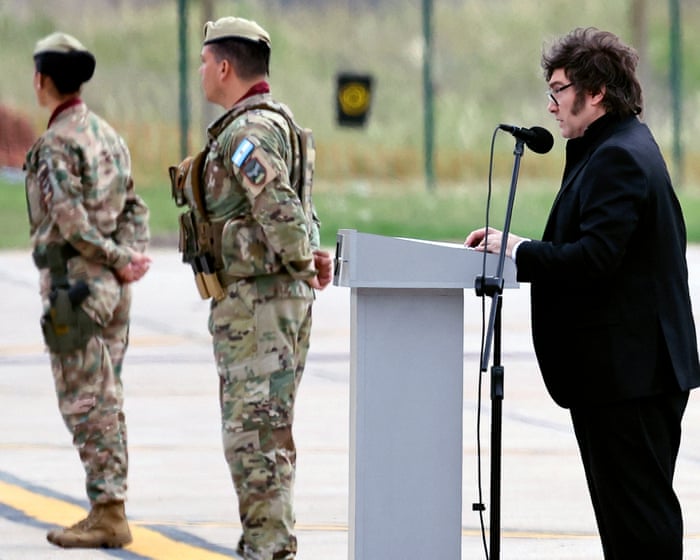
British government also rejects president’s claims on sovereignty over Falkland Islands as he suggests wanting to make Argentina a ‘world military power’
The British government has denied it is engaged in negotiations to lift a ban on selling arms to Argentina that has been in place since the Falklands war.
Javier Milei, the president of Argentina, told the Daily Telegraph his government had begun speaking to the UK about the restrictions.

 Login
Login