Reading view

UK to hold inquiry into foreign financial interference in domestic politics

Review, focusing on effectiveness of political finance laws, follows jailing of former Reform MEP for accepting bribes

An independent review into the impact of foreign financial influence and interference in domestic politics from Russia and other hostile states has been announced after one of Reform UK’s former senior politicians, Nathan Gill, was jailed for accepting bribes from a pro-Kremlin agent.

Amid growing concern inside the security services and parliament over the scale of the foreign threat to British democracy, the government-commissioned inquiry will focus on the effectiveness of the UK’s political finance laws.

Continue reading...

© Photograph: James Manning/PA

© Photograph: James Manning/PA

© Photograph: James Manning/PA

  •  

Chinese Surveillance and AI

New report: “The Party’s AI: How China’s New AI Systems are Reshaping Human Rights.” From a summary article:

China is already the world’s largest exporter of AI powered surveillance technology; new surveillance technologies and platforms developed in China are also not likely to simply stay there. By exposing the full scope of China’s AI driven control apparatus, this report presents clear, evidence based insights for policymakers, civil society, the media and technology companies seeking to counter the rise of AI enabled repression and human rights violations, and China’s growing efforts to project that repression beyond its borders.

The report focuses on four areas where the CCP has expanded its use of advanced AI systems most rapidly between 2023 and 2025: multimodal censorship of politically sensitive images; AI’s integration into the criminal justice pipeline; the industrialisation of online information control; and the use of AI enabled platforms by Chinese companies operating abroad. Examined together, those cases show how new AI capabilities are being embedded across domains that strengthen the CCP’s ability to shape information, behaviour and economic outcomes at home and overseas.

Because China’s AI ecosystem is evolving rapidly and unevenly across sectors, we have focused on domains where significant changes took place between 2023 and 2025, where new evidence became available, or where human rights risks accelerated. Those areas do not represent the full range of AI applications in China but are the most revealing of how the CCP is integrating AI technologies into its political control apparatus.

News article.

  •  

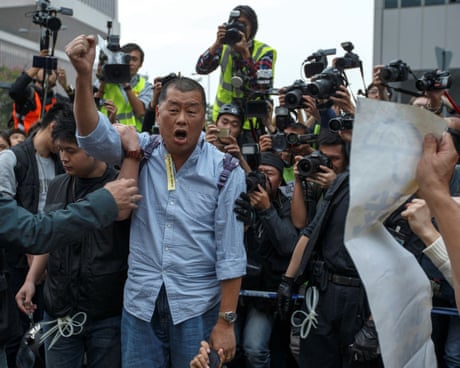
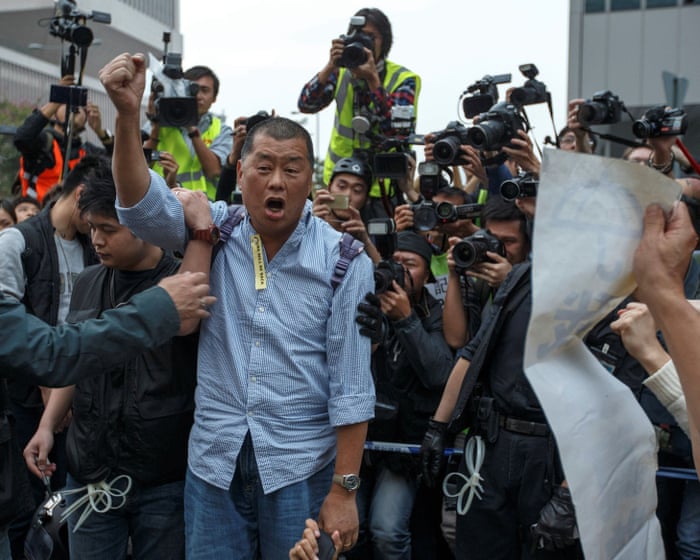
Trump urges Xi Jinping to free HK pro-democracy media tycoon Jimmy Lai

US president says he feels ‘so badly’ about Lai’s conviction and has spoken to the Chinese leader about it

Donald Trump has said he wants Chinese leader Xi Jinping to release Jimmy Lai as he voiced sadness over the Hong Kong media mogul’s conviction on national security charges.

“I feel so badly. I spoke to President Xi about it, and I asked to consider his release,” Trump told reporters on Monday, without specifying when he asked Xi.

Continue reading...

© Photograph: Anthony Wallace/AFP/Getty Images

© Photograph: Anthony Wallace/AFP/Getty Images

© Photograph: Anthony Wallace/AFP/Getty Images

  •  

Man who documented Uyghur camps in China may face removal from US after ICE arrest

Guan Heng, who filmed at sites in China of alleged rights violations against Muslim group, detained by ICE in August

A Chinese man who left his country after filming at sites of alleged human rights violations against Uyghurs now faces the risk of removal from the United States, according to his lawyer and mother.

Guan Heng, 38, underwent an immigration hearing in New York on Monday after being detained by US Immigration and Customs Enforcement (ICE) in August, his mother said in an interview.

Continue reading...

© Photograph: David Dee Delgado/Reuters

© Photograph: David Dee Delgado/Reuters

© Photograph: David Dee Delgado/Reuters

  •  

The Guardian view on combating Europe’s national populists: protect the less well-off from the winds of change | Editorial

As EU countries face multiple challenges in a new era, they must fight to preserve the continent’s social model. That means a new economic approach

More than a year after the election that handed Donald Trump a decisive comeback victory, the Democratic party has still not released its postmortem analysis. But last week, an influential progressive lobby group published its own. Kamala Harris’s campaign, its authors argued, failed to connect with core constituencies because it did not focus enough on addressing basic economic anxieties. By prioritising the menace to democracy that Maga authoritarianism represented, progressives neglected the bread-and-butter issues that were uppermost in many people’s minds.

As the EU braces for a tumultuous period of politics between now and the end of the decade, that is a lesson that needs to be fully absorbed in Brussels, Paris and Berlin. The White House, as its recently published national security strategy makes clear, is hopeful that “patriotic” parties in Europe will soon replicate Mr Trump’s success. In the EU’s Franco-German engine room, Marine Le Pen’s National Rally (RN) and Alternative für Deutschland (AfD) lead the polls, backed by large swaths of blue-collar voters. But among mainstream leaders and parties, it is hard to discern a response that is adequate to troubling times.

Continue reading...

© Photograph: Benoît Tessier/Reuters

© Photograph: Benoît Tessier/Reuters

© Photograph: Benoît Tessier/Reuters

  •  

Ford Will Take $19.5 Billion Hit as It Rolls Back E.V. Plans

Ford Motor said the costs came from its decision to make fewer electric vehicles than it had planned and more hybrids that use both gasoline engines and batteries.

© Brittany Greeson for The New York Times

A Ford F-150 Lightning electric truck at the company’s plant in Dearborn, Mich., in 2022. The Lightning will no longer be a pure electric vehicle.
  •  

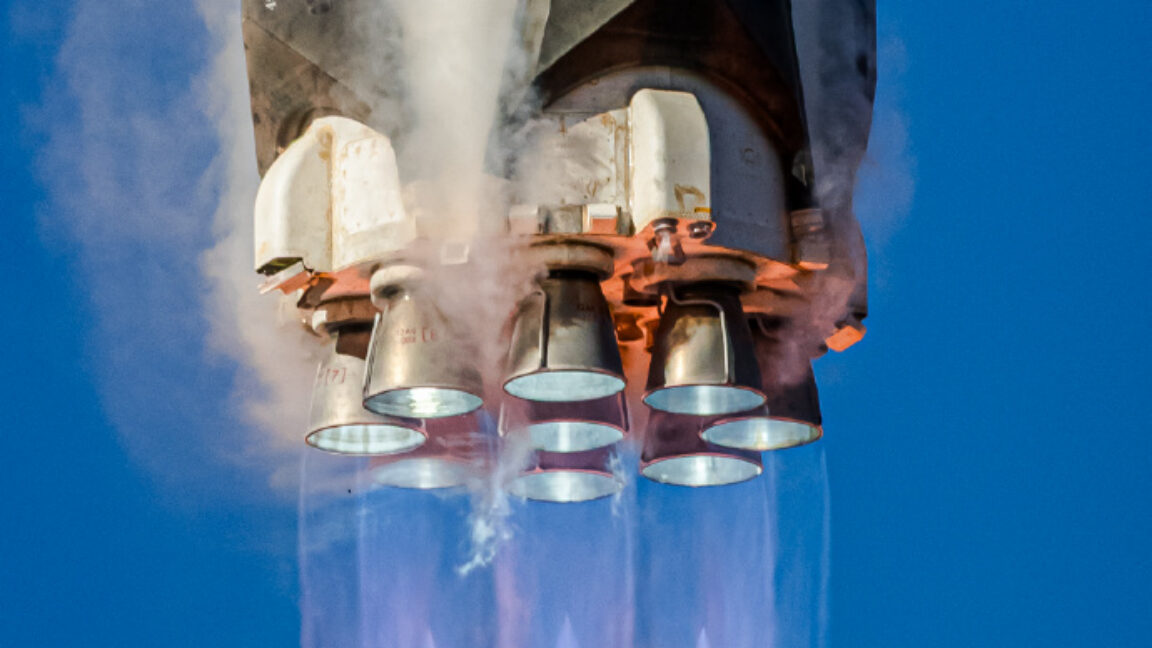
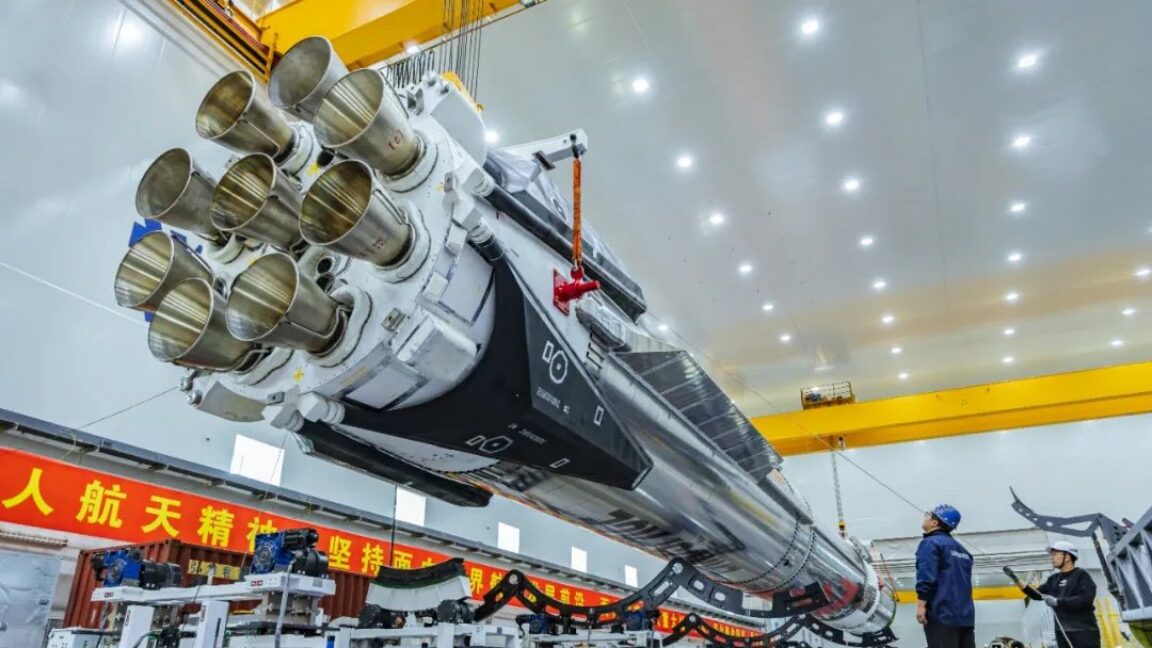
Oh look, yet another Starship clone has popped up in China

Every other week, it seems, a new Chinese launch company pops up with a rocket design and a plan to reach orbit within a few years. For a long time, the majority of these companies revealed designs that looked a lot like SpaceX’s Falcon 9 rocket.

The first of these copy cats, the medium-lift Zhuque-3 rocket built by LandSpace, launched earlier this month. Its primary mission was nominal, but the Zhuque-3 rocket failed its landing attempt, which is understandable for a first flight. Doubtless there will be more Chinese Falcon 9-like rockets making their debut in the near future.

However, over the last year, there has been a distinct change in announcements from China when it comes to new launch technology. Just as SpaceX is seeking to transition from its workhorse Falcon 9 rocket—which has now been flying for a decade and a half—to the fully reusable Starship design, so too are Chinese companies modifying their visions.

Read full article

Comments

© Beijing Leading Rocket Technology Co.

  •  

Roomba Maker iRobot Files for Bankruptcy, With Chinese Supplier Taking Control

Founded in 1990 by three M.I.T. researchers, iRobot introduced its vacuum in 2002. Its restructuring will turn the company over to its largest creditor.

© Justin Sullivan/Getty Images

Roomba vacuums on display in California last year. The chief executive of iRobot said the company’s acquisition by its Chinese supplier would secure its “long-term future.”
  •  

Governments and groups condemn conviction of Hong Kong activist Jimmy Lai

UK, EU and Australia say guilty verdict against 78-year-old is further blow to democracy and press freedom in territory

Governments, institutions and rights groups across the world have condemned the conviction of the former pro-democracy media tycoon and British citizen Jimmy Lai in Hong Kong on national security charges.

The 78-year-old was found guilty in West Kowloon district court on Monday of one count of conspiracy to publish seditious publications and two counts of conspiracy to foreign collusion. The charges were brought under the city’s punitive national security law , introduced in 2020, and a British colonial-era sedition law that has been used in recent years by authorities.

Continue reading...

© Photograph: Anthony Wallace/AFP/Getty Images

© Photograph: Anthony Wallace/AFP/Getty Images

© Photograph: Anthony Wallace/AFP/Getty Images

  •  

Jimmy Lai: conviction of Hong Kong pro-democracy figure decried as attack on press freedom

Rights groups dismiss ‘sham conviction’ of media tycoon on national security offences in city’s most closely watched rulings in decades

Jimmy Lai, the Hong Kong pro-democracy media tycoon, is facing life in prison after being found guilty of national security and sedition offences, in one of the most closely watched rulings since the city’s return to Chinese rule in 1997.

Soon after the ruling was delivered, rights and press groups decried the verdict as a “sham conviction” and an attack on press freedom.

Continue reading...

© Photograph: Leung Man Hei/AFP/Getty Images

© Photograph: Leung Man Hei/AFP/Getty Images

© Photograph: Leung Man Hei/AFP/Getty Images

  •  

The rise and fall of Jimmy Lai, whose trajectory mirrored that of Hong Kong itself

Progressing from child labourer to billionaire, Lai used his power and wealth to promote democracy, which ultimately pitted him against authorities in Beijing

On Monday, a Hong Kong court convicted Jimmy Lai of national security offences, the end to a landmark trial for the city and its hobbled protest movement.

The verdict was expected. Long a thorn in the side of Beijing, Lai, a 78-year-old media tycoon and activist, was a primary target of the most recent and definitive crackdown on Hong Kong’s pro-democracy movement. Authorities cast him as a traitor and a criminal.

Continue reading...

© Photograph: Athit Perawongmetha/Reuters

© Photograph: Athit Perawongmetha/Reuters

© Photograph: Athit Perawongmetha/Reuters

  •  

Jimmy Lai verdict: Hong Kong court to decide on national security charges against pro-democracy figure – live

Incarcerated activist and media owner has been on trial for more than two years on national security charges

As has become usual with these national security cases, there is a large police presence outside the West Kowloon district court.

It’s about two hours from the verdict hearing beginning, and there are officers in plain clothes and uniform everywhere, as well as a massive press pack. Smaller than I have seen before, however, is the queue for the general public.

They want to put him in prison.

Continue reading...

© Photograph: Anthony Wallace/AFP/Getty Images

© Photograph: Anthony Wallace/AFP/Getty Images

© Photograph: Anthony Wallace/AFP/Getty Images

  •  

I’m a Chinese pro-democracy activist. Here’s how to find courage to oppose Trump | Yaqiu Wang

While acting on your moral convictions can be risky, it can also feel profoundly good

In the eleven months since Donald Trump took office – during which he has unleashed unprecedented assaults on the checks and balances of American democracy – there has been a wave of warnings and advice from activists, writers and scholars who have either fought against authoritarian regimes or studied them closely. A common thread runs through much of their guidance: Americans, especially those in positions of power, must find the courage to stand up for what is right, even when doing so carries personal risk.

Yet few have addressed the harder questions: how does one become courageous? How much of courage is innate, and how much is learned? And what can we do to help people find the courage to act?

Yaqiu Wang is a Chinese human rights researcher and advocate. She is currently a fellow at University of Chicago’s Forum for Free Inquiry and Expression.

Continue reading...

© Photograph: Mark Makela/Getty Images

© Photograph: Mark Makela/Getty Images

© Photograph: Mark Makela/Getty Images

  •  

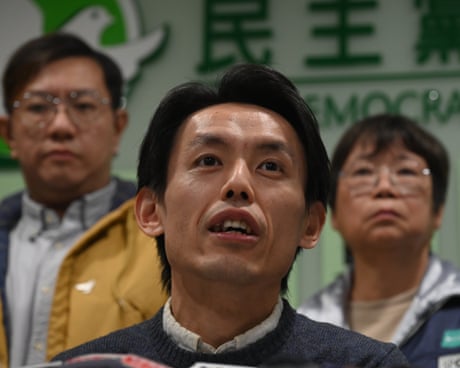
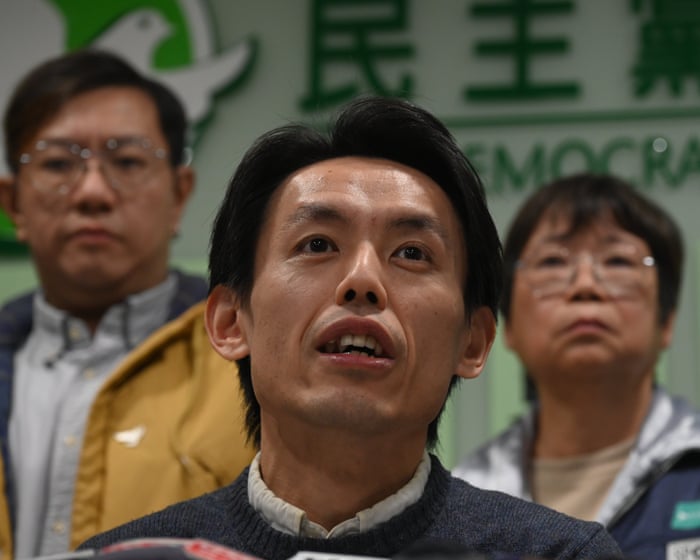
Hong Kong’s last major opposition party disbands amid Chinese pressure

Senior DP members previously allege being told to disband or face severe consequences including possible arrest

Hong Kong’s last major opposition party has disbanded after a vote by its members, the culmination of Chinese pressure on the city’s remaining liberal voices in a years-long security crackdown.

The Democratic party (DP) has been Hong Kong’s main opposition since its founding three years before the financial hub’s return to Chinese rule in 1997. The party used to sweep city-wide legislative elections and push China on democratic reforms and upholding freedoms.

Continue reading...

© Photograph: Kobe Li/Nexpher/ZUMA Press Wire/Shutterstock

© Photograph: Kobe Li/Nexpher/ZUMA Press Wire/Shutterstock

© Photograph: Kobe Li/Nexpher/ZUMA Press Wire/Shutterstock

  •  

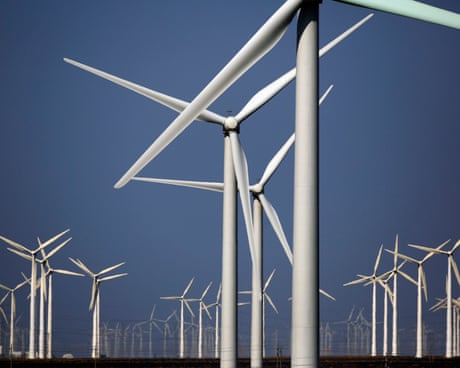
‘A shift no country can ignore’: where global emissions stand, 10 years after the Paris climate agreement

The watershed summit in 2015 was far from perfect, but its impact so far has been significant and measurable

Ten years on from the historic Paris climate summit, which ended with the world’s first and only global agreement to curb greenhouse gas emissions, it is easy to dwell on its failures. But the successes go less remarked.

Renewable energy smashed records last year, growing by 15% and accounting for more than 90% of all new power generation capacity. Investment in clean energy topped $2tn, outstripping that into fossil fuels by two to one.

Continue reading...

© Photograph: Carlos Barría/Reuters

© Photograph: Carlos Barría/Reuters

© Photograph: Carlos Barría/Reuters

  •  

China Leads Research in 90% of Crucial Technologies - a Dramatic Shift this Century

China is leading research in nearly 90% of the crucial technologies that "significantly enhance, or pose risks to, a country's national interests," according to a technology tracker run by the Australian Strategic Policy Institute (ASPI) -- an independent think-tank. Nature: The ASPI's Critical Technology Tracker evaluated research on 74 current and emerging technologies this year, up from the 64 technologies it analyzed last year. China is ranked number one for research on 66 of the technologies, including nuclear energy, synthetic biology, small satellites, while the United States topped the remaining 8, including quantum computing and geoengineering. The results reflect a drastic reversal. At the beginning of this century, the United States led more than 90% of the assessed technologies, whereas China led less than 5% of them, according to the 2024 edition of the tracker. "China has made incredible progress on science and technology that is reflected in research and development, as well as in publications," says Ilaria Mazzocco, who researches China's industrial policy at the Center for Strategic and International Studies, a non-profit research organization based in Washington DC. Mazzocco says the general trend identified by the ASPI is not a surprise, but it is "remarkable" to see that China is so dominant and advanced in so many fields compared with the United States.

Read more of this story at Slashdot.

  •  

Major Automakers Say China Poses 'Clear and Present Threat' To US Auto Industry

Major automakers have urged Washington to prevent Chinese government-backed automakers and battery manufacturers from opening U.S. manufacturing plants, warning the industry's future is at stake. From a report: The Alliance for Automotive Innovation, which represents General Motors, Ford, Toyota Motor, Volkswagen, Hyundai, Stellantis and other major automakers, sounded the alarm and said Congress and the Trump administration needed to act. "China poses a clear and present threat to the auto industry in the U.S.," the group wrote in a statement for a U.S. House hearing on Chinese vehicles. The group also said lawmakers should maintain the U.S. Commerce Department's prohibition on importing information and communications technology and services from China that effectively bars the import of vehicles from Chinese manufacturers. "No amount of investment by automakers and battery manufacturers operating inside the U.S. can counter a China that is enabled by subsidies to chronically oversupply around the world. This is a recipe for dumping that Congress and the Trump Administration must prevent from happening inside the U.S.," the auto industry group said.

Read more of this story at Slashdot.

  •  

Australia Kicks Kids Off Social Media + Is the A.I. Water Issue Fake? + Hard Fork Wrapped

“I’m told that Australian teens, in preparation for this ban, have been exchanging phone numbers with each other.”

© Photo Illustration by The New York Times; Photo: David Gray/Agence France-Presse — Getty Images

  •  

China Is Getting Much of What It Wants From the U.S., Including Chips

For China, President Trump’s moves to loosen chip controls, soften U.S. rhetoric and stay silent on tensions with Japan amount to a rare string of strategic gains.

© Haiyun Jiang/The New York Times

President Trump and Xi Jinping, China’s leader, after their meeting in Busan, South Korea, in October. Mr. Trump’s latest moves extended the conciliatory posture he struck at this summit.
  •  

After Australia, Which Countries Could Be Next to Ban Social Media for Children

Governments are studying the decision to prohibit youths from using platforms like Facebook and TikTok as worries grow about the potential harm they cause.

© Ida Marie Odgaard/Ritzau Scanpix, via Agence France-Presse — Getty Images

Elementary school children in Denmark, which could become the first country in the European Union to impose an age limit on access to social media.
  •  

EU watchdogs raid Temu’s Dublin HQ in foreign subsidy investigation

Chinese online retailer targeted under rules limiting state help to companies

Temu’s European headquarters in Dublin have been raided by EU regulators investigating a potential breach of foreign subsidy regulations.

The Chinese online retailer, which is already in the European Commission’s spotlight over alleged failures to prevent illegal content being sold on its app and website, was raided last week without warning or any subsequent publicity.

Continue reading...

© Photograph: Dado Ruvić/Reuters

© Photograph: Dado Ruvić/Reuters

© Photograph: Dado Ruvić/Reuters

  •  

Sexually explicit letters about exiled Hong Kong activists sent to UK and Australian addresses

Exclusive: Letters with deepfake images of Carmen Lau in UK and targeting of Ted Hui in Australia part of growing harassment

Sexually explicit letters and “lonely housewife” posters about high-profile pro-democracy Hong Kong exiles have been sent to people in the UK and Australia, marking a ratcheting up in the transnational harassment faced by critics of the Chinese Communist party’s rule in the former British colony.

Letters purporting to be from Carmen Lau, an exiled pro-democracy activist and former district councillor, showing digitally faked images of her as a sex worker were sent to her former neighbours in Maidenhead in the UK in recent weeks.

Continue reading...

© Photograph: Eleventh Hour Photography/Alamy

© Photograph: Eleventh Hour Photography/Alamy

© Photograph: Eleventh Hour Photography/Alamy

  •  

US taking 25% cut of Nvidia chip sales “makes no sense,” experts say

Donald Trump’s decision to allow Nvidia to export an advanced artificial intelligence chip, the H200, to China may give China exactly what it needs to win the AI race, experts and lawmakers have warned.

The H200 is about 10 times less powerful than Nvidia’s Blackwell chip, which is the tech giant’s currently most advanced chip that cannot be exported to China. But the H200 is six times more powerful than the H20, the most advanced chip available in China today. Meanwhile China’s leading AI chip maker, Huawei, is estimated to be about two years behind Nvidia’s technology. By approving the sales, Trump may unwittingly be helping Chinese chip makers “catch up” to Nvidia, Jake Sullivan told The New York Times.

Sullivan, a former Biden-era national security advisor who helped design AI chip export curbs on China, told the NYT that Trump’s move was “nuts” because “China’s main problem” in the AI race “is they don’t have enough advanced computing capability.”

Read full article

Comments

© Andrew Harnik / Staff | Getty Images News

  •  

‘The bullying can’t go on’: the film-maker following Filipino fishers under siege by China

Baby Ruth Villarama’s documentary Food Delivery depicts those struggling with the superpower to retain their trade. The director describes capturing their boats getting rammed by the Chinese coast guard

During a televised debate in 2016, populist presidential candidate Rodrigo Duterte made a typically belligerent statement that he himself would jetski to Scarborough Shoal in the South China Sea and plant a Philippine flag there. Duterte claimed that he was ready to die a hero to keep the Chinese out of the bitterly contested maritime territory.

“That made millions of Filipino workers and fishers vote for him because of that one promise,” says film-maker Baby Ruth Villarama. As her new Oscar and Bafta-contending documentary Food Delivery: Fresh from the West Philippine Sea reveals, it wasn’t a promise Duterte kept. “He would make excuses that the jetski has broken down. Eventually there was an official pronouncement that it had just been a campaign joke. From then on, the fisherfolk were really enraged.”

Continue reading...

© Photograph: Voyage Studios

© Photograph: Voyage Studios

© Photograph: Voyage Studios

  •  

Chip Company Plotted to Send Technology to China, Ex-C.E.O. Says

The former chief executive of Nexperia, a Dutch chipmaker, said Dutch officials had known for years that the company’s Chinese owner sought to move its technology to China.

© Fabian Bimmer/Reuters

On a production line of the Dutch semiconductor company Nexperia in Hamburg, Germany, last year. Dutch officials seized the company in September.
  •  

The Guardian view on Trump and Europe: more an abusive relationship than an alliance | Editorial

The White House is aggressively seeking to weaken and dominate the United States’ traditional allies. European leaders must learn to fight back.

Sir Keir Starmer, Emmanuel Macron and Friedrich Merz have become adept at scrambling to deal with the latest bad news from Washington. Their meeting with Volodymyr Zelenskyy in Downing Street on Monday was so hastily arranged that Mr Macron needed to be back in Paris by late afternoon to meet Croatia’s prime minister, while Mr Merz was due on television for an end-of-year Q&A with the German public.

But diplomatic improvisation alone cannot fully answer Donald Trump’s structural threat to European security. The US president and his emissaries are trying to bully Mr Zelenskyy into an unjust peace deal that suits American and Russian interests. In response, the summit helped ramp up support for the use of up to £100bn in frozen Russian assets as collateral for a “reparations loan” to Ukraine. European counter-proposals for a ceasefire will need to be given the kind of financial backing that provides Mr Zelenskyy with leverage at a critical moment.

Do you have an opinion on the issues raised in this article? If you would like to submit a response of up to 300 words by email to be considered for publication in our letters section, please click here.

Continue reading...

© Photograph: Alex Brandon/AP

© Photograph: Alex Brandon/AP

© Photograph: Alex Brandon/AP

  •  

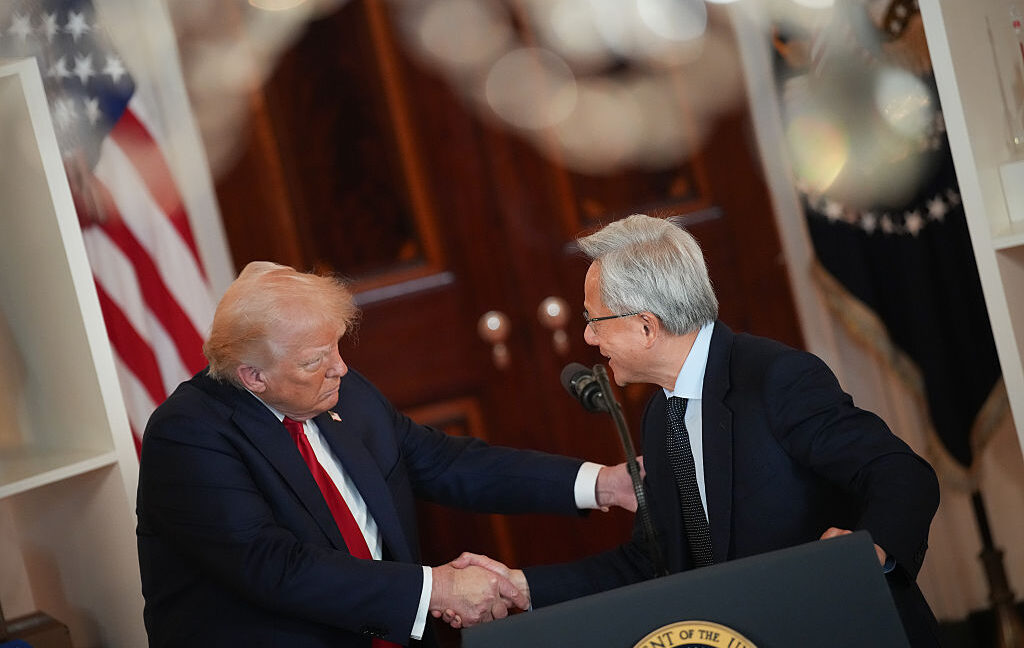
Nvidia Can Sell H200 Chips To China For 25% US Cut

The Trump administration will allow Nvidia to resume selling H200 chips to China, but only if the U.S. government takes a 25% cut. Axios reports: Trump said on Truth Social that he'll allow Nvidia to sell H200 chips -- the generation of chips before its current, more-advanced Blackwell lineup -- to China, with the U.S. government pocketing a quarter of the revenue. He said he would apply "the same approach to AMD, Intel, and other GREAT American Companies." American defense hawks fear that China could use Nvidia chips to advance its military ambitions. Trump said Monday that the sales will be subject to "conditions that allow for continued strong National Security." The blockade remains in place for Nvidia's current generation of Blackwell chips, which will be replaced in the second half of 2026 by even more advanced Rubin chips. Huang said recently he was unsure if China would want the older chips. "We applaud President Trump's decision to allow America's chip industry to compete to support high paying jobs and manufacturing in America," Nvidia said in a statement. "Offering H200 to approved commercial customers, vetted by the Department of Commerce, strikes a thoughtful balance that is great for America."

Read more of this story at Slashdot.

  •  

China's Growth Is Coming at the Rest of the World's Expense

China has contributed less to global growth this year than the U.S. despite Beijing's frequent criticism of protectionism, according to a Wall Street Journal analysis citing new research from Goldman Sachs economists. U.S. imports are up 10% so far this year compared to a year earlier, while China's imports have fallen 3% in dollar terms. Goldman's economists found that the historical relationship between Chinese growth and global growth has turned negative; where 1% more Chinese output once raised world output by 0.2%, the bank now projects. China will grow about 0.6 percentage points faster annually over the next few years while reducing the rest of the world's growth by 0.1 point per year. China's current account surplus could reach 1% of world GDP by 2029, Goldman estimates, larger than any country's since the late 1940s. China now accounts for 17% of global GDP.

Read more of this story at Slashdot.

  •  

The Married Scientists Torn Apart by a Covid Bioweapon Theory

In 2020, a Chinese virologist fled to the United States, aided by allies of President Trump who sought to promote her unproven theories about the origins of Covid-19. Her husband still can’t find her.

© Shannon Stapleton/Reuters

Dr. Li-Meng Yan spoke in 2021 at a summit in Anchorage, Alaska, on early outpatient treatment for the Covid-19 virus.
  •  

Chinese-Linked Hackers Use Backdoor For Potential 'Sabotage,' US and Canada Say

U.S. and Canadian cybersecurity agencies say Chinese-linked actors deployed "Brickstorm" malware to infiltrate critical infrastructure and maintain long-term access for potential sabotage. Reuters reports: The Chinese-linked hacking operations are the latest example of Chinese hackers targeting critical infrastructure, infiltrating sensitive networks and "embedding themselves to enable long-term access, disruption, and potential sabotage," Madhu Gottumukkala, the acting director of the Cybersecurity and Infrastructure Security Agency, said in an advisory signed by CISA, the National Security Agency and the Canadian Centre for Cyber Security. According to the advisory, which was published alongside a more detailed malware analysis report (PDF), the state-backed hackers are using malware known as "Brickstorm" to target multiple government services and information technology entities. Once inside victim networks, the hackers can steal login credentials and other sensitive information and potentially take full control of targeted computers. In one case, the attackers used Brickstorm to penetrate a company in April 2024 and maintained access through at least September 3, 2025, according to the advisory. CISA Executive Assistant Director for Cybersecurity Nick Andersen declined to share details about the total number of government organizations targeted or specifics around what the hackers did once they penetrated their targets during a call with reporters on Thursday. The advisory and malware analysis reports are based on eight Brickstorm samples obtained from targeted organizations, according to CISA. The hackers are deploying the malware against VMware vSphere, a product sold by Broadcom's VMware to create and manage virtual machines within networks. [...] In addition to traditional espionage, the hackers in those cases likely also used the operations to develop new, previously unknown vulnerabilities and establish pivot points to broader access to more victims, Google said at the time.

Read more of this story at Slashdot.

  •  

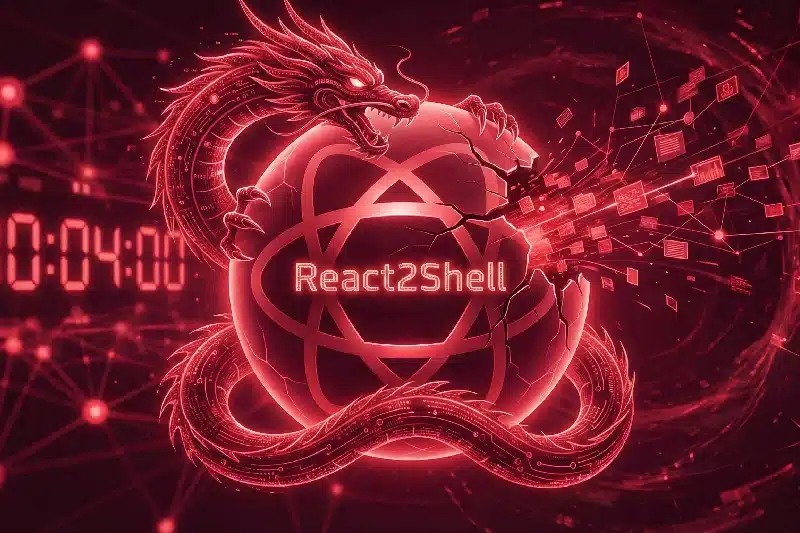
‘React2Shell’ Flaw Exploited by China-Nexus Groups Within Hours of Disclosure, AWS Warns

React2Shell, China

The cycle of vulnerability disclosure and weaponization has shattered records once again. According to a new threat intel from Amazon Web Services (AWS), state-sponsored hacking groups linked to China began actively exploiting a critical vulnerability nicknamed "React2Shell," in popular web development frameworks mere hours after its public release.

The React2Shell vulnerability, tracked as CVE-2025-55182, affects React Server Components in React 19.x and Next.js versions 15.x and 16.x when using the App Router. The flaw carries the maximum severity score of 10.0 on the CVSS scale, enabling unauthenticated remote code execution (RCE).

The Rapid Weaponization Race

The vulnerability was publicly disclosed on Wednesday, December 3. AWS threat intelligence teams, monitoring their MadPot honeypot infrastructure, detected exploitation attempts almost immediately.

The threat actors identified in the flurry of activity are linked to known China state-nexus cyber espionage groups, including:

  • Earth Lamia: Known for targeting financial services, logistics, and government organizations across Latin America, the Middle East, and Southeast Asia.

  • Jackpot Panda: A group typically focused on East and Southeast Asian entities, often aligned with domestic security interests.

"China continues to be the most prolific source of state-sponsored cyber threat activity, with threat actors routinely operationalizing public exploits within hours or days of disclosure," stated an AWS Security Blog post announcing the findings.

The speed of operation showcased how the window between public disclosure and active attack is now measured in minutes, not days.

Also read: China-linked RedNovember Campaign Shows Importance of Patching Edge Devices

Hacker's New Strategy of Speed Over Precision

The AWS analysis also revealed a crucial insight into modern state-nexus tactics that threat groups are prioritizing volume and speed over technical accuracy.

Investigators observed that many attackers were attempting to use readily available, but often flawed, public Proof-of-Concept (PoC) exploits pulled from the GitHub security community. These PoCs frequently demonstrated fundamental technical misunderstandings of the flaw.

Despite the technical inadequacy, threat actors are aggressively throwing these PoCs at thousands of targets in a "volume-based approach," hoping to catch the small percentage of vulnerable configurations. This generates significant noise in logs but successfully maximizes their chances of finding an exploitable weak link.

Furthermore, attackers were not limiting their focus, simultaneously attempting to exploit other recent vulnerabilities, demonstrating a systematic, multi-pronged campaign to compromise targets as quickly as possible.

Call for Patching

While AWS has deployed automated protections for its managed services and customers using AWS WAF, the company is issuing an urgent warning to any entity running React or Next.js applications in their own environments (such as Amazon EC2 or containers).

The primary mitigation remains immediate patching.

"These protections aren't substitutes for patching," AWS warned. Developers must consult the official React and Next.js security advisories and update vulnerable applications immediately to prevent state-sponsored groups from gaining RCE access to their environments.

CVE-2025-55182 enables an attacker to achieve unauthenticated Remote Code Execution (RCE) in vulnerable versions of the following packages:
  • react-server-dom-webpack
  • react-server-dom-parcel
  • react-server-dom-turbopack

AWS' findings states a cautious tale that a vulnerability with a CVSS 10.0 rating in today's times becomes a national security emergency the moment it hits the public domain.

  •  

CISA Warns PRC Hackers Are Targeting VMware vSphere with BRICKSTORM Malware

CISA Warns PRC Hackers Are Targeting VMware vSphere with BRICKSTORM Malware

U.S. and Canadian cybersecurity agencies are warning that China-sponsored threat actors are using BRICKSTORM malware to compromise VMware vSphere environments. “Once compromised, the cyber actors can use their access to the vCenter management console to steal cloned virtual machine (VM) snapshots for credential extraction and create hidden, rogue VMs,” CISA, the NSA and the Canadian Centre for Cyber Security warned in the advisory. Attacks have so far primarily targeted the government and IT sectors, the agencies said.

One PRC BRICKSTORM Malware Attack Lasted More Than a Year

CISA – the U.S. Cybersecurity and Infrastructure Security Agency – said it analyzed eight BRICKSTORM samples obtained from victim organizations, including one where CISA conducted an incident response engagement. While the analyzed samples were for VMware vSphere environments, there are also Windows versions of the malware, the agency said. In the incident response case, CISA said threat actors sponsored by the People’s Republic of China (PRC) gained “long-term persistent access” to the organization’s network in April 2024 and uploaded BRICKSTORM malware to a VMware vCenter server. The threat actors also accessed two domain controllers and an Active Directory Federation Services (ADFS) server, successfully compromising the ADFS server and exporting cryptographic keys. The threat actors used BRICKSTORM malware for persistent access “through at least Sept. 3, 2025,” the agency said. BRICKSTORM is an Executable and Linkable Format (ELF) Go-based backdoor. While samples may differ in function, “all enable cyber actors to maintain stealthy access and provide capabilities for initiation, persistence, and secure command and control (C2),” the agencies said. BRICKSTORM can automatically reinstall or restart if disrupted. It uses DNS-over-HTTPS (DoH) and mimics web server functionality “to blend its communications with legitimate traffic." The malware gives threat actors interactive shell access on the system and allows them to “browse, upload, download, create, delete, and manipulate files.” Some of the malware samples act as a SOCKS proxy to facilitate lateral movement and compromise additional systems.

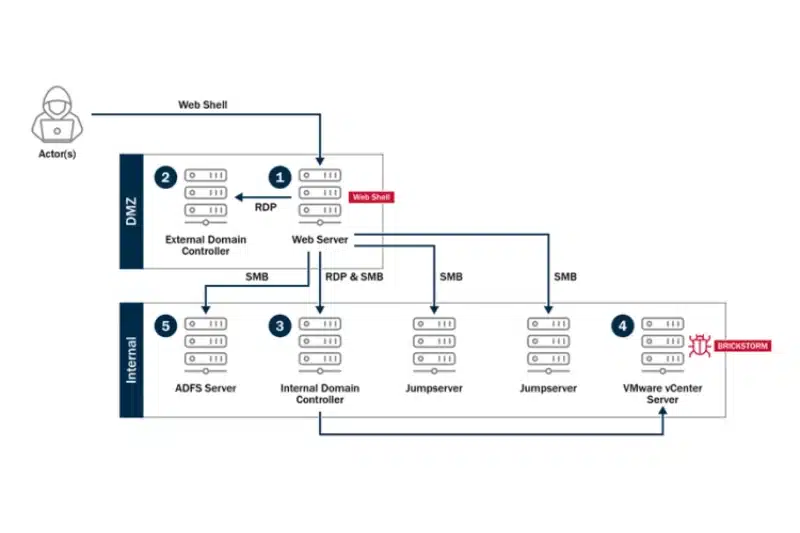
PRC Hackers Got Access via a Web Server

CISA said that in its incident response engagement, the PRC hackers accessed a web server inside the organization’s demilitarized zone (DMZ) on April 11, 2024. The threat actors accessed it through a web shell present on the server. “Incident data does not indicate how they obtained initial access to the web server or when the web shell was implanted,” CISA said. On the same day, the hackers used service account credentials to move laterally using Remote Desktop Protocol (RDP) to a domain controller in the DMZ, where they copied the Active Directory (AD) database (ntds.dit). The following day, the hackers moved laterally from the web server to a domain controller within the internal network using RDP and credentials from a second service account. “It is unknown how they obtained the credentials,” CISA said. The hackers copied the AD database and obtained credentials for a managed service provider (MSP) account. Using the MSP credentials, the hackers moved from the internal domain controller to the VMware vCenter server. From the web server, the PRC hackers also moved laterally using Server Message Block (SMB) to two jump servers and an ADFS server, from which they stole cryptographic keys. After gaining access to vCenter, the hackers elevated privileges using the sudo command, dropped BRICKSTORM malware into the server’s /etc/sysconfig/ directory, and modified the system’s init file in /etc/sysconfig/ to run the malware. The modified init file controls the bootup process on VMware vSphere systems and executes BRICKSTORM, CISA said. The file is typically used to define visual variables for the bootup process. The hackers added an additional line to the script to execute BRICKSTORM from the hard-coded file path /etc/sysconfig/. CISA, NSA, and the Canadian Cyber Centre urged organizations to use the indicators of compromise (IOCs) and detection signatures in their lengthy report to detect BRICKSTORM malware samples. CISA also recommended that organizations block unauthorized DNS-over-HTTPS (DoH) providers and external DoH network traffic; inventory all network edge devices and monitor for suspicious network connectivity, and use network segmentation to restrict network traffic from the DMZ to the internal network.

  •  

A spectacular explosion shows China is close to obtaining reusable rockets

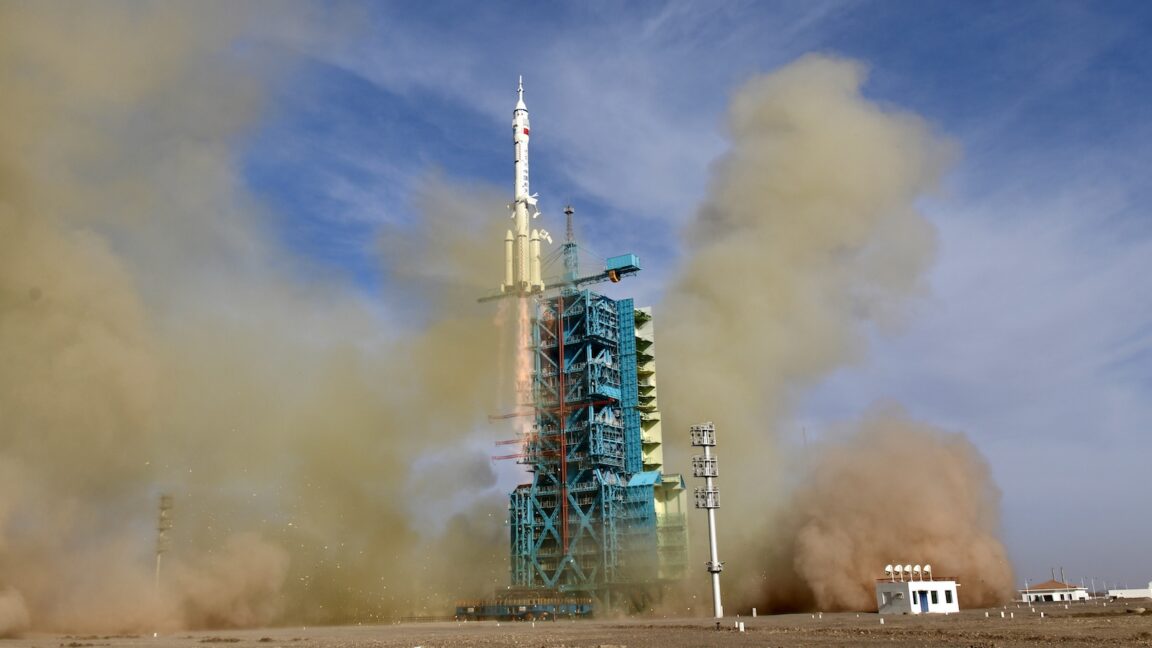
China’s first attempt to land an orbital-class rocket may have ended in a fiery crash, but the company responsible for the mission had a lot to celebrate with the first flight of its new methane-fueled launcher.

LandSpace, a decade-old company based in Beijing, launched its new Zhuque-3 rocket for the first time at 11 pm EST Tuesday (04:0 UTC Wednesday), or noon local time at the Jiuquan launch site in northwestern China.

Powered by nine methane-fueled engines, the Zhuque-3 (Vermillion Bird-3) rocket climbed away from its launch pad with more than 1.7 million pounds of thrust. The 216-foot-tall (66-meter) launcher headed southeast, soaring through clear skies before releasing its first stage booster about two minutes into the flight.

Read full article

Comments

© LandSpace

  •  

This Chinese company could become the country’s first to land a reusable rocket

There’s a race in China among several companies vying to become the next to launch and land an orbital-class rocket, and the starting gun could go off as soon as tonight.

LandSpace, one of several maturing Chinese rocket startups, is about to launch the first flight of its medium-lift Zhuque-3 rocket. Liftoff could happen around 11 pm EST tonight (04:00 UTC Wednesday), or noon local time at the Jiuquan Satellite Launch Center in northwestern China.

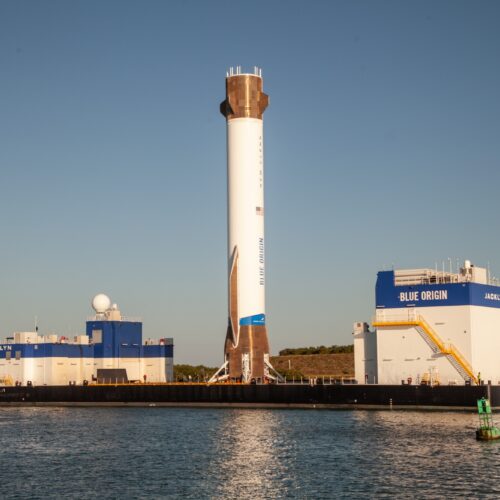
Airspace warning notices advising pilots to steer clear of the rocket’s flight path suggest LandSpace has a launch window of about two hours. When it lifts off, the Zhuque-3 (Vermillion Bird-3) rocket will become the largest commercial launch vehicle ever flown in China. What’s more, LandSpace will become the first Chinese launch provider to attempt a landing of its first stage booster, using the same tried-and-true return method pioneered by SpaceX and, more recently, Blue Origin in the United States.
Read full article

Comments

© LandSpace

  •  

Huawei and Chinese Surveillance

This quote is from House of Huawei: The Secret History of China’s Most Powerful Company.

“Long before anyone had heard of Ren Zhengfei or Huawei, Wan Runnan had been China’s star entrepreneur in the 1980s, with his company, the Stone Group, touted as “China’s IBM.” Wan had believed that economic change could lead to political change. He had thrown his support behind the pro-democracy protesters in 1989. As a result, he had to flee to France, with an arrest warrant hanging over his head. He was never able to return home. Now, decades later and in failing health in Paris, Wan recalled something that had happened one day in the late 1980s, when he was still living in Beijing.

Local officials had invited him to dinner.

This was unusual. He was usually the one to invite officials to dine, so as to curry favor with the show of hospitality. Over the meal, the officials told Wan that the Ministry of State Security was going to send agents to work undercover at his company in positions dealing with international relations. The officials cast the move to embed these minders as an act of protection for Wan and the company’s other executives, a security measure that would keep them from stumbling into unseen risks in their dealings with foreigners. “You have a lot of international business, which raises security issues for you. There are situations that you don’t understand,” Wan recalled the officials telling him. “They said, ‘We are sending some people over. You can just treat them like regular employees.'”

Wan said he knew that around this time, state intelligence also contacted other tech companies in Beijing with the same request. He couldn’t say what the situation was for Huawei, which was still a little startup far to the south in Shenzhen, not yet on anyone’s radar. But Wan said he didn’t believe that Huawei would have been able to escape similar demands. “That is a certainty,” he said.

“Telecommunications is an industry that has to do with keeping control of a nation’s lifeline…and actually in any system of communications, there’s a back-end platform that could be used for eavesdropping.”

It was a rare moment of an executive lifting the cone of silence surrounding the MSS’s relationship with China’s high-tech industry. It was rare, in fact, in any country. Around the world, such spying operations rank among governments’ closest-held secrets. When Edward Snowden had exposed the NSA’s operations abroad, he’d ended up in exile in Russia. Wan, too, might have risked arrest had he still been living in China.

Here are two book reviews.

  •  

China launches an emergency lifeboat to bring three astronauts back to Earth

An unpiloted Chinese spacecraft launched late Monday and linked up with the country’s Tiangong space station a few hours later, providing a lifeboat for three astronauts stuck in orbit without a safe ride home.

A Long March 2F rocket fired its engines and lifted off with the Shenzhou 22 spacecraft, carrying cargo instead of a crew, at 11:11 pm EST Monday (04:11 UTC Tuesday). The spacecraft docked with the Tiangong station nearly 250 miles (400 kilometers) above the Earth about three-and-a-half hours later.

Chinese engineers worked fast to move up the launch of the Shenzhou 22, originally set to fly next year. On November 4, astronauts discovered one of the two crew ferry ships docked to the Tiangong station had a damaged window, likely from an impact with a small fragment of space junk. The crew members used a microscope to photograph the defect from different angles, confirming a small triangular area with a crack, Zhou Jianping, chief designer of China’s human spaceflight program, told Chinese state media.

Read full article

Comments

© VCG/VCG via Getty Images

  •  

The Forgotten Nuclear Weapon Tests That Trump May Seek to Revive

Hydronuclear experiments, barred globally since the 1990s, may lie behind President Trump’s call last month for the United States to resume its testing of nuclear bombs.

© Los Alamos National Laboratory

Technicians in an underground test site in Nevada secured the door before execution of the 2021 Red Sage-Nightshade experiment, a subcritical nuclear test.
  •  

Rocket Report: SpaceX’s next-gen booster fails; Pegasus will fly again

Welcome to Edition 8.20 of the Rocket Report! For the second week in a row, Blue Origin dominated the headlines with news about its New Glenn rocket. After a stunning success November 13 with the launch and landing of the second New Glenn rocket, Jeff Bezos’ space company revealed a roadmap this week showing how engineers will supercharge the vehicle with more engines. Meanwhile, in South Texas, SpaceX took a step toward the first flight of the next-generation Starship rocket. There will be no Rocket Report next week due to the Thanksgiving holiday in the United States. We look forward to resuming delivery of all the news in space lift the first week of December.

As always, we welcome reader submissions. If you don’t want to miss an issue, please subscribe using the box below (the form will not appear on AMP-enabled versions of the site). Each report will include information on small-, medium-, and heavy-lift rockets, as well as a quick look ahead at the next three launches on the calendar.

Northrop’s Pegasus rocket wins a rare contract. A startup named Katalyst Space Technologies won a $30 million contract from NASA in August to build a robotic rescue mission for the agency’s Neil Gehrels Swift Observatory in low-Earth orbit. Swift, in space since 2004, is a unique instrument designed to study gamma-ray bursts, the most powerful explosions in the Universe. The spacecraft lacks a propulsion system and its orbit is subject to atmospheric drag, and NASA says it is “racing against the clock” to boost Swift’s orbit and extend its lifetime before it falls back to Earth. On Wednesday, Katalyst announced it selected Northrop Grumman’s air-launched Pegasus XL rocket to send the rescue craft into orbit next year.

Read full article

Comments

© Manuel Mazzanti/NurPhoto via Getty Images

  •  

Scam USPS and E-Z Pass Texts and Websites

Google has filed a complaint in court that details the scam:

In a complaint filed Wednesday, the tech giant accused “a cybercriminal group in China” of selling “phishing for dummies” kits. The kits help unsavvy fraudsters easily “execute a large-scale phishing campaign,” tricking hordes of unsuspecting people into “disclosing sensitive information like passwords, credit card numbers, or banking information, often by impersonating well-known brands, government agencies, or even people the victim knows.”

These branded “Lighthouse” kits offer two versions of software, depending on whether bad actors want to launch SMS and e-commerce scams. “Members may subscribe to weekly, monthly, seasonal, annual, or permanent licenses,” Google alleged. Kits include “hundreds of templates for fake websites, domain set-up tools for those fake websites, and other features designed to dupe victims into believing they are entering sensitive information on a legitimate website.”

Google’s filing said the scams often begin with a text claiming that a toll fee is overdue or a small fee must be paid to redeliver a package. Other times they appear as ads—­sometimes even Google ads, until Google detected and suspended accounts—­luring victims by mimicking popular brands. Anyone who clicks will be redirected to a website to input sensitive information; the sites often claim to accept payments from trusted wallets like Google Pay.

  •  

The Global Climate Leadership Vacuum

The United States is largely absent from the United Nations climate negotiations in Brazil. So who is stepping up?

© Fernando Llano/Associated Press

A lobby of the COP30 United Nations climate summit in Belém, Brazil.
  •  

Solvay of Belgium Creates Rare Earths Deals With U.S.

The contracts are the latest sign of how Europe is lagging the United States in the race to break China’s chokehold on rare earths.

© Dmitry Kostyukov for The New York Times

Solvay’s rare earths processing plant in La Rochelle, France. The company signed two deals to send rare earths to the United States.
  •