Reading view

Disappointing Oracle results knock $80bn off value amid AI bubble fears

Weaker-than-forecast quarterly data for Larry Ellison’s tech company shows slowdown in revenue growth and big rise in spending

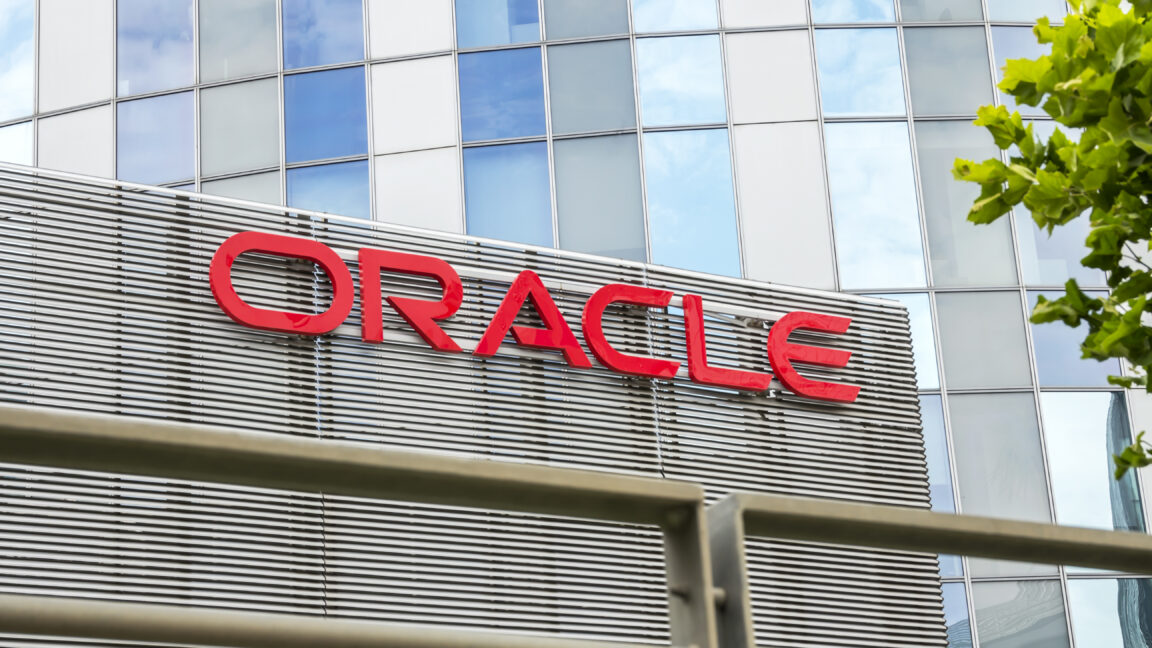
Oracle’s shares tumbled 15% on Thursday in response to the company’s quarterly financial results, disclosed the day before.

Roughly $80bn vanish from the value of the business software company co-founded by Donald Trump ally Larry Ellison, falling from $630bn (£470bn) to $550bn and fuelling fears of a bubble in artificial intelligence-related stocks. Shares in the chipmaker Nvidia, seen as a bellwether for the AI boom, fell after Oracle’s.

Continue reading...

© Photograph: Sundry Photography/Alamy

© Photograph: Sundry Photography/Alamy

© Photograph: Sundry Photography/Alamy

  •  

Oracle shares slide on $15B increase in data center spending

Oracle stock dropped after it reported disappointing revenues on Wednesday alongside a $15 billion increase in its planned spending on data centers this year to serve artificial intelligence groups.

Shares in Larry Ellison’s database company fell 11 percent in pre-market trading on Thursday after it reported revenues of $16.1 billion in the last quarter, up 14 percent from the previous year, but below analysts’ estimates.

Oracle raised its forecast for capital expenditure this financial year by more than 40 percent to $50 billion. The outlay, largely directed to building data centers, climbed to $12 billion in the quarter, above expectations of $8.4 billion.

Read full article

Comments

© Mesut Dogan

  •  

Green biotech firms to open factories at Grangemouth; Mexico imposes tariffs of up to 50% – business live

Rolling coverage of the latest economic and financial news

In the energy sector, Russia’s revenues from exports of crude oil and refined products has fallen to its lowest level since the invasion of Ukraine in 2022.

The International Energy Agency has reported this morning that Moscow’s sales of fossil fuels fell again in November due to lower export volumes and weaker prices.

These brighter prospects extend to our 2026 forecast, which we have upgraded by 90 kb/d, to 860 kb/d y-o-y.

“We need to ask who is setting the agenda for the UK’s future with AI.”

“In the absence of independent regulation or scrutiny, we’re at the mercy of technology companies’ commercial interests aligning with what the public want.”

Continue reading...

© Photograph: Murdo MacLeod/The Guardian

© Photograph: Murdo MacLeod/The Guardian

© Photograph: Murdo MacLeod/The Guardian

  •  

In 1995, a Netscape employee wrote a hack in 10 days that now runs the Internet

Thirty years ago today, Netscape Communications and Sun Microsystems issued a joint press release announcing JavaScript, an object scripting language designed for creating interactive web applications. The language emerged from a frantic 10-day sprint at pioneering browser company Netscape, where engineer Brendan Eich hacked together a working internal prototype during May 1995.

While the JavaScript language didn’t ship publicly until that September and didn’t reach a 1.0 release until March 1996, the descendants of Eich’s initial 10-day hack now run on approximately 98.9 percent of all websites with client-side code, making JavaScript the dominant programming language of the web. It’s wildly popular; beyond the browser, JavaScript powers server backends, mobile apps, desktop software, and even some embedded systems. According to several surveys, JavaScript consistently ranks among the most widely used programming languages in the world.

In crafting JavaScript, Netscape wanted a scripting language that could make webpages interactive, something lightweight that would appeal to web designers and non-professional programmers. Eich drew from several influences: The syntax looked like a trendy new programming language called Java to satisfy Netscape management, but its guts borrowed concepts from Scheme, a language Eich admired, and Self, which contributed JavaScript’s prototype-based object model.

Read full article

Comments

© Netscape / Benj Edwards

  •  

CISA Adds Oracle Identity Manager Vulnerability to KEV Database

Oracle Identity Manager vulnerability RCE code

The U.S. Cybersecurity and Infrastructure Security Agency (CISA) has added an Oracle Identity Manager vulnerability to its Known Exploited Vulnerabilities database after the SANS Internet Storm Center reported attack attempts on the flaw. CVE-2025-61757 is a 9.8-severity Missing Authentication for Critical Function vulnerability in the Identity Manager product of Oracle Fusion Middleware that was patched as part of Oracle’s October update and detailed in a blog post last week by Searchlight Cyber, which had discovered the vulnerability and reported it to Oracle. Following the Searchlight post, the SANS Internet Storm Center looked for exploitation attempts on the vulnerability and found evidence as far back as August 30. “Given the complexity of some previous Oracle Access Manager vulnerabilities, this one is somewhat trivial and easily exploitable by threat actors,” Searchlight Cyber said in its post. Cyble threat intelligence researchers had flagged the vulnerability as important following Oracle’s October update.

Oracle Identity Manager Vulnerability CVE-2025-61757 Explained

CVE-2025-61757 affects the REST WebServices component of Identity Manager in Oracle Fusion Middleware versions 12.2.1.4.0 and 14.1.2.1.0. The easily exploitable pre-authentication remote code execution (RCE) vulnerability could allow an unauthenticated attacker with network access via HTTP to compromise Identity Manager. Successful attacks of the vulnerability can result in takeover of Identity Manager. The Searchlight researchers began looking for vulnerabilities after an Oracle Cloud breach earlier this year exploited a host that Oracle had failed to patch for CVE-2021-35587. In the source code for the Oracle Identity Governance Suite, the researchers found that that the application compiles Groovy script but doesn’t execute it. Taking inspiration from a previous Java capture the flag (CTF) event, they noted that Java annotations are executed at compile time, not at run time, so they are free from the constraints of the Java security manager and can call system functions and read files just like regular Java code. “Since Groovy is built on top of Java, we felt we should be able to write a Groovy annotation that executes at compile time, even though the compiled code is not actually run,” they said. After experimenting with the code, they achieved RCE. “The vulnerability our team discovered follows a familiar pattern in Java: filters designed to restrict authentication often contain easy-to-exploit authentication bypass flaws,” the Searchlight researchers said. “Logical flaws in how Java interprets request URIs are a gift that continues giving when paired with matrix parameters. “Participating in CTFs, or even staying up to date with research in the CTF space, continues to pay dividends, giving us unique insights into how we can often turn a seemingly unexploitable bug into an exploitable one.”

Oracle EBS Victims Climb Past 100

Meanwhile, the number of victims from the CL0P ransomware group’s exploitation of Oracle E-Business Suite vulnerabilities has now climbed past 100 after the threat group claimed additional victims late last week. Mazda and Cox Enterprises are the latest to confirm being breached, bringing the confirmed total to seven so far. Mazda said it was able to contain the breach without system or data impact, but Cox said the personal data of more than 9,000 was exposed.

  •