Reading view

Disappointing Oracle results knock $80bn off value amid AI bubble fears

Weaker-than-forecast quarterly data for Larry Ellison’s tech company shows slowdown in revenue growth and big rise in spending

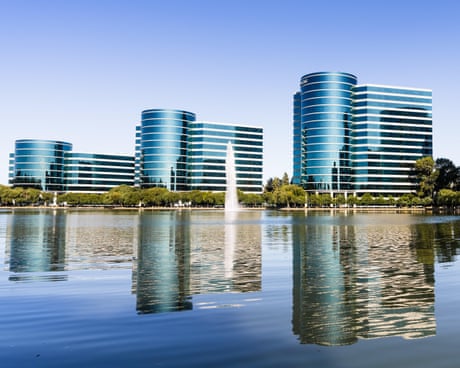
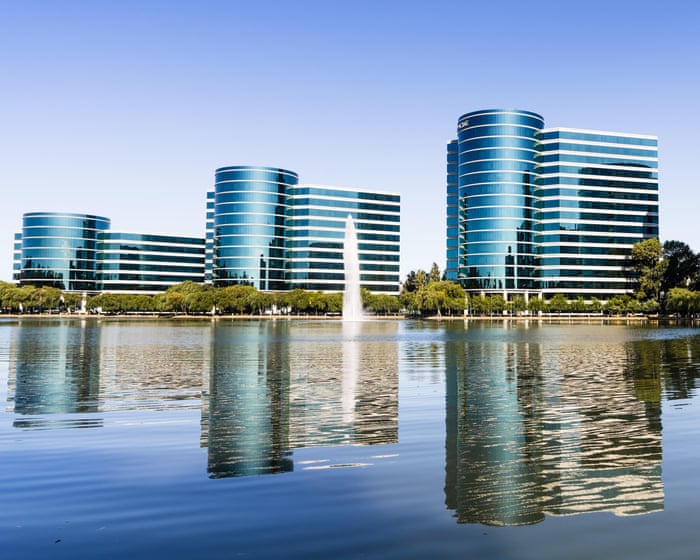
Oracle’s shares tumbled 15% on Thursday in response to the company’s quarterly financial results, disclosed the day before.

Roughly $80bn vanish from the value of the business software company co-founded by Donald Trump ally Larry Ellison, falling from $630bn (£470bn) to $550bn and fuelling fears of a bubble in artificial intelligence-related stocks. Shares in the chipmaker Nvidia, seen as a bellwether for the AI boom, fell after Oracle’s.

Continue reading...

© Photograph: Sundry Photography/Alamy

© Photograph: Sundry Photography/Alamy

© Photograph: Sundry Photography/Alamy

  •  

Microsoft drops AI sales targets in half after salespeople miss their quotas

Microsoft has lowered sales growth targets for its AI agent products after many salespeople missed their quotas in the fiscal year ending in June, according to a report Wednesday from The Information. The adjustment is reportedly unusual for Microsoft, and it comes after the company missed a number of ambitious sales goals for its AI offerings.

AI agents are specialized implementations of AI language models designed to perform multistep tasks autonomously rather than simply responding to single prompts. So-called “agentic” features have been central to Microsoft’s 2025 sales pitch: At its Build conference in May, the company declared that it has entered “the era of AI agents.”

The company has promised customers that agents could automate complex tasks, such as generating dashboards from sales data or writing customer reports. At its Ignite conference in November, Microsoft announced new features like Word, Excel, and PowerPoint agents in Microsoft 365 Copilot, along with tools for building and deploying agents through Azure AI Foundry and Copilot Studio. But as the year draws to a close, that promise has proven harder to deliver than the company expected.

Read full article

Comments

© Wong Yu Liang via Getty Images

  •  

Google tells employees it must double capacity every 6 months to meet AI demand

While AI bubble talk fills the air these days, with fears of overinvestment that could pop at any time, something of a contradiction is brewing on the ground: Companies like Google and OpenAI can barely build infrastructure fast enough to fill their AI needs.

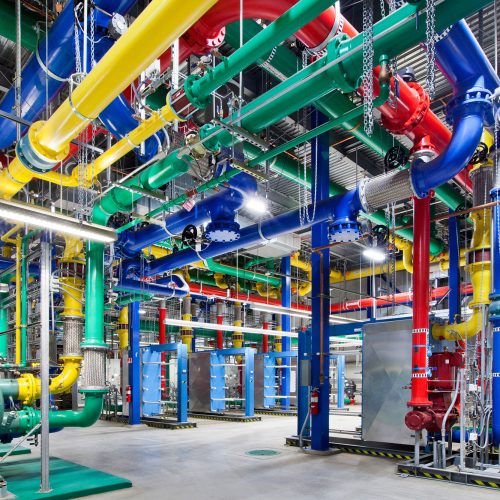
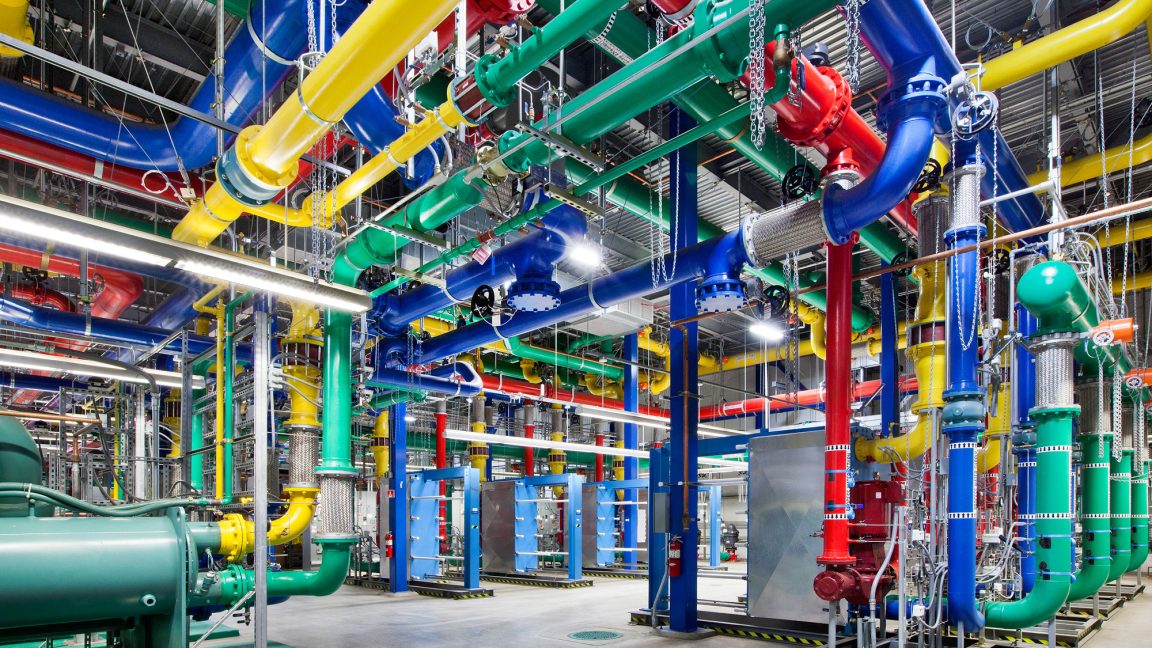
During an all-hands meeting earlier this month, Google’s AI infrastructure head Amin Vahdat told employees that the company must double its serving capacity every six months to meet demand for artificial intelligence services, reports CNBC. The comments show a rare look at what Google executives are telling its own employees internally. Vahdat, a vice president at Google Cloud, presented slides to its employees showing the company needs to scale “the next 1000x in 4-5 years.”

While a thousandfold increase in compute capacity sounds ambitious by itself, Vahdat noted some key constraints: Google needs to be able to deliver this increase in capability, compute, and storage networking “for essentially the same cost and increasingly, the same power, the same energy level,” he told employees during the meeting. “It won’t be easy but through collaboration and co-design, we’re going to get there.”

Read full article

Comments

© Google

  •  

New Attacks Against Secure Enclaves

Encryption can protect data at rest and data in transit, but does nothing for data in use. What we have are secure enclaves. I’ve written about this before:

Almost all cloud services have to perform some computation on our data. Even the simplest storage provider has code to copy bytes from an internal storage system and deliver them to the user. End-to-end encryption is sufficient in such a narrow context. But often we want our cloud providers to be able to perform computation on our raw data: search, analysis, AI model training or fine-tuning, and more. Without expensive, esoteric techniques, such as secure multiparty computation protocols or homomorphic encryption techniques that can perform calculations on encrypted data, cloud servers require access to the unencrypted data to do anything useful...

The post New Attacks Against Secure Enclaves appeared first on Security Boulevard.

  •  

New Attacks Against Secure Enclaves

Encryption can protect data at rest and data in transit, but does nothing for data in use. What we have are secure enclaves. I’ve written about this before:

Almost all cloud services have to perform some computation on our data. Even the simplest storage provider has code to copy bytes from an internal storage system and deliver them to the user. End-to-end encryption is sufficient in such a narrow context. But often we want our cloud providers to be able to perform computation on our raw data: search, analysis, AI model training or fine-tuning, and more. Without expensive, esoteric techniques, such as secure multiparty computation protocols or homomorphic encryption techniques that can perform calculations on encrypted data, cloud servers require access to the unencrypted data to do anything useful.

Fortunately, the last few years have seen the advent of general-purpose, hardware-enabled secure computation. This is powered by special functionality on processors known as trusted execution environments (TEEs) or secure enclaves. TEEs decouple who runs the chip (a cloud provider, such as Microsoft Azure) from who secures the chip (a processor vendor, such as Intel) and from who controls the data being used in the computation (the customer or user). A TEE can keep the cloud provider from seeing what is being computed. The results of a computation are sent via a secure tunnel out of the enclave or encrypted and stored. A TEE can also generate a signed attestation that it actually ran the code that the customer wanted to run.

Secure enclaves are critical in our modern cloud-based computing architectures. And, of course, they have vulnerabilities:

The most recent attack, released Tuesday, is known as TEE.fail. It defeats the latest TEE protections from all three chipmakers. The low-cost, low-complexity attack works by placing a small piece of hardware between a single physical memory chip and the motherboard slot it plugs into. It also requires the attacker to compromise the operating system kernel. Once this three-minute attack is completed, Confidential Compute, SEV-SNP, and TDX/SDX can no longer be trusted. Unlike the Battering RAM and Wiretap attacks from last month—which worked only against CPUs using DDR4 memory—TEE.fail works against DDR5, allowing them to work against the latest TEEs.

Yes, these attacks require physical access. But that’s exactly the threat model secure enclaves are supposed to secure against.

  •  

Amazon’s Profit Is Up 38% on Strong Performance

After unexpectedly strong sales and profits across its consumer and cloud businesses, the tech giant said another strong quarter might be ahead.

© AJ Mast for The New York Times

Amazon’s cloud computing complex in New Carlisle, Ind. The company reported that sales for that division were up 20 percent from a year earlier.
  •