Reading view

Trump tries to block state AI laws himself after Congress decided not to

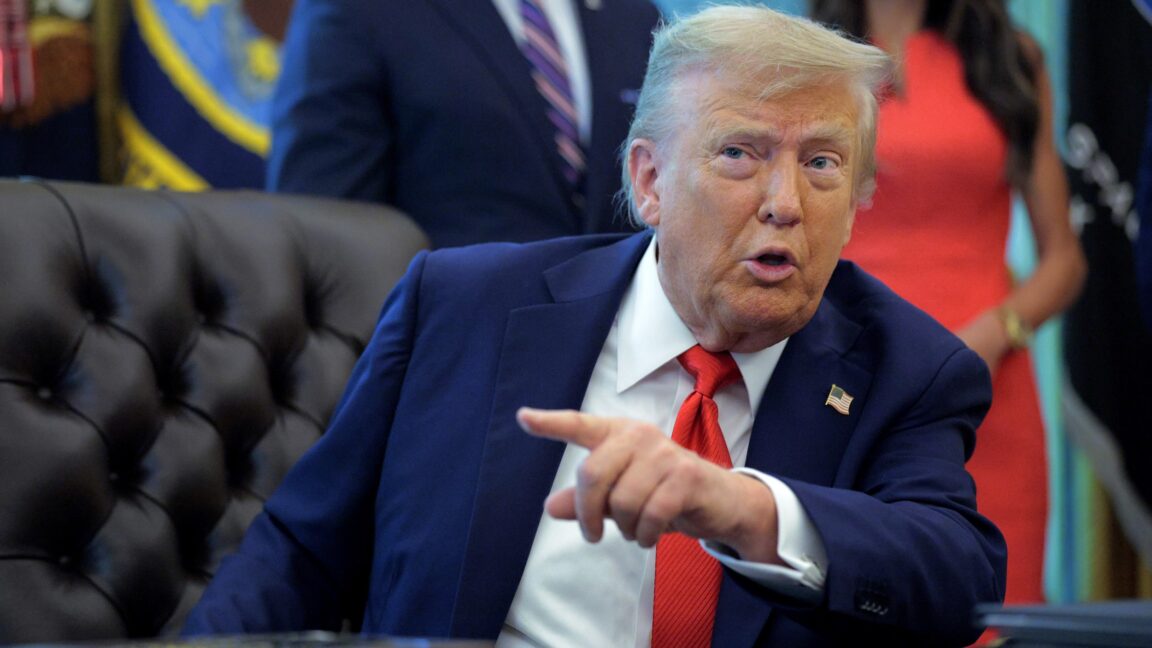
President Trump issued an executive order yesterday attempting to thwart state AI laws, saying that federal agencies must fight state laws because Congress hasn’t yet implemented a national AI standard. Trump’s executive order tells the Justice Department, Commerce Department, Federal Communications Commission, Federal Trade Commission, and other federal agencies to take a variety of actions.

“My Administration must act with the Congress to ensure that there is a minimally burdensome national standard—not 50 discordant State ones. The resulting framework must forbid State laws that conflict with the policy set forth in this order… Until such a national standard exists, however, it is imperative that my Administration takes action to check the most onerous and excessive laws emerging from the States that threaten to stymie innovation,” Trump’s order said. The order claims that state laws, such as one passed in Colorado, “are increasingly responsible for requiring entities to embed ideological bias within models.”

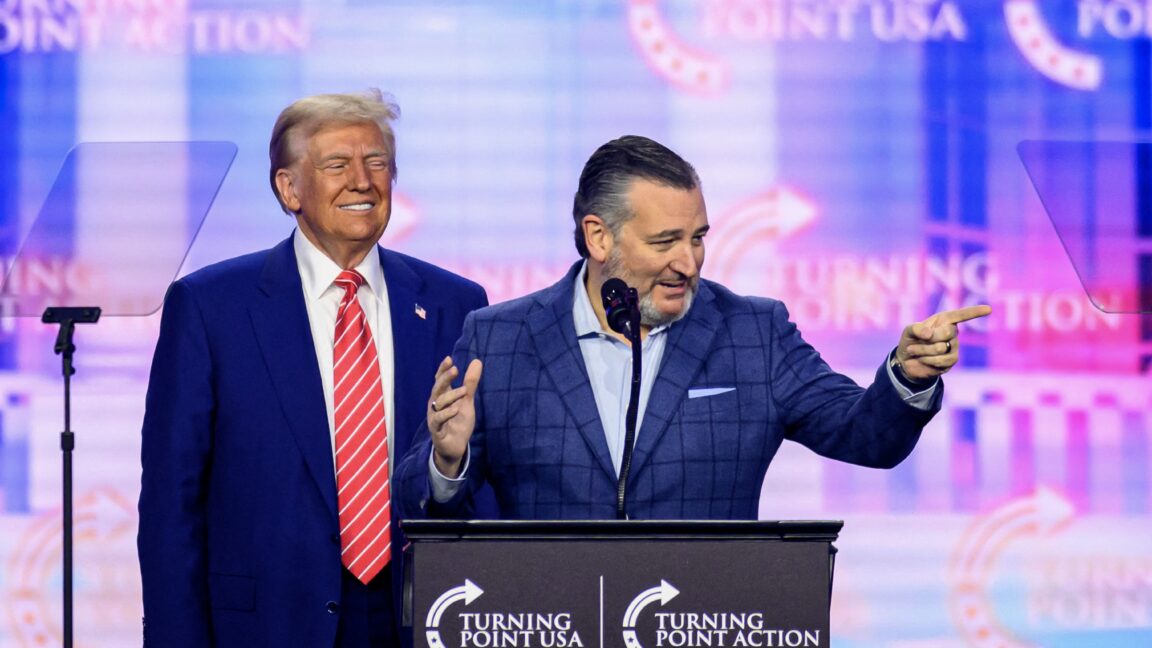
Congressional Republicans recently decided not to include a Trump-backed plan to block state AI laws in the National Defense Authorization Act (NDAA), although it could be included in other legislation. Sen. Ted Cruz (R-Texas) has also failed to get congressional backing for legislation that would punish states with AI laws.
Read full article

Comments

© Getty Images | Chip Somodevilla
  •  

After NPR and PBS defunding, FCC receives call to take away station licenses

A conservative group yesterday urged the Federal Communications Commission to take licenses away from NPR and PBS stations and let other entities use the spectrum. The request came from the Center for American Rights (CAR), a nonprofit law firm that has played a prominent role in the news-distortion investigations spearheaded by FCC Chairman Brendan Carr.

“In the wake of the wind-down of the Corporation for Public Broadcasting and the end of federal funding for NPR and PBS, the Center respectfully suggests that the Commission open an inquiry that looks at the future of ‘public’ broadcasting in that new environment,” a Center for American Rights filing said.

The CPB is set to shut down after Congress approved President Trump’s request to rescind its funding. The Center for American Rights said the CPB shutdown should be used as an opportunity to reassign spectrum used by NPR and PBS stations to other entities.

Read full article

Comments

© Getty Images | tarabird

  •  

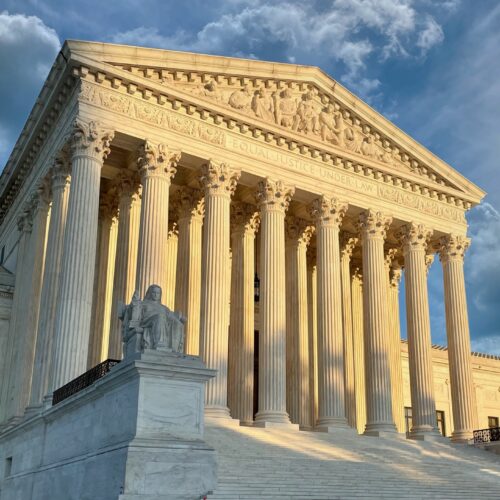
Supreme Court appears likely to approve Trump’s firing of FTC Democrat

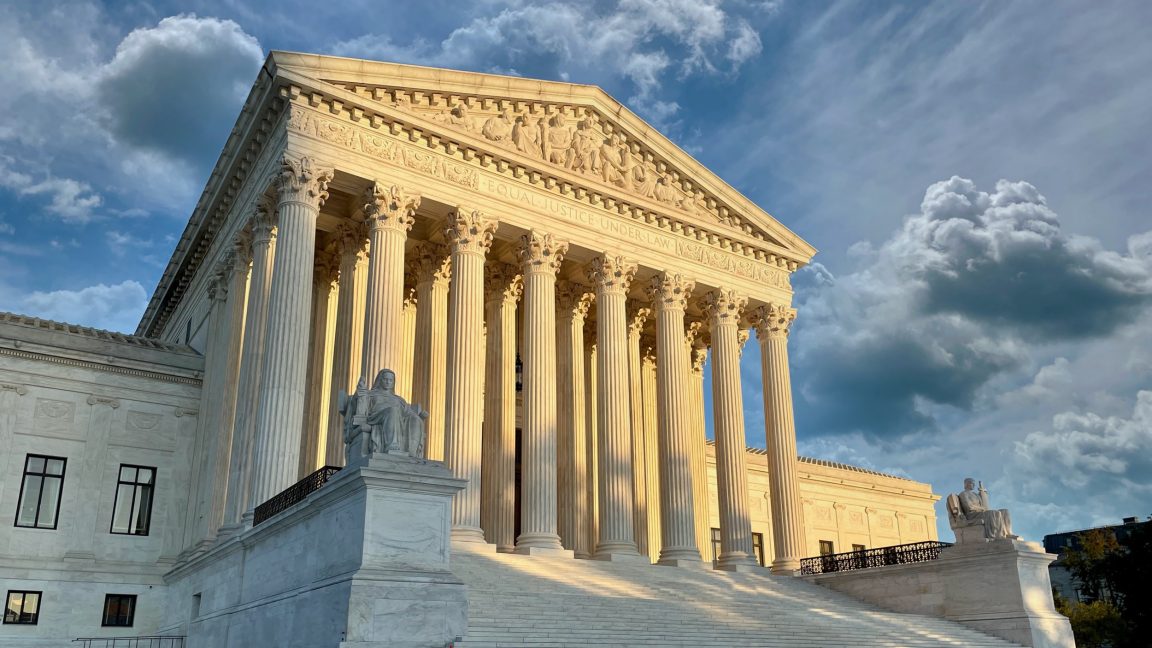
The Supreme Court’s conservative justices appear ready to overturn a 90-year-old precedent that said the president cannot fire a Federal Trade Commission member without cause. A ruling for Trump would give him more power over the FTC and potentially other independent agencies such as the Federal Communications Commission.

Former FTC Commissioner Rebecca Kelly Slaughter, a Democrat, sued Trump after he fired both Democrats from the commission in March. Slaughter’s case rests largely on the 1935 ruling in Humphrey’s Executor v. United States, in which the Supreme Court unanimously held that the president can only remove FTC commissioners for inefficiency, neglect of duty, or malfeasance in office.

Chief Justice John Roberts said during yesterday’s oral arguments that Humphrey’s Executor is a “dried husk” despite being the “primary authority” that Slaughter’s legal team is relying on. Roberts said the court’s 2020 ruling in Seila Law made it “pretty clear… that Humphrey’s Executor is just a dried husk of whatever people used to think it was because, in the opinion itself, it described the powers of the agency it was talking about, and they’re vanishingly insignificant, have nothing to do with what the FTC looks like today.”

Read full article

Comments

© Getty Images | Douglas Rissing

  •  

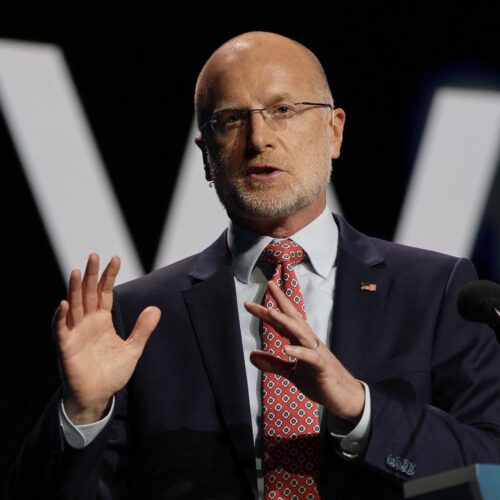
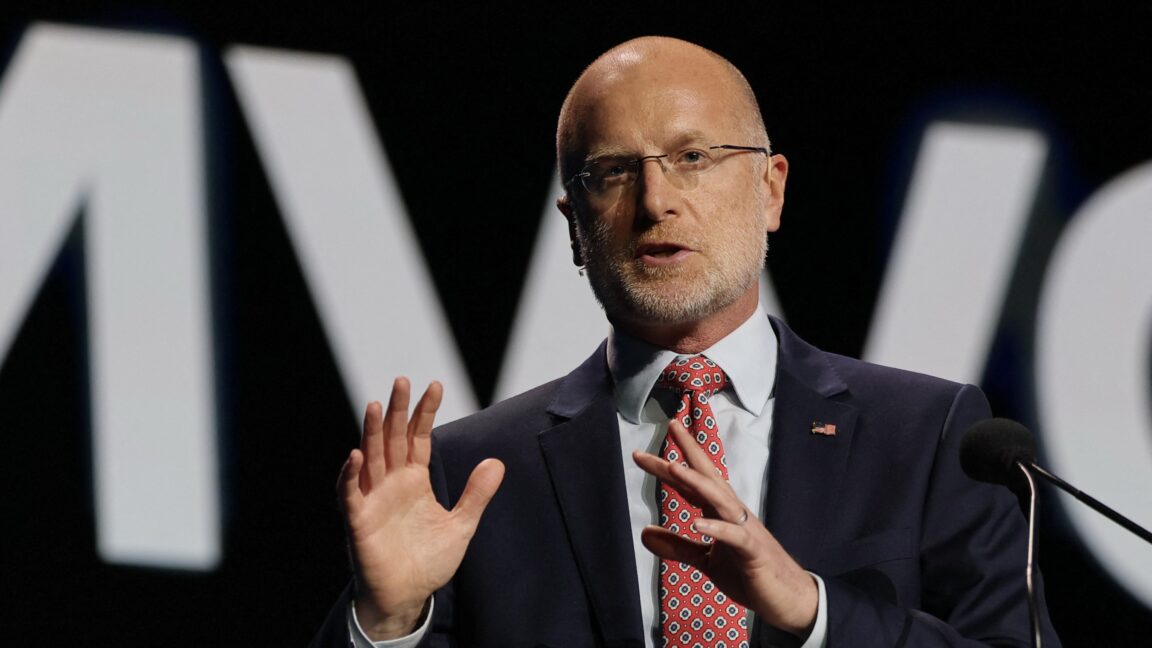
FCC boss Brendan Carr claims another victory over DEI as AT&T drops programs

AT&T told the Federal Communications Commission that it has eliminated DEI (diversity, equity, and inclusion) policies and programs, complying with demands from Chairman Brendan Carr.

The FCC boss has refused to approve mergers and other large transactions involving companies that don’t agree to drop support for DEI. On Monday, AT&T filed a letter disowning its former DEI initiatives in the FCC docket for its $1 billion purchase of US Cellular spectrum licenses.

“We have closely followed the recent Executive Orders, Supreme Court rulings, and guidance issued by the US Equal Employment Opportunity Commission and have adjusted our employment and business practices to ensure that they comply with all applicable laws and related requirements, including ending DEI-related policies as described below, not just in name but in substance,” AT&T’s letter to Carr said.

Read full article

Comments

© Getty Images | Lluis Gene

  •  

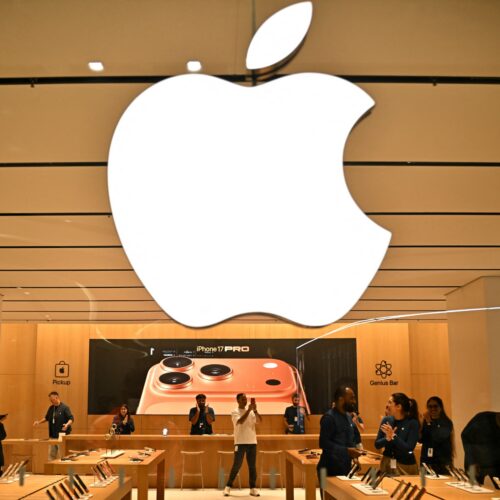
India orders device makers to put government-run security app on all phones

Apple reportedly won’t comply with a government order in India to preload iPhones with a state-run app that can track and block lost or stolen phones via a device’s International Mobile Equipment Identity (IMEI) code. While the government describes it as a tool to help consumers, privacy advocates say it could easily be repurposed for surveillance.

Reuters reported today, citing three anonymous sources, that “Apple does not plan to comply with a mandate to preload its smartphones with a state-owned cyber safety app and will convey its concerns to New Delhi.” Reuters noted that the government mandate has “sparked surveillance concerns and a political uproar.”

The government’s Sanchar Saathi (“Communication Partner”) app is billed as a consumer tool for reporting suspected fraud communications, verifying the genuineness of a phone, and blocking lost or stolen handsets. The app can already be installed by users as it is available on the Apple and Google Play app stores, but the government wants device makers such as Apple, Google, Samsung, and Xiaomi to load phones with the app before they are shipped.

Read full article

Comments

© Getty Images | Idrees Mohammed

  •  

Supreme Court hears case that could trigger big crackdown on Internet piracy

Supreme Court justices expressed numerous concerns today in a case that could determine whether Internet service providers must terminate the accounts of broadband users accused of copyright infringement. Oral arguments were held in the case between cable Internet provider Cox Communications and record labels led by Sony.

Some justices were skeptical of arguments that ISPs should have no legal obligation under the Digital Millennium Copyright Act (DMCA) to terminate an account when a user’s IP address has been repeatedly flagged for downloading pirated music. But justices also seemed hesitant to rule in favor of record labels, with some of the debate focusing on how ISPs should handle large accounts like universities where there could be tens of thousands of users.

Justice Sonia Sotomayor chided Cox for not doing more to fight infringement.

Read full article

Comments

© Getty Images | Ilmar Idiyatullin

  •  

Tech firm’s new CTO gets indicted; company then claims he was never CTO

When four people were arrested and charged with a conspiracy to illegally export Nvidia chips to China, there was an interesting side note. One of the arrestees, Alabama resident Brian Raymond, was the chief technology officer of an AI company called Corvex.

Or was he? Corvex certainly seemed to think that Raymond was its CTO in the days before his indictment. Corvex named Raymond as its CTO in a press release and filings to the Securities and Exchange Commission, which detailed plans for a merger with Movano Health.

But once Raymond was arrested, Corvex told media outlets that it had never completed the process of hiring him as an employee. While someone could technically be a CTO as a contractor and not a regular employee, a company spokesperson subsequently claimed to Ars that Raymond had never been the CTO.

Read full article

Comments

© Corvex

  •  

Tech company CTO and others indicted for exporting Nvidia chips to China

The US crackdown on chip exports to China has continued with the arrests of four people accused of a conspiracy to illegally export Nvidia chips. Two US citizens and two nationals of the People’s Republic of China (PRC), all of whom live in the US, were charged in an indictment unsealed on Wednesday in US District Court for the Middle District of Florida.

The indictment alleges a scheme to send Nvidia “GPUs to China by falsifying paperwork, creating fake contracts, and misleading US authorities,” John Eisenberg, assistant attorney general for the Justice Department’s National Security Division, said in a press release yesterday.

The four arrestees are Hon Ning Ho (aka Mathew Ho), a US citizen who was born in Hong Kong and lives in Tampa, Florida; Brian Curtis Raymond, a US citizen who lives in Huntsville, Alabama; Cham Li (aka Tony Li), a PRC national who lives in San Leandro, California; and Jing Chen (aka Harry Chen), a PRC national who lives in Tampa on an F-1 non-immigrant student visa.

Read full article

Comments

© Getty Images | VCG

  •  

Trump revives unpopular Ted Cruz plan to punish states that impose AI laws

President Trump is considering an executive order that would require the federal government to file lawsuits against states with AI laws, and prevent states with AI laws from obtaining broadband funding.

The draft order, “Eliminating State Law Obstruction of National AI Policy,” would order the attorney general to “establish an AI Litigation Task Force whose sole responsibility shall be to challenge State AI laws, including on grounds that such laws unconstitutionally regulate interstate commerce, are preempted by existing Federal regulations, or are otherwise unlawful in the Attorney General’s judgment.”

The draft order says the Trump administration “will act to ensure that there is a minimally burdensome national standard—not 50 discordant State ones.” It specifically names laws enacted by California and Colorado and directs the Secretary of Commerce to evaluate whether other laws should be challenged.

Read full article

Comments

© Getty Images | Josh Edelson

  •