Reading view

The Barbican refurbishment should take heed of Leeds | Letter

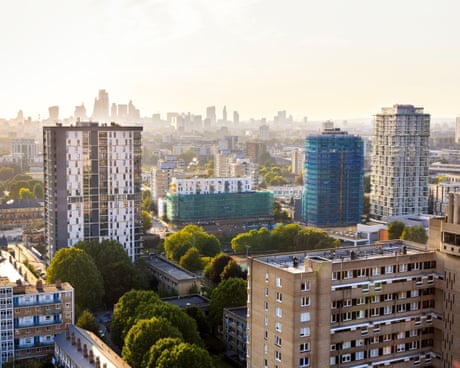
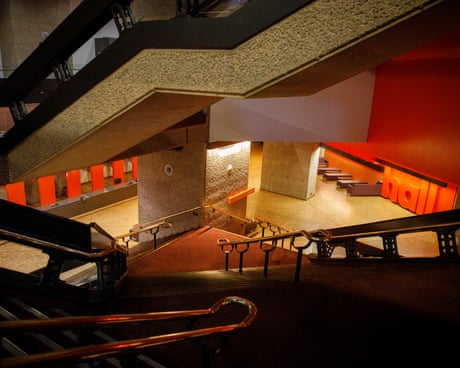
The University of Leeds complex was a prototype for the Barbican – and the work done to it over time demonstrates how brutalist buildings can be humanised, writes Alan Radford

I read with interest about the refurbishment plans for the Barbican (Barbican revamp to give ‘bewildering’ arts centre a new lease of life, 5 December). I spent more than 30 years working on the prototype – the large complex of buildings that the architects Chamberlin, Powell and Bon designed for the University of Leeds, constructed circa 1970.

All of the design features in the Barbican were there in the Leeds complex of offices, laboratories, library and so on, including all the problems. I always explained to visitors that I regarded the Chamberlin buildings primarily as a large-scale piece of brutalist sculpture rather than as a working environment.

Continue reading...

© Photograph: Alicia Canter/The Guardian
© Photograph: Alicia Canter/The Guardian

© Photograph: Alicia Canter/The Guardian


  •  

Flavoured condoms, 120 turkeys and a Free Marlon Dingle poster: the weird and wonderful work making the film industry green

Women are trailblazing efforts in the UK and US to improve sustainability on film and TV sets, from donating catering and rehoming props to reducing emissions

It’s two days before Thanksgiving and Hillary Cohen and Samantha Luu are trying to figure out how they’re going to cook 120 turkeys with limited oven space in their food warehouse in downtown LA. “We’re going to have to do a bit of spatchcocking. It’s not very showbiz,” Cohen says.

It’s the busiest time of year for Cohen and Luu, assistant directors who founded not-for-profit organisation Every Day Action during the Covid pandemic. Designed to help unhoused people and those facing food insecurity across the city, the idea was born when Cohen noticed the amount of food waste on film and TV sets, and looked into redistributing it to those in need. “I remember asking, ‘Why can’t we donate this food?’ I kept being told it was illegal and that people could sue us if they got sick.” It didn’t take Luu, who grew up working in a soup kitchen her father founded, long to establish this was not the case. “In the US, there’s the Bill Emerson Good Samaritan Act that’s been around since 1996,” she says. “It protects food donors from liability issues.”

Continue reading...

© Photograph: Kathy Schuh Photography

© Photograph: Kathy Schuh Photography

© Photograph: Kathy Schuh Photography

  •  

Instead of fixing WoW’s new floating house exploit, Blizzard makes it official

Long-time World of Warcraft players have been waiting 21 years for the new in-game housing features that Blizzard officially announced last year and which launched in early access last week. Shortly after that launch, though, players quickly discovered a way to make their houses float high above the ground by exploiting an unintended, invisible UI glitch.

Now, Blizzard says that the overwhelming response to that accidental house hovering has been so strong that it’s pivoting to integrate it as an official part of the game.

“We were going to fix flying houses to bring them back to terra firma, but you all made such awesome stuff, so we made it possible with the base UI instead,” WoW Principal Designer Jesse Kurlancheek posted on social media Tuesday. Lead Producer Kyle Hartline followed up on that announcement with some behind-the-scenes gossip: “Like no joke we had an ops channel about how to roll out the float fix but folks shared like 5 of the dopest houses and we all kinda immediately agreed this was way too cool to change,” he wrote.

Read full article

Comments

© Twitter / Zorbix

  •  

‘This country’s divided’: how a Sunderland charity is changing that – one house, park and shop at a time

Far-right rhetoric fuelled rioting here in 2024, but Back on the Map is helping to unite the community, through good accommodation, new shops, and an aim to genuinely uplift and improve people’s lives
Donate to the Guardian Charity Appeal 2025 here
Communities are our defence against hatred. Now, more than ever, we must invest in hope

When 47-year-old shop assistant Claire Carter was younger, her mother told her to “never live on the long streets” – terrace-lined roads about half a mile long that lead from the centre of Hendon, Sunderland, to the sea. These six streets have a reputation for being “full of wrong ’uns, full of stolen cars, places getting smashed up”, she says. Close by is Fletcher’s News & Booze, the shop where Tommy Robinson hosted a book signing in 2017 that ended in physical fights and 21 arrests.

Sunderland more widely has been a key site for far-right politics: in 2024 violent anti-Muslim riots broke out after misinformation spread on social media, suggesting that the man behind fatal stabbings at a children’s dance class in Southport was an illegal migrant. About 500 people came to Sunderland’s city centre to a protest that quickly descended into what a judge has since described as “an orgy of mindless destruction, violence and disorder”, with rioters setting a car on fire, shouting Islamophobic chants and throwing stones at the police.

Continue reading...

© Photograph: Richard Saker/The Guardian

© Photograph: Richard Saker/The Guardian

© Photograph: Richard Saker/The Guardian

  •  

Homelessness minister promises to end use of B&Bs as emergency housing

Exclusive: Alison McGovern makes target for end of this parliament, but figures show homelessness has jumped

The homelessness minister has pledged to end the use of bed and breakfasts as emergency housing, even as new figures show that the country’s homelessness problem has worsened since Labour came into government.

Alison McGovern said she would consider it a personal failing if people were still being placed in B&Bs by the end of this parliament as she launched the government’s three-year homelessness strategy.

Continue reading...

© Photograph: David Levene/The Guardian

© Photograph: David Levene/The Guardian

© Photograph: David Levene/The Guardian

  •  

The Guardian view on England’s social housing system: failing the very people it was built for | Editorial

Austerity hollowed out provision and hardened eligibility rules. A broken safety net now shuts out the poorest and drives rising homelessness

Moral logic is flipped on its head in England’s benefits system, which systematically excludes the poorest people from the only housing that was ever intended for them. Social homes were supposed to be for those who couldn’t afford private rents. However, a new report by Crisis shows that, because the stock of homes has been allowed to collapse, housing associations now ration supply by applying strict affordability tests. The homeless charity found that seven in 10 people with a history of rent arrears and no repayment plan would “sometimes” or “always” be excluded from housing registers. Perversely, England’s welfare system induces the very homelessness that it claims to alleviate.

Financial checks, along with rules requiring “local connections”, sharply narrow who can join the queue for social housing. For those who do, a further round of pre-tenancy checks means that about a third of housing associations refuse accommodation because applicants cannot afford even modest rents, a problem rooted in benefit levels that are simply too low. Homelessness therefore rises by design rather than accident. Its origins lie in the coalition’s austerity programme: instead of building social homes, which would have eased pressure on welfare, the government redefined who could qualify. The then chancellor George Osborne, it was said, resisted building houses that might create Labour voters.

Do you have an opinion on the issues raised in this article? If you would like to submit a response of up to 300 words by email to be considered for publication in our letters section, please click here.

Continue reading...

© Photograph: Nathaniel Noir/Alamy

© Photograph: Nathaniel Noir/Alamy

© Photograph: Nathaniel Noir/Alamy

  •  

Trump had two mortgages he claimed were primary dwellings, records show

President did same thing his administration is now calling ‘mortgage fraud’ in case against Fed governor Lisa Cook

Donald Trump signed mortgage documents in the 1990s claiming two separate Florida properties would each serve as his principal residence – the same thing his administration is calling “mortgage fraud” when done by political rivals, records show.

ProPublica unearthed documents demonstrating that within seven weeks of each other in late 1993 and early 1994, the president obtained loans for neighboring Palm Beach homes, pledging each would be his primary dwelling. Instead of living in them, though, he rented both out as investment properties.

Continue reading...

© Photograph: Andrew Caballero-Reynolds/AFP/Getty Images

© Photograph: Andrew Caballero-Reynolds/AFP/Getty Images

© Photograph: Andrew Caballero-Reynolds/AFP/Getty Images

  •  

Tell us: have you lived in temporary accommodation in the UK with children?

We want to hear from UK parents with experience in temporary accommodation about the impact on their lives, family and schooling

More than 172,000 children were living in temporary accommodation in England at the end of June, according to the latest quarterly official figures from October.

That represented an 8.2% rise on the same period last year. There are now more than 130,000 households households living in temporary accommodation in England, the figures showed.

Continue reading...

© Photograph: Ben Birchall/PA

© Photograph: Ben Birchall/PA

© Photograph: Ben Birchall/PA

  •