Reading view

The Guardian view on the Bondi terror shootings: do not let these antisemitic attacks drive division | Editorial

The beachside attack on Australia’s Jews, targeting a Hanukah gathering, reflects growing bigotry and political violence

The shock and horror that have rippled out from Bondi Beach across the world are immense. At least 11 people died at a place packed with families. A further 29 individuals suffered serious injuries. For Sunday evening’s shootings to occur in one of the most idyllic and quintessentially Australian of locations, at one of the most joyous times in the Jewish calendar, only deepens the fear and anguish felt throughout the Jewish community, across Australia and more broadly.

Authorities were quick to identify the attack as terrorism, targeting Jews as they gathered to celebrate the beginning of Hanukah on the beach. The two gunmen – one now dead, another critically injured as of Sunday night – fired on the crowds from a bridge. Parents ran with their children in their arms; elderly people struggled to flee. A car containing improvised explosive devices was found nearby and late on Sunday police were still searching for a possible third offender. Without the extraordinary courage of the man who single-handedly wrestled a gun from one attacker at the beach, and the swift response of others, this violence would probably have been still more devastating.

Continue reading...

© Photograph: Mark Baker/AP

© Photograph: Mark Baker/AP

© Photograph: Mark Baker/AP

  •  

The Guardian view on Thailand and Cambodia: a Trump-brokered truce falls apart | Editorial

The US president’s claims to have ended eight conflicts look shakier than ever as conflict reignites in south-east Asia and the Democratic Republic of Congo

When the hastily confected Fifa world peace prize was bestowed on Donald Trump last week, the ceasefire in the Thai-Cambodian border dispute was among the achievements cited. Mr Trump also boasted of having ended war in the Democratic Republic of the Congo. He brags of having brought eight conflicts to a close and has just had the US Institute of Peace renamed in his honour.

Yet the truce between Thailand and Cambodia has already fallen apart. Half a million residents along the border have fled renewed fighting and civilians are among at least 27 people killed. Meanwhile, in the east of the Democratic Republic of the Congo, at least 200,000 people have fled the advance of Rwanda-backed M23 rebels – days after a peace deal was signed in Washington.

Continue reading...

© Photograph: Bonnie Cash/UPI/Shutterstock

© Photograph: Bonnie Cash/UPI/Shutterstock

© Photograph: Bonnie Cash/UPI/Shutterstock

  •  

Hospitals in England ‘face dangerous winter overcrowding due to discharge delays’

Exclusive: Analysis of NHS data shows rise in patients ‘stranded’ in beds as flu crisis hits and resident doctors’ strikes loom

Hospitals in England face dangerous overcrowding this winter because even more patients than last year are “stranded” in a bed, according to an analysis of NHS figures.

The findings come as the health service struggles to cope with the early onset of its usual winter crisis driven by a crippling “flu-nami” and the NHS in England is bracing itself for a five-day strike by resident doctors starting on Wednesday.

The percentage of bed days used by patients whose discharge was delayed rose from 10.1% in 2024 to 11% this year, an increase of 9% or 19,000 bed days.

That rise was driven by an 8% year-on-year rise in the number of discharges, equivalent to about 3,800 patients a month.

The number of the NHS’s overall stock of about 100,000 general and acute beds occupied last winter by delayed discharge patients hit a peak of 14%, but it is likely to be even higher this winter.

Continue reading...

© Photograph: Victoria Jones/PA

© Photograph: Victoria Jones/PA

© Photograph: Victoria Jones/PA

  •  

America Adds 11.7 GW of New Solar Capacity in Q3 - Third Largest Quarter on Record

America's solar industry "just delivered another huge quarter," reports Electrek, "installing 11.7 gigawatts (GW) of new capacity in Q3 2025. That makes it the third-largest quarter on record and pushes total solar additions this year past 30 GW..." According to the new "US Solar Market Insight Q4 2025" report from Solar Energy Industries Association (SEIA) and Wood Mackenzie, 85% of all new power added to the grid during the first nine months of the Trump administration came from solar and storage. And here's the twist: Most of that growth — 73% — happened in red [Republican-leaning] states. Eight of the top 10 states for new installations fall into that category, including Texas, Indiana, Florida, Arizona, Ohio, Utah, Kentucky, and Arkansas... Two new solar module factories opened this year in Louisiana and South Carolina, adding a combined 4.7 GW of capacity. That brings the total new U.S. module manufacturing capacity added in 2025 to 17.7 GW. With a new wafer facility coming online in Michigan in Q3, the U.S. can now produce every major component of the solar module supply chain... SEIA also noted that, following an analysis of EIA data, it found that more than 73 GW of solar projects across the U.S. are stuck in permitting limbo and at risk of politically motivated delays or cancellations.

Read more of this story at Slashdot.

  •  

Purdue University Approves New AI Requirement For All Undergrads

Nonprofit Code.org released its 2025 State of AI & Computer Science Education report this week with a state-by-state analysis of school policies complaining that "0 out of 50 states require AI+CS for graduation." But meanwhile, at the college level, "Purdue University will begin requiring that all of its undergraduate students demonstrate basic competency in AI," writes former college president Michael Nietzel, "starting with freshmen who enter the university in 2026." The new "AI working competency" graduation requirement was approved by the university's Board of Trustees at its meeting on December 12... The requirement will be embedded into every undergraduate program at Purdue, but it won't be done in a "one-size-fits-all" manner. Instead, the Board is delegating authority to the provost, who will work with the deans of all the academic colleges to develop discipline-specific criteria and proficiency standards for the new campus-wide requirement. [Purdue president] Chiang said students will have to demonstrate a working competence through projects that are tailored to the goals of individual programs. The intent is to not require students to take more credit hours, but to integrate the new AI expectation into existing academic requirements... While the news release claimed that Purdue may be the first school to establish such a requirement, at least one other university has introduced its own institution-wide expectation that all its graduates acquire basic AI skills. Earlier this year, The Ohio State University launched an AI Fluency initiative, infusing basic AI education into core undergraduate requirements and majors, with the goal of helping students understand and use AI tools — no matter their major. Purdue wants its new initiative to help graduates: — Understand and use the latest AI tools effectively in their chosen fields, including being able to identify the key strengths and limits of AI technologies; — Recognize and communicate clearly about AI, including developing and defending decisions informed by AI, as well as recognizing the influence and consequences of AI in decision-making; — Adapt to and work with future AI developments effectively.

Read more of this story at Slashdot.

  •  

Repeal Section 230 and Its Platform Protections, Urges New Bipartisan US Bill

U.S. Senator Sheldon Whitehouse said Friday he was moving to file a bipartisan bill to repeal Section 230 of America's Communications Decency Act. "The law prevents most civil suits against users or services that are based on what others say," explains an EFF blog post. "Experts argue that a repeal of Section 230 could kill free speech on the internet," writes LiveMint — though America's last two presidents both supported a reapl: During his first presidency, US President Donald Trump called to repeal the law and signed an executive order attempting to curb some of its protections, though it was challenged in court. Subsequently, former President Joe Biden also voiced his opinion against the law. An EFF blog post explains the case for Section 230: Congress passed this bipartisan legislation because it recognized that promoting more user speech online outweighed potential harms. When harmful speech takes place, it's the speaker that should be held responsible, not the service that hosts the speech... Without Section 230, the Internet is different. In Canada and Australia, courts have allowed operators of online discussion groups to be punished for things their users have said. That has reduced the amount of user speech online, particularly on controversial subjects. In non-democratic countries, governments can directly censor the internet, controlling the speech of platforms and users. If the law makes us liable for the speech of others, the biggest platforms would likely become locked-down and heavily censored. The next great websites and apps won't even get started, because they'll face overwhelming legal risk to host users' speech. But "I strongly believe that Section 230 has long outlived its use," Senator Whitehouse said this week, saying Section 230 "a real vessel for evil that needs to come to an end." "The laws that Section 230 protect these big platforms from are very often laws that go back to the common law of England, that we inherited when this country was initially founded. I mean, these are long-lasting, well-tested, important legal constraints that have — they've met the test of time, not by the year or by the decade, but by the century. "And yet because of this crazy Section 230, these ancient and highly respected doctrines just don't reach these people. And it really makes no sense, that if you're an internet platform you get treated one way; you do the exact same thing and you're a publisher, you get treated a completely different way. "And so I think that the time has come.... It really makes no sense... [Testimony before the committee] shows how alone and stranded people are when they don't have the chance to even get justice. It's bad enough to have to live through the tragedy... But to be told by a law of Congress, you can't get justice because of the platform — not because the law is wrong, not because the rule is wrong, not because this is anything new — simply because the wrong type of entity created this harm."

Read more of this story at Slashdot.

  •  

Labour’s Andrew Gwynne says he has no plans to give up seat for Andy Burnham

Exclusive: MP dismisses as ‘idle speculation’ reports he could resign as part of ‘coup’ against Keir Starmer

The former health minister Andrew Gwynne has dismissed as “idle speculation” reports he could resign his seat as part of an Andy Burnham “coup” against Keir Starmer.

Allies of Burnham were reported on Sunday to have identified a shortlist of seats to allow the Greater Manchester mayor to return to Westminster in the new year.

Continue reading...

© Photograph: Victoria Jones/PA

© Photograph: Victoria Jones/PA

© Photograph: Victoria Jones/PA

  •  

Time Magazine's 'Person of the Year': the Architects of AI

Time magazine used its 98th annual "Person of the Year" cover to "recognize a force that has dominated the year's headlines, for better or for worse. For delivering the age of thinking machines, for wowing and worrying humanity, for transforming the present and transcending the possible, the Architects of AI are TIME's 2025 Person of the Year." One cover illustration shows eight AI executives sitting precariously on a beam high above the city, while Time's 6,700-word article promises "the story of how AI changed our world in 2025, in new and exciting and sometimes frightening ways. It is the story of how [Nvidia CEO] Huang and other tech titans grabbed the wheel of history, developing technology and making decisions that are reshaping the information landscape, the climate, and our livelihoods." Time describes them betting on "one of the biggest physical infrastructure projects of all time," mentioning all the usual worries — datacenters' energy consumption, chatbot psychosis, predictions of "wiping out huge numbers of jobs" and the possibility of an AI stock market bubble. (Although "The drumbeat of warning that advanced AI could kill us all has mostly quieted"). But it also notes AI's potential to jumpstart innovation (and economic productivity) This year, the debate about how to wield AI responsibly gave way to a sprint to deploy it as fast as possible. "Every industry needs it, every company uses it, and every nation needs to build it," Huang tells TIME in a 75-minute interview in November, two days after announcing that Nvidia, the world's first $5 trillion company, had once again smashed Wall Street's earnings expectations. "This is the single most impactful technology of our time..." The risk-averse are no longer in the driver's seat. Thanks to Huang, Son, Altman, and other AI titans, humanity is now flying down the highway, all gas no brakes, toward a highly automated and highly uncertain future. Perhaps Trump said it best, speaking directly to Huang with a jovial laugh in the U.K. in September: "I don't know what you're doing here. I hope you're right."

Read more of this story at Slashdot.

  •  

DWP needs overhaul to restore trust after carer’s allowance scandal, adviser says

Liz Sayce, who led inquiry into department’s failures, ‘distressed’ at carers being blamed for running up huge overpayments

The Department of Work and Pensions needs a management and cultural overhaul if it is to restore public trust after the benefits scandal which left hundreds of thousands of unpaid carers in debt, a key government adviser has warned.

Prof Liz Sayce led a scathing review of the carer’s allowance scandal, which found the DWP system and leadership failures were responsible for carers unknowingly running up huge debts, some of which resulted in serious mental illness and, possibly, criminal convictions for fraud.

Continue reading...

© Photograph: Martin Godwin/The Guardian

© Photograph: Martin Godwin/The Guardian

© Photograph: Martin Godwin/The Guardian

  •  

Trump Ban on Wind Energy Permits 'Unlawful', Court Rules

A January order blocking wind energy projects in America has now been vacated by a U.S. judge and declared unlawful, reports the Associated Press: [Judge Saris of the U.S. district court for the district of Massachusetts] ruled in favor of a coalition of state attorneys general from 17 states and Washington DC, led by Letitia James, New York's attorney general, that challenged President Trump's day one order that paused leasing and permitting for wind energy projects... The coalition that opposed Trump's order argued that Trump does not have the authority to halt project permitting, and that doing so jeopardizes the states' economies, energy mix, public health and climate goals. The coalition includes Arizona, California, Colorado, Connecticut, Delaware, Illinois, Maine, Maryland, Massachusetts, Michigan, Minnesota, New Jersey, New Mexico, New York, Oregon, Rhode Island, Washington state and Washington DC. They say they have invested hundreds of millions of dollars collectively to develop wind energy and even more on upgrading transmission lines to bring wind energy to the electrical grid... Wind is the United States' largest source of renewable energy, providing about 10% of the electricity generated in the nation, according to the American Clean Power Association. But the BBC quotes Timothy Fox, managing director at the Washington, DC-based research firm ClearView Energy Partners, as saying he doesn't expect the ruling to reinvigorate the industry: "It's more symbolic than substantive," he said. "All the court is saying is ... you need to go back to work and consider these applications. What does that really mean?" he said. Officials could still deny permits or bog applications down in lengthy reviews, he noted.

Read more of this story at Slashdot.

  •  

New Rule Forbids GNOME Shell Extensions Made Using AI-Generated Code

An anonymous reader shared this report from Phoronix: Due to the growing number of GNOME Shell extensions looking to appear on extensions.gnome.org that were generated using AI, it's now prohibited. The new rule in their guidelines note that AI-generated code will be explicitly rejected: "Extensions must not be AI-generated While it is not prohibited to use AI as a learning aid or a development tool (i.e. code completions), extension developers should be able to justify and explain the code they submit, within reason. Submissions with large amounts of unnecessary code, inconsistent code style, imaginary API usage, comments serving as LLM prompts, or other indications of AI-generated output will be rejected." In a blog post, GNOME developer Javad Rahmatzadeh explains that "Some devs are using AI without understanding the code..."

Read more of this story at Slashdot.

  •  

Is the R Programming Language Surging in Popularity?

The R programming language "is sometimes frowned upon by 'traditional' software engineers," says the CEO of software quality services vendor Tiobe, "due to its unconventional syntax and limited scalability for large production systems." But he says it "continues to thrive at universities and in research-driven industries, and "for domain experts, it remains a powerful and elegant tool." Yet it's now gaining more popularity as statistics and large-scale data visualization become important (a trend he also sees reflected in the rise of Wolfram/Mathematica). That's according to December's edition of his TIOBE Index, which attempts to rank the popularity of programming languages based on search-engine results for courses, third-party vendors, and skilled engineers. InfoWorld explains: In the December 2025 index, published December 7, R ranks 10th with a 1.96% rating. R has cracked the Tiobe index's top 10 before, such as in April 2020 and July 2020, but not in recent years. The rival Pypl Popularity of Programming Language Index, meanwhile, has R ranked fifth this month with a 5.84% share. "Programming language R is known for fitting statisticians and data scientists like a glove," said Paul Jansen, CEO of software quality services vendor Tiobe, in a bulletin accompanying the December index... Although data science rival Python has eclipsed R in terms of general adoption, Jansen said R has carved out a solid and enduring niche, excelling at rapid experimentation, statistical modeling, and exploratory data analysis. "We have seen many Tiobe index top 10 entrants rising and falling," Jansen wrote. "It will be interesting to see whether R can maintain its current position." "Python remains ahead at 23.64%," notes TechRepublic, "while the familiar chase group behind it holds steady for the moment. The real movement comes deeper in the list, where SQL edges upward, R rises to the top 10, and Delphi/Object Pascal slips away... SQLclimbs from tenth to eighth at 2.10%, adding a small +0.11% that's enough to move it upward in a tightly packed section of the table. Perl holds ninth at 1.97%, strengthened by a +1.33% gain that extends its late-year resurgence." It's interesting to see how TIOBE's ranking compare with PYPL's (which ranks languages based solely on how often language tutorials are searched on Google): TIOBE PYPL Python Python C C/C++ C++ Objective-C Java Java C# R JavaScript JavaScript Visual Basic Swift SQL C# Perl PHP R Rust Despite their different methodologies, both lists put Python at #1, Java at #5, and JavaScript at #7.

Read more of this story at Slashdot.

  •  

System76 Launches First Stable Release of COSMIC Desktop and Pop!_OS 24.04 LTS

This week System76 launched the first stable release of its Rust-based COSMIC desktop environment. Announced in 2021, it's designed for all GNU/Linux distributions — and it shipping with Pop!_OS 24.04 LTS (based on Ubuntu 24.04 LTS). An anonymous reader shared this report from 9to5Linux: Previous Pop!_OS releases used a version of the COSMIC desktop that was based on the GNOME desktop environment. However, System76 wanted to create a new desktop environment from scratch while keeping the same familiar interface and user experience built for efficiency and fun. This means that some GNOME apps have been replaced by COSMIC apps, including COSMIC Files instead of Nautilus (Files), COSMIC Terminal instead of GNOME Terminal, COSMIC Text Editor instead of GNOME Text Editor, and COSMIC Media Player instead of Totem (Video Player). Also, the Pop!_Shop graphical package manager used in previous Pop!_OS releases has now been replaced by a new app called COSMIC Store. "If you're ambitious enough, or maybe just crazy enough, there eventually comes a time when you realize you've reached the limits of current potential, and must create something completely new if you're to go further..." explains System76 founder/CEO Carl Richell: For twenty years we have shipped Linux computers. For seven years we've built the Pop!_OS Linux distribution. Three years ago it became clear we had reached the limit of our current potential and had to create something new. Today, we break through that limit with the release of Pop!_OS 24.04 LTS with the COSMIC Desktop Environment. Today is special not only in that it's the culmination of over three years of work, but even more so in that System76 has built a complete desktop environment for the open source community... I hope you love what we've built for you. Now go out there and create. Push the limits, make incredible things, and have fun doing it!

Read more of this story at Slashdot.

  •  

'Free Software Awards' Winners Announced: Andy Wingo, Alx Sa, Govdirectory

This week the Free Software Foundation honored Andy Wingo, Alx Sa, and Govdirectory with this year's annual Free Software Awards (given to community members and groups making "significant" contributions to software freedom): Andy Wingo is one of the co-maintainers of GNU Guile, the official extension language of the GNU operating system and the Scheme "backbone" of GNU Guix. Upon receiving the award, he stated: "Since I learned about free software, the vision of a world in which hackers freely share and build on each others' work has been a profound inspiration to me, and I am humbled by this recognition of my small efforts in the context of the Guile Scheme implementation. I thank my co-maintainer, Ludovic Courtès, for his comradery over the years: we are just building on the work of the past maintainers of Guile, and I hope that we live long enough to congratulate its many future maintainers." The 2024 Award for Outstanding New Free Software Contributor went to Alx Sa for work on the GNU Image Manipulation Program (GIMP). When asked to comment, Alx responded: "I am honored to receive this recognition! I started contributing to the GNU Image Manipulation Program as a way to return the favor because of all the cool things it's allowed me to do. Thanks to the help and mentorship of amazing people like Jehan Pagès, Jacob Boerema, Liam Quin, and so many others, I hope I've been able to help other people do some cool new things, too." Govdirectory was presented with this year's Award for Projects of Social Benefit, given to a project or team responsible for applying free software, or the ideas of the free software movement, to intentionally and significantly benefit society. Govdirectory provides a collaborative and fact-checked listing of government addresses, phone numbers, websites, and social media accounts, all of which can be viewed with free software and under a free license, allowing people to always reach their representatives in freedom... The FSF plans to further highlight the Free Software Award winners in a series of events scheduled for the new year to celebrate their contributions to free software.

Read more of this story at Slashdot.

  •  

Applets Are Officially Going, But Java In the Browser Is Better Than Ever

"The entire java.applet package has been removed from JDK 26, which will release in March 2026," notes Inside Java. But long-time Slashdot reader AirHog links to this blog post reminding us that "Applets Are Officially Gone, But Java In The Browser Is Better Than Ever." This brings to an official end the era of applets, which began in 1996. However, for years it has been possible to build modern, interactive web pages in Java without needing applets or plugins. TeaVM provides fast, performant, and lightweight tooling to transpile Java to run natively in the browser... TeaVM, at its heart, transpiles Java code into JavaScript (or, these days, WASM). However, in order for Java code to be useful for web apps, much more is required, and TeaVM delivers. It includes a minifier, to shrink the generated code and obfuscate the intent, to complicate reverse-engineering. It has a tree-shaker to eliminate unused methods and classes, keeping your app download compact. It packages your code into a single file for easy distribution and inclusion in your HTML page. It also includes wrappers for all popular browser APIs, so you can invoke them from your Java code easily, with full IDE assistance and auto-correct. The blog post also touts Flavour, an open-source framework "for coding, packaging, and optimizing single-page apps implemented in Java... a full front-end toolkit with templates, routing, components, and more" to "build your modern single-page app using 100% Java."

Read more of this story at Slashdot.

  •  

Startup Successfully Uses AI to Find New Geothermal Energy Reservoirs

A Utah-based startup announced last week it used AI to locate a 250-degree Fahrenheit geothermal reservoir, reports CNN. It'll start producing electricity in three to five years, the company estimates — and at least one geologist believes AI could be an exciting "gamechanger" for the geothermal industry. [Startup Zanskar Geothermal & Minerals] named it "Big Blind," because this kind of site — which has no visual indication of its existence, no hot springs or geysers above ground, and no history of geothermal exploration — is known as a "blind" system. It's the first industry-discovered blind site in more than three decades, said Carl Hoiland, co-founder and CEO of Zanskar. "The idea that geothermal is tapped out has been the narrative for decades," but that's far from the case, he told CNN. He believes there are many more hidden sites across the Western U.S. Geothermal energy is a potential gamechanger. It offers the tantalizing prospect of a huge source of clean energy to meet burgeoning demand. It's near limitless, produces scarcely any climate pollution, and is constantly available, unlike wind and solar, which are cheap but rely on the sun shining and the wind blowing. The problem, however, has been how to find and scale it. It requires a specific geology: underground reservoirs of hot water or steam, along with porous rocks that allow the water to move through them, heat up, and be brought to the surface where it can power turbines... The AI models Zanskar uses are fed information on where blind systems already exist. This data is plentiful as, over the last century and more, humans have accidentally stumbled on many around the world while drilling for other resources such as oil and gas. The models then scour huge amounts of data — everything from rock composition to magnetic fields — to find patterns that point to the existence of geothermal reserves. AI models have "gotten really good over the last 10 years at being able to pull those types of signals out of noise," Hoiland said... Zanskar's discovery "is very significant," said James Faulds, a professor of geosciences at Nevada Bureau of Mines and Geology.... Estimates suggest over three-quarters of US geothermal resources are blind, Faulds told CNN. "Refining methods to find such systems has the potential to unleash many tens and perhaps hundreds of gigawatts in the western US alone," he said... Big Blind is the company's first blind site discovery, but it's the third site it has drilled and hit commercial resources. "We expect dozens, to eventually hundreds, of new sites to be coming to market," Hoiland said.... Hoiland says Zanskar's work shows conventional geothermal still has huge untapped potential. Thanks to long-time Slashdot reader schwit1 for sharing the article.

Read more of this story at Slashdot.

  •  

Firefox Survey Finds Only 16% Feel In Control of Their Privacy Choices Online

Choosing your browser "is one of the most important digital decisions you can make, shaping how you experience the web, protect your data, and express yourself online," says the Firefox blog. They've urged readers to "take a stand for independence and control in your digital life." But they also recently polled 8,000 adults in France, Germany, the UK and the U.S. on "how they navigate choice and control both online and offline" (attending in-person events in Chicago, Berlin, LA, and Munich, San Diego, Stuttgart): The survey, conducted by research agency YouGov, showcases a tension between people's desire to have control over their data and digital privacy, and the reality of the internet today — a reality defined by Big Tech platforms that make it difficult for people to exercise meaningful choice online: — Only 16% feel in control of their privacy choices (highest in Germany at 21%) — 24% feel it's "too late" because Big Tech already has too much control or knows too much about them. And 36% said the feeling of Big Tech companies knowing too much about them is frustrating — highest among respondents in the U.S. (43%) and the UK (40%) — Practices respondents said frustrated them were Big Tech using their data to train AI without their permission (38%) and tracking their data without asking (47%; highest in U.S. — 55% and lowest in France — 39%) And from our existing research on browser choice, we know more about how defaults that are hard to change and confusing settings can bury alternatives, limiting people's ability to choose for themselves — the real problem that fuels these dynamics. Taken together our new and existing insights could also explain why, when asked which actions feel like the strongest expressions of their independence online, choosing not to share their data (44%) was among the top three responses in each country (46% in the UK; 45% in the U.S.; 44% in France; 39% in Germany)... We also see a powerful signal in how people think about choosing the communities and platforms they join — for 29% of respondents, this was one of their top three expressions of independence online. "For Firefox, community has always been at the heart of what we do," says their VP of Global Marketing, "and we'll keep fighting to put real choice and control back in people's hands so the web once again feels like it belongs to the communities that shape it." At TwitchCon in San Diego Firefox even launched a satirical new online card game with a privacy theme called Data War.

Read more of this story at Slashdot.

  •  

YouTube channels spreading fake, anti-Labour videos viewed 1.2bn times in 2025

Exclusive: More than 150 anonymous channels using cheap AI tools to spread false stories about Keir Starmer, study finds

YouTube channels spreading fake, anti-Labour videos have amassed more than a billion views this year, as opportunists attempt to use AI-generated content to profit from political division in the UK.

More than 150 channels have been detected in the last year that promote anti-Labour narratives, as well as outright fake and inflammatory accusations about Keir Starmer.

Continue reading...

© Photograph: Jacob King/PA

© Photograph: Jacob King/PA

© Photograph: Jacob King/PA

  •  

The World's Electric Car Sales Have Spiked 21% So Far in 2025

Electrek reports: EV and battery supply chain research specialists Benchmark Mineral Intelligence reports that 2.0 million electric vehicles were sold globally in November 2025, bringing global EV sales to 18.5 million units year-to-date. That's a 21% increase compared to the same period in 2024. Europe was the clear growth leader in November, while North America continued to lag following the expiration of US EV tax credits. China, meanwhile, remains the world's largest EV market by a wide margin. Europe's EV market jumped 36% year-over-year in November 2025, with BEV sales up 35% and plug-in hybrid (PHEV) sales rising 39%. That brings Europe's total EV sales to 3.8 million units for the year so far, up 33% compared to January-November 2024... In North America, EV sales in the US did tick up month-over-month in November, following a sharp October drop after federal tax credits expired on September 30, 2025. Brands including Kia (up 30%), Hyundai (up 20%), Honda (up 11%), and Subaru (232 Solterra sales versus just 13 the month before) all saw gains, but overall volumes remain below levels when the federal tax credit was still available... [North America shows a -1% drop in EV sales from January to November 2025 vs. January to November 2024] Year-to-date, EV sales in China are up 19%, with 11.6 million units sold. One of the biggest headlines out of China is exports. BYD reported a record 131,935 EV exports in November, blowing past its previous high of around 90,000 units set in June. BYD sales in Europe have jumped more than fourfold this year to around 200,000 vehicles, doubled in Southeast Asia, and climbed by more than 50% in South America... "Overall, EV demand remains resilient, supported by expanding model ranges and sustained policy incentives worldwide," said Rho Motion data manager Charles Lester. Beyond China, Europe, and North America, the rest of the world saw a 48% spike in EV sales in 2025 vs the same 11 months in 2024, representing 1.5 million EVs sold. "The takeaway: EV demand continues to grow worldwide," the article adds, "but policy support — or the lack thereof — is increasingly shaping where this growth shows up."

Read more of this story at Slashdot.

  •  

How a 23-Year-Old in 1975 Built the World's First Handheld Digital Camera

In 1975, 23-year-old electrical engineer Steve Sasson joined Kodak. And in a new interview with the BBC, he remembers that he'd found the whole photographic process "really annoying.... I wanted to build a camera with no moving parts. Now that was just to annoy the mechanical engineers..." "You take your picture, you have to wait a long time, you have to fiddle with these chemicals. Well, you know, I was raised on Star Trek, and all the good ideas come from Star Trek. So I said what if we could just do it all electronically...?" Researchers at Bell Labs in the US had, in 1969, created a type of integrated circuit called a charge-coupled device (CCD). An electric charge could be stored on a metal-oxide semiconductor (MOS), and could be passed from one MOS to another. Its creators believed one of its applications might one day be used as part of an imaging device — though they hadn't worked out how that might happen. The CCD, nevertheless, was quickly developed. By 1974, the US microchip company Fairchild Semiconductors had built the first commercial CCD, measuring just 100 x 100 pixels — the tiny electronic samples taken of an original image. The new device's ability to capture an image was only theoretical — no-one had, as yet, tried to take an image and display it. (NASA, it turned out, was also looking at this technology, but not for consumer cameras....) The CCD circuit responded to light but could only form an image if Sasson was somehow able to attach a lens to it. He could then convert the light into digital information — a blizzard of 1s and 0s — but there was just one problem: money. "I had no money to build this thing. Nobody told me to build it, and I certainly couldn't demand any money for it," he says. "I basically stole all the parts, I was in Kodak and the apparatus division, which had a lot of parts. I stole the optical assembly from an XL movie camera downstairs in a used parts bin. I was just walking by, you see it, and you take it, you know." He was also able to source an analogue to digital converter from a $12 (about £5 in 1974) digital voltmeter, rather than spending hundreds on the part. I could manage to get all these parts without anybody really noticing," he says.... The bulky device needed a way to store the information the CCD was capturing, so Sasson used an audio cassette deck. But he also needed a way to view the image once it was saved on the magnetic tape. "We had to build a playback unit," Sasson says. "And, again, nobody asked me to do that either. So all I got to do is the reverse of what I did with the camera, and then I have to turn that digital pattern into an NTSC television signal." NTSC (National Television System Committee) was the conversion standard used by American TV sets. Sasson had to turn only 100 lines of digital code captured by the camera into the 400 lines that would form a television signal. The solution was a Motorola microprocessor, and by December 1975, the camera and its playback unit was complete, the article points out. With his colleague Jim Schueckler, Sasson had spent more than a year putting together the "increasingly bulky" device, that "looked like an oversized toaster." The camera had a shutter that would take an image at about 1/20th of a second, and — if everything worked as it should — the cassette tape would start to move as the camera transferred the stored information from its CCD [which took 23 seconds]. "It took about 23 seconds to play it back, and then about eight seconds to reconfigure it to make it look like a television signal, and send it to the TV set that I stole from another lab...." In 1978, Kodak was granted the first patent for a digital camera. It was Sasson's first invention. The patent is thought to have earned Eastman Kodak billions in licensing and infringement payments by the time they sold the rights to it, fearing bankruptcy, in 2012... As for Sasson, he never worked on anything other than the digital technology he had helped to create until he retired from Eastman Kodak in 2009. Thanks to long-time Slashdot reader sinij for sharing the article.

Read more of this story at Slashdot.

  •  

More of America's Coal-Fired Power Plants Cease Operations

New England's last coal-fired power plant "has ceased operations three years ahead of its planned retirement date," reports the New Hampshire Bulletin. "The closure of the New Hampshire facility paves the way for its owner to press ahead with an initiative to transform the site into a clean energy complex including solar panels and battery storage systems." "The end of coal is real, and it is here," said Catherine Corkery, chapter director for Sierra Club New Hampshire. "We're really excited about the next chapter...." The closure in New Hampshire — so far undisputed by the federal government — demonstrates that prolonging operations at some facilities just doesn't make economic sense for their owners. "Coal has been incredibly challenged in the New England market for over adecade," said Dan Dolan, president of the New England Power Generators Association. Merrimack Station, a 438-megawatt power plant, came online in the1960s and provided baseload power to the New England region for decades. Gradually, though, natural gas — which is cheaper and more efficient — took over the regional market... Additionally, solar power production accelerated from 2010 on, lowering demand on the grid during the day and creating more evening peaks. Coal plants take longer to ramp up production than other sources, and are therefore less economical for these shorter bursts of demand, Dolan said. In recent years, Merrimack operated only a few weeks annually. In 2024, the plant generated just0.22% of the region's electricity. It wasn't making enough money to justify continued operations, observers said. The closure "is emblematic of the transition that has been occurring in the generation fleet in New England for many years," Dolan said. "The combination of all those factors has meant that coal facilities are no longer economic in this market." Meanwhile Los Angeles — America's second-largest city — confirmed that the last coal-fired power plant supplying its electricity stopped operations just before Thanksgiving, reports the Utah News Dispatch: Advocates from the Sierra Club highlighted in a news release that shutting down the units had no impact on customers, and questioned who should "shoulder the cost of keeping an obsolete coal facility on standby...." Before ceasing operations, the coal units had been working at low capacities for several years because the agency's users hadn't been calling on the power [said John Ward, spokesperson for Intermountain Power Agency]. The coal-powered units "had a combined capacity of around 1,800 megawatts when fully operational," notes Electrek, "and as recently as 2024, they still supplied around 11% of LA's electricity. The plant sits in Utah's Great Basin region and powered Southern California for decades." Now, for the first time, none of California's power comes from coal. There's a political hiccup with IPP, though: the Republican-controlled Utah Legislature blocked the Intermountain Power Agency from fully retiring the coal units this year, ordering that they can't be disconnected or decommissioned. But despite that mandate, no buyers have stepped forward to keep the outdated coal units online. The Los Angeles Department of Water and Power (LADWP) is transitioning to newly built, hydrogen-capable generating units at the same IPP location, part of a modernization effort called IPP Renewed. These new units currently run on natural gas, but they're designed to burn a blend of natural gas and up to 30% green hydrogen, and eventually100% green hydrogen. LADWP plans to start adding green hydrogen to the fuel mix in 2026. "With the plant now idled but legally required to remain connected, serious questions remain about who will shoulder the cost of keeping an obsolete coal facility on standby," says the Sierra Club. One of the natural gas units started commerical operations last Octoboer, with the second starting later this month, IPP spokesperson John Ward told Agency]. the Utah News Dispatch.

Read more of this story at Slashdot.

  •  

Who is Al Carns? Former Marine and Labour minister with sights on leadership

Ex-special forces colonel, who is sounding alarm on Russia, has risen swiftly to role of armed forces minister

A former special forces colonel, government minister Al Carns was this week on manouevres warning that the UK needs to be preparing for war with Russia.

“The shadow of war is knocking on Europe’s door once more. That’s the reality. We’ve got to be prepared to deter it,” he said, in comments that go beyond previous warnings by his boss, the defence secretary, John Healey.
Continue reading...

© Photograph: Finnbarr Webster/Getty Images

© Photograph: Finnbarr Webster/Getty Images

© Photograph: Finnbarr Webster/Getty Images

  •  

Rust in Linux's Kernel 'is No Longer Experimental'

Steven J. Vaughan-Nichols files this report from Tokyo: At the invitation-only Linux Kernel Maintainers Summit here, the top Linux maintainers decided, as Jonathan Corbet, Linux kernel developer, put it, "The consensus among the assembled developers is that Rust in the kernel is no longer experimental — it is now a core part of the kernel and is here to stay. So the 'experimental' tag will be coming off." As Linux kernel maintainer Steven Rosted told me, "There was zero pushback." This has been a long time coming. This shift caps five years of sometimes-fierce debate over whether the memory-safe language belonged alongside C at the heart of the world's most widely deployed open source operating system... It all began when Alex Gaynor and Geoffrey Thomas at the 2019 Linux Security Summit said that about two-thirds of Linux kernel vulnerabilities come from memory safety issues. Rust, in theory, could avoid these by using Rust's inherently safer application programming interfaces (API)... In those early days, the plan was not to rewrite Linux in Rust; it still isn't, but to adopt it selectively where it can provide the most security benefit without destabilizing mature C code. In short, new drivers, subsystems, and helper libraries would be the first targets... Despite the fuss, more and more programs were ported to Rust. By April 2025, the Linux kernel contained about 34 million lines of C code, with only 25 thousand lines written in Rust. At the same time, more and more drivers and higher-level utilities were being written in Rust. For instance, the Debian Linux distro developers announced that going forward, Rust would be a required dependency in its foundational Advanced Package Tool (APT). This change doesn't mean everyone will need to use Rust. C is not going anywhere. Still, as several maintainers told me, they expect to see many more drivers being written in Rust. In particular, Rust looks especially attractive for "leaf" drivers (network, storage, NVMe, etc.), where the Rust-for-Linux bindings expose safe wrappers over kernel C APIs. Nevertheless, for would-be kernel and systems programmers, Rust's new status in Linux hints at a career path that blends deep understanding of C with fluency in Rust's safety guarantees. This combination may define the next generation of low-level development work.

Read more of this story at Slashdot.

  •  

Risk to women of severe bleeding after giving birth at five-year high in England

Rate rises by 19% compared with 2020, prompting fresh concerns about NHS maternity care

The risk of women in England suffering severe bleeding after giving birth has risen to its highest level for five years, prompting fresh concern about NHS maternity care.

The rate at which mothers in England experience postpartum haemorrhage has increased from 27 per 1,000 births in 2020 to 32 per 1,000 this year, a rise of 19%.

Continue reading...

© Photograph: gorodenkoff/Getty Images/iStockphoto

© Photograph: gorodenkoff/Getty Images/iStockphoto

© Photograph: gorodenkoff/Getty Images/iStockphoto

  •  

‘A shift no country can ignore’: where global emissions stand, 10 years after the Paris climate agreement

The watershed summit in 2015 was far from perfect, but its impact so far has been significant and measurable

Ten years on from the historic Paris climate summit, which ended with the world’s first and only global agreement to curb greenhouse gas emissions, it is easy to dwell on its failures. But the successes go less remarked.

Renewable energy smashed records last year, growing by 15% and accounting for more than 90% of all new power generation capacity. Investment in clean energy topped $2tn, outstripping that into fossil fuels by two to one.

Continue reading...

© Photograph: Carlos Barría/Reuters

© Photograph: Carlos Barría/Reuters

© Photograph: Carlos Barría/Reuters

  •  

Will other countries follow Australia’s social media ban for under-16s?

Several European nations are already planning similar moves while Britain has said ‘nothing is off the table’

Australia is taking on powerful tech companies with its under-16 social media ban, but will the rest of the world follow? The country’s enactment of the policy is being watched closely by politicians, safety campaigners and parents. A number of other countries are not far behind, with Europe in particular hoping to replicate Australia, while the UK is keeping more of a watchful interest.

Continue reading...

© Photograph: Saeed Khan/AFP/Getty Images

© Photograph: Saeed Khan/AFP/Getty Images

© Photograph: Saeed Khan/AFP/Getty Images

  •  

The Guardian view on Trump and Venezuela: a return to seeking regime change | Editorial

The US is ramping up the pressure on Nicolás Maduro with a tanker seizure and expanded sanctions following threats and boat strikes

Early in his first term, Donald Trump mooted a “military option” for Venezuela to dislodge its president, Nicolás Maduro. Reports suggest that he eagerly discussed the prospect of an invasion behind closed doors. Advisers eventually talked him down. Instead, the US pursued a “maximum pressure” strategy of sanctions and threats.

But Mr Maduro is still in place. And Mr Trump’s attempts to remove him are ramping up again. The US has amassed its largest military presence in the Caribbean since the 1989 invasion of Panama. It has carried out more than 20 shocking strikes on alleged drug boats. Mr Trump reportedly delivered an ultimatum late last month, telling the Venezuelan leader that he could have safe passage from his country if he left immediately. There was already a $50m bounty on his head. This week came expanded sanctions and the seizure of a tanker.

Do you have an opinion on the issues raised in this article? If you would like to submit a response of up to 300 words by email to be considered for publication in our letters section, please click here.

Continue reading...

© Photograph: Anadolu/Getty Images

© Photograph: Anadolu/Getty Images

© Photograph: Anadolu/Getty Images

  •  

The Guardian view on Nnena Kalu’s historic Turner prize win: breaking a glass ceiling | Editorial

The UK art world is finally becoming more inclusive. But greater support must be given to the organisations that enable disabled artists to flourish

The Turner prize is no stranger to sparking debate or pushing boundaries. This year it has achieved both. For the first time, an artist with learning disabilities has won. Glasgow-born Nnena Kalu took the award for her colourful, cocoon-like sculptures made from VHS tape, clingfilm and other abandoned materials, along with her large swirling vortex drawings. Kalu is autistic, with limited verbal communication. In an acceptance speech on her behalf, Kalu’s facilitator, Charlotte Hollinshead, said that “a very stubborn glass ceiling” had been broken.

Kalu’s win is a high-profile symbol of a shift towards greater inclusivity that has been happening in the UK arts world over the past five years. Last month, Beyond the Visual opened at the Henry Moore Institute, Leeds, in which everything is curated or created by blind and partially sighted artists. The exhibits range from Moore sculptures (which visitors are encouraged to touch) to David Johnson’s 10,000 stone-plaster digestive biscuits stamped with braille. Design and Disability at the V&A South Kensington is showcasing the ways in which disabled, deaf and neurodivergent people have shaped culture from the 1940s to now.

Do you have an opinion on the issues raised in this article? If you would like to submit a response of up to 300 words by email to be considered for publication in our letters section, please click here.

Continue reading...

© Photograph: James Speakman/PA

© Photograph: James Speakman/PA

© Photograph: James Speakman/PA

  •  

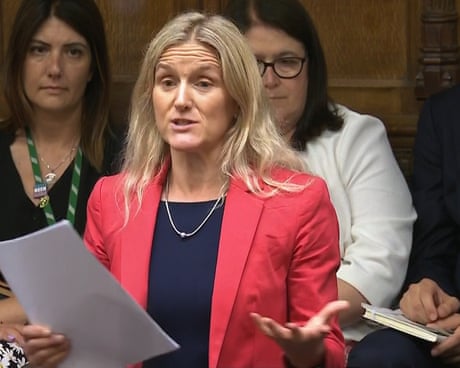
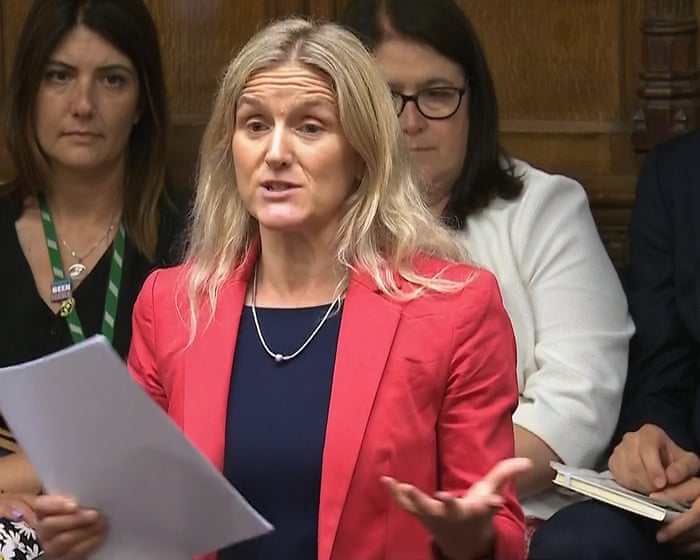
‘Cruel’ amendments being used to thwart assisted dying bill, says lead MP

Kim Leadbeater warns 1,150 Lords amendments are ‘unnecessary’ and designed to run down the clock

Members of the House of Lords have proposed “totally unnecessary” and “very cruel” amendments to the assisted dying bill in an attempt to scupper it, the MP leading the campaign has said.

Kim Leadbeater said on Friday she believed that peers opposed to the bill were trying to block it by proposing hundreds of changes, including one that would require terminally ill people to be filmed as they undergo an assisted death.

Continue reading...

© Photograph: House of Commons/PA

© Photograph: House of Commons/PA

© Photograph: House of Commons/PA

  •  

Guardian’s former Gaza reporter acclaimed at British Journalism Awards

Malak A Tantesh lauded for her ‘vital coverage of a war most journalists were banned from witnessing’

Malak A Tantesh, the Guardian’s former Gaza correspondent, was given a standing ovation at the British Journalism Awards, as she was recognised for reporting that included her own journey home following January’s ceasefire deal.

Tantesh, who reported for the Guardian from Gaza for 18 months, was named new journalist of the year and awarded the Marie Colvin award for outstanding up-and-coming journalists at a ceremony on Thursday night.

Continue reading...

© Photograph: Press Gazette/Adam Duke Photography

© Photograph: Press Gazette/Adam Duke Photography

© Photograph: Press Gazette/Adam Duke Photography

  •  

Guardian charity appeal donations top £200,000 before annual telethon

Milestone reached as journalists including Polly Toynbee and John Crace prepare for fundraising event on Saturday

The first week of the Guardian’s Hope appeal has raised more than £200,000 for grassroots charities doing inspiring work to bring divided communities together, promoting tolerance and positive change, and opposing racism and hate.

The milestone was reached before the annual fundraising telethon on Saturday. Journalists preparing to take donations over the phone include Polly Toynbee, John Crace, Jonathan Liew, Patrick Wintour and Simon Hattenstone.

Continue reading...

© Photograph: Christopher Thomond/The Guardian

© Photograph: Christopher Thomond/The Guardian

© Photograph: Christopher Thomond/The Guardian

  •  

Labour to create up to 60,000 spaces for children with Send in English schools

Bridget Phillipson says £3bn scheme focussed on local state schools will ‘transform lives’, after rise in parent appeals

The government is to invest £3bn in creating bespoke places within local state schools for pupils with special educational needs and disabilities (Send), a crucial part of its efforts to grapple with England’s rising numbers of children facing social and mental health problems.

The plan announced by Bridget Phillipson, the education secretary, to create up to 60,000 places within mainstream schools, will be partly funded by the suspension of a group of planned free schools, saving an estimated £600m in the coming years. The remaining £2.4bn will come from departmental spending outlined in November’s budget.

Continue reading...

© Photograph: Jaimi Joy/Reuters

© Photograph: Jaimi Joy/Reuters

© Photograph: Jaimi Joy/Reuters

  •  

Britain threatened to cut off ICC funding over Netanyahu arrest warrant, claims prosecutor

Karim Khan makes allegation in court submission while defending move to prosecute Israeli prime minister in 2024

The British government threatened to defund the international criminal court and leave the Rome statute that set it up if it pressed ahead with plans to issue an arrest warrant against Benjamin Netanyahu, the ICC’s prosecutor, has claimed.

Karim Khan made the allegation in a submission to the court defending his decision to prosecute Israel’s prime minister.

Continue reading...

© Photograph: Abir Sultan/EPA

© Photograph: Abir Sultan/EPA

© Photograph: Abir Sultan/EPA

  •  

UK MPs face rise in phishing attacks on messaging apps

Hackers include Russia-based actors targeting WhatsApp and Signal accounts, parliamentary authorities warn

MPs are facing rising numbers of phishing attacks and Russia-based actors are actively targeting the WhatsApp and Signal accounts of politicians and officials, UK parliamentary authorities have warned.

MPs, peers and officials are being asked to step up their cybersecurity after a continued rise in attacks that have involved messages pretending to be from the app’s support team, asking a user to enter an access code, click a link or scan a QR code.

Continue reading...

© Photograph: Maureen McLean/REX/Shutterstock

© Photograph: Maureen McLean/REX/Shutterstock

© Photograph: Maureen McLean/REX/Shutterstock

  •  

The Guardian view on Labour’s new peerages: another boost for the ermine arms race | Editorial

Sir Keir Starmer promised to bring meaningful reform to the House of Lords. He is failing to introduce it

In opposition, Sir Keir Starmer called the unelected House of Lords “indefensible”. This week, barely 18 months into his prime ministership, Sir Keir took the total of unelected peers he has appointed since July 2024 to 96. Remarkably, Wednesday’s 34 new life peerages, mainly Labour supporters, take his appointment total above those of each of his four most recent Conservative predecessors. You must go back to David Cameron to find a prime minister who did more to stuff the Lords than Sir Keir.

At the last election, Labour presented itself to the voters as a party of Lords reform. The party manifesto promised to remove the remaining hereditary peers, to reform the appointments process, to impose a peers’ retirement age, and to consult on proposals for replacing the Lords with an alternative second chamber. The House of Lords, the manifesto flatly declared, was “too big”.

Do you have an opinion on the issues raised in this article? If you would like to submit a response of up to 300 words by email to be considered for publication in our letters section, please click here.

Continue reading...

© Photograph: WPA/Getty Images

© Photograph: WPA/Getty Images

© Photograph: WPA/Getty Images

  •  

The Guardian view on far-right perversions of the Christmas message: promoting a gospel of hate | Editorial

A Tommy Robinson-inspired carol service is the latest sign of a burgeoning Christian nationalist movement. The Church of England is right to push back

The story of Christmas is a tale of poverty and flight from persecution. According to Christian tradition, humanity’s saviour is born in a stable, since Mary and Joseph are unable to find a room in Bethlehem. The holy family subsequently flee to Egypt to escape the murderous intentions of King Herod. This drama grounds the New Testament message of compassion for the stranger, the fugitive and all those who find themselves far from home. “I was hungry and you gave me food to eat,” says Jesus in the Gospel of Matthew. “I was a stranger and you welcomed me.”

The spirit of a far-right show of force planned on Saturday by Stephen Yaxley-Lennon, AKA Tommy Robinson, will be somewhat different. Since reportedly converting fully to Christianity while serving a prison sentence for contempt of court, Mr Yaxley-Lennon has energetically deployed his faith to promote his own gospel of ethnic discord and political polarisation. The Unite the Kingdom rally he organised in July featured hymns, a plethora of wooden crosses and a Christian preacher who spoke of a war against “the Muslim”. His latest provocation is a “carol service” in central London, ostensibly to “put Christ back in Christmas”.

Do you have an opinion on the issues raised in this article? If you would like to submit a response of up to 300 words by email to be considered for publication in our letters section, please click here.

Continue reading...

© Photograph: Christopher Furlong/Getty Images

© Photograph: Christopher Furlong/Getty Images

© Photograph: Christopher Furlong/Getty Images

  •  

Senior opponents of assisted dying bill urge Lords not to deliberately block it

Letter says there is danger of Lords losing legitimacy as more than 1,000 amendments tabled, delaying any vote

Senior opponents of assisted dying legislation have called on peers not to hold up the progress of the bill through parliament, warning there was a serious danger of the Lords losing democratic legitimacy.

Many supporters now admit the bill is in serious danger of running out of time in the Lords before the end of the parliamentary session, meaning it will fail to pass, because of the slow pace of considering more than 1,000 amendments means the bill will probably run out of time for a vote.

Continue reading...

© Photograph: House of Lords/UK Parliament/PA

© Photograph: House of Lords/UK Parliament/PA

© Photograph: House of Lords/UK Parliament/PA

  •  

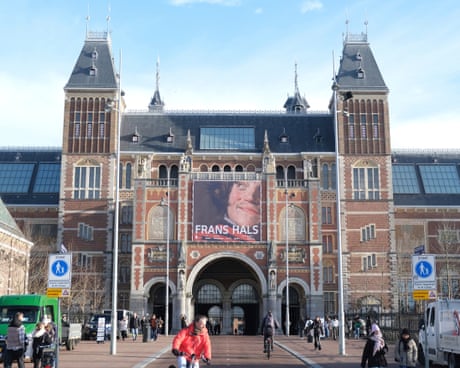
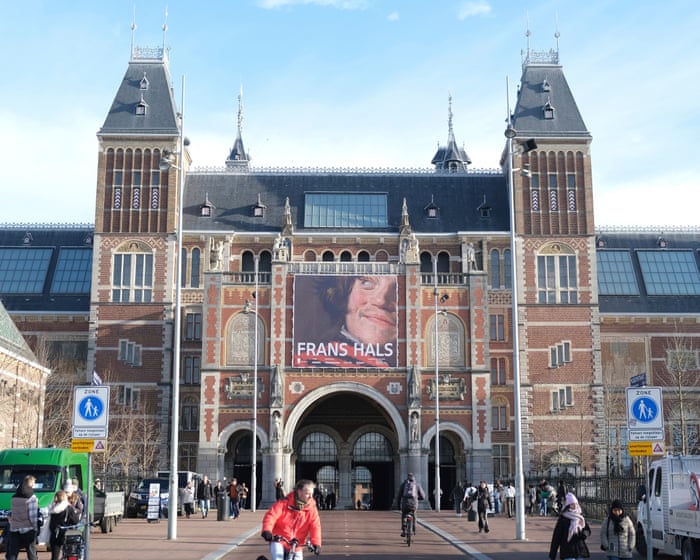
Amsterdam’s Rijksmuseum announces southern outpost in Eindhoven

Museum, which includes rich collection of Vermeers and Rembrandts, currently shows only fraction of its 1m objects

Amsterdam’s Rijksmuseum, which holds the world’s largest trove of paintings from the Dutch Golden Age, has announced plans to open an outpost in Eindhoven.

The museum, which showcases only a fraction of its more than 1m objects, said on Thursday it would construct the 3,500 sq metre centre over the next six to eight years.

Continue reading...

© Photograph: Mike Corder/AP

© Photograph: Mike Corder/AP

© Photograph: Mike Corder/AP

  •  

Downing Street vows to force employment rights bill through Lords

No more concessions, says minister after legislation was thwarted in upper house despite manifesto climbdown

The government has vowed that there will be no more concessions on the employment rights bill and that it will force the Lords to vote on it again next week, after Conservative and cross-bench peers blocked it on Wednesday night.

Ministers and trade unions expressed fury that the bill was voted down again in the House of Lords by peers protesting against the lifting of the compensation cap for unfair dismissal, calling it “cynical wrecking tactics that risk a constitutional crisis”.

Continue reading...

© Photograph: Christopher Furlong/Getty Images

© Photograph: Christopher Furlong/Getty Images

© Photograph: Christopher Furlong/Getty Images

  •  

‘Like a rock star’: the global reverence for Martin Parr’s class-conscious photography

Unfettered love for late photographer in France and elsewhere stands in contrast to occasional reservations in UK

The death of Martin Parr, the photographer whose work chronicled the rituals and customs of British life, was front-page news in France and his life and work were celebrated as far afield as the US and Japan.

If his native England had to shake off concerns about the role of class in Parr’s satirical gaze before it could fully embrace him, countries like France have long revered the Epsom-born artist “like a rock or a movie star”, said the curator Quentin Bajac.

Continue reading...

© Photograph: Dpa Picture Alliance/Alamy

© Photograph: Dpa Picture Alliance/Alamy

© Photograph: Dpa Picture Alliance/Alamy

  •  

‘Not normal’: Climate crisis supercharged deadly monsoon floods in Asia

Cyclones like those in Indonesia, Sri Lanka and Malaysia that killed 1,750 are ‘alarming new reality’

The climate crisis supercharged the deadly storms that killed more than 1,750 people in Asia by making downpours more intense and flooding worse, scientists have reported. Monsoon rains often bring some flooding but the scientists were clear: this was “not normal”.

In Sri Lanka, some floods reached the second floor of buildings, while in Sumatra, in Indonesia, the floods were worsened by the destruction of forests, which in the past slowed rainwater running off hillsides.

Continue reading...

© Photograph: Yt Hariono/AFP/Getty Images

© Photograph: Yt Hariono/AFP/Getty Images

© Photograph: Yt Hariono/AFP/Getty Images

  •  

Tory governments spent £325m on free schools that failed or disappeared

More than £10bn was committed to building new schools between 2014-15 and 2023-24, compared with £6.8bn for rebuilding existing schools

Conservative governments spent £325m creating 67 free schools that subsequently failed or disappeared, many through lack of demand, according to data revealed by a freedom of information request.

The figures from the Department for Education (DfE) show that the government committed more than £10bn to building new schools between 2014-15 and 2023-24, compared with £6.8bn for rebuilding existing schools, which critics say left England with a backlog of crumbling and decaying buildings.

Continue reading...

© Photograph: Ian Forsyth/Getty Images

© Photograph: Ian Forsyth/Getty Images

© Photograph: Ian Forsyth/Getty Images

  •  

Trump has confirmed Europeans’ worst fears. Are their leaders ready to stand up to him now?

The White House has formalised its contempt for ‘decaying’ Europe with an ominous plan to undermine the EU and boost the far right

Almost half of EU citizens regard Donald Trump as an enemy of Europe, a new survey across nine countries revealed last week. The poll, conducted for the French debate platform Le Grand Continent, found that across Europe, Trumpism is considered “a hostile force”.

The new US foreign policy doctrine published by the White House on Friday will have heightened these respondents’ worst fears. The 30-page National Security Strategy landed like a bombshell in Europe. And citizens may have been out in front of their political leaders in figuring out what Trump’s worldview could mean for Europeans.

Continue reading...

© Photograph: Jonathan Ernst/Reuters

© Photograph: Jonathan Ernst/Reuters

© Photograph: Jonathan Ernst/Reuters

  •  

Wes Streeting improves offer to resident doctors in England in attempt to stop strikes

BMA puts health secretary’s offer, which includes pledge to double number of extra training places, to resident doctors

Wes Streeting has made an improved offer to end the long-running dispute with resident doctors before their strike next week that threatens to bring chaos to the NHS as it battles a flu surge.

The health secretary has pledged to double the number of extra places that early career doctors in England can apply for in order to train in the area of medicine they have chosen to specialise in.

Continue reading...

© Photograph: Adam Vaughan/EPA

© Photograph: Adam Vaughan/EPA

© Photograph: Adam Vaughan/EPA

  •  

The Birth Keepers: I choose this – episode one

The Free Birth Society was selling pregnant women a simple message. They could exit the medical system and take back their power. By free birthing. But Nicole Garrison believes FBS ideology nearly cost her her life. This is episode one of a year-long investigation by Guardian journalists Sirin Kale and Lucy Osborne

Continue reading...

© Photograph: The Guardian

© Photograph: The Guardian

© Photograph: The Guardian

  •  

The Guardian view on ECHR reform: times change, but universal values need defending | Editorial

Calls to modernise human rights law too often assume that hostile public opinion cannot be changed by argument from first principles

Arguments over the role of the European convention on human rights in asylum policy express a tension between the politics of an ever-changing world and the principle of immutable humanitarian values.

When Sir Keir Starmer observes that population flows in 2025 are different to conditions 75 years ago, when the ECHR was drafted, and that governments have a duty to adapt to the change, he is responding to political reality.

Do you have an opinion on the issues raised in this article? If you would like to submit a response of up to 300 words by email to be considered for publication in our letters section, please click here.

Continue reading...

© Photograph: Yoan Valat/EPA

© Photograph: Yoan Valat/EPA

© Photograph: Yoan Valat/EPA

  •  

The Guardian view on England’s social housing system: failing the very people it was built for | Editorial

Austerity hollowed out provision and hardened eligibility rules. A broken safety net now shuts out the poorest and drives rising homelessness

Moral logic is flipped on its head in England’s benefits system, which systematically excludes the poorest people from the only housing that was ever intended for them. Social homes were supposed to be for those who couldn’t afford private rents. However, a new report by Crisis shows that, because the stock of homes has been allowed to collapse, housing associations now ration supply by applying strict affordability tests. The homeless charity found that seven in 10 people with a history of rent arrears and no repayment plan would “sometimes” or “always” be excluded from housing registers. Perversely, England’s welfare system induces the very homelessness that it claims to alleviate.

Financial checks, along with rules requiring “local connections”, sharply narrow who can join the queue for social housing. For those who do, a further round of pre-tenancy checks means that about a third of housing associations refuse accommodation because applicants cannot afford even modest rents, a problem rooted in benefit levels that are simply too low. Homelessness therefore rises by design rather than accident. Its origins lie in the coalition’s austerity programme: instead of building social homes, which would have eased pressure on welfare, the government redefined who could qualify. The then chancellor George Osborne, it was said, resisted building houses that might create Labour voters.

Do you have an opinion on the issues raised in this article? If you would like to submit a response of up to 300 words by email to be considered for publication in our letters section, please click here.

Continue reading...

© Photograph: Nathaniel Noir/Alamy

© Photograph: Nathaniel Noir/Alamy

© Photograph: Nathaniel Noir/Alamy

  •  

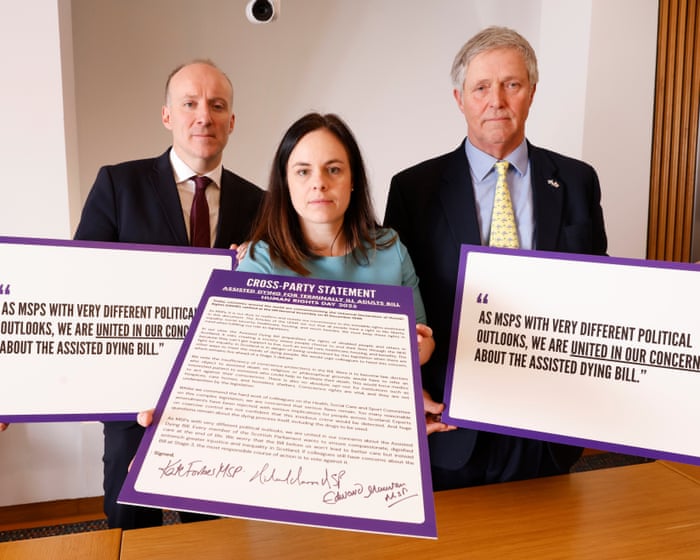
Scotland’s looser rules on assisted dying could lead to ‘death tourism’, say senior politicians

Cross-party group of MSPs says bill going through Holyrood could attract people from elsewhere in UK

Senior Scottish politicians fear there could be a risk of “death tourism” from terminally ill people travelling from other parts of the UK to end their lives in Scotland.

A cross-party group of MSPs, including the deputy first minister, Kate Forbes, said the looser controls on eligibility written into an assisted dying bill for Scotland could attract people who are unhappy with stricter rules planned for England and Wales.

Continue reading...

© Photograph: Murdo MacLeod/The Guardian

© Photograph: Murdo MacLeod/The Guardian

© Photograph: Murdo MacLeod/The Guardian

  •  

Meghan accuses Daily Mail of ethics breach over reporting from father’s bedside

Paper criticised over coverage of Duchess of Sussex’s attempt to contact Thomas Markle after surgery

The Duchess of Sussex has accused the Daily Mail of breaching “clear ethical boundaries” by reporting from the bedside of her estranged father, following his claims he had not received his daughter’s messages.

Thomas Markle appealed to Meghan to see him in a Mail on Sunday interview at the weekend, after he underwent serious surgery in the Philippines.

Continue reading...

© Photograph: Robin Utrecht/REX/Shutterstock

© Photograph: Robin Utrecht/REX/Shutterstock

© Photograph: Robin Utrecht/REX/Shutterstock

  •  

UK joins call for Europe’s human rights laws to be ‘constrained’

Britain aligns with some of Europe’s hardline governments in calling for change to allow Rwanda-style migration deals

The UK has joined some of Europe’s hardline governments in calling for human rights laws to be “constrained” to allow Rwanda-style migration deals with third countries and more foreign criminals to be deported.

Twenty-seven of the 46 Council of Europe members including the UK, Hungary and Italy have signed an unofficial statement that also urges a new framework for the European convention of human rights, which will also narrow the definition of “inhuman and degrading treatment”.

Continue reading...

© Photograph: Gareth Fuller/PA

© Photograph: Gareth Fuller/PA

© Photograph: Gareth Fuller/PA

  •