Login
Login
From Seinfeld to Shawshank, Rob Reiner changed Hollywood for ever
Reiner’s own films reshaped modern comedy and drama with their intelligence, empathy and range. But through his company, Castle Rock, he paved the way for Seinfeld, Sorkin and many more
As a film-maker, Rob Reiner championed humour, civility and intelligence – qualities you suppose would be out of step with the Hollywood of the 1980s where he made his name, and in the 1990s where he scored a series of extraordinary, far-reaching successes. Reiner had a family interest in the workings of on-screen comedy: his father Carl had played a key role on Sid Caesar’s TV shows, which themselves were revolutionary, and helped birth a new generation of screen comics by directing Steve Martin’s film debut The Jerk. Rob had become a household name as Meathead, the liberal foil to Carroll O’Connor’s bigoted Archie Bunker in 70s sitcom All in the Family (the equivalent to Mike Rawlins v Warren Mitchell in the British original, Till Death Us Do Part). But it was as a director and producer that he really made his impact felt.
In 1984, Reiner released This Is Spinal Tap, a “mockumentary” about a fictitious heavy metal band from the UK that rewrote the rules on what comedy could do. It sent up rock’n’roll behaviour and codified its cliches (with Reiner himself doing a hilarious parody of Martin Scorsese’s hosting role in The Last Waltz) and gave us zingers that haven’t lost their comedy power more than 30 years on: “The numbers all go to 11”, “it’s such a fine line between stupid, and er … clever.” Its deployment of improvised comedy was revolutionary for a Hollywood feature, and while Reiner wasn’t the first to use the fake-documentary techniques for comedic purposes (that goes back at least to Woody Allen’s Take the Money and Run), it hugely popularised the mockumentary style; subsequent efforts include Bob Roberts, Fear of a Black Hat, Drop Dead Gorgeous and Borat: Cultural Learnings of America for Make Benefit Glorious Nation of Kazakhstan. All these owe Tap a huge debt – as well as the microgenre of star Christopher Guest’s improv-mockumentaries: Waiting for Guffman, Best in Show and A Mighty Wind. Almost incidentally, Spinal Tap became a sort-of-real band, with tours, record releases and a follow-up feature (Spinal Tap II: The End Continues), in which the presence of music industry titans Paul McCartney and Elton John demonstrated the high regard in which the original was held.
Continue reading...
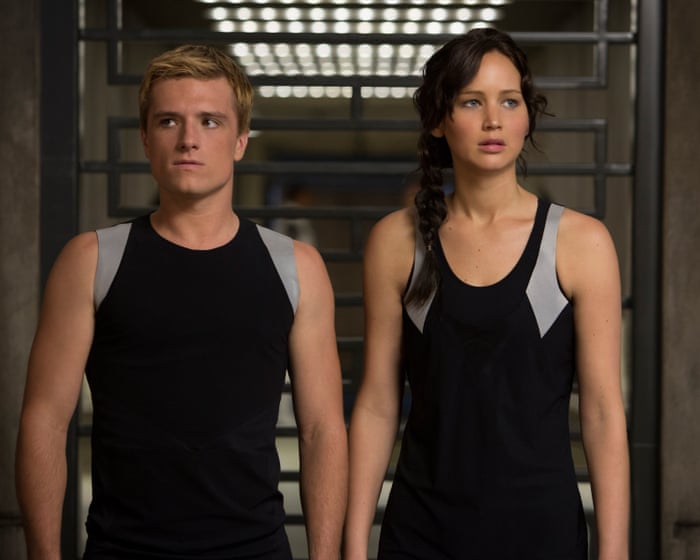
© Photograph: PictureLux/The Hollywood Archive/Alamy
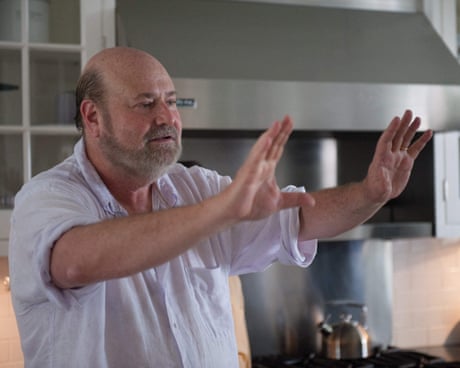
© Photograph: PictureLux/The Hollywood Archive/Alamy
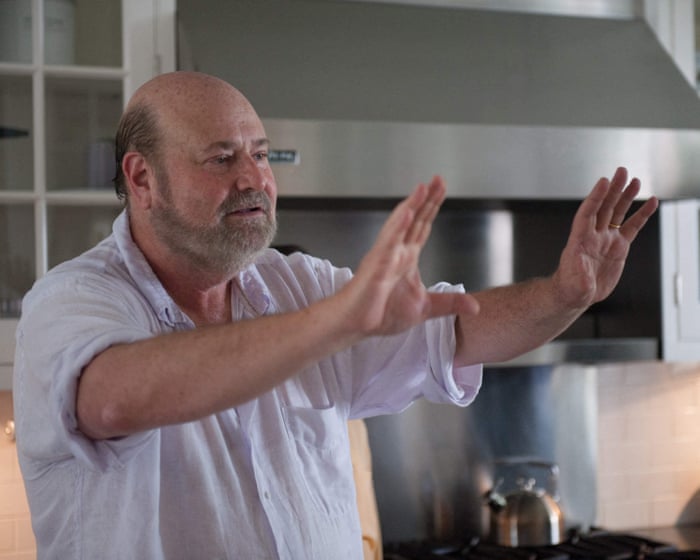
© Photograph: PictureLux/The Hollywood Archive/Alamy