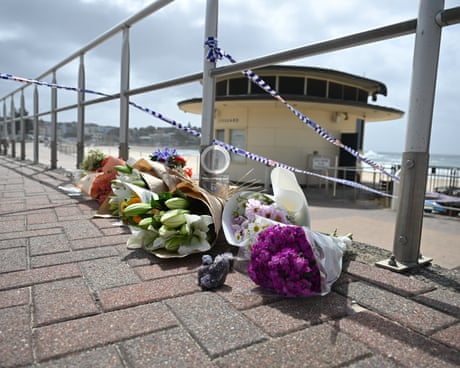
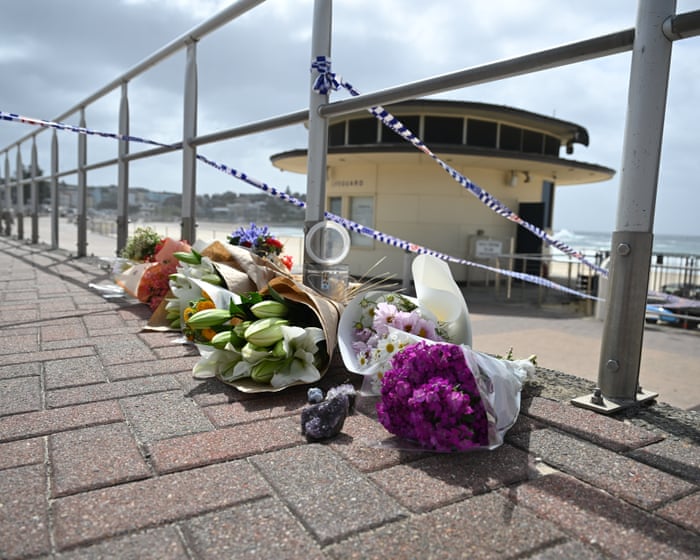
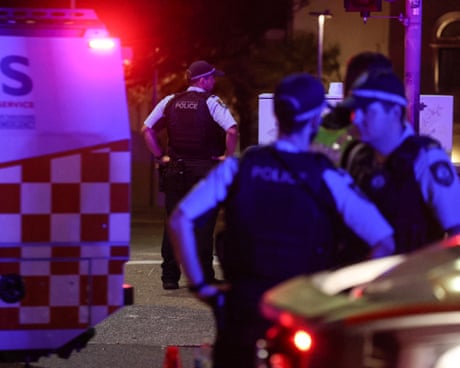
The alleged gunman shot dead by police during Sunday’s attack on Australia’s Bondi beach was originally from the southern Indian city of Hyderabad and his family there seemed unaware of his alleged “radical mindset”, Indian police said on Tuesday.
Meanwhile the second alleged gunman who was hospitalised after also being shot by police has awoken from a coma and may be charged as early as today, Seven News has reported.
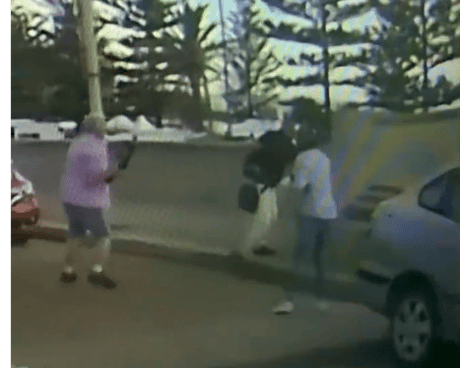
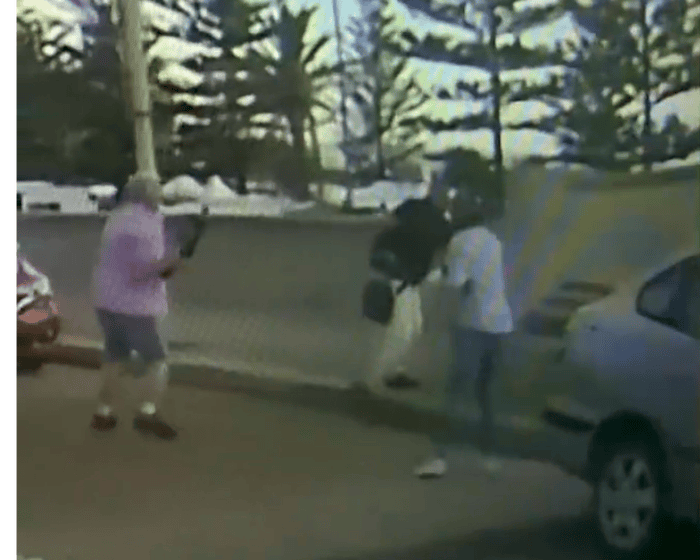
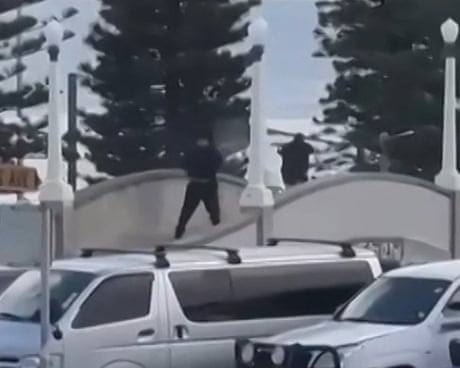
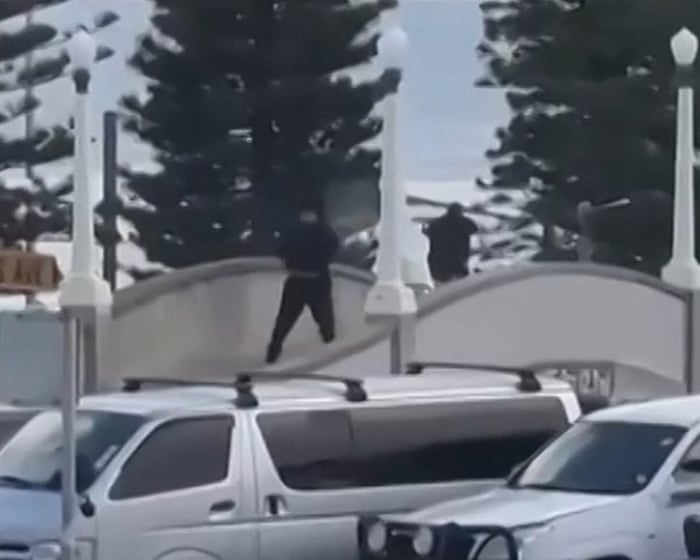
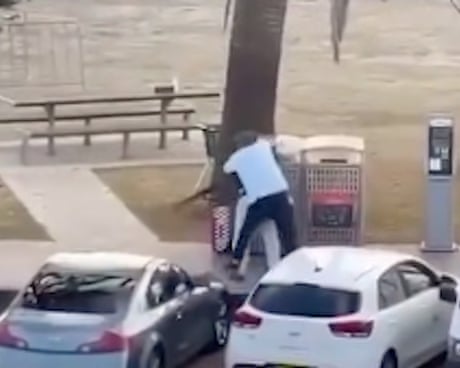
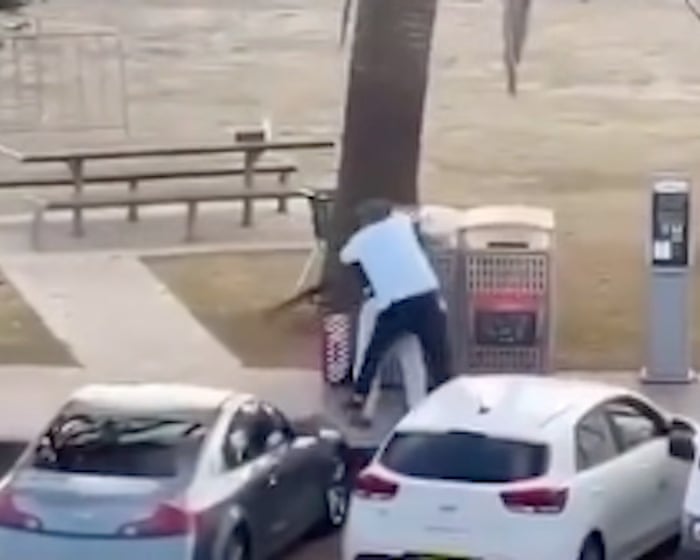
Dramatic footage has emerged of two victims who were killed while trying to stop a gunman during the early stages of the Bondi beach terror attack on Sunday.
The couple have been identified as Boris Gurman, 69, and Sofia Gurman, 61, after their family gave a statement to the Sydney Morning Herald.
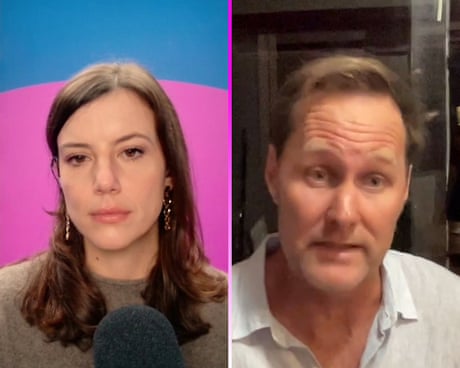
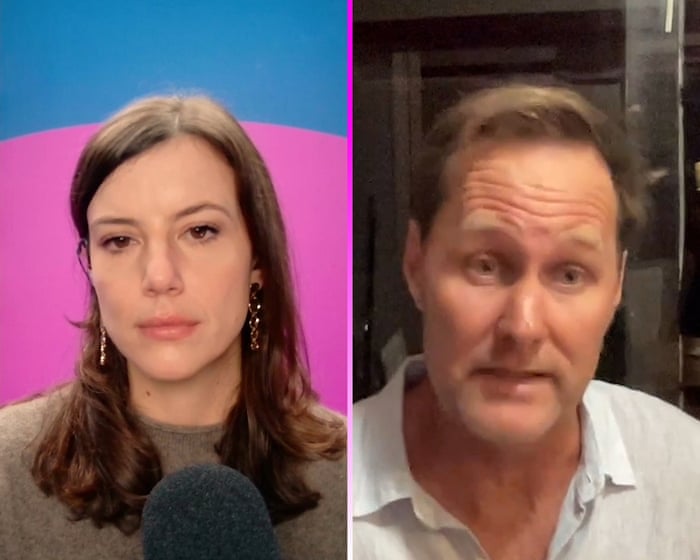
Australia suffered one of the deadliest massacres in its modern history on Sunday when two gunmen opened fire on a Jewish celebration at Bondi in Sydney. At least 16 people died, including one of the alleged gunmen, with more than 40 left wounded. The victims include a 10-year-old child, a Holocaust survivor and a London-born rabbi. The alleged gunmen behind the attack are a father-son duo, suspected of using legally obtained firearms to commit the massacre. Naveed Akram, 24, was known to New South Wales police and security agencies and had been linked with an Islamic State cell. The Australian prime minister, Anthony Albanese, is facing questions about gun law reform and security failings as Australians reel from the attack. Lucy Hough talks to the Guardian Australia senior reporter Ben Doherty
When Ahmed al-Ahmed tackled and wrested a gun from an alleged shooter at Bondi beach, he was simply thinking that he “couldn’t bear to see people dying”, his cousin says.
Less than a day later, al-Ahmed remains in a critical but stable condition at St George hospital in Sydney. Since the attack, the 43-year-old father of two young girls has catapulted to international fame with a GoFundMe page already raising more than $A1.3m (£645,000; $864,000) in less than 24 hours.
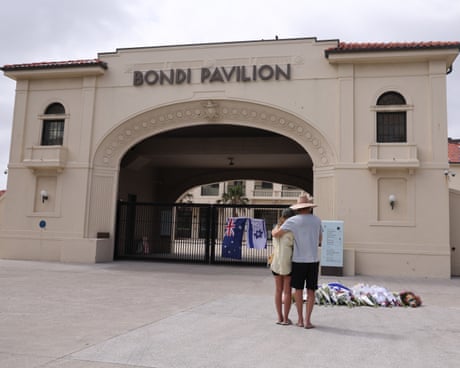
Australia experienced one of its deadliest mass shootings in its history on Sunday when two gunmen opened fire on a Jewish celebration at Bondi in Sydney. At least 16 people are dead, including one of the alleged killers.
Here is what we know so far:
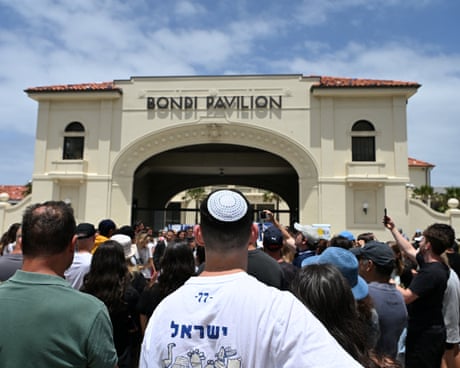
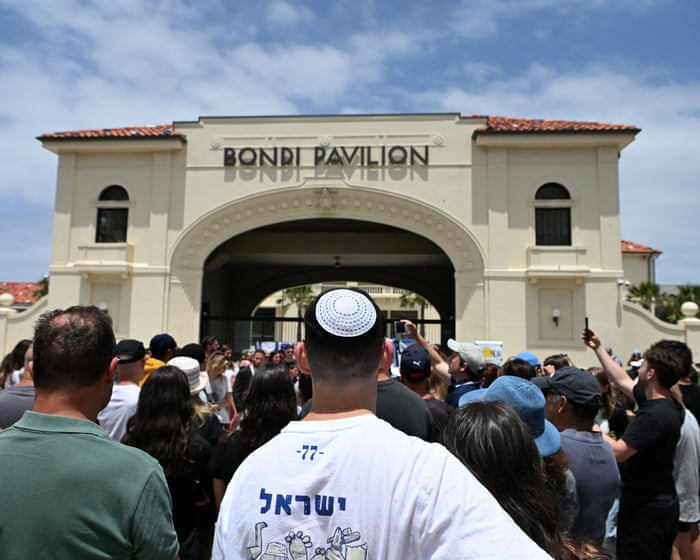
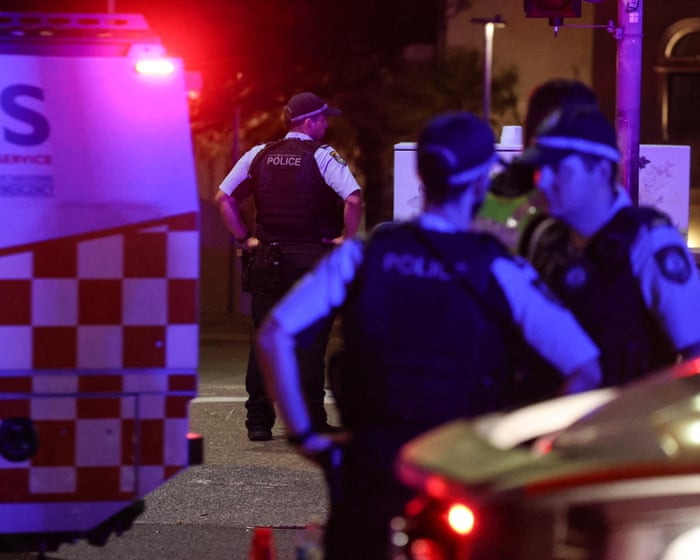
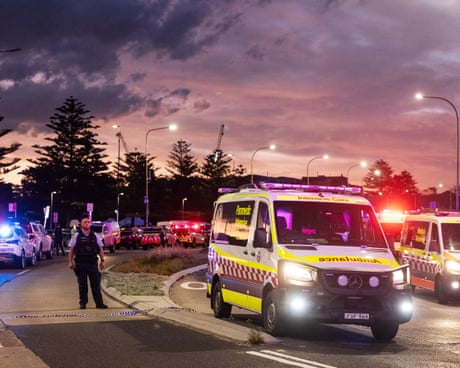
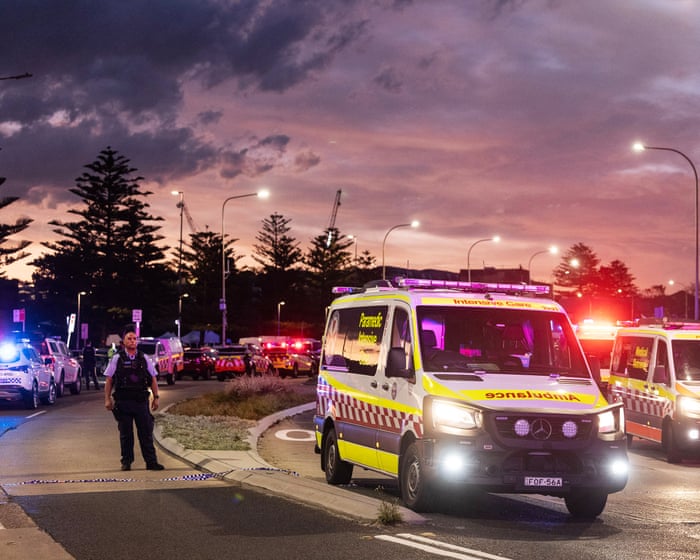
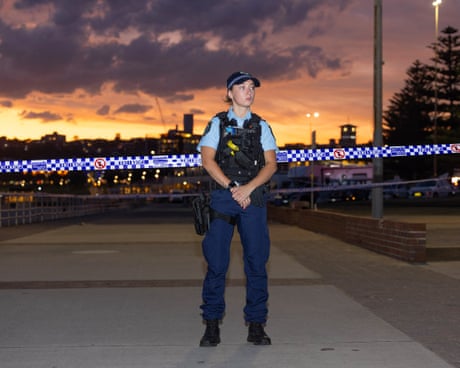
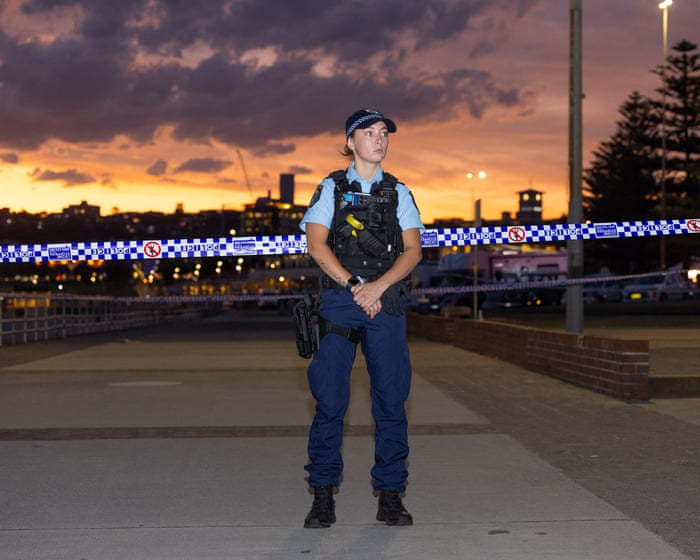
On Sunday at 6.47pm local time, police and emergency services were called to Archer Park next to Sydney’s Bondi beach after reports of gunshots.
Footage shared on social media showed two gunman firing continuously at a large group who had gathered to celebrate the Jewish festival of Hanukah.
At least 16 people are dead, including one of the alleged shooters. Among the dead are holocaust survivor Alexander Kleytman, London-born rabbi Eli Schlanger, French national Dan Elkayam, businessman Reuven Morrison, retired police officer Peter Meagher and a 10-year-old girl. Police believe the oldest victim is 87.
Forty-two people were taken to hospital after the attack. At 9.30pm local time on Monday, there were 26 people in Sydney hospitals. Seven were in a critical condition, five were in a critical but stable condition and 14 were in a stable condition.
Two police officers were among the injured and were both in a critical but stable condition.
Police said they were treating the attack as an act of terrorism.
The alleged gunmen were a 50-year-old, who was shot by police and died at the scene, and his 24-year-old son, who suffered critical injuries and was taken to hospital under police guard where he remained on Monday.
Police have not named the alleged gunmen, but media have identified them as Naveed Akram and his father, Sajid Akram.
Naveed Akram is an Australian-born citizen, the home affairs minister, Tony Burke, said. His father arrived in 1998 on a student visa, transferred in 2001 to a partner visa and, after trips overseas, had been on resident return visas three times.
The prime minister, Anthony Albanese, said the son first came to the attention of the Australian Security Intelligence Organisation (Asio) in October 2019. He was examined “on the basis of being associated with others”.
New South Wales police and the director general of Asio, Mike Burgess, said one of the shooters was known to authorities, “but not in an immediate threat perspective”.
The NSW police commissioner, Mal Lanyon, said the father was a licensed firearms holder with six guns.
Bomb disposal experts removed two active improvised explosive devices from the scene. Police said on Monday a third IED was located at Bondi.
The alleged gunmen behind the Bondi beach attack are a father-son duo suspected of using legally obtained firearms to commit the massacre, according to police.
Rozen had attended the Chanukah by the Sea event with her family when the terrorist attack began that evening, bringing a terrifying end to the day’s Jewish celebration of light.
Like everyone else, I watched news of the Bondi attack unfold last night with shock, horror and dismay. As I did so, I was immediately assailed by imagery of bodies lying on the ground, barely hidden from view. I closed these videos immediately, knowing the way this imagery can stick in your mind.
When terrible events such as yesterday’s attack occur, we often race to find out as much as possible about what happened. We do so by trawling social media and news sites. This is a natural way of making sense of events, and reflects a human urge to know what is occurring around us in order to keep us safe. Sometimes it’s a more prurient interest, like the way we slow down to look at a crash.
Dr Ahona Guha is a clinical and forensic psychologist, trauma expert and author from Melbourne. She is the author of Reclaim: Understanding Complex Trauma and Those Who Abuse, and Life Skills For a Broken World.
In Australia, support is available at Beyond Blue on 1300 22 4636, Lifeline on 13 11 14, and Griefline on 1300 845 745. In the UK, the charity Mind is available on 0300 123 3393. In the US, call or text Mental Health America at 988 or chat 988lifeline.org. Other international helplines can be found at befrienders.org
There are now more guns in the community per capita than in the aftermath of the Port Arthur massacre, with at least 2,000 new firearms lawfully entering the community every week
For almost three decades, Australia’s gun laws have been recognised as among the most stringent – and effective – in the world.
After the horror of the 1996 Port Arthur massacre that killed 35 people in Tasmania, Australia’s then conservative government stared down the gun lobby to introduce restrictions that led to a dramatic decrease in the number of guns.
Jewish communities across the world have reacted with shock, sadness and solidarity after what Australia’s prime minister described as a “targeted attack on Jewish Australians” at Bondi beach in Sydney.
On Sunday, as hundreds of people were gathered to celebrate the first day of Hanukah, the Jewish festival of lights, at least two individuals armed with guns began firing on crowds on the beach. At least 11 people were killed and 29 injured in what police designated as a terrorist attack. One of the alleged gunman was also killed, bringing the total number of dead to 12.
The prime minister, Anthony Albanese, just released a statement. He said:
The scenes in Bondi are shocking and distressing. Police and emergency responders are on the ground working to save lives. My thoughts are with every person affected.
I just have spoken to the AFP Commissioner and the NSW Premier. We are working with NSW Police and will provide further updates as more information is confirmed.
I urge people in the vicinity to follow information from the NSW Police.
A bystander tackled and wrestled a gun from one of the two alleged gunmen during the Bondi beach mass shooting in which at least 16 people were killed, footage shows.
Seven News reported the man was a 43-year-old fruit shop owner from the Sutherland Shire named Ahmed al-Ahmed.

 Login
Login