Reading view

Can a Transparent Piece of Plastic Win the Invisible War on Your Identity?

Identity systems hold modern life together, yet we barely notice them until they fail. Every time someone starts a new job, crosses a border, or walks into a secure building, an official must answer one deceptively simple question: Is this person really who they claim to be? That single moment—matching a living, breathing human to..

The post Can a Transparent Piece of Plastic Win the Invisible War on Your Identity? appeared first on Security Boulevard.

  •  

When Love Becomes a Shadow: The Inner Journey After Parental Alienation

There's a strange thing that happens when a person you once knew as your child seems, over years, to forget the sound of your voice, the feel of your laugh, or the way your presence once grounded them. It isnt just loss - it's an internal inversion: your love becomes a shadow. Something haunting, familiar, yet painful to face.

I know this because I lived it - decade after decade - as the father of two sons, now ages 28 and 26. What has stayed with me isn't just the external stripping away of connection, but the internal fracture it caused in myself.

Some days I felt like the person I was before alienation didn't exist anymore. Not because I lost my identity, but because I was forced to confront parts of myself I never knew were there - deep fears, hidden hopes, unexamined beliefs about love, worth, and attachment.

This isn't a story of blame. It's a story of honesty with the inner terrain - the emotional geography that alienation carved into my heart.

The Silent Pull: Love and Loss Intertwined

Love doesn't disappear when a child's affection is withdrawn. Instead, it changes shape. It becomes more subtle, less spoken, but no less alive.

When your kids are little, love shows up in bedtime stories, laughter, scraped knees, and easy smiles. When they're adults and distant, love shows up in the quiet hurt - the way you notice an empty chair, or a text that never came, or the echo of a memory that still makes your heart ache.

This kind of love doesn't vanish. It becomes a quiet force pulling you inward - toward reflection instead of reaction, toward steadiness instead of collapse.

Unmasking Attachment: What the Mind Holds Onto

There's a psychological reality at play here that goes beyond custody schedules, angry words, or fractured holidays. When a person - especially a young person - bonds with one attachment figure and rejects another, something profound is happening in the architecture of their emotional brain.

In some dynamics of parental influence, children form a hyper‑focused attachment to one caregiver and turn away from the other. That pattern isn't about rational choice but emotional survival. Attachment drives us to protect what feels safe and to fear what feels unsafe - even when the fear isn't grounded in reality. High Conflict Institute

When my sons leaned with all their emotional weight toward their mother - even to the point of believing impossible things about me - it was never just "obedience." It was attachment in overdrive: a neural pull toward what felt like safety, acceptance, or approval. And when that sense of safety was threatened by even a hint of disapproval, the defensive system in their psyche kicked into high gear.

This isn't a moral judgment. It's the brain trying to survive.

The Paradox of Love: Holding Two Realities at Once

Here's the part no one talks about in polite conversation:

You can love someone deeply and grieve their absence just as deeply - at the same time.

It's one of the paradoxes that stays with you long after the world expects you to "move on."

You can hope that the door will open someday

and you can also acknowledge it may never open in this lifetime.

You can forgive the emotional wounds that were inflicted

and also mourn the lost years that you'll never get back.

You can love someone unconditionally

and still refuse to let that love turn into self‑erosion.

This tension - this bittersweet coexistence - becomes a part of your inner life.

This is where the real work lives.

When Attachment Becomes Overcorrection

When children grow up in an environment where one caregiver's approval feels like survival, the attachment system can begin to over‑regulate itself. Instead of trust being distributed across relationships, it narrows. The safe figure becomes everything. The other becomes threatening by association, even when there's no rational basis for fear. Men and Families

For my sons, that meant years of believing narratives that didn't fit reality - like refusing to consider documented proof of child support, or assigning malicious intent to benign situations. When confronted with facts, they didn't question the narrative - they rationalized it to preserve the internal emotional logic they had built around attachment and fear.

That's not weakness. That's how emotional survival systems work.

The Inner Terrain: Learning to Live With Ambivalence

One of the hardest lessons is learning to hold ambivalence without distortion. In healthy relational development, people can feel both love and disappointment, both closeness and distance, both gratitude and grief - all without collapsing into one extreme or the other.

But in severe attachment distortion, the emotional brain tries to eliminate complexity - because complexity feels dangerous. It feels unstable. It feels like uncertainty. And the emotional brain prefers certainty, even if that certainty is painful. Karen Woodall

Learning to tolerate ambiguity - that strange space where love and loss coexist - becomes a form of inner strength.

What I've Learned - Without Naming Names

I write this not to indict, accuse, or vilify anyone. The human psyche is far more complicated than simple cause‑and‑effect. What I've learned - through years of quiet reflection - is that:

  • Attachment wounds run deep, and they can overshadow logic and memory.

  • People don't reject love lightly. They reject fear and threat.

  • Healing isn't an event. It's a series of small acts of awareness and presence.

  • Your internal world is the only place you can truly govern. External reality is negotiable - inner life is not.

Hope Without Guarantee

I have a quiet hope - not a loud demand - that one day my sons will look back and see the patterns that were invisible to them before. Not to blame. Not to re‑assign guilt. But to understand.

Hope isn't a promise. It's a stance of openness - a willingness to stay emotionally available without collapsing into desperation.

Living With the Shadow - and the Light

Healing isn't about winning back what was lost. It's about cultivating a life that holds the loss with compassion and still knows how to turn toward joy when it appears - quietly, softly, unexpectedly.

Your heart doesn't have to choose between love and grief. It can carry both.

And in that carrying, something deeper begins to grow.

#

Sources & Resources

Parental Alienation & Emotional Impact

Attachment & Alienation Theory

General Parental Alienation Background

The post When Love Becomes a Shadow: The Inner Journey After Parental Alienation appeared first on Security Boulevard.

  •  

EFF and 12 Organizations Urge UK Politicians to Drop Digital ID Scheme Ahead of Parliamentary Petition Debate

The UK Parliament convened earlier this week to debate a petition signed by 2.9 million people calling for an end to the government’s plans to roll out a national digital ID. Ahead of that debate, EFF and 12 other civil society organizations wrote to politicians in the country urging MPs to reject the Labour government’s newly announced digital ID proposal.

The UK’s Prime Minister Keir Starmer pitched the scheme as a way to “cut the faff” in proving people’s identities by creating a virtual ID on personal devices with information like names, date of birth, nationality, photo, and residency status to verify their right to live and work in the country. 

But the case for digital identification has not been made. 

As we detail in our joint briefing, the proposal follows a troubling global trend: governments introducing expansive digital identity systems that are structurally incompatible with a rights-respecting democracy. The UK’s plan raises six interconnected concerns:

  1. Mission creep
  2. Infringements on privacy rights
  3. Serious security risks
  4. Reliance on inaccurate and unproven technologies
  5. Discrimination and exclusion
  6. The deepening of entrenched power imbalances between the state and the public.

Digital ID schemes don’t simply verify who you are—they redefine who can access services and what those services look like. They become a gatekeeper to essential societal infrastructure, enabling governments and state agencies to close doors as easily as they open them. And they disproportionately harm those already at society’s margins, including people seeking asylum and undocumented communities, who already face heightened surveillance and risk.

Even the strongest recommended safeguards cannot resolve the core problem: a mandatory digital ID scheme that shifts power dramatically away from individuals and toward the state. No one should be coerced—technically or socially—into a digital system in order to participate fully in public life. And at a time when almost 3 million people in the UK have called on politicians to reject this proposal, the government must listen to people and say no to digital ID.

Read our civil society briefing in full here.

  •  

ServiceNow to Acquire Identity Security Firm Veza

consolidation, security, cyberthreats, Darktrace cybersecurity acquisition

ServiceNow Inc. announced on Tuesday plans to acquire Veza in a move aimed at fortifying security for identity and access management. The acquisition will integrate Veza’s technology into ServiceNow’s Security and Risk portfolios, helping organizations monitor and control access to critical data, applications, systems, and artificial intelligence (AI) tools. The deal comes as businesses increasingly..

The post ServiceNow to Acquire Identity Security Firm Veza appeared first on Security Boulevard.

  •  

Privacy is For the Children (Too)

In the past few years, governments across the world have rolled out different digital identification options, and now there are efforts encouraging online companies to implement identity and age verification requirements with digital ID in mind. This blog is the third in a short series that explains digital ID and the pending use case of age verification. Here, we cover alternative frameworks on age controls, updates on parental controls, and the importance of digital privacy in an increasingly hostile climate politically. You can read the first two posts here, and here.

Observable harms of age verification legislation in the UK, US, and elsewhere:

As we witness the effects of the Online Safety Act in the UK and over 25 state age verification laws in the U.S, it has become even more apparent that mandatory age verification is more of a detriment than a benefit to the public. Here’s what we’re seeing:

It’s obvious: age verification will not keep children safe online. Rather, it is a large proverbial hammer that nails everyone—adults and young people alike—into restrictive parameters of what the government deems appropriate content. That reality is more obvious and tangible now that we’ve seen age-restrictive regulations roll out in various states and countries. But that doesn’t have to be the future if we turn away from age-gating the web.

Keeping kids safe online (or anywhere IRL, let’s not forget) is a complex social issue that cannot be resolved with technology alone.

The legislators responsible for online age verification bills must confront that they are currently addressing complex social issues with a problematic array of technology. Most of policymakers’ concerns about minors' engagement with the internet can be sorted into one of three categories:

  • Content risks: The negative implications from exposure to online content that might be age-inappropriate, such as violent or sexually explicit content, or content that incites dangerous behavior like self-harm. 
  • Conduct risks: Behavior by children or teenagers that might be harmful to themselves or others, like cyberbullying, sharing intimate or personal information or problematic overuse of a service.
  • Contact risks: The potential harms stemming from contact with people that might pose a risk to minors, including grooming or being forced to exchange sexually explicit material.

Parental controls—which already exist!—can help.

These three categories of possible risks will not be eliminated by mandatory age verification—or any form of techno-solutionism, for that matter. Mandatory age checks will instead block access to vital online communities and resources for those people—including young people—who need them the most. It’s an ineffective and disproportionate tool to holistically address young people’s online safety. 

However, these can be partially addressed with better-utilized and better-designed parental controls and family accounts. Existing parental controls are woefully underutilized, according to one survey that collected answers from 1,000 parents. Adoption of parental controls varied widely, from 51% on tablets to 35% on video game consoles. Making parental controls more flexible and accessible, so parents better understand the tools and how to use them, could increase adoption and address content risk more effectively than a broad government censorship mandate.  

Recently, Android made its parental controls easier to set up. It rolled out features that directly address content risk by assisting parents who wish to block specific apps and filter out mature content from Google Chrome and Google Search. Apple also updated its parental controls settings this past summer by instituting new ways for parents to manage child accounts and giving app developers access to a Declared Age Range API. Where parents can declare age range and apps can respond to declared ranges established in child accounts, without giving over a birthdate. With this, parents are given some flexibility like age-range information beyond just 13+. A diverse range of tools and flexible settings provide the best options for families and empower parents and guardians to decide and tailor what online safety means for their own children—at any age, maturity level, or type of individual risk.

Privacy laws can also help minors online.

Parental controls are useful in the hands of responsible guardians. But what about children who are neglected or abused by those in charge of them? Age verification laws cannot solve this problem; these laws simply share possible abuse of power with the state. To address social issues, we need more efforts directed at the family and community structures around young people, and initiatives that can mitigate the risk factors of abuse instead of resorting to government control over speech.

While age verification is not the answer, those seeking legislative solutions can instead focus their attention on privacy laws—which are more than capable of assisting minors online, no matter the state of their at-home care. Comprehensive data privacy, which EFF has long advocated for, is perhaps the most obvious way to keep the data of young people safe online. Data brokers gather a vast amount of data and assemble new profiles of information as a young person uses the internet. These data sets also contribute to surveillance and teach minors that it is normal to be tracked as they use the web. Banning behavioral ads would remove a major incentive for companies to collect as much data as they do and be able to sell it to whomever will buy it from them. For example, many age-checking tools use data brokers to establish “age estimation” on emails used to sign up for an online service, further incentivizing a vicious cycle of data collection and retention. Ultimately, privacy-encroaching companies are rewarded for the years of mishandling our data with lucrative government contracts.

These systems create much more risk online and offline for young people in terms of their privacy over time from online surveillance and in authoritarian political climates. Age verification proponents often acknowledge that there are privacy risks, and dismiss the consequences by claiming the trade off will “protect children.” These systems don’t foster safer online practices for young people; they encourage increasingly invasive ways for governments to define who is and isn’t free to roam online. If we don’t re-establish ways to maintain online anonymity today, our children’s internet could become unrecognizable and unusable for not only them, but many adults as well. 

Actions you can take today to protect young people online:

  • Use existing parental controls to decide for yourself what your kid should and shouldn’t see, who they should engage with, etc.
  • Discuss the importance of online privacy and safety with your kids and community.
  • Provide spaces and resources for young people to flexibly communicate with their schools, guardians, and community.
  • Support comprehensive privacy legislation for all.
  • Support legislators’ efforts to regulate the out-of-control data broker industry by banning behavioral ads.

Join EFF in opposing mandatory age verification and age gating laws—help us keep your kids safe and protect the future of the internet, privacy, and anonymity.

  •  

CrewAI GitHub Token Exposure Highlights the Growing Risk of Static Credentials in AI Systems

3 min readAs AI platforms grow more complex and interdependent, small failures can cast long shadows. That’s what happened inside the open-source CrewAI platform, where a vulnerability in its error-handling logic surfaced during a provisioning failure. The resulting “exception response” – the message a service returns when it encounters an unhandled error during a request – contained […]

The post CrewAI GitHub Token Exposure Highlights the Growing Risk of Static Credentials in AI Systems appeared first on Aembit.

The post CrewAI GitHub Token Exposure Highlights the Growing Risk of Static Credentials in AI Systems appeared first on Security Boulevard.

  •  

The Trust Crisis: Why Digital Services Are Losing Consumer Confidence

TrustCloud third party risk Insider threat Security Digital Transformation

According to the Thales Consumer Digital Trust Index 2025, global confidence in digital services is slipping fast. After surveying more than 14,000 consumers across 15 countries, the findings are clear: no sector earned high trust ratings from even half its users. Most industries are seeing trust erode — or, at best, stagnate. In an era..

The post The Trust Crisis: Why Digital Services Are Losing Consumer Confidence appeared first on Security Boulevard.

  •  

Verifying Trust in Digital ID Is Still Incomplete

In the past few years, governments across the world have rolled out different digital identification options, and now there are efforts encouraging online companies to implement identity and age verification requirements with digital ID in mind. This blog is the second in a short series that explains digital ID and the pending use case of age verification. Upcoming posts will evaluate what real protections we can implement with current digital ID frameworks and discuss how better privacy and controls can keep people safer online.

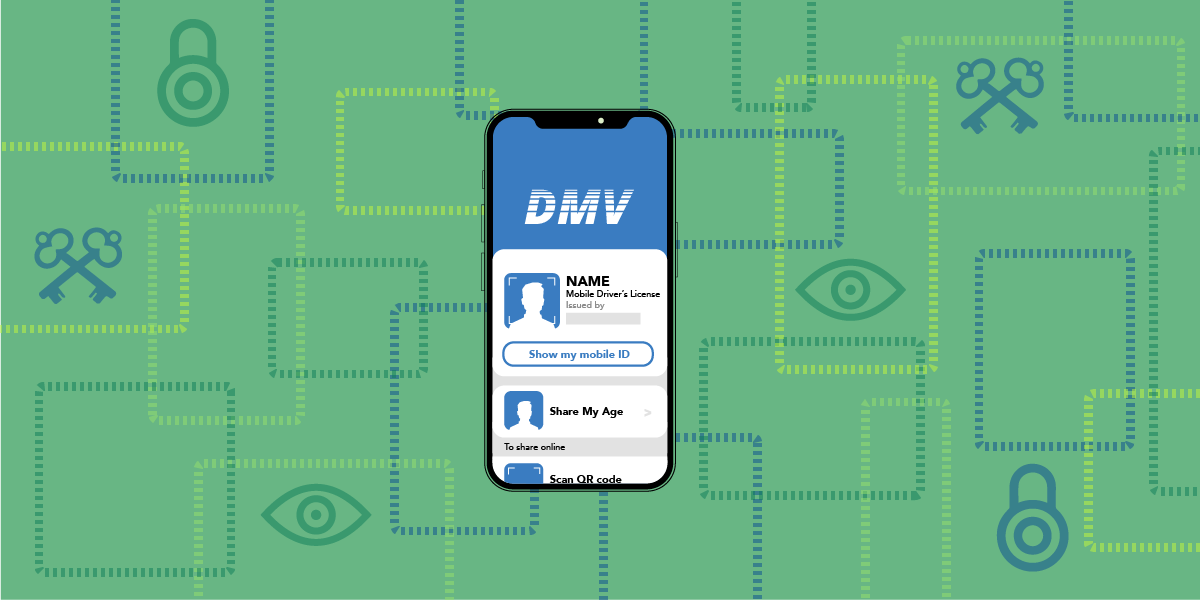
Digital identity encompasses various aspects of an individual's identity that are presented and verified through either the internet or in person. This could mean a digital credential issued by a certification body or a mobile driver’s license provisioned to someone’s mobile wallet. They can be presented in plain text on a device, as a scannable QR code, or through tapping your device to something called a Near Field Communication (NFC) reader. There are other ways to present credential information that is a little more privacy preserving, but in practice those three methods are how we are seeing digital ID being used today.

Advocates of digital ID often use a framework they call the "Triangle of Trust." This is usually presented as a triangle of exchange between the holder of an ID—those who use a phone or wallet application to access a service; the issuer of an ID—this is normally a government entity, like the state Departments of Motor Vehicles in the U.S, or a banking system; and the verifier of an ID—the entity that wants to confirm your identity, such as law enforcement, a university, a government benefits office, a porn site, or an online retailer.

This triangle implies that the issuer and verifier—for example, the government who provides the ID and the website checking your age—never need to talk to one another. This theoretically avoids the tracking and surveillance threats that arise by preventing your ID, by design, from phoning home every time you verify your ID with another party.

But it also makes a lot of questionable assumptions, such as:

1) the verifier will only ever ask for a limited amount of information. 

2) the verifier won’t store information it collects.

3) the verifier is always trustworthy. 

The third assumption is especially problematic. How do you trust that the verifier will protect your most personal information and not use, store, or sell it beyond what you have consented to? Any of the following could be verifiers:

  • Law enforcement when doing a traffic stop and verifying your ID as valid.
  • A government benefits office that requires ID verification to sign up for social security benefits.
  • A porn site in a state or country which requires age verification or identity verification before allowing access.
  • An online retailer selling products like alcohol or tobacco.

Looking at the triangle again, this isn’t quite an equal exchange. Your personal ID like a driver’s license or government ID is both one of the most centralized and sensitive documents you have—you can’t control how it is issued or create your own, having to go through your government to obtain one. This relationship will always be imbalanced. But we have to make sure digital ID does not exacerbate these imbalances.

The effort to answer the questions of how to prevent verifier abuse is ongoing. But instead of working on the harms that these systems cause, the push for this technology is being fast-tracked by governments around the world scrambling to solve what they see as a crisis of online harms by mandating age verification. And current implementations of the Triangle of Trust have already proven disastrous.

One key example of the speed of implementation outpacing proper protections is the Digital Credential API. Initially launched by Google and now supported by Apple, this rollout allows for mass, unfettered verification by apps and websites to use the API to request information from your digital ID. The introduction of this technology to people’s devices came with no limits or checks on what information verifiers can seek—incentivizing verifiers to over-ask for ID information beyond the question of whether a holder is over a certain age, simply because they can. 

Digital Credential API also incentivizes for a variety of websites to ask for ID information that aren’t required and did not commonly do so previously. For example, food delivery services, medical services, and gaming sites, and literally anyone else interested in being a verifier, may become one tomorrow with digital ID and the Digital Credential API. This is both an erosion of personal privacy, as well as a pathway into further surveillance. There must be established limitations and scope, including:

  • verifiers establishing who they are and what they plan to ask from holders. There should also be an established plan for transparency on verifiers and their data retention policies.
  • ways to identify and report abusive verifiers, as well as real consequences, like revoking or blocking a verifier from requesting IDs in the future.
  • unlinkable presentations that do not allow for verifier and issuer collusion. As well as no data shared between verifiers you attest to. Preventing tracking of your movements in person or online every time you attest your age.

A further point of concern arises in cases of abuse or deception. A malicious verifier can send a request with no limiting mechanisms or checks and the user who rejects the request could be  fully blocked from the website or application. There must be provisions that ensure people have access to vital services that will require age verification from visitors.

Pop up asking user to make sure they trust the website they are submitting ID info to

Government's efforts to tackle verifiers potentially abusing digital ID requests haven’t come to fruition yet. For example, the EU Commission recently launched its age verification “mini app” ahead of the EU ID wallet for 2026. The mini app will not have a registry for verifiers, as EU regulators had promised and then withdrew. Without verifier accountability, the wallet cannot tell if a request is legitimate. As a result, verifiers and issuers will demand verification from the people who want to use online services, but those same people are unable to insist on verification and accountability from the other sides of the triangle. 

While digital ID gets pushed as the solution to the problem of uploading IDs to each site users access, the security and privacy on them varies based on implementation. But when privacy is involved, regulators must make room for negotiation. There should be more thoughtful and protective measures for holders interacting with more and more potential verifiers over time. Otherwise digital ID solutions will just exacerbate existing harms and inequalities, rather than improving internet accessibility and information access for all.

  •  

Zero Knowledge Proofs Alone Are Not a Digital ID Solution to Protecting User Privacy

In the past few years, governments across the world have rolled out digital identification options, and now there are efforts encouraging online companies to implement identity and age verification requirements with digital ID in mind. This blog is the first in this short series that will explain digital ID and the pending use case of age verification. The following posts will evaluate what real protections we can implement with current digital ID frameworks and discuss how better privacy and controls can keep people safer online.

Age verification measures are having a moment, with policymakers in the U.S. and around the world passing legislation mandating online services and companies to introduce technologies that require people to verify their identities to access content deemed appropriate for their age. But for most people, having physical government documentation like a driver's license, passport, or other ID is not a simple binary of having it or not. Physical ID systems involve hundreds of factors that impact their accuracy and validity, and everyday situations occur where identification attributes can change, or an ID becomes invalid or inaccurate or needs to be reissued: addresses change, driver’s licenses expire or have suspensions lifted, or temporary IDs are issued in lieu of obtaining permanent identification.  

The digital ID systems currently being introduced potentially solve some problems like identity fraud for business and government services, but leave the holder of the digital ID vulnerable to the needs of the companies collecting such information. State and federal embrace of digital ID is based on claims of faster access, fraud prevention, and convenience. But with digital ID being proposed as a means of online verification, it is just as likely to block claims of public assistance and other services as facilitate them. That’s why legal protections are as important as the digital IDs themselves. To add to this, in places that lack comprehensive data privacy legislation, verifiers are not heavily restricted in what they can and can’t ask the holder. In response, some privacy mechanisms have been suggested and few have been made mandatory, such as the promise that a feature called Zero Knowledge Proofs (ZKPs) will easily solve the privacy aspects of sharing ID attributes.

Zero Knowledge Proofs: The Good News

The biggest selling point of modern digital ID offerings, especially to those seeking to solve mass age verification, is being able to incorporate and share something called a Zero Knowledge Proof (ZKP) for a website or mobile application to verify ID information, and not have to share the ID itself or information explicitly on it. ZKPs provide a cryptographic way to not give something away, like your exact date of birth and age from your ID, instead offering a “yes-or-no” claim (like above or below 18) to a verifier requiring a legal age threshold. More specifically, two properties of ZKPs are “soundness” and “zero knowledge.” Soundness is appealing to verifiers and governments to make it hard for an ID holder to present forged information (the holder won’t know the “secret”). Zero-Knowledge can be beneficial to the holder, because they don’t have to share explicit information like a birth date, just cryptographic proof that said information exists and is valid. There have been recent announcements from major tech companies like Google who plan to integrate ZKPs for age verification and “where appropriate in other Google products”.

Zero Knowledge Proofs: The Bad News

What ZKPs don’t do is mitigate verifier abuse or limit their requests, such as over-asking for information they don’t need or limiting the number of times they request your age over time. They don’t prevent websites or applications from collecting other kinds of observable personally identifiable information like your IP address or other device information while interacting with them.

ZKPs are a great tool for sharing less data about ourselves over time or in a one time transaction. But this doesn’t do a lot about the data broker industry that already has massive, existing profiles of data on people. We understand that this was not what ZKPs for age verification were presented to solve. But it is still imperative to point out that utilizing this technology to share even more about ourselves online through mandatory age verification establishes a wider scope for sharing in an already saturated ecosystem of easily linked, existing personal information online. Going from presenting your physical ID maybe 2-3 times a week to potentially proving your age to multiple websites and apps every day online is going to render going online itself as a burden at minimum and a barrier entirely at most for those who can’t obtain an ID.

Protecting The Way Forward

Mandatory age verification takes the potential privacy benefits of mobile ID and proposed ZKPs solutions, then warps them into speech chilling mechanisms.

Until the hard questions of power imbalances for potentially abusive verifiers and prevention of phoning home to ID issuers are addressed, these systems should not be pushed forward without proper protections in place. A more private, holder-centric ID is more than just ZKPs as a catch all for privacy concerns. The case of safety online is not solved through technology alone, and involves multiple, ongoing conversations. Yes, that sounds harder to do than age checks online for everyone. Maybe, that’s why this is so tempting to implement. However, we encourage policy and law makers to look into what is best, and not what is easy.

  •