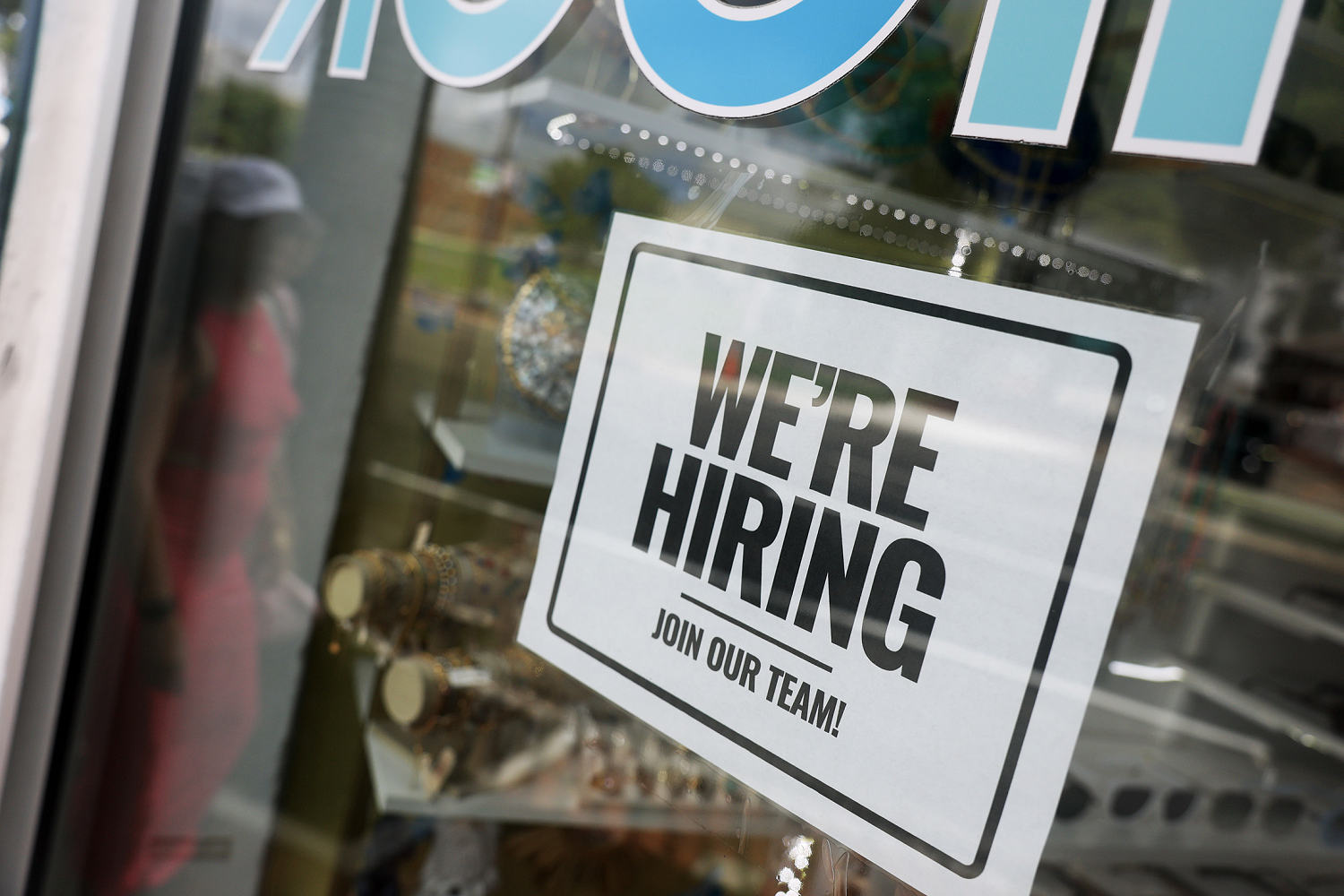
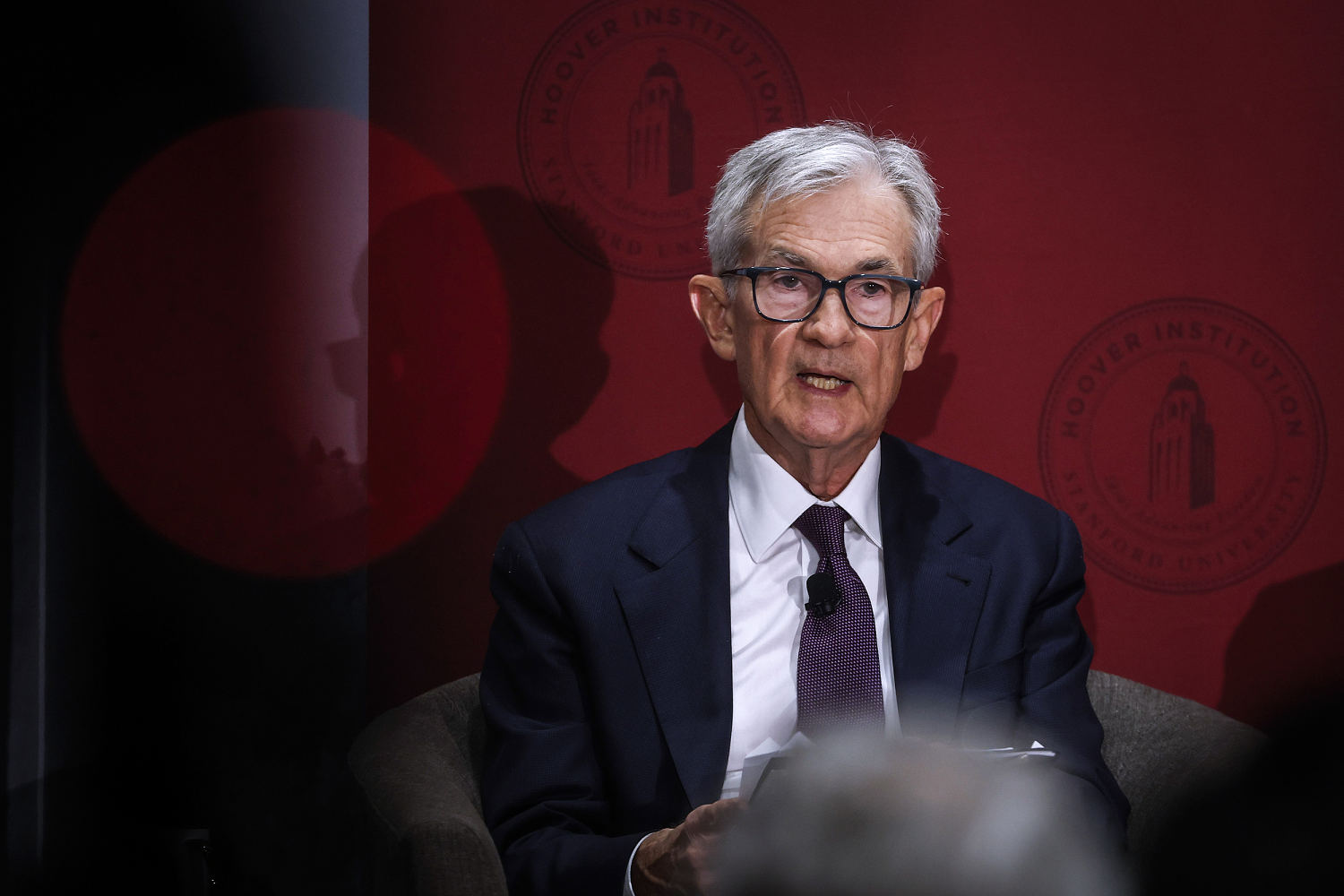
A deeper look at the federal jobs data reveals trends in teen and Black unemployment, factory jobs and lopsided sector breakdowns that could spell trouble.
Ambiguity isn't just a challenge. It's a leadership test - and most fail it.
I want to start with something that feels true but gets ignored way too often.
Most of us in leadership roles have a love hate relationship with ambiguity. We say we embrace it... until it shows up for real. Then we freeze, hedge our words, or pretend we have a plan. Cybersecurity teams deal with ambiguity all the time. Its in threat intel you cant quite trust, in stakeholder demands that swing faster than markets, in patch rollouts that go sideways. But ambiguity isnt a bug to be fixed. Its a condition to be led through.
[Image: A leader facing a foggy maze of digital paths - ambiguity as environment.]
Lets break this down the way I see it, without jazz hands or buzzwords.
Ambiguity isn't uncertainty. Its broader.
Uncertainty is when you lack enough data to decide. Ambiguity is when even the terms of the problem are in dispute. Its not just what we don't know. Its what we cant define yet. In leadership terms, that feels like being handed a puzzle where some pieces aren't even shaped yet. This is classic VUCA territory - volatility, uncertainty, complexity and ambiguity make up the modern landscape leaders sit in every day.
[Image: The dual nature of ambiguity - logic on one side, uncertainty on the other.]
Here is the blunt truth. Great leaders don't eliminate ambiguity. They engage with it. They treat ambiguity like a partner you've gotta dance with, not a foe to crush.
Ambiguity is a leadership signal
When a situation is ambiguous, its telling you something. Its saying your models are incomplete, or your language isn't shared, or your team has gaps in context. Stanford researchers and communication experts have been talking about this recently: ambiguity often reflects a gap in the shared mental model across the team. If you're confused, your team probably is too.
A lot of leadership texts treat ambiguity like an enemy of clarity. But thats backward. Ambiguity is the condition that demands sensemaking. Sensemaking is the real work. Its the pattern of dialogue and iteration that leads to shared understanding amid chaos. That means asking the hard questions out loud, not silently wishing for clarity.
If your team seems paralyzed, unclear, or checked out - it might not be them. It might be you.
Leaders model calm confusion
Think about that phrase. Calm confusion. Leaders rarely say, "I don't know." Instead they hedge, hide, or overcommit. But leaders who effectively navigate ambiguity do speak up about what they don't know. Not to sound vulnerable in a soft way, but to anchor the discussion in reality. That model gives permission for others to explore unknowns without fear.
I once watched a director hold a 45-minute meeting to "gain alignment" without once stating the problem. Everyone left more confused than when they walked in. That’s not leadership. That's cover.
There is a delicate balance here. You don't turn every ambiguous situation into a therapy session. Instead, you create boundaries around confusion so the team knows where exploration stops and action begins. Good leaders hold this tension.
Move through ambiguity with frameworks, not polish
Here is a practical bit. One common way to get stuck is treating decisions as if they're singular. But ambiguous situations usually contain clusters of decisions wrapped together. A good framework is to break the big, foggy problem into smaller, more combinable decisions. Clarify what is known, identify the assumptions you are making, and make provisional calls on the rest. Treat them like hypotheses to test, not laws of motion.
In cybersecurity, this looks like mapping your threat intel to scenarios where you know the facts, then isolating the areas of guesswork where your team can experiment or prepare contingencies. Its not clean. But it beats paralysis.
Teams learn differently under ambiguity
If you have ever noticed that your best team members step up in times of clear crises, but shut down when the goals are vague, you're observing humans responding to ambiguity differently. Some thirst for structure. Others thrive in gray zones. As a leader, you want both. You shape the context so self starters can self start, and then you steward alignment so the whole group isnt pulling in four directions.
Theres a counterintuitive finding in team research: under certain conditions, ambiguity enables better collaborative decision making because the absence of a single voice forces people to share and integrate knowledge more deeply. But this only works when there is a shared understanding of the task and a culture of open exchange.
Lead ambiguity, don't manage it
Managing ambiguity sounds like you're trying to tighten it up, reduce it, or push it into a box. Leading ambiguity is different. It's about moving with the uncertainty. Encouraging experiments. Turning unknowns into learning loops. Recognizing iterative decision processes rather than linear ones.
And yes, that approach feels messy. Good. Leadership is messy. The only thing worse than ambiguity is false certainty. I've been in too many rooms where leaders pretended to know the answer, only to cost time, credibility, or talent. You can be confident without being certain. That's leadership.
But there's a flip side no one talks about.
Sometimes leaders use ambiguity as a shield. They stay vague, push decisions down the org, and let someone else take the hit if it goes sideways. I've seen this pattern more than once. Leaders who pass the fog downstream and call it empowerment. Except it's not. It's evasion. And it sets people up to fail.
Real leaders see ambiguity for what it is: a moment to step up and mentor. To frame the unknowns, offer scaffolding, and help others think through it with some air cover. The fog is a chance to teach — not disappear.
But the hard truth? Some leaders can't handle the ambiguity themselves. So they deflect. They repackage their own discomfort as a test of independence, when really they're just dodging responsibility. And sometimes, yeah, it feels intentional. They act like ambiguity builds character... but only because they're too insecure or inexperienced to lead through it.
The result is the same: good people get whiplash. Goals shift. Ownership blurs. Trust erodes. And the fog thickens.
There's research on this, too. It's called role ambiguity — when you're not clear on what's expected, what your job even is, or how success gets measured. People in those situations don't just get frustrated. They burn out. They overcompensate for silence. They stop trusting. And productivity tanks. It's not about needing a five-year plan. It's about needing a shared frame to work from. Leadership sets that tone.
Leading ambiguity means owning the fog, not outsourcing it.
Ambiguity isn't a one-off problem. It's a perpetual condition, especially in cybersecurity and executive realms where signals are weak and stakes are high. The real skill isn't clarity. It's resilience. The real job isn't prediction. It's navigation.
Lead through ambiguity by embracing the fog, not burying it. And definitely not dumping it on someone else.
When the fog rolls in, what kind of leader are you really?
Green-led authority to provide 250 pitches in richer neighbourhoods rather than poorer parts of the city
Bristol city council has vowed to open temporary sites for people who live in vehicles in some of the most affluent neighbourhoods rather than trying to shift them to more deprived areas.
The Green-led authority is aiming to provide 250 pitches on “meanwhile sites” – often plots of land about to be developed – for vehicle dwellers by the spring.
Rob Reiner's son arrested after his parents' deaths, authorities release images of suspected gunman in Brown University shooting, police say Bondi Beach shooting was inspired by Islamic State group.
The federal government will release October’s payrolls and November’s full jobs report, both of which were delayed by the historic government shutdown.
There's a strange thing that happens when a person you once knew as your child seems, over years, to forget the sound of your voice, the feel of your laugh, or the way your presence once grounded them. It isnt just loss - it's an internal inversion: your love becomes a shadow. Something haunting, familiar, yet painful to face.
I know this because I lived it - decade after decade - as the father of two sons, now ages 28 and 26. What has stayed with me isn't just the external stripping away of connection, but the internal fracture it caused in myself.
Some days I felt like the person I was before alienation didn't exist anymore. Not because I lost my identity, but because I was forced to confront parts of myself I never knew were there - deep fears, hidden hopes, unexamined beliefs about love, worth, and attachment.
This isn't a story of blame. It's a story of honesty with the inner terrain - the emotional geography that alienation carved into my heart.
The Silent Pull: Love and Loss Intertwined
Love doesn't disappear when a child's affection is withdrawn. Instead, it changes shape. It becomes more subtle, less spoken, but no less alive.
When your kids are little, love shows up in bedtime stories, laughter, scraped knees, and easy smiles. When they're adults and distant, love shows up in the quiet hurt - the way you notice an empty chair, or a text that never came, or the echo of a memory that still makes your heart ache.
This kind of love doesn't vanish. It becomes a quiet force pulling you inward - toward reflection instead of reaction, toward steadiness instead of collapse.
Unmasking Attachment: What the Mind Holds Onto
There's a psychological reality at play here that goes beyond custody schedules, angry words, or fractured holidays. When a person - especially a young person - bonds with one attachment figure and rejects another, something profound is happening in the architecture of their emotional brain.
In some dynamics of parental influence, children form a hyper‑focused attachment to one caregiver and turn away from the other. That pattern isn't about rational choice but emotional survival. Attachment drives us to protect what feels safe and to fear what feels unsafe - even when the fear isn't grounded in reality. High Conflict Institute
When my sons leaned with all their emotional weight toward their mother - even to the point of believing impossible things about me - it was never just "obedience." It was attachment in overdrive: a neural pull toward what felt like safety, acceptance, or approval. And when that sense of safety was threatened by even a hint of disapproval, the defensive system in their psyche kicked into high gear.
This isn't a moral judgment. It's the brain trying to survive.
The Paradox of Love: Holding Two Realities at Once
Here's the part no one talks about in polite conversation:
You can love someone deeply and grieve their absence just as deeply - at the same time.
It's one of the paradoxes that stays with you long after the world expects you to "move on."
You can hope that the door will open someday
and you can also acknowledge it may never open in this lifetime.
You can forgive the emotional wounds that were inflicted
and also mourn the lost years that you'll never get back.
You can love someone unconditionally
and still refuse to let that love turn into self‑erosion.
This tension - this bittersweet coexistence - becomes a part of your inner life.
This is where the real work lives.
When Attachment Becomes Overcorrection
When children grow up in an environment where one caregiver's approval feels like survival, the attachment system can begin to over‑regulate itself. Instead of trust being distributed across relationships, it narrows. The safe figure becomes everything. The other becomes threatening by association, even when there's no rational basis for fear. Men and Families
For my sons, that meant years of believing narratives that didn't fit reality - like refusing to consider documented proof of child support, or assigning malicious intent to benign situations. When confronted with facts, they didn't question the narrative - they rationalized it to preserve the internal emotional logic they had built around attachment and fear.
That's not weakness. That's how emotional survival systems work.
The Inner Terrain: Learning to Live With Ambivalence
One of the hardest lessons is learning to hold ambivalence without distortion. In healthy relational development, people can feel both love and disappointment, both closeness and distance, both gratitude and grief - all without collapsing into one extreme or the other.
But in severe attachment distortion, the emotional brain tries to eliminate complexity - because complexity feels dangerous. It feels unstable. It feels like uncertainty. And the emotional brain prefers certainty, even if that certainty is painful. Karen Woodall
Learning to tolerate ambiguity - that strange space where love and loss coexist - becomes a form of inner strength.
What I've Learned - Without Naming Names
I write this not to indict, accuse, or vilify anyone. The human psyche is far more complicated than simple cause‑and‑effect. What I've learned - through years of quiet reflection - is that:
Attachment wounds run deep, and they can overshadow logic and memory.
People don't reject love lightly. They reject fear and threat.
Healing isn't an event. It's a series of small acts of awareness and presence.
Your internal world is the only place you can truly govern. External reality is negotiable - inner life is not.
Hope Without Guarantee
I have a quiet hope - not a loud demand - that one day my sons will look back and see the patterns that were invisible to them before. Not to blame. Not to re‑assign guilt. But to understand.
Hope isn't a promise. It's a stance of openness - a willingness to stay emotionally available without collapsing into desperation.
Living With the Shadow - and the Light
Healing isn't about winning back what was lost. It's about cultivating a life that holds the loss with compassion and still knows how to turn toward joy when it appears - quietly, softly, unexpectedly.
Your heart doesn't have to choose between love and grief. It can carry both.
And in that carrying, something deeper begins to grow.
#
Sources & Resources
Parental Alienation & Emotional Impact
International Society for the New Definition of Abuse & Family Violence - overview on parental alienation as child abuse: https://isnaf.info/our-mission-2/
In cybersecurity, being “always on” is often treated like a badge of honor.
We celebrate the leaders who respond at all hours, who jump into every incident, who never seem to unplug. Availability gets confused with commitment. Urgency gets mistaken for effectiveness. And somewhere along the way, exhaustion becomes normalized—if not quietly admired.
But here’s the uncomfortable truth:
Always-on leadership doesn’t scale. And over time, it becomes a liability.
I’ve seen it firsthand, and if you’ve spent any real time in high-pressure security environments, you probably have too.
The Myth of Constant Availability
Cybersecurity is unforgiving. Threats don’t wait for business hours. Incidents don’t respect calendars. That reality creates a subtle but dangerous expectation: real leaders are always reachable.
The problem isn’t short-term intensity. The problem is when intensity becomes an identity.
When leaders feel compelled to be everywhere, all the time, a few things start to happen:
Decision quality quietly degrades
Teams become dependent instead of empowered
Strategic thinking gets crowded out by reactive work
From the outside, it can look like dedication. From the inside, it often feels like survival mode.
And survival mode is a terrible place to lead from.
What Burnout Actually Costs
Burnout isn’t just about being tired. It’s about losing margin—mental, emotional, and strategic margin.
Leaders without margin:
Default to familiar solutions instead of better ones
React instead of anticipate
Solve today’s problem at the expense of tomorrow’s resilience
In cybersecurity, that’s especially dangerous. This field demands clarity under pressure, judgment amid noise, and the ability to zoom out when everything is screaming “zoom in.”
When leaders are depleted, those skills are the first to go.
Strong Leaders Don’t Do Everything—They Design Systems
One of the biggest mindset shifts I’ve seen in effective leaders is this:
They stop trying to be the system and start building one.
That means:
Creating clear decision boundaries so teams don’t need constant escalation
Trusting people with ownership, not just tasks
Designing escalation paths that protect focus instead of destroying it
This isn’t about disengaging. It’s about leading intentionally.
Ironically, the leaders who are least available at all times are often the ones whose teams perform best—because the system works even when they step away.
Presence Beats Availability
There’s a difference between being reachable and being present.
Presence is about:
Showing up fully when it matters
Making thoughtful decisions instead of fast ones
Modeling sustainable behavior for teams that are already under pressure
When leaders never disconnect, they send a message—even if unintentionally—that rest is optional and boundaries are weakness. Over time, that culture burns people out long before the threat landscape does.
Good leaders protect their teams.
Great leaders also protect their own capacity to lead.
A Different Measure of Leadership
In a field obsessed with uptime, response times, and coverage, it’s worth asking a harder question:
If I stepped away for a week, would things fall apart—or function as designed?
If the answer is “fall apart,” that’s not a personal failure. It’s a leadership signal. One that points to opportunity, not inadequacy.
The strongest leaders I know aren’t always on.
They’re intentional. They’re disciplined. And they understand that long-term effectiveness requires more than endurance—it requires self-mastery.
In cybersecurity especially, that might be the most underrated leadership skill of all.
#
References & Resources
World Health Organization (WHO) — Burn-out an “occupational phenomenon” (ICD-11 overview)
Benjamin Lewis pleads guilty to harassing Christians by dumping dead deer and lambs in New Forest
A 47-year-old man has admitted harassing Christians by dumping animal carcasses outside churches in and around an English forest.
Benjamin Lewis admitted seven offences relating to incidents in which dead deer and lambs were left at churches in the New Forest in Hampshire earlier this year.
To transform cyber risk into economic advantage, leaders must treat cyber as a board-level business risk and rehearse cross-border incidents with partners to build trust.
The convergence of physical and digital security is driving a shift toward software-driven, open-architecture edge computing. Access control has typically been treated as a physical domain problem — managing who can open which doors, using specialized systems largely isolated from broader enterprise IT. However, the boundary between physical and digital security is increasingly blurring. With..
Disney said it reached a deal with OpenAI to bring its characters to the company's Sora video generator. Disney also accused Google of copyright infringement.
Disney said it reached a deal with OpenAI to bring its characters to the company's Sora video generator. Disney also accused Google of copyright infringement.
With ACA tax credits set to expire, Sen. Jeanne Shaheen says premiums are "doubling, tripling" and warns "millions" could lose coverage if Congress fails to act.
Sen. Elizabeth Warren cautions that the sale of Warner Bros. Discovery to either Netflix or Paramount Skydance could reduce competition and concentrate power over what films and news American see.
NPR's Steve Inskeep asks Senator Elizabeth Warren (D-MA) about her concerns over the fight between Netflix and Paramount to take over Warner Bros. Discovery.
Every day he broadcasts a marathon Twitch stream, airing his views to his three million followers. It has led to fame – and some fear – in a country ever more politically divided
Hasan Piker calls it the bus driver test: “You get on a bus and you have 30 seconds to explain whatever online phenomena took place to the bus driver without them looking at you and going, ‘Get off the fucking bus.’” Most online discourse, no matter how heated, fails the test, he says – not least an incident last weekend, when someone on a Dublin street asked to take a picture with Piker, then held up a picture of his dog and shouted “Free Kaya!” Never mind the bus driver; trying to explain the significance of this particular event might well take the rest of this article, but the wider point is that there is a jarring overlap, or more often disconnect, between the online and offline worlds.
Piker finds himself in this in-between space more and more these days. Until fairly recently, the 34-year-old was familiar only to the very online, especially Americans in their 20s and 30s, largely thanks to his presence on the streaming channel Twitch, where he has 3 million followers. But since Donald Trump’s election, Piker has become an in-demand voice in “the real world” for his views on the beleaguered political left, and especially that inordinately fretted-over demographic, young men.
The prime minister and his counterpart in Denmark want a concerted effort to weaken human rights across Europe. This isn’t pragmatism – it’s cruelty
Steve Valdez-Symonds is refugee and migrant rights director at Amnesty UK
When Keir Starmer and Mette Frederiksen, the Danish prime minister, argue that asylum protections must be rewritten for a new “era”, they are not simply adjusting policy. They are reshaping the moral ground our societies stand on.
Their message is clear: hardening rules so that fewer people receive protection is the way to restore confidence in their leadership. They present this as measured and responsible, even progressive. But what they propose is not a new centre ground; it is a retreat into a politics that regards some lives as less worthy than others.
Steve Valdez-Symonds is refugee and migrant rights director with Amnesty International UK
NPR's Steve Inskeep asks conservative commentator Brett Cooper about her YouTube following, her recent criticisms of President Trump and her opinion of Nick Fuentes.
More than 300 flood warnings or alerts across UK as homes left without power, sporting events cancelled and transport disrupted
Flights, trains and ferries were cancelled, motorists faced long delays and thousands of properties were left without power across the UK and Ireland after Storm Bram brought heavy rain and strong winds.
By Tuesday night, there were more than 300 flood warnings or alerts across the UK and sporting matches and festive events were cancelled because of the weather.
President Donald Trump said the United States would permit NVIDIA to ship its H200 AI chips to approved customers in China, effectively ending an export ban.
President Donald Trump said the United States would permit NVIDIA to ship its H200 AI chips to approved customers in China, effectively ending an export ban.
Agriculture Secretary Brooke Rollins said that the money will be paid by Feb. 28 and that farmers will find out by the end of the month how much will be in their checks.
Agriculture Secretary Brooke Rollins said that the money will be paid by Feb. 28 and that farmers will find out by the end of the month how much will be in their checks.
Apple's top artificial intelligence executive is stepping down and will retire in 2026, an abrupt change at a company known for its careful succession plans.
John Giannandrea, senior vice president of machine learning and AI strategy at Apple, during the Apple Worldwide Developers Conference in Cupertino, Calif., on June 10, 2024.
John Giannandrea, senior vice president of machine learning and AI strategy at Apple, during the Apple Worldwide Developers Conference in Cupertino, Calif., on June 10, 2024.
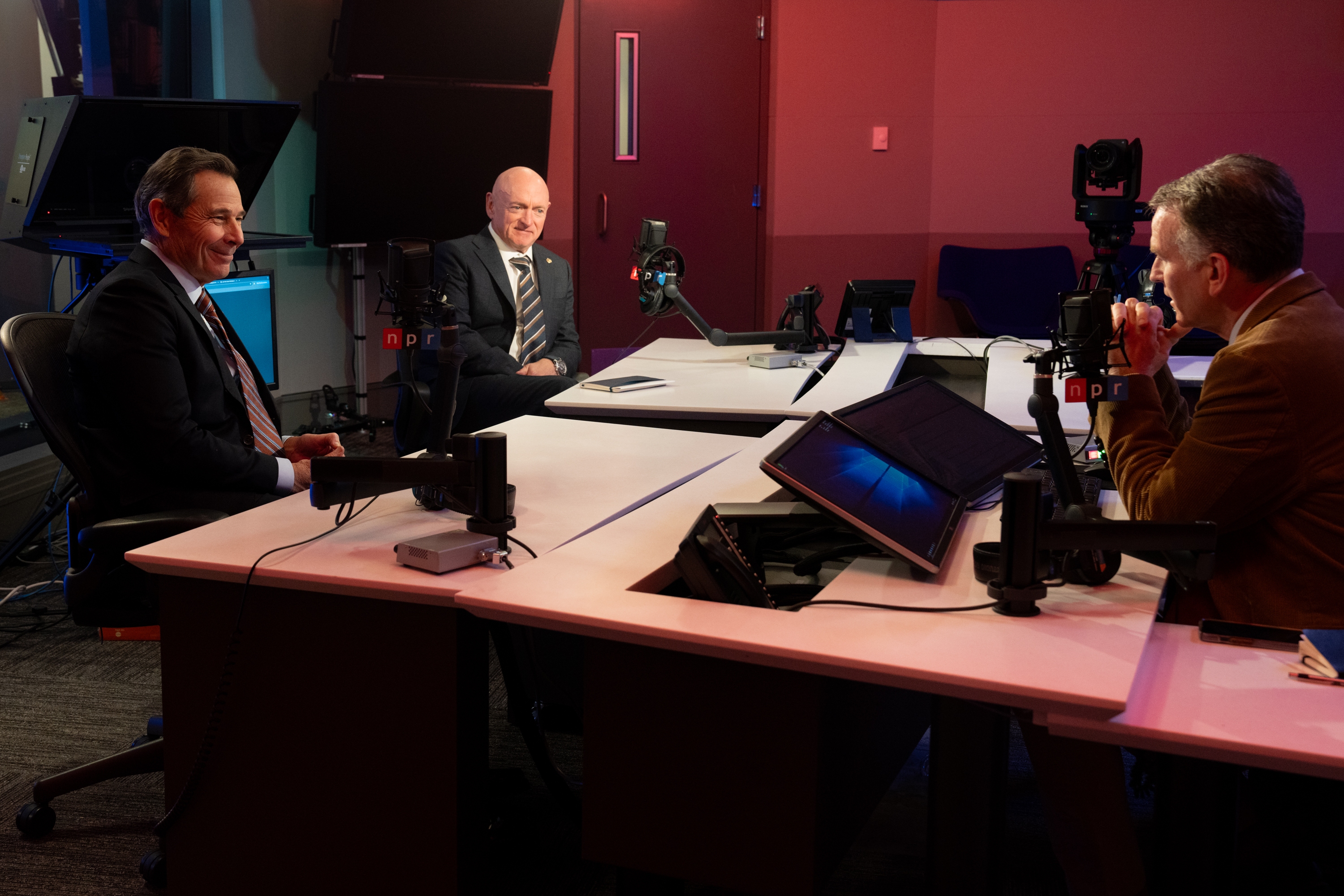
Sens. Mark Kelly, D-Ariz.,and John Curtis, R-Utah, want to hold social media companies accountable for the negative impacts their algorithms have on people. They spoke to NPR about their bill.
Chinese astronauts for the Shenzhou-20 mission attend a send-off ceremony for their manned space mission at the Jiuquan Satellite Launch Center in northwestern China earlier this year.
In a major antitrust ruling, a federal judge stopped short of ordering Google to sell off its popular Chrome browser, but ordered other penalties against the tech giant.
 Login
Login