Reading view

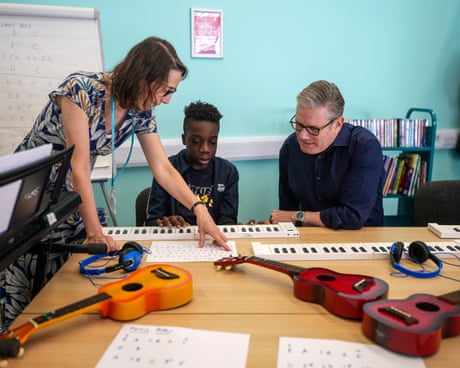
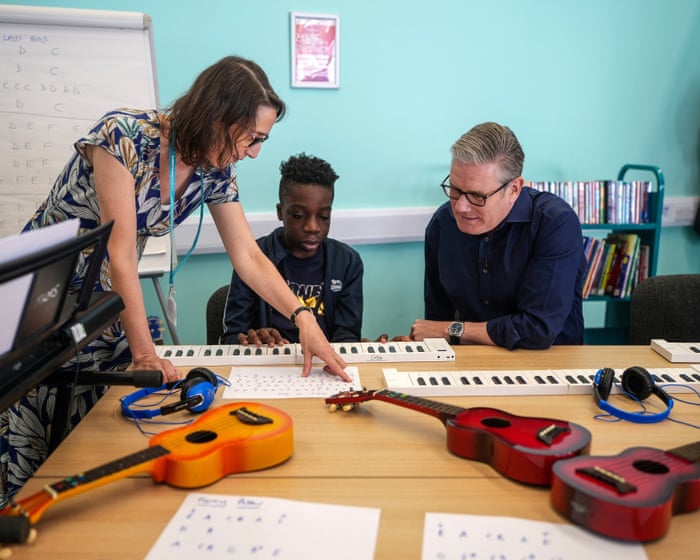
Keir Starmer is our most musical prime minister since Edward Heath. He must take up the baton for the arts | Martin Kettle

Not all of the problems of Britain’s cultural sector come down to funding, but an awful lot do. That’s where leadership comes in

As you listen to a Christmas performance of Handel’s Messiah, it is easy to persuade yourself that all is still well with music and the arts in Britain. I again felt the familiar potency of both Messiah and of music more widely in London’s St Martin’s-in-the-Fields on Tuesday this week. When the musicians and singers launched into the fabulously affirmative final chorus, Worthy is the Lamb, towards which Handel and his librettist Charles Jennens have all along been building, the annual ritual poured forth Messiah’s deep sense of shared security and allayed doubt afresh.

I’ve been going to Messiah at Christmas for decades now, at one venue or another, and the experience never ceases to lift the spirits in this darkest of seasons. This year, though, more disturbing feelings were also in play. The tender balm of Messiah’s opening lines for the tenor – “Comfort ye, comfort ye my people” – has rarely sounded more necessary and consolatory than it did this week. The austere solemnity of the oratorio’s collective reprimand against “the iniquity of us all” felt very contemporary too, especially at the end of such a dismal, demented and dangerous year.

Continue reading...

© Photograph: Christopher Furlong/Reuters
© Photograph: Christopher Furlong/Reuters
© Photograph: Christopher Furlong/Reuters
  •  

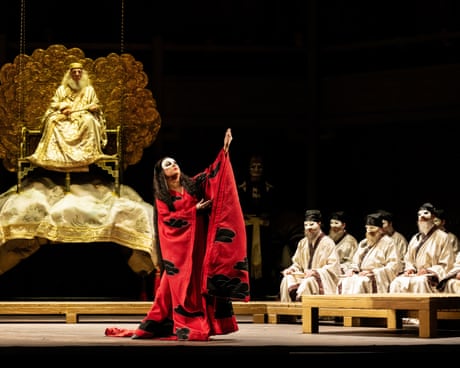
Turandot review – Anna Netrebko brings greatness to Royal Opera’s classic staging

Royal Opera House, London
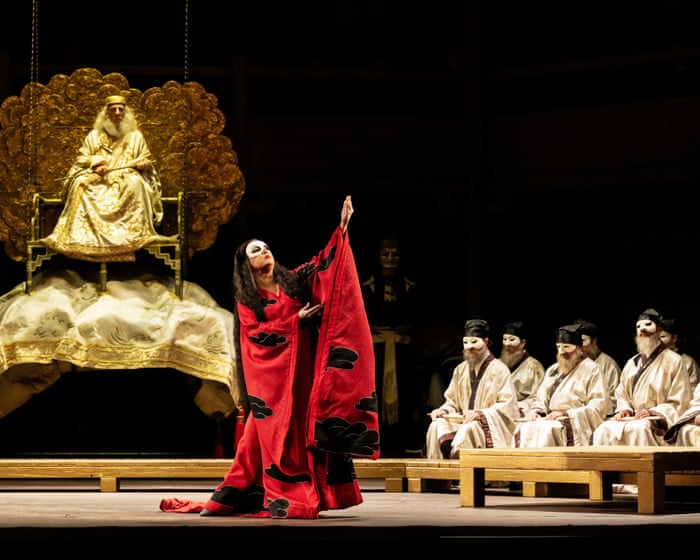
Andrei Serban’s 40-year-old production is confidently revived by Jack Furness, while the vocal richness of the Russian soprano as its eponymous heroine takes things to another level

When the Royal Opera’s current run of Turandot ends in February, there will have been no fewer than 22 performances of Puccini’s unfinished final opera on the Covent Garden stage in less than a year. By opera house standards, that’s a remarkably big number, especially for a staging that is now more than 40 years old.

But it’s not hard to see why this Turandot keeps on returning. Puccini’s darkest, most ritualistic and choral opera is a showstopper shot through with musical colour, innovation and interest. In tough economic times for the art form, it offers guaranteed box office, due in no small part to the iconic tenor aria Nessun Dorma. What’s more, Andrei Serban’s 1984 production is a living theatrical classic, in which everything is played out within oppressive sets inhabited by shadowy watchers. It is confidently revived here by Jack Furness, with eye-catching orientalist choreography by Kate Flatt.

Continue reading...

© Photograph: Camilla Greenwell

© Photograph: Camilla Greenwell

© Photograph: Camilla Greenwell

  •  

Why it’s ridiculous to call our new train system 'Great' British Rail | Martin Kettle

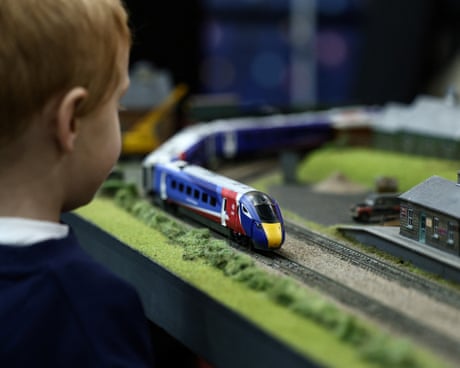
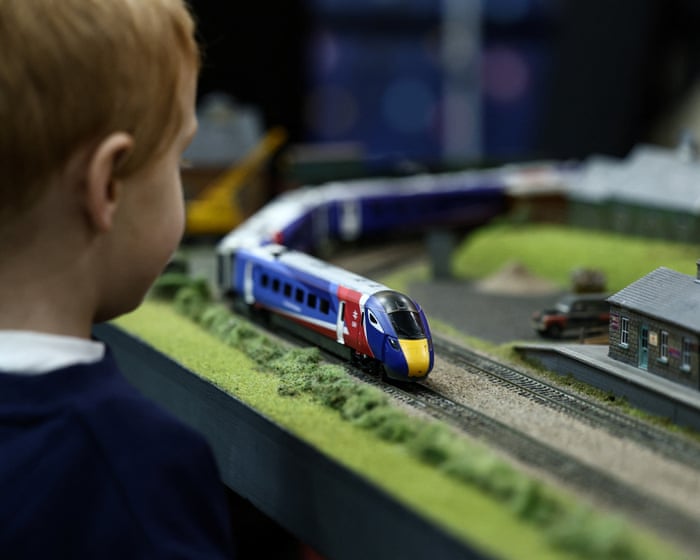
The name originated during the period of Boris Johnson boosterism. People no longer want Brexit triumphalism, but things that actually work

What’s in a name? A government minister has a good answer for Shakespeare’s question. “Names aren’t just convenient labels for people, places and things. They come with expectations,” the minister said. “Countries don’t normally have these pressures. But Great Britain? It’s quite a name to live up to.”

The words are from the opening of Great Britain? How We Get Our Future Back, published last year by the Labour MP Torsten Bell, now a Treasury minister. Bell’s book is about why this country is, and feels, broken. But it is also spot on about this country’s enduring naming problem. As Bell puts it: “What began as a statement about our geography has become one about our quality.”

Martin Kettle is a Guardian columnist

Continue reading...

© Photograph: Toby Shepheard/AFP/Getty Images

© Photograph: Toby Shepheard/AFP/Getty Images

© Photograph: Toby Shepheard/AFP/Getty Images

  •