The post-apocalyptic dark comedy returns, with added Macaulay Culkin, while a new book reveals what Lord of the Flies could have been called. Here’s the pick of the week’s culture, taken from the Guardian’s best-rated reviews
James Cameron’s Smurftacular franchise is back for an action-packed third outing, and musical geniuses butt heads in the new TV adaptation of Peter Shaffer’s play
Avatar: Fire and Ash Out now
James Cameron comes down with a case of the Christmas blues, so to speak, as the director’s record-breaking franchise epic returns once more to planet Pandora for more internecine strife and respecting of the splendour of the natural world, rendered in dazzling motion-capture glory.
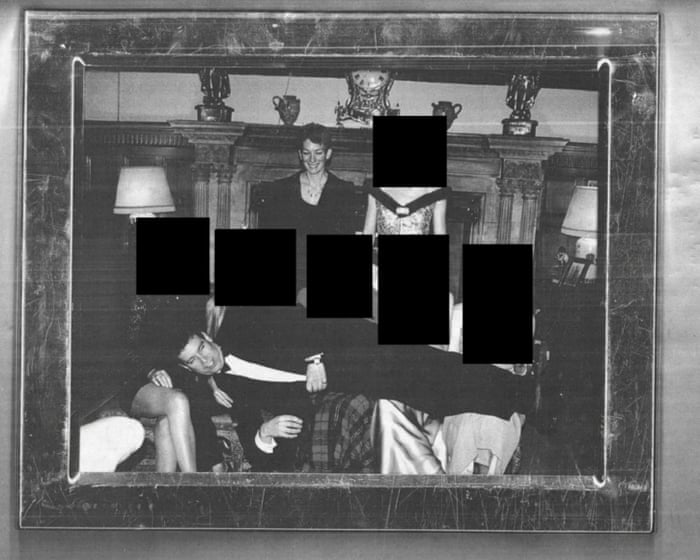
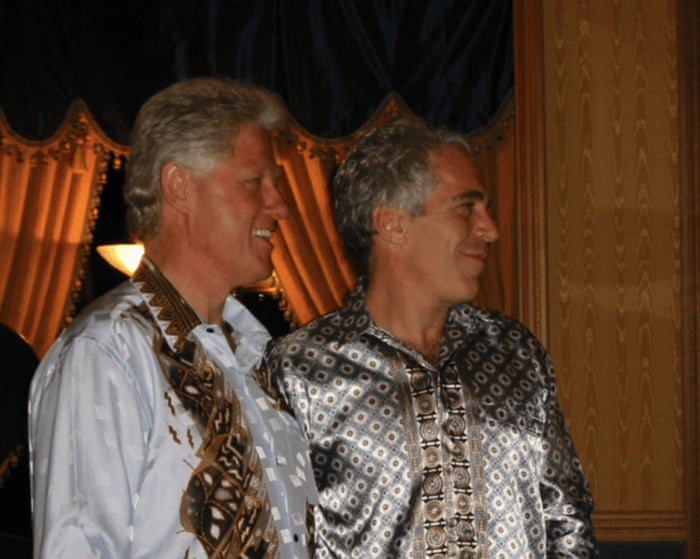
In the undated image, which is a photograph of a picture in a photo frame, convicted sex trafficker Ghislaine Maxwell appears to peer down and smile at the former duke, who is smiling with his eyes closed.
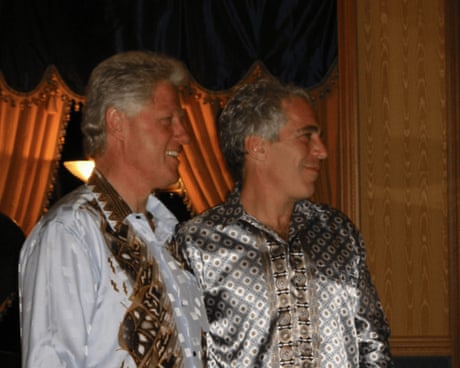
Donald Trump, Bill Clinton, and Richard Branson are among the people who appear in the thousands of documents released by the US justice department on Friday
A compelling model for sustainable security without nuclear deterrence or offensive military capabilities could be developed, writes Dr Ian Davis. Plus letters from Prof Michael Rustin and Jon Duke
It is good to see Jonathan Freedland calling out the thuggery of the Trump administration (Donald Trump is pursuing regime change – in Europe, 12 December). To safeguard its security and values, Europe must act swiftly to prepare for a post‑Nato Europe. Most Europe-centric alternative proposals approach the issue from a traditional hard security perspective, not fully severing Nato ties but prioritising EU-led decision-making, often starting as a “Nato-plus” complement before evolving into a standalone entity.
Such thinking also generally proposes major increases in military spending, an EU-based command structure independent of the US, integrated European military capabilities, a shared European nuclear deterrent, and binding mutual defence commitments. However, recreating a European-led “house of dynamite” will simply compound existing insecurities. A radical departure from traditional power politics is needed, drawing inspiration from successful neutral states (Austria, Ireland and Switzerland) and human security frameworks pioneered by the UN and Nordic countries.
Paul McGilchrist says we will remain complicit in the rise of racism until we can accept that it emerges from problematic behaviours and attitudes. Plus letters from Dr Peter Purton and Michael Bulley
In considering the continued popularity of Nigel Farage despite his alleged racism (Opinion, 15 December), Nesrine Malik concludes: “If he survives … it will be because there is now a little bit of his poison everywhere.” She is right. But not simply because racial intolerance has become newly contagious. It is because of a peculiarly British paradox: we abhor racists yet often excuse racism because we too often want to believe that only racists are capable of it.
But racism is no more dependent on racists for its existence than it is reliant on malice to find expression. Too few among the general public are cognisant of this and too many politicians appear to be ignorant of it, which is why so many can be wooed by a hardline anti-immigration stance without recognising the extent to which it employs racist tropes.
Those who suggest ‘not doing presents this year’ tend to be people who already have all the socks and candles they need, writes one reader
There’s a very particular phrase that circulates as Christmas approaches, usually delivered over a glass of wine: “Shall we just not do presents this year?”
This is almost always suggested by people who already own everything. The sort of people who, if they fancy a new coffee Thermos at 8:42am, simply buy one. Socks? Ordered. Pyjamas? Bought in October. Candles? Seventeen already, none ever lit. These are also the people who believe a £10 gift is radical generosity, holding it out proudly as if they’d made a personal sacrifice, when it costs roughly the same effort as tapping their card at Pret. They mean well; they’re not villains, just living in a different festive universe.
David Parker responds to the news that some New Zealanders are taking an extremely long summer break
I’m curious about these New Zealand workers checking out of any serious work from Christmas until March (See you in March? Debate in New Zealand over extremely long summer break, 12 December). Who are these workers exactly? Retail workers? No, they’re straight back on deck for Boxing Day sales. Supermarket workers? Certainly not. Hospital staff? Fast-food workers? Bar and cafe workers? I think not.
Minimum-wage workers need not apply for this extended break. I suspect the article reflects the experience of “professional” types: company directors, academics and politicians. Meanwhile, unseen people are working their behinds off emptying your bins and selling you beer for atrocious wages. They’re certainly not asking you to “circle back [in] February”. David Parker Auckland, New Zealand
Prof Andrew Weeks, Anna Melamed and Sonia Richardson on the rising rate of postpartum haemorrhage, and the factors associated with it
Your report (Risk to women of severe bleeding after giving birth at five-year high in England, 13 December) rightly points out that the risk to women of severe bleeding after giving birth is at a five-year high. The article suggests that this is due to the declining quality and safety of NHS maternity care. But this is not true. The problem of increasing haemorrhage after birth is not simple, and neither women nor the quality of maternity care should be blamed.
In a recent World Health Organization analysis, the largest influence on the rate of haemorrhage was caesarean birth, and the only two factors that reduced the haemorrhage risk were home birth and early skin-to-skin contact/breastfeeding. Increased rates of haemorrhage are a natural consequence of high caesarean section rates. Sensationalist quotes of the “terrifying” risk to mothers of haemorrhage will only make the problem worse, as women seek to avoid labour in the NHS, either by choosing a caesarean (which increases the risk of haemorrhage) or by opting out of maternity care altogether (which increases the risk of death if haemorrhage occurs).
Teeny problem though. Would we need to get rid of our Nigerian priests? Our Filipino altar servers? Our Nigerian readers? The African-Caribbean man who does the collections? Our admin staff from east Africa? And don’t even start me on all the Irish, Burmese, Congolese and Indian people who come to mass. Our local imam can always be relied on to attend our multifaith events – do we have to uninvite him, as well as our Jewish friends? And, dare I say it, we will be celebrating the birth of a Jew born in Palestine. Nollaig shona daoibh. Dr Ronan Cormacain Finsbury Park, London
Ruth Wilkinson says good regulation allows business to thrive without risking workers’ health
John Fingleton’s claim that health and safety rules are holding UK infrastructure back (Report, 12 December) is not only wrong, it’s dangerous. Stripping back protections in the name of speed is a false economy that risks lives, reputations and resilience. The UK’s health and safety framework is the backbone of safe and sustainable growth. These regulations have driven a historic decline in workplace fatalities, injuries and ill health. Weakening them would reverse decades of progress and shift enormous costs on to the NHS, employers and taxpayers.
Despite the progress, 124 people died in accidents at work in 2024-25. In 2023-24, the estimated annual cost of workplace injuries and new cases of work-related ill health reached £22.9bn. Good regulation allows businesses to thrive without compromising worker health and safety. The idea that deregulation will unlock growth ignores the reality – unsafe work slows projects, causes harm and damages reputations. We urge policymakers to reject calls for health and safety deregulation, and uphold the world-class standards that make Britain a safe, healthy and competitive place to work, trade and invest. Ruth Wilkinson Head of policy and public affairs, Institution of Occupational Safety and Health
Late-night hosts recapped Trump’s national address and further insights from chief of staff Susie Wiles’s interview
Late-night hosts discussed – or ignored – Donald Trump’s surprise primetime address and dug further into the explosive new interview the White House chief of staff, Susie Wiles.
What was the final resting place of the bronze age toxophilite? Which butterfly is named after the giant with 100 eyes? Who was shown carrying Bananaman’s 45th birthday cake? On your marks … set, go!
Editor’s note: the King William’s College quiz has appeared in the Guardian since 1951. The quiz is no longer sat formally; it is sent to the schoolchildren and their families to tackle over the Christmas holiday. So yes, you are allowed to Google – however, the questions are constructed to make that less than straightforward. Answers will appear on theguardian.com on 13 January 2025. Good luck!
General knowledge paper, 2025-2026, No 121, set for the pupils of King William’s College, Isle of Man
From aerial footage of an Indian pilgrimage to portraits of Romanians in bear costumes, this year’s awards featured stunning images from the streets of 23 countries
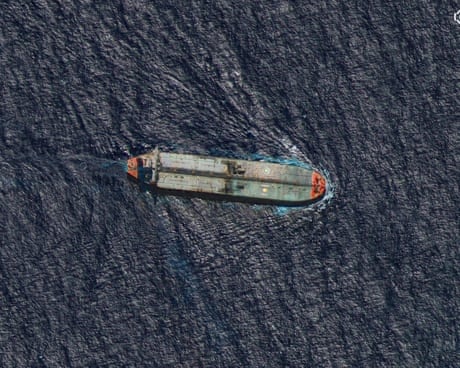
Deaths and damage to ship reported in attack in Rostov-on-Don; Zelenskyy to reportedly push EU plan to use frozen Russian assets. What we know on day 1,394
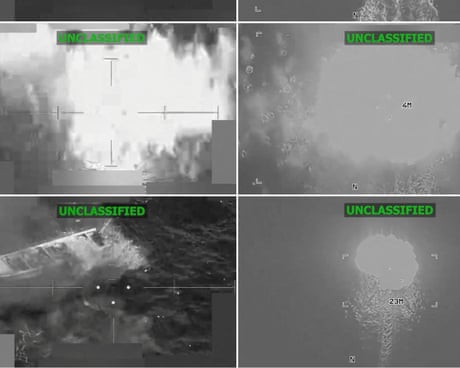
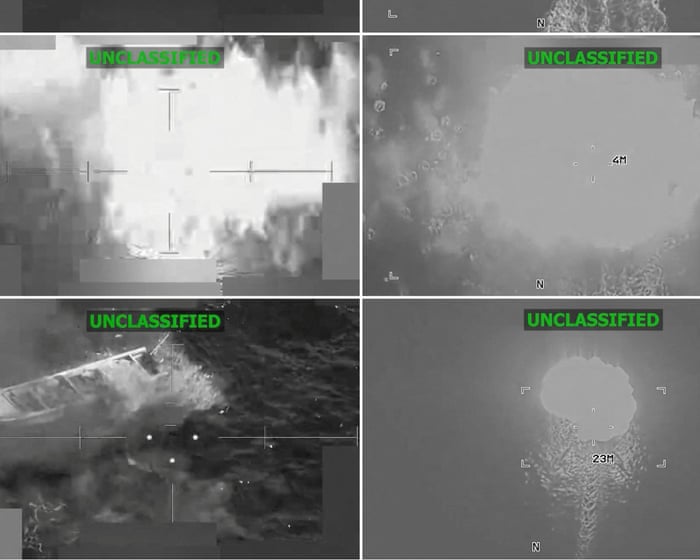
Ukrainian forces have struck a tanker in a southern Russian port and caused deaths, the regional governor said early on Thursday. The strike in the southern Russian port of Rostov-on-Don damaged the vessel and, according to preliminary information, crew members had died, regional governor Yuri Slyusar said on Telegram. Mayor Alexander Skriabin was quoted by Russian news agencies as saying: “Emergency teams are extinguishing the fire on the tanker that was struck while docked in a drone attack … A leak of oil products was avoided. Unfortunately, there are dead and injured.” Slyusar also said parts of a high-rise apartment block under construction were damaged in the city and two private homes burned in a nearby town.
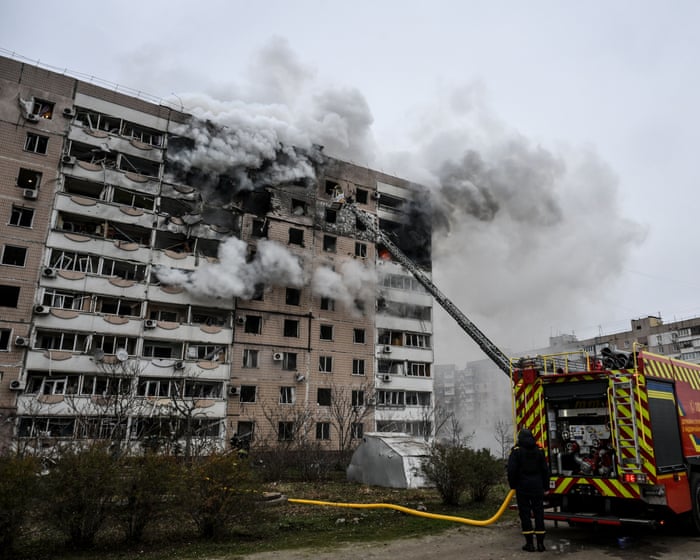
Russian air strikes on and around the Ukrainian city of Zaporizhzhiawounded at least 32people, local authorities said. All the wounded came from the city and its surroundings, the head of the regional military administration, Ivan Fedorov, said on Telegram. Rescue services earlier said five children were among the casualties in a provisional toll of 30 after the Russian strikes on a block of flats, a house and an educational establishment on Wednesday. Firefighters were seen battling a blaze in a multi-storey housing block. Fedorov said two people were also wounded in a Russian drone strike on a civilian car in Kushuhum, south of Zaporizhzhia.
Volodymyr Zelenskyy will be in Brussels on Thursday to convince European partners to use frozen Russian assets to support Ukraine, despite Washington “pressuring” EU countries against the plan, Agence France-Presse quoted an unnamed Ukrainian official as saying. The European Union has laid out a plan to use the frozen assets to harness €90bn ($105bn) for a loan to help Ukraine repel Moscow’s forces, with the money to be paid back by any eventual Russian reparations to Ukraine.
Belgian politicians and senior finance executives have been subject to a campaign of intimidation orchestrated by Russian intelligence aimed at persuading the country to block the use of €185bn ($217bn) assets for Ukraine, according to European intelligence agencies. Dan Sabbagh and Jennifer Rankin report that security officials indicated to the Guardian that there had been deliberate targeting of key figures at Euroclear, the securities depository holding the majority of Russia’s frozen assets, and leaders of the country. EU leaders meeting in Brussels on Thursday are debating whether to approve the lending of urgently needed funds for Ukraine secured on Russian central bank assets.
Volodymyr Zelenskyy said Russia was preparing to wage a new “year of war” on his country in 2026, after Vladimir Putin said Moscow would “certainly” achieve its objectives. “Today, we heard yet another signal from Moscow that they are preparing to make next year a year of war,” the Ukrainian president said in his evening address on Wednesday. The statement was a reaction to the Russian president, who earlier said Moscow would “certainly” achieve its goals in its Ukraine offensive, including seizing Ukrainian territories it claims as its own, amid the flurry of international diplomacy to end the war. Putin warned that Moscow would seek to extend its gains in Ukraine if Kyiv and its allies rejected the Kremlin’s demands in peace talks.
The UK has given its final warning to Roman Abramovich to release £2.5bn ($3.3bn) from the oligarch’s sale of Chelsea FC to give to Ukraine, telling the billionaire to release the funds within 90 days or face court action, reports Jessica Elgot. The British prime minister, Keir Starmer, told the House of Commons the funds from Abramovich, who is subject to UK sanctions, would be converted into a new foundation for humanitarian causes in Ukraine and that the issuing of a licence for the transfer was the last chance Abramovich would have to comply.
Bongino, a former Secret Service agent turned podcaster, will step down in January. Key US politics stories from Wednesday 17 December at a glance
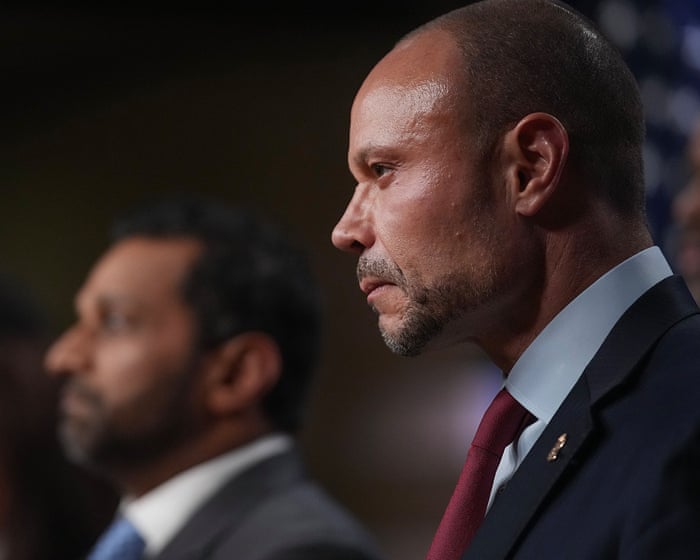
The FBI deputy director, Dan Bongino, confirmed on Wednesday that he is stepping down in January.
In a statement posted on social media, Bongino thanked Donald Trump, FBI director Kash Patel, and Pam Bondi, the attorney general he reportedly clashed with over her decision not to release files from the federal investigation into Jeffrey Epstein.
Vote on Isaacman, private astronaut and Mars missions advocate, passes 67-30 for him to be agency’s 15th leader
The US Senate on Wednesday confirmed billionaire private astronaut Jared Isaacman to become Donald Trump’s Nasa administrator. The confirmation makes an advocate of Mars missions and an ally of SpaceX CEO Elon Musk the space agency’s 15th leader.
The vote on Isaacman, who Trump nominated, removed and then renamed for the post of Nasa administrator this year, passed 67-30, two weeks after he told senators in his second hearing that Nasa must pick up the pace in beating China back to the moon this decade.
Karen Ford says strike action is set to continue because of political posturing, while an NHS consultant worries about the deteriorating relationship among colleagues. Plus letters from John Sowerby, Dr Mussaddaq Iqbal, Gill Kelly and a final-year medical student
“Striking resident doctors are digging in. History suggests this will go on and on” says the headline on Denis Campbell’s analysis piece (16 December). As a retired public health research and policy adviser and the parent of a doctor currently in core training, I agree that it is likely to go on and on – but not because doctors are stubborn. It will persist because the numbers do not add up and too much of the response has been political posturing rather than workforce planning.
This year, around 30,000 doctors competed for just 10,000 specialty training posts, leaving thousands unable to progress. Promised increases of around 1,000 posts from 2026 may help at the margins, but will leave large numbers with no route into registrar training.
Deploying familiar tropes and the loaded phrase “population control” (not used by the organisations or institutions working on the issue), he insinuates that anyone raising population concern is at best hypocritical, at worst racist, by blaming “poorer Black and Brown people in the global south” while ignoring excessive individual consumption in rich, developed countries like the UK. His crusade to scare off any liberal, progressive person from daring to posit that growth in population as well as consumption might be an issue sinks to new lows when he claims that only “mass murder on an unprecedented scale” could slow and stabilise population growth.
Mark Cottle, who has metastatic prostate cancer, responds to an article by Carolin Würfel
It’s not just Germans like Carolin Würfel (16 December) who face a challenge with the question “How are you?” When I was diagnosed with metastatic prostate cancer, that question went from being a routine conversation-opener to something much trickier.
The convention, in Britain at least, is to answer something like “Oh, not bad…” Frankly, things are very bad, so I’m stuck between the dishonesty of the ritual reply and the full truth, which is a lot to fling back at someone offering an innocent greeting. I’ve developed the more nuanced response “All right today”, which I use if I really am doing all right in the general context of things.
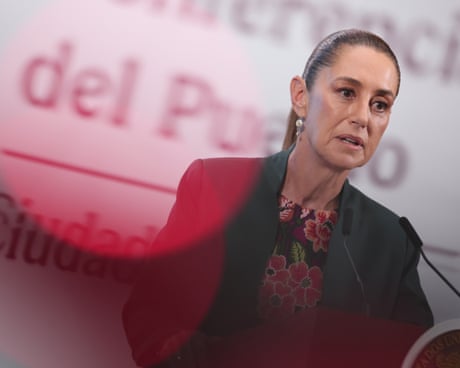
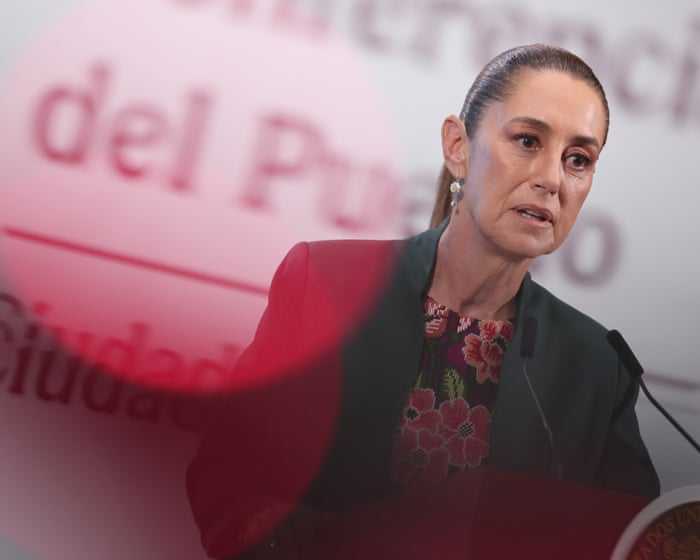
Mexico’s president, Claudia Sheinbaum, has urged the United Nations to “prevent any bloodshed” in Venezuela, as Donald Trump piled more pressure on the South American country.
“The United Nations has been conspicuously absent. It must assume its role to prevent any bloodshed and to always seek the peaceful resolution of conflicts,” the leftwing president told reporters the morning after Washington announced a blockade of “sanctioned oil tankers” entering or leaving Venezuela.
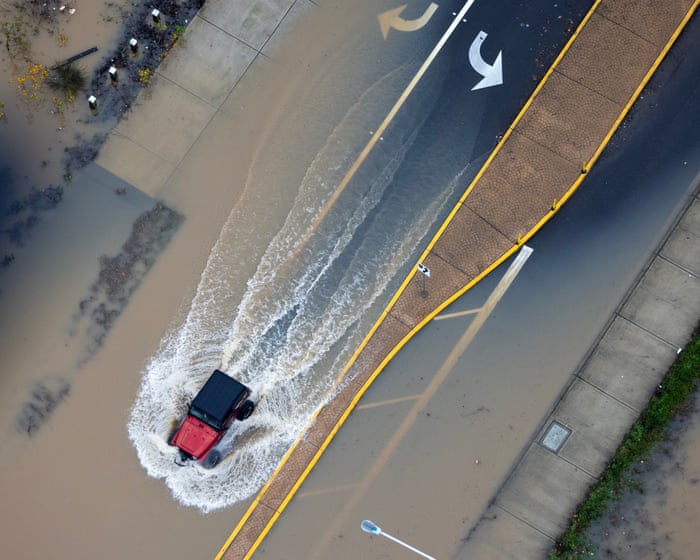
Record rains have forced hundreds of rescues, swamped communities and left rivers high, with more storms forecast
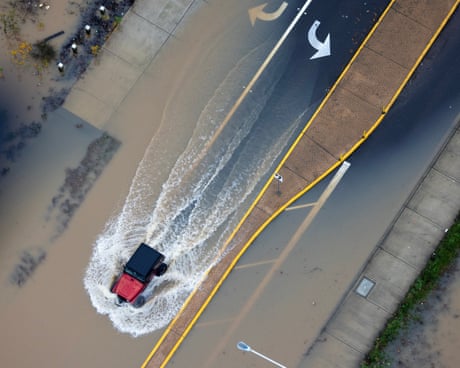
The extent of the damage in Washington state is profound but unclear after more than a week of heavy rains and record flooding, according to the state’s governor, Bob Ferguson.
A barrage of storms from weather systems stretching across the Pacific has dumped close to 2ft (0.6 metres) of rain in parts of the state, swelling rivers far beyond their banks and prompting more than 600 rescues across 10 counties.
German Chancellor says this remains a far-off prospect; Zelenskyy says negotiations on peace deal could soon be finalised. What we know on day 1,393
Under post-ceasefire guarantees provided by the United States and Europe to Ukraine, peacekeepers could in certain circumstances repel Russian forces, German Chancellor Friedrich Merz told ZDF public television in an interview, adding that this remained a far-off prospect. Pressed by interviewers for details on the possible security guarantees floated by the United States in Monday’s Berlin talks with Ukrainian president Volodymyr Zelenskyy, Merz said the guarantors would need to repel Russian forces should there be a violation of any ceasefire terms.
“We would secure a demilitarized zone between the warring parties and, to be very specific, we would also act against corresponding Russian incursions and attacks.We’re not there yet,” he said. “The fact that the Americans have made such a commitment – to protect Ukraine in the event of a ceasefire as if it were Nato territory – I think that’s a remarkable new position for the United States of America,” Merz said.
Zelenskyy has said proposals negotiated with US officials on a peace deal to end Russia’s war in Ukraine could be soon finalised, after which American envoys will present them to the Kremlin. After two days of talks in Berlin, US officials said on Monday they had resolved “90%” of the problematic issues between Russia and Ukraine, but despite the positive spin it is not clear that an end to the war is any closer, particularly as the Russian side is absent from the current talks.
Russian President Vladimir Putin’s spokesperson indicated that the Kremlin opposes European participation in talks on ending the conflict in Ukraine based on a US plan. “The participation of the Europeans, in terms of acceptability, does not bode well,” Kremlin spokesperson Dmitry Peskov was quoted as saying by Russian news agencies. Peskov also said that the Kremlin had not yet been informed of the results of the latest talks in Berlin on Monday between Zelenskyy and European leaders.
The UN rights chief voiced alarm Wednesday over diminishing freedoms in Russian-occupied Ukrainian territory, saying restrictions were tightening on freedom of movement, expression and religion. Volker Turk painted a grim picture of events in a presentation to the UN Human Rights Council, the United Nations’ top rights body.
Russian authorities on Tuesday named German public broadcaster Deutsche Welle as an “undesirable organization,” effectively outlawing its operation in the country. Under Russian law, involvement with an “undesirable organization,” including sharing its content, is a criminal offence. In a statement, Deutsche Welle director general Barbara Massing called the designation Russia’s latest attempt to silence independent media.
The Russian-controlled Zaporizhzhia nuclear power plant in Ukraine is now receiving electricity through only one of two external power lines, its Russian management said on Tuesday. The other line was disconnected due to military activity, the management said, adding that radiation levels remain normal. Repair work will begin as soon as possible.
South Africa’s government is in talks with Russia to bring home 17 South African men fighting for Russia in Ukraine, after the men were allegedly tricked on to the frontlines of the war.
The alleged gunman shot dead by police during Sunday’s attack on Australia’s Bondi beach was originally from the southern Indian city of Hyderabad and his family there seemed unaware of his alleged “radical mindset”, Indian police said on Tuesday.
Meanwhile the second alleged gunman who was hospitalised after also being shot by police has awoken from a coma and may be charged as early as today, Seven News has reported.
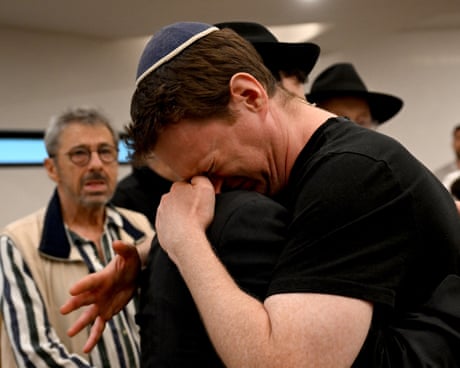
Readers respond to Sunday night’s terror attack targeting Jewish families celebrating the first night of Hanukah at Bondi beach in Sydney, Australia
The Bondi beach terror attack did not occur in a vacuum. It followed years in which antisemitism originating on the left has been minimised, sanitised, or treated as a conceptual misunderstanding rather than a real threat.
In Australia, language that Jews recognise immediately as dangerous has been repeatedly defended as nuance. Antisemitic imagery has been excused as metaphor. Threats have been recast as “context”. When Jews object, they are told they are conflating criticism with hatred – even when the language used would be unacceptable if directed at any other minority.
The agreement raises the baseline threshold used by the National Institute for Health and Care Excellence to assess the cost-effectiveness for newmedicines, enabling more treatments to be considered for NHS use.
Retired immigration judge Jane Coker points out that it’s the right to respect for family life that the European convention on human rights protects
Why do the media refer to “the right to family life” in the European convention on human rights (What does UK want to change about human rights law – and will it happen?, 10 December). It is the right to respect for family life. As the Bonavero report from the University of Oxford makes clear, article 8 can only prevent deportation if the impact would be “unduly harsh” on the family and the consequences of deportation outweigh the public interest.
The number of foreign national offenders who successfully invoked human rights grounds to prevent their deportation is 0.73% of the total number of foreign offenders. Having a child or partner in the UK does not mean that a foreign national offender can successfully appeal on human rights grounds. The Home Office does not keep – or at least does not appear to release – statistics on the number of foreign national offenders who are removed immediately after serving their prison sentence and those who are not, despite there being a valid deportation order (some of whom then go on to commit further serious crimes).
There’s a difference between armchair diagnosis and legitimate observation, and we must allow medical expertise to inform public discourse, writes Robert Krasner
The Goldwater rule was designed to prevent irresponsible “armchair diagnosis” based on hearsay. However, Dr Allen Dyer, a psychiatrist instrumental in developing the original rule, clarified in October 2024 that it was never intended to serve as an absolute gag order. It does not preclude responsible discussion of observable public behaviours, particularly when a public figure voluntarily displays these patterns on a national stage.
Evacuation order comes after a levee failed following a week of heavy rain as NWS issues flash flood warning
Officials in Washington state ordered immediate evacuations in three south Seattle suburbs on Monday after a levee failed following a week of heavy rains.
The evacuation order from King county covered homes and businesses east of the Green River in parts of Kent, Auburn and Tukwila.
Bryony Worthington says the media should not be pushing a western attitude to climate strategies to the detriment of African nations. Plus letters from Prof Hugh Hunt, Dr Portia Adade Williams and Angela Churie Kallhauge
Your editorial (8 December) says that it is “hard to disagree” with calls to ban research into climate interventions or geoengineering solutions, citing well-worn tropes about a “termination shock” scenario and a dislike of private-sector involvement in the field. The pretext for forming this opinion – and claiming it represents all of Africa – appears to be the brief reference in a joint statement earlier this year from the African environmental ministers.
I can’t help feeling that the Guardian is being played. Every advance in human technology elicits cries from a vocal few that a line must be drawn that cannot be crossed. Usually seeded in the corridors of western NGOs, legitimate concerns are whipped up into fearmongering and luddism, with the goal of holding back scientific inquiry.
Guardian readers respond to a report by the homelessness charity Crisis and our editorial
Your editorial (The Guardian view on England’s social housing system: failing the very people it was built for, 10 December) claims that “social homes were supposed to be for those who couldn’t afford private rents”. That’s not so. Most council estates, such as Becontree and Harold Hill, were built following the first and second world wars to house ordinary working families when decent housing was in dire straits. Privately rented properties were often of poor quality and devoid of basic amenities.
The governments then believed it imperative to house ordinary families in good-quality modern housing. Relying on private landlords and precarious tenancies was seen practically as an insult to the nation’s people, and even financially well-off council tenants could rest assured that their tenancy was not going to be terminated.
We shouldn’t be surprised that teenagers are turning to tools such as ChatGPT in this way. NHS waiting lists are rising, and one in five young people are living with a mental health condition. It is unacceptable that young people who require support for their mental health are unable to access the services they need, before they reach crisis point.
William Schabas on the conviction of two officers of a German submarine of ‘an offence against the law of nations’ during the first world war
Sidney Blumenthal referred to a 1945 war crimes judgment on the killing of seamen who had survived an attack at sea during the second world war (Does Pete Hegseth even believe that war crimes exist?, 8 December). There is an even earlier case. In a trial held by a German court pursuant to the treaty of Versailles (1919), two officers of U-86 were convicted of “an offence against the law of nations” for attacking survivors after the sinking of a Canadian hospital ship, the Llandovery Castle, off the coast of Ireland in the final months of the first world war. The judges said the rule against such attacks was “simple” and “universally known”. They rejected the defence argument that the officers were following orders of the submarine’s captain. They said such an order was manifestly unlawful. The precedent is still cited today and is codified in the Rome statute of the international criminal court. William Schabas Professor of international law, Middlesex University
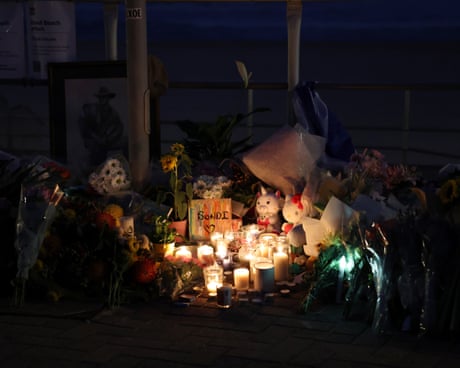
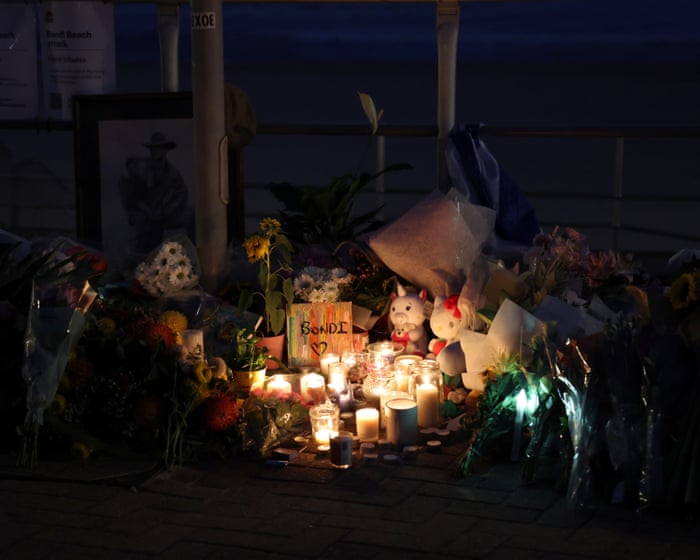
Australia is in mourning after gunmen opened fire on Bondi beach on Sunday, killing at least 15 people in an attack on the Jewish community during its Hanukah celebrations. One of the alleged gunmen was also killed during the incident
Israeli prime minister claims the Australian government ‘let the disease’ of antisemitism spread ‘and the result is the horrific attacks on Jews we saw today’
Leaders around the world expressed their horror at Sunday’s terrorist attack on Bondi beach, in which at least 16 people died, mixed in some cases with harsh words for the Australian government for alleged shortcomings in tackling antisemitism over the past two years.
The Israeli prime minister, Benjamin Netanyahu, said he had written to his Australian counterpart, Anthony Albanese, in August, warning that the government’s decision to recognise a Palestinian state “pours fuel on the antisemitic fire … emboldens those who menace Australian Jews and encourages the Jew hatred now stalking your streets”. He claimed Albanese had “replaced weakness with weakness and appeasement with more appeasement”.
Dr Richard Hassall, Allen Frances and Natasha Fairbairn respond to a column by John Harris which argued that the health secretary should not jump on a rightwing bandwagon about mental health
John Harris is misguided in his criticism of Wes Streeting’s review of UK mental health services (The right’s callous overdiagnosis bandwagon is rolling. Wes Streeting should not be on it, 7 December). While this review will inevitably examine questions of overdiagnosis, Harris is wrong to imply that Streeting’s main motivation is political. There is nothing unusual, of course, about ministers making decisions based on political considerations, but there is rather more to the review than Harris indicates.
It hardly needs restating that mental health services are grossly overstretched and underresourced, and an inquiry is necessary. This is a particular problem in child and adolescent mental health services (Camhs). When I was working as a clinical psychologist and involved in a Camhs autism diagnosis team 15 years ago, the waiting time for an autism assessment was around four to six months. Nowadays a waiting time of up to two years is common.
They are not ‘bureaucrats’ who must be culled, writes Michael Joffe
The finding that one in seven GP referrals are getting lost, with harm to most of the patients involved (Thousands of patients in England at risk as GP referrals vanish into NHS ‘black hole’, 7 December), is no surprise to me. But it is not confined to GP referrals. Hospital patients are constantly in a similar position. I have experienced this myself many times, with investigations and/or outpatient appointments promised but never happening. Sometimes this follows an appointment being cancelled, with a “we will be in contact soon” message that turns out not to be true. Sometimes one just falls off the system, presumably included on a waiting list to be dealt with, that is then not dealt with. My experience is shared by large numbers of patients.
The administrators are, in my experience, competent and dedicated people – but the system is not working. The commonly heard complaint that “there’s too much bureaucracy in the NHS” is wrong. What is needed is a well-managed administrative system, where the chief priority is that somebody is responsible for ensuring coordination, and that gaps are filled, eg when an administrator is on leave, ill, or moves to a different job. The present dire situation also means that nurses and doctors have to add administrative tasks to their already-heavy workload, adding to their stress and burnout.
Australia is showing what is possible by not succumbing to the pressures of big tech. The UK needs to follow its lead, says Daniel Kebede
Lisa Nandy’s suggestion that an Australian-style restriction on social media for under-16s would lead to prosecuting children is a distraction (Young people have faced ‘violent indifference’ for decades, Lisa Nandy says, 9 December). No one is calling for teenagers to be criminalised for using platforms designed to keep them hooked. The responsibility lies squarely with the tech companies that profit from exposing children to harm. Why does the government still allow systems that erode childhood for commercial gain?
Teachers and parents witness the fallout daily: pupils too anxious and distracted to learn, children awake into the night because notifications demand constant attention, bullying that never ends, and content that pushes young people to extremes. This is not poor parenting or teaching – it is caused by the exploitative business models at the core of these addictive platforms.
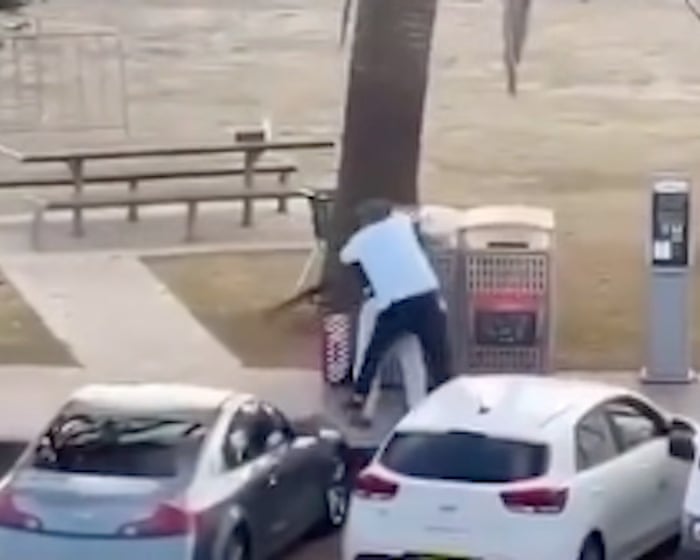
A bystander tackled and wrestled a gun from one of the two alleged gunmen during the Bondi beach mass shooting in which at least 16 people were killed, footage shows.
Seven News reported the man was a 43-year-old fruit shop owner from the Sutherland Shire named Ahmed al-Ahmed.
Cuban officials denounce the US seizure of the Skipper oil tanker off Venezuela’s coast. Key US politics stories from 13 December 2025
Cuban officials have denounced the US seizure of the Skipper oil tanker off Venezuela’s coast on Wednesday, calling it an “act of piracy and maritime terrorism”, as well as a “serious violation of international law” that hurts the Caribbean island nation and its people.
The tanker, which was reported now to be heading for Galveston, Texas, was believed to loaded with nearly 2m barrels of Venezuela’s heavy crude, according to internal data from the Venezuelan state oil company PDVSA, as reported by the New York Times.

 Login
Login