❌

Reading view

Veggie Thursdays and vegan surprises! How Ghent became a plant-based paradise

In 2014, 13% of the population of this Belgian city described themselves as flexitarian. This year, 83% did. Here is how everyone was convinced to eat their greens – and love them

Sixty bowls of slime-green soup sit waiting for the children to arrive. Pupils rush in from their morning lessons, grab the bowls by the handles and start slurping. No complaints, no refusals. (OK, maybe a few “bleurgh” faces.) Chicory soup dispatched, they get stuck into the main course: falafel, Mediterranean vegetable tagine and couscous. Some ask for seconds; most grab a piece of fruit for dessert and run out to play.

This is a typical Thursday lunchtime in BS De Stadspoort primary school in Ghent, Belgium. Similar meat-free menus are being eaten in other schools and nurseries across the city, plus community centres, care homes and assisted living facilities, not to mention many work canteens and restaurants. Thursday in Ghent is officially “Veggie Day”, with residents encouraged to eschew any meat or fish. So how did a city get its children – and everyone else – to eat their greens?

Continue reading...
© Photograph: Isabelle Pateer/The Guardian
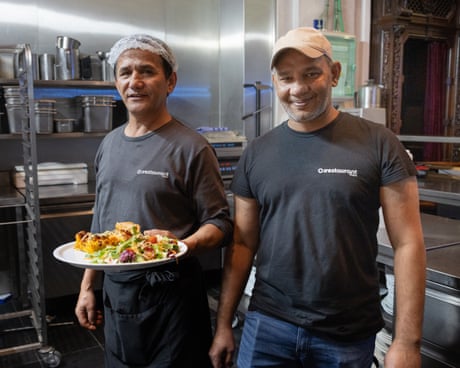
© Photograph: Isabelle Pateer/The Guardian
© Photograph: Isabelle Pateer/The Guardian
  •  

The CO2-absorbing building made of old sinks, windscreens and toilets: Ghent’s £17m design museum is a green marvel

Inspired by a gothic cathedral partly built using human bones, this gleaming monument to recycling boasts 82,000 bricks derived from construction waste – following a two-day brick-making festival

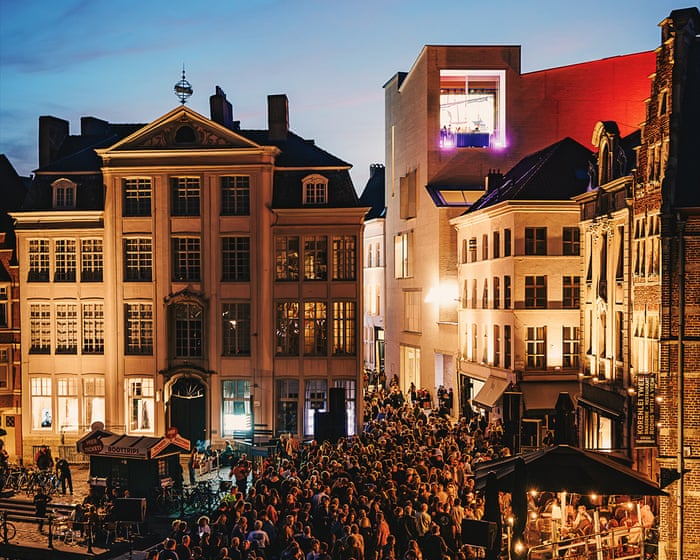
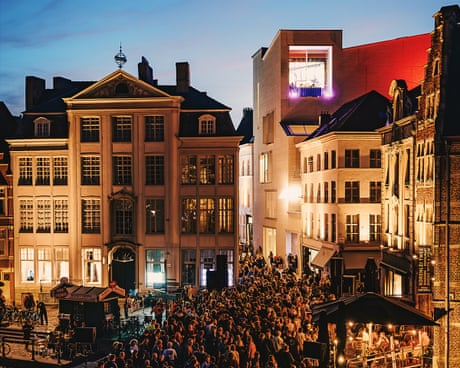
Museums often try to reflect the world around them, but rarely are they made so literally of their surroundings as the new design museum in Ghent. Rising above the Belgian city’s medieval tiled rooftops like an angular white watchtower, the new building has vacuumed up the city’s condemned concrete frames, windows, car windscreens, sinks and old toilets, and transformed them, phoenix-like, into a gleaming monument to recycling.

“There’s nothing new about reuse,” says Andy Groarke, co-founder of Carmody Groarke, the London-based architects who designed the €20m (£17m) project with local firms Atama and Re-st. “We’ve just forgotten how to do it.”

Continue reading...

© Photograph: Behangmotief for Design Museum Gent

© Photograph: Behangmotief for Design Museum Gent

© Photograph: Behangmotief for Design Museum Gent

  •  

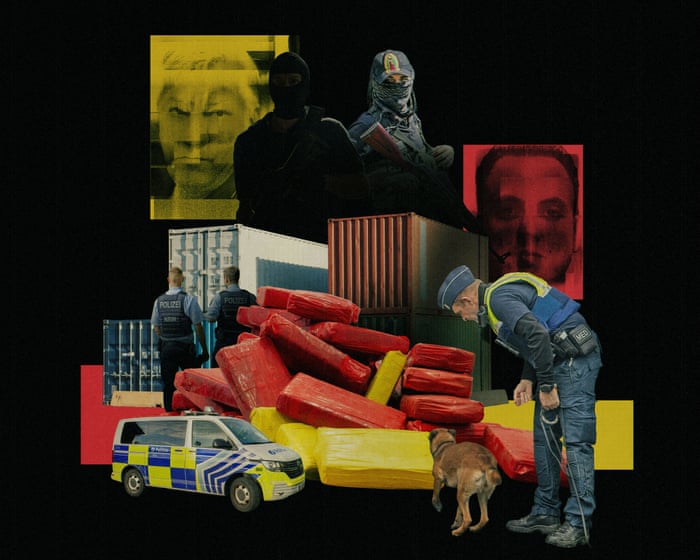
The ‘Finger cutter’ and the ‘Brazilian Escobar’: the men accused of bringing cocaine cartels to Europe

A Belgian criminal organisation’s links with a Brazilian cocaine gang have been the focus of a major trial in Brussels, where smuggling links have been alleged between European players and the drug cartels of Latin America

In the early hours of 7 September, a convoy of heavily armed police swept through the sleeping streets of central Brussels towards the Haren district, on the city’s north-eastern outskirts. They made their way to 22 Avenue du Bourget, a militarised bunker-like complex that was the former headquarters of Nato.

The modernist complex, with its austere and functional architecture, was hastily built in 1967 and houses the Justitia courtroom, where Belgium’s federal trials are now held. It was here that the perpetrators and accomplices of the 2015 Paris terrorist attacks and the 2016 Brussels attacks were tried in 2022.

Continue reading...

© Composite: Guardian Design/Belga/AFP/Getty Images/AP/Europol

© Composite: Guardian Design/Belga/AFP/Getty Images/AP/Europol

© Composite: Guardian Design/Belga/AFP/Getty Images/AP/Europol

  •  

Angèle: Instinct review – Belgium’s biggest star is determined to do pop differently

(RCA)
Massive in her home nation but less so outside, Angèle is aided by Justice, Soulwax and Caroline Polachek in ​a bold bid for broader appeal – but her resultant album ​can be generic as well as daring

As has often been pointed out, we live in an era where the traditional Anglo-American stranglehold over pop has been broken. Partly because streaming has presented listeners with a far broader choice of music than would once have been imaginable, and partly as a result of social media accounts doing the promotional departments’ job for them, the charts are now as likely to include music made in Seoul or Lagos as London or LA. Spurs’ 62,000-capacity stadium has recently hosted not just Jay-Z, Gorillaz and System of a Down, but India’s Arijit Singh, South Korea’s BTS, BigBang and Stray Kids, and Puerto Rico’s Bad Bunny, who addressed the crowd almost exclusively in Spanish.

Clearly, British audiences’ disinclination to be welded to English-speaking artists is a cheering thing. Equally clearly, there seem to be limits: the same interest hasn’t been afforded Francophone pop. The biggest French-speaking stars in recent memory have either dealt in dance music or acquiesced to recording in English. Belgian rapper Stromae has attracted media interest and co-signs from Kanye West and Lorde without ever progressing beyond cult status in the UK.

Continue reading...

© Photograph: Kenza Le Bas

© Photograph: Kenza Le Bas

© Photograph: Kenza Le Bas

  •  
❌