❌

Reading view

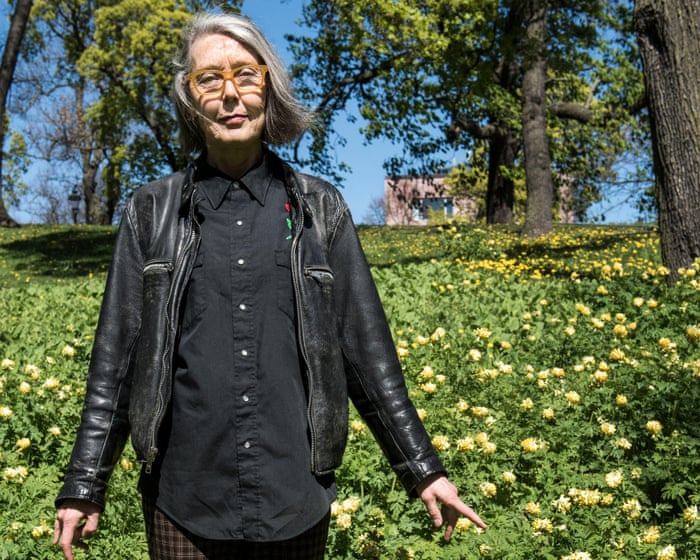
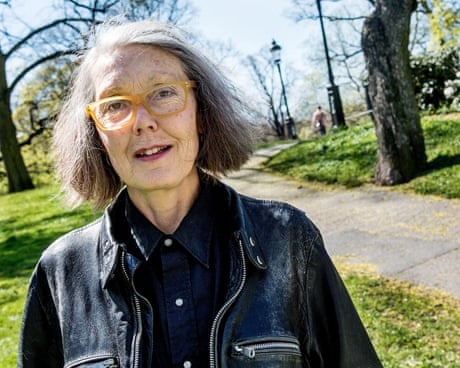
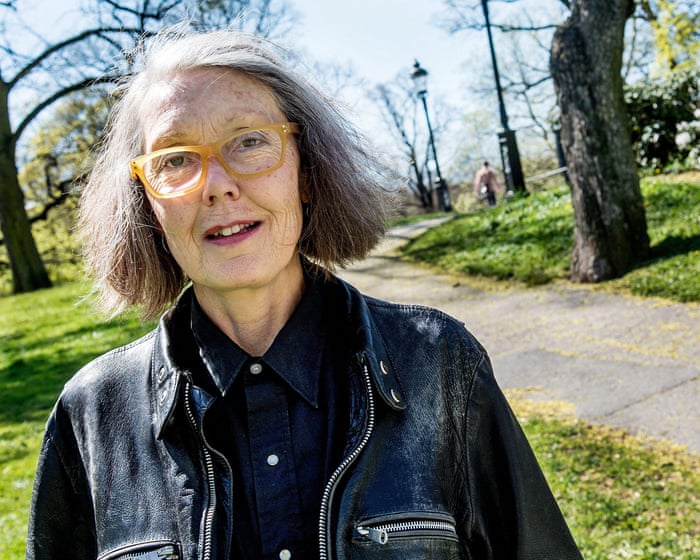
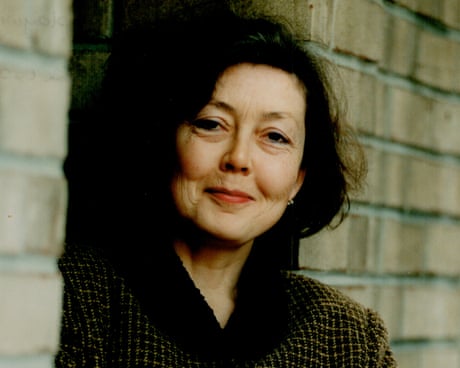
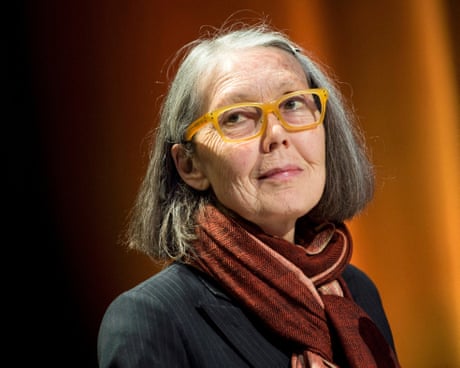
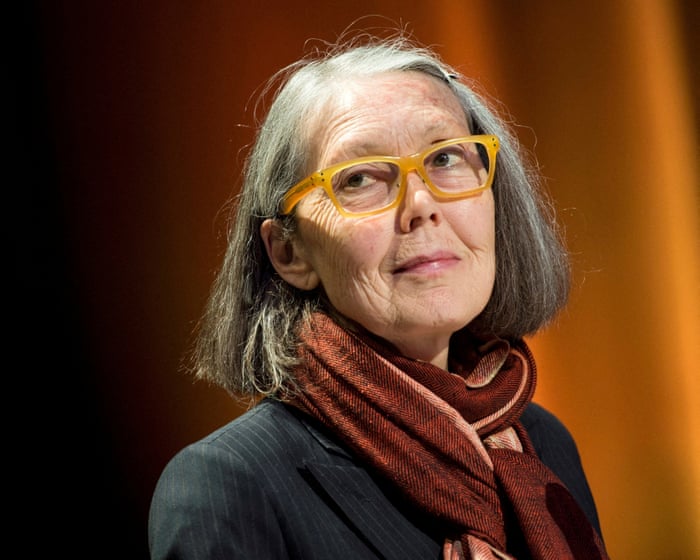
‘Sometimes she publishes notes she’s scribbled on her hand’: Édouard Louis on 10 reasons to love Anne Carson

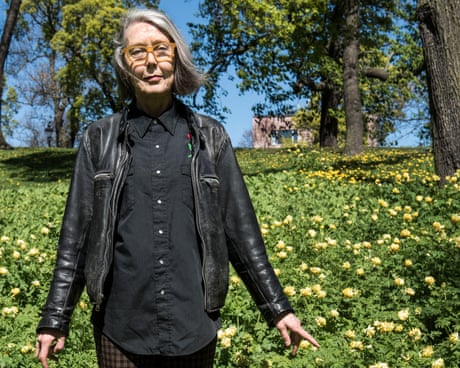
The French author discovered Carson on a bus while stranded in a snowstorm and has been enthralled by her fearless imagination ever since

1. Anne Carson is one of the greatest writers of our time. I discovered her work on a Peter Pan bus from New York to New England. I’d bought Antigonick in a bookstore a few days earlier, almost randomly. From the very first lines, I was enthralled. While we were on the bus, a snowstorm suddenly blanketed the roads, and the other passengers and I found ourselves stuck for 10 hours in rural America, surrounded by an entirely white landscape. I took my computer out of my backpack and started to translate Antigonick into French. Spontaneously. I was so absorbed by the power of Carson’s text that I didn’t notice the hours pass.

2. One of Carson’s greatest strengths is that, unlike so many other contemporary writers, she doesn’t try to “make literature”. She writes. Sometimes clouds do the speaking, in her work, and sometimes monsters do; sometimes, in the middle of a collection of poems, she lets an imaginary Catherine Deneuve take over the narration. Sometimes she writes a letter to her own sleep and sometimes she publishes notes she’s scribbled on her hand. She writes about Homer, but also Rosalía; about Brecht, but also Marilyn Monroe.

Translated by Josh Cohen

Continue reading...

© Photograph: Golli/Kjartan Þorbjörnsson

© Photograph: Golli/Kjartan Þorbjörnsson

© Photograph: Golli/Kjartan Þorbjörnsson

  •  

Digested week: Don’t worry about the plague, go and read some Anne Carson | Emma Brockes

The world may be going to hell in a handcart, but at least now I get to say I know a Nobel prize winner

“Anyone worried about pneumonic plague?” This is a friend – a medic – texting me after reading reports at the weekend of the 28-year-old Russian woman who died while working at a “plague research lab” in Siberia. Relying on details from the famously open Russian state guaranteed the presence of a certain dark subtext to the tantalisingly short news item. Namely: lab-grown disease cultivated for reasons unknown and with a 100% mortality rate escapes Russian facility into general population, eight hours’ flying time from London. In other words, we’re all going to die.

Continue reading...

© Photograph: TT News Agency/Alamy Stock Photo/Alamy Live News.

© Photograph: TT News Agency/Alamy Stock Photo/Alamy Live News.

© Photograph: TT News Agency/Alamy Stock Photo/Alamy Live News.

  •  

Winning the Nobel prize in literature only underlines Anne Carson’s infinite genius | Yiyun Li

When her sons died the Book of Goose author turned to Grief Lessons, Carson’s translation of four plays by Euripides. She reflects on the ‘life sustaining’ work of an extraordinary writer
• Where to start with: Anne Carson
• ‘Delights await!’: Margaret Atwood and other writers on Anne Carson

It is preposterous to agree to write a short piece on Anne Carson’s work. The task is impossible, akin to that of solving the mathematical problem of dividing zero by zero. If one had the power to solve it, perhaps one would have some confidence in attempting to write about Anne Carson’s work. Attempting, I say, not succeeding. In attempting to do so, I shall emphasise that all words fall short in extreme situations, which not only include unfathomable losses (of children, in my case) but also include articulating anything about Anne Carson’s work.

One could start with Carson’s words. “Words, if you let them, will do what they want to do and what they have to do.” (Autobiography of Red) But to let the words exist in their own desires and yearnings and frustrations and confusions, to let the words scream with inarticulable pain or tell a riddle with a twinkling smile or make love to one another – how many of us have achieved that kind of mastery of words? But, oh no, mastery is the wrong word here. Only the minor and the greedy and the power-thirsty writers want to be the masters of the words. Carson does not subjugate or manipulate her words. She lets them be; and lets herself be led by the words – hers, and the ancients’ translated into unforgettable English by her.

Continue reading...

© Photograph: TT News Agency/Alamy Stock Photo/Alamy Live News.

© Photograph: TT News Agency/Alamy Stock Photo/Alamy Live News.

© Photograph: TT News Agency/Alamy Stock Photo/Alamy Live News.

  •  

Where to start with: Anne Carson

From essays on sexual jealousy to retellings of classical Greek tragedies, here’s a guide to the Nobel prize-winning writer’s catalogue of work

Anne Carson, the Canadian poet who has been awarded this year’s Nobel prize in literature, is an exhilarating choice by the committee. The sheer range of writing she has been producing since the mid-1980s is exceptional: poetry, essays, translations, collaborative artwork, and works that find intriguingly under-explored meeting points between scholarship, graphic design and personal rites of passage.

But open any of these books and most of all it’s the extraordinary tone that strikes you. Carson sounds like nobody else. All her writing has a kind of high austerity. Almost jaunty in its intellectual cut and thrust, it deals with sometimes painful material without sentiment, sometimes even through literal deletions in the printed text. The result is a compression and intensity that is unputdownable.

Fiona Sampson’s WaterTango Against Extinction is forthcoming from Wesleyan University Press.

Continue reading...

© Photograph: Peter Power/Toronto Star/Getty Images

© Photograph: Peter Power/Toronto Star/Getty Images

© Photograph: Peter Power/Toronto Star/Getty Images

  •  

‘Delights await!’: Margaret Atwood and other writers on Nobel winner Anne Carson

The Handmaid’s Tale author is joined by Emily Wilson, Ocean Vuong and Booker-shortlisted writer Rebecca Perry in celebrating the newly announced Nobel laureate

Anne Carson’s work has long been admired among poets of many countries. For new readers, I would recommend The Beauty of the Husband – direct and visceral, funny and angry and sad – or Men in the Off Hours. Delights await!

Continue reading...

© Photograph: Peter Smith

© Photograph: Peter Smith

© Photograph: Peter Smith

  •  

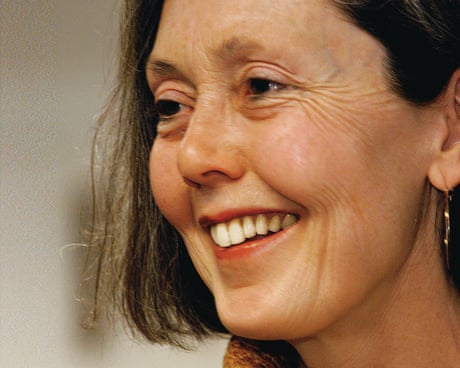
The 2026 Nobel Prize in Literature goes to Canadian poet Anne Carson

Anne Carson is the 2026 Nobel Laureate in Literature. She is a poet from Canada who has settled in Iceland. You can read her poetry in the London Review of Books, the New Yorker and Poem Hunter. Her work is also widely available in bookshops and libraries. There are many interviews with her, including this recent one with the Paris Review. You can also watch lectures by her on YouTube, including On the History of Skywriting and Beware the man whose handwriting sways like a reed in the wind. And here she's reading poems in Reykjavík.
  •  

Anne Carson wins Nobel prize in literature 2026

Most prestigious literature prize goes to Canadian known for genre-crossing works such as Autobiography of Red

The Nobel prize in literature has been awarded to the Canadian poet and essayist Anne Carson, the Swedish Academy has announced.

The academy cited the author’s “bold and inventive oeuvre that, in playful dialogue with the classical tradition, has created new forms for contemporary literature”.

Continue reading...

© Photograph: Pontus Lundahl/TT/Reuters

© Photograph: Pontus Lundahl/TT/Reuters

© Photograph: Pontus Lundahl/TT/Reuters

  •  

Anne Carson and Can Xue favourites to win Nobel prize in literature

The Canadian poet and Chinese experimental writer are the bookmakers’ favourites to win, with Haruki Murakami, Gerald Murnane and Margaret Atwood also in the mix

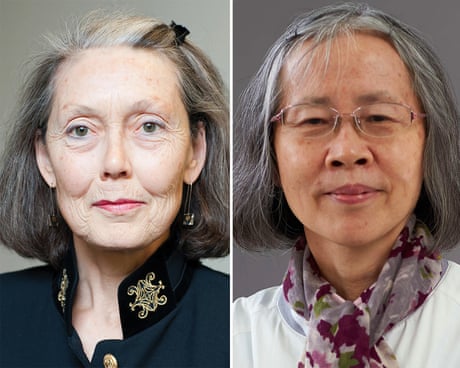
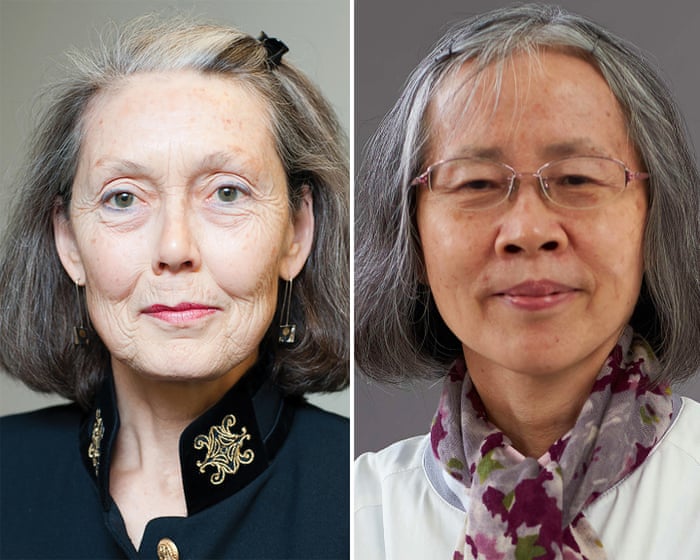
Canadian poet Anne Carson and Chinese experimental writer Can Xue are the bookies’ favourites to win this year’s Nobel prize in literature, set to be announced Thursday.

The frontrunners both have 10/1 odds of taking home the world’s most prestigious literary prize, this year worth 12m Swedish Krona (approximately £900,000), according to Ladbrokes.

Continue reading...

© Composite: PR, Alamy

© Composite: PR, Alamy

© Composite: PR, Alamy

  •  
❌