❌

Reading view

Hokusai: Thirty-Six Views of Mount Fuji review – sublime wonders from the Great Wave to that heroic, eternal peak

Dulwich Picture Gallery, London
With its helpless rowers, naked river-crossers and snowbound tea-drinkers, this magnificent series is a warning to put your faith in the essential and enduring

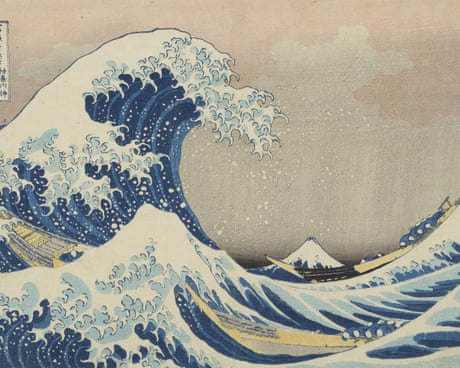
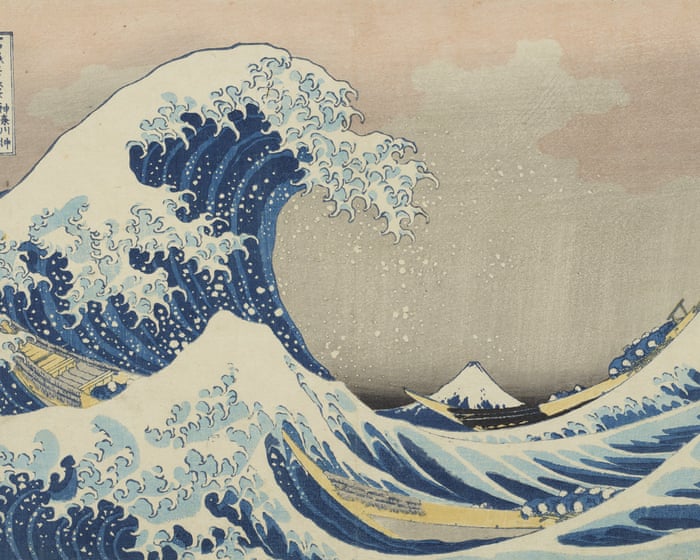
The giant wave’s foaming white summit spreads high over the heads of the helpless souls huddled in their long thin boats, crackling into what look like many sharp claws. It is a monster, hungry to swallow human flesh. But beyond it, over the wild water, soothing the terror of those in peril on the sea, is Mount Fuji – a solid cone of hope and solace. The mountain, not the wave, is the hero of this masterpiece, as it is the hero of all the prints in Dulwich Picture Gallery’s stunning exhibition – the first in Britain – of the complete Thirty-Six Views of Mount Fuji.

When you look closely here at three different, superb impressions of Katsushika Hokusai’s Under the Wave off Kanagawa – widely known today as the Great Wave – your mental picture of this icon is shattered by the violent onrush of water. In reproductions the wave just seems beautiful, an elegant curl of blue and white. But here, to paraphrase Tennyson, it is nature, blue in tooth and claw. The wretched people are the emotional heart of the picture, their imminent risk of drowning its whole point.

Continue reading...
© Photograph: Courtesy the Iuchi Collection, on deposit at The National Museum of Western Art, Tokyo. Photo by Norihiro Ueno
© Photograph: Courtesy the Iuchi Collection, on deposit at The National Museum of Western Art, Tokyo. Photo by Norihiro Ueno
© Photograph: Courtesy the Iuchi Collection, on deposit at The National Museum of Western Art, Tokyo. Photo by Norihiro Ueno
  •  

Blue for poor, yellow for posh: the London maps exposing centuries of terrible housing

From rent strikes to squatting, a new show reveals how people have managed to keep a roof over their head in London – and the mould and astronomical rents that persist

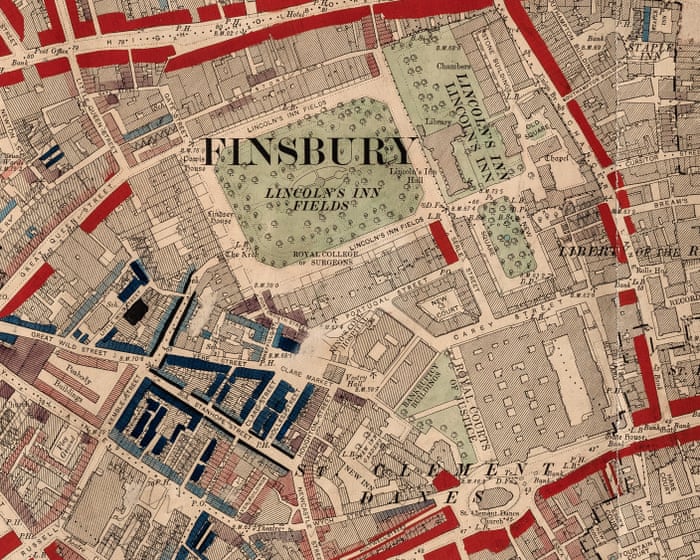
Charles Booth’s pioneering poverty maps of Victorian London show a vivid colour-coded warren of streets, alleyways and slums tightly packed together. Those marked black and dark blue were classed as being “very poor”, defined by “chronic want”. The light blue ones were poor – “18s to 21s a week for a moderate family”. Pink streets housed those who were “fairly comfortable”, and those where the wealthy lived were marked in yellow.

The maps by the British social reformer are the 19th-century equivalent of the modern-day indices of deprivation, which rank every geographic area of the UK by its level of social and economic disadvantage. Comparing the two shows how much has changed in the past 150 years – but also what hasn’t. Historical slums have been cleared away and housing conditions have generally improved, but extreme poverty and extreme wealth continue to live side by side in the capital.

Continue reading...

© Photograph: Charles Booth Archive, courtesy of London School of Economics

© Photograph: Charles Booth Archive, courtesy of London School of Economics

© Photograph: Charles Booth Archive, courtesy of London School of Economics

  •  

‘Shakespeare was a Black woman’: the playwright’s under-recognized connection to Black culture

A new Washington DC exhibition examines how Toni Morrison, Maya Angelou and more used the Bard’s work to help tell their own stories

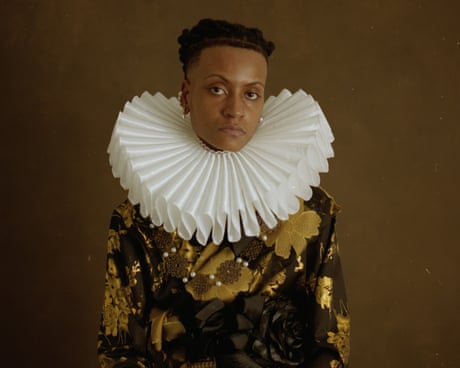
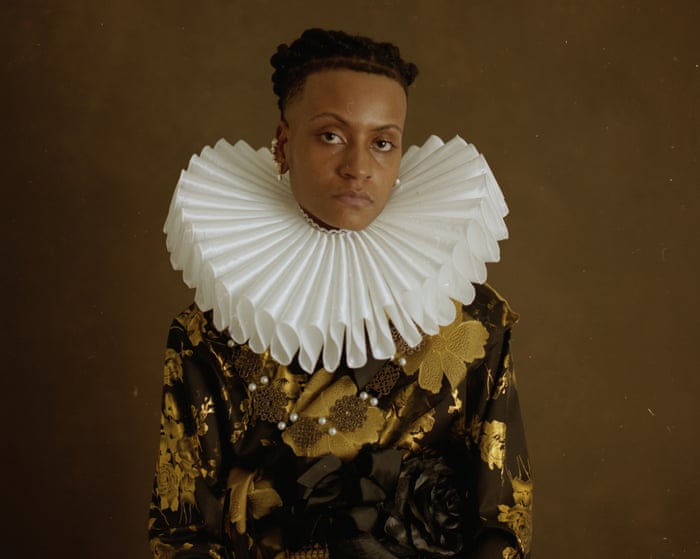
“William Shakespeare was a black woman.” In 1985, Maya Angelou spoke these words as part of a keynote speech at a convention in Cedar Rapids, Iowa.

There, she spoke of the role poetry played in her transition from muteness as a child and how she fantasized herself triumphantly delivering Portia’s speech from William Shakespeare’s The Merchant of Venice in front of her entire community at church. Though she never got the chance to perform that rendition, Angelou acknowledged her desire to deliver that rendition as part of a lifelong kinship with Shakespeare, a connection she continued to seek out throughout her life whenever she needed heartening or solace. In her eyes, Shakespeare wrote his emotionally desolate Sonnet 29 “for” her; how else could he have so aptly described the harsh realities of the Black feminine condition?

Continue reading...

© Photograph: Kennedi Carter/Courtesy of ROSEGALLERY

© Photograph: Kennedi Carter/Courtesy of ROSEGALLERY

© Photograph: Kennedi Carter/Courtesy of ROSEGALLERY

  •  

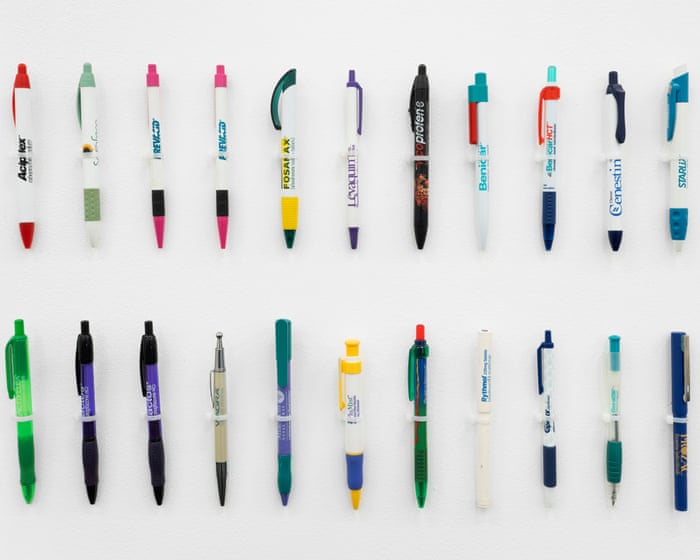
Sweet nothings, urinal cakes and headless dogs: 10 artworks worth seeing at Frieze

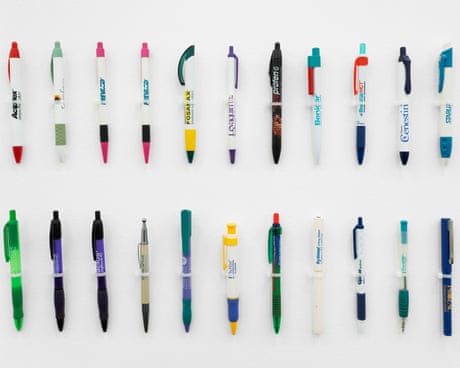
There’s plenty that stands out at Regent’s Park this year, from antidepressant pens and an ibuprofen-dolling robotic arm to Miriam Cahn’s 26 years’ worth of self-portraiture and a 150m-year-old dinosaur skull – still with embedded tooth

The raised platform in the middle of British artist Ella Fleck’s installation vibrates under your feet to the sound of a male voice. He’s whispering sweet nothings, intoning sexual fantasies. It’s all based on third-party agencies that manage OnlyFans accounts, interacting with users, creating fictional relationships that horny guys spend thousands on. It’s a greasy, gross, uncomfortable exploration of sex work on an industrial scale.

Continue reading...

© Photograph: Courtesy the artist/ Trautwein Herleth

© Photograph: Courtesy the artist/ Trautwein Herleth

© Photograph: Courtesy the artist/ Trautwein Herleth

  •  

Frieze review – you’ll see more avant garde wonders in the Bake Off tent

Regents Park, London
This year’s art fair is a jumble sale of mediocre paintings for the super-rich, while its Masters sibling hawks dinosaur skulls and sleazy 19th-century nudes. Welcome to the art market as its most grotesque

Naked people climb out of the earth and run around waving their arms and screaming, while someone with a bird’s head and wings plays the bagpipes. It’s my favourite artwork at this year’s Frieze but don’t go looking for this wildly imaginative outrage among the heaps of contemporary art at Frieze London. It’s a painting by a 16th-century follower of Hieronymus Bosch and is on view at Frieze Masters, the posher tent on the other side of Regent’s Park.

I’m sorry to say I was bored rigid in Frieze London. Many people attend, I imagine, hoping to be informed and excited by the newest, coolest art, but you’ll see more genuinely avant garde wonders in the Bake Off tent. There are endless paintings, none of which are much good, interspersed with photographs which tend to be a little better. The first thing here that held me at all was a two-metre-tall, inkjet print by Wolfgang Tillmans called Paul, nude, golf ball in which the naked Paul has his elbows on the floor and his close-cropped head bowed between them in apparent despair, while the white ball beside him eerily mirrors the pale flesh of his bony back. But it’s not new – it dates from 1994.

Continue reading...

© Photograph: Linda Nylind/Linda Nylind. Courtesy Frieze

© Photograph: Linda Nylind/Linda Nylind. Courtesy Frieze

© Photograph: Linda Nylind/Linda Nylind. Courtesy Frieze

  •  

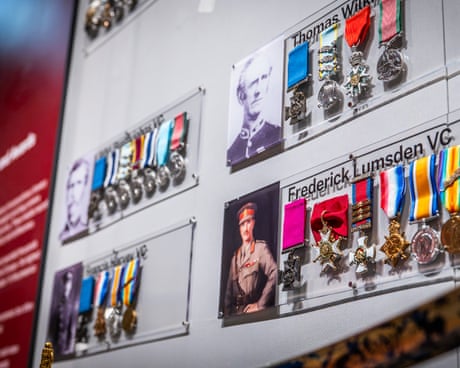
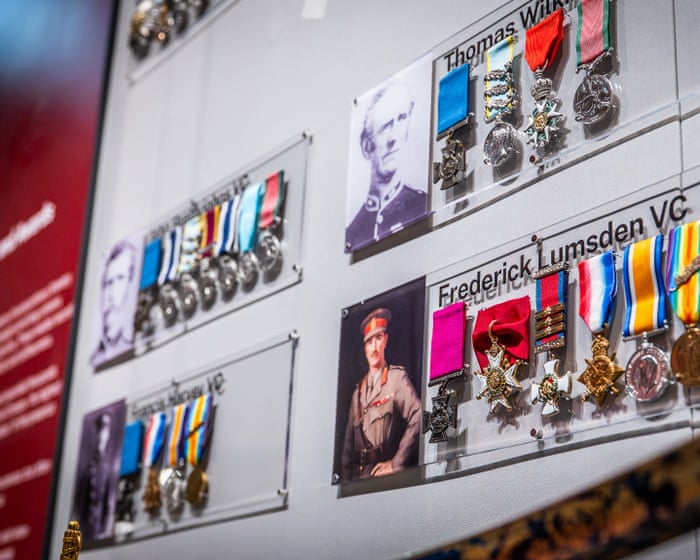
‘Fantastically special’: all 10 Victoria Crosses awarded to Royal Marines go on show for first time

Exclusive: Portsmouth Historic Dockyard’s new £15m permanent display tells tales of courage from conflicts such as Crimean and both world wars

They tell tales of bravery under fire, may lead to conversations about the UK’s place in the world and could prompt visitors to reflect on what they might have done if faced with the same perilous circumstances.

All 10 Victoria Crosses (VCs) awarded to members of the Royal Marines are going on display together for the first time along with tales of courage during conflicts such as the Crimean and both world wars.

Continue reading...

© Photograph: Royal Navy Museums

© Photograph: Royal Navy Museums

© Photograph: Royal Navy Museums

  •  

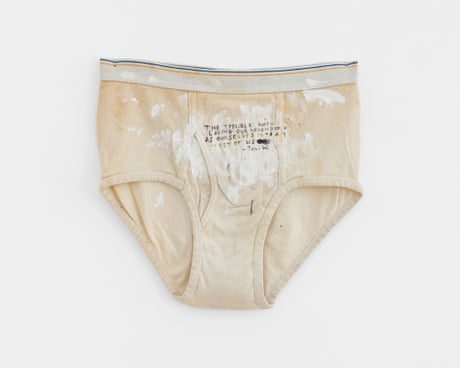
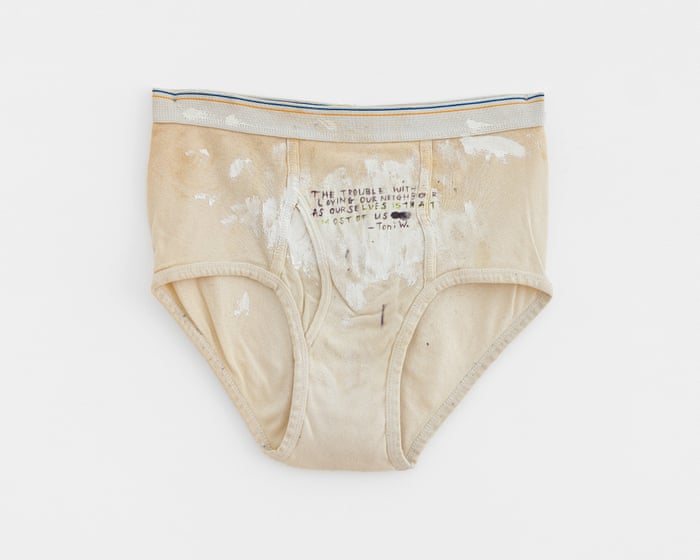
Pope.L review – savage satire from Y-fronts-wearing trickster famed for gruelling ‘crawl’ across New York

Modern Art, London
The late American took on liberal presumptions and the commercialism of Black culture, even dressing in white bunny ears and underpants

Seven squares are pinned to the wall, each one painted in the high style of American minimalism: pure, austere variations on a theme. At the centre of each is printed the phrase “negro idea” followed by an apparently random number (51, 37, 666). What is Pope.L, the late, great trickster of contemporary American art, getting at?

Perhaps it is a critique of how minimalism, with its ethos of art-for-art’s sake, excluded politics from art? Or a comment on how racial categories are as constructed (and as subject to fashion) as the theories underpinning contemporary art? Or is it a riff on how the edifice of western modernism is built on stolen ideas? Then again, maybe the deployment of an outmoded racial category is simply designed to discomfort the liberal pieties of those people likely to visit this art gallery just off Piccadilly.

Continue reading...

© Photograph: Courtesy The Estate of Pope.L and Modern Art © The Estate of Pope.L

© Photograph: Courtesy The Estate of Pope.L and Modern Art © The Estate of Pope.L

© Photograph: Courtesy The Estate of Pope.L and Modern Art © The Estate of Pope.L

  •  

A tour around Amy Winehouse’s private junk: five free art exhibitions to see

The Back to Black singer’s books, shoes and jigsaw puzzles have gone on display. Elsewhere, a leaky Barbican and some gloriously gloopy sculptures can be viewed in London galleries this week

Continue reading...

© Photograph: Eva Herzog/Courtesy the artist and the Nicoletta Fiorucci Foundation

© Photograph: Eva Herzog/Courtesy the artist and the Nicoletta Fiorucci Foundation

© Photograph: Eva Herzog/Courtesy the artist and the Nicoletta Fiorucci Foundation

  •  

Her royal heilness: Berlin show revisits the artist who turned the Queen into a Nazi

The late Christoph Schlingensief was one of German art’s great provocateurs. Can his B-Movie horror aesthetics still shock us into thinking anew about media power, colonialism, and the far right?

Christoph Schlingensief certainly knew how to provoke. “Fury at German play that shows Queen as a Nazi,” read the Sunday Express’s headline after Kaprow City first premiered at Berlin’s Volksbühne theatre in 2006. Drawing on the happenings of US performance artist Allan Kaprow, the play turned its attention to Diana, Princess of Wales’s death. In one scene, the then queen performs a Hitler salute. Another re-enacts the paparazzi chase that led to Diana’s fatal crash. Diana appears in bed beside two men with Down’s syndrome; and Camilla is pelted with animal blood. Schlingensief insisted the work was not meant as provocation but as an investigation into how Diana turned into a modern icon. But his art thrived on outrage, exposing the absurdity of societies that glorify their idols while consuming their lives as entertainment.

Kaprow City is at the heart of a new Berlin show – It’s Not My Problem Anymore, Deal With Your Own Shit – that revisits the artist’s legacy. In the Gropius Bau’s grand neo-Renaissance atrium, visitors encounter remnants of the carousel-like rotating stage he called the “animatograph”. Looking at this installation today feels like a glimpse into Schlingensief’s mind: a messy collage of childhood memories, violent fantasies and royal glamour.

Continue reading...

© Photograph: © Estate of Christoph Schlingensief

© Photograph: © Estate of Christoph Schlingensief

© Photograph: © Estate of Christoph Schlingensief

  •  

‘I must continue until I die’: inside the fight to bring Iran’s thriving art scene to the world

Amid economic sanctions and ongoing conflict, a new initiative is returning Iran’s artists to the international spotlight

When the call came early one morning, Tehran resident Elham Issari knew it must be urgent. The voice on the line was offering something precious. “Miss Elham,” he said excitedly, “I have a single tube of white paint! It’s overpriced and I know it’s overpriced but, if you want it, you have to buy it right now because there’s this other guy in this other city who wants it and you have to tell me within the next five minutes.”

The tube of white paint would have cost Issari 5m tomans (about $36), she recalls. “I was like, I don’t think so, because that’s overpriced, and the next thing you know is it’s 4am and I’m on YouTube watching how to make lead white in your backyard without getting lead poisoning.”

Continue reading...

© Photograph: Courtesy of the artist and Continuum: Artist Relief for Iran, presented by Duran Art Projects. © Aryan Dabbagh, 2021.

© Photograph: Courtesy of the artist and Continuum: Artist Relief for Iran, presented by Duran Art Projects. © Aryan Dabbagh, 2021.

© Photograph: Courtesy of the artist and Continuum: Artist Relief for Iran, presented by Duran Art Projects. © Aryan Dabbagh, 2021.

  •  

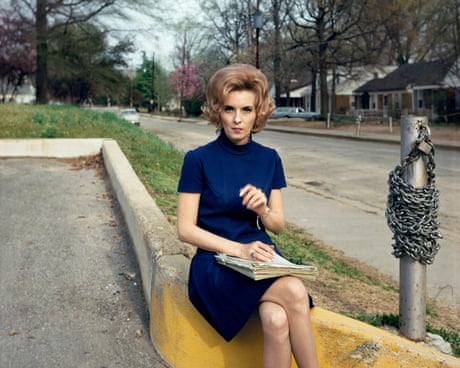
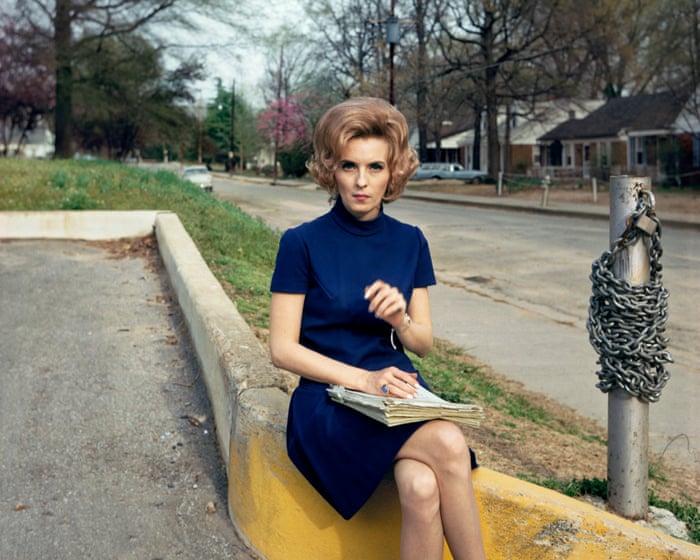
‘At war with the obvious’: the everyday genius of William Eggleston – in pictures

As a new exhibition looks at how the pioneering photographer sparked a colour revolution, his son, William Eggleston III, explains his father’s unique approach

Continue reading...

© Photograph: Eggleston Artistic Trust. Courtesy Eggleston Artistic Trust and David Zwirner

© Photograph: Eggleston Artistic Trust. Courtesy Eggleston Artistic Trust and David Zwirner

© Photograph: Eggleston Artistic Trust. Courtesy Eggleston Artistic Trust and David Zwirner

  •  

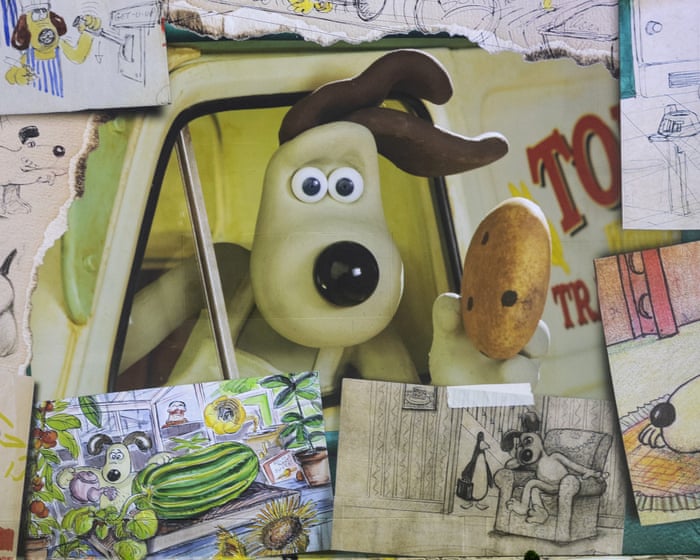
Larger Than Life review – Wallace, Gromit and the gang say cheeeese for hilarious Aardman origin story

Lightroom, London
From Shaun’s barn to Gromit’s box, these immersive behind-the-scenes renderings of the wide-grinned, cheeky characters are joyful, enormous – and a bit hard to follow

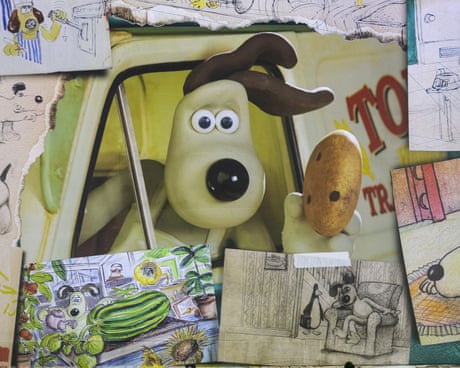
Nothing is safe from the scourge of immersification. They’ve turned Gustav Klimt and Vincent Van Gogh into vast, projection-mapped digital environments; they’ve told the stories of the moon landings and the dinosaurs and David Bowie as floor-to-ceiling electronic spectacles; and now they’ve come for Aardman. For Wallace and Gromit and Shaun the Sheep, our national treasures. Is nothing sacred?

The latest immersive cinematic experience at Lightroom is a big, eye-popping celebration of Aardman Animations, the company behind the world’s favourite claymation films and TV shows. It moves between documentary storytelling, behind-the-scenes insight and dazzling immersive renderings of all your wide-grinned, cheeky northern favourites.

Continue reading...

© Photograph: Justin Sutcliffe/Justin Sutcliffe for LIghtroom KX

© Photograph: Justin Sutcliffe/Justin Sutcliffe for LIghtroom KX

© Photograph: Justin Sutcliffe/Justin Sutcliffe for LIghtroom KX

  •  

Our Bodies Have Been Bridges review – riveting portraits and the story of the first woman on Earth

Autograph, London
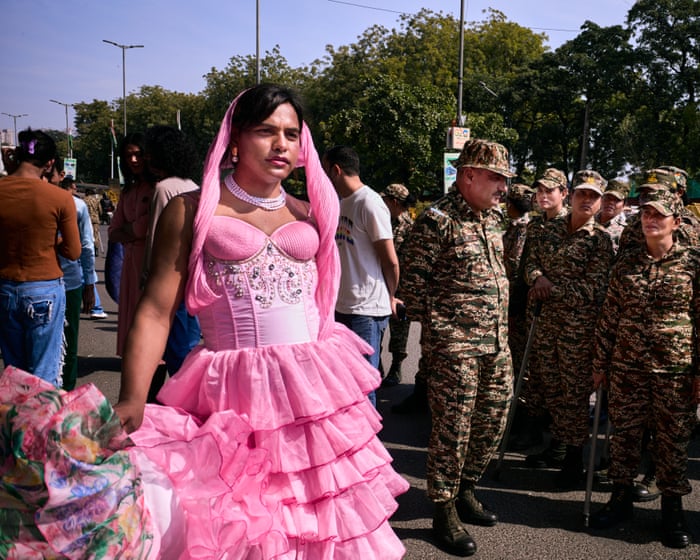
The three-person headline show looking at South American feminism is displayed alongside Charan Singh: Your Tongue in My Mouth, an intimate study of Indian trans communities

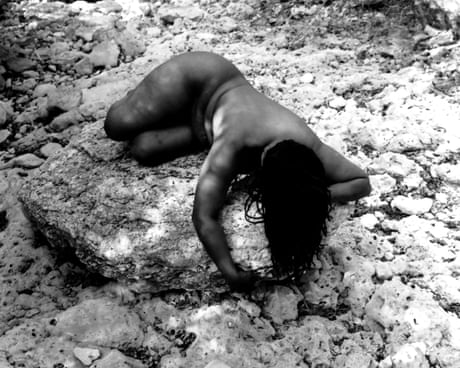
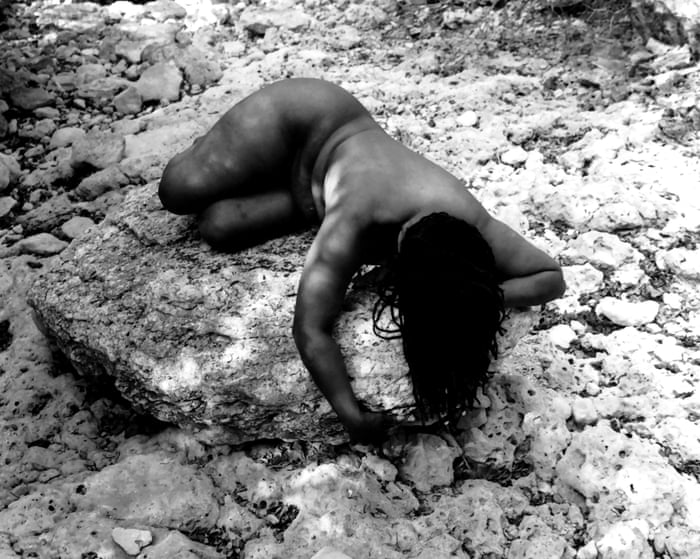
In the 1990s, the late Chicana artist Laura Aguilar was living with depression. A friend took her on a road trip to New Mexico, where Aguilar made some nude self-portraits in the mystical landscapes. Those photographs evolved into a pivotal series shot in desert environments across the American south-west, Aguilar’s notable 1996 Nature Self-Portrait – considered an early work of intersectional feminist art, before the word had entered academic discourse.

London gallery Autograph first worked on an exhibition of Aguilar’s in 1997, the year after she made Nature Self-Portrait, so this is something of a homecoming, a generation on. Aguilar’s contours, folds, and crevices sometimes disappear into the barren desert landscapes, assimilating the shapes of boulders or trees; at other times, her body is incongruous, soft flesh that can’t be held by the harsh, barren conditions. These images capture the paradox of a body that is both hypervisible and ignored.

Continue reading...

© Photograph: © Laura Aguilar

© Photograph: © Laura Aguilar

© Photograph: © Laura Aguilar

  •  

Georg Baselitz: The Heroes review – astonishing paintings take a savage swipe at history

Thaddaeus Ropac, London
The artist captures horror, disgust and guilt over Germany’s Nazi past. The colossal results are so scathingly ironic it’s like being spat at

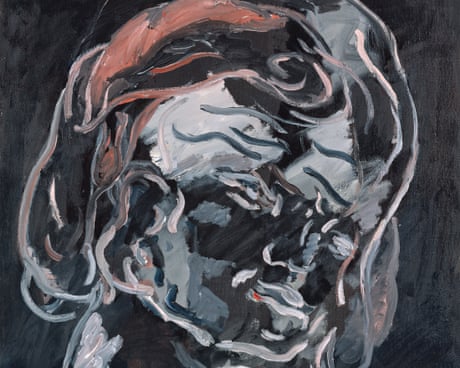
When the German painter Georg Baselitz died this year a chunk of Europe’s rapidly diminishing historical memory went with him. Baselitz was born in 1938, experienced Hitler’s Germany and the second world war as a young child, then found himself growing up in communist East Germany before escaping to the west and becoming an artist. His acidic, honest perceptions of the history he’d lived through will no longer be those of the living person I was lucky enough to encounter. But he has left us a gift: an exhibition in London he helped plan of his most astonishing history paintings, The Heroes.
It’s a savage, merciless vision of modern history with feelings of horror, disgust and irreparable guilt hanging heavy in the poisoned air. But there’s a terrible joy too, the thrill of speaking the truth. You sense the liberation Baselitz must have felt when he set brush to canvas to start these paintings in 1965. Comparing the explosive rage and nihilism of his art to punk may be inadequate but the title of this series of colossal imaginary portraits is so scathingly ironic it’s like being spat at.

Continue reading...

© Photograph: © Georg Baselitz 2026. Courtesy Thaddaeus Ropac gallery, London

© Photograph: © Georg Baselitz 2026. Courtesy Thaddaeus Ropac gallery, London

© Photograph: © Georg Baselitz 2026. Courtesy Thaddaeus Ropac gallery, London

  •  

Home is where the jellyfish glows: Finland finally warms to nature-loving modernist Alvar Aalto

His egalitarian homeland used to harbour reservation against the architecture star. But with 13 new Unesco listings and a new exhibition in Helsinki, Aalto’s work is finally getting the recognition it deserves

In the early 1950s, Alvar Aalto built a boat to get to his remote summer residence on an island in Lake Päijänne, about 200km north of Helsinki. But the celebrated Finnish architect was not a happy skipper. He named the boat – a title as cumbersome as his buildings were elegant – Nemo propheta in patria: “No man is a prophet in his own land”.

The name was a dig at Finland, which the architectural maestro believed had taken him for granted. Other nations, he moaned, recognised his talent more than his own. Today, arriving in Helsinki, I find that Finland doesn’t just love Aalto, he’s a national treasure.

Continue reading...

© Photograph: Foundation for the Finnish Museum of Architecture and Design

© Photograph: Foundation for the Finnish Museum of Architecture and Design

© Photograph: Foundation for the Finnish Museum of Architecture and Design

  •  

Prem Sahib: Chamber review – master of unease twists the city into terror and pleasure

De La Warr Pavilion, Bexhill
There’s an atmosphere of sickly discomfort throughout this weird, intense mid-career survey for this brilliant artist

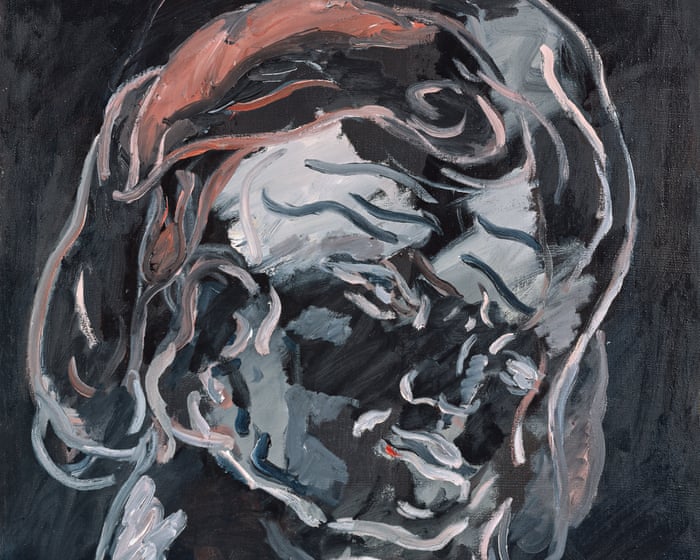
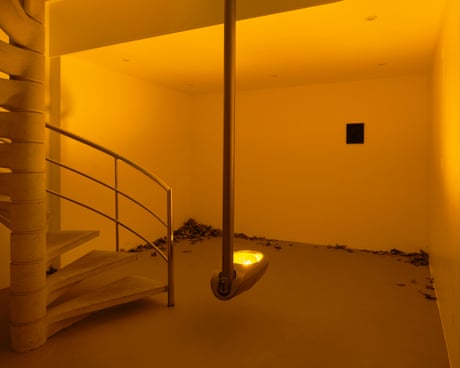
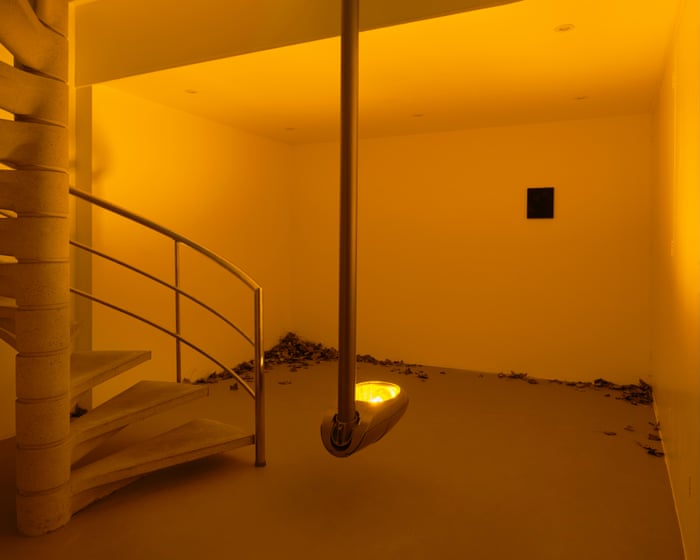
Prem Sahib turns the city inside out, twists it around and rips it apart. His show at the De La Warr Pavilion in Bexhill, a sort of mid-career survey for the 44-year-old English artist, is full of private spaces and urban nightmares that have been gutted and left on display. It’s minimal, claustrophobic, intense stuff.

A sodium street lamp hangs upside down from the ceiling, casting its sickly pale orange glow across the gallery. You feel like you’ve stumbled into some urban back alley where physics has been flipped, it has all the threat of an underpass, but surreal and inverted. Nearby, three puffer jackets have been squeezed between sheets of glass – are these the blokes who were waiting for you in the underpass? Or are they three strangers who you’ve caught mid-embrace?

Continue reading...

© Photograph: Ben Westoby/courtesy the artist and Phillida Reid, London

© Photograph: Ben Westoby/courtesy the artist and Phillida Reid, London

© Photograph: Ben Westoby/courtesy the artist and Phillida Reid, London

  •  

Gabrielle Goliath: Elegy review – devastating lament is a furious, single-note call to action

Ibraaz, London
Too controversial for the Venice Biennale, this haunting video and audio work commemorates murders and genocides with an angry act of mourning

The sound of mourning spills out into the streets. A single, endless wailing note echoes out of the basement of Ibraaz, a relatively new cultural centre in London’s Fitzrovia. This is Gabrielle Goliath’s heart-wrenching Elegy, each of its three films featuring a woman singing just one note until their lungs falter and another woman steps up to fill in for her. Just as a note is about to die, it is sustained. It’s a haunting, shocking act of mourning for murder, injustice and genocide.

And it almost never made it.

Continue reading...

© Photograph: Ollie Hammick

© Photograph: Ollie Hammick

© Photograph: Ollie Hammick

  •  

‘Enough of this suffering!’ Joana Vasconcelos on why she is fed up with women’s art defined by pain

The Portuguese artist is famous for her monumental ceramic wedding cakes and gigantic chandeliers made of tampons. So why is a new show in Lisbon pairing her with Valentino’s size-zero catwalk dresses?

To interview the Portuguese artist Joana Vasconcelos is to jump on to a moving train. She is telling me why she uses needlework to make huge things: 15-metre doilies, say, or a tree 13.5 metres tall rustling with 150,000 hand-sewn leaves. “One day, I said to myself,” she says, “why not bring domestic detail into monumental sculpture? What do we know of works like this? OK, there’s Louise Bourgeois. But it wasn’t enormous. She worked in detail but on small things. There’s the beauty of Niki de Saint Phalle. But it’s always papier mache – a technique that’s very simple, very practical, but not chic.”

It takes a certain something to compare yourself to these two French giantesses of art. It takes something else to castigate Bourgeois and de Saint Phalle for not being big, bold and beautiful enough. But if there’s one female contemporary artist who can do it without coming across as delusional, it’s Vasconcelos. Born in Paris in 1971 into an artistic Portuguese family, Vasconcelos has established herself as one of her country’s leading contemporary artists – and one of the world’s most ambitious.

Continue reading...

© Photograph: Horacio Villalobos/Corbis/Getty Images

© Photograph: Horacio Villalobos/Corbis/Getty Images

© Photograph: Horacio Villalobos/Corbis/Getty Images

  •  

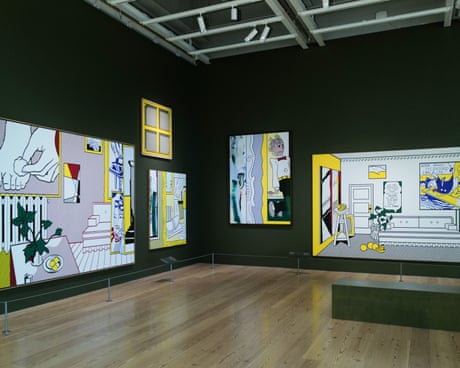
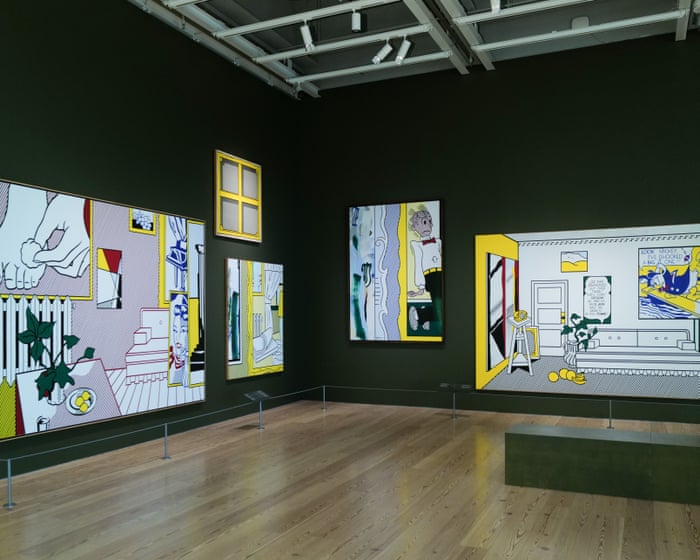
‘What could be discovered? What is new there?’: blockbuster exhibition celebrates Roy Lichtenstein

The often-criticised pop artist is the focus of a monumental new survey including rarely seen pieces and ambitious new restagings at New York’s Whitney Museum

When the American artist Roy Lichtenstein created his monumental Greene Street Mural in 1983, he took inspiration from the Bayeux tapestry for its serial storytelling technique. But whereas the embroidery depicting the Norman conquest continues to delight after nearly 1,000 years, Lichtenstein’s site-specific mural was destroyed after six weeks, in accordance with his wishes.

More than four decades later, however, the monumental Greene Street Mural is to mesmerise art lovers once more. This week a 96ft (29-metre) recreation of the work will span the entire entryway to Roy Lichtenstein: Like New, the first major New York retrospective of the pop artist’s work in 33 years, at the Whitney Museum of American Art.

Continue reading...

© Photograph: Jason Lowrie/Estate of Roy Lichtenstein. Photograph by Jason Lowrie/BFA.com

© Photograph: Jason Lowrie/Estate of Roy Lichtenstein. Photograph by Jason Lowrie/BFA.com

© Photograph: Jason Lowrie/Estate of Roy Lichtenstein. Photograph by Jason Lowrie/BFA.com

  •  

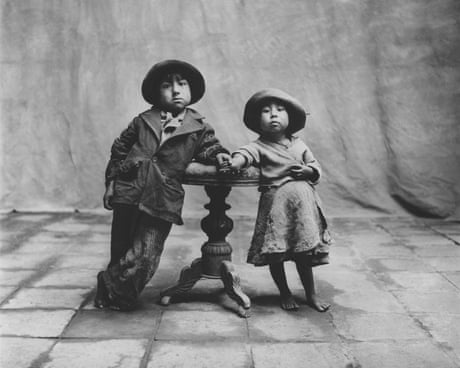
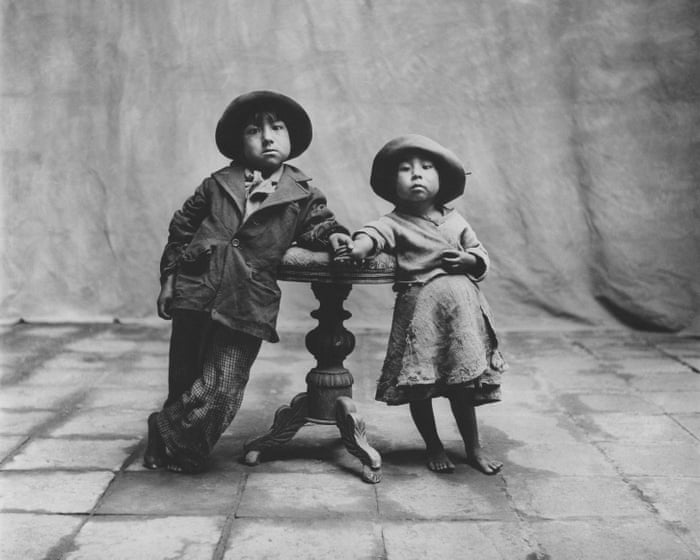
Remember Me review – narrow view of two photographic centuries is like a history of food in three ham sarnies

Bourse de Commerce, Paris
There are 700 works from François Pinault’s collection on display – more than half of them by Irving Penn – but it’s a blinkered selection and annoyingly didactic

‘Beware … of assuming the sterile attitude of the spectator, for life is not a spectacle” scream the words of Aimé Césaire – writ large and bold by Barbara Kruger, in a giant installation, The History of Tears, that fills Bourse de Commerce’s spectacular Rotunda. Kruger’s angry, menacing, viscerally charged work – words as images, and large-scale video clips of people seething with self-hate – is a thrilling setup for Remember Me, an exhibition that promises a take on 200 years of photography through 700 works by more than 70 artists drawn from the collection of the French billionaire François Pinault. That excitement quickly dissipates as the exhibition moves on.

This is the biggest photography show ever held at the Bourse de Commerce. Remember Me has two main problems: first, it tries to say too much with too few artists. For a start, nearly 450 of the 700 or so works are by Irving Penn. It leans heavily on classical, conventional approaches, styles and familiar names, and that creates a very obvious skew in the perception of what photography is, does, and how it is presented.

Continue reading...

© Photograph: © Irving Penn, Condé Nast Pinault Collection

© Photograph: © Irving Penn, Condé Nast Pinault Collection

© Photograph: © Irving Penn, Condé Nast Pinault Collection

  •  

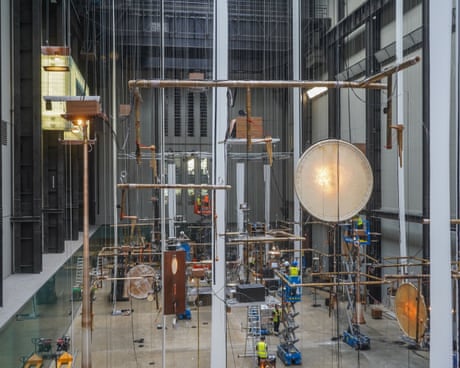
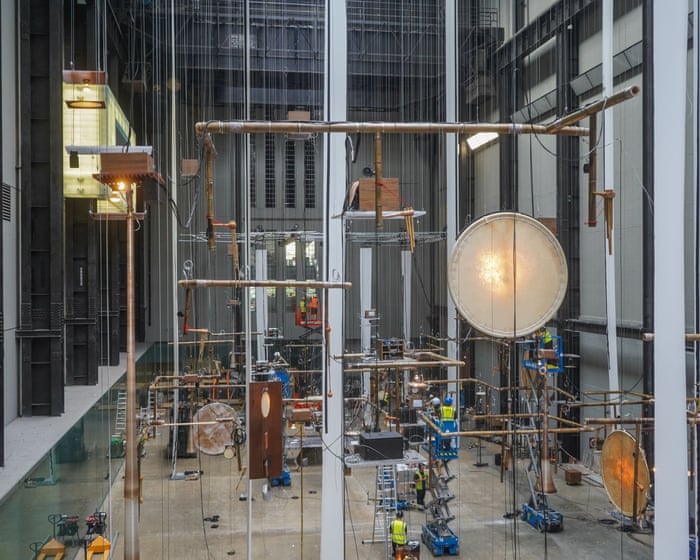
Tate sounds eerie, Frieze returns and Cindy Sherman takes surreal selfies – the week in art

The Turbine Hall gets haunted by sound art and the colossal air fair opens its doors, while Sherman champions the fantastic and the grotesque – all in your weekly dispatch

Tarek Atoui
Sound art inspired by everyday objects and the eerie harmonies of history provides the latest artistic intervention in Tate Modern’s biggest space. Read more here.
• Turbine Hall, Tate Modern, London, from 13 October to 11 April

Continue reading...

© Photograph: Amer Ghazzal/Shutterstock

© Photograph: Amer Ghazzal/Shutterstock

© Photograph: Amer Ghazzal/Shutterstock

  •  

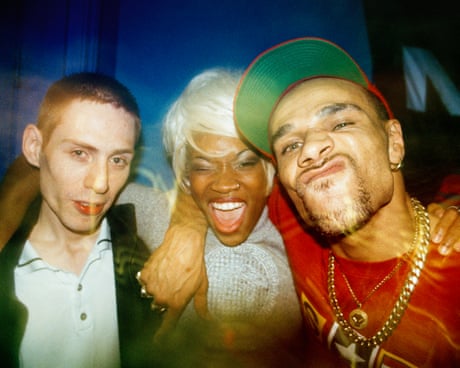
Crush-worthy photography, camp sci-fi and a centenarian’s florals: five free exhibitions to see

A little exhibition of Daidō Moriyama at his artiest and strangest, like Warhol with added filth, is among the best on show in London’s free-entry commercial galleries this week

If it’s a crime to have a crush on an elderly avant garde Japanese street photographer then lock me up and throw away the key, because I have some seriously strong feelings for Daidō Moriyama. His ultra-confrontational, high contrast, aggressive take on photography just gets me blushing, what can I say.

Continue reading...

© Photograph: © Daidō Moriyama, Courtesy Hamiltons Gallery

© Photograph: © Daidō Moriyama, Courtesy Hamiltons Gallery

© Photograph: © Daidō Moriyama, Courtesy Hamiltons Gallery

  •  

‘My first photographs coincided with me falling in love’: why children have always adored taking pictures

What makes someone pick up a camera at a young age, and what can their images tell us? A new book and show explore why a child’s first photo could be as formative as their first record

What was the first photograph you took? Though most of us use cameraphones every day, few think about how the habit started or even why we choose the pictures we keep. Photography is one of the most popular hobbies in the world, typically picked up in childhood, but its impact – particularly pre-smartphone and digital imagery – has not been much studied. This lapse fascinates Annebella Pollen, professor of visual and material culture at the University of Brighton.

“My generation is used to being asked: ‘What was the first record you bought?’ Music is seen as a key part of identity formation, but what if something similar crystallises when we handle a camera?” she asks. “I certainly remember my first photos, because they coincided with me falling in love, as a 10-year-old, with a beautiful boy at school. I pursued him with my camera.”

Continue reading...

© Photograph: Collection, Mass Observation Archive, University of Sussex, 1991–1992.

© Photograph: Collection, Mass Observation Archive, University of Sussex, 1991–1992.

© Photograph: Collection, Mass Observation Archive, University of Sussex, 1991–1992.

  •  

‘My poetry won me asylum’: Cecilia Vicuña on exile life in ‘sad’ Britain after Pinochet’s coup

Five decades after convincing judges she’d be killed if she returned to Chile, the artist is back with a politically charged retrospective in the country she grew to love

Cecilia Vicuña was 24 when she first arrived in London. She had come from Santiago on a British Council scholarship to study at the Slade School of Art, and her stay was supposed to be so brief that she didn’t even unpack her suitcase.

Then, in September 1973, General Augusto Pinochet’s military coup overthrew Chile’s democratically elected president, Salvador Allende. Vicuña was one of a handful of Chilean students in London immediately expelled from their universities and expected to leave Britain. At a Home Office hearing, her pro-bono lawyers argued that she would be killed if she returned to Chile, and showed the judges her recently published art and poetry book, Saborami, which documented the aftermath of the coup. The judges granted her asylum.

Continue reading...

© Photograph: David Levene/The Guardian

© Photograph: David Levene/The Guardian

© Photograph: David Levene/The Guardian

  •  

‘I’m bringing together women who nourish me’: French film-maker Alice Diop on her debut installation

The Saint Omer director has gathered work by artists, writers, composers and poets for Geste de Consolation, set in the 60m-long central hall of the Palais d’Iena in Paris

Alice Diop has just returned to France from California when we speak. It’s a Zoom meeting with a bad connection, and Diop leans close to the camera, always in frame, barely moving. It’s like watching the characters in her documentaries and films, where her camera lingers on its subject with a slow, cool intensity.

Diop had been attending a two-week celebration of her work organised by the French department at University of California, Berkeley, in which academics pored over her documentaries (Nous (We), Vers La Tendresse (Towards Tenderness)) and her first feature film, Saint Omer, which received the Silver Lion in Venice in 2022. The courtroom drama was inspired by a real trial that Diop attended, of a Senegalese woman who had allowed her baby to drown in the sea. Over two hours, it explored the complexities of race, culture and motherhood in contemporary France. The film was the first by a black female director to be entered by France as its official entry in the 2023 Academy Awards.

Continue reading...

© Photograph: Miu Miu, Art Basel

© Photograph: Miu Miu, Art Basel

© Photograph: Miu Miu, Art Basel

  •  

The 90s: Art and Fashion review – this isn’t an exhibition, it’s a magazine spread

Tate Britain, London
The Young British Art of the 1990s was brash and macabre but also intelligent and emotional. This breathlessly superficial show reduces it to a stylish pose

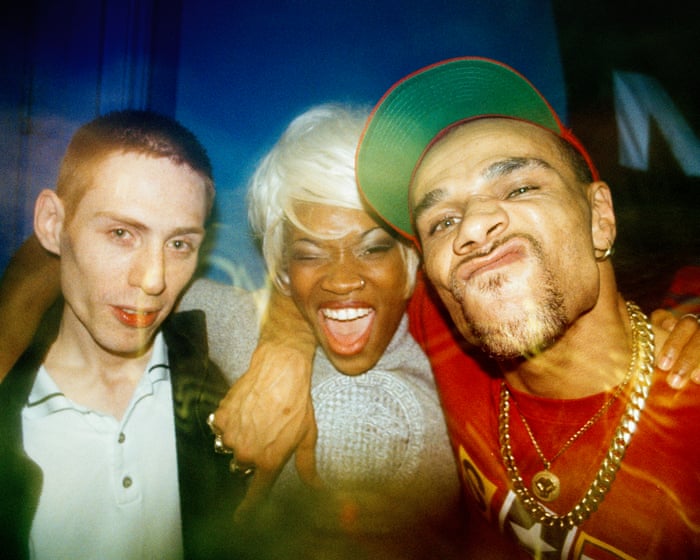
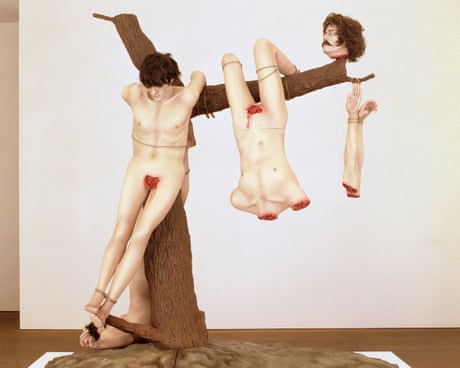
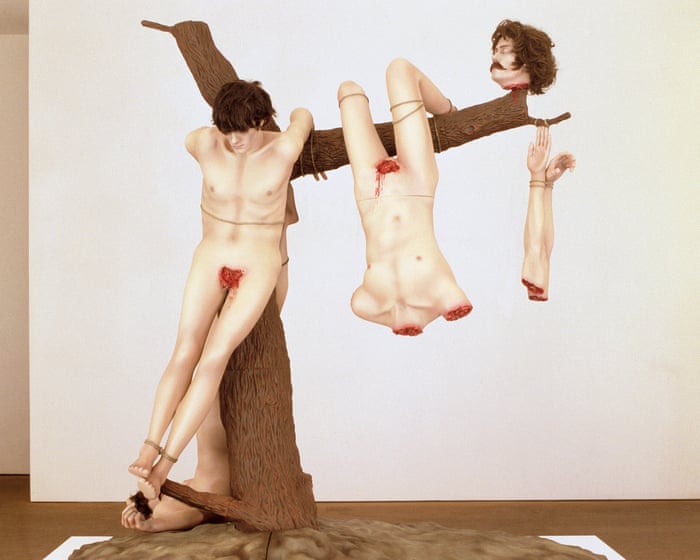
Jake and Dinos Chapman were dismissed by some even in the 1990s as overgrown adolescents selling shock for its own sake, and yet it is their work that brings this dismally shallow show closest to a moment of depth. Their sculpture Great Deeds Against the Dead, based on a print of Napoleonic war atrocities by Goya, is a display of dismembered, bleeding nude corpses hung on a tree. It asks questions about war and art, the representation of pain, whether art can have a moral purpose. The best British art of the 1990s was like that, coming on as brash, vulgar, macabre, yet also unexpectedly intelligent and emotional. Unfortunately this show is neither.

You’d think Tate Britain would want to do justice to a decade in which these Millbank premises played a starring role, staging the Turner prize in the years when bisected cows, concrete houses and elephant dung got the nation arguing. At the start of the 1990s no one thought Britain was a leader in contemporary art. By the millennium, we were better known for new art than new novels.

Continue reading...

© Photograph: Jake and Dinos Chapman/Jake and Dinos Chapman. All Rights Reserved, DACS Images

© Photograph: Jake and Dinos Chapman/Jake and Dinos Chapman. All Rights Reserved, DACS Images

© Photograph: Jake and Dinos Chapman/Jake and Dinos Chapman. All Rights Reserved, DACS Images

  •  

Aphrodite review – a trashy way to treat the goddess of love

Ashmolean museum, Oxford

She’s the ultimate female nude, a Greek goddess who inspired centuries of artists. Yet despite some world-class loans, her story here is jumbled

Botticelli’s Venus has parked her shell outside your house and come to pay a night-time visit. The glowing strands of her hair glitter against blackness as she looks past you at a mystery only she can see, while your eyes follow those river-like locks down to a hand that gathers a looping cascade between her thighs. She is, unmistakably, the goddess from Botticelli’s The Birth of Venus in the Uffizi, Florence. This very similar painting from about 1490, also by Botticelli and his workshop, suggests his Uffizi masterpiece was already such an icon that someone commissioned this version without the zephyrs and green sea, just that goddess body.

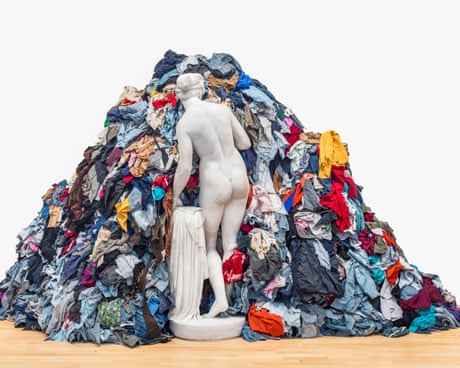
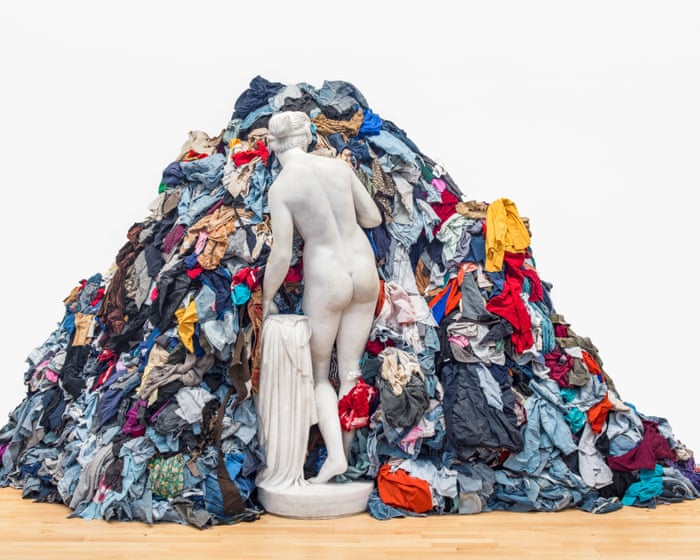
So it goes. Venus, in art, is just a word for “female nude”. Botticelli started a modern appetite that has never ended. From his hypnotic paintings a host of lush sex goddesses rose up, or reclined, to rule European art through to Michelangelo Pistoletto’s ironic 1967 assemblage Venus of the Rags, also here, in which a heap of old clothes overflow from a corner around a marble nude seen from behind, the mix of beauty and chaos resembling a rubbish-strewn Naples piazza.

Continue reading...

© Photograph: Tate and Michelangelo Pistoletto

© Photograph: Tate and Michelangelo Pistoletto

© Photograph: Tate and Michelangelo Pistoletto

  •  
❌