❌

Reading view

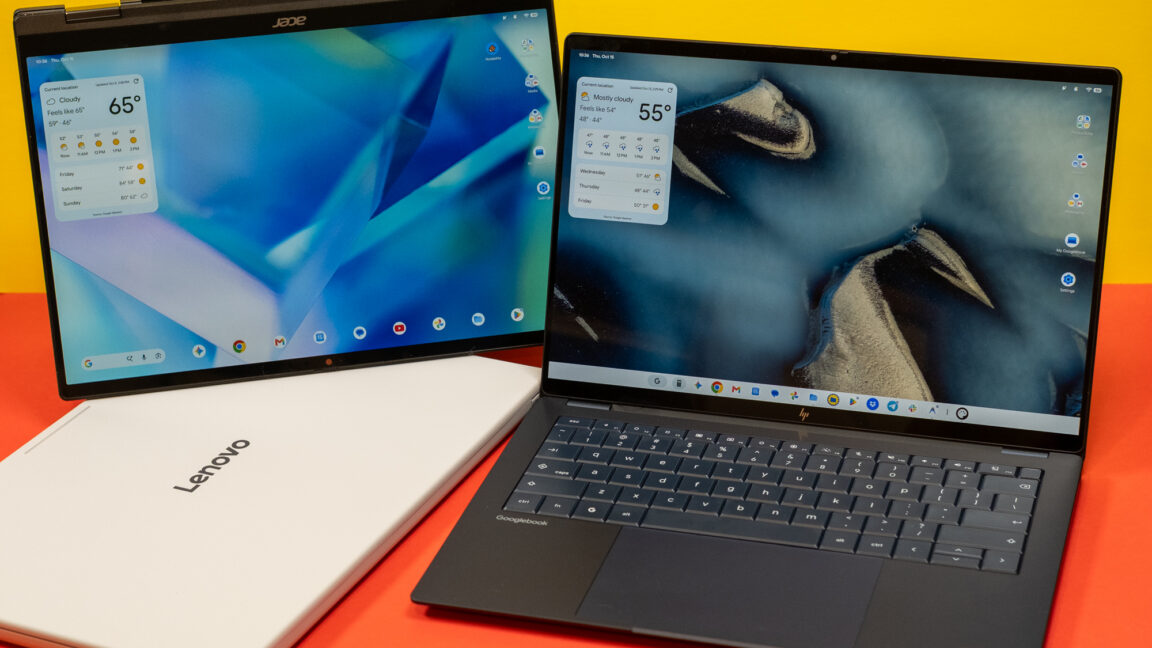
Googlebook review: Android on a laptop is still Android

Android was designed for phones, but that hasn't stopped Google from trying to adapt the OS and its apps to larger machines over the years. Googlebooks are just the latest attempt after tablets, Chromebooks, and foldables induced little change in how people interact with Android software. These new Android-powered laptops are designed to pick up where the web-focused ChromeOS left off, offering premium hardware and native support for Android apps.

Google sees Googlebooks as an alternative to Windows and macOS, but these platforms are entrenched with decades of software and UI conventions that keep users locked in. Googlebooks have to offer something very special to steal users away from either of the dominant operating systems.

For devoted Android phone users, there are some cool things in Googlebook OS, but the Android roots of these machines are impossible to miss. Sometimes it feels like using a Chromebook, and sometimes it feels like using a giant phone. It almost never feels like using a premium laptop, and that's the problem.

Read full article

Comments

© Ryan Whitwam

  •  

OpenAI, Google pushing new AI models easily tricked into making nudes, researchers say

Safety researchers continue to warn that a large volume of AI-generated explicit content is spreading unchecked, while regulators do little to meaningfully stop it.

This non-consensual content is commonly shared in text and direct messages or stored in private clouds where it’s less likely to be detected or reported, a Google co-authored study of Internet users across the United States, Australia, and the United Kingdom found this July. That’s why the “most critical intervention point” remains at the source: the harmful AI tools used to make the fake sexual images, Google researchers concluded.

Yet red-teaming in recent months suggests that as some of the leading AI image generators from Google and OpenAI become more capable, they may be getting worse at blocking explicit outputs.

Read full article

Comments

© Aurich Lawson | Getty Images

  •  

Amazon has over 1 million robot workers. What’s next for human employees?

No organization in the world operates more robots than Amazon. The company already has more than 1 million robots working in warehouses around the clock to make tens of millions of same-day and one-day package deliveries happen on a daily basis—and Amazon is poised to significantly grow that robotic fleet in the coming years as it establishes new factories to churn out increasingly more capable robot workers.

Despite deploying so many robots, Amazon is also the second-largest corporate employer in the world, with more than 1.5 million full-time and part-time human workers, according to its 2025 annual report. Amazon executives say that the growing robot fleet has eased the burden on its human workforce by taking on the toughest fulfillment center tasks that carry the greatest risks of physical fatigue and injury. But labor advocacy groups and independent researchers point to evidence suggesting that warehouse automation driven by AI is not all upside for the humans who work alongside robots.

“For the last 100 years, most of the automation that we've seen usually happens away from workers—you're taking that high-risk task away from the worker, and you're doing so in a way that is not physically proximate,” Brad Greenwood, professor of business at George Mason University, told Ars. “The rise of collaborative robots really changes that dynamic for two reasons: one is that it is physically proximate, and two, the robot has the ability to dictate the pace of work.”

Read full article

Comments

© Amazon

  •  

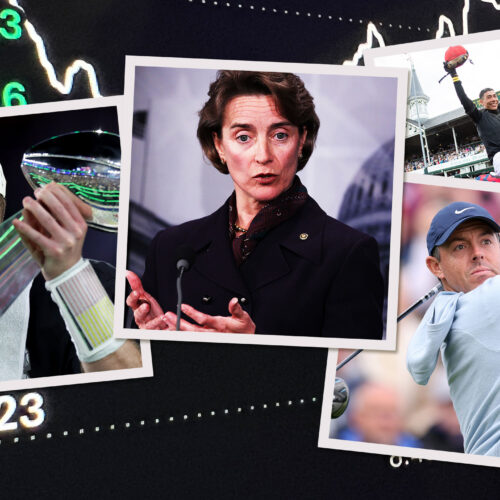
A senator tried to ban gambling on prediction markets—now she's a Kalshi lobbyist

In July 2010, US Senator Blanche Lincoln (D-Ark.) predicted the rise of prediction markets and the problems they could cause. If not properly regulated, Lincoln warned during Senate proceedings on the Dodd–Frank Wall Street Reform and Consumer Protection Act, prediction markets could evade gambling laws by offering "event contracts" that let people place wagers on sports games.

"It would be quite easy to construct an event contract around sporting events such as the Super Bowl, the Kentucky Derby, and Masters golf tournament," Lincoln, who played a key role in making the law that now regulates prediction markets, told fellow senators. "These types of contracts would not serve any real commercial purpose. Rather, they would be used solely for gambling."

Today, Lincoln is a lobbyist for prediction market Kalshi and has urged the Commodity Futures Trading Commission (CFTC) to allow sports gambling on the markets. The firm she founded has received $480,000 from Kalshi since 2024 in exchange for lobbying Congress and the CFTC for looser regulation of event contracts.

Read full article

Comments

© Aurich Lawson | Getty Images

  •  

If you're looking, here's a "good deal" for NASA and the European Space Agency

It's no surprise that NASA's new tack toward foreign partnerships—good deals only, please—is challenging preconceived notions of international cooperation in space.

Without a massive budget hike, the US space agency's emphasis on building a Moon Base and winning a competition for lunar real estate and resources with China will inevitably leave lesser priorities behind.

Gone is the Lunar Gateway, a space station that was to be assembled in orbit around the Moon. For the United States, Gateway was an unnecessary distraction and expense as NASA goes all-in on placing a surface station near the Moon's south pole.

Read full article

Comments

© AEI/MM/Exozet

  •  

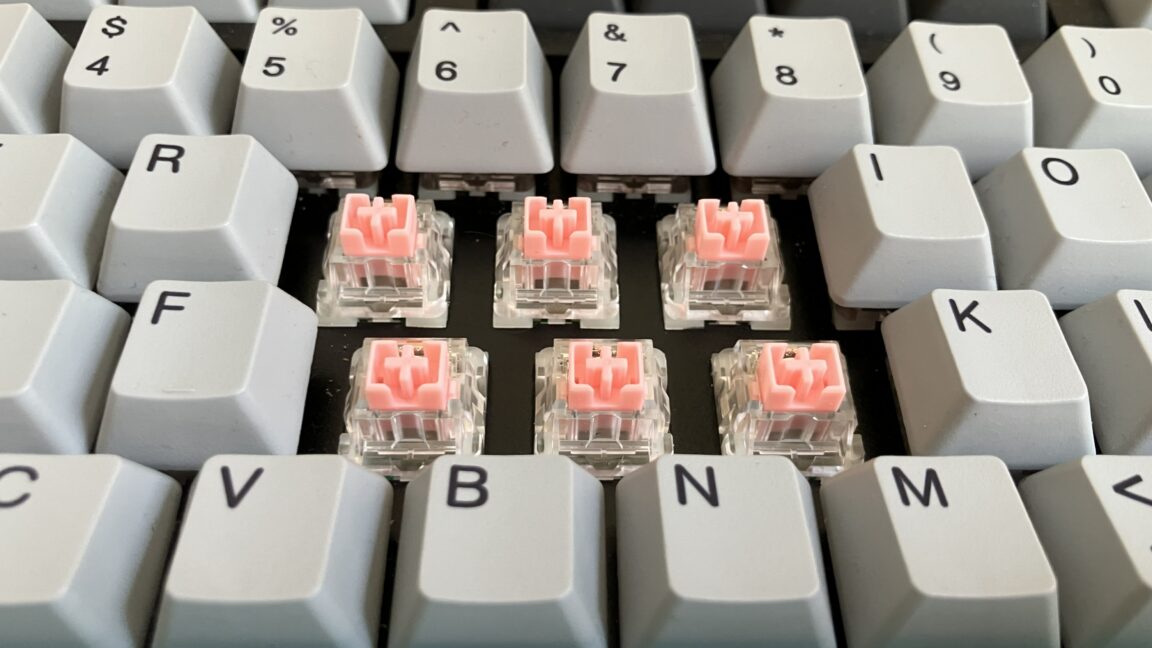
Explaining Hall-effect, TMR, and other new types of "mechanical" switches

The mechanical keyboard isn't always so mechanical anymore.

Over the past six years, keyboards with optical, Hall-effect, and other "contactless" switches have become increasingly common, often going for higher prices than traditional mechanical keyboards, which already command a premium over basic membrane boards. In return, they promise some theoretical advantages, particularly for gamers. In daily use, though, the differences can be pretty subtle.

So what exactly are you paying for? In this guide, we break down how the newest switches work, why contactless designs are becoming more popular, and where their advantages—and disadvantages—really matter.

Read full article

Comments

© Scharon Harding

  •  

TCL is right to question Samsung’s use of the term “Mini LED”

What makes a display a Mini LED display?

It's a question that sounds like it should have a simple answer. But it's now at the center of a lawsuit between two of the biggest names in TVs, with TCL accusing its longtime competitor Samsung of falsely advertising budget LCD-LED TVs as Mini LED sets.

TCL may have a point. Samsung's M-series TVs, which range from $300 for a 43-inch model to $2,300 for a 100-inch model, do raise some legitimate questions about what should qualify as Mini LED. More broadly, though, the dispute highlights a problem for shoppers: Without agreed-upon standards for what "Mini LED" actually means, manufacturers have plenty of room to define the technology for themselves.

Read full article

Comments

© Samsung

  •  

LinkedIn adds new checks for fake profiles and work histories

LinkedIn is adding trust and verification features aimed at making fake professional identities, invented work histories, and company impersonation harder to pull off.

The company is responding to an environment in which generative AI enables imposters to create an entirely made-up professional persona. It reduces the cost of creating convincing headshots, biographies, résumés, outreach messages, and recommendations.

LinkedIn’s new features use verified people and company Pages to help check other users’ claims.

Colleague and classmate vouching: People can confirm that they worked or studied with someone during the period listed on that person’s profile. This confirms an affiliation; it does not rate the person’s ability or recommend them.

Employer control over false affiliations: Admins of verified company Pages can remove people who falsely claim to work there from the company’s associated people and search results. This doesn’t remove the person’s profile or erase the claim from it.

Workplace verification requirement (in testing): LinkedIn is testing a setting that would require people who want to associate themselves with a company Page to verify their workplace, for example, through a work email address.

Verified identity beyond LinkedIn: LinkedIn is extending partnerships that let users display their LinkedIn-verified identity elsewhere. New partners include Truecaller and PeerSpot, alongside Adobe and UserTesting.

LinkedIn hopes that multiple visible signals such as identity verification, workplace verification, peer corroboration, and company Page controls will make a fabricated profile less persuasive. It says its existing verification tools have verified 115 million members and more than 700,000 companies.

LinkedIn VP of Product Oscar Rodriguez told TechCrunch:

“We’ve been invested in [verification] because we believe that authenticity will be the single most valuable currency on the internet.”

These new affiliation checks cannot tell a job seeker whether an opportunity is genuine. A scammer does not always need to impersonate a major employer. They can invent a convincing startup, build a polished company Page, and use fake job listings or recruiters to lure applicants. The checks may be less helpful if the supposed employer itself is part of the scam.

As we’ve seen in recent research, criminals pose as both well-known companies and appealing new ventures offering the kind of role a job seeker hopes to find. The new checks may help someone determine whether a supposed recruiter is affiliated with a company they recognize. They may be less helpful when the company itself is part of the scam.

Verification is therefore a useful signal, not a guarantee. Job seekers should still be wary of unsolicited approaches, pressure to move conversations off LinkedIn, requests to install software or share identity documents, and job offers that arrive before a credible interview process. Check a recruiter’s affiliation, visit the employer’s website independently, and confirm that its contact details and job listing match.

LinkedIn’s changes acknowledge a growing problem: AI can make a fake professional identity look remarkably polished. Verified accounts, workplace affiliations, and colleague confirmations may become more valuable to criminals, too. They may try to exploit those signals through stolen accounts, manipulated verification, or carefully constructed networks of fraudulent profiles. Verification can raise the cost of deception, but it cannot replace healthy skepticism.


Scammers don’t need to hack you. They just need you to click once. 

Malwarebytes Identity Theft Protection catches suspicious activity before it becomes a problem.

  •  

10 Best Brand Protection Solutions (Ranked and Compared)

10 Best Brand Protection Solutions

The best brand protection solutions in 2026 combine AI-driven detection across domains, marketplaces, social media, and the dark web with fast, verified takedown execution. Cyble, BrandShield, and Red Points lead on different strengths — threat-intelligence depth, channel breadth, and marketplace automation, respectively — so the right pick depends on which abuse surface threatens your brand most.  Brand impersonation, fake domains, counterfeit listings, and phishing campaigns that spoof a company's identity have moved from a marketing nuisance to a security and fraud problem. This list compares ten brand protection platforms on what they actually do well, who they're built for, and where each one falls short — so you can shortlist based on your threat profile instead of a vendor's own pitch. 

What Makes the Best Brand Protection Solutions in 2026 

The strongest platforms in this category share four traits: continuous monitoring across surface, deep, and dark web channels; AI-assisted detection that keeps false positives low; verified (not just automated) takedown execution; and reporting that connects brand incidents to broader security or fraud context. Where vendors differ is in which abuse surface they were built to solve first — counterfeit marketplace listings, phishing and domain infrastructure, social media impersonation, or trademark enforcement — which is why most security and brand teams end up choosing based on their dominant threat, not a single "best overall" score.

1. Cyble — Best for Brand Protection Tied to Threat Intelligence

Cyble's Brand Intelligence module sits inside its broader Cyble Vision threat-intelligence platform, so brand abuse detection — fake domains, phishing sites, fraudulent mobile apps, executive and social media impersonation — is correlated with dark web chatter, leaked credentials, and attack surface data rather than tracked in isolation. That correlation is the main differentiator: a security team already using Cyble for threat intel gets brand monitoring without standing up a separate tool or data feed. 
  • Best for: Security teams that want brand protection unified with dark web monitoring and attack surface management, not a standalone point solution. 
  • Trade-off: Its marketplace/counterfeit-listing enforcement is less specialized than vendors built specifically for e-commerce abuse — brands whose primary problem is counterfeit products on Amazon or TikTok Shop may find more purpose-built workflows elsewhere. 

2. BrandShield — Best for Coverage Across Channels

BrandShield covers websites, marketplaces, social media, paid ads, mobile apps, and the dark web from a single dashboard, using a hybrid of AI detection and human analyst review to keep false-positive rates down. 
  • Best for: Enterprises facing abuse across many channels at once who want one platform instead of stitching together point tools. 
  • Trade-off: The breadth comes with enterprise-level pricing and onboarding that smaller teams may find heavier than necessary if they only face one or two threat types. 

3. Red Points — Best for Automated Marketplace and Counterfeit Takedowns

Red Points is built around high-volume, automation-first detection and takedown for counterfeit listings and IP infringement across marketplaces and social platforms, minimizing the manual review most legacy vendors still require. 
  • Best for: E-commerce and consumer brands where counterfeit product listings are the dominant threat and takedown speed at scale matters more than case-by-case nuance. 
  • Trade-off: Less flexible for broader digital threats like phishing infrastructure or executive impersonation, which sit outside its core automation model. 

4. ZeroFox — Best for Social Media and Executive Protection at Enterprise Scale

ZeroFox specializes in monitoring and disrupting threats on social platforms, including executive impersonation, fake accounts, and coordinated brand-abuse campaigns, backed by its own threat intelligence research team. 
  • Best for: Enterprises where executive and social-channel impersonation is the primary risk, particularly in regulated or high-visibility industries. 
  • Trade-off: Marketplace and counterfeit-listing coverage isn't its core strength compared to vendors purpose-built for e-commerce enforcement. 

5. Netcraft — Best for Phishing and Domain Takedown Speed

Netcraft has built its reputation on fast detection and takedown of phishing sites and malicious domain infrastructure, making it a common fit for financial services and other high-risk industries where phishing volume is constant. 
  • Best for: Banks, fintechs, and other frequently-phished brands that need fast domain and phishing-site takedown above all else. 
  • Trade-off: Less built out for social media impersonation or marketplace counterfeit monitoring than dedicated brand-protection suites. 

6. Corsearch — Best for Trademark and Legal-First Enforcement

Corsearch pairs trademark watching and legal research tools with marketplace and domain monitoring, positioning it closer to IP counsel workflows than a pure security operations tool. 
  • Best for: Legal and IP teams that need trademark enforcement and domain monitoring managed through a legal-research lens. 
  • Trade-off: Security teams looking for dark web or threat-intelligence correlation will find this outside its scope. 

7. MarqVision — Best for AI-Plus-Human Hybrid at Mid-Market Pricing

MarqVision combines AI-driven detection with human expert review in its enforcement workflows, positioned between fully automated platforms and high-touch legacy vendors on both capability and price. 
  • Best for: Mid-market brands that want more oversight than a pure-automation tool but don't need enterprise-scale pricing. 
  • Trade-off: Smaller analyst bench than larger enterprise vendors, which can matter during a high-volume incident. 

8. Bolster — Best for API-First Automated Phishing and Domain Detection

Bolster (formerly CheckPhish) focuses on automated, API-accessible detection of phishing sites and malicious domains, appealing to security teams that want to integrate brand-threat data directly into existing tooling rather than work from a separate dashboard. 
  • Best for: Security engineering teams that want to pipe brand-threat detection into their own SIEM or SOAR rather than manage another standalone console. 
  • Trade-off: Less suited to teams that want a managed, dashboard-driven experience with heavy analyst involvement. 

9. Recorded Future (Brand Intelligence) — Best for Integrating with an Existing Threat Intel Program

Recorded Future's Brand Intelligence module extends its broader threat-intelligence platform to cover impersonation and brand abuse, making it a natural add-on for organizations already standardized on Recorded Future for threat intel. 
  • Best for: Organizations already running Recorded Future as their primary threat-intel platform who want brand monitoring in the same system. 
  • Trade-off: Adopting it purely for brand protection, without the broader platform, is a heavier commitment than most standalone brand-protection vendors require. 

10. CSC — Best for Enterprise Domain Portfolio and DNS-Led Brand Protection

CSC approaches brand protection from domain and DNS security — managing large enterprise domain portfolios, monitoring for look-alike registrations, and layering brand abuse monitoring on top of that infrastructure. 
  • Best for: Large enterprises that already manage domain portfolios through CSC and want brand-abuse monitoring layered onto existing domain security. 
  • Trade-off: Less focused on social media or marketplace counterfeit detection than dedicated brand-protection platforms. 

How to Choose Among the Best Brand Protection Solutions 

Vendor 

Core Strength 

Best Fit 

Cyble  Threat intel + brand correlation  Security teams wanting unified dark web + brand monitoring 
BrandShield  Channel breadth  Enterprises facing multi-channel abuse 
Red Points  Marketplace automation  E-commerce counterfeit enforcement at scale 
ZeroFox  Social + executive protection  High-visibility executives, regulated industries 
Netcraft  Phishing/domain takedown speed  Financial services, frequently-phished brands 
Corsearch  Trademark/legal enforcement  IP and legal teams 
MarqVision  AI + human hybrid  Mid-market brands 
Bolster  API-first detection  Security engineering teams 
Recorded Future  Threat intel integration  Existing Recorded Future customers 
CSC  Domain/DNS-led protection  Enterprises with large domain portfolios 

Frequently Asked Questions About Best Brand Protection Solutions

What is a brand protection software? 

Brand protection software monitors the internet — websites, marketplaces, social media, app stores, and the dark web — for unauthorized use of a company's name, logo, or identity, then helps detect and remove that abuse. 

Why do companies need brand protection in 2026? 

Generative AI has made it faster and cheaper for attackers to clone a brand's visual identity, spin up convincing phishing sites, and run impersonation campaigns at scale, increasing both the volume and realism of brand abuse. 

What's the difference between brand protection and trademark monitoring? 

Trademark monitoring focuses narrowly on unauthorized use of registered marks for legal enforcement, while brand protection covers a wider range of abuse, including phishing, fake apps, and social media impersonation, often from a security rather than legal angle. 

Is Cyble a brand protection company or a broader cybersecurity company? 

Cyble is a broader AI-native threat intelligence company; brand protection is one of their strongest module (Brand Intelligence) inside its Cyble Vision platform, alongside dark web monitoring and attack surface management. 

Which brand protection tool is best for e-commerce counterfeits specifically? 

Red Points is generally considered the strongest fit for high-volume, automated counterfeit-listing takedown on marketplaces like Amazon and TikTok Shop. 

Which brand protection tool is best for phishing-heavy industries like banking? 

Netcraft is widely used by financial services firms specifically for fast phishing-site and malicious-domain takedown. 

Can brand protection tools stop deepfake impersonation of executives? 

Some platforms, including ZeroFox and Cyble, monitor for executive impersonation and synthetic media abuse, though detection accuracy for deepfakes specifically is still an evolving capability across the industry. 

Do brand protection platforms guarantee takedowns? 

No platform can guarantee a takedown, since removal ultimately depends on the hosting platform, registrar, or marketplace acting on a request; vendors differ mainly in takedown speed and success rate. 

How much does brand protection software cost? 

Pricing varies widely by vendor and scope, from mid-market platforms priced for smaller teams to enterprise contracts that scale with monitoring volume and takedown quotas; most vendors require a custom quote. 

What should be in a brand protection contract? 

Look for specific takedown SLA commitments by severity, clarity on what's bundled versus add-on, takedown quotas and overage pricing, evidence retention rights, and renewal pricing protection. 

Does brand protection cover social media impersonation? 

Most modern platforms, including ZeroFox, BrandShield, and Cyble, monitor for fake social media accounts and impersonation, though depth of coverage varies by vendor. 

What is a fake domain or look-alike domain? 

A look-alike domain mimics a legitimate brand's URL (through typos, extra characters, or different extensions) to trick users into believing they're on the real site, often as the first step in a phishing campaign. 

How do brand protection tools detect fake mobile apps? 

They scan app stores for apps using a brand's name, logo, or trademarked assets without authorization, flagging suspicious apps for review and takedown. 

What industries need brand protection most? 

Financial services, retail and e-commerce, healthcare, and any consumer-facing brand with significant online transaction volume face the highest exposure to brand impersonation and phishing. 

Is dark web monitoring part of brand protection? 

It often is for platforms built on a broader threat-intelligence base, like Cyble and Recorded Future, since brand-related credentials and impersonation kits are frequently traded on dark web forums before being deployed. 

What's the difference between detection and enforcement in brand protection? 

Detection is identifying abuse (a fake site, a counterfeit listing, an impersonating account); enforcement is the takedown process that actually gets it removed — vendors vary significantly in how much of enforcement is automated versus manual. 

Can small businesses afford brand protection software? 

Some mid-market platforms, like MarqVision, are positioned specifically for smaller teams that need coverage without enterprise-level pricing, though most established vendors still target mid-size to large organizations. 

How long does a typical takedown take? 

Timelines vary by vendor, threat type, and the hosting platform's own response process; ask vendors for measurable SLA commitments by severity tier rather than vague language like "prompt response." 

What is executive impersonation? 

Executive impersonation involves attackers creating fake social media profiles or communications that mimic a company's leadership, often used for fraud, phishing, or reputational damage. 

Do brand protection tools integrate with security operations (SOC) tools? 

Some do — Bolster is built API-first for SIEM/SOAR integration, and platforms built on broader threat-intel bases (Cyble, Recorded Future) naturally feed brand data into existing security workflows. 

What is business email compromise (BEC) and how does it relate to brand protection? 

BEC involves attackers impersonating a company or executive via email to defraud employees or partners; brand protection platforms that monitor phishing infrastructure and domain abuse help reduce the infrastructure BEC attacks rely on. 

Should legal teams or security teams own brand protection? 

It depends on the organization's dominant threat: trademark-first enforcement (Corsearch) tends to sit with legal/IP teams, while phishing- and impersonation-heavy programs (Netcraft, ZeroFox, Cyble) tend to sit with security teams. 

What is a takedown success rate and how is it measured? 

It's the percentage of flagged abuse (a fake site, listing, or account) that a vendor successfully gets removed; ask vendors how they calculate this figure and over what time window, since methodology varies. 

Can AI reduce false positives in brand monitoring? 

AI-assisted detection is designed to reduce false positives compared to manual monitoring, but most reputable vendors still pair AI with human review for verification before enforcement action. 

What is the difference between BrandShield and Red Points? 

BrandShield covers a broader range of channels including phishing and social media, while Red Points is more specialized and automation-heavy specifically for marketplace counterfeit enforcement. 

Does brand protection help with paid ad abuse? 

Some platforms, including BrandShield, monitor for unauthorized use of a brand's identity in paid search and social ads, which is a growing abuse vector alongside marketplace and phishing threats. 

What data sources feed brand protection platforms? 

Sources typically include surface web crawling, marketplace and app store scanning, social media APIs, domain registration data, and — for platforms with a threat-intel base — dark web forums and marketplaces. 

How do I evaluate brand protection vendors during a trial? 

Test detection accuracy on known abuse cases, ask for real takedown SLA numbers rather than marketing language, and confirm how enforcement actions are verified before being reported as resolved. 

Is brand protection a compliance requirement in any industry? 

It's not typically a direct regulatory requirement, but financial services and healthcare organizations often adopt it as part of broader fraud-prevention and customer-protection obligations. 

What's a common mistake companies make when choosing a brand protection vendor? 

Assuming AI detection alone is sufficient without adequate human oversight or without matching the vendor's core specialty (marketplace, phishing, social, or trademark) to the brand's actual dominant threat.  Prepared for the Cyble Knowledge Hub. Vendor information reflects publicly available product documentation as of September 2026 and should be independently verified before publication, particularly pricing, SLA figures, and takedown-rate claims. 
  •  

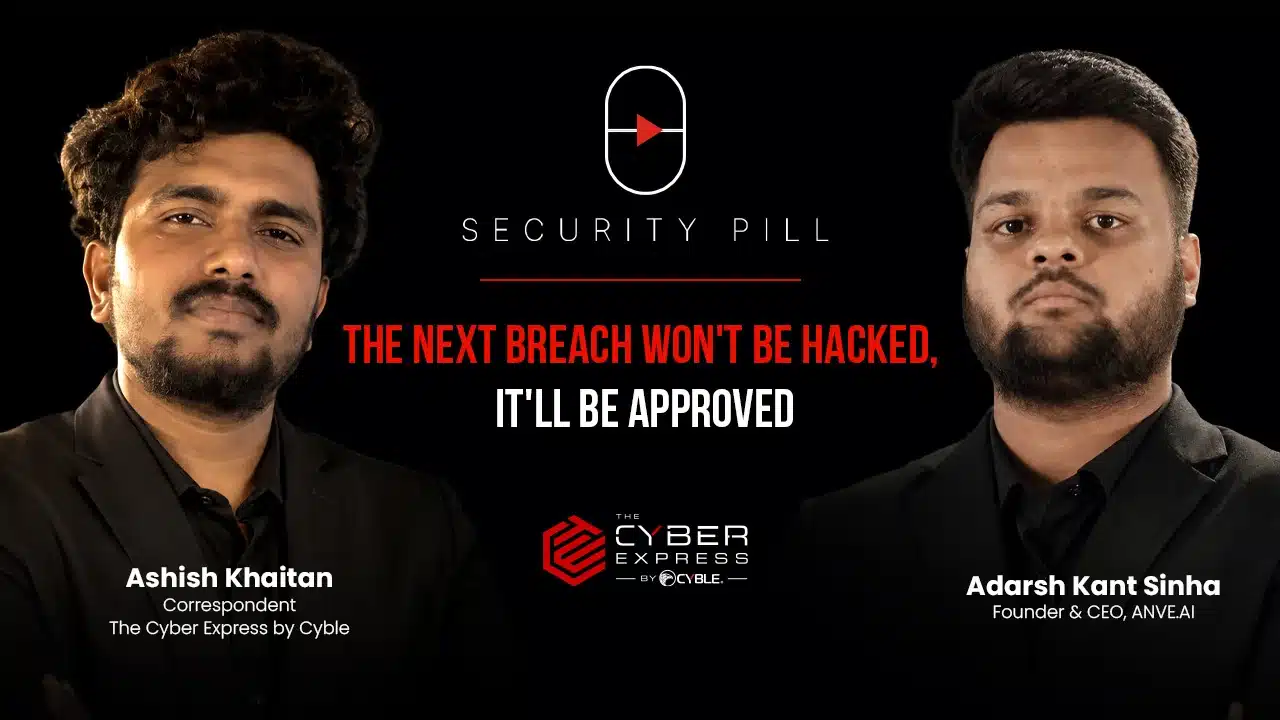
Can We Trust AI Agents With Security Decisions? Adarsh Kant Sinha Explains

decoding AI agents with Adarsh Kant Sinha

As organizations race to move from AI chatbots and copilots toward autonomous AI agents, security leaders are being forced to answer a harder question than "should we adopt AI?" — it's "can we trust AI to make security decisions?" To unpack this, The Cyber Express sat down with Adarsh Kant Sinha, Founder and CEO of ANVE.AI. With expertise spanning AI architecture, Agentic AI, AI automation, and secure AI infrastructure, Adarsh brings a practitioner's and builder's perspective to the rapidly evolving AI landscape. He has built a community of more than 25,000 ethical hackers, mentored startups, trained enterprise teams, advised organizations on AI strategy, and currently leads the development of AI products focused on agentic systems and voice-first human-computer interaction.

Watch the Full Podcast: 

https://www.youtube.com/watch?v=Kr0YXyIu5iU

Adarsh Kant Sinha Explains Why AI Agents Could Become a New Cybersecurity Risk 

Adarsh challenges the idea that the biggest AI security concern is simply whether an AI model can be manipulated. In his view, the bigger question is what happens when AI agents are given the ability to act independently across business systems.  An AI agent with access to Slack, email, CRM platforms, financial systems, and cloud infrastructure could potentially do far more than generate an incorrect answer. If compromised or manipulated, it could potentially use legitimate access to perform unauthorized actions — creating a new class of cybersecurity risk.  The shift from AI assistants to autonomous agents therefore changes the security equation. "Everyone wants AI agents," but the more independence an organization gives an AI system, the more important it becomes to define what that system can access, what decisions it can make, and where human oversight remains necessary. 

Not Everything Called an "AI Agent" Is One 

Adarsh flags a separate problem before the trust question even applies: most of what founders and enterprises are calling "AI agents" isn't agentic — it's automation with better branding. 
  • Teams are still defining rigid workflows, not work goals — scripting the steps rather than giving the system an objective and letting it choose the path 
  • The label shifted industry-wide this year, but the underlying architecture in many deployments didn't 
  • Business understanding is mixed — some are cautiously testing what can actually be automated; others have already rebranded existing automation as "agentic" 
The distinction matters for security teams specifically: a system executing a fixed script has a bounded, auditable action space. A system pursuing a goal with discretion over how to get there does not. Conflating the two scopes assigns governance to the wrong risk category — writing oversight policy for autonomous decision-making when what's running in production is deterministic automation, or the reverse.  Also Read: AI Won't Replace Cybersecurity Jobs, It'll Replace the Toil – Harsha Reddy Explains What's Next  The conversation also explores why businesses may be moving faster with AI adoption than they are with AI governance. While organizations are investing heavily in AI capabilities, questions around permissions, accountability, data protection, and responsible deployment can sometimes come later.  Adarsh argues that AI security needs to move beyond protecting the model itself. Organizations need to consider the entire ecosystem around AI — including agents, data, identities, integrations, tools, and the actions AI systems are authorized to perform.  The conversation also digs into new risks around Voice AI. A realistic synthetic voice could create new opportunities for impersonation, social engineering, and fraud. As voice becomes more natural, it could also become another significant attack surface.  The discussion turns to another important question: should CISOs be more concerned about dramatic AI-generated attacks, or about AI systems quietly making the wrong decisions? Adarsh explores why excessive permissions, manipulated inputs, insecure integrations, and insufficient governance could become more significant risks as AI becomes embedded into enterprise workflows.  He also shares how he would approach red-teaming an AI-powered enterprise, why prompt injection may not be the only threat security teams should focus on, and what "enterprise-ready" AI should actually mean from a security perspective.  The conversation that leads to Express Shots, a new rapid-fire-styled questionnaire by The Cyber Express. Adarsh shares his take on AI Copilots vs. AI Agents, open-source vs. closed-source models, passwords vs. Passkeys, and the technology he believes is being overhyped. 

💾

AI agents are no longer a future concept; they're already inside your Slack, your CRM, your finance stack. But what happens when one of them makes the wrong ...
  •  
❌