New Shakespeare Play Just Dropped. Computerized textual analysis concludes that the play Edward III should be added to William Shakespeare's canon, and also that it was a collaboration with his contemporary Christopher Marlowe.
Exclusive: Play anonymously published in 1596 was collaboration between Shakespeare and Christopher Marlowe, according to computer analysis
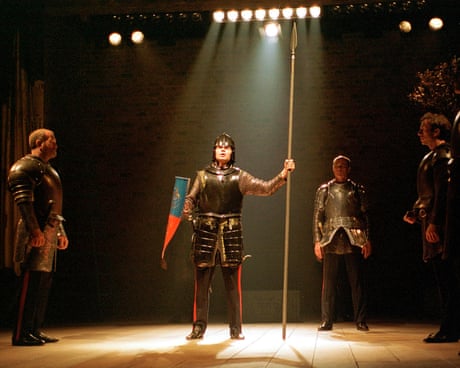
Dramatic new evidence concludes that the play Edward III should be added to William Shakespeare’s canon, and also that it was a major collaboration with his contemporary rival Christopher Marlowe.
The history was published anonymously in 1596, and it has long been thought that Shakespeare wrote at least a few scenes. However, Dr Rory Loughnane, a leading scholar and co-author of the research, told the Guardian that computerised textual analysis pushed the case “beyond any reasonable doubt” that the Stratford-born playwright was the principal writer.
Crucible, Sheffield The yellow stockings are as funny as ever – yet a haunting, folky live score casts a dream-like uncertainty over Shakespeare’s tangled romance
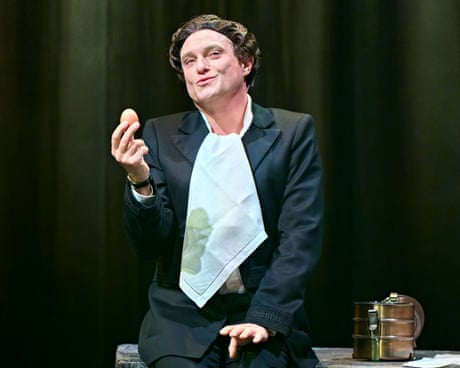
You can picture Mathew Horne’s Malvolio as a guest on an early 1970s BBC Two arts show. With his buttoned-up collar, tight black suit and supercilious delivery, he oozes self-satisfaction. Trusting in his superior taste, he has the pose to prove it: stiff, studied and haughty.
His fall from grace, tricked into dressing up as a yellow-stockinged morris dancer, is as funny as it ever is in Shakespeare’s comedy. It is the comeuppance of the arriviste. Brought down to size, he is no less indignant for it. In a smart, unyielding performance, he goes from pompous to bruised – and ever unrepentant.
A new Washington DC exhibition examines how Toni Morrison, Maya Angelou and more used the Bard’s work to help tell their own stories
“William Shakespeare was a black woman.” In 1985, Maya Angelou spoke these words as part of a keynote speech at a convention in Cedar Rapids, Iowa.
There, she spoke of the role poetry played in her transition from muteness as a child and how she fantasized herself triumphantly delivering Portia’s speech from William Shakespeare’s The Merchant of Venice in front of her entire community at church. Though she never got the chance to perform that rendition, Angelou acknowledged her desire to deliver that rendition as part of a lifelong kinship with Shakespeare, a connection she continued to seek out throughout her life whenever she needed heartening or solace. In her eyes, Shakespeare wrote his emotionally desolate Sonnet 29 “for” her; how else could he have so aptly described the harsh realities of the Black feminine condition?
Shakespeare’s bloody revenge-fest is full of horror and grotesquerie but the camaraderie of performing it with a youth theatre had an upbeat effect
Titus Andronicus has to be among William Shakespeare’s worst plays. In fact TS Eliot called it “one of the stupidest and most uninspired plays ever written”. Yet it holds a very special place in my heart. It’s a bloody revenge-fest in which each act of violence is more grotesque than the last. Titus Andronicus returns from war with “barbarous” Tamora, “Queen of the Goths”, as his prisoner. She stealthily proceeds to kill and destroy his family, and when he discovers this, he murders her sons and serves them up to her in a pie. The play ends with gudgeons of fake blood and a sea of carnage. In Shakespeare’s day it was a huge hit, a kind of slasher film of the 16th century.
Plays are very powerful things and I have spent my life watching them and writing them. Some have been revelatory but none has affected me like Titus Andronicus. It was the first play, outside of school, that I was ever in – so I suppose this is about the transformative power of youth theatre.

 Login