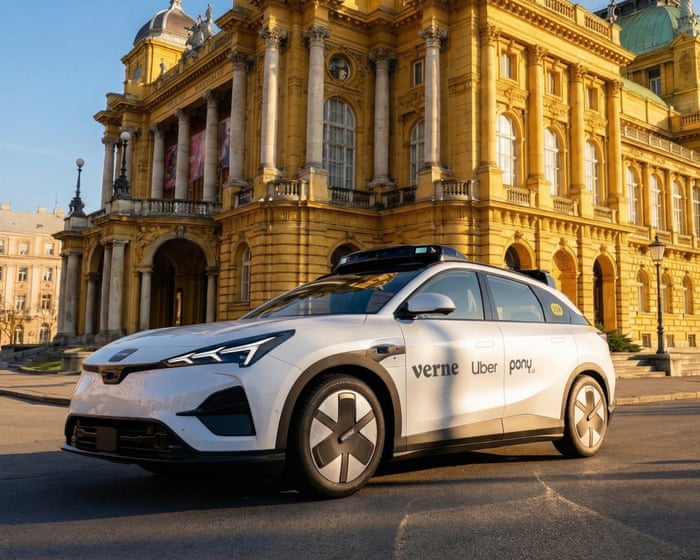
Protest planned at Wayve HQ as Uber drivers fear for their future and city’s politicians demand TfL should have power over licences
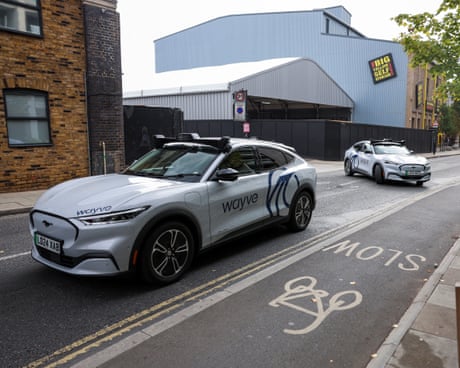
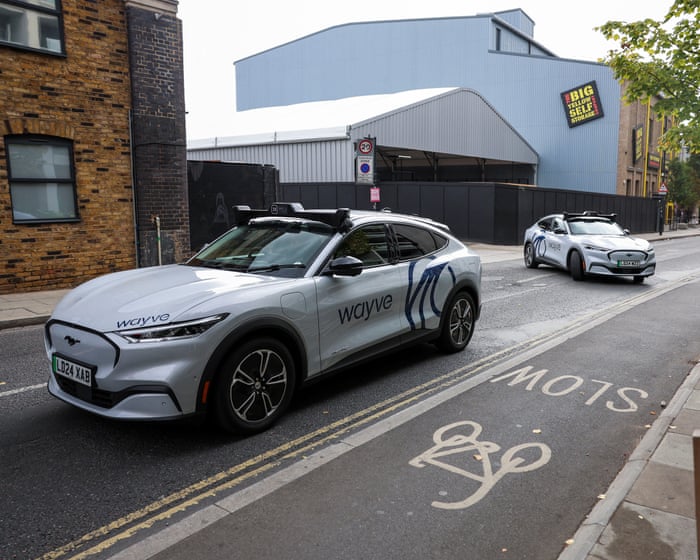
For passengers in Britain who want to try the latest ride, robotaxis are eagerly awaited: more than 100,000 are on Uber’s waitlist in London after the first UK services started in September.
Others view them with trepidation. “I think we should all be worried,” said Florentina Ghiuzan, an Uber driver from Essex. “I was shocked TfL approved it so soon. I knew change would come. But I thought it would come with a solution for us.”
Company hails first step in rolling out technology across UK as first autonomous vehicles take to city’s streets
Uber has begun a trial of autonomous vehicles on the streets of Manchester as it looks to bring robotaxis to cities around the UK.
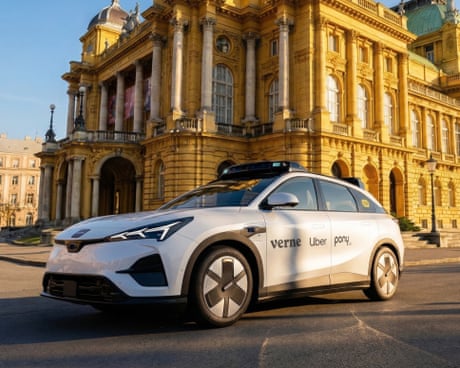
The first self-driving cars are operating, using the technology of its partner firms Pony and Verne, with whom Uber recently launched Europe’s first autonomous taxi service in the Croatian capital, Zagreb.
Who's your Uber driver on the phone to? Welcome to the long, long diaspora phone call When you get a cab on a ride-hailing app, the chances that your driver will be on the phone is high. The conversation is almost always quiet, containing pauses so long that it often seems they are actually no longer on a call. But then comes a rejoinder, a laugh, an interjection, and the marathon continues.
For anyone of an immigrant background, the question of who they are talking to is absolutely no mystery. They are talking to us; their siblings, parents, cousins and friends. Sometimes the person on the end of the line is back home, other times they are in a western city also navigating the dislocations of immigrant life. The long phone call is a regular feature of diaspora lives, and even more so for those employed in long, solitary work such as cab driving. These conversations are about nothing and everything.
It may sound entirely bizarre but the prices you once paid for hotels, educational classes, or staplers could have all been higher because you used a Mac computer, lived in a certain zip code, or lacked an Office Depot in your neighborhood.
“type some zip codes into the company’s website, they are offered The Princeton Review’s premier course for as little as $6,600. For other zip codes, the same course cost as much as $8,400. One unexpected effect of the company’s geographic approach to pricing is that Asians are almost twice as likely to be offered a higher price than non-Asians.”
Under surveillance pricing, companies collect as much data as possible about consumers so that they can alter the literal prices those consumers pay for the exact same goods as everyone else. It is reportedly what caused some customers to see higher prices for televisions in the Target app when those customers were physically located in a Target parking lot. It is also allegedly why Home Depot customers in wealthy neighborhoods oddly paid less. And it is what Delta Airlines walked away from after public backlash.
The near-omnipresence of surveillance pricing is also why so many videos can be found online today that claim that minor alterations to a person’s data trail—like changing an IP address using a VPN or shopping for airline tickets on a public library’s computer—can lead to lower prices online.
The proof behind these claims, however, is harder to test.
Thankfully, one person has already tried.
Video journalist Chris Parr, known on YouTube as Chris the Producer, ran a wild experiment into whether he could “stress-test” surveillance pricing. Far beyond changing his IP address or making online purchases from different locations, Parr started from scratch. By first registering an LLC in the state of Wyoming, Parr granted that LLC both a credit card and a phone, effectively creating a brand new consumer persona to be tracked. But creating a realistic data trail for his LLC would require a little extra help—help that Parr received from an actor he hired for the part.
Today, on the Lock and Code podcast with host David Ruiz, we speak with Parr about his experiment into surveillance pricing, including a high-wire drone act to purchase a White Castle Crave Case in the air space above his home state’s wealthiest neighborhood:
“To the data collectors, they don’t know that this phone is floating in the air, like 200 feet in the air. They just see a geolocation on it.”

 Login