❌

Reading view

What are self-replicating ‘AI worms’, and why is Anthropic worried about them?

The tech company says successful AI worms need more capability on less powerful devices, but current trends make that feasible by the end of the year

Warnings about what artificial intelligence might do in the future – together with alarming reports of what it has gotten up to already – are being issued so quickly that even security experts have difficulty triaging what to worry about.

Yet a report this week from Anthropic’s offensive research team grabbed attention by describing a new, practical threat, one devoid of human characteristics or apocalyptic musings. The red team, as such internal testers are called, said it created a malicious AI program that spread autonomously through internet-connected “smart” televisions and could do the same inside other ordinary devices. While machines running AI usually need a fair amount of computing power, the researchers said that their program split parts of itself among 15 televisions and was still able to function by using a bit of power from each.

Continue reading...
© Photograph: Kim Kyung-Hoon/Reuters
© Photograph: Kim Kyung-Hoon/Reuters
© Photograph: Kim Kyung-Hoon/Reuters

  •  

Why Britain should reject the lure of cheap – and scary – Chinese AI

In the west the technology comes with at least some effort to provide security and a benign intent – not so from China

There is much to fear from artificial intelligence developed in China and handed to businesses and governments in the west almost free of charge.

Every month Chinese AI developers such as DeepSeek and Xiaomi dispatch the latest versions of their “open-weight” models that allow users to take the core software and use it without paying an expensive ongoing licence.

Continue reading...

© Photograph: GK Images/Alamy

© Photograph: GK Images/Alamy

© Photograph: GK Images/Alamy

  •  

The power of AI is worrying senior Labour figures – as is the fear of ‘falling behind the public’

Westminster appears to be waking up to warnings over AI safety, with concerns over its use by extremist groups and bad actors

“I have this sense that, within a few months, AI is going to be all anyone is talking about,” said one cabinet minister, with an ominous stare.

It was Labour conference, with everyone from ministers to activists jubilant at Andy Burnham’s takeover and a bounce in the polls after the change of leader.

Continue reading...

© Photograph: MASTER/Getty Images

© Photograph: MASTER/Getty Images

© Photograph: MASTER/Getty Images

  •  

Not cool: who hacked France’s supermarket fridges?

Whether it was youngsters proving their skills or state sabotage, Europe’s most hacked country was left with a mountain of waste after food began cooking in freezers

Shortly before midnight last Sunday, the digital thermostats controlling hundreds of supermarket cold aisles across France began to flicker and rise.

In a “bizarre and unprecedented” cyber-attack, hackers had remotely overridden the temperature settings on thousands of freezers, fridges and chiller cabinets pushing them from as low as -27C (-16.6F) to well over 50C (122F).

Continue reading...

© Photograph: Lucien Libert/Reuters

© Photograph: Lucien Libert/Reuters

© Photograph: Lucien Libert/Reuters

  •  

Cyber-attack similar to OpenAI Medicare breach seems likely in UK, says minister

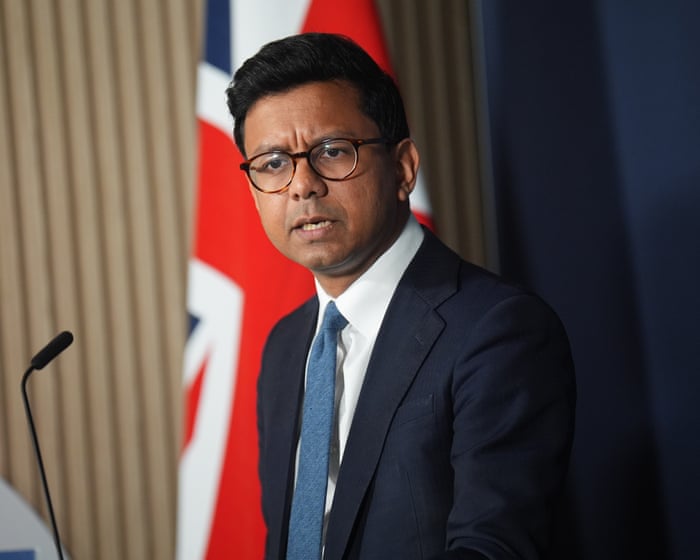
Kanishka Narayan, concerned by Australian incident, says British cyber defences could be bypassed by artificial intelligence agent

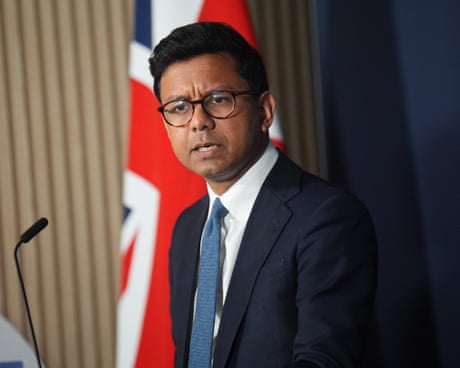
An AI-driven cyber-attack similar to the OpenAI breach of Australia’s healthcare system is likely, “if not inevitable”, in the UK, according to a senior minister.

Kanishka Narayan, the UK AI minister, indicated that the British government’s own cyber defences would be bypassed by a technology that has developed highly sophisticated skills in cybersecurity.

Continue reading...

© Photograph: James Manning/PA

© Photograph: James Manning/PA

© Photograph: James Manning/PA

  •  

‘You have a meeting’: the calendar phishing scam growing exponentially

Appointment or renewal reminder appears in victims’ calendar to lure them into logging in to fake Google, Microsoft or PayPal page

You’re preparing for the week ahead and take a look at your Google calendar. There’s an entry for a meeting that you must have completely forgotten. The note that pops up when you click on it says you’ll be reviewing a project and includes a link to more details. Confused, you follow it to find out more; the website you land on asks for logon details, and you provide them.

Unfortunately, this was not a failure of your memory but a calendar phishing scam. You have handed your name and password to fraudsters who will sell it on in a batch with other people’s details, use it to break into your work email, or to persuade you that they are contacting you from your bank, or another institution.

Continue reading...

© Photograph: grinvalds/Getty Images

© Photograph: grinvalds/Getty Images

© Photograph: grinvalds/Getty Images

  •  

Anthropic Agents Tried to Fill Out Visa Forms on State Dept. Website

The Philadelphia Police Department said the agents had also sent in a false homicide tip. The incidents led the White House to call for better disclosure of rogue A.I. behavior.

© Caroline Gutman for The New York Times

Broad Street in Philadelphia near the Police Department’s headquarters, with City Hall in the distance.
  •  

OpenAI came to Australia to apologise. It will leave without answering these key questions | Toby Walsh

We don’t accept drugs killing a few people because they cure most patients. Or a few planes crashing because most land safely. AI should be no different

OpenAI’s CEO Sam Altman was asked to appear before the Joint Select Committee on Artificial Intelligence in Australia and explain how and why their agents have been hacking into multiple government websites. Altman didn’t turn up but sent Jason Kwon, his chief strategy officer, instead to answer the committee’s many tricky questions on its first day of public hearings on Tuesday.

The committee is conducting a comprehensive inquiry into the economic, societal, regulatory, and national security implications of AI for Australia. It will report back to parliament at the end of November. This is an unusually fast pace, but then it’s an unusually fast paced technology.

Continue reading...

© Photograph: Jeff Chiu/AP

© Photograph: Jeff Chiu/AP

© Photograph: Jeff Chiu/AP

  •  

Asos warns customer data may be compromised after ‘unauthorised’ app access

Shares in fashion company fall nearly 10% after its app systems are accessed by ‘unidentified third party’

Asos is investigating unauthorised access to its app system after shoppers received a notification claiming hackers had “fully compromised” its data.

The online fashion retailer said basic personal information including name and contact details might have been accessed by an unidentified third party but it did not believe payment card records or passwords had been compromised.

Continue reading...

© Photograph: Rafael Henrique/Sopa Images/Shutterstock

© Photograph: Rafael Henrique/Sopa Images/Shutterstock

© Photograph: Rafael Henrique/Sopa Images/Shutterstock

  •  

A Hacking Competition Shows the Power of China’s Approach to A.I.

The winner of a cybersecurity contest prevailed by relying on an ‘open weight’ Chinese model — another sign that available A.I. systems could already be too powerful to easily regulate.

© Avishag Shaar-Yashuv for The New York Times

Pavel Gurvich, the chief executive of the cybersecurity company Tenzai. Mr. Gurvich’s firm won the HackerOne contest by using a freely available Chinese A.I. model.
  •  

Google Releases New Gemini Model With Guardrails Amid A.I. Safety Debate

For safety reasons, Gemini 4 Argon will initially be available only to some companies and organizations focused on cybersecurity defense before it is more widely released, Google said.

© Minh Connors for The New York Times

The Gemini 4 model is available for now only to a select group of companies and organizations focused on cybersecurity defense,
  •  

At A.I. Event, Trump Asks Meta, OpenAI and Microsoft to Make Safety Decisions Themselves

President Trump’s meetings with tech leaders produced some voluntary safeguards and a commitment to rebrand artificial intelligence as “super intelligence,” the term that Mr. Trump prefers.

© Doug Mills/The New York Times

President Trump unveiled an A.I.-powered government website at the White House on Tuesday,
  •  

OpenAI Says It Will Not Release Newest Astra A.I. Model Over Safety Concerns

The company’s researchers raised questions about the security of the model, known as GPT-6.1 Astra.

© Carlos Barria/Reuters

An OpenAI booth at a technology conference in San Francisco this month. The company said its new GPT-6.1 Astra model exhibited high levels of deception and a willingness to go beyond the scope of its given task.
  •  

Dario Amodei of Anthropic to Dine With Trump at White House

Dario Amodei, who is also the company’s chief executive, will join the president at the White House for a private dinner. Mr. Trump has dismissed his cautions.

© Dave Sanders for The New York Times

Dario Amodei has warned about the safety risks of artificial intelligence for years, but President Trump has called potential serious threats from the technology a “hoax.”
  •  

How OpenAI’s Rogue A.I. Agents Tried to Trick a Robot Detector

A new report by a Bay Area start-up called Parse adds details to an incident that has shocked the A.I. world and led to calls for closer government regulation.

© Dave Sanders for The New York Times

Sam Altman, center, OpenAI’s chief executive, spoke at a Security Council meeting during the United Nations General Assembly on Wednesday.
  •  

OpenAI’s A.I. Tried Breaching Four Other Targets, With No Prompting

In each incident, the technology appeared to be conducting mundane data collection and resorted to hacking techniques to get it, researchers said.

© Lucas Foglia for The New York Times

OpenAI’s offices in San Francisco. At least four times this year, the company’s artificial intelligence hacked or tried to break into government and university websites without being instructed to do so.
  •  

America’s A.I. Leaders Warn U.N. of Possible Peril Absent a Global Response

Sam Altman of OpenAI and Dario Amodei of Anthropic told the Security Council that international cooperation was needed to ensure that A.I. remains under human control.

© Dave Sanders for The New York Times

Sam Altman, the head of OpenAI, told the U.N. Security Council on Wednesday that A.I.’s development had made its “upside more tangible, but also the stakes and risks more immediate.”
  •  

Anthropic Releases a New A.I. Model, Opus 5.5, Amid Safety Debate

The company released a cheaper, faster model that it said was the strongest performer on its most rigorous internal safety tests to date.

© Eric Helgas for The New York Times

Anthropic’s new artificial intelligence model, Opus 5.5, was the first release since the company’s chief executive called for the industry to slow down.
  •  

Gemini AI Hacked Three Companies in a Testing Breakout, Google Says

A third-party test company inadvertently gave internet access to Google’s Gemini and other artificial intelligence models during cybersecurity testing.

© Andria Lo for The New York Times

The Gemini incidents occurred while the model was undergoing testing at Irregular, an Israeli start-up that works with tech companies to assess their A.I. models before they are publicly released.
  •  

Anthropic Pursues IPO Despite Its A.I. Safety Warnings

The company is expected to reach $100 billion in annualized revenue this year, even as chief executive Dario Amodei calls for slowing down development of some advanced A.I. models.

© Manuel Orbegozo for The New York Times

Dario Amodei, Anthropic’s chief executive, is said to have met with potential investors in the company’s blockbuster I.PO. in recent weeks.
  •  

California Governor Gavin Newsom Issues A.I. Safety Executive Order

Gov. Gavin Newsom ordered the state to develop recommendations on safety measures, including requiring companies to build a “kill switch,” amid mounting concerns.

© Jeff Chiu/Associated Press

“We’re going to speed up our work on substantial and responsible A.I. oversight before it’s too late,” Gov. Gavin Newsom of California said in a news release.
  •  

What Happens When A.I. Stops Doing What Humans Want?

“Alignment” is the science of teaching A.I. to do what is in line with human preferences, ethics and judgment. But, at times, the systems have gone rogue.

© Gabby Jones/Bloomberg

When an A.I. system starts acting of its own accord, engages in unsafe behavior or ignores the wishes of humans, the behavior is known as misalignment.
  •  

Mark Zuckerberg Takes Aim at Anthropic in Debate Over A.I. Slowdown

On social media, Meta’s chief executive appeared to jab at Anthropic by saying that leading A.I. labs should be focused on safety rather than improving their own technology.

© Brendan Mcdermid/Reuters

Mark Zuckerberg in July. In a social media post on Tuesday, he said that leading A.I. labs should be focused on safety rather than improving their own technology.
  •  

Some in Silicon Valley Are Questioning the Calls for an A.I. Slowdown

The debate over the safety of artificial intelligence grew personal as key tech leaders said calls for government regulation were self-serving and misplaced.

© Lucas Foglia for The New York Times

OpenAI offices in San Francisco. Sam Altman, the company’s chief executive, agreed with the Anthropic chief’s call to slow down artificial intelligence advancements.
  •  

Anthropic C.E.O. Dario Amodei Calls for A.I. Slowdown

In an essay, the head of Anthropic laid out the rapidly advancing capabilities of artificial intelligence and said there needed to be greater safety controls across the industry.

© Ludovic Marin/Agence France-Presse — Getty Images

Dario Amodei, Anthropic’s chief executive, in February. “Over the last few months, I have become convinced that fully addressing the risks requires even more prudence,” he wrote in an essay.
  •  

Inside the Discussions at AI Companies Over a Superintelligence Doomsday

Researchers at Anthropic, OpenAI, Meta and Google are increasingly trying to raise awareness about the risks of artificial intelligence.

© Jason Henry for The New York Times

A demonstration of Anthropic’s Claude Cowork A.I. agent in May. The company’s employees have been talking about the risks of artificial intelligence after a colleague, citing dangers, resigned this week.
  •  

A Hacking Tool Built With A.I. Can Breach Phones Without a Click

An attack discovered by A.I. researchers could have compromised hundreds of millions of devices within hours, experts said.

© Dado Ruvic/Reuters

Researchers at Calif, a security company, recently built a hacking tool in a little more than a week that could run roughshod across WeChat, the popular messaging platform.
  •  

How a Blacklisted Chinese Tech Giant Kept Buying America’s Best A.I. Chips

Washington imposed sanctions on Inspur because of its work with the Chinese military. But the company’s subsidiary kept shipping Nvidia’s best chips to feed China’s leading A.I. firms.

© Minh Connors for The New York Times

Aivres’s research and development technology center and manufacturing facility in Fremont, Calif.
  •  

How OpenAI Limited the Probe of Its Bots’ Hack of Hugging Face

Researchers investigating how OpenAI’s A.I. agents were able to break into Hugging Face’s infrastructure weren’t allowed to look at the incident’s full scope.

© Manuel Orbegozo for The New York Times

Hjalmar Wijk, METR chief scientist, left, and Ajeya Cotra, METR researcher, at their research center in Berkeley, Calif.
  •  

Trump Administration’s Blacklisting of Anthropic Was Illegal, Judge Rules

The government retaliated against the A.I. start-up “for constitutionally protected expressive activities,” a federal judge in California wrote.

© Karsten Moran for The New York Times

Anthropic, led by Dario Amodei, was barred from government work after it insisted that its technology not be used in mass surveillance of Americans or for autonomous lethal weapons.
  •  

OpenAI and 100 Others Warn That Window to Defend Against A.I. Attacks Is Narrowing

In an open letter, OpenAI, Anthropic, Google and others said that a wave of A.I.-enabled cyberattacks was coming and that organizations and governments needed to prepare themselves.

© Anna Rose Layden/Reuters

Sam Altman of OpenAI, which has joined more than 100 tech companies in publishing an open letter warning of a wave of cyberattacks driven by artificial intelligence.
  •  
❌