โŒ

Reading view

Google's early attempt to pay websites for AI answers is struggling

Google's shift to AI-powered search has upended the way the world's largest search engine generates web traffic, rankling large and small publishers alike. In recent months, the company has experimented with paying publishers when their content appears in AI answers, but a new report claims the payouts in this pilot program are miniscule. That has publishers in the program, as well as those watching from the sidelines, feeling skeptical.

According to The Information, Google has admitted about 100 publishers to the AI contribution pilot. The pitch is that websites can get payments from Google when their content materially contributes to Gemini-powered search results like an AI Overview. Google has long resisted the idea of direct payments to publishers, arguing that websites get traffic in exchange for allowing Google bots to scrape their content for use in search and knowledge graph tools. In the age of AI, that relationship is breaking down, hence the AI pilot.

So far, publishers aren't getting much for their trouble. The Information heard from several small and mid-sized publishers in the program that Google's AI payments are minuscule, equaling roughly one-tenth of one percent of their advertising revenue. These payments have been so disappointing that several larger publishers have reportedly declined to participate in the program. These publishers hope that by refusing to join the pilot, they can force Google to offer a more generous deal.

Read full article

Comments

ยฉ Aurich Lawson

  •  

European Commission Fines Google โ‚ฌ890 Million for DMA Breaches

Google Fined

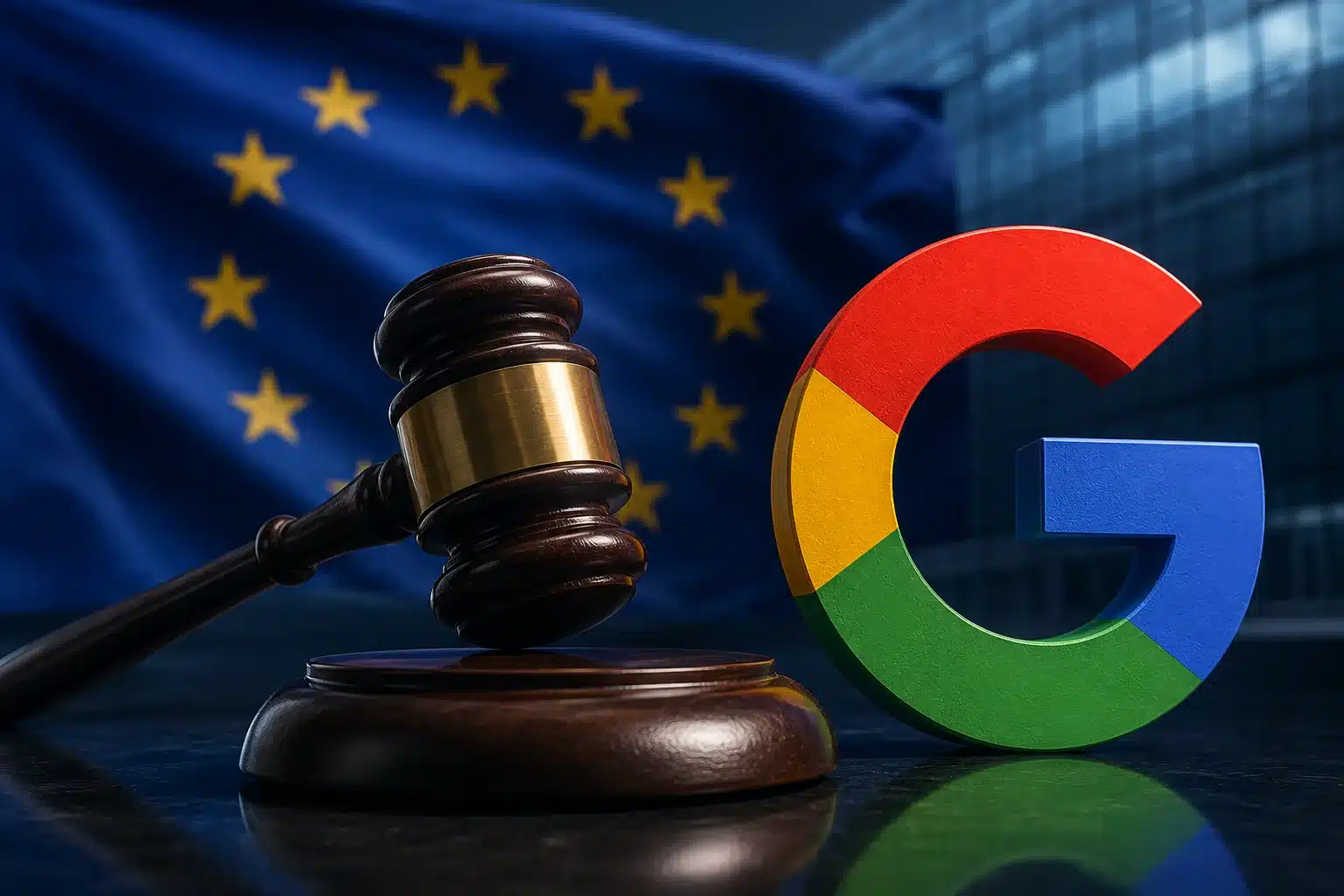
Google fined โ‚ฌ890 million by the European Commission for breaching the Digital Markets Act (DMA) over its practices on Google Search and Google Play. The Commission issued two separate fines of โ‚ฌ460 million and โ‚ฌ430 million, finding that Google had failed to comply with the DMA's rules on self-preferencing and steering. The decisions concern how Google ranks its own services in search results and how app developers can communicate alternative offers to users through Google Play.

Google Fined Over Self-preferencing on Google Search

The Commission found that Google breached the DMA by giving preferential treatment to its own services, including shopping, hotels, transport and sports results, compared with third-party services appearing in Google Search. Under the DMA, designated gatekeepers are required to treat their own services and third-party services fairly and without discrimination in search rankings. According to the Commission, Google gives its own services greater prominence by placing them at the top of search results or displaying them with enhanced visuals and filters. The Commission said similar third-party services do not receive the same level of prominence. The Commission's decision requires Google to treat third-party services featured in its search results in a fair and non-discriminatory manner compared with its own services. The Commission also noted that Google has proposed and started testing changes to the way it presents its own services on Google Search, including free services covering shopping, hotels and flights. The Commission said these changes represent substantial progress towards compliance and will be monitored. Google has also proposed and started testing changes involving shopping ads and content-related services, including sports. The Commission is assessing these changes and will continue discussions with the company. The dialogue will also cover Google's proposals for applying the principles of the decision to AI Overviews and AI Mode.

Google Play Restrictions Lead to Second Fine

The second decision concerns Google's anti-steering practices on Google Play. Under the DMA, app developers distributing apps through Google Play must be able to inform customers about alternative, often cheaper offers at no cost. Developers should also be able to direct users to make purchases through other channels, including websites and alternative app stores. The Commission found that Google failed to meet these requirements. It said Google restricted app developers from freely communicating and promoting offers and from concluding contracts with users through distribution channels of their choice, including third-party app stores. The Commission acknowledged that Google can charge a fee for facilitating the initial acquisition of a new customer by an app developer through Google Play. However, it found that the level of Google's steering-related fees and the length of time those fees were charged went beyond what is considered compliant with the DMA. Google has since rolled out changes related to its steering terms. The Commission said these changes represent good progress towards compliance but will be assessed in light of the cease and desist order issued as part of the decision.

Digital Markets Act Enforcement Brings Compliance Deadline

As part of the two decisions, the Commission has ordered Google to end the identified non-compliance. The company must implement measures addressing both search rankings and its anti-steering rules. Google is required to comply with the Commission's decisions within 60 days. If it fails to do so, it could face periodic penalty payments of up to 5% of its total worldwide turnover. The fines take into account the gravity and duration of the non-compliance. The Commission said it also considered the recurrence of the breaches and concluded that the fines were proportionate and appropriate. Google may appeal the decisions.

Commission Investigations Began in 2024

Google was designated as a gatekeeper in September 2023 for its online search engine, Google Search. On 25 March 2024, the Commission opened non-compliance investigations into Google's measures addressing self-preferencing and its steering rules. On 19 March 2025, the Commission informed Google of its preliminary view that the company was in breach of the DMA. Google subsequently exercised its rights of defence by reviewing the documents in the Commission's investigation files and responding in writing to the preliminary findings. The two decisions followed a detailed investigation that included feedback from market participants and extensive dialogue with Google. The Commission said the decisions demonstrate its continued enforcement of the DMA and its focus on protecting fairness, business opportunities, consumer choice and innovation in digital markets.
  •  

TikTok Age Verification Under Investigation as UK Tightens Child Safety Rules

TikTok age verification

The UK's communications regulator has launched a formal investigation into TikTok age verification, raising questions over whether the platform is adequately protecting children online under the country's Online Safety Act. The move comes as Britain prepares to introduce a social media ban for under-16s, with regulators warning that current age assurance methods used by some platforms may not be sufficient to prevent children from accessing harmful content.

The investigation follows the publication of a new Ofcom report that found age checks are becoming more common across online services, but significant gaps remain, particularly on social media platforms and some pornography websites.

Ofcom Questions TikTok Age Verification Method

According to Ofcom, some social media companies rely primarily on age inference methods to identify child users. These systems estimate a user's age based on their online behavior rather than verifying it directly.

The regulator said it has "serious doubts" about whether these methods are capable of meeting the standards required under the Online Safety Act. Ofcom believes some companies may be failing to correctly identify a significant number of children, potentially exposing them to harmful content, including pornography, self-harm, and suicide-related material.

As a result, Ofcom has launched a formal investigation into whether TikTok is complying with its legal duties to protect children from harmful content.

The regulator also warned that age inference alone will not be considered sufficient for enforcing the government's planned restrictions on social media use by children under 16. Platforms using such methods have been urged to adopt more effective age assurance technologies or provide compelling evidence demonstrating their effectiveness.

Age Checks Increase Across Online Services

The report found significant progress in the adoption of age checks since the Online Safety Act's child protection duties came into force in July 2025.

Between July 2025 and January 2026, the proportion of children encountering highly effective age checks increased from 25% to 43%.

Ofcom said more than 69 million age checks were completed across a sample of 32 UK services during the second half of 2025, representing a 23-fold increase compared to the previous six months.

The regulator also reported that all of the UK's top 10 pornography websites and most of the top 100 now have age verification measures in place.

Among children aged 8 to 14 who attempted to access pornography, only 8% visited such services. Half of those children reached only websites with age checks, while nearly 87% of their visits lasted less than 30 seconds, suggesting age verification discouraged continued access.

Search Engines Also Face Scrutiny

Despite the wider rollout of age assurance, Ofcom found that children can still easily discover pornography websites without age checks through Google Search and Bing.

Its analysis found that 33% of first-page Google search results and 54% of Bing results directed users to pornography websites lacking age verification or equivalent protections.

Following discussions with the regulator, Google and Bing have agreed to work with Ofcom on practical measures to reduce the visibility of such websites in search results.

Meanwhile, Ofcom continues enforcement against adult services that fail to comply with the law. The regulator has opened 23 investigations involving 88 adult service providers, with many either introducing age assurance or blocking UK users after enforcement action.

UK Moves Toward Social Media Ban for Under-16s

The investigation comes as the UK government advances plans to introduce a social media ban for under-16s, modeled on Australia's approach.

Under the proposal, platforms including TikTok, Snapchat, Instagram, Facebook, YouTube, and X would be prohibited from offering social media services to users under 16. Messaging services such as WhatsApp and Signal are not expected to be included.

The government also plans to introduce additional protections, including restrictions on livestreaming and communication with strangers for children under 16 across social media and certain gaming platforms. Similar safeguards would apply by default to users aged 16 and 17 to avoid what officials describe as a "cliff-edge" at age 16.

The proposed measures are expected to be presented to Parliament before the end of the year, with implementation targeted for Spring 2027.

Ofcom said it will submit a rapid assessment to Parliament by the end of October outlining what constitutes highly effective age assurance for verifying whether someone is over 16, helping shape future enforcement of the planned restrictions.

  •  
โŒ