❌

Reading view

As King Charles heads to the Caribbean, he should know that Winston Churchill admitted to imperial plunder 90 years ago | Kenneth Mohammed

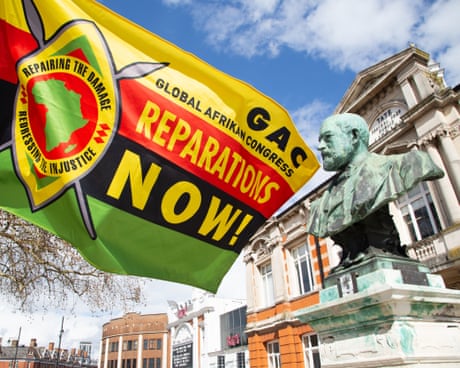
Modern politicians play on tales of empire to exaggerate what Britain left behind, but the monarch should consider a historical speech on imperial plunder

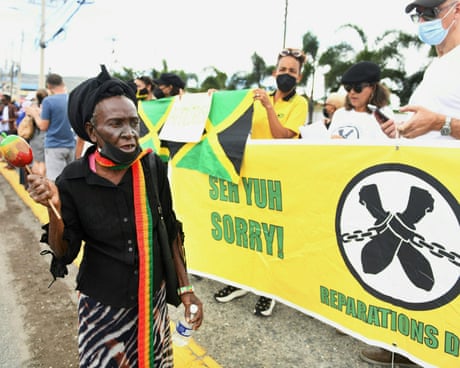
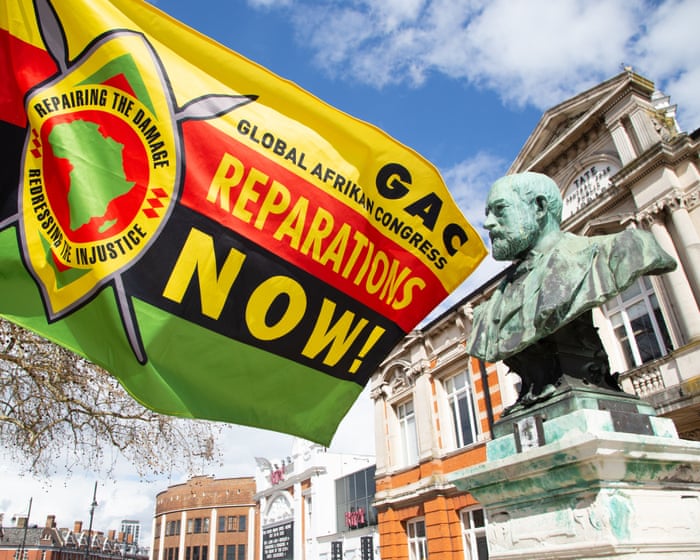
For us in the Caribbean, there is something surreal about Britain’s renewed nostalgia over empire. As Britain’s monarch prepares to visit the Caribbean, and at a time when we in the former colonies are demanding to have a serious reckoning with slavery and reparations, UK politicians are invoking a dumbed-down distortion of history.

Rewriting the facts: the Reform MP Robert Jenrick has argued that colonies owed Britain a “debt of gratitude” for the institutions empire bequeathed them. Jacob Rees-Mogg, a former minister in a Conservative government, has described British colonialism as “one of the greatest civilising, prosperity-creating forces the world has ever seen”. The opposition leader, Kemi Badenoch, has disputed colonialism’s contribution to Britain’s prosperity. Then there is Suella Braverman. The Reform MP suggested in July that rather than Britain paying reparations, former colonies should repay Britain for the investment and infrastructure provided under empire. This prompted Mia Mottley, the prime minister of Barbados, to call that proposition “asinine”. At best it is historical amnesia. At its worse it is an insidious misrepresentation of facts.

Continue reading...
© Photograph: Thabo Jaiyesimi/SOPA Images/LightRocket/Getty Images
© Photograph: Thabo Jaiyesimi/SOPA Images/LightRocket/Getty Images
© Photograph: Thabo Jaiyesimi/SOPA Images/LightRocket/Getty Images

  •  

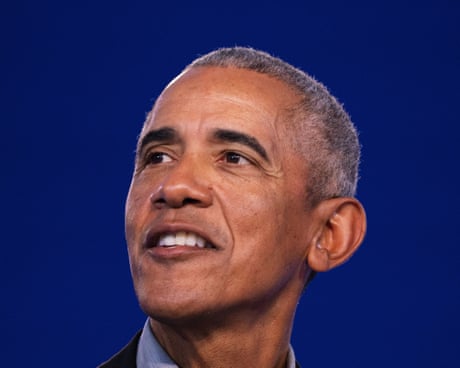
Barack Obama pays tribute to Manchester cotton workers and cites them as an inspiration

Speaking at live UK event, former US president expresses hope rooted in the past and discusses the modern challenges to democracy

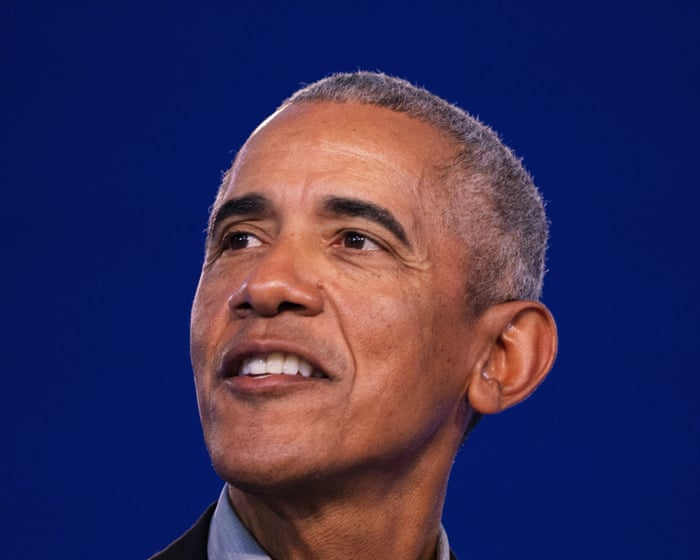
Barack Obama cited the “wonderful” story of how Manchester cotton workers stood in solidarity with enslaved African Americans as an inspiration for our times in a live appearance in the city.

Tens of thousands of people packed Co-op Live in the city on Thursday for An Evening With Barack Obama, where the former US president was interviewed by the writer and broadcaster Afua Hirsch.

Continue reading...

© Photograph: Jane Barlow/PA

© Photograph: Jane Barlow/PA

© Photograph: Jane Barlow/PA

  •  

‘Opening the lid of a horrible secret’: Jamaicans confront enslavement with taboo-busting stories on screen

As violent spirits are unleashed in Sky’s Possession, observers see confident creatives reclaiming the island’s narratives in a form of ‘cultural reparation’

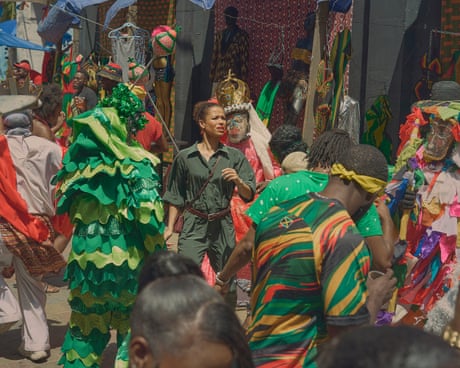
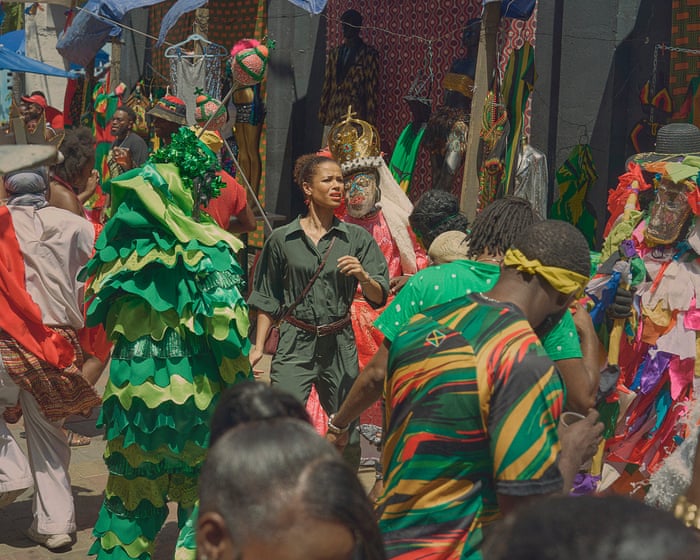
A woman opens a 300‑year‑old box, unleashing a violent spirit – it is the spirit of colonialism and oppression roaring back to life. It is a pivotal scene in Sky’s supernatural series Possession and symbolises a wider shift in Jamaica’s film industry, where directors are increasingly using the landscape to tell Jamaican stories – including those that confront enslavement, trauma and historical memory.

The series is about a biracial British lawyer who travels to Jamaica to investigate a multimillion-pound inheritance dispute, only to uncover a dark, vengeful spirit tied to the plantation’s brutal colonial past.

Continue reading...

© Photograph: Des Willie

© Photograph: Des Willie

© Photograph: Des Willie

  •  

UK law could deny Fayed accusers recognition as victims of human trafficking

‘Unfair’ immigration and asylum bill could fail to support sexual violence survivors, anti-slavery commissioner says

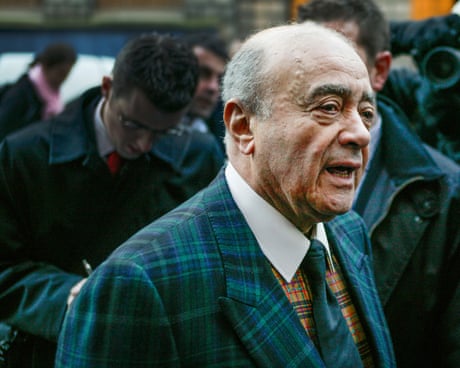
Survivors of sexual violence could wrongly be denied recognition as victims of human trafficking under credibility tests in a new UK law, the independent anti-slavery commissioner has warned.

Eleanor Lyons said the measures in the immigration and asylum bill were fundamentally unfair and could lead to many more victims of slavery and trafficking, including those allegedly abused by Mohamed Al Fayed, being denied support.

Continue reading...

© Photograph: Murdo Macleod/The Guardian

© Photograph: Murdo Macleod/The Guardian

© Photograph: Murdo Macleod/The Guardian

  •  

Jamaica says slavery reparations petition to be heard by UK privy council in March 2027

Jamaica’s minister of culture says UK has until November this year to file its case following referral by King Charles

A high-level United Kingdom appeals court has set a date to hear Jamaica’s petition for legal advice on its claim for slavery reparations from the UK, the Jamaican government has said.

Olivia Grange, Jamaica’s minister of culture, confirmed in a statement that a hearing had been provisionally set for the week of 8 March, 2027 by the London-based privy council, the final court of appeal for UK overseas territories and some Commonwealth countries.

Continue reading...

© Photograph: Ricardo Makyn/AFP/Getty Images
© Photograph: Ricardo Makyn/AFP/Getty Images
© Photograph: Ricardo Makyn/AFP/Getty Images
  •  

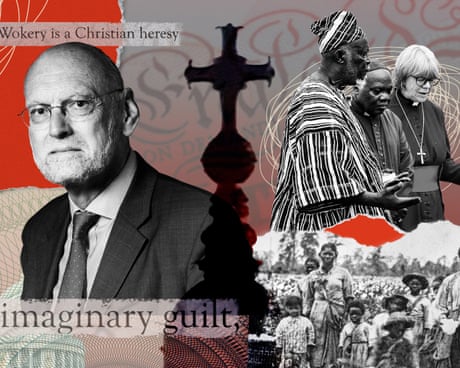
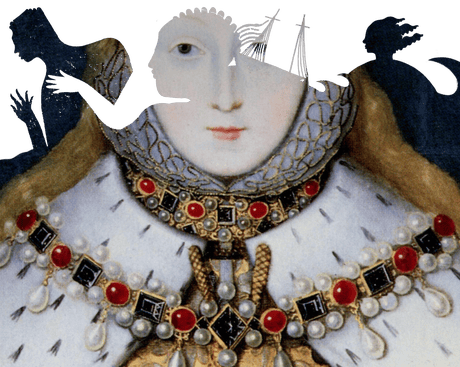
Lobbying, lawyers and a media blitz: the fight to kill the Church of England’s £100m slavery compensation fund

Some of Britain’s wealthiest financiers, including Sir Paul Marshall, have given a platform to critical coverage or are linked to its leading opponent

“This is virtue signalling,” said Nigel Biggar. “These are elites who are trying to demonstrate that they are being progressive.”

The target of his scorn was one that has obsessed him for years: the movement to pay reparations for the slave trade, and specifically the Church of England’s plan to spend £100m atoning for its involvement.

Continue reading...

© Composite: Guardian

© Composite: Guardian

© Composite: Guardian

  •  

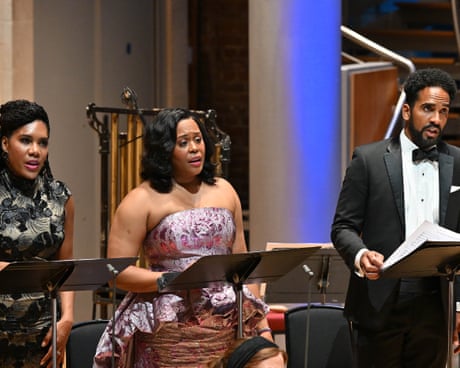
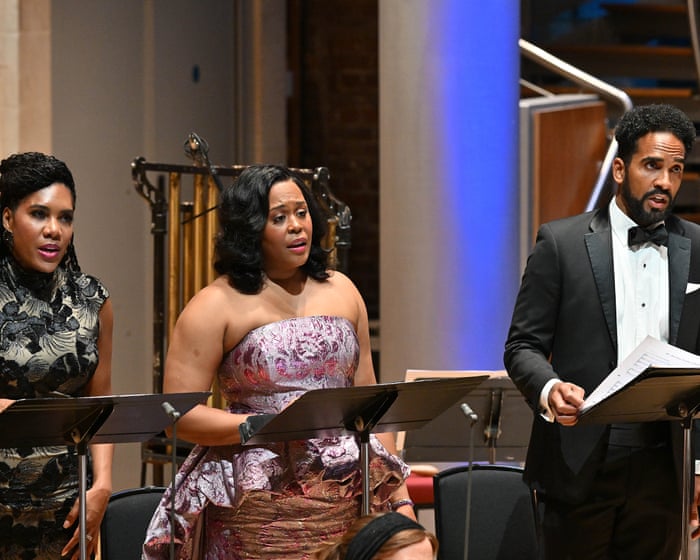
Atlantic Requiem review – Önaç gives historical slavery documents howling raging life

LSO St Luke’s, London
From syncopated funk to the Latin requiem mass, Gregorian chant to bureaucratic recitative, the score to David Önaç new oratorio, premiered by the London Symphony Orchestra, is serious and beautiful

How do you put a value on a human life? If you’re an insurance underwriter that’s not a philosophical question, it’s a practical one. The answer, incidentally, as calculated by Lloyds of London in 1779 was £45: the figure placed on each enslaved person transported across the Atlantic alongside corn, fish and other cargo. Court transcripts from two decades later describe a woman quarantined for smallpox, subsequently bound, blindfolded and tossed overboard tied to a chair. The captain later expressed his regret for the loss of “so good a chair”.

Archives can tell us what, but it takes art to give us the human how of the past. Enter composer David Önaç – commissioned to take the historical documents unearthed from the Lloyds archive and give them howling, raging life in his new Atlantic Requiem, premiered this weekend by the London Symphony Orchestra, an expanded BBC Singers, three soloists and (in a last-minute step-in) conductor Malcolm J Merriweather.

Continue reading...

© Photograph: Mark Allan

© Photograph: Mark Allan

© Photograph: Mark Allan

  •  

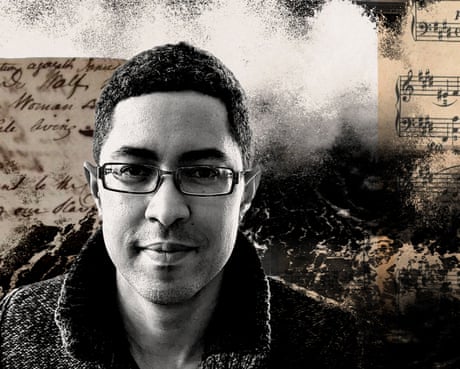
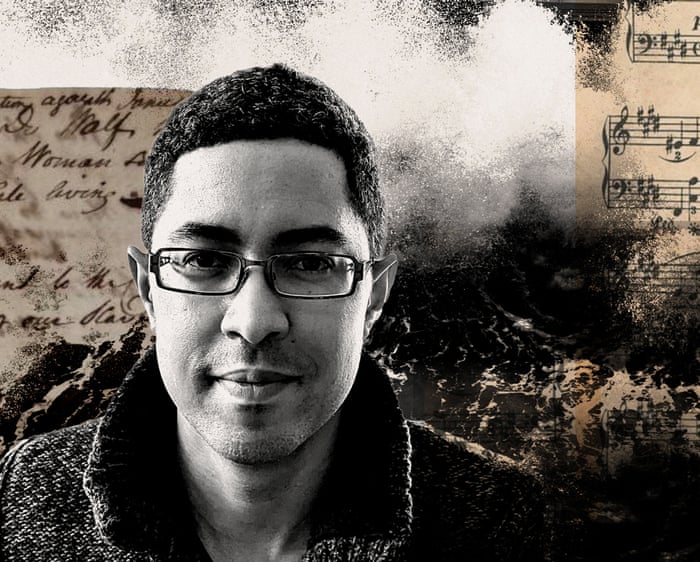
Manchester-based composer creates requiem to honour enslaved Africans

David Önaç uses insurance documents for work funded by Lloyd’s of London after research uncovered its slavery links

A centuries-old insurance document detailing the trafficking of enslaved Africans began with the words: “In the name of God, Amen.”

For Dr Errol Francis, the artistic director and chief executive of the arts and heritage charity Culture&, the contradiction was striking: an invocation of God in a document that treated human beings as cargo.

Continue reading...

© Composite: Guardian

© Composite: Guardian

© Composite: Guardian

  •  

Study explores links between 19th-century Manchester workers and enslaved Africans in Caribbean

Global Threads research project reveals how slavery hung ‘like a spectre’ over the Peterloo massacre and other Mancunian struggles for equality

They were the killings that changed Britain, paving the way for working-class people’s right to vote, as well as leading to the founding of the Manchester Guardian. In the Peterloo massacre of 1819, peaceful protesters were shot and trampled to death by the Manchester and Salford Yeomanry at St Peter’s Field in the city.

A study by Global Threads, a public history project, has examined how the exploitation of Africans enslaved in the Caribbean was linked with the struggles of cotton workers at Peterloo. Though these workers were divided by thousands of miles and led different lives, they were exploited by the same forces – as Robert Wedderburn, a Black abolitionist in London, said at the time.

Continue reading...

© Photograph: Richard Saker/The Guardian

© Photograph: Richard Saker/The Guardian

© Photograph: Richard Saker/The Guardian

  •  

Blood of My Blood review – gripping ghost story is a reckoning with slavery

Royal Court theatre, London
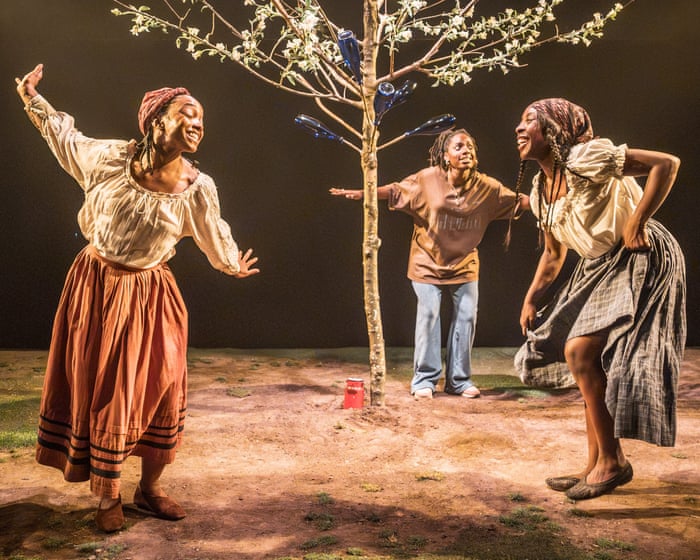
A Black British woman traces her family’s enslaved past in Joy Nesbitt’s supernaturally charged play

Joy Nesbitt’s fantastically chilling play is both a ghost story and a reckoning with the undocumented history of enslaved people. It takes us from present-day America into the past, towards the exact moment when slavery was abolished.

A white couple has turned their South Carolina plantation into a holiday rental. People come for celebrations and weddings, we hear. It is tantamount to slave-plantation tourism, says Talulah (Jodie Campbell), a Black British woman who has traced her family line to this spot. Talulah is trying to channel her descendant Ginnie (Ronkẹ Adékọluẹ́jọ) through the ritual practice of “conjuring” – making contact is a way to fill in the gaps of her family’s enslaved past.

Continue reading...

© Photograph: Marc Brenner

© Photograph: Marc Brenner

© Photograph: Marc Brenner

  •  

The Register that shatters the myth of Britain’s role in profiting from enslavement

In this month’s newsletter: for Caribbean scholars, the evidence of how deeply slavery shaped Britain’s wealth has never been in doubt. Plus, heritage walks in Manchester

• Don’t get Cotton Capital delivered to your inbox? Sign up here

Welcome to this month’s Cotton Capital newsletter. I’m Ahmed Reid, coming to you from Jamaica, where I am programme manager for the Guardian’s Legacies of Enslavement team.

The recently published Register of British Slave-Traders, reported exclusively in the Guardian, lists 13,000 men and women who invested in and profited from the trafficking of more than three million enslaved Africans between 1563 and 1807.

Continue reading...

© Composite: Guardian

© Composite: Guardian

© Composite: Guardian

  •  

"We have a hard time thinking historically with much sophistication"

Karin Wulf (9/2026), "The Family History of Sally Hemings and Thomas Jefferson, and the Politics of Genealogy": "a team ... has been working with a strand of Thomas Jefferson's hair to compare recovered DNA with that contributed by descendants of Sally Hemings ... More problematic is the failure of most of the flurry of media attention ... to resist tired and tiresome framings ... History regularly skips or dismisses the essential history of family." Wulf's other posts on "Reading Family History" (2, 3, 4, 5, 6), her course on "Gender, Sexuality and Family in the Early Modern Atlantic World," and other posts / tidbits. Also this month, an interview with Marcia Biederman on a later family's history: "the true story of an Alaska Native woman" with "villainous relatives: the mother- and sister-in-law from hell, who welcomed Agnes by showing her to a stark, unheated attic room." Via.
  •  
❌