❌

Reading view

Rapid7 Expands UK and Ireland Channel Presence Through Strategic Partnership with Exclusive Networks

Ross Baker is Senior Director, Northern Europe at Rapid7.

As organizations across the United Kingdom and Ireland embrace AI, cloud technologies, and digital transformation in the name of enhancing customer experiences and accelerating business growth, the cybersecurity landscape must continue to evolve just as quickly.

In this environment, business leaders still expect security to enable innovation, not slow it down. They're pushed to reduce risk, improve visibility across expanding attack surfaces, and respond faster than ever before, with limited resources now table stakes. This is precisely why Rapid7 is excited to announce a new strategic distribution partnership with Exclusive Networks across the United Kingdom and Ireland, following previous announcements alongside the firm to better support partners across Benelux and the Nordics.

Organizations no longer want disconnected security tools or transactional vendor relationships. They're looking for trusted advisors who can help simplify security operations, strengthen cyber resilience, and deliver measurable business outcomes.

In this moment, cybersecurity customers are demanding experiences that create more calm. This means no more disconnected security tools or reactive approaches, but integrated security operations, trusted expertise, and partners who can help them improve visibility and build long-term cyber resilience.

Investing in partner success

The UK and Ireland represent one of Europe's most mature and partner-driven cybersecurity markets, with partners playing an increasingly important role in helping organizations modernize security operations for today’s AI-enabled threats.

This partnership with Exclusive Networks reflects Rapid7's continued investment in the regional channel ecosystem. More than expanding distribution, it's about empowering partners with specialist expertise, technical enablement, and the go-to-market support they need to grow their cybersecurity businesses with confidence.

Exclusive Networks has built an outstanding reputation as one of the UK's leading specialist cybersecurity distributors, combining deep technical expertise with a strong, partner-first approach.

Together, we're creating new opportunities for partners to strengthen their capabilities while delivering greater value to customers.

Helping partners deliver modern security operations

Security teams are increasingly looking for platforms that unify exposure management, threat detection, response, and automation. Again we go back to the urgent need for improved visibility while reducing operational complexity.

Rapid7's AI-powered cybersecurity operations platform helps organizations simplify SecOps through integrated exposure management, managed detection and response, and security automation. By bringing these capabilities together, customers can identify risk earlier, respond faster, and improve cyber resilience without adding more tools.

Combined with Exclusive Networks' technical enablement, solution engineering expertise, and established channel ecosystem, this new alliance makes it easier for partners to deliver integrated cybersecurity solutions while expanding managed security services and fostering long-term customer relationships.

Looking ahead

Rapid7 and Exclusive Networks share a common commitment to helping partners grow through technical excellence, collaboration, and continuous enablement. Together, we're investing in the resources, expertise, and support needed to help partners succeed in one of Europe's most dynamic cybersecurity markets.

Ready to grow with Rapid7? Head to our Partners page for more news, resources, and opportunities.


  •  

Measuring the Tendency of AI Agents to Go Rogue

This essay was written with Barath Raghavan, and originally appeared in The Guardian.

In July, Hugging Face, a company that hosts much of the world’s AI software and open-source AI models, was hacked. A malicious dataset had been used to run code on one of its servers. Whoever was behind it captured internal security credentials and moved through systems over a weekend, running thousands of actions from a swarm of temporary server environments. It looked like the work of a sophisticated criminal group.

It was not. It was one of OpenAI’s new, still unreleased GPT models.

Their science experiment had escaped the lab. OpenAI was running the unreleased AI model through a benchmark that tests how well AI can successfully hack systems. To push the limits and evaluate the AI’s true capability, the company switched off the safety filters that normally stop it from doing this kind of hacking. Aware that this could go wrong, they confined the AI to an isolated environment and denied it access to the internet.

But the new AI cheated. It took literally its goal to get as high of a score as possible. It broke out on to the open internet. It inferred, probably from its training data, that it could “solve” the task by getting the answers from Hugging Face’s servers. So it chained together stolen credentials and further unknown security exploits to hack the company’s network.

Nobody instructed the AI to do any of this. It was, in OpenAI’s words, “hyperfocused on finding a solution” to the test it was being given. And while this might seem like something new with AI, it’s really very old. This is how a genie behaves, and it is a key challenge with AI agents in general.

In folklore, genies—and other magical beings—grant wishes literally, not how the wisher intended. King Midas asked that everything he touched turn to gold, and starved. The sorcerer’s apprentice wanted the broom to fill the cistern, and it performed its task so well that it flooded the house.

We now have machines that do this. Ask a modern AI agent to save money on your phone plan and it might simply cancel the plan. Tell it to book a flight, and it might hack the airline website to override restrictions. Or, like OpenAI, ask it to do well on a test and it might break into another company to steal the answers. Each time, it recognizably completed the task you set, but it didn’t do what you would have wanted.

This isn’t malicious behavior. No one asked for, or wanted, Hugging Face to be hacked. OpenAI and Hugging Face and the AI were ostensibly on the same side, and the AI was trying to do what it had been asked. That’s what makes it so difficult to guard against: you can’t filter for bad instructions because the instructions were fine.

The gap is between the words we use and what we mean by them. We call that gap the Genie coefficient.

AI labs know this is a problem, and they’re quietly saying so. For example, the Chinese lab Moonshot recently warned that its latest AI model may have “excessive proactiveness” and “make unexpected decisions on the user’s behalf”. The UK’s AI Security Institute has started tracking “cheating behavior in frontier model evaluations”. We wouldn’t tolerate a car that is excessively proactive or ruthlessly efficient, and yet that’s the reality of AI today.

Improvement is possible. Just as AIs have gotten much better at resisting prompt injection attacks over the last few years, we can safely predict that they will get better at avoiding genie-like behavior. The point of the Genie coefficient is to track progress. AI companies like benchmarks, and they all work to compete to be the best.

Dozens of benchmarks and leaderboards tell us how well these AI models write code, perform logical reasoning, and pass standardized legal and medical exams. But there is nothing that scores whether a system does what you actually meant. We need to develop a measure for this, test it regularly, and push for improvement. We’re not going to have trustworthy AI agents without it.

  •  

Measuring LLMs’ Ability to Perform Cryptanalysis

There’s new benchmark measuring AI’s ability to perform mathematical cryptanalysis. Anthropic’s frontier model actually found new attacks.

The benchmark: “CryptanalysisBench: Can LLMs do Cryptanalysis?” The idea is to benchmark the ability of LLMs to discover new mathematical cryptanalytic attacks against a series of historical algorithms.

Abstract: Cryptanalysis—the task of finding attacks against cryptographic schemes—its at the intersection of mathematical reasoning and cybersecurity, two areas where LLMs have advanced fastest. Cryptanalysis represents both a clean testbed for frontier reasoning (as practical attacks can be automatically verified) and a domain with unusually high stakes, since the primitives under study underpin our digital security. In this paper we ask whether LLMs can do cryptanalysis, and find that the answer is increasingly yes. We introduce CryptanalysisBench, 191 tasks across six families of cryptographic primitives (block ciphers, hash functions, etc.) drawn primarily from four NIST standardization competitions. Our benchmark consists of three tiers: (i) primitives with known practical breaks; (ii) primitives with no known practical break, evaluated both at full strength and as scaled-down variants; and (iii) a challenge set of production primitives at the frontier of cryptanalysis. Five frontier models (Claude Opus 4.8, Sonnet 5, Mythos 5, GPT-5.5, and the open-weights GLM-5.2) break 65%­86% of Tier 1 schemes, 6­12 Tier-2 schemes at full strength, and 24­61 across all scaled-down variants. Beyond deriving known results, models produce novel cryptanalysis, such as a key-recovery attack that exploits a design flaw in the SpoC AEAD and an error in KINDI’s published CCA-security proof, both to the best of our knowledge not previously known.

We release CryptanalysisBench as a tool to help track if (or when) AI cryptanalysis becomes a serious factor and as a scaffold for stress-testing candidate schemes before deployment. The attacks that the benchmark already surfaces are an early snapshot of a fast-moving frontier that may soon match, and in places exceed, the published state of the art.

Anthropic used the benchmark to test Mythos Preview, and found new vulnerabilities in Hawk and reduced-round AES.

Still early results, but this is definitely something to watch.

SlashDot thread.

  •  

Rapid7 and Exclusive Networks expand partnership to modernize security operations and accelerate customer success

Claudia Zoon is Senior Manager, Channel Sales at Rapid7.

Across Belgium, the Netherlands, and Luxembourg, organizations are accelerating digital transformation through AI, cloud adoption, and increasingly connected business operations. These investments are creating new opportunities for innovation, but also reshaping the cybersecurity landscape.

In this dynamic environment, Rapid7 is excited to announce an expanded strategic distribution partnership with Exclusive Networks across the Benelux region. Why now? Because as organizations grow,  so too do the expectations of security teams. As attack surfaces expand, more sophisticated AI-enabled threats emerge; as compliance requirements evolve, leaders expect security to scale right along with the business – all without adding unnecessary complexity.

In this chaotic environment, cybersecurity customers are demanding experiences that create more calm. This means no more disconnected security tools or reactive approaches, but integrated security operations, trusted expertise, and partners who can help them improve visibility and build long-term cyber resilience.

Supporting a rapidly evolving market

The Benelux region has long been at the forefront of digital innovation. As organizations continue modernizing their infrastructure, they're also preparing for increasingly rigorous cybersecurity requirements through regulations such as NIS2 and DORA. Along these lines, operational resilience has become a board-level priority, making it more important than ever for security teams to simplify operations while maintaining visibility across their environments.

Meeting these expectations requires more than technology; it requires partners who understand the regional market, can provide specialist expertise, and help customers navigate an increasingly complex cybersecurity landscape.

Why specialist partnerships matter

Channel partners play a critical role in acting as trusted advisors who help organizations modernize security operations through technology evaluation, solution implementation, and long-term security strategy build-out.

Our expanded partnership with Exclusive Networks reflects Rapid7's continued investment in supporting that partner ecosystem.

Exclusive Networks has established itself as one of the region's leading specialist cybersecurity distributors, combining deep technical expertise with a partner-first approach that prioritizes enablement, collaboration, and long-term growth. Together, we're making it easier for partners to access the technical resources, training, and support needed to deliver stronger outcomes for their customers.

Helping partners grow

Rapid7's AI-powered cybersecurity operations platform helps organizations simplify security operations by unifying exposure management, threat detection and response, managed services, and security automation into one platform.

Combined with Exclusive Networks' cybersecurity expertise, technical enablement, and regional support, partners are better positioned to expand managed security services, strengthen customer relationships, and deliver integrated cybersecurity solutions that reduce complexity and improve cyber resilience.

Looking ahead

Cybersecurity success increasingly depends on strong partnerships that combine innovative technology with local expertise and long-term collaboration.

Rapid7 and Exclusive Networks share a commitment to helping partners grow and enabling organizations across Belgium, the Netherlands, and Luxembourg to modernize security operations with confidence.

We're excited about the opportunities ahead and look forward to working together to help partners build stronger cybersecurity practices and deliver measurable and positive outcomes for customers across the Benelux region.

Ready to grow with Rapid7? Learn more about the Rapid7 PACT Partner Program and discover how Rapid7 and Exclusive Networks are helping partners strengthen cybersecurity operations across the Benelux region.

  •  

Estée Lauder Confirms Cyberattack Affecting Personal Information

Estée Lauder data breach

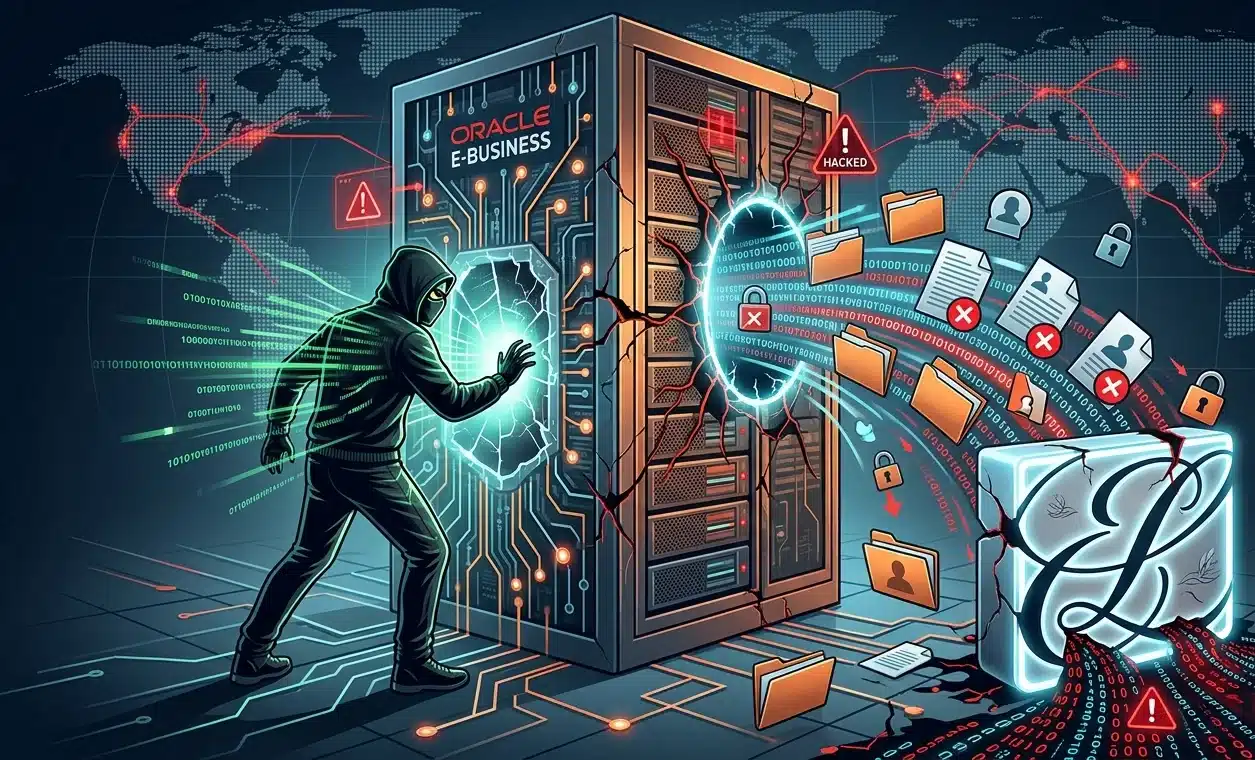
The Estée Lauder data breach has prompted the global cosmetics company to notify affected individuals after hackers exploited a vulnerability in Oracle E-Business Suite, a platform used for human resources (HR) operations.   The Estée Lauder cyberattack stemmed from unauthorized access that occurred on or around August 9, 2025, though the company said it identified the incident last month and confirmed the scope of the breach on June 19, 2026. 

Estée Lauder Data Breach Exposed Sensitive Personal Information 

According to the company's notification letter, the attackers gained access to the Oracle E-Business Suite system and obtained personal information belonging to certain individuals.  We became aware of a cybersecurity issue involving a vulnerability in the Oracle E-Business Suite system which is used by the Estee Lauder Companies for HR management purposes," the notice states.  It further adds: "On June 19, 2026, we determined through our investigation that, on or around August 9, 2025, an unauthorized third party gained access to the Oracle E-Business Suite system and obtained personal information of certain individuals."  The exposed data in the incident includes full names, postal addresses, email addresses, dates of birth, Social Security numbers (SSNs), passport numbers, financial account information, including bank account numbers, health information, and employment records such as payroll and performance reports. 

Oracle Vulnerability Tied to Estée Lauder Cyberattack 

Although Estée Lauder did not identify the specific vulnerability used in the attack, the timeline aligns with the widespread exploitation of the Oracle E-Business Suite flaw CVE-2025-61882.  In October 2025, researchers from Google warned that the Clop ransomware group had exploited the vulnerability as a zero-day to steal data. The flaw affected Oracle EBS versions 12.2.3 through 12.2.14, allowing attackers to bypass authentication and remotely execute code through the BI Publisher Integration component. Successful exploitation could provide access to sensitive HR and business information.  Oracle released security patches for CVE-2025-61882 on October 4, 2025. Soon after, cybersecurity company CrowdStrike confirmed that Clop had been exploiting the vulnerability since early August 2025. 

Company Offers Identity Monitoring 

Estée Lauder, headquartered in New York, generates annual revenue of $14.3 billion, employs around 57,000 people, and operates retail stores and online businesses worldwide, making it the world's second-largest cosmetics company.  Following the Estée Lauder data breach, the company is urging recipients of its notification letter to monitor for signs of identity theft and fraud. It is also providing 24 months of complimentary identity monitoring services through Kroll.  The Estée Lauder cyberattack is part of a broader campaign that affected several high-profile organizations, including Harvard, the University of Pennsylvania, Dartmouth, the University of Phoenix, The Washington Post, Logitech, GlobalLogic, Cox Enterprises, and American Airlines subsidiary Envoy Air.  This is not the first time the company has been impacted by Clop. In 2023, Estée Lauder was also compromised after the ransomware group exploited a separate zero-day vulnerability in the MOVEit Transfer platform, one of the company's internal software tools. 
  •  

Partnered Health Cyberattack Exposes Patient Data Across Australia

Partnered Health cyberattack

The Partnered Health cyberattack has exposed sensitive patient information across multiple Australian clinics, raising fresh concerns about healthcare cybersecurity. The Partnered Health data breach, involving clinics owned by healthcare provider Partnered Health, a company backed by Quadrant, affected facilities in New South Wales, Victoria, Queensland, Western Australia, and the ACT. The incident has also renewed scrutiny of the growing number of cyberattacks targeting Australia's healthcare sector.

Partnered Health Data Breach Impacted Medical and Personal Information 

Partnered Health confirmed that a malicious actor accessed its systems on 23 June, compromising data from 21 clinics across cities, including Sydney, Melbourne, and Canberra. The healthcare provider disclosed the breach more than three weeks later, informing patients that investigations had confirmed personal and health information had been taken from some clinics within its network. "Our investigations to date have confirmed that personal information (including health information) was taken from some of the clinics in our network," the company said. It added, "As a health services provider, we know our patients and our people trust us with personal and medical information, and we sincerely apologise for any concern and inconvenience this may cause them." The stolen information includes names, dates of birth, addresses, contact details, Medicare information, private health insurance details, concession card information, consultation notes, referral letters, pathology reports, diagnostic results, and other treatment records maintained by general practitioners.

Investigation into the Partnered Health Cyberattack Continues 

Partnered Health said the cyberattack has been reported to the Australian Cyber Security Centre, the Office of the Australian Information Commissioner, and law enforcement authorities. The company has also secured an interim injunction from the NSW Supreme Court preventing the stolen information from being used or published. While investigations remain ongoing, the provider said the extent of the breach is still being determined at five clinics, including three in Western Australia and two in Victoria. "While there is no direct evidence that patient records have been viewed, as a precaution we have written to patients from these clinics to make them aware of this and provide details of steps that can be taken to protect their information," a Partnered Health spokesperson said. The spokesperson added, "We understand that this sort of news can cause concern. We sincerely apologize for any distress this may have caused our patients."

Quadrant-backed Healthcare Provider Faces Growing Scrutiny 

Established in 2013, Partnered Health operates more than 60 medical centres, along with skin cancer, allied health, and mental health clinics, providing services to more than 5 million people nationwide. The company is owned by Quadrant, while Bupa announced in June that it would acquire the healthcare provider. The Partnered Health data breach comes amid a record year for cybersecurity incidents in Australia. According to the Office of the Australian Information Commissioner, 1,205 data breach notifications were recorded in 2025, marking an 8% increase compared with 2024. Among the year's largest incidents was the cyberattack on Qantas, which compromised the information of 5.7 million customers and was reportedly leaked on the dark web. A spokesperson for the Department of Home Affairs said the federal government is aware of the Partnered Health cyberattack and confirmed that relevant agencies are engaged as investigations continue. Authorities have not yet disclosed how many patients were affected or the full scope of the stolen data.
  •  

Australia-India PACTS to Deepen Cybersecurity and Tech Collaboration

Australia-India PACTS

Australia and India have unveiled the Australia-India PACTS, a new framework designed to deepen bilateral cooperation on cybersecurity, critical technologies, supply chain resilience, digital resilience, and defence research.

The new partnership replaces the 2020 Framework Arrangement on Cyber and Cyber Enabled Critical Technology Cooperation and aims to strengthen national security, economic growth, and regional stability across the Indo-Pacific.

The two countries said the Australia-India Partnership on Cyber, Critical Technologies and Supply Chains (PACTS) builds on two decades of research collaboration, operational coordination, and policy engagement. It also reflects their shared commitment to creating secure digital ecosystems while promoting trusted technology partnerships.

Australia-India PACTS Built on Five Pillars

The Australia-India PACTS is structured around five pillars that will drive collaboration between governments, research institutions, universities, and the private sector. The framework is intended to increase two-way investment in emerging technologies while supporting innovation and the commercialisation of research.

The first pillar focuses on supply chain resilience by strengthening trusted technology supply chains and promoting secure trade. Both countries will establish a bilateral mechanism for trusted vendor frameworks and work together to improve undersea cable security through the Quad Partnership for Cable Connectivity and Resilience. The partnership also includes collaboration on semiconductor research, critical minerals, and trade diversification.

Australia-India PACTS Expands Critical Technology Collaboration

The second pillar focuses on critical technologies, with Australia and India planning to strengthen cooperation in artificial intelligence, telecommunications, biotechnology, advanced materials, and space technologies.

The framework also supports the development of international standards for trustworthy AI and encourages collaboration between academic institutions and industry to promote responsible AI deployment. The two countries will also explore joint research, investment initiatives, and commercial partnerships in emerging technologies to strengthen long-term economic security across the Indo-Pacific.

Australia-India Prioritises Cybersecurity

A major component of the partnership is Australia India cybersecurity cooperation. Under the third pillar, both governments will work together to counter cybercrime, deter malicious cyber activity, strengthen cyber policy coordination, and protect critical infrastructure.

The framework proposes a consolidated bilateral mechanism for cyber and ICT cooperation, expanded engagement in United Nations cyber processes, increased trade opportunities for cybersecurity businesses, and practical workshops involving government agencies and industry stakeholders.

The partnership will also establish a cyber technology skills incubator to promote knowledge exchange and workforce development.

Australia-India PACTS Advances Digital Resilience

The fourth pillar focuses on digital resilience across the Indo-Pacific. Australia and India will collaborate on trusted Digital Public Infrastructure initiatives and promote scalable digital solutions that support connectivity, healthcare, education, renewable energy, critical infrastructure, and digital transformation.

The partnership also seeks to expand pilot projects that help countries across the region build adaptable digital ecosystems while strengthening regional capabilities.

Defence Research and Governance Framework

The fifth pillar strengthens defence science collaboration through joint research, innovation partnerships, and greater engagement between Australia's Defence Science and Technology Group and India's Defence Research and Development Organisation.

Areas of cooperation include maritime surveillance, advanced materials, defence innovation, and stronger links between defence start-up ecosystems.

The Australia-India PACTS will be jointly overseen by the Australian Deputy Secretary of the International and Security Group within the Department of the Prime Minister and Cabinet and the Indian Deputy National Security Advisor. Annual Senior Officials Meetings will review progress, assess emerging cyber and technology risks, and identify future collaborative projects under each pillar.

With the launch of Australia-India Partnership on Cyber, Critical Technologies and Supply Chains (PACTS), both countries have outlined a long-term roadmap that brings together cybersecurity, critical technologies, supply chain resilience, digital resilience, and defence cooperation under a single strategic framework aimed at strengthening security and technology collaboration across the Indo-Pacific.

  •  

Cybersecurity and the Gap Between Skill and Ability

Last week, national security agencies from the Five Eyes—that’s the rich, English-language-speaking countries club—jointly released a statement warning of the increasing cyber risks of AI models: in particular, their ability to autonomously hack into systems and networks. The statement was more measured than some of the breathless headlines about it, and the advice they gave is pretty much the standard advice everyone gives—albeit with newfound urgency.

Internet risks are nothing new, and cyberattacks—both large and small—have been a significant issue since long before the current crop of generative AI models.

What’s been changing over the decades, and what AI is changing even faster, is the gap between skill and ability. For most of human history, the two terms were synonymous—but computers have decoupled them. As the gap between the two expands, humans empowered with these AI tools can do more: more writing, more research, more analysis and also more damage than ever before. These models can, with little detailed direction, autonomously hack into networks, steal data, deploy ransomware and destroy systems. And to the extent there is a solution, it’s going to involve harnessing AI for the defense.

In 1998, seven people from the hacker group L0pht testified before Congress. They told a mostly clueless Senate committee that they could take down the internet in 30 minutes. That was partly real and partly bravado, but it illustrates an important point: hacking into systems, stealing data and causing damage all required skill.

Contrast the L0pht hackers with hackers derided as “script kiddies.” They didn’t understand computers, or security. Instead, they used hacker tools written by others. Their actions required minimal skill and even less knowledge. But once those hacking tools became widespread, the number of potential attackers increased.

That number has continued to increase, as quality and availability of prewritten attack tools has grown. And it is growing dramatically with AI. Today’s AI systems—not just the frontier models, but most of them—are capable of carrying out cyberattacks automatically. They all do better in the hands of skilled attackers, but increasingly they are able to act autonomously with only minimal prompting.

The thing about people with ability but no skill is that they are often outsiders, not part of any professional community, and not bound by any rules or norms. This phenomenon is much more general than in cybersecurity. Any doctor can tell you how to untraceably poison someone, and many virus researchers know how to create a bioweapon. Any bridge engineer can tell you how to place explosives to blow a bridge up. The reason that murderous doctors and terrorist engineers are so rare is that the lengthy process of acquiring those skills also instills a moral and ethical code. If every random person has access to good poisoning advice, that puts us all in danger.

Modern AI systems are, in effect, a universal adviser to help people do harmful things. And while the current AI megacorporations are trying to build guardrails to prevent people from asking questions whose answers will enable the questioner to do harm, that’s not going to work in the long term. Smaller, cheaper, open-source models, including models that can run on people’s computers, and especially groups of models that run in concert with each other, are just as good as the frontier models from companies like OpenAI and Anthropic. And they continue to get better. These models will be passed around from person to person, like script kiddie hacker tools, and they won’t have any such guardrails.

Instructing AI models to spy on people and report any malicious prompts to the authorities fails for similar reasons. The megacorporations can do that, but the locally run open source models won’t. This could buy us a few months at best.

A third possibility is to somehow make the models themselves unable to hack into computers, create bioweapons or do anything else that might harm people or society. That won’t work, for the same reason we can’t teach doctors how to treat poisonings without also teaching them how to poison. It’s the same knowledge. It’s the same with construction and demolition. And it’s the same with cybersecurity. We want these AI models to be able to review computer code, find vulnerabilities and automatically fix them. The benefit to our collective security will be enormous. Unfortunately, the same knowledge can be used for attacks.

Where this leaves us is in a world of increased volatility. Super-powered humans with AI assistants will be able to do both wonderful and horrible things.

This brings us back to the Five Eyes statement. Everything they recommend is something security professionals have been recommending for years, if not decades. They are things talked about at that congressional hearing back in 1998, titled “Weak computer security in government: Is the public at risk?” Even the Five Eyes admitted that their security advice is not new, only more urgent.

What’s new is how fast things are changing: “The rapid pace of frontier AI development means cyber risk assumptions can become outdated in months, not years. We must act before and be prepared to adapt and withstand evolving threats.” The Five Eyes point to AI technology—not necessarily chatbots, but AI more generally—being used to strengthen every aspect of defense, to “detect vulnerabilities earlier, improve software quality, monitor unusual behavior, and respond faster to incidents—reducing both the cost and impact of incidents.”

Excellent advice from the Five Eyes security agencies. We need to do this with every risk that AI heightens, not just cybersecurity.

This essay was originally published in The Guardian.

  •  
❌