❌

Reading view

Elon Musk reveals β€˜world’s first flying car’ at Tesla event

The Tesla Roadster 2 drove up a curved ramp before using SpaceX rocket thrusters to fly, flip and land

Elon Musk has revealed Tesla’s latest model, which he claims will be the world’s first flying car, using technology from his aerospace company SpaceX to β€œbasically fly like a rocket”.

The billionaire, who hosted a demonstration of the Tesla Roadster 2 at the SpaceX rocket development and testing facility in Texas, said the sports car could go from 0 to 60mph in a record time of less than a second and had thrusters.

Continue reading...

Β© Photograph: Tesla/AFP/Getty Images

Β© Photograph: Tesla/AFP/Getty Images

Β© Photograph: Tesla/AFP/Getty Images

  •  

World's Timekeepers Vote to Eliminate the Leap Second

Timekeepers have officially voted to eliminate the leap second, allowing Coordinated Universal Time to drift as much as one hour from Earth's rotation before a correction is needed. The change ends decades of occasionally adding or subtracting seconds and replaces it with a hypothetical "leap hour" that likely wouldn't be necessary for hundreds or even thousands of years. Smithsonian Magazine reports: "It's kind of a philosophical discussion, because if a leap hour happens, it won't be for a very, very long time," Christian Bizouard, director of the IERS Earth Orientation Center in France, tells the Guardian's Ian Sample. "What we are doing is pushing back the decision." The move caps off 30 years of debate, as the leap second has been highly controversial in the world of timekeeping. Leap seconds aren't nearly as smooth of a fix as leap years are, and they can cause computer and website issues. Reddit famously crashed when a leap second was added on June 30, 2012. It's "always been a problem," Judah Levine, a former researcher at the NIST's Time and Frequency Division, tells Scientific American's Emma Gometz. Instead of adding the entire second all at once, companies such as Google and Meta add the extra time in smaller segments in a tactic called "smearing," according to the Conversation. It's not a simple task, however, and companies that employ smearing have long lobbied to get rid of the leap second. What's more, with Earth's recent spin acceleration, timekeepers around the world were facing the possibility of the world's first negative leap second, in which a second would be subtracted from UTC. This sparked fears, akin to those surrounding Y2K, that our modern technologies wouldn't be able to handle such a change. "It's never happened before, and therefore the software for that has never been tested," Darryl Veitch, a researcher who leads the Timing Lab at the University of Technology Sydney, tells the Australian Broadcasting Corporation's Ellen Phiddian. But others argued that it wouldn't be much of a problem. The vote means that in the future, UTC will be allowed to diverge from astronomical time more than ever before.

Read more of this story at Slashdot.

  •  

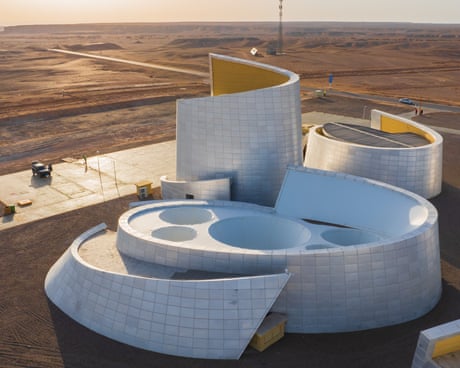
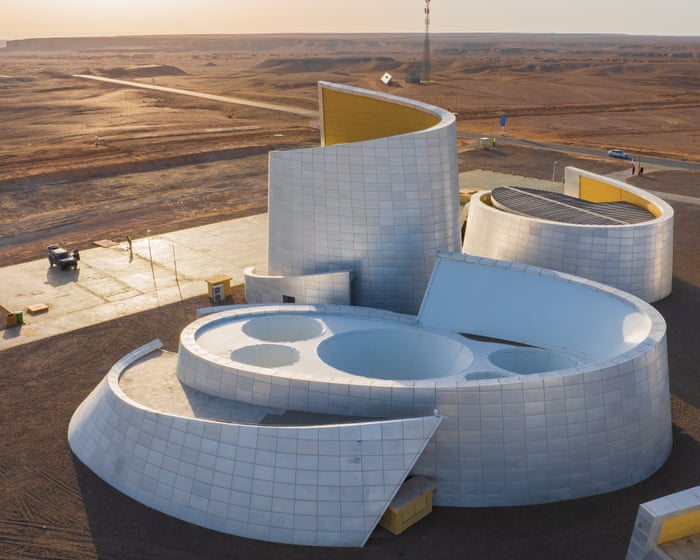
Like dinosaur eggs in the sand: the pterosaur museum built to thrive in the Gobi desert

How architects worked with harsh environment to create sustainable building in location where fossils were found

Viewed from afar, the silver-hued Hami Pterosaur Museum almost looks like a space base on Mars. Viewed from above, it resembles a collection of dinosaur eggs in the sand. Nestled in the Gobi desert, in north-west China, the new tourist attraction showcases hundreds of impressive fossils of pterosaurs, ancient flying reptiles related to dinosaurs. But far from reflecting its prehistoric exhibits, the building itself is a modern-day architectural specimen.

Designed with underground exhibition halls, giant light funnels and sprawling solar farms, the museum is able to operate sustainably while withstanding an extremely harsh environment.

Continue reading...

Β© Photograph: Turenscape

Β© Photograph: Turenscape

Β© Photograph: Turenscape

  •  

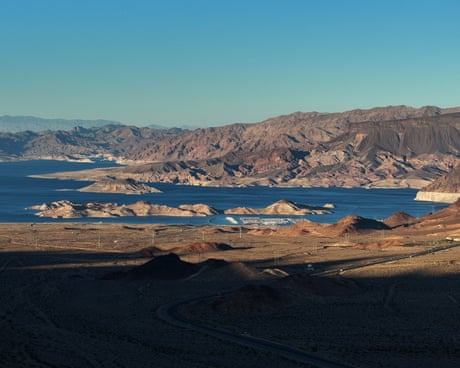
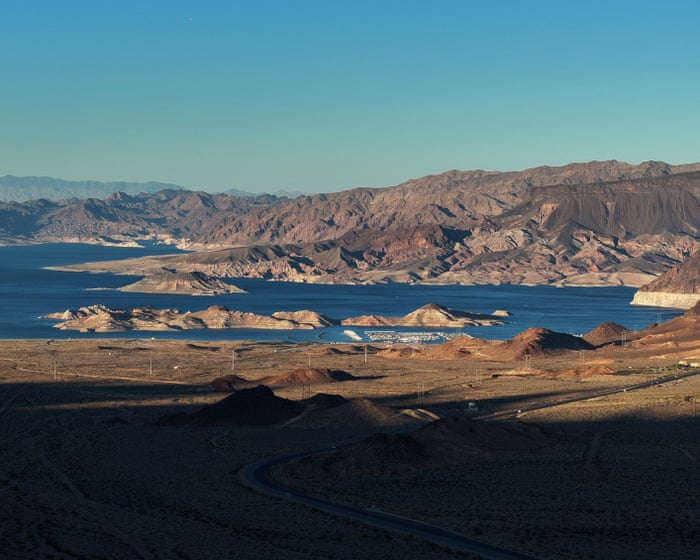
Police reveal identity of man found in a barrel in drought-stricken Lake Mead

The remains of Edward Lelburian Jackson were first discovered in 2022, and an initial autopsy revealed he was killed decades ago

After four years, a piece of the haunting mystery uncovered in the waning waters of drought-stricken Lake Mead has been solved.

Since the remains of an unknown homicide victim were discovered stuffed inside a barrel in 2022, Las Vegas investigators have been searching not for his killer – but for his identity. At a press conference on Thursday, Clark county coroner Melanie Rouse shared his name publicly for the first time: Edward Lelburian Jackson.

Continue reading...

Β© Photograph: John Locher/AP

Β© Photograph: John Locher/AP

Β© Photograph: John Locher/AP

  •  
❌