❌

Normal view

Nvidia's big bet on physical AI aims for safer robotaxis, humanoid robots

8 October 2026 at 07:15

Investors bullish on AI data centers may be fueling Nvidia’s multitrillion-dollar market capitalization, but the AI chipmaker has also bet billions of dollars on physical AI technologies such as robotics and self-driving cars. Part of that gambit has involved developing a full-stack safety system that companies can build upon to reduce the risk of their machines harming nearby people.

Nvidia's Halos system launched in 2025 with hardware and software tools to help developers implement guardrails in self-driving cars and other autonomous vehicles. Then the company expanded its safety architecture to more physical AI technologies by announcing Nvidia Halos for Robotics in June 2026β€”with the goal of enabling safe deployments of autonomous mobile robots in warehouses, humanoid robots walking around inside a factory, or even surgical robots.

β€œNow the AI models are getting capable, the robot hardware is getting capable, and a thing we thought is going to be the next bottleneck is safety,” Amit Goel, head of robotics ecosystem and edge computing at Nvidia, told Ars. β€œSo that's why we launched our Halos for Robotics to unlock the capability of these systems.”

Read full article

Comments

Β© Agility Robotics

US arrests tech CEO accused of smuggling $300M in Nvidia chips into China

2 October 2026 at 14:39

The US has arrested another suspect accused of smuggling high-end computer servers containing export-controlled Nvidia chips into China.

In a press release on Thursday, the Department of Justice accused 38-year-old Greg Lui of using false paperwork to mask shipments of servers worth more than $300 million that he allegedly knew were ultimately destined for China.

As the CEO of Earthmade Computer, Lui allegedly conspired with freight-forwarding firms in South Asian countries like Malaysia and Singapore to illegally divert chip shipments into China, including Nvidia’s A100 GPUs and H100 GPUs, the FBI’s indictment alleged. These are not Nvidia’s most advanced chips. However, the chips can process large amounts of data and train large language models, which the US fears could pose national security risks if China suddenly gets access to enough chips to drastically advance its AI or strengthen its military.

Read full article

Comments

Β© Bloomberg / Contributor | Bloomberg

The 7-year-old Nvidia Shield TV is now $100 more expensive due to AI

2 October 2026 at 10:52

The era of generative AI has upended technology supply chains, and there is one ironclad rule in 2026: If it has memory or storage, it's getting more expensive. Even devices with years-old tech inside are still apparently subject to that unwritten rule. Nvidia has just announced that the Shield TV Pro is getting $100 more expensive, effective immediately.

The most recent version of the Shield streaming box debuted in 2019, running Android TV with AI upscaling and hardware decoding for almost any type of media. While it ran an aging Tegra X1+ processor, that was (and still is) fast for a TV media streamer. The device launched at $199.99, with a non-Pro variant at $149.99. The non-Pro Shield has since been discontinued, but the Shield TV Pro lives on at the new $299.99 price.

Nvidia has confirmed that you can blame AI for the higher Shield TV pricing. "Starting October 2, SHIELD Pro will be priced at $299. The cost of components, including memory, has increased substantially across the industry," a spokesperson told Ars.

Read full article

Comments

Β© Ryan Whitwam

Trump plan to combat AI risks hinges on Big Tech pals policing themselves

30 September 2026 at 14:47

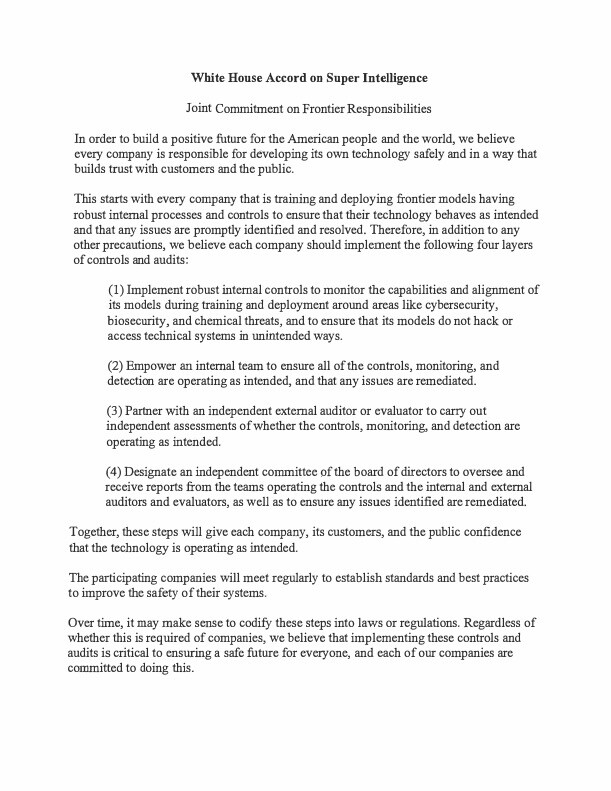
Amid escalating AI security incidents causing OpenAI to halt training and pause releases, Donald Trump continues to advocate for the AI industry to regulate itself as the best path to combat emerging risks when developing frontier AI.

In an agreement Tuesday, two dozen tech firms voluntarily committed to implementing controls recommended by the White House, including undergoing independent safety audits that will test whether firms’ internal controls, monitoring, and detecting are actually working. Key focuses for external reviews included β€œrisks related to cybersecurity, biosecurity, chemical threats, and unintended actions by AI models.”

Firms also agreed to regularly meet to discuss best practices and set common AI safety standards and benchmarks. Among signers were leaders like Anthropic’s Dario Amodei, OpenAI’s Sam Altman, SpaceXAI’s Elon Musk, Nvidia’s Jensen Huang, Meta’s Mark Zuckerberg, and Alphabet/Google’s Sundar Pichai.

Read full article

Comments

Β© Kevin Dietsch / Staff | Getty Images News

❌