Normal view

Received yesterday — 12 December 2025

In a shocking twist, Keir Starmer’s TikToks are borderline competent

12 December 2025 at 10:08

The PM’s social media sortie has not been a total embarrassment, which may be a shame for him

The scene opens on the interior of an aeroplane.

A suited man in a luxurious seat looks pensively out the window, his face partially obscured, his chin delicately resting on his hand.

Continue reading...

© Photograph: TikTok

The mystery man gazes through his plane window.

© Photograph: TikTok

The mystery man gazes through his plane window.

© Photograph: TikTok

The mystery man gazes through his plane window.

Australia’s social media ban launched with barely a hitch – but the real test is still to come

12 December 2025 at 07:00

The policy to cut off social media access for more than 2 million under-16s remains popular with Australians, while other countries look to follow suit

On the lawns of the prime minister’s Kirribilli residence in Sydney, overlooking the harbour, Anthony Albanese said he had never been prouder.

“This is a day in which my pride to be prime minister of Australia has never been greater. This is world-leading. This is Australia showing enough is enough,” he said as the country’s under-16s social media ban came into effect on Wednesday.

Continue reading...

© Composite: Victoria Hart/Guardian Design/Getty images

© Composite: Victoria Hart/Guardian Design/Getty images

© Composite: Victoria Hart/Guardian Design/Getty images

Received before yesterday

Online child sexual abuse surges by 26% in year as police say tech firms must act

10 December 2025 at 19:01

Figures for England and Wales show there were 51,672 offences for child sexual exploitation and abuse online in 2024

Online child sexual abuse in England and Wales has surged by a quarter within a year, figures show, prompting police to call for social media platforms to do more to protect young people.

Becky Riggs, the acting chief constable of Staffordshire police, called for tech companies to use AI tools to automatically prevent indecent pictures from being uploaded and shared on their sites.

Continue reading...

© Photograph: Fiordaliso/Getty Images

© Photograph: Fiordaliso/Getty Images

© Photograph: Fiordaliso/Getty Images

Australian Social Media Ban Takes Effect as Kids Scramble for Alternatives

9 December 2025 at 16:10

Australian Social Media Ban Takes Effect as Kids Scramble for Alternatives

Australia’s world-first social media ban for children under age 16 takes effect on December 10, leaving kids scrambling for alternatives and the Australian government with the daunting task of enforcing the ambitious ban. What is the Australian social media ban, who and what services does it cover, and what steps can affected children take? We’ll cover all that, plus the compliance and enforcement challenges facing both social media companies and the Australian government – and the move toward similar bans in other parts of the world.

Australian Social Media Ban Supported by Most – But Not All

In September 2024, Prime Minister Anthony Albanese announced that his government would introduce legislation to set a minimum age requirement for social media because of concerns about the effect of social media on the mental health of children. The amendment to the Online Safety Act 2021 passed in November 2024 with the overwhelming support of the Australian Parliament. The measure has met with overwhelming support – even as most parents say they don’t plan to fully enforce the ban with their children. The law already faces a legal challenge from The Digital Freedom Project, and the Australian Financial Review reported that Reddit may file a challenge too. Services affected by the ban – which proponents call a social media “delay” – include the following 10 services:
  • Facebook
  • Instagram
  • Kick
  • Reddit
  • Snapchat
  • Threads
  • TikTok
  • Twitch
  • X
  • YouTube
Those services must take steps by Wednesday to remove accounts held by users under 16 in Australia and prevent children from registering new accounts. Many services began to comply before the Dec. 10 implementation date, although X had not yet communicated its policy to the government as of Dec. 9, according to The Guardian. Companies that fail to comply with the ban face fines of up to AUD $49.5 million, while there are no penalties for parents or children who fail to comply.

Opposition From a Wide Range of Groups - And Efforts Elsewhere

Opposition to the law has come from a range of groups, including those concerned about the privacy issues resulting from age verification processes such as facial recognition and assessment technology or use of government IDs. Others have said the ban could force children toward darker, less regulated platforms, and one group noted that children often reach out for mental health help on social media. Amnesty International also opposed the ban. The international human rights group called the ban “an ineffective quick fix that’s out of step with the realities of a generation that lives both on and offline.” Amnesty said strong regulation and safeguards would be a better solution. “The most effective way to protect children and young people online is by protecting all social media users through better regulation, stronger data protection laws and better platform design,” Amnesty said. “Robust safeguards are needed to ensure social media platforms stop exposing users to harms through their relentless pursuit of user engagement and exploitation of people’s personal data. “Many young people will no doubt find ways to avoid the restrictions,” the group added. “A ban simply means they will continue to be exposed to the same harms but in secret, leaving them at even greater risk.” Even the prestigious medical journal The Lancet suggested that a ban may be too blunt an instrument and that 16-year-olds will still face the same harmful content and risks. Jasmine Fardouly of the University of Sydney School of Psychology noted in a Lancet commentary that “Further government regulations and support for parents and children are needed to help make social media safe for all users while preserving its benefits.” Still, despite the chorus of concerns, the idea of a social media ban for children is catching on in other places, including the EU and Malaysia.

Australian Children Seek Alternatives as Compliance Challenges Loom

The Australian social media ban leaves open a range of options for under-16 users, among them Yope, Lemon8, Pinterest, Discord, WhatsApp, Messenger, iMessage, Signal, and communities that have been sources of controversy such as Telegram and 4chan. Users have exchanged phone numbers with friends and other users, and many have downloaded their personal data from apps where they’ll be losing access, including photos, videos, posts, comments, interactions and platform profile data. Many have investigated VPNs as a possible way around the ban, but a VPN is unlikely to work with an existing account that has already been identified as an underage Australian account. In the meantime, social media services face the daunting task of trying to confirm the age of account holders, a process that even Albanese has acknowledged “won’t be 100 per cent perfect.” There have already been reports of visual age checks failing, and a government-funded report released in August admitted the process will be imperfect. The government has published substantial guidance for helping social media companies comply with the law, but it will no doubt take time to determine what “reasonable steps” to comply look like. In the meantime, social media companies will have to navigate compliance guidance like the following passage: “Providers may choose to offer the option to end-users to provide government-issued identification or use the services of an accredited provider. However, if a provider wants to employ an age assurance method that requires the collection of government-issued identification, then the provider must always offer a reasonable alternative that doesn’t require the collection of government-issued identification. A provider can never require an end-user to give government-issued identification as the sole method of age assurance and must always give end-users an alternative choice if one of the age assurance options is to use government-issued identification. A provider also cannot implement an age assurance system which requires end-users to use the services of an accredited provider without providing the end-user with other choices.”  

‘When you’re desperate, you fall for things easily’: the scam job ads on TikTok taking people’s money

Exclusive: Guardian investigation finds fake agencies using the social media platform to dupe Kenyans into paying for nonexistent jobs in Europe

Lilian, a 35-year-old Kenyan living in Qatar, was scrolling on TikTok in April when she saw posts from a recruitment agency offering jobs overseas. The Kenya-based WorldPath House of Travel, with more than 20,000 followers on the social media platform, promised hassle-free work visas for jobs across Europe.

“They were showing work permits they’d received, envelopes, like: ‘We have Europe visas already,’” Lilian recalls.

Continue reading...

© Illustration: Getty Images/Guardian pictures

© Illustration: Getty Images/Guardian pictures

© Illustration: Getty Images/Guardian pictures

ChatGPT hyped up violent stalker who believed he was “God’s assassin,” DOJ says

4 December 2025 at 13:40

ChatGPT allegedly validated the worst impulses of a wannabe influencer accused of stalking more than 10 women at boutique gyms, where the chatbot supposedly claimed he’d meet the “wife type.”

In a press release on Tuesday, the Department of Justice confirmed that 31-year-old Brett Michael Dadig currently remains in custody after being charged with cyberstalking, interstate stalking, and making interstate threats. He now faces a maximum sentence of up to 70 years in prison that could be coupled with “a fine of up to $3.5 million,” the DOJ said.

The podcaster—who primarily posted about “his desire to find a wife and his interactions with women”—allegedly harassed and sometimes even doxxed his victims through his videos on platforms including Instagram, Spotify, and TikTok. Over time, his videos and podcasts documented his intense desire to start a family, which was frustrated by his “anger towards women,” whom he claimed were “all the same from fucking 18 to fucking 40 to fucking 90” and “trash.”

Read full article

Comments

© Yurii Karvatskyi | iStock / Getty Images Plus

Faced with naked man, DoorDasher demands police action; they arrest her for illegal surveillance

18 November 2025 at 17:27

Last month, a DoorDash driver in upstate New York delivered an item to a local house in Oswego—only to find the front door open and a man apparently unconscious or asleep on a couch in the front room. The man was also quite naked, with pants and underwear around his ankles, and he was fully visible from the porch.

The DoorDasher was a 23-year-old woman named Olivia Henderson, and she felt like the whole situation was some kind of creepy exploitation play. Was this guy purposely exposing himself to her? Was he even asleep? Should she have to endure the sight of random male genitalia just to make a few bucks?

She did not think so, and she decided to do something about it. Henderson filmed the man from outside the home, and she later posted the video on TikTok to shame him. Naturally, it went viral.

Read full article

Comments

© TikTok

Meta wins monopoly trial, convinces judge that social networking is dead

18 November 2025 at 16:47

After years of pushback from the Federal Trade Commission over Meta’s acquisitions of Instagram and WhatsApp, Meta has defeated the FTC’s monopoly claims.

In a Tuesday ruling, US District Judge James Boasberg said the FTC failed to show that Meta has a monopoly in a market dubbed “personal social networking.” In that narrowly defined market, the FTC unsuccessfully argued, Meta supposedly faces only two rivals, Snapchat and MeWe, which struggle to compete due to its alleged monopoly.

But the days of grouping apps into “separate markets of social networking and social media” are over, Boasberg wrote. He cited the Greek philosopher Heraclitus, who “posited that no man can ever step into the same river twice,” while telling the FTC they missed their chance to block Meta’s purchase.

Read full article

Comments

© Bloomberg / Contributor | Bloomberg

Affiliates Flock to ‘Soulless’ Scam Gambling Machine

28 August 2025 at 13:21

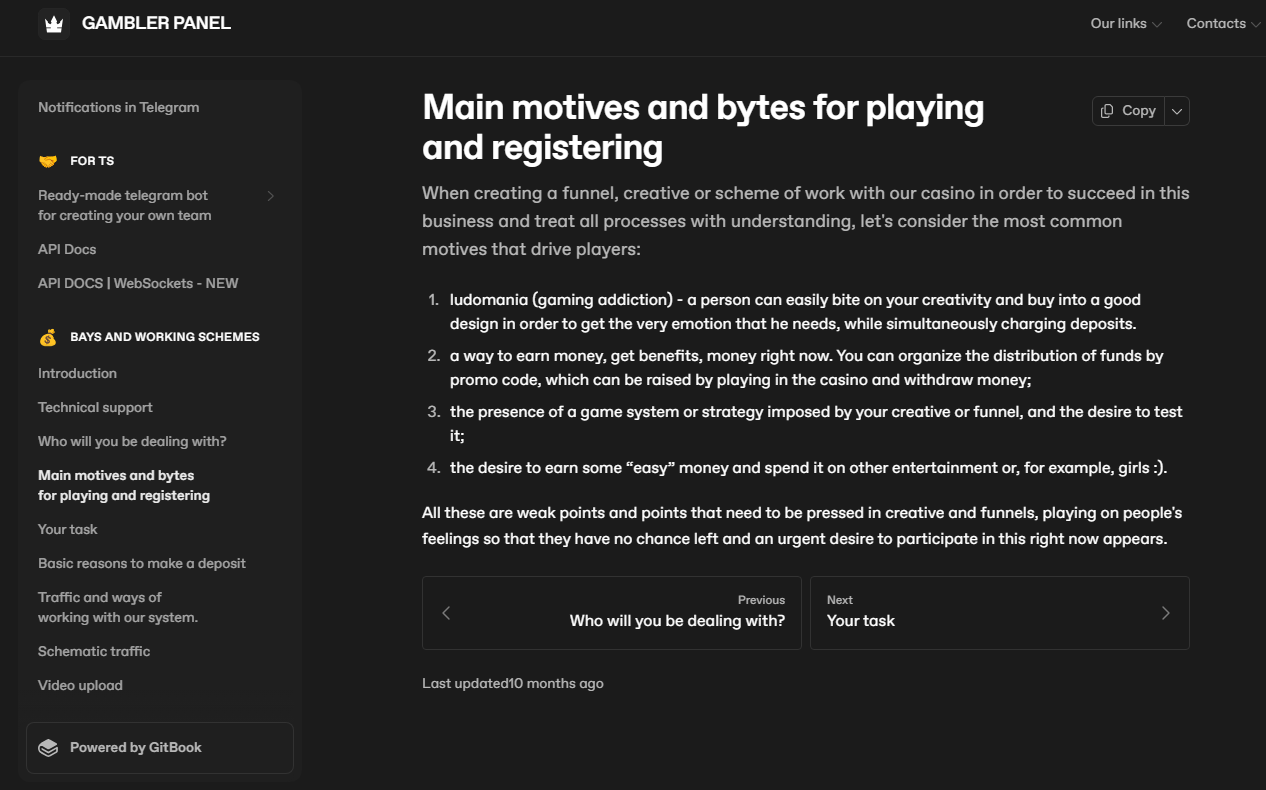
Last month, KrebsOnSecurity tracked the sudden emergence of hundreds of polished online gaming and wagering websites that lure people with free credits and eventually abscond with any cryptocurrency funds deposited by players. We’ve since learned that these scam gambling sites have proliferated thanks to a new Russian affiliate program called “Gambler Panel” that bills itself as a “soulless project that is made for profit.”

A machine-translated version of Gambler Panel’s affiliate website.

The scam begins with deceptive ads posted on social media that claim the wagering sites are working in partnership with popular athletes or social media personalities. The ads invariably state that by using a supplied “promo code,” interested players can claim a $2,500 credit on the advertised gaming website.

The gaming sites ask visitors to create a free account to claim their $2,500 credit, which they can use to play any number of extremely polished video games that ask users to bet on each action. However, when users try to cash out any “winnings” the gaming site will reject the request and prompt the user to make a “verification deposit” of cryptocurrency — typically around $100 — before any money can be distributed.

Those who deposit cryptocurrency funds are soon pressed into more wagering and making additional deposits. And — shocker alert — all players eventually lose everything they’ve invested in the platform.

The number of scam gambling or “scambling” sites has skyrocketed in the past month, and now we know why: The sites all pull their gaming content and detailed strategies for fleecing players straight from the playbook created by Gambler Panel, a Russian-language affiliate program that promises affiliates up to 70 percent of the profits.

Gambler Panel’s website gambler-panel[.]com links to a helpful wiki that explains the scam from cradle to grave, offering affiliates advice on how best to entice visitors, keep them gambling, and extract maximum profits from each victim.

“We have a completely self-written from scratch FAKE CASINO engine that has no competitors,” Gambler Panel’s wiki enthuses. “Carefully thought-out casino design in every pixel, a lot of audits, surveys of real people and test traffic floods were conducted, which allowed us to create something that has no doubts about the legitimacy and trustworthiness even for an inveterate gambling addict with many years of experience.”

Gambler Panel explains that the one and only goal of affiliates is to drive traffic to these scambling sites by any and all means possible.

A machine-translated portion of Gambler Panel’s singular instruction for affiliates: Drive traffic to these scambling sites by any means available.

“Unlike white gambling affiliates, we accept absolutely any type of traffic, regardless of origin, the only limitation is the CIS countries,” the wiki continued, referring to a common prohibition against scamming people in Russia and former Soviet republics in the Commonwealth of Independent States.

The program’s website claims it has more than 20,000 affiliates, who earn a minimum of $10 for each verification deposit. Interested new affiliates must first get approval from the group’s Telegram channel, which currently has around 2,500 active users.

The Gambler Panel channel is replete with images of affiliate panels showing the daily revenue of top affiliates, scantily-clad young women promoting the Gambler logo, and fast cars that top affiliates claimed they bought with their earnings.

A machine-translated version of the wiki for the affiliate program Gambler Panel.

The apparent popularity of this scambling niche is a consequence of the program’s ease of use and detailed instructions for successfully reproducing virtually every facet of the scam. Indeed, much of the tutorial focuses on advice and ready-made templates to help even novice affiliates drive traffic via social media websites, particularly on Instagram and TikTok.

Gambler Panel also walks affiliates through a range of possible responses to questions from users who are trying to withdraw funds from the platform. This section, titled “Rules for working in Live chat,” urges scammers to respond quickly to user requests (1-7 minutes), and includes numerous strategies for keeping the conversation professional and the user on the platform as long as possible.

A machine-translated version of the Gambler Panel’s instructions on managing chat support conversations with users.

The connection between Gambler Panel and the explosion in the number of scambling websites was made by a 17-year-old developer who operates multiple Discord servers that have been flooded lately with misleading ads for these sites.

The researcher, who asked to be identified only by the nickname “Thereallo,” said Gambler Panel has built a scalable business product for other criminals.

“The wiki is kinda like a ‘how to scam 101’ for criminals written with the clarity you would expect from a legitimate company,” Thereallo said. “It’s clean, has step by step guides, and treats their scam platform like a real product. You could swap out the content, and it could be any documentation for startups.”

“They’ve minimized their own risk — spreading the links on Discord / Facebook / YT Shorts, etc. — and outsourced it to a hungry affiliate network, just like a franchise,” Thereallo wrote in response to questions.

“A centralized platform that can serve over 1,200 domains with a shared user base, IP tracking, and a custom API is not at all a trivial thing to build,” Thereallo said. “It’s a scalable system designed to be a resilient foundation for thousands of disposable scam sites.”

The security firm Silent Push has compiled a list of the latest domains associated with the Gambler Panel, available here (.csv).

❌